Our Hunger Games
This article by Vandana Shiva is re-posted from Common Dreams.
Hunger and malnutrition are man-made. They are hardwired in the design of the industrial, chemical model of agriculture. But just as hunger is created by design, healthy and nutritious food for all can also be designed, through food democracy.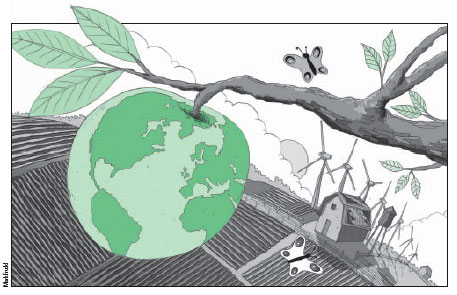
We are repeatedly told that we will starve without chemical fertilisers. However, chemical fertilisers, which are essentially poison, undermine food security by destroying the fertility of soil by killing the biodiversity of soil organisms, friendly insects that control pests and pollinators like bees and butterflies necessary for plant reproduction and food production.
Industrial production has led to a severe ecological and social crisis. To ensure the supply of healthy food, we must move towards agro-ecological and sustainable systems of food production that work with nature and not against her. That is what movements that promote biodiversity conservation, like our NGO Navdanya, are designing on the ground.
Industrialisation of agriculture creates hunger and malnutrition, and yet further industrialisation of food systems are offered as solution to the crisis. In the Indian context, agriculture, food and nutrition are seen independent of each other, even though what food is grown and how it is grown determines its nutritional value. It also determines distribution patterns and entitlements. If we grow millets and pulses, we will have more nutrition per capita. If we grow food by using chemicals, we are growing monocultures — this means that we will have less nutrition per acre, per capita. If we grow food ecologically, with internal inputs, more food will stay with the farming household and there will be less malnutrition among rural children.
Our agriculture policy focuses on increasing yields of individual crops and not on the output of the food system and its nutritional value. The food security system — based on the public distribution system — does not address issues of nutrition and quality of food, and nutritional programmes are divorced from both agriculture and food security.
The agrarian crisis, the food crisis and the nutrition and health crisis are intimately connected. They need to be addressed together. The objective of agriculture policy cannot be based on promoting industrial processing of food. The chemicalisation of agriculture and food are recipes for “denutrification”. They cannot solve the problem of hunger and malnutrition. The solution to malnutrition begins with the soil.
Industrial agriculture, sold as the Green Revolution and the second Green Revolution to Third World countries, is chemical-intensive, capital-intensive and fossil fuel-intensive. It must, by its very structure, push farmers into debt and indebted farmers off the land. In poor countries, farmers trapped in debt for buying costly chemicals and non-renewable seeds, sell the food they grow to pay back debt. That is why hunger today is a rural phenomenon. Wherever chemicals and commercial seeds have spread, farmers are in debt. They lose entitlement to their own produce and hence get trapped in poverty and hunger.
Industrial chemical agriculture also creates hunger by displacing and destroying the biodiversity, which provides nutrition. The Green Revolution displaced pulses, an important source of proteins, as well as oilseeds, thus reducing nutrition per acre. Monocultures do not produce more food and nutrition. They take up more chemicals and fossil fuels, and hence are profitable for agrochemical companies and oil companies. They produce higher yields of individual commodities but a lower output of food and nutrition.
Industrial chemical agriculture’s measures of productivity focus on labour as the major input while externalising many energy and resource inputs. This biased productivity pushes farmers off the land and replaces them with chemicals and machines, which in turn contribute to greenhouse gases and climate change. Further, industrial agriculture focuses on producing a single crop that can be globally traded as a commodity. The focus on “yield” of individual commodities creates what I call a “monoculture of the mind”. The promotion of so-called high-yield crops leads to the destruction of biodiversity.
Biodiverse systems have higher output than monocultures, that is why organic farming is more beneficial for farmers and the earth than chemical farming.
Industrial chemical agriculture also causes hunger and malnutrition by robbing crops of nutrients. Industrially produced food is nutritionally empty but loaded with chemicals and toxins. Nutrition in food comes from the nutrients in the soil. Industrial agriculture, based on the NPK mentality of synthetic nitrogen, phosphorous and potassium-based fertilisers, lead to depletion of vital micro-nutrients and trace elements such as magnesium, zinc, calcium, iron.
The increase in yields does not translate into more nutrition. In fact, it is leading to malnutrition. To get the required amount of nutrition people need to eat much more food.
The most effective and low-cost strategy for addressing hunger and malnutrition is through biodiverse organic farming. It enriches the soil and nutrient-rich soils give us nutrient-rich food.
Earthworm castings, which can amount to four to 36 tons per acre per year, contain five times more nitrogen, seven times more phosphorus, three times more exchangeable magnesium, 11 times more potash and one-and-a-half times more calcium than soil. Their work on the soil promotes the microbial activity essential to the fertility of most soils. Soils rich in micro organisms and earthworms are soils rich in nutrients. Their products, too, are rich in nutrients. On an average, organic food has been found to have 21 per cent more iron, 14 per cent more phosphorous, 78 per cent more chromium, 390 per cent more selenium, 63 per cent more calcium, 70 per cent more boron, 138 per cent more magnesium, 27 per cent more vitamin C and 10-50 per cent more vitamin E and beta-carotene. And the more biodiversity on our farms, the more is the nutrition per acre, at little cost.
Plants, people and the soil are part of one food web, which is the web of life. The test of good farming is how well it works to increase the health and resilience of the food web.
Not “Disappointed” With Obama
This interview between Diego Viana (Valor Econômico) is re-posted from ZNet.
As you show in your books, Obama’s achievements fare quite disappointingly when compared to the progressive agenda his candidacy was associated with. Given his personal history and political connections, particularly within the Democratic Party, to what extent was all this surprising? How disappointing was Obama, in your view? On the other hand, given the American political landscape, could he really have done much more?
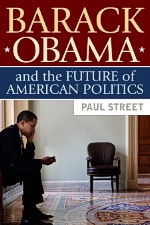
Street: The first of the two books I’ve published with “Barack Obama” in the title was researched and published well before his election to the White House. That book (Barack Obama and the Future of American Politics – June 2008) predicted that an Obama presidency would disappoint those who naively bought into the notion that his election heralded progressive change. I had no progressive expectations and thus was not disappointed. My prediction was based on my understanding of Obama’s centrist, neoliberal, business- and empire-friendly record in the Illinois legislature and the U.S. Senate and on the actual content of his presidential campaign. My second “Obama book,” bearing the title The Empire’s New Clothes: Barack Obama in the Real World of Power, illustrated in detail the different ways in which the prediction was born out over the first 14 months of Obama’s presidency.
Obama rose to power in Washington with remarkable and in-fact record-setting financial backing from Wall Street and K Street election investors and with the strong approval of the nation’s foreign policy establishment. Those elites are NOT in the business or promoting or tolerating politicians who seek to challenge the nation’s dominant domestic and imperial hierarchies and doctrines. “It’s not always clear what Obama’s financial backers want,” the progressive journalist Ken Silverstein noted in Harpers’ Magazine in the fall of 2006, “but it seems safe to conclude that his campaign contributors are not interested merely in clean government and political reform – a reasonable judgment given well-known facts on the purposes behind election finance at the upper levels. On condition of anonymity,” Silverstein added, “one Washington lobbyist I spoke with was willing to point out the obvious: that big donors would not be helping out Obama if they didn’t see him as a ‘player.’ The lobbyist added: ‘What’s the dollar value of a starry-eyed idealist?'”
For those who chose, against mountains of contrary evidence, to believe that Obama was in fact a progressive idealist. Obama has been, yes a great disappointment. Like many other Left thinkers including Noam Chomsky, John Pilger, Adolph Reed Jr., the late Alexander Cockburn, Glen Ford, Doug Henwood, Ralph Nader, Laurence Shoup, Edward Herman, and Chris Hedges, I found it fairly easy to foresee the corporatist and militarist direction of the Obama presidency. That direction is consistent with Obama’s conservative, power-serving essence (cloaked in deceptive progressive rebel’s clothing for electoral purposes) and with the deeper subordination of the nation’s two reigning political parties and political culture to the unelected and interrelated dictatorships of money and empire.
Could he have done more in a progressive way, had he wanted do, given the political context of the U.S.? It’s hard to know since he never tried. I think a genuinely progressive, anti-poverty, and populist president might have been able to rally a very angry populace to push back against the nation’s concentrated wealth and power structures by pushing aggressively for a number of policies: a much larger stimulus with major public works jobs programs; a real (single-payer) health insurance reform (the reform he passed should be called “The All Power to the Big Insurance and Drug Companies Act”); the disciplining and even nationalization of key financial institutions; and passage of the Employee Free Choice Act (which would have re-legalized union organizing in the U.S.). Would such a fighting and progressive President Obama have succeeded on any or all of this? We’ll never know because he never remotely tried. He does not believe in confronting existing power structures and dominant ideologies. He never did. He came into office determined to tamp down dangerous popular and progressive expectations associated with his election – something that is very clear in his Election Night speech and Inaugural Address.
I think even the moneyed elite itself was somewhat surprised at the extent to which president Obama was determined to shield them from citizen rage. In his book Confidence Men: Wall Street, Washington, and the Education of a President (2011), the PulitzerPrize-winning author Ron Suskind tells a remarkable story from March of 2009. Three months into Obama’s supposedly “transformative” presidency, popular rage at Wall Street was intense and the leading financial institutions were weak and on the defensive. Obama called a meeting of the nation’s top thirteen financial executives at the White House. The banking titans came into the meeting full of dread only to leave pleased to learn that the new president was in their camp. For instead of standing up for those who had been harmed most by the crisis – workers, minorities, and the poor – Obama sided unequivocally with those who had caused the meltdown.
“My administration is the only thing between you and the pitchforks,” Obama said. “You guys have an acute public relations problem that’s turning into a political problem. And I want to help…I’m not here to go after you. I’m protecting you…I’m going to shield you from congressional and public anger.”
For the banking elite, who had destroyed untold millions of jobs, there was, as Suskind puts it, “Nothing to worry about. Whereas [President Franklin Delano] Roosevelt had [during the Great Depression] pushed for tough, viciously opposed reforms of Wall Street and famously said ‘I welcome their hate,’ Obama was saying ‘How can I help?’”
As one leading banker told Suskind, “The sense of everyone after the meeting was relief. The president had us at a moment of real vulnerability. At that point, he could have ordered us to do just about anything and we would have rolled over. But he didn’t – he mostly wanted to help us out, to quell the mob.”
When the Occupy Wall Street movement came along, many people thought it would empower president Obama in promoting reforms. Is it possible to determine why that didn’t happen?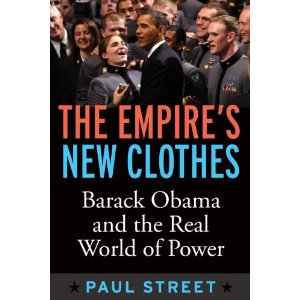
Street: Obama hasn’t been interested in passing reforms beyond a deeply flawed and absurdly complex health insurance bill (recently approved by Republican Supreme Court Chief Justice John Roberts) that serves the nation’s leading insurance and pharmaceutical corporations above all. During the summer 2011 debt ceiling crisis that preceded and helped spark Occupy Wall Street (OWS), Obama offered the right wing a “grand bargain” that included regressive cuts in Social Security and other social programs far beyond what the Republicans were demanding. Even as it has sought to co-opt the movement’s populist spirit for partisan electoral purposes, the Obama administration was very standoffish towards OWS (it took the same distant posture towards the labor rebellion in Madison, Wisconsin months earlier). The White House helped coordinate the repression and dismantlement of the Occupy Movement in October and November of last year.
For its part, Occupy was not really into pressing Obama or any other major party politician for reforms. It seemed more interested in advancing and embodying or prefiguring radical system change – a “world turned upside down,” so to speak. And once the Democrats determined that the Occupy Movement was not something that they could easily co-opt, they decided to crush it.
The Democrats do seem to find Occupy’s language of the “1%” versus “the 99%” useful in running against the Republicans and especially against Mitt “Mr. 1%” Romney. But this is about electoral advantage – the standard U.S. manipulation of populism by elitism – and has little to with any specific policies or reforms.
Before Obama was elected, did you expect him to be the bringer of change?
Street: Well, let me put a “dialectical” twist on what I said above. I expected change of a curiously ironic and indirect kind. I expected first an elite-directed white-nationalist “right wing populist” rebellion to emerge in the progressive vacuum created by Obama’s initial success in muting liberal and left forces. Then I expected a more genuinely grassroots and left-leaning rebellion to emerge as more and more “disappointed” American received a great lesson from Obama on who really rules the United States (the aforementioned “unelected dictatorships”) beneath and beyond the quadrennial big money-big media-candidate-centered “electoral extravaganzas” (Chomsky’s term) that are sold to us as “politics” – the only politics that matters. Consistent with the pre-election reflections of a smart, Brooklyn-based Marxist named Doug Henwood, I expected many Americans to get it that it’s a fantasy to expect democratic or progressive change to come from electing another ruling class-sponsored candidate. I expected some of those people to act accordingly by joining social movements for radical progressive change.
The first expectation was born out with the emergence of “the Tea Party,” which helped fuel the historic right wing sweep in the mid-term Congressional elections of 2010. The second expectation was born out with the rise of Occupy Wall Street, which reflected participants’ realization that American democracy (or what’s left of it) is no less crippled by the dark cloud of big money and the machinations of capital when Democrats hold nominal power than when Republicans do. True, Occupy was crushed but it was a start beyond candidate- and major party-captive electoralism and towards a more Latin American style of social movement politics. I expect the populist, radically democratic Occupy spirit to inform the rebuilding of a U.S. Left that matters in coming years.
When Obama campaigned in campus towns like Madison, Wisconsin in 2007 and 2008, he proclaimed that “change doesn’t come from the top down, it comes from the bottom up.” He stopped saying that once he got into the nation’s top job, as I expected. Still, the confrontation between (a) dreamy candidate Obama and (b) the harsh reality of Obama in the real world of power was very instructive in ways that did create some welcome shifts in the populace.
In 2008, then candidate Obama’s name was associated with hope (as in the famous Shepard Fairey piece) and change; he was considered as the candidate who would change the US completely, reversing Bush’s imperialism and very strong penchant for the plutocracy. How deeply do the last four years change this image among the American people and electors? Can president Obama still mobilize people’s emotions?
Street: Obama’s predictable (and predicted) transition from outwardly progressive, anti-war and expectation-raising candidate to centrist, imperial, and expectation-managing president has (quite predictably) created a significant “enthusiasm gap” among the Democratic Party’s “progressive base.” His image and popularity have suffered. While he is doing his best to present himself as a progressive people’s critic of “Mr. 1%” (more like Mr. 001%) Mitt Romney, he cannot mobilize poor, minority, and working class constituencies to anything like the same degree as he could in 2007 and 2008 or to the degree that might be able to had he taken a progressive direction in the White House. He’s been on the inside making policy from the top down on behalf of the ruling class for more than three years now and that often makes it difficult for him to pose credibly as a champion of the people in their struggle with the Establishment. This does not necessarily mean that he will lose to Romney. If he wins re-election (and he may well – the election seems likely to be close as in 2000 and 2004), it will have more to do with negative attack campaign ads and a sense of Obama being the lesser and known evil (compared to the doltish aristocratic arch-plutocrat and wild card Romney) than with any successful rallying of progressive hopes and expectations around the banner of “hope” or “change.”
As for “reversing Bush’s imperialism,” just ask the survivors of the many Pakistanis, Afghans, Libyans, Yemenis and others killed by Obama’s drones, bombs, missiles, bullets, and invasions. The president has kept the imperial machine set on kill (as Alan Nairn put it a couple of years ago) and has actually expanded the scope of the U.S. global imperial war on/of terror. He has also pushed the military closer to conflict with China. And ask the people of Honduras (and Paraguay) if Obama has reversed the imperial U.S. policy of encouraging and assisting right wing coups in Latin America. Meanwhile, the Obama administration has been considerably more aggressive than its predecessor in attacking and violating the civil liberties of antiwar protestors at home.
But anyone who thought Obama was going to reverse U.S. imperialism wasn’t paying serious attention to his speeches, writings, and Senate voting record before the election. U.S. Senator and presidential candidate Obama advertised his commitment to empire and the use of force quite clearly to those willing and able to look and listen.
Obama’s election was also expected to impact lastingly on racial relations within the US, since he’s the first black president. Can such changes be identified? Is it possible to assess that America (or maybe even not just America, but the world) has become less racist? Has there been any real change at all?
Street: Well, not really – nothing much beyond the superficial. To quote Frantz Fanon in his book Black Skin, White Masks: “What matters is not so much the color of your skin as the power you serve and the millions you betray.” Having black conservatives Colin Powell as Secretary of State, Condolleeza Rice as top National Security Advisor, and Clarence Thomas as a Supreme Court Justice under George W. Bush did not alter the fundamental nature of U.S. race relations and neither did electing the conservative Obama to the White House.
Racism and white supremacy are very deeply entrenched in U.S. institutional and cultural life (a topic I have written about at some length in the third chapter of Barack Obama and the Future of American Politics and in my 2007 book Racial Oppression in the Global Metropolis: A Living Black Chicago History). Anyone who thinks that to put a very cautious and conservative, “race-neutral,” and half-white black politician into the White House is to seriously confront white racism in the U.S. has a superficial understanding of racial oppression in this country.
In some ways, Barack Obama’s election and administration seems to have worsened the nation’s racial problems. The ascendancy of Obama has been seen by many whites as proof positive that the only meaningful remaining barriers to black advancement and equality in the U.S. are internal to “black culture” and the black community itself. Along with other widely white-heralded “race neutral” black American elites like Oprah Winfrery and Colin Powell, Obama has been widely perceived as an epitome of the cultural-Darwinian thesis – as the “good” “guess-who’s-coming-to-dinner” black whose internalization of respectable white values and behavioral codes leads to success that demonstrates that a “color blind” America has answered the call for racial equality of opportunity and that impoverished “ghetto blacks” are victims of their own “bad choices” and “bad culture.”
It is a narrative that Obama has been unwilling to remotely question and more than happy to exploit to his advantage with the majority white racism-denying electorate. As the astute black left commentator Glen Ford recently noted on Black Agenda Report:
“a clear white consensus favors ‘race neutral’ government policies – which, in practice, reject Black grievances based on past discrimination and disadvantage, and set an extremely high bar for complaints of current bias. Such dismissal of essential – and irrefutable – contemporary and historical data can only be rooted in a general white belief that African American culture is what holds Blacks back. Barack Obama either shares this white attitude, or pretends he does for political gain. His singling out of ‘irresponsible’ Black fathers and hectoring of Black parents for feeding their kids Popeye’s chicken for breakfast was a shout-out to white folks that he shared their assessment of Black ‘culture.’ ”
It goes back a long way in Obama’s career. Before and since his election to the presidency, Obama has repeatedly criticized blacks for failing to think and act right and thereby to take advantage of the great opportunities supposedly afforded them by the “magical place called the United States.” He has distanced himself from the supposedly “dysfunctional” and obsolete notion that white supremacy and societal racism continue to oppress black Americans. Claiming that “a rising tide will lift all boats” and explicitly denying the need to address the specific needs of blacks, he has refused to advance any policies that might specially address harsh racial disparities resulting from racist realities – this even as already terrible black poverty, joblessness, foreclosure, homelessness, and abuse-by-police numbers have significantly worsened during his administration. A cheerleader for Newt Gingrich and Bill Clinton’s neoliberal-racist elimination of poor families’ entitlement to public family cash assistance (for s-called “welfare reform”), Obama chides blacks for supposed personal and cultural failure but has nothing to say about the Caucasian culture of white supremacy that creates a living (if dangerously cloaked) reality of anti-black racial oppression in the contemporary U.S.
The kind of opposition president Obama has faced is very particular: “birthers”, “accusations” of being a Muslim, the Tea Party, and so on. What does this tell us about the historical figure of Obama?
Street: Well, it tells us less about Obama than it does about how deeply racist and nativist much of the United States remains, even if a majority of the predominantly white electorate (though not a majority of white voters) was ready to select a certain (bourgeois and “post-racial”) kind of black presidential candidate with a technically Muslim name over the terrible John McCain-Sarah Palin ticket in 2008. It tells us that the country is dangerously mired in identity politics, that American racism and nationalism after 9/11 is especially noxious in relation to Islam and the Muslim world; that the Republican Party (what I now half-jokingly call the Teapublican Party and Tea.O.P.) has gone very far to the extreme right; and that popular anger remains all too susceptible to being captured by viciously racist right-wing forces in the absence of a sustained and organized Left political opposition. The fact that people who bizarrely think that Obama is a foreign-born Muslim and radical are commonly cited as at “the opposition” to Obama speaks volumes about how incredibly far U.S. political culture has titled to the right. Majority public opinion on numerous key policy issues (jobs, inequality, social spending, labor rights, taxes, the role of money in elections, the power of corporations and the rich and more) stands well to the progressive left of Obama and the Democrats but the aforementioned dictatorships tolerate no parties to the left of the corporate and imperial U..S. Democrats – “history’s second most enthusiastic capitalist party” (after the U.S. Republicans). As a result there are no real progressive, even mildly social-democratic political institutions to relevantly capture progressive majority sentiments and the role of the angry and vocal “opposition” falls to the racist, white nationalist and arch-plutocratic paranoids of the ever more viciously right-wing Republican Party. It’s not a pretty situation.
A silent Election issue: The Cost of War to Grand Rapids
We are entering the last leg of the 2012 election cycle and as with all presidential election cycles there is limited discourse on issues of substance.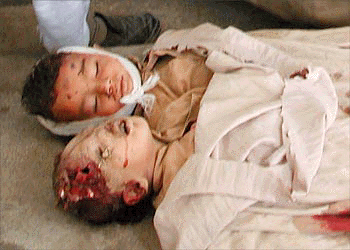
One issue that has received virtually no attention to date is the current US wars abroad, particularly Afghanistan, and the cost of war. The Obama administration has made claims about a withdrawal timeline for Afghanistan, much the same way the Bush administration did for Iraq. However, the term withdraw is tremendously misleading.
First, focusing the “idea” of withdraw negates or downplays the devastation wrought by the US occupations of both Iraq and Afghanistan. On top of the several thousand US troops that have been killed or permanently disabled, there have been over a million Iraqi deaths as a result of the US occupation and tens of thousands of Afghan deaths.
There have also been tens of thousands more wounded and over a million displaced in each country. The level of radioactive waste created because of the use of depleted uranium in US weapons will impact Iraq and Afghanistan for generations to come and political instability has not manifested.
Then there is the long term US interests, such as resource extraction and regional geopolitics. Western oil companies continue to reap massive profits since they now control the majority of oil production in Iraq, while Afghanistan and Iraq both play a significant role in the future of that region, particularly the isolation of Iran. The economic and geopolitical interests are exactly why troop withdrawal is misleading, especially since the US will continue to use private military contractors and maintain military bases on both of those countries for decades to come.
These imperialist policies are not being debated or discussed or investigated during the 2012 election, especially since the two major parties are in agreement on maintain the larger imperial plan.
However, all of the troops, weapons, bases, private contractors, etc., costs a shit ton of money. The US military budget is the largest in the world and roughly half of the entire US government budget is allocated towards military spending.
According to the data from the National Priorities Project, the monetary cost of the wars in Iraq and Afghanistan since 2001 have cost $1.36 trillion and counting. The data shows that $806 billion has been spent on Iraq and another $560 billion on Afghanistan.
Breaking that data down by state shows that over $31 billion has left the state of Michigan to fund these two wars. Closer to home, the same data shows that $491 million has left Grand Rapids to fund murder, torture and theft in Iraq and Afghanistan.
If we were looking at how much money has left the 3rd Congressional District since 2001, the total would be $2.2 billion and counting. This issue was not part of the discourse before the Democratic Primary in early August and it is not likely to be part of the debate between Steve Pestka and Justin Amash before the November 6 Election, since both candidates are committed to the current US military policy. There is nothing on Justin Amash’s re-election site about US military spending, not does Steve Pestka. In fact, Peskta does not even mention foreign policy as part of his platform.
This silence on such a critical issue is instructive in that it exposes the bi-partisan nature of the US imperial project and it demonstrates the clear fallacy that either candidate or political party really wants to divert funds to public policy like education, mass transit, public health or environmental protection. In order to fund those policies the military budget would have to be radically reduced and that is not likely to happen without a revolution.
The 2012 election, no matter who is elected, will not change the fundamental nature of US militarism abroad and the massive amounts of military spending that is provided by US taxpayers.
The Best Laid Plans: How Quickly Will the US Leave Afghanistan?
This article by Tom Engelhardt is re-posted from TomDispatch.
n the wake of several deaths among its contingent of troops in a previously peaceful province in Afghanistan, New Zealand (like France and South Korea) is now expediting the departure of its 140 soldiers. That’s not exactly headline-making news here in the U.S. If you’re an American, you probably didn’t even know that New Zealand was playing a small part in our Afghan War. In fact, you may hardly have known about the part Americans are playing in a war that, over the last decade-plus, has repeatedly been labeled “the forgotten war.”
Still, maybe it’s time to take notice. Maybe the flight of those Kiwis should be thought of as a small omen, even if they are departing as decorously, quietly, and flightlessly as possible. Because here’s the thing: once the November election is over, “expedited departure” could well become an American term and the U.S., as it slips ignominiously out of Afghanistan, could turn out to be the New Zealand of superpowers.
You undoubtedly know the phrase: the best laid plans of mice and men. It couldn’t be more apt when it comes to the American project in Afghanistan. Washington’s plans have indeed been carefully drawn up. By the end of 2014, U.S. “combat troops” are to be withdrawn, but left behind on the giant bases the Pentagon has built will be thousands of U.S. trainers and advisers, as well as special operations forces to go after al-Qaeda remnants (and other “militants”), and undoubtedly the air power to back them all up.
Their job will officially be to continue to “stand up” the humongous security force that no Afghan government in that thoroughly impoverished country will ever be able to pay for. Thanks to a 10-year Strategic Partnership Agreement that President Obama flew to Kabul to seal with Afghan President Hamid Karzai as May began, there they are to remain until 2020 or beyond.
In other words, it being Afghanistan, we need a translator. The American “withdrawal” regularly mentioned in the media doesn’t really mean “withdrawal.” On paper at least, for years to come the U.S. will partially occupy a country that has a history of loathing foreigners who won’t leave (and making them pay for it).
Tea Boys and Old Men
Plans are one thing, reality another. After all, when invading U.S. troops triumphantly arrived in the Iraqi capital, Baghdad, in April 2003, the White House and the Pentagon were already planning to stay forever and a day — and they instantly began building permanent bases (though they preferred to speak of “permanent access” via “enduring camps”) as a token of their intent. Only a couple of years later, in a gesture that couldn’t have been more emphatic in planning terms, they constructed the largest (and possibly most expensive) embassy on the planet as a regional command center in Baghdad. Yet somehow, those perfectly laid plans went desperately awry and only a few years later, with American leaders still looking for ways to garrison the country into the distant future, Washington found itself out on its ear. But that’s reality for you, isn’t it?
Right now, evidence on the ground — in the form of dead American bodies piling up — indicates that even the Afghans closest to us don’t exactly second the Obama administration’s plans for a 20-year occupation. In fact, news from the deep-sixed war in that forgotten land, often considered the longest conflict in American history, has suddenly burst onto the front pages of our newspapers and to the top of the TV news. And there’s just one reason for that: despite the copious plans of the planet’s last superpower, the poor, backward, illiterate, hapless, corrupt Afghans — whose security forces, despite unending American financial support and mentoring, have never effectively “stood up” — made it happen. They have been sending a stark message, written in blood, to Washington’s planners.
A 15-year-old “tea boy” at a U.S. base opened fire on Marine special forces trainers exercising at a gym, killing three of them and seriously wounding another; a 60- or 70-year-old farmer, who volunteered to become a member of a village security force, turned the first gun his American special forces trainers gave him at an “inauguration ceremony” back on them, killing two; a police officer who, his father claims, joined the force four years earlier, invited Marine Special Operations advisers to a meal and gunned down three of them, wounding a fourth, before fleeing, perhaps to the Taliban.
About other “allies” involved in similar incidents — recently, there were at least 9 “green-on-blue” attacks in an 11-day span in which 10 Americans died — we know almost nothing, except that they were Afghan policemen or soldiers their American trainers and mentors were trying to “stand up” to fight the Taliban. Some were promptly shot to death. At least one may have escaped.
These green-on-blue incidents, which the Pentagon recently relabeled “insider attacks,” have been escalating for months. Now, they seem to have reached a critical mass and so are finally causing a public stir in official circles in Washington. A “deeply concerned” President Obama commented to reporters on the phenomenon (“We’ve got to make sure that we’re on top of this…”) and said he was planning to “reach out” to Afghan President Karzai on the matter. In the meantime, Secretary of Defense Leon Panetta did so, pressing Karzai to take tougher steps in the vetting of recruits for the Afghan security forces. (Karzai and his aides promptly blamed the attacks on the Iranian and Pakistani intelligence agencies.)
General Martin Dempsey, the chairman of the Joint Chiefs, flew to Afghanistan to consult with his counterparts on what to make of these incidents (and had his plane shelled on a runway at Bagram Air Field — “a lucky shot,” claimed a NATO spokesman — for his effort). U.S. Afghan War commander General John Allen convened a meeting of more than 40 generals to discuss how to stop the attacks, even as he insisted “the campaign remains on track.” There are now rumblings in Congress about hearings on the subject.
Struggling With the Message
Worry about such devastating attacks and their implications for the American mission, slow to rise, is now widespread. But much of this is reported in our media as if in a kind of code. Take for example the way Laura King put the threat in a front-page Los Angeles Times piece (and she was hardly alone). Reflecting Washington’s wisdom on the subject, she wrote that the attacks “could threaten a linchpin of the Western exit strategy: training Afghan security forces in preparation for handing over most fighting duties to them by 2014.” It almost sounds as if, thanks to these incidents, our combat troops might not be able to make it out of there on schedule.
No less striking is the reported general puzzlement over what lies behind these Afghan actions. In most cases, the motivation for them, writes King, “remains opaque.” There are, it seems, many theories within the U.S. military about why Afghans are turning their guns on Americans, including personal pique, individual grudges, cultural touchiness, “heat-of-the moment disputes in a society where arguments are often settled with a Kalashnikov,” and in a minority of cases — about a tenth of them, according to a recent military study, though one top commander suggested the number could range up to a quarter — actual infiltration or “coercion” by the Taliban. General Allen even suggested recently that some insider attacks might be traced to religious fasting for the Islamic holy month of Ramadan, combined with unseasonable summer heat, leaving Afghans hungry, tetchy, and prone to impulsive acts, guns in hand. According to the Washington Post, however, “Allen acknowledged that U.S. and Afghan officials have struggled to determine what’s behind the rise in attacks.”
“American officials are still struggling,” wrote the New York Times in an editorial on the subject, “to understand the forces at work.” And in that the editorial writers like the general reflected the basic way these acts are registering here — as a remarkable Afghan mystery. In other words, in Washington’s version of the blame game, the quirky, unpredictable Afghans from Hamid Karzai on down are in the crosshairs. What is the matter with them?
In the midst of all this, few say the obvious. Undoubtedly, a chasm of potential misunderstanding lies between Afghan trainees and their American trainers; Afghans may indeed feel insulted by any number of culturally inapt, inept, or hostile acts by their mentors. They may have been on edge from fasting for Ramadan. They may be holding grudges. None of the various explanations being offered, that is, may in themselves be wrong. The problem is that none of them allow an observer to grasp what’s actually going on. On that, there really should be few “misunderstandings” and, though you won’t hear it in Washington, right now Americans are actually the ones in the crosshairs, and not just in the literal sense either.
While the motives of any individual Afghan turning his gun on an American may be beyond our knowing — just what made him plan it, just what made him snap — history should tell us something about the more general motives of Afghans (and perhaps the rest of us as well). After all, the United States was founded after colonial settlers grew tired of an occupying army and power in their midst. Whatever the individual insults Afghans feel, the deeper insult almost 11 years after the U.S. military, crony corporations, hire-a-gun outfits, contractors, advisers, and aid types arrived on the scene en masse with all their money, equipment, and promises is that things are going truly badly; that the westerners are still around; that the Americans are still trying to stand up those Afghan forces (when the Taliban has no problem standing its forces up and fighting effectively without foreign trainers); that the defeated Taliban, one of the less popular movements of modern history, is again on the rise; that the country is a sea of corruption; that more than 30 years after the first Afghan War against the Soviets began, the country is still a morass of violence, suffering, and death.
Plumb the mystery all you want, our Afghan allies couldn’t be clearer as a collective group. They are sick of foreign occupying armies, even when, in some cases, they may have no sympathy for the Taliban. This should be a situation in which no translators are needed. The “insult” to Afghan ways is, after all, large indeed and should be easy enough for Americans to grasp. Just try to reverse the situation with Chinese, Russian, or Iranian armies heavily garrisoning the U.S., supporting political candidates, and trying to stand us up for more than a decade and it may be easier to understand. Americans, after all, blow people away regularly over far less than that.
And keep in mind as well what history does tell us: that the Afghans have quite a record of getting disgusted with occupying armies and blowing them away. After all, they managed to eject the militaries of two of the most powerful empires of their moments, the British in the 1840s and the Russians in the 1980s. Why not a third great empire as well?
A Contagion of Killing
The message is certainly clear enough, however unprepared those in Washington and in the field are to hear it: forget our enemies; a rising number of those Afghans closest to us want us out in the worst way possible and their message on the subject has been horrifically blunt. As NBC correspondent Jim Miklaszewski put it recently, among Americans in Afghanistan there is now “a growing fear the armed Afghan soldier standing next to them may really be the enemy.”
It’s a situation that isn’t likely to be rectified by quick fixes, including the eerily named Guardian Angel program (which leaves an armed American with the sole job of watching out for trigger-happy Afghans in exchanges with his compatriots), or better “vetting” of Afghan recruits, or putting Afghan counterintelligence officers in ever more units to watch over their own troops.
The question is: Why can’t our leaders in Washington and in the U.S. military stop “struggling” and see this for what it obviously is? Why can’t anyone in the mainstream media write about it as it obviously is? After all, when almost 11 years after your arrival to “liberate” a country, orders are issued for every American soldier to carry a loaded weapon everywhere at all times, even on American bases, lest your allies blow you away, you should know that you’ve failed. When you can’t train your allies to defend their own country without an armed guardian angel watching at all times, you should know that it’s long past time to leave a distant country of no strategic value to the United States.
As is now regularly noted, the incidents of green-on-blue violence are rising rapidly. There have been 32 of them reported so far this year, with 40 American or coalition members killed, compared to 21 reported in all of 2011, killing 35. The numbers have a chilling quality, a sense of contagion, to them. They suggest that this may be an unraveling moment, and don’t think — though no one mentions this — that it couldn’t get far worse.
To date, such incidents are essentially the work of lone wolf attackers, in a few cases of two Afghans, and in a single case of three Afghans plotting together. But no matter how many counterintelligence agents are slipped into the ranks or guardian angels appointed, don’t think there’s something magical about the numbers one, two, and three. While there’s no way to foresee the future, there’s no reason not to believe that what one or two Afghans are already doing couldn’t in the end be done by four or five, by parts of squads, by small units. With a spirit of contagion, of copycat killings with a message, loose in the land, this could get far worse.
One thing seems ever more likely. If your plan is to stay and train a security force growing numbers of whom are focused on killing you, then you are, by definition, in an impossible situation and you should know that your days are numbered, that it’s not likely you’ll be there in 2020 or even maybe 2015. When training your allies to stand up means training them to do you in, it’s long past time to go, whatever your plans may have been. After all, the British had “plans” for Afghanistan, as did the Russians. Little good it did them.
Imagine for a moment that you were in Kabul or Washington at the end of December 2001, after the Taliban had been crushed, after Osama bin Laden fled to Pakistan, and as the U.S. was moving into “liberated” Afghanistan for the long haul. Imagine as well that someone claiming to be a seer made this prediction: almost 11 years from then, despite endless tens of billions of dollars spent on Afghan “reconstruction,” despite nearly $50 billion spent on “standing up” an Afghan security force that could defend the country, and with more than 700 bases built for U.S. troops and Afghan allies, local soldiers and police would be deserting in droves, the Taliban would be back in force, those being trained would be blowing their trainers away in record numbers, and by order of the Pentagon, an American soldier could not go to the bathroom unarmed on an American base for fear of being shot down by an Afghan “friend.”
You would, of course, have been considered a first-class idiot, if not a madman, and yet this is exactly the U.S. “hearts and minds” record in Afghanistan to date. Welcomed in 2001, we are being shown the door in the worst possible way in 2012. Washington is losing it. It’s too late to exit gracefully
Obama Admininstration Backs Shell in Supreme Court Case
This article is re-posted from Corpwatch.
The Obama administration is backing Shell Oil after abruptly changing sides in a landmark U.S. Supreme Court case that could make it even more difficult for survivors of human rights abuses overseas to sue multinational corporations in federal courts. The case will be heard on October 1.
Lawyers at EarthRights International, a Washington-based human rights law nonprofit, say they suspect that a new legal submission – which was signed only by the U.S. Justice Department – reflects tensions inside the government on how to deal with multinational corporations do business in the U.S. Significantly, neither the State nor the Commerce Department signed on to the brief, despite their key roles in the case.
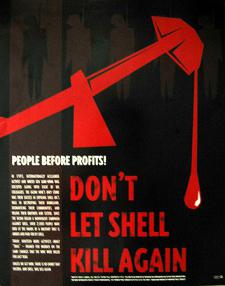
“It was shocking,” Jonathan Kaufman EarthRights legal policy coordinator commented to Reuters. “The brief was largely unexpected, based on what they had filed previously, and pretty breathtaking.”
At issue is the Alien Torts Claim Act (ATCA) – an 18th century U.S. law originally designed to combat piracy on the high seas – that has been used during the last 30 years as a vehicle to bring international law violations cases to U.S. federal courts. Lawyers began using ATCA as a tool in human rights litigation in 1979, when the family of 17-year-old Joel Filartiga, who was tortured and killed in Paraguay, sued the Paraguayan police chief responsible. Filartiga v. Peña-Irala set a precedent for U.S. federal courts to punish non-U.S. citizens for acts committed outside the U.S. that violate international law or treaties to which the U.S. is a party. ATCA has brought almost 100 cases of international (often state-sanctioned) torture, rape and murder to U.S. federal courts to date.
In recent years, a number of ATCA lawsuits have also been filed against multinationals which has angered the business lobby. “Expansion of this problem into the international arena via ATCA promises nothing but trouble for U.S. economic and foreign policy interests worldwide,” wrote John Howard, vice president of international policy and programs at the U.S. Chamber of Commerce. “U.S. national interests require that we not allow the continuing misapplication of this 18th century statute to 21st century problems by the latter day pirates of the plaintiffs’ bar.”
No plaintiff against a corporation has won on ATCA grounds, although some have settled or plea bargained. In 1996 Doe v. Unocal, a lawsuit filed by ethnic Karen farmers against Unocal (now owned by Chevron) set a new precedent when a U.S. federal court ruled that corporations and their executive officers could be held legally responsible for crimes against humanity. Unocal contracted with the Burmese military dictatorship to provide security for a natural gas pipeline project on the border of Thailand and Burma. The suit accused Unocal of complicity in murder, rape and forcing locals to work for Unocal for free. Shortly before the jury trial was set to begin in 2005, Unocal settled with the plaintiffs by paying an undisclosed sum, marking the first time a corporation settled in any way a case based on the ATCA. Another such case was filed against Chiquita, the global banana producer, by surviving victims of brutal massacres waged by right-wing paramilitary squads in Colombia. The paramilitary, who killed thousands of civilians during Colombia’s dirty war of the 1980s and 1990s, were on Chiquita’s payroll in the 1990s. Now-U.S. Attorney General Eric Holder defended Chiquita in the case and won a plea bargain for them of $25 million and five years of probation.
Holder isn’t the only Justice Department staffer who defended a corporation in an ATCA case. Sri Srinivasan, recently nominated for the second highest position in the Justice Department, represented Exxon Mobil in a case brought against them by Indonesian villagers who survived alleged attacks, torture and murder by Indonesian military units hired by Exxon to provide security. Lower courts disagreed on Exxon’s liability under ATCA, and in 2011 an appeals court sent the case back to trial.
Which brings us to the case currently before the Supreme Court – Kiobel v. Royal Dutch Petroleum Co. (Shell) – brought by relatives of nine Nigerian Ogoni activists who were executed in 1995 by a military dictatorship allegedly working in collaboration with Shell. For the last ten years, the widow of executed Dr. Barinem Kiobel and other Nigerian refugees have been trying to prove in court that the British-Dutch multinational oil company Royal Dutch Petroleum Co., or Shell Oil, conspired with the Nigerian military to illegally detain, torture and kill critics of Shell’s environmentally destructive practices in the Niger Delta.
In February the Supreme Court agreed to hear the case to determine whether or not corporations – as opposed to private parties – could be sued under the ATCA. At that time the Justice Department, submitted a “friend of the court” brief that said they could.
Lawyers say that if the Supreme Court accepts that the case can be heard in U.S. courts, it will mark a significant step forward for human rights activists. It will also send a powerful signal to business that any violations overseas can be prosecuted if they do business in the U.S. Then in June, the Obama administration, suddenly changed its opinion. The new brief from the Justice Department “read like a roadmap for getting rid of cases Srinivasan and Holder had worked on previously” EarthRights attorney Kaufman told Reuters.
In its submission filed in response to a Supreme Court order to re-argue whether or not ATCA applied to territories outside the U.S., the Justice Department urged the Supreme Court to dismiss the suit against Shell. The brief’s authors stated that the ATCA was not appropriate for Kiobel or other lawsuits involving foreign corporations accused of collaborating in human rights abuses with a foreign government outside U.S. territory.
U.S. courts “should not create a cause of action that challenges the actions of a foreign sovereign in its own territory, where the [sued party] is a foreign corporation of a third country that allegedly aided and abetted the foreign sovereign’s conduct,” the Justice Department wrote.
However, the Justice Department stopped short of categorically barring all similar cases that occur outside the U.S. from ATCA eligibility, and it left ambiguous whether the current recommendation would prevent future ATCA lawsuits against U.S. citizens or corporations, or in cases where abuses take place on the high seas.
EarthRights International filed three Freedom of Information Act requests in July to look for evidence showing whether or not corporate interests and lobbying influenced the government’s decision to back Shell.
“If disclosed, this information will help reveal whether or not the business interests of Attorney General Eric Holder or Deputy Solicitor General Sri Srinivasan influenced the government’s position in Kiobel,” said Kaufman.
“Be Honest About the History of Our Country”: Remembering the People’s Historian Howard Zinn at 90
This video is re-posted from Democracy Now!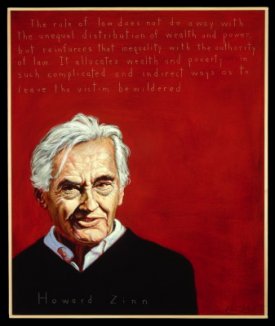
Editor’s note: For anyone interested in being part of a group discussion using Zinn’s A People’s History of the United States, you can sign up for the GRIID class A History of US Social Movements.
The late historian, writer and activist Howard Zinn would have turned 90 years old today. Zinn died of a heart attack at the age of 87 on January 27, 2010. After serving as a bombardier in World War II, Zinn went on to become a lifelong dissident and peace activist. He was active in the civil rights movement and many of the struggles for social justice over the past 50 years.
In 1980, Howard Zinn published his classic book, “A People’s History of the United States,” which would go on to sell more than a million copies and change the way we look at history in America. We air an excerpt of a Zinn interview on Democracy Now! from May 2009, and another from one of his last speeches later that year, just two months before his death.
[image: Robert Shetterly]
The Katrina Pain Index, 2012
This article by Bill Quigley and Davida Finger is re-posted from CounterPunch.
1 Rank of New Orleans in fastest growing US cities between 2010 and 2011. Source: Census Bureau.
1 Rank of New Orleans, Louisiana in world prison rate. Louisiana imprisons more of its people, per head, than any of the other 50 states. Louisiana rate is five times higher than Iran, 13 times higher than China and 20 times Germany. In Louisiana, one in 86 adults is in prison. In New Orleans, one in 14 black men is behind bars. In New Orleans, one of every seven black men is in prison, on parole or on probation. Source: Times-Picayune.
2 Rank of New Orleans in rate of homelessness among US cities. Source: 2012 Report of National Alliance to End Homelessness.
2 Rank of New Orleans in highest income inequality for cities of over 10,000 Source: Census.
3 Days a week the New Orleans daily paper, the Times-Picayune, will start publishing and delivering the paper this fall and switch to internet only on other days. (See 44 below). Source: The Times-Picayune.
10 Rate that New Orleans murders occur compared to US average. According to FBI reports, the national average is 5 murders per 100,000. The Louisiana average is 12 per 100,000. The New Orleans reported 175 murders last year or 50 murders per 100,000 residents. Source: WWL TV.
13 Rank of New Orleans in FBI overall crime rate rankings. Source: Congressional Quarterly.
15 Number of police officer-involved shootings in New Orleans so far in 2012. In all of 2011 there were 16. Source: Independent Police Monitor.
21 Percent of all residential addresses in New Orleans that are abandoned or blighted. There were 35,700 abandoned or blighted homes and empty lots in New Orleans (21% of all residential addresses), a reduction from 43,755 in 2010 (when it was 34% of all addresses). Compare to Detroit (24%), Cleveland (19%), and Baltimore (14%). Source: Greater New Orleans Community Data Center (GNOCDC).
27 Percent of people in New Orleans live in poverty. The national rate is 15%. Among African American families the rate is 30% and for white families it is 8%. Source: Corporation for Enterprise Development (CEFD) and Greater New Orleans Community Data Center (GNOCDC) Assets & Opportunity Profile: New Orleans (August 2012).
33 Percent of low income mothers in New Orleans study who were still suffering Post Traumatic Stress symptoms five years after Katrina. Source: Princeton University Study.
34 Bus routes in New Orleans now. There were 89 before Katrina. Source: RTA data.
37 Percent of New Orleans families that are “asset poor” or lack enough assets to survive for three months without income. The rate is 50% for black households, 40% for Latino household, 24% for Asian household and 22% for white households. Source: Corporation for Enterprise Development (CEFD) and Greater New Orleans Community Data Center (GNOCDC) Assets & Opportunity Profile: New Orleans (August 2012)
40 Percent of poor adults in New Orleans region that work. One quarter of these people work full-time and still remain poor. Source: GNOCDC.
42 Percent of the children in New Orleans who live in poverty. The rate for black children is 65 percent compared to less than 1 percent for whites. Source: Census.
44 Rank of Louisiana among the 50 states in broadband internet access. New Orleans has 40 to 60 percent access. Source: The Lens.
60 Percent of New Orleans which is African American. Before Katrina the number was 67. Source: GNOCDC.
60 Percent of renters in New Orleans are paying more than 30 percent of their income on rent and utilities, up from 51 percent in 2004. Source: GNOCDC.
68 Percent of public school children in New Orleans who attend schools that pass state standards. In 2003-2004 it was 28 percent. Source: GNOCDC.
75 Percent of public school students in New Orleans who are enrolled in charter schools. Source: Wall Street Journal. This is the highest percentage in the US by far, with District of Columbia coming in second at 39 percent. Sources: Wall Street Journal and National Alliance for Public Charter Schools.
76 Number of homes rebuilt by Make It Right Foundation. Source: New York Times.
123,934 Fewer people in New Orleans now than in 2000. The Census reported the 2011 population of New Orleans source as 360,740. The 2000 population was 484,674. Source: Census.
Greepeace Activists Occupy Arctic Oil Drilling Platform
This story is re-posted from Common Dreams.
 “Melting Arctic ice is a warning, not a business opportunity.”
Six Greenpeace activists have occupied the Russian oil drilling platform Prirazlomnaya in the Arctic to protest the risky plans for drilling in the pristine ecosystem.
The group includes Greenpeace International Executive Director Kumi Naidoo, who tweeted during the action, “Melting Arctic ice is a warning, not a business opportunity.”
From Greepeace’s ship Arctic Sunrise, Greenpeace Campaigner Dima Litvinov, says, “This is the face of Arctic destruction. Prirazlomnaya is the first ice-capable permanent oil platform in the Arctic. It is a perfect example — it is a personification of the slowly creeping industrialization of this pristine area. And especially, given the information that is coming in all the time about the rapidly decreasing ice cover in the Arctic, it is an obscenity. It is an insult that the same companies that are responsible for this crisis are now seeking to profit from it.”
MLive article misses the point of the GQ article on ArtPrize
Nearly a week after the GQ story on ArtPrize has been circulating in Grand Rapids, MLive finally decided to join the conversation.
The MLive article, by entertainment writer Jeffrey Karczmarcxyk, frames the narrative around the GQ story on ArtPrize (So you think you can paint) as a glass half-full/half-empty story. Karczmarcxyk presents the argument that the Matthew Powers article in GQ pointed out the very best and the very worst of the annual art event in Grand Rapids.
While the GQ article did do what the MLive writer stated, the GQ article was much more than that. Matthew Power seemed to be asking both critical questions about ArtPrize the event, but equally important was its relationship to the political and economic power of the DeVos family.
The only real reference that the MLive writer made to the politics of the DeVos family was this line, “Power’s observations on the “ultra conservative” DeVos family and its support of “hot-button, conservative issues” is searing.” While I think that Powers made important statements about the DeVos family, in terms of their involvement in issues like anti-gay marriage, I would hardly call what he wrote as “searing.”
However, maybe to Karczmarcxyk, the GQ article was a searing indictment of the DeVos family, which might explain why he did not honestly deal with that aspect of the GQ article.
The MLive story does mention Paul Armenta and SITE: LAB, but fails to acknowledge the critical comments from Armenta or GR artist Michael Pfleghaar that were prominent in the GQ article. In fact, the only source that Karczmarcxyk uses in the MLive article, other than Power, was the PR guy for ArtPrize, Brian Burch. Burch applies his trade and puts his own spin on the GQ article with this innocuous comment, “The piece offers a number of interesting perspectives that add to the conversation and showcases how much complexity can come out of something so simple.”
The MLive story was in no way a surprise, it just demonstrated once again its unwillingness to provide a larger critique of ArtPrize, the DeVos family and their politics, which is what the GQ article was a least willing to do.
Let them Die: GM ignores workers on Hunger Strike in Colombia
This article is re-posted from Foreign Policy in Focus.
Minutes before he started to sew his mouth shut, Jorge Alberto Parra Andrade explained his rationale to me: “Essentially GM gave us a choice: to die of hunger or to die waiting for them to solve this problem.”
Mr. Parra is one of 68 injured workers fired by General Motors Colombia who started a protest in front of the U.S. Embassy in Bogotá one year ago, on August 1st, 2011. The Association of Injured Workers and Ex-Workers of General Motors Colombia (ASOTRECOL) had two simple demands: fair compensation for injuries incurred in the workplace and reintegration into GM’s workforce. In commemoration of their protest’s anniversary — and without any movement on their case — four leaders of ASOTRECOL decided to sew their mouths closed and initiate a hunger strike. Another three joined on August 8th, and a small group will join each week until their cases are resolved.
ASOTRECOL workers claim that they were among 200 employees injured on the job in GM’s plant in Colombia’s capital city. The majority of ASOTRECOL’s members have undergone multiple surgeries, most commonly to treat spinal injuries, tendinitis, carpal tunnel, rotator cuff syndrome, and lumbar damage. After working their bodies until they were disabled and unable to perform manual labor any longer, GM fired them and refused to pay medical benefits or a severance package. ASOTRECOL also alleges that GM lost, altered, erased, or fabricated their medical histories to exclude their injuries from the company’s official records, and that the Ministry of Labor approved the documents.
Consequently, GM does not accept the injuries as work-related, instead claiming that they were incurred outside the plant. Luis Alvarado Vásquez, the Inspector at the Ministry of Labor who reviewed ASOTRECOL members’ records, was convicted for falsifying their records and approving their illegal firings. He was suspended from work for 12 months and has a warrant out for his arrest. However, since his cases were not automatically voided, ASOTRECOL must reverse them by entering Colombia’s lengthy legal process.
The injured workers and their families do not have time to wait years navigating the legal system. The dramatic move by ASOTRECOL activists to start a hunger strike reflects their growing desperation. Before receiving six stitches in his lips, Carlos Ernesto Trujillo explained that the workers are running out of money to pay for their homes or support their spouses and children. “They fired us without just cause, endangering us and our families,” he said. “We are taking this decision because our health has worsened each day, we’re losing our houses, we practically live in the street, and we’ve been forgotten by the government.”
Inaction by the United States
ASOTRECOL’s case is especially alarming considering the U.S. government’s stake in General Motors. Two years before ASOTRECOL began its strike, GM filed for bankruptcy protection and reorganization with the United States government. It was the fourth-largest Chapter 11 filing in U.S. history, and the U.S. government became the company’s largest shareholder with 60-percent ownership. When GM failed to stay afloat after the Bush administration pumped $20 billion into the company in 2008, the Obama administration shelled out another $30 billion in taxpayer dollars in 2009. At the start of 2012, the United States still had $25 billion invested in GM.
GM seems to have recovered from its financial turmoil and this year reclaimed its position as the largest automobile manufacturer in the United States. However, even the billion-dollar quarterly profit margins for GM did not translate into a willingness to settle the small claims of ASOTRECOL members. The first week of the hunger strike, GM attended a mediation session with representatives from the International Labor Organization, the Office of Inspector General, and the Ministry of Labor, but walked out on the first day. GM did not even stay at the negotiating table long enough to initiate a dialogue with ASOTRECOL.
The U.S. government has remained silent on GM’s situation as well, despite its pledges to support labor rights in the Colombia. The United States walked a tight rope this past year as the Obama administration tried to convince Congress to pass a free trade agreement (FTA) with the South American country. Signed by the Bush administration, the FTA stalled for years in Congress due to concerns over the country’s abysmal labor rights record. According to journalist Garry Leech, almost 75 percent of the world’s union leaders killed in the last 20 years were Colombian, and less than 5 percent of these killings have resulted in a conviction for the perpetrators. In 2011, out of 76 union leaders killed globally, 29 were Colombian.
Despite Colombia’s record as the “most dangerous country in the world to be a unionist,” the U.S. government passed the FTA, which went into effect in May 2012. The countries implemented an “Action Plan for Labor Rights” to provide enhanced protection for Colombia’s most at-risk industries. Still, seven unionists have been killed in Colombia this year, and many more have received death threats.
ASOTRECOL is a case in point for labor rights violations in Colombia. The situation of these workers is all the more deplorable given the U.S. government’s promises to protect labor leaders while at the same time remaining one of GM’s largest shareholders. Although ASOTRECOL’s case is little-known in the United States, U.S. taxpayers are de facto GM shareholders. The U.S. government should recognize its two-sided stance on this case and pressure GM to stop ignoring these workers before they die of starvation. Mr. Parra and other fired workers’ resolve in their hunger strike is evident. “We must reclaim our rights and demand an end to the human rights violations committed by General Motors. GM must answer for its actions and what they have done to us,” concluded Parra. “If necessary, we are willing to die fighting for justice.”
 Grand Rapids Institute for Information Democracy