If you have come to help me, then you are wasting your time. But if you have come because your liberation is bound up with mine, then let us work together.
Australian aboriginal woman
The LGBT Resource Center at GVSU is still accepting applications for the social justice trainings they offer in a program called Change U.
Change U has two levels of trainings and the Change 1.0 applications are due this Friday for anyone interested in participating in these social justice training sessions.
Change U 1.0 involves 8 weeks of 3 hour sessions that present social justice information from an intersectional perspective – looking at how race, gender, class, sexual orientation, disability rights, the environment, war and all forms of oppression intersect.
There are guest speakers for each 8 week session and this year one of those speakers will be anti-racists author and activist Tim Wise.
Change U 1.0 also provides an opportunity to discuss these critical issues with other participants, to make connections and to find out more about social justice is being practiced here in West Michigan and around the world.
This project is open to GVSU students, faculty, staff and anyone from the greater Grand Rapids area.
Change U 1.0 sessions begin On January 10. You can check out the entire schedule, download the application and read more about this project online at http://www.gvsu.edu/socialjustice/.
Grand Rapids City Commission likely to vote on Wage Theft tomorrow night – updated
Tomorrow night (Tuesday, November 13), the Grand Rapids City Commission is expected to vote on the issue of adopting a wage theft ordinance for Grand Rapids.
Wage Theft is a serious problem in the US, where workers are not regularly paid for the amount of hours they actually put in.
According to the Interfaith Worker Justice Center, “Wage Theft is the illegal underpayment or non-payment of workers’ wages. It affects millions of workers each year, often forcing them to choose between paying the rent or putting food on the table.”
Because of the growing awareness around Wage Theft, some communities have begun campaigns to both educate the public and get municipal governments to pass a Wage Theft ordinance. You can see which states and cities have adopted or are working to adopt such an ordinance across the country.
We asked Wage Theft organizer Jordan Bruxvoort a few questions about the campaign.
1) If adopted, what will a wage theft ordinance do for working people
in Grand Rapids? If adopted, our wage theft proposal will create a means by which businesses that have contracts with the city and commit wage theft will face meaningful penalties (such as not being paid by the City until all workers who were victims of wage theft by that company are fully compensated and then being suspended from applying for City contracts for two years). It will also help ensure that City contracts go to businesses that have a clean record on wage theft (City contracts will stipulate that businesses certify that they have not engaged in for the last two years).
2) How will the City enforce the wage theft policy? The Micah Center will be in conversation with the Michigan wage and hour division and the federal wage and hour division to report back to the City the findings of these agencies regarding local companies that have City contracts to the City’s Office of Diversity and Inclusion who will then take the specified actions against offending businesses (withholding payment and/or suspending businesses from applying for contracts).
The group behind the Wage Theft campaign in Grand Rapids has a Facebook event page encouraging people to come to the City Commission meeting and show “collective strength.”
City Commission Vote on Wage Theft
Tuesday, November 13
7:00PM
City Hall – 300 Monroe Ave – 9th Floor
For anyone who wants more information on the Grand Rapids Wage Theft Campaign and how they can get involved they should contact Jordan Bruxvoort, Associate Director of the Micah Center at: jordan.bruxvoort@gmail.com.
On Race, Redistribution of Resources Still Divides Liberals, Radicals
This article by Howard Winant is re-posted from Political Research Associates.
“Race” as an idea barely existed before the Enlightenment and the onset of modernity in the West. Today, many dismiss the race-concept as an illusion, arguing that “there is no such thing as race;” or in more universalist terms, “there is only one race: the human race.” Yet race continues to demarcate and stratify all the world’s peoples in striking ways. Race remains a peculiar and unstable concept; racism has been upgraded, but it is still violent, coercive, and omnipresent.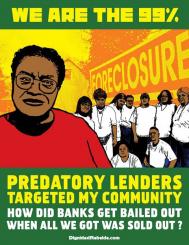
The United States is undergoing a significant racial shift. Massive migration and a demographic transition to a “majority-minority” nation are shifting the meaning of race once again. Is race an illusion or an objective reality? Is American and worldwide structural racism a holdover from an earlier epoch of conquest, empire, capitalism, and slavery–all of which are still racially ordered–or is it a more-or-less permanent means of organizing inequality and domination on both a local and global scale? Why is the race-concept so implacably situated at the crossroads of identity and social structure? How permanent is the “color line”?
Few doubt that the civil rights movement achieved substantial democratic reforms. Putting an end to the state-based and legally sanctioned racial despotism that governed the United States for centuries marked a real, if partial, democratization. Yet the movement failed to uproot the deep structure of racism. Consider: the Civil War ended slavery and killed 750,000 Americans in the process, at a time the national population was less than 50 million. Add to that racial upheaval the brief Reconstruction period that followed the war, and note that even these cataclysmic events could not end racism! So why should we think that the 1960s movement could have accomplished that task, even with the expense of blood, sweat, and tears?
The partial victories of the civil rights movement were achieved by a tactical alliance of mass movements on the one hand and elite national interests on the other, brokered by racial “moderates.” This accommodation to the demands of a mass movement too wide and too deep to be resisted any longer involved more than legislated and judicial reforms. Negotiation, compromise, and political incorporation were also required. So was “elite recruitment” of political and cultural activists and intellectuals, as well as a large-scale cultural reorientation. The civil rights movement made race and racism into far more public matters than they had ever been before, even under slavery and after emancipation. It demonstrated to the world that racism and democracy were incompatible.
Yet in the aftermath of the civil rights reforms, the forces of racial reaction–largely but not only based in the South–also regrouped. The old verities of established racism had been officially discredited, not only in the United States but fairly comprehensively across the globe. While White supremacy had been somewhat shaken, it had hardly been destroyed. The Right Wing therefore attempted to tap into repressed but still strong currents of racism in order to counter the civil rights movement’s egalitarian thrust.
Combining organized political campaigns with the free-floating racism that permeates the United States–in culture, economic practices, spatial segregation, profiling, crime, and punishment, health… the list goes on and on–has undoubtedly increased racial tension. Obama’s presidency is also a more volatile enterprise because of race and racism.
The racial reaction was an uneasy alliance between the New Right and neoconservatives. The New Right cultivated race. Its strategy was born in the campaigns of George Wallace and Richard Nixon; they mobilized “coded” White resentments of Blacks, and later women and gays. Neoconservatism downplayed race by reducing it to ethnicity. Neocons were willing to dispense with the outright institutionalized prejudice and discrimination of Jim Crow. They seized upon the most “moderate” and integrationist dimensions of the civil rights movement. To them, “integration” meant ignoring race: “the content of their character, not the color of their skin,” was their message, adopting Dr. King’s words but not his meaning. In practice, this amounted to a denial of the significance of race in American life.
Reformist Strategies and Structural Change
At its heart, the civil rights movement was a radical democratic initiative. This is what explains its influence beyond its core Black adherents. The New Left, feminism, Black power (and Brown power, Red power, and Yellow power, too), and even the later queer and environmental movements were all influenced by it.
As movement demands were translated into law, they were attenuated through compromise. For example, during negotiations in the Senate over the 1964 Civil Rights Act, centrists (mainly Republicans) approved only weak civil remedies against discrimination, rather than criminalizing it. Since the Democrats were split, civil rights law retains that character.
Black “entrism” into government at all levels, where numerous movement activists won electoral and appointed positions inside local and federal governments, also provided a substantial moderating force. It offered a counter-narrative to more radical demands. Activists who remained outside the state apparatus also acted as mediating forces. Working in community organizations and other NGOs, they provided contacts between state officials and the community. [Full disclosure: this is my background. I come out of 1960s community-based service and advocacy work.] Another moderating force was the middle classes of color who rejected Black power, Brown power, etc. These were the people who stood to gain the most from moderate civil rights reforms.
Civil rights measures were thus a mixed bag. Undeniable victories, such as voting rights and immigration reform, stood alongside many losses, such as activists’ unmet demands for redistributive policies and broader social rights. The assassinations and repression of the 1960s were devastating, especially for more radical groups. Reforms provided a counter-narrative to COINTELPRO and the murder of Panthers, AIM activists, and others, and defused political opposition by permitting the reassertion of a certain broad-based racial stability.
Nonetheless, it is important for those working for social change to recognize that to be “free at last” ultimately means something deeper than the gaining of partial access–principally by favored minority elites–to key social and political institutions. It means more than limited reforms and palliation of the worst excesses of White supremacy. It requires a substantive reorganization of the American social system. It means political implementation of egalitarian economic and democratizing political measures. It means social democracy, “a Marshall Plan for the Ghetto and Barrio,” human rights, and social citizenship for people of color.
It is this last issue–redistribution of resources–that seems to be the dividing line between liberal and radical demands. This is the continuing threat to the right-wing racial regime that continues to rule, even with a Black man in the White House. What threat exactly? That of a working and poor people’s alliance, race-conscious but transracial, and feminist and queer as well. We can see inklings of that “dream” yesterday in the Poor People’s Movement that Dr. King was trying to organize when he was killed, in the peace movement, and today in Occupy.
Beyond Obama Nothing symbolizes the unresolved dilemmas of race more acutely than the election of Barack Obama. A few years earlier, the idea of a Black president appeared to be the stuff of purest fantasy, or at best a Hollywood conceit (see: Chris Rock in “Head of State” or the series “24,” among others). Although the 2008 election briefly appeared transformational, to paraphrase George Clinton, the White House has not yet become a Black House.
Obama is manifestly unable–especially in a chronic recession–to address a severe heightening of racial inequality. Structural racism lives on. The massive increase in Black and Brown incarceration, the growing disparities in Black-White (and Latino-White) inequality, and the resurgent, somewhat race-driven U.S. imperialism in the Middle East and elsewhere, all demonstrate the failure of sustained efforts to institutionalize “colorblindness” as the new racial common sense. In addition, a decades-long series of Supreme Court decisions has attempted with increasing absurdity to redefine racism as a problem chiefly suffered by Whites. The claims of a “post-racial” order were premature.
The Continuing Political Project and the New Coalition
The United States’ Right Wing may speak the language of “colorblindness,” but it unhesitatingly uses race to rule: to manipulate elections, justify foreign wars and nativism, organize repression and incarceration at home, and to assault social and human rights. Racial profiling is not gone; indeed it is more embedded than ever in such arenas as immigration, where all Latino@s are presumed to be undocumented. Profiling is also visible in the “homeland security” targeting of Muslims but not White terrorists like Timothy McVeigh or the White assassins of abortion providers.
There’s resistance out there. Our movement challenges racism mainly through the targets it chooses and the people it mobilizes. Immigration, education, health, incarceration, police violence, labor, and many more issues are being confronted by people at the grassroots, and by community organizations. Movement people and movement groups today have an awareness of racism and a racial diversity that was not present in previous waves of American protest. Occupy, immigrants rights, antiwar, opposition to profiling and police violence, feminist, and queer movements, all have significant anti-racist dimensions.
Occupy has not been sufficiently understood in terms of race. Where Occupy has succeeded, it has directly addressed the needs of poor people and people of color: feeding and talking with the homeless in Zuccotti Park was not easy, but it was vital. Voices of color were heard in the General Assemblies. Resisting foreclosures and evictions and occupying banks have been recognized as anti-racist actions. Occupy is the prototype of a new direct-action, nonviolent, and somewhat anarchist-oriented political approach. It is a radical democratic project. Given that the structural racism at the heart of the Right Wing is fundamentally despotic and anti-democratic, Occupy offers an alternative. Direct democracy must be antiracist.
Activists for racial justice must come to understand race and racism, as well as a wide range of other political themes, as everyday encounters between despotic and democratic practices. As individuals and groups confronted by state power and entrenched privilege, but not entirely limited by those obstacles, we must choose to take part in a constant anti-racist “reconstruction” both of everyday life and of the state itself.
GVSU to host screening of “Transgender Tuesdays” film on November 13
On Tuesday, November 13, the LGBT Resource Center at GSVU will host a screening of the Transgender Tuesdays.
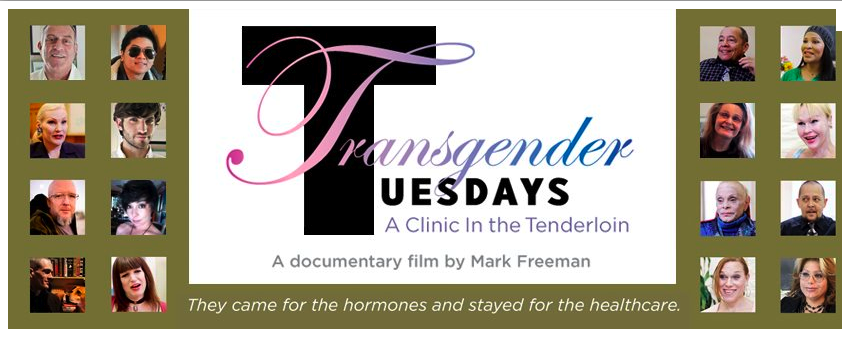
Viewers of the film will hear about the lives of eight of the patients who came to the Transgender Tuesdays clinic starting in 1993. Their stories reach back to some of the “bad old days” of the 1950s, recalling the sexual freedom movement of the 1960s, drug ravages of the ’70s, Women’s and GLB (and finally T) Liberation in the ’80s, and the HIV epidemic and queer activism of the ’90s.
These true tales reveal what transgender life was like over those decades on the streets of San Francisco and around the country — and make it clear that it is still no bed of roses today. Clinic staff and stars of the community make cameo appearances. But it is the lives of these transgender heroes (often unknown even by younger trans folk today) that provide pride in the present and hope for the future.
In addition to the screening, the director of the film Mark Freeman and one of the people featured in the film, Kelly Kelly, will be at the screening and part of a discussion following the film.
Transgender Tuesdays
Tuesday, November 13
4:00PM
GVSU Allendale – 2250 Kirkhof Center, Grand River Room
This event is free and open to the public.
Indigenous Protestors Against Guatemala Energy Company Targeted
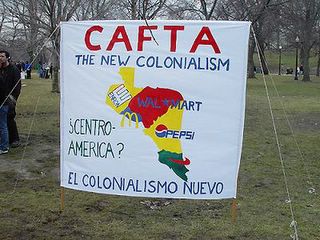
This article by Jennifer Kennedy is re-posted from CorpWatch. Editor’s Note: This most recent violence should take into account the ongoing economic pressures for Guatemala to privatize public services, which is a clear outcome of adopting the Central American Free Trade Agreement with the US in 2006. Also, it should be noted that this type of targeted killing is reminiscent of the 1979 Panzos massacre, which many historians identify as the beginning of the worst years of genocidal violence against the indigenous people of Guatemala.
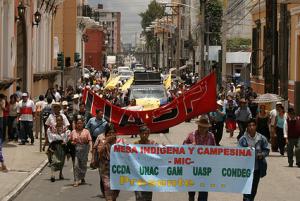
Six demonstrators were killed and dozens injured when the Guatemalan military fired into a group of indigenous Maya-K’iche’ gathered on the Inter-American highway to protest rising electricity charges from Energuate, a major national power company owned by a private equity firm created by the UK government.
The demonstrators, who had gathered on the highway some 170 kilometers west of Guatemala City, were from Totonicapán, one of Guatemala’s most impoverished departments (provinces). Malnutrition is widespread and the price of electricity is prohibitively expensive in the region. The World Bank estimates 75 percent of Guatemalans live in poverty with 58 percent of the population living in extreme poverty.
“We were protesting right next to [the military] when they opened fire on us,” Rolando Carrillo, a 25 year old demonstrator with injuries to his hand and his face that he claimed were sustained during the protest, told the Associated Press news agency. Juana Celestina Batz Puac, another demonstrator, who witnessed the shootings told the Guardian that “our demands need to be listened to … As indigenous people we are consuming their energy, but [Energuate] are getting rich off the people.”
Privatizing Energy in Guatemala
Energuate first came into existence as Unión FENOSA in 1999 when Guatemala privatized the state energy company and established two subsidiaries, Distribuidora de Electricidad de Occidente (DEOCSA) and Distribuidora de Electricidad de Oriente (DEORSA) Following privatization, thousands of consumers filed complaints against Unión FENOSA “about the quality and excessive costs of the service – over 90,000 between January and May 2009 and popular discontent rose,” according to Guatemala Solidarity Network, a UK non-profit.
Indeed monthly energy bills in the region have more than doubled for some customers because of how tariffs are currently set – some rural customers are paying for public street lighting even though they live in areas where there is none. Excessive electricity charges are affecting “the fragile financial situation of the indigenous and rural population of Totonicapán,” stated the mayors of the 48 communities in Totonicapán in a press release dated October 4, the day of the killings.
Unión FENOSA was acquired by UK-based Actis Capital LLP, a private equity firm, when it bought a majority stake in the company in May 2011 from its Spanish owners. Actis then renamed the company Energuate, stating that it “looks forward to building upon the work of FENOSA and delivering a world class service to customers while operating to the highest environmental, safety, and governance standards.”
Actis itself has roots in the Commonwealth Development Corporation (CDC), a UK government entity that was created in 1948 to invest in developing economies, following the retreat of the British empire from many of its colonies. The Actis private equity arm was set up by CDC in 2004 with UK government money.
It was fully privatized in May 2012 by Andrew Mitchell, the UK Secretary of State In charge of international development at the time. (The sale netted the taxpayer £8.37 million or $13.4 million plus as much as £62 million in future profits)
Trade Unionists Killed
Activists have been targeted in acts of violence and impunity that have plagued Guatemala for many years, even though a 36 year civil war in Guatemala between the government and a variety of leftist rebel groups supported by indigenous communities and poor farmers officially came to an end with the signing of the 1996 peace accords. “On terms of impunity of the wealthy and powerful sectors linked to the economic elite and the military, fundamentally little has changed since the 1954 military coup,” Grahame Russell, a Guatemala expert at Rights Action, a U.S. based human rights group, told CorpWatch.
For example, in 2010, Friends of the Earth called for international solidarity in the wake of three assassinations of activists in San Marcos, a department neighboring Totonicapán, who were “believed to have been shot for their work in exposing the abuses against the population committed by DEOCSA.” Just two months after Actis acquired Union FENOSA, Lesbia Xurup, a 33 year old trade unionist, member of Communities in Resistance against Unión FENOSA, and active against alleged company abuses, was hacked to death on July 21, 2011 with a machete.
Union leaders in the UK have reacted strongly to these incidents. The UK General Union (GMB) called on Actis to take action regarding Xurup’s assassination. “Tragically Guatemala is now the second most dangerous country in the world in which to be a trade unionist,” said Brendan Barber, the general secretary of the Trade Union Congress (TUC) in the UK.
The source of these violence acts has been hard to verify. But the direct role of the Guatemalan military in the October 4 killings of Maya-K’iche’ has struck fear in the hearts of many Guatemalans who recall the civil war years. In reaction to last month’s violent protest, Energuate told the Guardian that the company was not responsible for bringing about the conflict and shifted responsibility to the government for the high electricity rates.
“Very distressed by these recent incidents. Like others, we believe that the current system of paying for street lighting through a flat charge on customers’ energy bills is unfair,” Actis told the newspaper. “We continue to lobby the Guatemalan government to change it. Actis made a significant investment in the energy sector in Guatemala in May 2011. We are committed to providing high quality reliable electricity to customers at the right price.”
An investigation into the events of October 4 is underway. So far Juan Chiroy Sal, an army colonel, together with eight soldiers have been arrested and charged with the Totonicapán killings. But the violence continues: on November 1, Mario Itzep of the National Indigenous Observatory, who filed a lawsuit with the Prosecutor’s Office for Human Rights against the military for the massacre, said two men on a motorbike opened fire on him in Guatemala City.
Fracking and Radioactivity
This article by Karl Grossman is re-posted from CounterPunch.
Fracking for gas not only uses toxic chemicals that can contaminate drinking and groundwater—it also releases substantial quantities of radioactive poison from the ground that will remain hot and deadly for thousands of years.
Issuing a report yesterday exposing major radioactive impacts of hydraulic fracturing—known as fracking—was Grassroots Environmental Education, an organization in New York, where extensive fracking is proposed.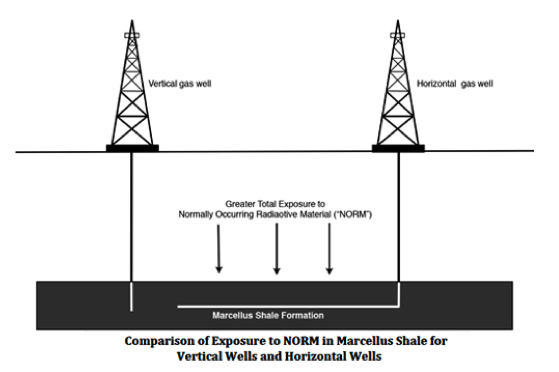
The Marcellus Shale region which covers much of upstate New York is seen as loaded with gas that can be released through the fracking process. It involves injecting fluid and chemicals under high pressure to fracture shale formations and release the gas captured in them.
But also released, notes the report, is radioactive material in the shale—including Radium-226 with a half-life of 1,600 years. A half-life is how long it takes for a radioactive substance to lose half its radiation. It is multiplied by between 10 and 20 to determine the “hazardous lifetime” of a radioactive material, how long it takes for it to lose its radioactivity. Thus Radium-226 remains radioactive for between 16,000 and 32,000 years.
“Horizontal hydrofracking for natural gas in the Marcellus Shale region of New York State has the potential to result in the production of large amounts of waste materials containing Radium-226 and Radium-228 in both solid and liquid mediums,” states the report by E. Ivan White. For 30 years he was a staff scientist for the Congressionally-chartered National Council on Radiation Protection.
“Importantly, the type of radioactive material found in the Marcellus Shale and brought to the surface by horizontal hydrofracking is the type that is particularly long-lived, and could easily bio-accumulate over time and deliver a dangerous radiation dose to potentially millions of people long after the drilling is over,” the report goes on.
“Radioactivity in the environment, especially the presence of the known carcinogen radium, poses a potentially significant threat to human health,” it says. “Therefore, any activity that has the potential to increase that exposure must be carefully analyzed prior to its commencement so that the risks can be fully understood.”
The report lays out “potential pathways of the radiation” through the air, water and soil. Through soil it would get into crops and animals eaten by people.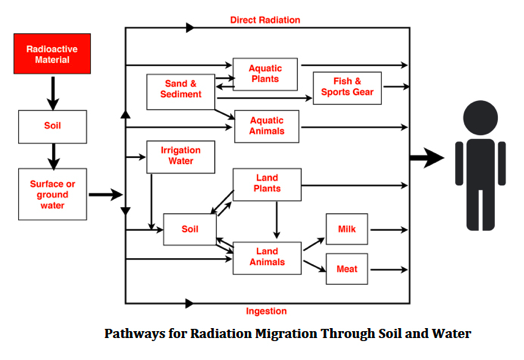
Examined in the report are a 1999 study done by the New York State Department of Environmental Conservation “assisted by representatives from 16 oil and gas companies” on hydrofracking and radioactivity and a 2011 Environmental Impact Statement the agency did on the issue. It says both present a “cavalier attitude toward human exposure to radioactive material.”
Radium causes cancer in people largely because it is treated as calcium by the body and becomes deposited in bones. It can mutate bones cells causing cancer and also impact on bone marrow. It can cause aplastic anemia—an inability of bone marrow to produce sufficient new cells to replenish blood cells. Marie Curie, who discovered radium in 1893 and felt comfortable physically handling it, died of aplastic anemia.
Once radium was used in self-luminous paint for watch dials and even as an additive in products such as toothpaste and hair creams for purported “curative powers.”
There are “no specific treatments for radium poisoning,” advises the Delaware Health and Social Services Division of Public Health in its information sheet on radium. When first discovered, “no one knew that it was dangerous,” it mentions.
White’s report, entitled “Consideration of Radiation in Hazardous Waste Produced from Horizontal Hydrofracking,” notes that “radioactive materials and chemical wastes do not just go away when they are released into the environment. They remain active and potentially lethal, and can show up years later in unexpected places. They bio-accumulate in the food chain, eventually reaching humans.”
Under the fracking plan for New York State, “there are insufficient precautions for monitoring potential pathways or to even know what is being released into the environment,” it states.
The Department of Environmental Conservation “has not proposed sufficient regulations for tracking radioactive waste from horizontal hydrofracking,” it says. “Neither New York State nor the Nuclear Regulatory Commission would permit a nuclear power plant to handle radioactive material in this manner.”
Doug Wood, associate director of Grassroots Environmental Education, which is based in Port Washington, New York, and also editor of the report, commented as it was issued: “Once radioactive material comes out of the ground along with the gas, the problem is what to do with it. The radioactivity lasts for thousands of years, and it is virtually impossible to eliminate or mitigate. Sooner or later, it’s going to end up in our environment and eventually our food chain. It’s a problem with no good solution—and the DEC is unequipped to handle it.”
As for “various disposal methods…contemplated” by the agency “for the thousands of tons of radioactive waste expected to be produced by fracking,” Wood said that “none…adequately protect New Yorkers from eventual exposure to this radioactive material. Spread it on the ground and it will become airborne with dust or wash off into surface waters; dilute it before discharge into rivers and it will raise radiation levels in those rivers for everyone downstream; bury it underground and it will eventually find its way into someone’s drinking water. No matter how hard you try, you can’t put the radioactive genie back into the bottle.”
Furthermore, said Wood in an interview, in releasing radioactive radium from the ground, “a terrible burden would be placed on everybody that comes after us. As a moral issue, we must not burden future generations with this. We must say no to fracking—and implement the use of sustainable forms of energy that don’t kill.”
The prospects of unleashing, through fracking, radium, a silvery-white metal, has a parallel in the mining of uranium on the Navajo Nation.
The mining began on the Navajo Nation, which encompasses parts of Arizona, New Mexico and Utah, during World War II as the Manhattan Project, the American crash program to build atomic weapons, sought uranium to fuel them. The Navajos weren’t told that mining the uranium, yellow in color, could lead to lung cancer. And lung cancer became epidemic among the miners and then spread across the Navajo Nation from piles of contaminated uranium tailings and other remnants of the mining.
The Navajos gave the uranium a name: Leetso or yellow monster.
Left in the ground, it would do no harm. But taken from the earth, it has caused disease. That is why the Navajo Nation outlawed uranium mining in 2005. “This legislation just chopped the legs off the uranium monster,” said Norman Brown, a Navajo leader.
Similarly, radium, a silvery-white monster, must be left in the earth, not unleashed, with fracking, to inflict disease on people today and many, many generations into the future.
Immigration Rally forces Gov. Snyder to set up a meeting about driver’s license policy and other immigrant rights issues
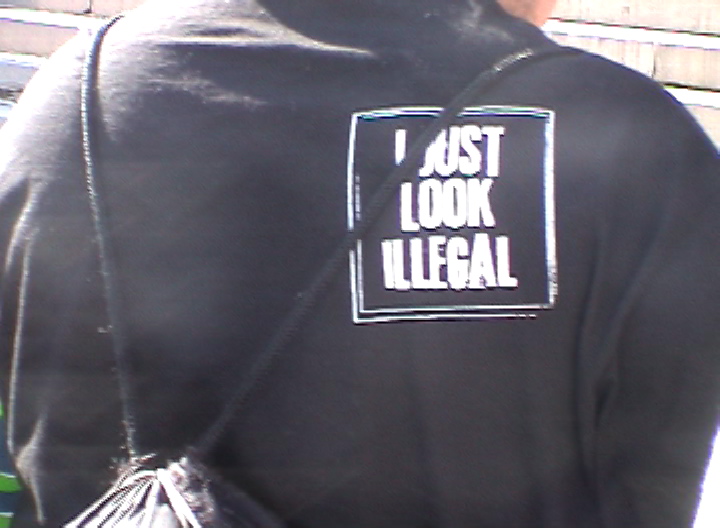
Earlier today, about 250 people from all across Michigan descended on the State Capitol in Lansing to protest the policy of denying undocumented immigrants the opportunity obtain a Michigan driver’s license.
Young immigrants and their supporters gathered on the steps of the State Capital to call on Secretary of State Ruth Johnson and Governor Snyder has announced that she will not issue drivers licenses to students granted work permits under President Obama’s DREAM Relief or Deferred Action for Childhood Arrivals program. At least two bus loads came from Grand Rapids alone.
The rally featured several speakers, but most of them were young Latinos/as who gave personal testimonies about the hardship these anti-immigration policies have caused them. However, the students spoke with passion and had solid analysis about why these policies are wrong.
Here is a video of 2 young Latina women and one Latino talking about their experiences and calling out the government for the oppressive policies that impact immigrants.
After people listened to speakers, the group was encouraged to enter the Capitol building and demand a meeting with Governor Snyder and Secretary of State Ruth Johnson.
Nearly everyone who attended the rally went in to the capitol building, up two floors and began chanting in the rotunda. At one point a group of grade school students walked past the crowd chanting, with expressions on their faces like they had never seen anything like this before.
Someone from Snyder’s office eventually came out to tell the crowd that he was across the street. Immediately the crowd announced they would leave the building and see if they could confront Snyder across the street. You can see from this footage people chanting in the rotunda and then in front of the government building across the street.
After about 50 people got inside the George Romney building, security guards showed up all in a panic and finally agreed to allow a delegation from the rally to go speak with someone from Snyder’s office.
While the delegates meet with the Governor’s office, people continued to march, chant and use the time to talk about next steps and network with dreamers across the state.
After about 45 minutes the delegates came down and told the crowd that the Governor’s office listened to their concerns and agreed to another meeting in the next few weeks to discuss policy issues related to driver’s licenses and other immigration rights. Ryan Bates, with Alliance for Immigration Rights and Reform, asked the crowd if they could commit to meeting with local legislators and if they would be willing to come back to Lansing for another rally when the next meeting was confirmed with Snyder’s office. The crowd let out a resounding yes.
While the rally was very inspiring, since it was organized mostly by young Latinos/as, this writer finds it hard to believe that either the Snyder administration or the Obama administration will be sympathetic to their demands. Both have demonstrated nothing but contempt for immigrant rights and the Obama administration has deported more undocumented immigrants in his first four years than the Bush administration had in eight.
Victory! – for the Non-Resistance
This article by Glen Ford is re-posted from Black Agenda Report.
“Get Away Sandy – God and Obama Will Save Us” read the graffiti, scrawled man-high on a cinderblock wall in the majority Black town of Plainfield, New Jersey. It is an apt articulation of African American politics as we descend into the First Black President’s second term.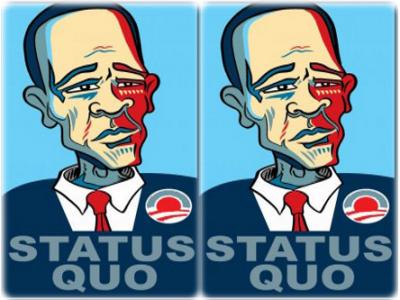
Black folks may or may not have a prayer, but they certainly don’t have any earthly influence on the direction of the nation or on a president for whom they gave near-unanimous support, while asking nothing in return.
Wait a minute! I’m hearing echoes of…a familiar voice:
“We have learned that Black politicians and activist-poseurs have an infinite capacity to celebrate not having engaged in struggle with Power, and that the Black masses can be made drunk by the prospect of vicariously (through Obama) coming to power.” – Black Agenda Report, “The Obama ’08 Phenomenon: What Have We Learned?” November 4, 2008.
As Marx said, history repeats itself, “first as tragedy, then as farce.” Independent Black politics, rooted in the historical African American consensus on social justice, racial equality and peace, definitively collapsed, after a long illness, with the first Obama presidential campaign. The tragedy was compounded, exponentially, by the timing, coinciding with capitalism’s greatest crisis since the Great Depression. The autumn of 2008 was an historical juncture for the nation and the world. Either the people would erect structures to protect themselves from being crushed under the dead weight of a system in terminal decay, or the Lords of Capital would swallow the State whole, and buy themselves some time.
African Americans, the most politically volatile and left-oriented U.S. constituency – a people specifically targeted by Wall Street’s machinations – had an historical role to play. “The man STRUCK,” said Frederick Douglass, “is the man to cry out.” But Black folks had already been struck silly with Obama’Laid.
The rulers had, at long last, found our Achilles Heel, the weakest spot in African Americans’ political armor. Our reflexive racial solidarity (actually, an aspect of Black nationalism), which had served us so well, for so long, short-circuited our progressive political instincts. We became fodder for Obama, the slicker-than-Slick-Willie corporate guy with the brown face.
Despite his background, Obama knew enough about African Americans to pay us no attention and less respect. There would be no penalty. Black folks had convinced themselves that Obama needed our protection; it never occurred to most of us that we needed protection from him – not during the primaries, when he praised Ronald Reagan’s reaction to the “excesses” of the Sixties, or when he refused to endorse even a voluntary halt to home foreclosures (while Hillary Clinton and John Edwards endorsed “voluntary” and mandatory moratoriums, respectively); not in the last weeks before his inauguration, when Obama announced that Social Security, Medicare, Medicaid and all “entitlements” would be “on the table” for chopping under his administration.
Instead, a million Black folks gathered on the National Mall for what we at BAR called “The Great Black Hajj of 2009,” a pilgrimage, as if to Mecca, in celebration of Obama’s ascension. There, he proclaimed to the multitudes: “In the words of Scripture, the time has come to set aside childish things.”
Dutifully, Black folks set aside the last vestiges of their vaunted distrust of Power. Henceforth, African Americans would consider themselves as a Palace Guard – the antithesis of independent political actors. Thus was Obama empowered to become the “More Effective Evil.”
With little resistance on the Left, and virtually none from organized Black America, Obama has worked miracles for the resuscitation of the Lords of Capital and their imperial apparatus – feats that only a Black corporate Democrat could accomplish. After saving George Bush’s bank bailout in October of 2008 (it passed only after candidate Obama’s intervention), Obama undertook the historic mission of placing the U.S. State at the total disposal of finance capital. Under Obama’s watch, the Treasury Department and, especially, the Federal Reserve have funneled at least $16 trillion to Wall Street and its foreign annexes – a sum greater than the national GDP. The “free money” window at the Federal Reserve has become a permanent fixture of the global financial order, permanently blurring the lines between the U.S. state and international finance capital. Obama has embedded the state into the banks, and vice versa, in ways that cannot be undone without causing the system to collapse. In a very real sense, the “good faith and credit” of the United States has become a collective corporate asset of the Lords of Capital – an outcome that fits the classic structural description of fascism. No Republican could have delivered the state apparatus so effectively to the banks – there would have been fierce resistance from within the Democratic base, as well as libertarian Right. But Obama has proven to be the more effective facilitator of the bankers’ state.
Social Security was untouchable – until Obama laid his hands on it. Beginning with his pre-inauguration pronouncements on entitlements, Obama has been the guiding hand of an austerity offensive that did not exist on Election Day, 2008. Instead, Obama made deficit reduction his own priority, at a time when pundits were saying obituaries over the GOP. (Much as they are, today.) The Black Democrat appointed the Right-weighted Deficit Reduction Commission to promulgate a $4 trillion blueprint for austerity, a formula that matched Republic proposals in 2011. The blueprint would have been the basis for Obama’s cherished Grand Bargain had the GOP not balked at “modest” taxes on the rich – levies that are irrelevant to those who will lose their programs under the axe. Obama is the more effective austerity president – if the Republicans will just let him work his show.
Imperial aggression has never fared better than under the opposition-less Obama. At one point, he was bombing five countries simultaneously, pretty good work for a Nobel Peace Prize winner – or did the prize help empower him to such heights of bellicosity? His ever-evolving “Kill List” includes not only individuals of all nationalities (including our own) but also any country whose government is inconvenient to the United States. With “humanitarian” jargon as his only justification, President Obama has attempted to render international law a dead letter. No nation has any rights that he feels bound to respect. Obama, with his drone armadas and multiplying Special Forces troops, represents a far greater threat to global civilization – which must be rooted in law! – than the failed conquerer George Bush (who actually negotiated the U.S. withdrawal from Iraq). Unlike Bush, Obama has promulgated his own, novel doctrine of war, which declares that wars only exist when sufficient numbers of Americans become casualties. Under this construct, Libya was not a war, and the possibilities for U.S. non-war depredations are endless.
Preventive detention is the crown jewel of Obama’s presidential exceptionalism. Statutory authority to imprison Americans without charge or trial was beyond Bush’s reach, and he knew it. But Obama guided a bill through the Congress with very little Democratic opposition. He is the more effective secret police warden.
Now Obama has won another “mandate,” which he will use to finish the projects he started: wider wars, a more profound government subservience to finance capital, and that “new legal architecture” on national security that he warned about on the Daily Show, a few weeks ago. He looks forward to fulfilling his austerity dreams early in his new term: “I am absolutely confident that we can get what is the equivalent of the grand bargain that essentially I’ve been offering to the Republicans for a very long time.”
The non-resisters have won a non-victory against an unimpressive enemy, while the more effective evil plots new atrocities.
You will note that I have not specifically mentioned Black folks since the beginning of this article; that’s because African Americans have made themselves irrelevant – not just for the second Obama presidency, but possibly deep into the future. “Power concedes nothing without a demand,” and Black folks have failed to demand even elementary respect from this president, much less concrete programs, or peace. Obama isn’t the only one who has noted Black ineffectuality. Until an independent African American politics and political movement can be rebuilt, there is no reason for a president or Congress to pay “the Blacks” any more attention than Obama did.
Anti-fracking forum to be held in Allegan on Monday, November 12
Several organizations are hosting an informational forum on Monday to address the growing problem of fracking in Michigan.
Michigan Land, Air, Water Defense & Citizens Against Drilling on Public Lands with support from FLOW and Food & Water Watch are hosting the forum with speakers who will address a variety of tactics people can use to stop and possibly ban the practice of hydraulic fracturing in Michigan.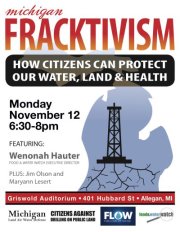
Calling the event “Michigan Fracktivism,” the organizations want people to not only know what the consequences of fracking will be for Michigan, but how they can be part of an effort to stop it.
The Facebook event page says:
Please join us for an evening focused on the topic of fracking and how we can stop it here in Michigan. Hear from experts in law, media and organizing for a workshop-meets-forum-meets-presentation event!
Attendees will have the opportunities to hear about legal strategies, media & organizing your community from renowned speakers!
Michigan Fracktivism
Monday, November 12
6:30 – 8:00PM
Griswold Auditorium – 401 Hubbard Street, Allegan, MI
This event is free, light refreshments will be served.
Where did the GR elite spend their money in the 2012 elections?
Well, it’s finally over. One thing we can say about the 2012 elections is that they were the most expensive ever, with roughly $2 billion dollars spend on the Presidential race alone and that is without the last few weeks of the spending being accounted for yet.
Billions more were spent on Congressional and Senate races, with nearly $20 million spent in the race in Michigan between Debbie Stabenow ($14 million) and challenger Pete Hoekstra ($5 million).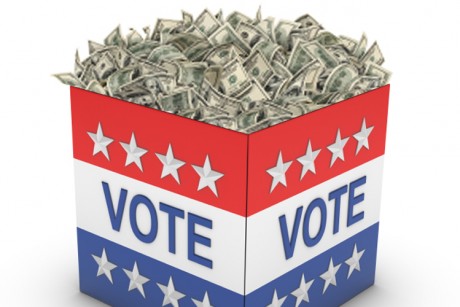
However, what is interesting to look at is how the economic elite from Grand Rapids spent their money in the most expensive US election ever. When we say GR elite, we are referring to some of the same people identified in a September posting that provided what we called a Grand Rapids Power Analysis.
Many of the local elites have residence in the 49503 zip code area and according to the Center for Responsive Politics, the 49503 zip code also set a record for money contributed to candidates or political parties in the 2012 Election cycle. The total money spent from the 49503 zip was $1,556,252.
According to the Center for Responsive Politics this amount contributed from zip code 49503 was 28 times as much as the average zip code area. The average for zip code areas spent on buying influence is $54,969.
The top contributors from 49503 are people we have identified as part of the local ruling class, people with economic wealth who also influence policy is a variety of ways. Most of them own businesses, are CEOs, sit on board(s) of directors or are part of organizations such as the Grand Rapids Chamber of Commerce, the Econ Club of Grand Rapids, The Right Place Inc., Grand Action and the West Michigan Policy Forum.
The top financial contributors from zip code 49503 are several members of the DeVos family, such as Doug DeVos, President of Amway/Alticor. According to the data Doug DeVos contributed $68,300 to several Republican National committees and some directly to Mitt Romney’s campaign.
Another member of the DeVos family, Dick DeVos contributed $82,300 in 2012, mostly to the Republican National Committee and the Republican Party of Michigan. Combined with other members of the DeVos family who claim residency in the 49503 zip, the collectively gave over half a million dollars, mostly to the Republican Party or candidates like Mitt Romney and Justin Amash.
Another resident from 49503 who is part of the local elite is Peter Secchia. According to Open Secrets, Secchia contributed $66,600 in the 2012 election cycle. Like the DeVos family members, he also gave to the Republican National Committee and Mitt Romney.
Another member of the local elite is Michael Jandernoa, business owner who sits on the boards of the Van Andel Institute, Grand Action and the West Michigan Policy Forum. Jandernoa contributed $160,000 to the Republican Party and Republican candidates in this most recent election cycle.
In the 49506 zip code area Crystal Flash owner Tom Fehsenfeld contributed $40,800 to the Democratic Party and Debbie Stabenow. Another 49506 resident Mark Murray (Meijer), contributed $71,100 to the Republican Party, Mitt Romney and Fred Upton.
From the 49546 zip code there was a sizeable amount contributed. For example, former Calvin College President Gaylen Byker, contributed $44,300 to the Republican National Committee, the Michigan Republican Party and Justin Amash.
Another member of the local elite, CEO of Autocam John Kennedy, was a major contributor. According to Open Secrets, Kennedy contributed $323,850 is the 2012 election cycle to CatholicVote.org, Restore Our Future, the Republican National Committee, Republican Party of Michigan, Pete Hoekstra, Justin Amash and Mike Rogers. Kennedy also sits on the boards of the Right Place Inc., the Van Andel Institute and the Acton Institute.
David Frey, with the Frey Foundation, contributed $92,550 during the 2012 election cycle. He directed his money towards the Republican Party, Mitt Romney, Justin Amash, Tim Walberg and Pete Hoekstra. Frey is also part of Grand Action.
This is just a sampling of the local power elite and how they try to influence electoral politics. While one could argue that the Republicans did not win the White House, they did retain control of the Michigan House of Representatives and the 2nd and 3rd Congressional districts are still held by Republicans. Also, it should be noted that all of the state ballot proposals in Michigan opposed by the reactionary right and the business community were defeated, except for Proposal One. Either way in the two-party dominated system we have big money wins, since the Democrats also relied on wealthy individuals and corporations to win or maintain the seats they held in the 2012 election.

