Neo-Liberalism and the Defanging of Feminism
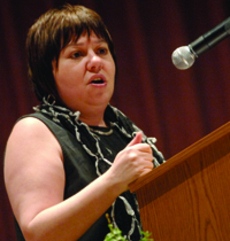
Gail Dines is a feminist, activist and the author of numerous books, most recently PornLand: How Porn Has Hijacked Our Sexuality.
In this lecture entitled Neo-Liberalism and the Defanging of Feminism, Dines provides an important and sharp critique of the state of feminism, a critique of capitalism through a feminist lens and a look at the pornography industry as one manifestation of the wedding between capitalism and patriarchy.
Dines is also one of the founders of the group, Stop Porn Culture, which provides resources and training material for people who want to both understand the pornography industry and confront it.
How Mass Incarceration Affects Everything Else
This article by Margaret Kimberley is re-posted from Black Agenda Report.
The United States is the imprisonment capital of the world. Just one state, Louisiana, has an incarceration rate 5 times higher than Iran and 13 times higher than China, nations which Americans are supposed to feel superior to. More than 2 million Americans are behind bars in jails and prisons, which is the highest on earth in total number and by percentage of population.
The phenomenon we now know as mass incarceration began in the early 1970s and has steadily increased since. In this country minor infractions result in prison terms and an ever increasing number of offenses are added to the list. Black people are a minority of Americans but make up fully half of the imprisoned population, and most of those were convicted of non-violent crimes.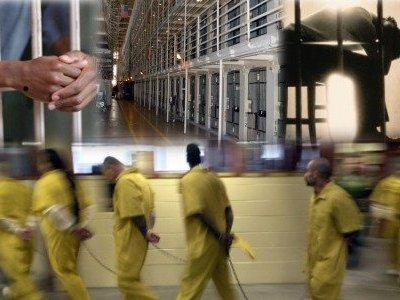
Imprisonment was and is seen as a tool to keep black people from fully realizing their gains made in the 1960s. It was no longer legal to keep black people from living where they wanted, getting jobs they were qualified to get or preventing them from going to the polls. It was possible to put people in jail for any and every offense, however. People can’t compete for good jobs or agitate for their rights if they are in jail. Problem solved.
The toll that mass incarceration has taken on black people is enormous. A newly published book entitled Invisible Men: Mass Incarceration and the Myth of Black Progress gives the facts and figures behind the crime committed against black people. Prisoners are disappeared persons who are removed from census figures, who lose their voting rights, and who upon gaining their freedom are banned from entire categories of employment. According to author Becky Pettit, statistics about black people cannot be trusted because incarcerated men aren’t included in them.
Every negative statistic that bedevils the black community is tied to the awful effects of imprisonment. It is not mysterious that a group with large numbers of its members locked away would have higher rates of HIV or lower rates of marriage or a median net worth of only $4,955.As Invisible Men so clearly points out, the large numbers of black men who are behind bars and who therefore disappear from productive life means that these dismal statistics would be even worse if the incarcerated were not also disappeared from the numbers.
Invisible Men is just the latest in a series of books such as The New Jim Crow and A Plague of Prisons which reveal the terrible toll that incarceration is taking on the black community. These works are seriously needed, documenting with hard data the depth of the attack on black people. Unfortunately, this plethora of books doesn’t seem to be lowering rates of incarceration. The great recession and its resultant budget constraints around the country have been the only thing forcing some states and municipalities to open up some of the prison doors.
It all may have started slowly, but the code words and race baiting were evident from the beginning. Terms like “law and order,” “war on drugs,” “dead beat dads” all meant that more and more black people would end up behind bars for infractions big and small. Yet it must be pointed out that code words exist for a reason. They speak with a nudge and a wink to the intended audience in a language that others may not understand.
There is a nagging question about these statistics, an elephant in the room as it were. America could not have become the world’s prison capital if a majority of the population didn‘t want it to happen. A recent poll regarding New Yorkers’ attitudes toward the NYPD stop and frisk policies shows a clear racial divide. Most whites polled, 55%, think that stop and frisk is acceptable while only 35% of blacks are supportive.
It isn’t surprising that the victims of police abuse are more likely to oppose it, but that shouldn’t stop the non-victims from opposing it too. Stop and frisk, like imprisonment, assures many white people that black people will be locked up far away from them, or at the very least will be sufficiently inconvenienced that they will not be able to compete for any benefits which society might offer. In the case of stop and frisk the victimized population may just decide to leave town for good and take themselves out of sight and out of mind.
This is the challenge of discussing not only mass incarceration but many other issues too. Black people suffer as a direct result of conscious and unconscious thinking on the part of white people. Some of those New Yorkers who will tell a pollster that stop and frisk is acceptable would not admit to harboring racist thoughts, but their reticence in owning up to those feelings doesn’t change the fact that their desires hold sway in public policy making. Stop and frisk would end immediately if enough white people wanted it to.
The wave of scholarship on incarceration is all to the good but it isn’t enough if it doesn’t address the why behind the numbers. Black people have a history of seeing political victories turn pyrrhic. The backlash against black progress is an old story that keeps repeating itself and mass incarceration is just the latest manifestation. The next steps must include ways of honestly addressing the fact that racism is at the root of almost every crisis facing black people. If this simple fact isn’t addressed, all of these excellent books and studies will in fact be irrelevant.
GVSU to host screening of A People’s History of the LGBTQ Community in Grand Rapids on October 11 for National Coming Out Day
Almost a year after the premier screen of this film, GVSU will host a screening on the Allendale campus about the struggle for justice by the LGBTQ community in West Michigan.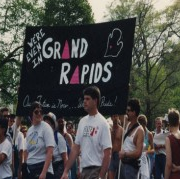
The LGBT Resource Center is proud to be a co-sponsor along with GVSU’s Kutsche Office of Local History, the College of Education and the Liberal Studies Department.
After the screening there will be a discussion, facilitated by GVSU faculty and staff who were part of the LGBT struggle in Grand Rapids and on the campus of GVSU.
The screening is free and open to the general community and the GVSU campus. For those who cannot make the screening, you can watch the film online and view on the archival materials.
A People’s History of the LGBTQ Community in Grand Rapids
Thursday, October 11
6:00PM
GVSU Allendale Campus – Kirkhof Center 2204 Pere Marquette

Yesterday, we sat down with Kate from the Heritage Clinic for Women to talk about their 40 Days of Choice Campaign.
The 40 Days of Choice Campaign began several years ago in response to the anti-abortion campaign known as 40 Days for Life. People can make monetary and other pledges online to provide needed support for women as they make difficult decisions. You can support the work of the Heritage Clinic for Women and join the 40 Days of Choice Campaign by going to their Facebook page.
During the interview with Kate, we also talked about the current political climate and the legislative attacks against reproductive rights, the larger socio-economic factors surrounding women’s reproductive rights and the changes she has seen in recent years because of the economic crisis.
New Evidence Confirms That Fracking Endangers Groundwater
This article by Sue Sturgis is re-posted from Znet.
The U.S. Geological Survey released two reports this week confirming that fracking for natural gas has led to groundwater contamination — a fact that has been contested by the industry.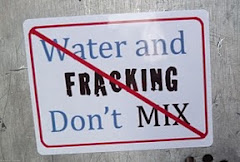
The USGS results are consistent with earlier findings by the Environmental Protection Agency that contamination from fracking had seeped into monitoring wells near gas drilling operations in Pavillion, Wyo., a rural community within the Wind River Indian Reservation. The contaminants detected include methane, ethane, diesel compounds and phenol, a known neurotoxin.
The driller involved in the operations being monitoring is Encana, a Canadian company that is one of North America’s largest natural gas producers. Its U.S. subsidiary operates in Colorado, Louisiana and Texas as well as Wyoming.
Released last December, the EPA’s draft report on the Pavillion wells was the first time the U.S. government linked fracking to groundwater contamination.
Encana has argued that the contaminants are naturally occurring. However, Rob Jackson, an environmental scientist at Duke University in Durham, N.C., told Bloomberg News that the stray gas concentrations are very high, which “suggests a fossil-fuel source for the gases.”
The findings have important implications for North Carolina, where regulators are just beginning to write rules governing the controversial drilling practice. Today the state’s Mining and Energy Commission meets to choose a chair, and Lee County Commissioner Jim Womack, the frontrunner for the job, recently dismissed concerns that fracking endangers the state’s water supplies, WRAL reports:
“You’re more likely to have a meteorite fall from the sky and hit you on the head than you are to contaminate groundwater with fracking fluid percolating up from under the ground. It hasn’t happened.”
The EPA has advised residents in the Pavillion area against using their well water for cooking or drinking.
Earlier today I sat down with poet/activist Staceyann Chin, who is the featured speaker at the GVSU Take Back the Night event on the Allendale campus. I interviewed Chin at her hotel room, where she was resting with her 8-month old daughter Zuri-Siale.
I had been listening to her spoken word on YouTube videos in recent days and was amazed at her skill with words, her passion and her insights into the human condition. I was even more impressed with her in person, since she was able to respond to my questions, while giving full attention to her daughter during the interview.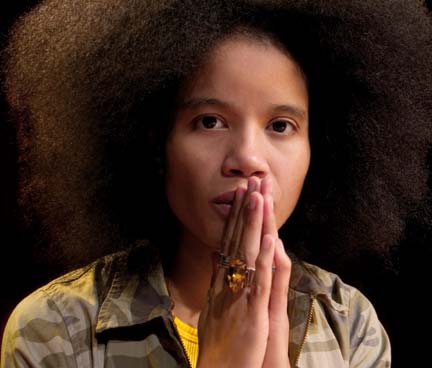
GRIID – I was reading your Facebook page earlier today and noticed that you stated that you yourself are a victim of rape. You also said that the only shame that should be felt, “belongs to the fucking coward who attacked you!” How has your own experience as a survivor informed your work as an artist and as a human being in general?
Staceyann – When you have experienced sexual assault or rape or some form of violation, you understand the problem differently. When I speak about my own experience, it is easier for other women to feel solidarity. This lived experience resonates with survivors.
People can perceive you as a survivor. Your body becomes an example of someone who has kept breathing. Every time I speak out about it, I become less afraid and I take back power from my attacker. My speaking re-affirms the fact that you can keep breathing, living, loving and laughing. The trauma brought about by the assault need not cripple you, in ways that makes you feel alone, like when you are not part of a community of survivors. When I speak out against rape, I feel a kind of uplifting.
We live in an age when the first person narrative is both powerful and provocative. It means a great deal to women to hear or read that kind of personal narrative. It is important because so much of media, particularly TV, will not say things like rape and when they do it is always very clinical or in very legalistic terms. We don’t get from media a more honest sense of rape, the way it feels, the way I felt, the sounds and the smells that come with it. So for me, I have to speak out about it all the time.
GRIID – The Take Back the Night event will be an indoor event tonight, which is different from its origin as a more confrontational action that took place outdoors, often in the streets where women were assaulted. Those Take Back the Night actions were meant to demonstrate women’s collective power, but also to send a message to rapists that their actions would not be tolerated. It seems that the Take Back the Night events have become less political and radical. What is your sense of this?
Staceyann – The change in Take Back the Night might also be a larger reflection of what has happened to feminism as well over the years. Feminism has to some degree been driven indoors. Women were reclaiming their bodies in the 1960s and 70s, but since female identities are so prescribed there is less emphasis on taking control of our bodies. As a feminist who loves bacon, who shaves her arm pits and doesn’t wear heels, I always get people questioning how can I be a feminist and……

The change with Take Back the Night also has something to do with feminism being under attack, where people are saying we don’t need to study gender anymore. Hell, even women’s centers are closing or are near to closing because of a lack of funds. What has happened to Take Back the Night is a reflection of what has happened to feminism in general. The confrontational edge has somehow been lost. Feminism used to be about smashing open doors and now it seems more “diplomatic.”
This is really important, especially since we have politicians talking about “legitimate rape,” which invites the notion that there is illegitimate rape. We have lost that “take no prisoners” edge. We lose some of the power that made us warriors. The current climate may open a whole new wave of action, but we need to take feminism back to the streets. We need to be more visible and demand that society look more closely at the safety of women’s bodies, even little girls’ bodies. Being a new mother has only underscored the need to fight in this struggle. I am in it for the long haul, but having a child means that there is no way I will let anyone harm her, even if I have to use force. The way I see it is if every woman in every part of the world said that rape will end tomorrow or else, you might see a serious change.
GRIID – I saw in one of the YouTube videos you talking about how when White men were involved in Act Up, it was because it affected them, but when people of color are dying of AIDS at a much higher level all of a sudden these White men are not to be found. As someone who identifies as a Lesbian, feminist from Jamaica, how important is it for those involved in struggles to see the intersectionality of justice issues?
Staceyann – If I am only concerned with my body, then that struggle is selfish. If I am only interested in my own rights, people will see how selfish that is. If I am only concerned about Black rights, even at the expense of others, then that is a major problem.
We have to be concerned about the community as a whole. There are poor White, Black, immigrants, women, all kinds of people who are being dispossessed of freedom. Until I am concerned about the global community, then what we are rallying for is to ask permission from the current gate keepers. We should be knocking down the wall instead of asking for permission to the same rights that everyone should have. If we knock down the walls then everyone will have access to the same big, beautiful garden. This is the kind of world I want to fight for and this is the kind of struggle we should be in.
Editor’s note: Since Staceyann Chin is a spoken word artist, it is important that you hear her, so we included a YouTube video of her talking and then reading some of her work.
Notes from OKT’s 2011 Bicycle Tour of Fruit and Nut Trees
 This week’s tour and more:
Thursday Oct. 5:
OKT Tree-mapping Workshop with Lee Mueller, 6-8 p.m. , Kroc Center, 2500 Division Ave. SouthSaturday Oct. 6:
OKT 2012 Bicycle Tour of Fruit and Nut Trees
with Forager & Cyclist, Laura Casaletto
2-4 p.m.
Meet at Garfield Park’s Madison Avenue parking lot,
south of Burton Street SE
Last fall, a dozen or so folks met in Eastown for Our Kitchen Tables’s Bicycle Tour of Fruit and Nut Trees. Sunny skies, comfortable temperatures and a brisk breeze made for a lively, enjoyable ride.
Seasoned cyclist, Josh McBryde, planned the route and led the tour across Wealthy Street and over to Cherry Park. On the way there, tree expert, Laura Cassaletto, pointed out various trees and their edible uses, bringing the group to its first stop alongside an old apple tree, full of ripe fruit, outside of a two-flat apartment house.
After assuring us that she had gotten permission from the property’s owner, Laura invited everyone in the group to pick and enjoy an apple. She mentioned that the tree’s owner had told her that the apples were not good for eating as they had not been sprayed with pesticides. The group broke into laughter. And, with a close eye for worms,we took bites of the “imperfect” fruit. All were amazed at the incredible flavor these small, old fashioned, untended apples offered.
Laura recommended foraging such untended apple trees around the city. She likes to use them for applesauce. When the apples are put through the food mill, it’s easy to pick out any critters that might have eaten their way inside the fruit.
In Cherry Park, the group identified different varieties of nut trees, scavenged nuts from off the ground and even cracked and ate a few. Heading back across the neighborhood, a stop near Diamond and Cherry yielded a look at mulberry trees (already done fruiting) as well as locust trees. Seasoned urban forager, Richa, shared that the spring flowers from the locust tree are delicious. (At the conclusion of the tour, he shared a loaf of his homemade acorn bread).
Crab apples, yes.
Along the route, Laura pointed out that ornamental crab apple trees have edible fruit. She explained that crab apple trees are related to the rose, and like the rose, are edible. High in vitamin C, their edible fruit can be identified by the “crown” at the bottom of the fruit. While fruit with a crown is edible, she warned not to forage white fruit and berries, “White is the color of death.”
She also advised us to try new foraged fruits and nuts in small quantities to see how our own body reacts to it. Because trees, like people, are individuals, the fruits and berries eaten from them have differences in flavor and in how they align with each individual person’s digestive system.
 Bittersweet, no.
In Wilcox Park, the group snacked on plump wild grapes and tried edible, though bitter, viburnum berries. We also learned that the colorful bittersweet nearby was just for decoration and not an edible. The group ended its tour at Aquinas College, where Josh handed out tree identification maps the college provides to visitors. We stopped to gather, crack and snack on beech nuts beneath an elephantine beech tree.
A 16-year-old on the tour remarked, “It was so cool to learn that if I had to, I could get enough to eat from nature.” Cool indeed. Food is growing all around us. Let’s learn to appreciate it!

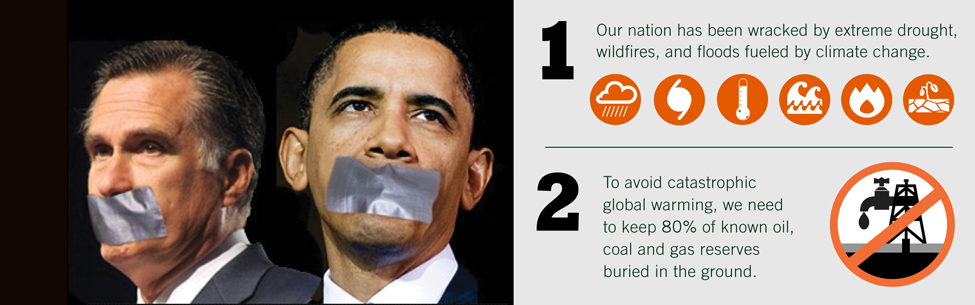
A national organization that has been trying to hold broadcaster accountable on how they report on global warming is now trying to get the two main Presidential candidates to make climate change a campaign issue.
Their campaign called Climate Silence, states:
Although Barack Obama and Mitt Romney sprinkle their speeches with mentions of energy and climate, they have remained stubbornly silent on the immediate and profound task of phasing out a carbon-based economy. Their failure to connect the dots and do the math imperils our nation and prevents the development of a national and global plan to respond to the most urgent challenge of our era. It’s time for their climate silence to end.
We don’t think that either candidate will make climate change an issue until they are forced to do so by grassroots pressure in the form of direct action. This campaign to get people to sign a petition, while commendable, is not enough.
It is important that we recognize that the candidates are not paying attention to climate change and climate justice, but the strategy should be focused on getting more and more people to confront and dismantle the main perpetrators of carbon emissions, the fossil fuel industry.
Arctic Ice Melt, Psychopathic Capitalism And The Corporate Media
This article by Media Lens is re-posted from Dissident Voice.
Last month, climate scientists announced that Arctic sea ice had shrunk to its smallest surface area since satellite observations began in 1979. An ice-free summer in the Arctic, once projected to be more than a century away, now looks possible just a few decades from now. Some scientists say it may happen within the next few years.
The loss is hugely significant because Arctic sea ice reflects most solar energy into space, helping to keep the Earth at a moderate temperature. But when the ice melts it reveals dark waters below, which absorb more than 90 per cent of the solar energy that hits them, leading to faster warming both locally and globally.
Peter Wadhams, professor of ocean physics at Cambridge University, warns that the Arctic may be ice-free in summer as soon as 2015. Such a massive loss would have a warming effect roughly equivalent to all human activity to date. In other words, a summer ice-free Arctic could double the rate of warming of the planet as a whole. No wonder that leading NASA climate scientist James Hansen says bluntly: “We are in a planetary emergency”.
In a comprehensive blog piece on the Scientific American website, Ramez Naam points out that:
The reality of changes to the Arctic has far outstripped most predictions. Only a few years ago, in the 2007 Intergovernmental Panel on Climate Change report, the bulk of models showed the Arctic ice cap surviving in summer until well past 2100. Now it’s not clear that the ice will survive in summer past 2020. The level of sea ice we saw this September, in 2012, wasn’t expected by the mean of IPCC models until 2065. The melting Arctic has outpaced the predictions of almost everyone – everyone except the few who were called alarmists.
As well as global warming from carbon dioxide (CO2), there is the additional risk of warming from methane (CH4) being released into the atmosphere. Huge quantities of methane are locked up in land permafrost. But even vaster quantities exist as methane hydrates frozen below the shallow waters of the Arctic Ocean’s continental shelves. Naam warns:
If even 10% of the northern permafrost’s buried carbon were released as methane, it would have a heating effect over the next decade equivalent to ten times all human greenhouse emissions to date, and over the next century equivalent to roughly four times all human greenhouse emissions to date’
That’s just the methane on land, trapped in the permafrost. If the methane hydrates buried on the Arctic continental shelves were to be released, that would have a warming effect equivalent to hundreds of times the total human carbon emissions to date.
Although Namm says ‘we are probably not in danger of a methane time bomb going off any time soon’, recent observations show that Arctic methane is being released into the atmosphere. And there is scientific controversy over how serious and how rapid this release is.
In summary, Naam points to a triple whammy effect:
1. Warming from the greenhouse gases we are currently emitting.
2. Warming from the loss of ice and permafrost in the Arctic, and the exposure of dark water and dark land below.
3. Warming from the release of more carbon into the atmosphere as the permafrost and the Arctic sea floor methane begin to melt.
The situation is already dire. According to a new report commissioned by twenty governments, more than 100 million people will die by 2030 if the world fails to tackle climate change. Five million deaths already occur each year from air pollution, hunger and disease as a result of climate change and carbon-intensive economies. This death toll would likely rise to six million a year by 2030 if current patterns of fossil fuel use continue. More than 90 per cent of those deaths will occur in developing countries.
On a sane planet, action would have been taken long before now to limit the risk. But, as Greenpeace International head Kumi Naidoo notes, fossil fuel industries have been working hard to corrupt the political process:
Why our governments don’t take action? Because they have been captured by the same interests of the energy industry.
As we noted in an alert last year, a Greenpeace study titled Who’s Holding Us Back? reported:
The corporations most responsible for contributing to climate change emissions and profiting from those activities are campaigning to increase their access to international negotiations and, at the same time, working to defeat progressive legislation on climate change and energy around the world.
Greenpeace added:
These polluting corporations often exert their influence behind the scenes, employing a variety of techniques, including using trade associations and think tanks as front groups; confusing the public through climate denial or advertising campaigns; making corporate political donations; as well as making use of the “revolving door” between public servants and carbon-intensive corporations.
Unsurprisingly then, meaningful action on tackling climate change is nowhere on the political agenda.
Drilling To Oblivion
Around the same time that a record low in Arctic sea ice was being recorded, a new report from the UK’s House of Commons Environmental Audit Committee urged a halt to all oil and gas drilling in the Arctic, at least ‘until new safeguards are put in place.’ Committee chair Joan Walley MP said:
The shocking speed at which the Arctic sea ice is melting should be a wake-up call to the world that we need to phase out fossil fuels fast. Instead we are witnessing a reckless gold rush in this pristine wilderness as big companies and governments make a grab for the world’s last untapped oil and gas reserves.
Caroline Lewis, member of the committee, warned that “the race to carve up the Arctic is accelerating faster than our regulatory or technical capacity to manage it.”
But the record of corporate capitalism shows that powerful industrial forces will do all they can to lobby governments to allow for continued economic exploitation of the planet’s resources. According to the US Geological Survey, within the Arctic Circle there are some 90 billion barrels of oil – 13 per cent of the planet’s undiscovered oil reserves – and 30 per cent of its undiscovered natural gas. The race for corporate profits is now on, with Shell already committed to a ‘multi-year exploration program’ in the Arctic.
The receding Arctic ice is a ‘business opportunity’ for those wishing to exploit newly available shipping routes. Cargo that now goes via the Panama Canal or the Suez Canal will, in many cases, have a shorter Arctic route, ensuring ‘efficiency savings’ for big business.
Companies are also licking their lips at the prospect at getting their hands on vast deposits of minerals as Greenland’s ice cap recedes.
‘For me, I wouldn’t mind if the whole ice cap disappears,’ said Ole Christiansen, the chief executive of NunamMinerals, Greenland’s largest homegrown mining company, with his eyes on a proposed gold mining site up the fjord from Nuuk, Greenland’s capital. ‘As it melts, we’re seeing new places with very attractive geology.’
A good example of the psychopathic mind-set at the heart of corporate capitalism. Science writer Peter Gleick responded incredulously on Twitter: ’25 foot sea rise?’ For that is indeed the catastrophic scale of global sea level rise that would occur with the melting of the Greenland ice sheet.
The BBC Parks The Problem
The BBC’s extremely poor and biased coverage of climate change continues to dismay seasoned observers. As Verity Payne and Freya Roberts noted on The Carbon Brief website, the corporation’s “fondness for pitting non-experts against each other over particularly complex areas of climate science reached surreal heights” in a recent BBC2 Newsnight segment on Arctic sea ice loss. The encounter between Conservative MP Peter Lilley and the Green Party’s new leader Natalie Bennett eventually degenerated into an argument over the merits of locally-sourced food. Payne and Roberts concluded:
It’s hard to understand how, over a year after the BBC Trust reviewed the corporation’s science coverage, paying particular attention to topics such as climate change, this is what we end up with.
In fact, the BBC’s awful performance is not that much of a mystery. The corporation has always been a reliable supporter of state and corporate power. But particularly since the fallout from reporting the government’s ‘sexing-up’ of discredited claims about Iraq’s supposed weapons of mass destruction, when heads rolled at the BBC, the broadcaster has been at pains not to offend the government and allied interests. Its abysmal failure to inform the British public of the coalition’s effective dismantling of the National Health Service is another key example.
According to former BBC correspondent and editor Mark Brayne, who was privy to internal editorial discussions in 2010, the BBC has ‘explicitly parked climate change in the category “Done That Already, Nothing New to Say”.’ Brayne added:
On climate change, that BBC journalistic urgency to be seen to be fair now means, after a period between Al Gore’s Inconvenient Truth and the disaster of [the 2009 UN Climate Summit in] Copenhagen when global warming was everywhere in the output, that the Corporation has been bending over backwards to reflect the opposite, sceptical view.
Consider the analogy of two men at a bar, says Brayne. One man claims that two plus two equals four, and the other that two plus two equals six. The BBC solution to this disagreement? ‘Put them both on the Today Programme, and the answer clearly lies somewhere in the middle.’
The Today programme, BBC Radio 4’s ‘agenda-setting’ morning programme, is a serial offender when it comes to irresponsible climate coverage. On July 13 this year, veteran interviewer John Humphrys interviewed Ralph Cicerone, president of the US National Academy of Sciences. Part of the interview went like this:
JH: But to say nearly every spot on the globe has warmed significantly over the past 30 years and indeed the entire planet is warming is different from saying it’s going to continue to warm to such an extent that we have to spend vast and unimaginable amounts of money to protect ourselves against a catastrophe that many people, some distinguished scientists say, isn’t actually proven.
RC: Well of course the way you’ve worded it, it was quite strong; “vast and unimaginable sums of money”, I don’t think I’ve heard anybody make such a proposal.
Moments later, Humphrys made the idiotic assertion that:
You can’t absolutely prove that CO2 in the atmosphere is responsible for global warming.
As climate writers Christian Hunt and Ros Donald put it politely:
If the Today programme brought this level of research and preparation to interviewing politicians, it probably wouldn’t be taken particularly seriously.
In fact, the standard of political debate on Today, as with the rest of BBC News, is on a similarly appalling level: routinely tilted towards state-corporate power, and all at public expense.
Meanwhile, BBC News happily chunters along issuing a stream of articles and broadcasts about Britain’s “dreadful weather” this year and how it has, for example, ‘cost rural Britain £1bn’ in lost income. But you would be hard pressed to find any links drawn between this and human-induced climate change.
Guarding The Mythology Of “Feeble Response”
Greens like to flock to the Guardian almost as though it were the house paper of the environment movement. One recent Guardian editorial noted that:
Pessimists in the climate change community warn that within the next century global mean temperatures could rise by 6C. A fierce, sustained drought in the US, with 170 all-time US heat records broken in June alone, has already hurt world food stocks.
These are important points. But given the observed rapid changes in the Arctic under global warming, the Guardian’s pejorative use of ‘pessimists’ should probably be replaced with ‘realists’. The Guardian continued:
The global response to these signals of potential calamity has so far been feeble.
This hugely understates the problem. But, even more damning, it diverts attention from root causes. As mentioned earlier, huge vested interests have mounted decades-long campaigns of disinformation, fierce lobbying and intimidation to subvert and bully governments into (a) avoiding what needs to be done in the face of climate chaos; and (b) providing tax breaks, subsidies and other measures to enhance rapacious corporate practices under the guise of boosting economic ‘growth’ and ‘job creation’ (newspeak terms for corporate profits).
Senior Guardian editorial staff seem unable to move beyond the same anodyne waffle they have been publishing for thirty years:
Britain’s “greenest government ever” has shown what it thinks of scientific evidence, by placing a homeopathic medicine enthusiast in charge of the National Health Service, and a reputed climate skeptic as environment secretary. The outlook is not promising.
The Guardian has almost nothing to say about the deep-rooted changes required to redress the imbalance of power in society; or about its own role in pushing climate-damaging policies and practices. The Guardian is a corporate newspaper dependent on advertisers for around 70 per cent of its income. Put simply, like other corporate media, it is part of the problem.
Media Malpractice – Challenging The Decline In Coverage
In the US, climate blogger Joe Romm notes that the decline in corporate media climate coverage has been well documented, both in print and the evening news. Bill Blakemore of ABC News observes that a number of the climate scientists ‘are perplexed by — and in some cases furious with — American news directors.’ Blakemore elucidates:
‘“Malpractice!” is typical of the charges this reporter has heard highly respected climate experts level — privately, off the record — at my professional colleagues over the past few years.
Complaints include what seems to the scientists a willful omission of overwhelming evidence the new droughts and floods are worsened by man made global warming, and unquestioning repetition, gullible at best, of transparent anti-science propaganda credibly reported to be funded by fossil fuel interests and anti-regulation allies.
Blakemore adds that he has spoken with climate scientists who ‘agree with those, including NASA scientist James Hansen, who charge that fossil fuel CEOs are guilty of a “crime against humanity,” given the calamity that unregulated greenhouse emissions are quickly bringing on.’ With 100 million deaths from global warming predicted by 2030, the charge is no hyperbole. Indeed this surely represents the greatest crime in all human history. And yet governments and big business, shielded by the corporate media, are getting away with it.
It probably comes as no surprise that the worst US media offenders belong to the Murdoch stable. A study by the Union of Concerned Scientists (UCS) shows that Fox News had been “misleading” viewers about climate science in 93 per cent of primetime programmes that addressed the subject over a six-month period in 2012. Fox News hosts and guests “mocked and disparaged statements from scientists and drowned out genuine scientific assertions with cherry-picked data and false claims.” The opinion pages of the Murdoch-owned Wall Street Journal performed slightly better: only 81 per cent of the examples studied were misleading, according to the UCS analysis. Similar surveys of the UK media are sorely needed. And, more to the point, action taken to challenge this corporate media complicity in history’s premier crime.
We have to re-examine our assumptions about what might be most effective in changing things for the better. For years, left and green activists have argued that we should work with corporate media to reach a wider public. For a long time the argument may have seemed unassailable. But after decades of accelerating planetary devastation and rapidly declining democracy, the argument has weakened to the point of collapse. By a process of carefully rationed corporate ‘inclusion’, the honesty, vitality and truth of environmentalism have been corralled, contained, trivialised and stifled.
Corporate media ‘inclusion’ of dissent has deceived the public with the illusion of openness and change, while business-as-usual has taken us very far in the opposite direction. Ironically, meek ‘cooperation’ has handed influence and control to the very forces seeking to disempower dissent. And in the absence of serious left/green criticism, corporate media performance has actually deteriorated.
Why should progressives help this system sell the illusion that the corporate media offers a ‘wide spectrum of views’ when its biased output overwhelmingly and inevitably promotes Permanent War for resources and war on the planet? The corporate media must be confronted with the reality of what it is, and what it has done. It is vital that this be highlighted to the public it has been deceiving.
While the power of the internet remains relatively open, there is a brief window to free ourselves from the shackles of the corporate media and to build something honest, radical and publicly accountable. Climate crisis is already upon us, with much worse likely to come. The stakes almost literally could not be higher.
We Don’t Get to Vote Against War next month
Americans are less than 5 weeks away from the November 6 Election date, but one thing that will not really be on the ballot is war.
People have the “choice” between two parties that both have embraced imperialist policies for more than a century, but people will not get to vote against war, particularly the 11 year US/NATO war/occupation of Afghanistan.
The Afghanis have been suffering from war and political turmoil since 1979, with much of the violence either perpetrated by the US or its proxy forces in that country. In the presidential election of 2008, many people who opposed the Iraq war voted for Barack Obama with the belief that Obama was an anti-war candidate, a belief that was not rooted in fact.
During his brief time in the US Senate, Barack Obama did not vote against the ongoing funding for the US war/occupation of Iraq and while he has said he was opposed to the reasons for going to war, he has never apologized or suggested that the US pay massive reparations to the people of Iraq for the devastation wrought by the US military and paid assassins (private military contractors).
On the matter of the US war/occupation of Afghanistan, Barack Obama has always been in support of that US military campaign. While he was a US Senator, Obama voted for ongoing military engagement and for all funding requests related to Afghanistan.

As President, Obama not only has continued the US military occupation of Afghanistan, his administration has significantly escalated it, adding an additional 60,000 US troops. In addition to the escalation of troops, the Obama administration has increased the use of drones to target insurgent leaders, both in Afghanistan and Pakistan. This increase in the use of drones has not only been disastrous, since it has increased the number of dead civilians, it has created tremendous opposition to US presence in the region, especially from Pakistan.
The Obama administration, and fellow Democrats like Michigan Senator Carl Levin, have claimed that the goal of the Afghan policy is too train Afghanis to police their own country, but this policy has been an utter failure as has been documented by independent reporters like Gareth Porter and he team of writers involved with the Afghanistan Analysts Network.
The platform position of Presidential candidate Mitt Romney on Afghanistan is certainly not any better and not much different than the Obama administration, so there is no lesser of evil position here.
Besides Iraq and Afghanistan, the Obama administration began a military campaign in Libya, is supporting one group in a military conflict in Syria, continues to support the Israeli occupation of Palestinian land, has supported the military coup in Honduras and Paraguay and the further militarization of Colombia, with the construction of several US military bases in that Latin American country.
Thus, it seems that once again, if one votes for either Democrat or Republican next month in the Presidential Election, voting for Romney or Obama is a vote for war and militarism.
Here is a good interview with Gareth Porter talking about how Afghanistan has not been part of the presidential debates to this point.
 Grand Rapids Institute for Information Democracy