Learn to plant and grow garlic!
 Our Kitchen Table is hosting Plant, Cook & Eat GARLIC! The free event is open to all.
- Saturday Nov. 3, 10 a.m. to 12 p.m.
- Logan Street Garden, 1416 Logan SE
Learn how to grow your own garlic. A tasty addition to many dishes, garlic also helps your body fight off colds, flu and infections.
This article was written by Holland resident and activist Nicole Berens-Capizzi.
On Monday, October 29, Holland City Council and Holland Board of Public Works (HBPW) held a joint study session at the Doubletree Hotel in Holland to discuss the city’s energy future. On August 8, HBPW announced the results of the year-long Sustainable Return on Investment (SROI) analysis that favored building a new 114 MW natural gas power plant and possibly retiring the James DeYoung coal-fired power plant. Though this is not yet official, it is clear after the joint study session that the city is leaning heavily in the direction of supporting their proposal recommendation. This has concerned individuals in the Holland community and abroad. City council has not yet voted on this proposal, but a vote could come as early as November.

Residents of Holland, myself included, believe that city council has been rushing this decision with very little input from the public. Though city council and HBPW have continuously promoted the idea that this decision making process has been very transparent and inclusive, many feel that they have not had a fair opportunity to speak up and voice their concerns. The city has not only excluded members of the community from appointments to the generation task force, but they have also excluded public participation in Risk Assessment Panel (RAP) meetings this past summer. The meeting on Monday would be no exception. Even though the public was invited to this meeting, we were told we could not comment or ask questions.
After discussing these issues with others in the community and following the suggestion of another activist, I decided to organize a call-in on the day of the meeting to HBPW and local media, including the Holland Sentinel, 1450 AM WHTC/92.7 FM The Van, 89.9 FM The Voice of Hope College, and the Grand Rapids Press. I wrote scripts for people to reference when calling or emailing these organizations. Some received a response from Angela Badran of HBPW. In her email response, she denied that HBPW has excluded the public throughout this process. She stated that they “invited members of the community from various interest groups (education (Hope College, Holland Public Schools), environmental (West Michigan Environmental Action Council), government (City Council/BPW Board), business (Haworth, Herman Miller, Holland Hospital), downtown development (Lakeshore Advantage, Downtown Development Authority), and other interest groups, such as League of Women Voters, Macatawa Area Coordinating Council, and Young Professionals).” The individuals from these “interest groups” are members of the RAP panel and are supposed to represent the interests of the public. In a response put together by Monica Hallacy, another Holland resident and clean energy advocate, she pointed out how some of these groups have not attended while others don’t necessarily have the community’s best interests at heart. “Hope College, Holland Public Schools, Holland Hospital all have a vested interest in district heating and are not groups truly representing the community,” said Ms. Hallacy. Energy efficiency experts and statewide environmental groups were also excluded – especially disappointing since the Sierra Club was booted from the RAP panel earlier this year. So far, HBPW has not followed up with this response.
Prior to the meeting on Monday, I stood outside the Doubletree Hotel and handed out information on fracking to individuals entering the meeting. This included a list of some of the chemicals used in fracking (including their classification as carcinogens and hazardous air pollutants), an info sheet on why we want to ban fracking in Michigan, an article entitled “Health Professionals Raise Concerns about ‘Fracking’” put forth by Physicians for Social Responsibility, and a list of websites with more information on fracking. Paul Elzinga, a HBPW board member and also a RAP panel member, declined to take any information and told me they had solid information on fracking from a geologist they consulted with. Shortly before entering the meeting I was approached by Annette Manwell from the Holland Sentinel and briefly interviewed about my concerns. An article detailing the outcome of the meeting, including a sidebar on the public’s opposition to a natural gas plant, was published later that night.

The meeting began with a brief opportunity for the public to comment, which lasted less than five minutes. Prior to the meeting we had been told we would not have the opportunity to comment, so many did not come prepared to make a statement. Perhaps the phone calls and emails to HBPW and local media persuaded city council and HBPW to allow this brief comment period. Regardless, this still did not allow us the opportunity to ask questions or voice concerns regarding the actual content of the meeting.
Seated at the front of the room were twenty-three members of the RAP panel (one of whom left about halfway through the meeting). Included in the panel was a representative from Holland Hospital, Holland League of Women Voters, Macatawa Area Coordinating Council, Lakeshore Advantage, Riverview Group, and WMEAC. The remaining members represented either city council or HBPW. Dave Koster, General Manager of HBPW, conducted the presentation.
Mr. Koster began the meeting by discussing how transparent he believes the decision making process has been, as well as inclusive of the public. As examples, he mentioned accounts for P21: Holland, MI Energy Decision on various social networking sites as well as billboards. He continued to promote this point of view for the duration of the evening.
In this study session, Mr. Koster referenced results of the SROIanalysis, including certain diagrams from this report in his PowerPoint presentation. This analysis was conducted by HDR Inc., an engineering firm that Mr. Koster noted has particular expertise in economics. This focus on economics was clear throughout the night. While the term “sustainability” was liberally used, there was a stronger focus on the “bottom line” and what the monetary cost of various options would be. Mr. Koster referenced seven scenarios (A-G) during the meeting, but for anyone who didn’t have each of these scenarios memorized, this was difficult to follow (RAP panelists had summaries of these scenarios at their disposal while the public wasn’t given any useful literature to accompany this presentation or any other RAP meeting). Throughout the study session, natural gas scenarios (A, B, G) were touted as being the cleanest and most economically viable options. At no point did anyone mention how fracking, the process of drilling for natural gas, makes relying on natural gas as a power source just as dirty (if not moreso) than relying on coal.
About two-thirds of the way through the study session, Mr. Koster presented the staff recommendation. This was not based on one specific scenario, but rather a combination of these options. HBPW concluded building a new 114 MW natural gas power plant to be the best option, noting the huge burden placed on the grid during summer months. Ironically, and perhaps as an attempt to green wash this recommendation, one RAP panelist suggested this natural gas power plant be LEED certified. Mr. Koster agreed this would be a great idea. In addition to natural gas, HBPW recommended finalizing a 10-year PowerPurchase agreement with E-ON Wildcat I for 15 MW of wind generation near Elwood, Indiana, and also completing a 20-year agreement with Beebe Community Wind Farm LLC for 17 MW of wind generation in Ithaca, Michigan. Just last month, HBPW announced it was dropping plans to develop its own wind farm – yet when it comes to natural gas, they say it is necessary for Holland to own its own generation. There is some disagreement between HBPW and city council as to the fate of the James DeYoung coal-fired power plant. Unit 5 would likely be closed within three to four years because it will no longer meet EPA regulations. Units 3 and 4, however, might not be subject to these regulations and could possibly burn natural gas (in addition to the proposed natural gas power plant).
The study session concluded with a four-point Likert scale survey of RAP panelists and a discussion among panelists on areas where there was disagreement. Panelists used an electronic device to record their level of agreement with a variety of statements. Approximately 86% of panelists agreed that the community had ample opportunity to give their input. The same percentage agreed that the P21 process covered significant issues associated with the community’s power generation decision. Of particular concern was the agreement with the statement that pursuing natural gas as our primary energy source meant moving our community toward a cleaner energy future: 86%. This survey of RAP panelists was one more way in which HBPW and city council provided the illusion they were including the public by having panelists represent our concerns. These are questions they should have been asking the public who attended the meeting, not RAP panelists (the majority of which were HBPW and city council members). As this survey was carried out and the public witnessed responses given on their behalf without the ability to actually speak up, I could not help but feel that our concerns and opinions were no more represented by these panelists than they are by elected officials. Holland citizens did not have the opportunity to raise concerns about natural gas and fracking, why the city is not focusing more on renewable energy such as wind and solar power, or why we as citizens don’t focus on reducing our consumption of electricity in combination with introducing cleaner energy options and phasing out more resource intensive and environmentally destructive forms of energy. Prior to and during the meeting, we have been told by HBPW and city council that we the people had the opportunity to speak our minds throughout this process. As members of the community, we couldn’t have possibly felt more excluded Monday night.
One RAP panelist raised an important question after the survey was finished; he asked whether or not the potential for pipeline breaks or possible terrorist acts were taken into consideration when deciding the future location of the new natural gas power plant. Mr. Koster tip-toed around this question and said that HBPW’s recommendation was very diversified. No one called him out for not answering the question.
Frankenstorms and Climate Change: How the 1% Created a Monster
This article by Chris Williams is re-posted from Dissident Voice.
There is little doubt that freakish and unnaturally-assembled storms are a taste of what the future holds under an economic system that has “interfered with the tranquility of domestic affections”; galvanized the forces of nature into a fury of clashing dislocations as we pump ever-more heat-trapping gases into our atmosphere and industrial filth into our lungs. The riptides of climate change are beginning to tear at the fabric of our biosphere as the earth’s climate system lurches, in ungainly and lumbering jerks, from the relatively dormant and benign stability of the last 10,000 years, toward a more volatile, violent and less hospitable new climatic state previously unknown to human civilization.
Alluding, therefore, to Mary Shelley’s great work of gothic horror through the appellation of Frankenstorm for the confluence of Hurricane Sandy and a cold front is, in many ways, quite apt. Particularly as Shelley herself offered a symbolic criticism of the inner dynamics of capitalism and class society in Frankenstein, captured in the quote above, as the conflicted Victor recounts his tale and the uncontrollable forces that he has unleashed as a result of his compulsion to continue with his project, despite the warning signs that are proliferating around him.
The obsession that took over Victor, his growing alienation from the world, which makes him forsake friends, family, even sustenance, is echoed on a global scale by the unquenchable thirst for profits of the global capitalist monster, which eats through our lives and our planet in search of fresh fields for exploitation and growth. The fact that Victor’s uncontrollable quest consumed him in its flames when his creation turned against him won’t stop similar warning signs preventing capitalism eating itself – and taking the rest of the planet down with it.
That human-induced climate change is part of the reason for Hurricane Sandy, the “largest hurricane in Atlantic history measured by diameter of gale force winds (1,040mi)”, is explained by Dr. Kevin E. Trenberth, Distinguished Senior Scientist in the Climate Analysis Section at the National Center for Atmospheric Research:
The sea surface temperatures along the Atlantic coast have been running at over 30C above normal for a region extending 800km off shore all the way from Florida to Canada. Global warming contributes 0.60C to this. With every degree C, the water holding of the atmosphere goes up 7%, and the moisture provides fuel for the tropical storm, increases its intensity, and magnifies the rainfall by double that amount compared with normal conditions.
Global climate change has contributed to the higher sea surface and ocean temperatures, and a warmer and moister atmosphere, and its effects are in the range of 5 to 10%. Natural variability and weather has provided the perhaps optimal conditions of a hurricane running into extra-tropical conditions to make for a huge intense storm, enhanced by global warming influences.
As the climate continues to warm, the effect will only increase, leading to more extreme weather events, flooding and drought, as outlined in two recent Naturearticles.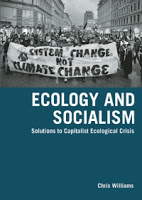
And warm it will. Not because we don’t have answers to prevent that from happening and derive our energy from sources other than fossil fuels, but because it’s simply too profitable to change. There is a compulsion inherent to capitalism; the propellant force of profit that powers further growth in a perpetual feedback loop, whereby the colossal forces of production are testing the limits of the planet to absorb the battering its biosphere is taking. Never has Marx’s comment in the Communist Manifesto on the nature of capitalism been so apposite:
Modern bourgeois society, with its relations of production, of exchange and of property, a society that has conjured up such gigantic means of production and of exchange, is like the sorcerer who is no longer able to control the powers of the nether world whom he has called up by his spells.
At this point, as a thunderous storm barrels up the east coast of the United States, still suffering from an unprecedented drought in other parts of the country, it seems indisputable that the capitalist system has put the entire web of life on a collision course with a stable biosphere and climate system. One of those systems has to give, and there is no indication that it will be capitalism. To the extent that anything is being done internationally to address the inextricably intertwined ecological and social crises, the answer seems to be to hack down the last vestiges of humanity’s common heritage via the sword of privatization.
Specifically in terms of oil production, which, along with other fossil fuels, needs to peak and start to decline in the next five years if we are to avoid irreversible climate change, according to the International Energy Agency, is nevertheless projected to rise from its current 80 million barrels per day to 110 million by 2020 ,as oil companies seek to exploit their reserves and drill for more.
Along with higher profits to oil companies due to the price per barrel of oil, The Age of Obama has helped to usher in a gusher of new exploration and increases in output that, according to a report by Citibank, mean that the US could soon rival Saudi Arabia as the largest producer of oil on the planet and make the US “the new Middle East”:
The Energy Department forecasts that U.S. production of crude and other liquid hydrocarbons, which includes biofuels, will average 11.4 million barrels per day next year. That would be a 40-year high for the U.S. and just below Saudi Arabia’s output of 11.6 million barrels. Citibank forecasts U.S. production could reach 13 million to 15 million barrels per day by 2020, helping to make North America ‘the new Middle East’.
As Obama has repeatedly boasted of his Administration’s commitment to laying enough pipeline to girdle the earth and taken Romney to task by launching ads accusing him of being “anti-coal”, US coal exports are at record highs due to the expansion of another fossil fuel, fracked natural gas.
So, even as US carbon emissions have decreased due to coal plants shutting and being replaced by natural gas, there has been a bonanza for US coal companies exporting their product abroad, leading to no net reduction in carbon emissions for the world as a whole. In fact, quite the opposite is the case; making a mockery of the argument that natural gas is somehow a “transition” or “bridge” fuel to a cleaner energy future (leaving aside the intensely polluting effects of the fracking process itself).
Perhaps this is why the Obama Administration recently abandoned its commitment to keeping global temperature increases below the absolutely critical threshold of 20C that it had formally adopted just two years ago. No wonder, as the number of drilling permits granted in the Gulf of Mexico is set to exceed the number issued in 2007, and production will be higher, a mere two years after the worst environmental disaster in United States history:
Two years after the White House lifted a moratorium on deepwater drilling in the wake of the BP oil spill, federal regulators have issued the most permits for new wells since 2007, and many in the industry expect oil production in the Gulf of Mexico to soon exceed pre-spill levels.
No doubt all this extra domestic production is helping ConocoPhilips, the world’s 9th largest corporation, rake in the cash from planetary ecocide. ConocoPhilips announced its third quarter profits October 25, which came in at $1.8 billion – though the corporation annually receives $600 million in tax breaks while sitting on $1.3 billion in cash reserves and the former CEO of the company, James Mulva, “earned” $18.92 million in total compensation in 2011.
In light of Frankenstorm Sandy, I bet Obama is now wishing he’d had some small reserve of political principle left to at least mention climate change in one of the stultifying presidential debates, as the two candidates, whenever talking about energy, sparred over exactly who could burn greater amounts of fossil fuels and more swiftly transform the earth into a burnt cinder.
As reported by the New York Times, despite the fact that “Even after a year of record-smashing temperatures, drought and Arctic ice melt, none of the moderators of the four general-election debates asked about climate change, nor did either of the candidates broach the topic”, apparently the candidates nevertheless agree that, “For all their disputes, President Obama and Mitt Romney agree that the world is warming and that humans are at least partly to blame.” Yet the Times also acknowledge that, “It remains wholly unclear what either of them plans to do about it.”
And furthermore:
Throughout the campaign, Mr. Obama and Mr. Romney have seemed most intent on trying to outdo each other as lovers of coal, oil and natural gas — the very fuels most responsible for rising levels of carbon dioxide in the atmosphere.
In fact, even as the science of climate change has vastly improved, and the pronunciations of climate scientists become ever more definitive – not to mention desperate – this was the first set of debates not to mention climate change in a generation! Not since prior to the election of 1988, when even Republican vice-presidential candidate Dan Quayle thought it was a problem that should be tackled, has climate change not been addressed by candidates during any of the debates.
Not only did the candidates clearly have no interest in addressing the issue, neither did the moderator of the second debate, CNN’s Candy Crowley. Despite a petition signed by no less than 160,000 people demanding that debate moderators at least include a question on climate change, Crowley excused her deliberate omission on the basis: “Climate change, I had that question…All you climate change people. We just, you know, again, we knew that the economy was still the main thing.” Except that the candidates did manage to find time to debate the issue of gun control, which is hardly a direct connection to the economy.
In point of fact, the whole reason why the candidates don’t want to discuss climate change is precisely because of the economy, specifically the US economy, which depends, as no other in the world, on fossil fuel energy.
Speaking later in an interview for MTV about the complete lack of discussion of climate change in the debates, President Obama expressed his “surprise” that it hadn’t come up – as if the President of the United States has no ability to raise issues in a presidential debate!
This effectively puts Obama to the right of the group Young Evangelicals for Climate Action. Members of the group car-pooled their way to the second debate on Long Island in order to pray in the parking lot for a mention of climate change and the adoption of government policies such as taxing carbon emissions and helping the poor deal with the effects of climate change.
While I have a tactical disagreement with regard to the effectiveness of their chosen method, I couldn’t agree more with the group’s spokesperson Ben Lowe: “This is a long fight that we are committed to fighting.”
So the critical question becomes, is voting for Obama as the lesser of two climate evils part of that long fight? My answer is the same as Chris Hedges’, in his excellent article on Truthdig, and consists of a definitive no:
The November election is not a battle between Republicans and Democrats. It is not a battle between Barack Obama and Mitt Romney. It is a battle between the corporate state and us. And if we do not immediately engage in this battle we are finished, as climate scientists have made clear…The corporate state has successfully waged a campaign of fear to disempower voters and citizens. By intimidating voters through a barrage of propaganda with the message that Americans have to vote for the lesser evil and that making a defiant stand for justice and democracy is counterproductive, it cements into place the agenda of corporate domination we seek to thwart. This fear campaign, skillfully disseminated by the $2.5 billion spent on political propaganda, has silenced real political opposition. It has turned those few politicians and leaders who have the courage to resist, such as [Green Party candidates] Stein and Ralph Nader, into pariahs, denied a voice in the debates and the national discourse. Capitulation, silence and fear, however, are not a strategy. They will guarantee everything we seek to avoid.
As Hedges points out, throughout history, our side has only won things when we have independently organized and built movements and political parties outside of, and in opposition to, mainstream parties and politics. Take, for example, Richard Nixon’s 1970 State of the Union Address, which includes a lengthy discussion on the need to address, “The great question of the seventies” and whether we,
shall…surrender to our surroundings, or shall we make our peace with nature and begin to make reparations for the damage we have done to our air, to our land, and to our water?
Restoring nature to its natural state is a cause beyond party and beyond factions. It has become a common cause of all the people of this country. It is a cause of particular concern to young Americans, because they more than we will reap the grim consequences of our failure to act on programs which are needed now if we are to prevent disaster later.
Clean air, clean water, open spaces–these should once again be the birthright of every American. If we act now, they can be.
Though Nixon was an unquestionably right-wing megalomaniac who caused untold suffering, mass murder and environmental devastation in Southeast Asia, he felt compelled, by a growing mass movement on the ground independent of the Democrats, to reign in corporate power by the creation of the EPA and sign legislation on many of the most effective environmental regulations we still have on the books.
While I would think that Nicholas Carne’s argument in a recent op-ed in the New York Times contradicts his claim about living in a “great democracy”, it nevertheless illustrates what’s really going on with US elections:
ELECTIONS are supposed to give us choices. We can reward incumbents or we can throw the bums out. We can choose Republicans or Democrats. We can choose conservative policies or progressive ones.
In most elections, however, we don’t get a say in something important: whether we’re governed by the rich. By Election Day, that choice has usually been made for us. Would you like to be represented by a millionaire lawyer or a millionaire businessman? Even in our great democracy, we rarely have the option to put someone in office who isn’t part of the elite.
Precisely. And those representatives of the elite will sponsor and push policies which favor their class, not ours. And if those policies contradict a broader reality, such as calling into question the very stability of the entire planetary climate system, so be it.
Which means that I’m far more interested in working with people, forging alliances and building a climate justice movement with anyone who wants to fight against the ruling elite in the intervening 1,460 days, before the next competition between two representatives of the corporate 1%, than I am in whether someone is voting for the lesser of two evils on November 6. In those struggles, I’m far more likely to be doing that by linking arms with the Young Evangelicals for Climate Action than I am with Obama and his coterie of Democratic Party operatives.
For many environmentalists, it seems easier to imagine the end of the world than it does the end of the economic and social system known as capitalism. Not only do I disagree with that as a premise, if we don’t get rid of capitalism, there won’t be much of a world left to imagine.
Therefore, even as we build a broad-based movement to fight for real reforms within the system, to slow down the monster of runaway, fossil-fueled capitalism that is creating Frankenstorms and much else in the way of ecological and social devastation, we need a vision for a completely different social system. This means locating the practical and ideological operation of capitalism and environmental degradation within a unified framework that requires its replacement with a system based on cooperation, real democracy, sustainable production for need and the earth held in common trust by all the people in the interests of future generations. Only then, by that revolutionary social change, can we hope to avoid cataclysmic dismemberment of global ecosystems via anthropogenic climate change.
And the agent of that change is not on the ballot. For there is another way to read Mary Shelley’s Frankenstein, in that the monster that the reader sympathizes with, manufactured and brought to life by the bourgeois Dr. Frankenstein, is so enraged by his oppression and exploitation that he is the representative for the revolutionary overthrow of his creator and antagonist. In other words, Dr. Frankenstein, much like capitalism, has created its own gravedigger, in the shape of the organized workers, peasants and communities who must fight in the streets, fields and forests of the world for the emancipation of ourselves and our planet.
On Sunday, we provided some analysis of an MLive story about the increase of oil & gas leases in Kent County in the last year, mostly due to the scramble for more natural gas.
In our article we pointed out that even though the MLive headline suggested they would report on details of the oil & gas leases in Kent County, they didn’t. In fact, the only company mentioned involved in purchases leases for oil & gas rights in Kent County was Western Land Services, which we reported has previously purchased mineral rights in Michigan for the notorious energy giant, Chesapeake Energy Corp.
Earlier today, I went down to the Kent County Registrar’s office to look at documents related to the purchasing of mineral rights in Kent County by oil & gas companies. I asked to see any and all information about mineral leasing in Kent County for 2012. A staff person with the county gave me 68 pages of information, detailing every leasing agreement with land owners and private oil & gas companies or those representing oil & gas companies.
Here is the list of companies that had purchased leasing rights in Kent County for 2012:
- Bishop Land Services
- Sun Operations
- Central Michigan Exploration
- Liverpool Production Company
- Uniroyal Inc.
- AMOCO
- Jordan Development Company
- Michigan Basin Resources
- Western Land Services
- Goodale Enterprises
- Merrill Drilling
- Shell Oil
- PTERADON Energy
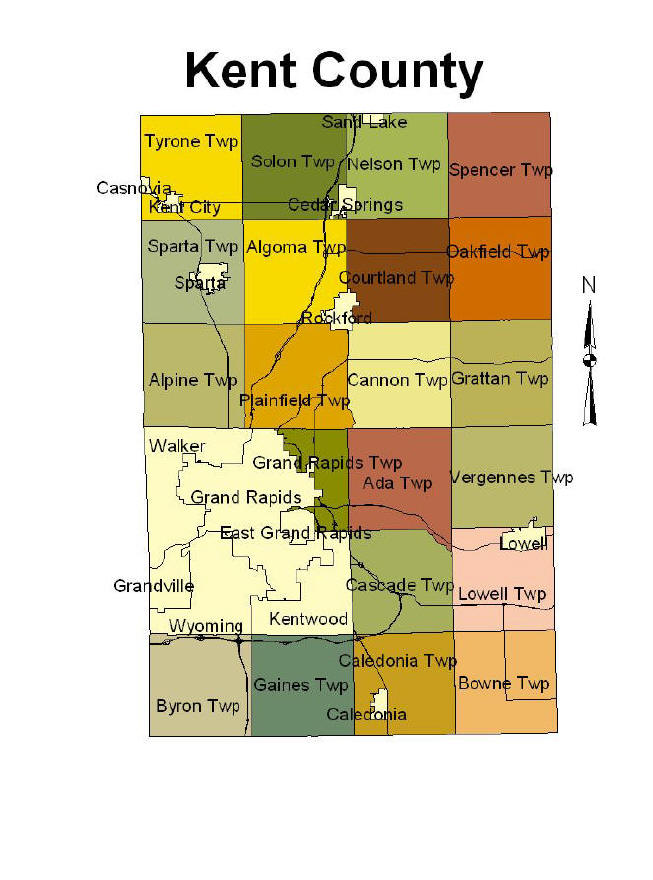
Of the 13 companies that had purchased leasing rights to explore for oil & gas in Kent County so far in 2012, only seven of them had purchased multiple parcels of land for oil & gas exploration.
The seven companies that have purchased multiple leases for oil & gas are: Bishop Land Services (46) Central Michigan Exploration (30), Liverpool Production Company (15), Michigan Basin Resources (60), Western Land Services (130), Goodale Enterprises (8) and PTERADON Energy (44).
As we mentioned in the posting on Sunday, Western Land Services has offices across the country, but primarily works on behalf of oil & gas companies to purchase land or leasing rights, sort of a front company or go between, in order to protect the companies who will actually be doing the oil & gas extraction. A recent example in Michigan was when Western Land Services was hired by Chesapeake Energy Corp, according to a story from Reuters. The Reuters piece talks about how many land owners in the Traverse City area were approached by companies like Western Land Services on behalf of Chesapeake Energy Corp and that there is now a lawsuit against the fossil fuel giant because of fraudulent practices.
The company with the second highest number of leases for oil & gas in Kent County this year is Michigan Basin Resources. We could find no online presence by the company, but we did discover that this company has also purchased leases in Barry County as well, according to an article in the Hastings Banner back in April.
The next company on the list is Bishop Land Services. The company is based out of Mesick, Michigan appears to be a company that just obtains oil & gas leases on behalf of other companies, much like Western Land Services. The company does have a web address, but it was not working while this article was being written.
Another company that has purchased leases for oil & gas in Kent County in 2012 is PTERADON Energy. They registered to do business in Michigan on March 27, 2012. They are a Delaware LLC that formed in January 2012. If you do an online search for Pteradon, there isn’t anything. There is a small reference to the company on a Michigan Better Business Bureau website that states they have an office in Traverse City. We do know that at the DNR Land Auction in May, Pteradon purchased the mineral rights to over 11,000 acres of public land in Michigan.
Central Michigan Exploration is a company based out of Meadville, Pennsylvania and like Western Land Services, had been contracted to purchase land leases for Chesapeake Energy Corp, according to an article in International Business Times.
Liverpool Production Company has been around since 1997 and is based out of Tulsa, Oklahoma. This company also purchased leases for oil & gas in Barry County within the past year and like many of these companies has virtually no online presence.
The last company we found information on that had purchased multiple leases for oil & gas in Kent County this year was Goodale Enterprises. Goodale has an office in Grand Rapids, but they also have no real online presence.
It seems pretty clear from this investigation that the companies which are purchasing leases for oil & mineral exploration in Kent County and other parts of Michigan do not want to make it easy for the public to find out anything about how they operate and who they are purchasing the leases for. This lack of transparency is yet another reason for people to be concerned about the increase in fossil fuel extraction throughout the state, particularly through the method of hydraulic fracturing.
Reconsidering Hate
This article is an excerpt of Political Research Associates’ discussion paper, “Reconsidering Hate: Policy and Politics at the Intersection,” available online here.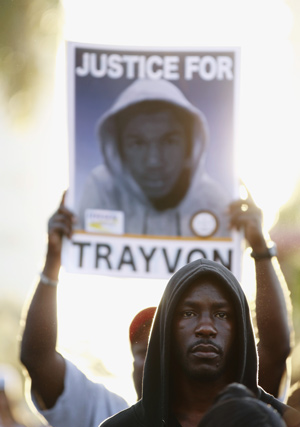
In 1998, three White men in Jasper, Texas murdered James W. Byrd, Jr., an African-American man, dragging him for two miles along an asphalt road. Several months later, two men met 21-year-old Matthew Shepard, a White, gay student at the University of Wyoming, in a bar in Laramie, gave him a ride, pistol-whipped him and tied him to a fence. Shepard died from his injuries several days later.
These horrific incidents, labeled “hate crimes,” galvanized the nation. They intensified public support for laws that would add enhanced provisions to certain violations already subject to criminal penalties. These provisions include law enforcement reporting requirements, mandated training for law enforcement personnel, and civil legal remedies (permitting victims to sue for damages). Penalty enhancements could only be applied in cases where the crimes could be proved to be linked by bias and attempts to terrorize entire groups of people based on their actual or perceived race, color, religion, ethnicity, national origin, sexual orientation, gender, gender identity or expression, or physical/mental disability.1
Now let’s fast-forward to 2012 in Sanford, Florida and the killing of a Black teenager, Trayvon Martin, as he was walking home. George Zimmerman, a self-appointed neighborhood watch volunteer who entertained hopes of being a cop one day, admitted shooting Martin to death. He was charged with second-degree murder 46 days after the shooting. Many groups hailed this indictment as a victory. FBI agents have also questioned witnesses, presumably to determine if Zimmerman might be charged with a federal hate crime.2 It is worth noting that a murder charge prosecuted under federal hate crime law could carry a death sentence.
Over the past four decades, social justice advocacy groups have increasingly adopted the frame of “hate” for analyzing, describing, and responding to violence, oppression, and discrimination. Today, almost every state has enacted some form of hate crime statute, although the focus, wording, and identification of “protected” status categories differ widely.3 There are several federal hate crime laws.4
Since the 1980s, there has been a robust, sometimes fiery debate in social justice arenas over the desirability, efficacy, and possible consequences of “hate speech” law as a response to violent and dehumanizing rhetoric. An increasing number of colleges and universities have adopted policies prohibiting certain forms of speech, with the stated intention of protecting pluralism and ensuring equal educational opportunities.5
Prominent advocacy organizations, including the Southern Poverty Law Center (SPLC)6, the Anti-Defamation League (ADL)7, and Center for New Community,8 regularly monitor and report on “hate” and “extremist” groups (defined according to their own criteria). “Stop Hate” initiatives abound.9 SPLC offers an array of “teaching tolerance,” diversity awareness, and prejudice reduction educational resources for both teachers and students. Not in Our Town is a national organization that highlights community initiatives to resist, respond to, and prevent hate violence.10
The Gonzaga University Institute for Hate Studies, created to help advance an interdisciplinary field of Hate Studies and disseminate new theories, models, and discoveries about hate, began publishing the Journal of Hate Studies in 2001.11
These are significant achievements, and represent a major investment by social justice advocates, However, I believe the hate frame has had unintended, harmful consequences that social justice activists and scholars need to re-evaluate. Does calling something a hate crime or hate speech clarify or distort the nature of our struggles?
Beyond “Bad Attitudes”
No one familiar with the history of lynching and other means of enforcing racial segregation and asserting White supremacy in the United States could reasonably argue that such actions are not motivated by racial hatreds–or that hate doesn’t motivate anti-immigrant vigilantes who take it into their hands to “patrol” the U.S. Mexico border. Similarly, one could not plausibly assert that vile, anti-LGBT sentiments expressed in queer bashings and anti-gay political campaigns aren’t hateful. Hate is very much as the center of bombing and burning of Black churches, synagogues, and mosques. Hate is certainly involved when women’s health care centers are torched and abortion providers murdered.
But beyond a sense that we know hate when we feel it, we don’t know a great deal about hate itself. Is hate an emotion? A belief? A behavior? A process? An outcome? Is it innate? Learned? A mental disorder? Is it an individual phenomenon? Is it still considered “hate” when it appears in systemic form, preserved in routine actions of public and private institutions? What is its relationship to hierarchies of power, if any? Is it intrinsically violent? Is it a fixed part of human nature? Can it be corrected or healed?
Ken Stern, specialist on antisemitism and extremism for the American Jewish Committee (AJC), suggests that one working definition of hate might be “the human capacity to define, and then dehumanize or demonize, an ‘other,’ and the processes which inform and give expression to …that capacity.”12 At first glance, that seems clear and useful. But the waters muddy when we try to utilize a single frame–hate–for interpreting and responding to the actions of the following actors: individuals motivated by obvious bigotry; independent groups and networks pushing openly oppressive agendas; and the histories and systemic operation of respectable public and private institutions and entire nation-states.
The liberal version of the hate frame asserts that people who engage in bullying, threat, intimidation, and violence stand outside the circle of normalcy and mainstream standards of civic morality. “Haters” are identified as “extremists” acting outside social norms.
However, these kinds of hatreds aren’t merely about personal prejudice or “bad attitudes.” Sociologist Kathleen Blee is one among a number of social scientists and legal scholars writing about hate who recognizes that violent acts motivated by bias or hatreds “can reflect broader social institutions and cultural norms.”13
Racist and gendered violence is supremacist in nature, touting the alleged superiority of Whites over people of color; heterosexuals over queers; men over women; and a certain variety of Christianity over other denominations and faiths. Such hatreds, openly expressed and used as a focal point for organizing, intend to retain and reinforce traditional (and unjust) hierarchies of racial, gender, and economic power. As former PRA political analyst Chip Berlet notes in the Journal of Hate Studies, “Organized supremacist groups utilize and amplify the same elements of prejudice, supremacy, demonization, and scapegoating that already exist in mainstream society. [Their] ideologies, styles, frames, and narratives…are drawn from pre-existing systems of oppression buried in mainstream society.”14
Safety or Distraction?
At the time President Barack Obama signed the Matthew Shepard and James Byrd, Jr. Hate Crimes Prevention Act into law in October 2009,15 many activists believed that with the passage of federal and state hate crime laws, law enforcement (historically a persecutor of people of color, queers, and other targeted groups) would at last protect those marginalized communities. Hate crime laws, major advocacy organizations said, would help deter and prevent hate violence. They would make our communities safer.
Unfortunately, no such message was sent or received. Violence against people of color, queers, and other vulnerable groups remains widespread. In fact, some communities are now more likely to experience harassment and abuse.16 Racial, gender, and sexual profiling permanently classify people from targeted communities as “suspicious” and “dangerous others.”
Glimpses and discussion of criminalizing processes at the intersections of race, class, gender, and immigration status are found in Queer (In)Justice: The Criminalization of LGBT People in the United States, which documents these overarching problems:
• Hate crime laws provide no pro-active protection. Highly selective enforcement of these laws typically takes place (sometimes) only after an incident is reported.
• There is no evidence that hate crime laws deter acts of violence. For example, National Coalition of Anti-Violence Programs (NCAVP) annual reports do not show any consistent reductions in reports of violent crime. But they do show recent increases, especially in murder.17
• Based on reported incidents, people of color and transgender people are disproportionately targeted for bias-motivated violence; transgender people, particularly, are at risk for murder. People of color who are transgender face especially heightened risk for being targets of violence.
The neutral wording of hate crime and related laws is “power-evasive.” When selectively enforced, these laws can morph into instruments of injustice. For example, a South Carolina anti-lynching statute intended to protect African Americans against White mob violence has transformed into a legal tool used disproportionately against young Black men–simple enough, given the law’s race-neutral definition of “mob” as “the assemblage of two or more persons, without color or authority of law, for the premeditated purpose and with the premeditated intent of committing an act of violence upon the person of another.”18
Police often treat many LGBT and HIV-affected people who attempt to report hate violence as offenders rather than as people who have suffered violence. Such “re-victimization” is especially likely if the person reporting is a person of color, transgender or gender nonconforming, poor, presumed to be a sex worker, or an immigrant. Additionally, many who are targets of hate crimes do not wish to report incidents to the police out of fear. These can include fear of not being believed, fear of additional abuse at the hands of police, fear of being reported to immigration authorities, fear of unwanted and negative publicity, and fear of reprisals.
According to NCAVP, police officers consistently constitute a major hate violence offender group; Amnesty International has documented widespread, systemic police misconduct and abuse–particularly against queers of color. Police in some jurisdictions have refused to take hate crime reports, and some reports may not be accurately classified as hate crimes under legal criteria.
Most discussions of hate violence in the United States cite annual reports from the FBI. However, as recently as 2005, the Bureau of Justice Statistics (BJS) recognized that the actual incidence of hate violence was vastly understated by the FBI. The FBI’s reports suffer from these shortcomings:
• There is no way to ensure that evaluation and classification of reported incidents are consistent across jurisdictions.
• State and local law enforcement agency participation in the FBI’s hate crime reporting program is voluntary. In 2009, for example, of the 14,422 agencies formally participating in the effort, only 2,034 actually submitted incident reports.19
• Most law enforcement agencies within a state jurisdiction do not report any incidents. For example, in 2009, only 67 out of 413 agencies in Virginia; five out of 487 Georgia agencies reported incidents. Less than half the participating agencies in California reported incidents.
• The FBI does not report clearly, if at all, on violence or other hate crime offenses committed by law enforcement authorities.
Making the Change We Need
If hate is a social problem, and not just a matter of individual psychology, then intensified policing and enhanced punishments cannot create safe and just communities.
Does that mean every concept in hate crime law is worthless? Not at all. Most of us would probably all agree, for instance, that documentation, reporting, and analysis of violence directed against targeted groups are essential. We should not stop being concerned about White supremacist, neo-Nazi, and other groups that are rooted in fear, intimidation, and violence. There is a strong argument for, and tradition of, identifying, monitoring, and exposing virulently bigoted groups and individuals in order to interrupt their actions and minimize their influence on the larger culture and mechanisms of the state. Political Research Associates, SPLC, Center for New Community, Institute for Research and Education on Human Rights, and other organizations have been doing this for many years.
SPLC suggests that the most recent expansion of “right-wing extremism came even as politicians around the country, blown by gusts from the Tea Parties and other conservative formations, tacked hard to the right, co-opting many of the issues important to extremists.”20 Yet it is often difficult to distinguish between the messages of “hate” groups and the actions of leaders in public and private institutions.
We should also ask how federal hate crime commitments to respond to violence against “protected” groups square with other federal programs, such as “Secure Communities” (S-Comm) which automatically compares fingerprints submitted by local law enforcement agencies against Immigration and Customs Enforcement Agency (ICE) databases–a program slated to be mandatory nation-wide by 2013. Marketed as a program to locate and deport criminal immigrants, in practice, S-Comm is deployed against immigrants regardless of criminal background.21
But we also need resist the easy demonizing of “criminals” and challenge our overreliance on the legal system to produce community safety. After all, processes of criminalization, selective law enforcement, and mass incarceration are structural ways of devaluing and destroying the lives of people of color, poor people, immigrants, and queers.
How do liberal and progressive groups and leaders go beyond our now well-established pattern of responding to one egregious act of hate violence or police brutality after another with little more than outraged demands for more policing, prosecution, and punishment? Even when these demands are fulfilled in individual cases, the structures of violence and injustice remain intact. As Ejeris Dixon, former coordinator of the Audre Lorde Project’s Safe OUTside the System (SOS) Collective once observed, “It’s easier to talk about hate than power.”22
We must turn to community-based strategies that seek to address structures of violence as well as individual acts. To that end, we might better focus our efforts on increasing the capacity of (underfunded and overstressed) community-based anti-violence organizations and coalitions committed to collecting, analyzing, and reporting anti-violence data that includes law enforcement as an offender category.
A growing number of “movement building” initiatives have emerged to help equip social justice advocacy groups with the additional knowledge, tools, and resources essential to expanding their capacity to organize for lasting change, and intersectional organizing is taking root in new ways. For instance, the federal government’s S-Comm program has been met with growing opposition from surprising allies. Law enforcement officials, state and local governments, and dozens of LGBT organizations have joined to protest programs and laws that restrict and criminalize immigrants.23 And while Critical Resistance, INCITE! Women of Color Against Violence, families of prisoners, former prisoners, and others have long educated about and organized to oppose the prison industrial complex, resistance to mass incarceration is now expanding rapidly to include new networks of civil rights groups, students, faith communities, and others.24 They are finding new ways to address violence in their communities without overreliance on the criminal legal system.
It’s time to build on the best of our histories, deepen and expand our vision, take in some fresh air, and redouble our efforts to create, in the words of Angela Y. Davis, “new terrains of justice.”25
Natural Gas Industry counters Gasland with their “film” Truthland
One of the educational tools that have moved thousands to take action against the escalating use of hydraulic fracturing across the US is the documentary film Gasland.
Not surprising, the natural gas industry would feel threatened by the power of information that challenges their interests. The natural gas industry has made all kinds of disparaging comments about Gasland and its director, but the making of their counter-film might be the most blatant form of propaganda they have created to date.
The film Truthland is a campy sort of film that centers around a mother who lives in Pennsylvania and she claims to drive across the country in an attempt to dismiss the claims made in Gasland.
However, what fracking apologists don’t acknowledge is that Truthland is a film that was made by the group Energy Indepth, which is a project of the Independent Petroleum Association of America (IPAA). The IPAA has been around for roughly 75 years and is one of the major oil associations, when it comes to lobbying. You can follow the millions of dollars this group has spent lobbying Congress by looking at the well-researched and interactive information at Oil Change International.
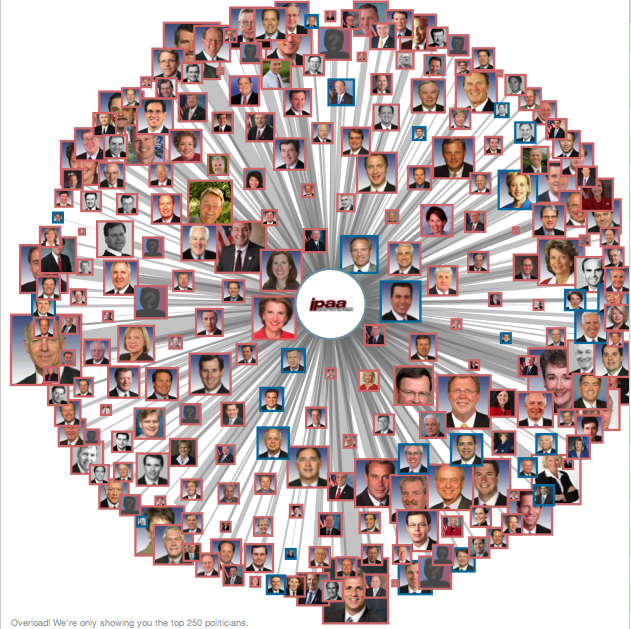
In addition, Truthland has been used as a tool of the natural gas industry to counter Gasland, particularly in rural areas, where residents are being approached by the oil & gas industry. Often the film is shown at “public forums” without people knowing that this is an industry created piece of propaganda.
However, grassroots groups are also exposing the film as a fraud. In one example, the blog Marcellus-Shale.us has posted great information about Truthland. The site even states that the film website was registered by the Energy giant Chesapeake Energy Corp.
In addition, it was discovered by several other groups that the film Truthland was part of a larger PR campaign, which even included Astroturf groups posing as pro-fracking protestors.
The blog that uncovered this PR campaign also states:
After first appearing on YouTube in the first week of June, Truthland was quickly withdrawn from the website when it began to pick up hits, alarming supportive viewers. On a natural gas-leasing web forum, a member claiming to represent the Joint Landowners Coalition of New York wrote that the film’s unveiling was the responsibility of “Susan Oliver a ‘communications consultant’ who lives in DC but has acreage in Bainbridge [in Chenango County, NY].” Like many professionals working for the natural gas industry, Oliver tries to keep her work in the PR industry (“Persuasive media relations pro intensely committed to victory”) hidden when it’s more useful to appear to be simply a “NY Marcellus Shale landowner”
The film can be viewed online and is worth watching, so people who understand the seriousness of fracking can respond to the absurdity of its claims.
What you need to know about Mlive article headlined, “What you need to know before you lease your land for oil & gas exploration”
Mlive posted a second story relating to oil & gas land leasing today, with the second one providing information about a meeting this Thursday in Holland at Olive Township Hall.
This second oil & gas related story includes some rehashing of information from the first story and uses former Michigan Lt. Governor Dick Posthumus as the poster child for what is looks like to lease your land to private oil & gas companies looking to extract more fossil fuels in the state of Michigan.
However, the bulk of the story uses the perspective of Curtis Talley Jr, which the MLive reporter refers to as a “farm management educator.” Talley will not only be hosting the meeting on Thursday in Holland, he will be one of the “experts” letting area property owners know what they need to do if they are approached by oil & gas companies to lease their land.
In addition, to how to go about selling mineral rights to oil & gas companies, Talley is likely to answer questions and share information on hydraulic fracturing since that is the issue that is being raised by residents and environmental groups in recent months.
If Talley follows the same process he did at a meeting he hosted in Macomb County, they he will be sharing information that is pro-fracking and uses sources from the oil & gas industry.
In a handout Talley gave to those who attended the Macomb County meeting in September, one would find several instructive bits of information from a man who works for the MSU Extension.
The handout includes on page 2 comments about the “excitement” surrounding the growing interest in leasing land to oil & gas companies. Here Talley mentions “concerns” that people have about fracking, but the sources that he sites to put those concerns to rest is a link to the oil & gas industry group known as Frac-Focus. Frac Focus is run by two entities, the Ground Water Protection Council and the Interstate Oil & Gas Compact Commission. Both groups are a partnership between the state and oil & gas industry with no independent representation.
Talley also has a section which discusses chemicals used in fracking, but this section is entitled, AMERICAN PETROLEUM INSTITUTE BEST PRACTICES FOR
GROUNDWATER QUALITY AND TESTING. Again, the group Frac-Focus is sited as the source that will answer concerns people have about chemicals used during fracking. What Talley doesn’t tell people in the handout and is not likely to tell people is that Frac-Focus is a site for the oil & gas industry to self-post information on the testing they have done in regards to chemicals and ground water. This should raise red flags for anyone, since the oil & gas industry has a horrendous track record when it comes to the environmental and human health consequences of drilling for oil & gas.
Lastly, it is worth noting that Curtis Talley has information on the movie Gasland and the petroleum industry fake-movie response TruthLand.
For those who want to listen to an hour-long presentation, with slides, from Curtis Talley on the matter of leasing land to oil & gas companies and fracking, go to this link and you will hear for yourself that Talley is an apologist for the industry, something that MLive does not acknowledge in their story.
Reclaiming Our Lineage: Organized Queer, Gender-Nonconforming, and Transgender Resistance to Police Violence
This article by Che Gossett, Reina Gossett, and AJ Lewis is re-posted from The Scholar & Feminist Online. Editor’s note: This is just one of a whole series of article that we recommend on radical queer politics.
The riots that erupted at the Stonewall Bar on Christopher Street on the night of June 28, 1969, like the one at San Francisco’s Compton Cafeteria in 1966, signaled a real turning point in queer activism. And yet, rather than being narrated as an urgent act of resistance and rebellion against state violence, the story of the Stonewall riot has been refashioned into a homonoramative tale of the LGBT community’s first proud public proclamation of gay identity and rejection of social stigma. The Compton Cafeteria riot was all but erased from mainstream LGBT history, obscuring the fact that the individuals who fought back against the police that evening were not simply members of San Francisco’s gay community, but were also those who most often have to resist police oppression: street youth, gay and lesbian people of color, sex workers, drag queens, transgender, and gender-nonconforming people. Indeed, queer people located outside of the mainstream LGBT movement have much to contribute to an analysis of police violence, as well as to a critique of aligning with the police for “protection.”
That the social and political connections between LGBT communities and policing are so infrequently considered central to LGBT politics is all the more striking when one considers that, in one form or another, strains of LGBT political work have always addressed police violence. There is, in significant respects, nothing new about making police violence central to a queer agenda—indeed it is perhaps only relatively recently that police violence has been seen as anything other than one of the most flagrantly apparent manifestations of LGBT oppression. Before the Stonewall and Compton Cafeteria riots, in fact, even politically moderate groups such as the Mattachine Society, which was founded in 1950 in Los Angeles and later expanded with chapters in the East Coast, were heavily active around issues of police harassment. Printing “What to Do in Case of Arrest” cards and attempting to build collaborative relationships with police forces in order to promote more sensitive police conduct towards gay individuals, Mattachine organized around gay men’s vulnerability towards police violence.[1]
Later, in the politically radical years of the early 1970s, activists of the gay liberation movement looked to the Black Panther Party in their call for an end to the “racist police force,” and prominently espoused an analysis of the police and the prison system as intrinsically oppressive of racial, sexual, and gender minorities alike.[2] As historian Regina Kunzel documents, gay liberation activists marching to commemorate the one-year anniversary of the Stonewall riots marched in front of New York City’s Women’s House of Detention (across the street from the Stonewall Bar), where Afeni Shakur and Joan Bird, Black Panther members, were incarcerated shouting, “Free Our Sisters! Free Ourselves!”[3]
The latter half of 1970s and early 1980s are typically considered the time of collapse of the revolutionary historical moment surrounding the gay liberation movement, and indeed this period saw the fall of the Black Panther Party and other revolutionary groups under the FBI’s COINTELPRO (a secret FBI “counter intelligence program” targeting political groups and often using tactics that were themselves illegal). Although politically moderate groups such as the Gay Activists Alliance, which espoused a comparatively narrow, single-issue approach to gay-positive political reform, were founded in the late 1960s and active in the early 1970s, as the United States became more conservative over the ensuing decades this single-issue approach eventually came to be predominant.
However, the mid-1970s also gave birth to many of the first antiracist and queer of color organizations. Groups such as Salsa Soul Sisters (the first black lesbian organization), Black and White Gay Men Together (BWMT), the National Coalition of Black Lesbians and Gays, Dykes Against Racism Everywhere (DARE), and the black lesbian and feminist Combahee River Collective had all formed by 1980, and all included an analysis of policing issues in some capacity in their work. DARE, Salsa Soul Sisters, BWMT, and other New York City-based activists came together in the fall of 1982 to mobilize in response to the September 29th police raid on Blue’s Bar, a predominantly black gay bar on 43rd Street in Midtown. Queer activists’ response to the incident heightened the levels of attention to police brutality against LGBT people both within and beyond the gay and lesbian community. The lasting legacy of the Blue’s raid could be seen a little over a year later, when James Credle of BWMT addressed the congressional hearings on police brutality in Brooklyn specifically on the subject of the Blue’s raid and police abuse of gays and lesbians. Reminding his audience that it was not an accident that queer people of color and transvestites led the revolt at Stonewall, Credle asserted to the House Subcommittee on Criminal Justice:
While we are often stereotyped as members of a single community, our roots emerge from and encompass multiple ethnic and racial identities. We have suffered, and continue to suffer, brutality as blacks, Hispanics, Asian and Native Americans, in addition to our third-class status as lesbians and gay men. All of us who have been maimed, physically and emotionally abused, unlawfully arrested—yes, even tortured and killed—have yet to receive any note of recognition or acknowledgement that we too are victims of police harassment and brutality. If we are serious about the eradication of such brutality from our community, then we must acknowledge the widespread abuses which occur daily against lesbians and gay males.[4]
Credle presented a nuanced understanding of the police force’s systemic and pervasive oppressive relationship with LGBT communities as well as the role of intersectionality in determining who among those communities were historically the most vulnerable to police abuse. Although none of the officers involved in the Blue’s incident were criminally prosecuted, the incident became a catalyst for coalition building and promoting internal dialogue about community-based responses to police violence. The work of DARE, BWMT, Salsa, and others would eventually lead to the formation of an ad hoc Anti-Police Abuse Coalition in the summer of 1984, the goals of which included a formal apology from the NYPD, as well as to the organization of “a network capable of mobilizing at a moment’s notice to stand up to the police” and to “express […] solidarity and build alliances with other oppressed communities who are fighting police abuse.”[5]
As the burgeoning impact of AIDS in the 1980s and 1990s brought with it a resurgence of queer militancy reminiscent of post-Stonewall radicalism—most notably with the emergence of direct action-oriented groups such as ACT-UP and Queer Nation—so too continued the struggle of queer resistance against police violence. Often, however, these groups exemplified the ways in which gay “antiviolence” activism had come to be fraught with conflicting ideas about and approaches to addressing the perceived threat of antigay violence. Though they championed their confrontational style of direct action politics and radical, antiassimilationist ethos, Queer Nation, for instance, espoused an analysis of antigay violence that did not posit the threat of violence as coming from the state but rather looked to the police force, if not as a de facto ally, than certainly as a potential source of support.[6] In this respect, Queer Nation exemplifies a trend noted by Christina Hanhardt that, in the decades following Stonewall, gay vulnerability to antigay violence came to be perceived as the “vulnerability of the crime victim.”[7]
In this sense, Queer Nation and its spin-offs—in particular the Safe Street Patrol and the Pink Panthers—embodied a significant shift away from the critiques of state- and police-perpetrated violence espoused by gay liberationists and their allies in the new left and carried forward by antiracist queer activists in the 1980s and 1990s. This shift in emphasis became institutionalized when the national lesbian and gay organizations, like the Human Rights Campaign and the National Gay and Lesbian Taskforce took up support for “hate crimes legislation” in the 1990s. These laws increase sentencing and hence can also increase the already unprecedented numbers of people incarcerated in the United States.
Throughout the long history of policing of queer communities in New York City, queer, trans, and gender-non-conforming people have creatively resisted and simultaneously survived police brutality and police violence. Through direct confrontation with the police, intervention in police violence, and concrete attempts at rethinking safety and realizing that vision, queer and trans people, particularly low-income and queer and trans people of color, have sought to change and dismantle policing and create real alternatives to the police state.
In the contemporary moment, while the mainstream LGBT movement continues to advocate for the inclusion of gender identity and sexual orientation in state and federal hate crimes statutes, there are numerous examples of grassroots efforts to challenge homophobic and transphobic violence within the context of a broader movement to decrease our reliance on police, prisons, and courts. Groups like the Southerners on New Ground, the Safe Outside the System Collective at the Audre Lorde Project, Critical Resistance, Justice Now!, INCITE!: Women of Color Against Violence, and many others, actually work in the same spirit of the more liberatory post-Stonewall movements to create spaces to dream, think, and create police-free zones, community accountability mechanisms, and ways of resisting violence.
These organizations continue this project because policing of communities that can be called deviant continues to the present day and is even intensifying in some respects. For example, in July of 2006 Washington DC Mayor Anthony Williams signed the Omnibus Public Safety Emergency Amendment Act, which allowed for prostitution free zones (PFZ) to be implemented throughout the district. Similar to drug- and gang-free zones created in the 1990s as a part of the continuing racialized, policed, militarized, and antipoor “war on drugs,” prostitution-free zones are marked by warning signs and cast a wide net of criminality over a host of identities (trans women, sex workers, and people of color) and actions (congregating in groups, waving at the corner, possessing condoms or cash).
Fears about the “prostitute” are often augmented by hysteria over the presence of people of color in public space who may be simultaneously eroticized, considered “dirty,” and security threats (e.g., “loitering” Latinos) (McArdle, 2001; Cleaveland and Kelly, 2008). Profiled as prostitutes with alarming frequency, transgender women of color are targets for arrest and harassment by police who act out societal stigma against gender-nonconformity (Amnesty International, 2005). Different frameworks can drive policing and surveillance of other forms of sex work, such as massage parlors. Police raids may be framed as “rescues” of trafficked women (Sex Workers Project, 2009), or they may be based on similar fears of congregating “illegal immigrants” who challenge public safety.[8]
Trans justice activist Darby Hickey argues that the implementation of PFZs simply makes a de facto practice de jure. “The intent [of the PFZs] was to legitimize a practice the police have been doing for years, it was not new, it was just legitimized again in the law, not a whole lot changed, now police had an official phrase for doing what they have always done.”[9]
Mallory Teefari, trans activist and harm reduction practicioner, has worked with street sex workers and in the DC trans community since the 1970s, and described the long history of attempts at social control by police:
All through the years the [Metro Police Department] sought means and ways to actually control the trans and sex worker market in Washington DC, by zones, by identification as workers, by means of ID-ing. […] Groups were formed like the DC Transgender Coalition, DC Care Consortium, and Transgender Health Empowerment, and activists started looking into reasons and ways to combat oppression and help the transgender community to deal with issues like health, legal issues of arrests—to try and understand the community that has basically always been an aspect of DC: a transgender street culture.[10]
Organizations mobilized in response to the policing of sex workers in DC, the legislating of the PFZs, and to advocate for alternatives to policing. The Alliance for a Safe and Diverse DC was established in 2005 by community members and advocates in response to an assemblage of proposed laws targeting sex workers and those involved in street sex economies, such as the Prostitution Nuisance Abatement Amendment Act, the Omnibus Public Safety Act, and the Anti-Prostitution Vehicle Impoundment Amendment Act.[11] The Alliance for a Safe and Diverse DC established a community-based research team, which included many people directly impacted by the PFZs. Research team members had significant experience working on “topics of sex work, HIV, drug use, LGBT and immigrant communities, racism, homelessness and community organizing.”[12] The team conducted research over the course of 2007, and finished and published their findings in 2008. The research culminated in “The Move Along Report: Policing and Sex Work in DC” (PDF). The final portion of the report consists of a series of recommendations to the mayor and DC Council, the Metropolitan Police, US Attorney’s Office, the Office of Police Complaints, funders, sex worker organizations, and human rights advocates. The recommendations call for a, “city wide review of the laws, policies and practices regarding the policing and regulating of adult public sex,” and the report proposes that the PFZs be repealed or a moratorium enacted. However, in spite of these recommendations, DC police posted PFZ signs along 5th and I streets during the inauguration of President Obama,[13] and Prince George’s County recently adopted PFZs.[14] In November new legislation was also proposed to extend PFZs in Washington DC indefinitely.[15]
Campaigns like that of the Alliance for a Safe and Diverse DC work to reshape the radical legacies of the Stonewall and Compton Cafeteria uprisings toward a still more expansively liberatory future. This future can be realized by standing in solidarity with—and taking direction from—the vibrant queer and trans organizing led by queer and trangender youth on the Christopher Street Pier in New York City (see FIERCE! article in this issue), as well as with campaigns happening south of New York City, like the sex workers in DC organizing against prostitution free zones or the trans women of color in Memphis, Tennessee organizing in response to the police violence against Duanna Johnson. Arrested in February of 2008, Johnson, a black transgender woman, was verbally and physically assaulted by police at the Shelby County Jail. She spoke out against the violence in the local news media and initiated a federal lawsuit against the Memphis police department for civil rights violations.[16] Nine months later, she was found murdered, execution style, near her home in North Memphis.
Unfortunately, many of the largest national LGBT organizations constantly recall and reference the liberatory and antipolice “Stonewall” riot as a battle cry for their homonormative agenda: marriage, military inclusion, access to the market, and hate crimes legislation. The narrow and singular pressure to accept this agenda and assimilate into mainstream society elides the rich and dynamic history of our movements for liberation and self-determination. A critical analysis about the dangers of aligning with the police, and an alternative practice of building real protection from violence in the form of strong and diverse communities, is part of that rich heritage. Remembering our radical history, and reclaiming ownership over it, is a powerfully transformative act of love for the value of our movements and our lives.
MLive headline on oil & gas interests in Kent County is misleading
This morning, MLive posted a story about the increased interest from oil & gas companies to purchase mineral rights for oil & gas drilling in West Michigan.
The headline reads, “Find out where oil and gas leasing is booming across Lower Michigan.” Such a headline was delightfully welcomed, especially since lots of people in the area have been concerned about where oil & gas companies might be drilling near their property and what the consequences might be.
However, after reading the article one discovers that there are no details of where oil & gas companies are buying land in West Michigan. The MLive reporter builds up some anticipation about finding out which parcels of land have been grabbed up by oil & gas companies by telling readers about how the Kent County Chief Deputy Registrar has seen a significant increase in signed leases in Kent County.
Unfortunately, no details on which parcels of land that have been leased by oil & gas companies follows. It seems clear that the reporter talked to the official from Kent County, either in person or on the phone, so why not get details on which companies and which parcels of land have been leased for mineral rights? Seems like a logical question that the general public would certainly benefit from.
The article does tell readers about companies doing oil & gas exploration up north and that Barry & Allegan Counties have been hotbeds of oil & gas activity, but the only company identified operating in West Michigan is Western Land Services. The MLive reporter talked to a representative from Western Land Services, but their response is, “To detail what we’re doing and what we’re looking for and what we’re after, I’m not at liberty to discuss.”
This is where the MLive article ends, meaning they didn’t question such a response or try to find any information out about the company that would be useful public information. Instead, all readers get is a hyper-link to the company, which upon viewing tells us virtually nothing of value.
What we could find on Western Land Services was limited, but there is some useful information. Western Land Services has offices across the country, but primarily works on behalf of oil & gas companies to purchase land or leasing rights, sort of a front company or go between, in order to protect the companies who will actually be doing the oil & gas extraction. A recent example in Michigan was when Western Land Services was hired by Chesapeake Energy Corp, according to a story from Reuters. The Reuters piece talks about how many land owners in the Traverse City area were approached by companies like Western Land Services on behalf of Chesapeake Energy Corp and that there is now a lawsuit against the fossil fuel giant because of fraudulent practices.
So, not only does MLive not give us details about which parcels of land have been leased in Kent County by oil & gas companies, they didn’t do much work to actually inform the public about the companies seeking to profit from oil & gas extraction.
PACs have raised over $34 million so far in Michigan, one DeVos PAC has given $500,000
According to the Lansing-based group, Michigan Campaign Finance Network, $34.7 million has been raised by Political Action Committees as of the most recent campaign finance filing deadline.
The most recent report states in part:
Michigan’s top 150 state political action committees have raised $34.7 million through the October campaign finance reports. That total is the lowest recorded since the 2004 election cycle for the state’s top 150 PACs.
Rankings were compiled by the nonpartisan Michigan Campaign Finance Network from reports filed with the Michigan Bureau of Elections.
The relatively low total reflects the absence of two PACs that topped the state list the last three election cycles: Coalition for Progress, which topped this list in 2006 and 2008, and the Republican Governors Association Michigan PAC, which the set the record as Michigan’s largest PAC ever in 2010.
Another factor contributing to the relatively low total may be the huge volume of money flowing into state ballot committees this year.
The House Republican Campaign Committee leads the list of PACs this year at $2,413,905. It is followed by the House Democratic Fund at $2,012,838.
The rest of the top ten PACs are: Senate republican Campaign Committee, $1,552,849; Michigan Association of Justice PAC, $1,495,502; Michigan Education Association PAC, $1,290,563; Blue Cross/Blue Shield PAC, $1,043,396; Michigan Regional Council of Carpenters PAC, $819,043; Business Leaders for Michigan’s SuperPAC, $796,250; United Auto Workers Voluntary PAC, $675,688; and, Michigan Beer and Wine Wholesalers PAC, $675,688.
Looking at the top 150 PACs in Michigan, one can see the usual suspects in terms of which companies, associations and sectors are trying to use money to influence the electoral outcome.
The state Chamber of Commerce and several regional Chambers have given over a million, trade unions have given over a million, and several political party affiliated groups have done the same.
In addition, energy focused groups like DTE ($544,261), Michigan Petroleum Jobbers ($110,270) and the Michigan Petroleum PAC (68,122) are giving to both oppose Prop 3 and buy influence on oil & gas policy in the state.
Other sectors like the telecom and the automotive industry are buying influence and on the local level the DeVos family has given $500,000 through their group Great Lakes Education Project to push their privatizing/voucher-based education system.
To see a list of the top 150 PACs in Michigan as of now go to this link.
 Grand Rapids Institute for Information Democracy