Palestine Solidarity Information, Analysis, Local Actions and Events for the week of May 4th
It has been 19 months since the Israeli government began their most recent assault on Gaza and the West Bank. The retaliation for the October 7, 2023 Hamas attack in Israel, has escalated to what the international community has called genocide, therefore, GRIID will be providing weekly links to information and analysis that we think can better inform us of what is happening, along with the role that the US government is playing. We will also provide information on local events and actions that people can get involved in. All of this information is to provide people with the capacity of what Noam Chomsky refers to as, intellectual self-defense.
Information
Call from Gaza Unions to US Workers: Put Your Solidarity Into Action to Stop the Genocide
The Myth of Conquest: Why Gaza Will Never Be Subdued by Israel
Screaming Soldiers and Open Revolt: How One Video Unmasked Israel’s Internal Power Struggle
NO LABOR FOR GENOCIDE – NO COMPLICITY WITH APARTHEID
‘Genocide in Action’ as 60-Day Blockade Plunges Gaza Into Mass Starvation
Analysis & History
The Ongoing Gaza Genocide and the State of “Ceasefire” Negotiations
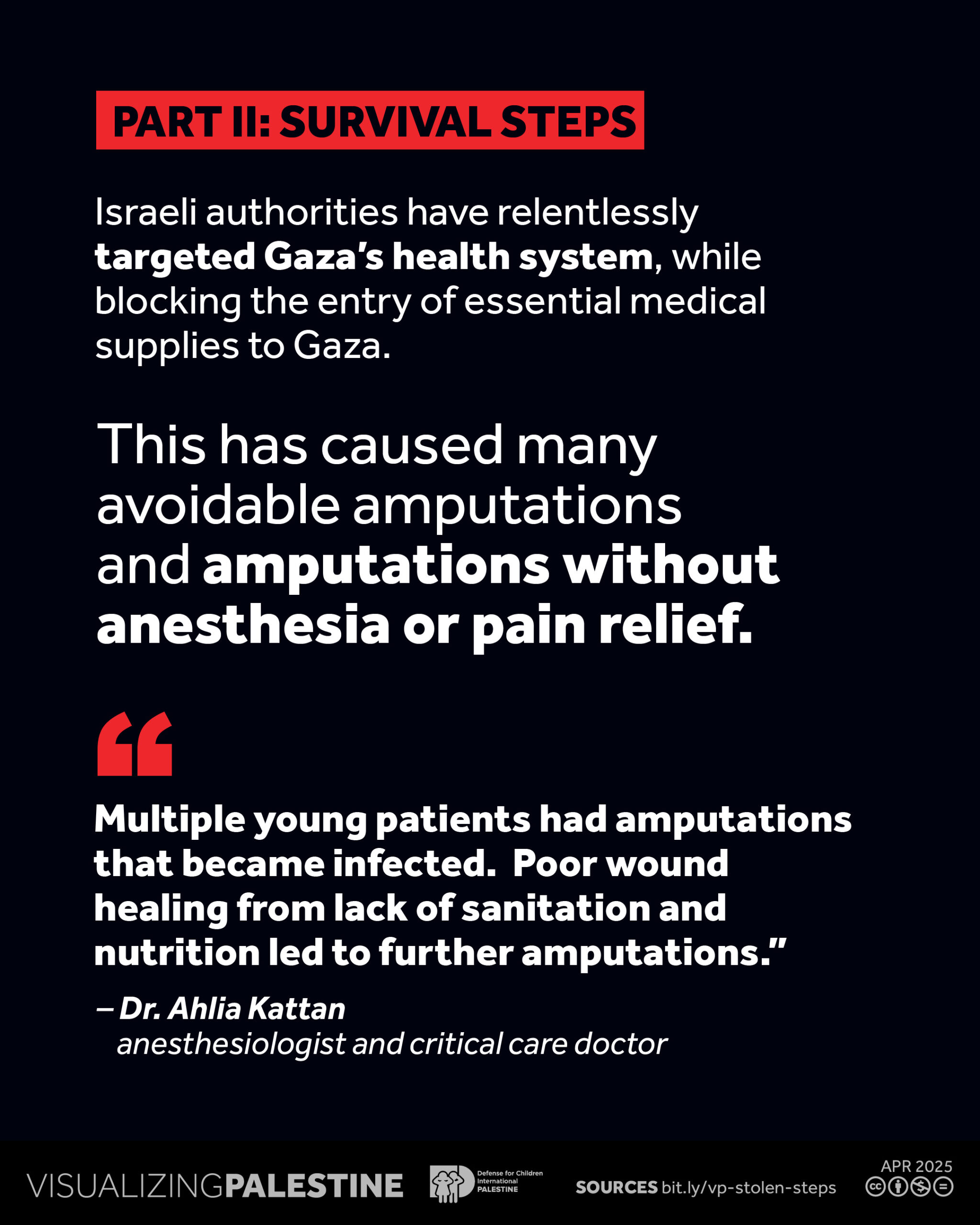
Image used in this post is from https://visualizingpalestine.org/visual/stolen-steps/
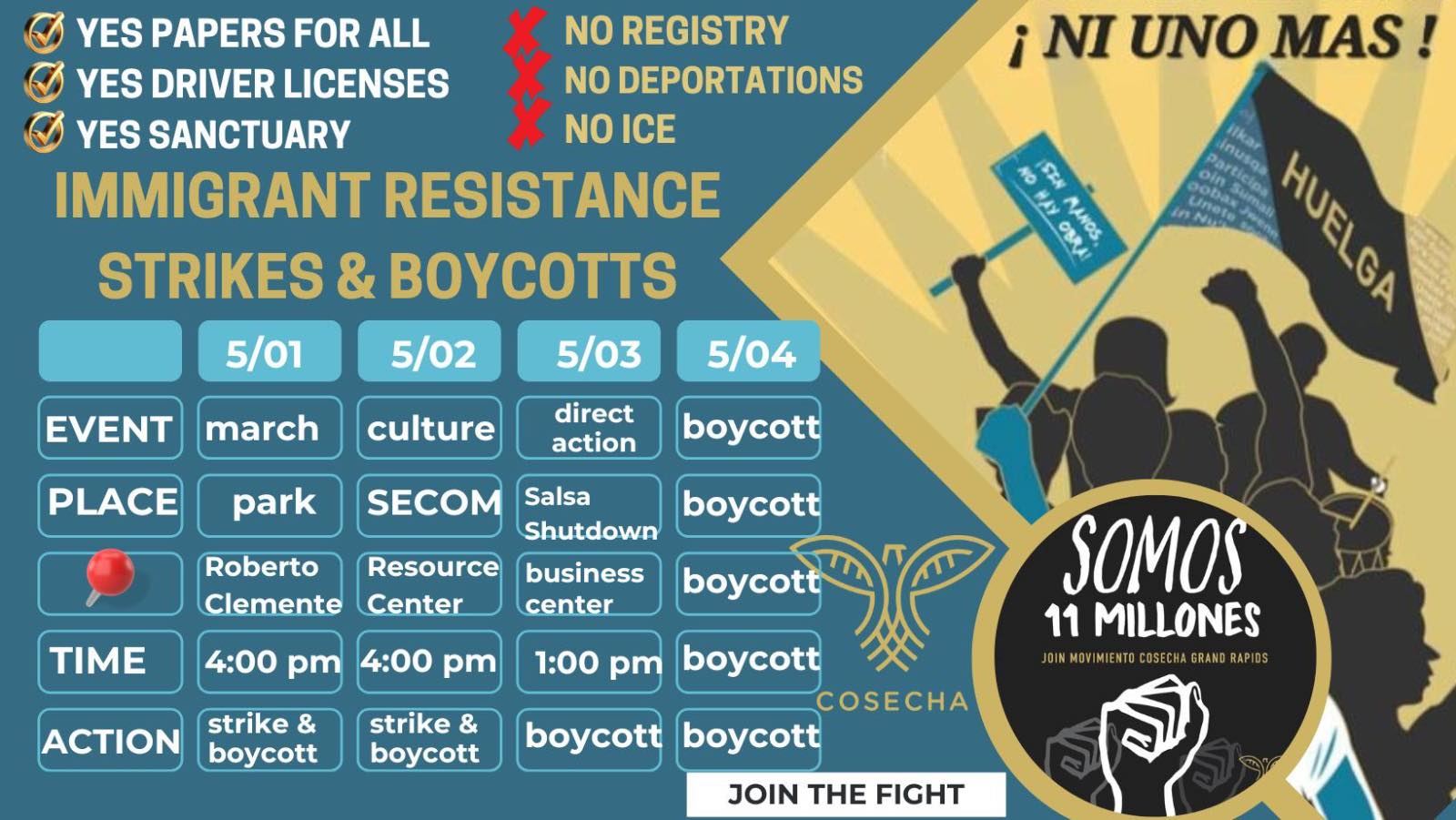
Last night, Movimiento Cosecha hosted the second event in their 4 days of immigrant resistance. Yesterday, I posted about the May Day march and in today’s post I want to talk about the Cosecha cultural event and the Sanctuary announcement.
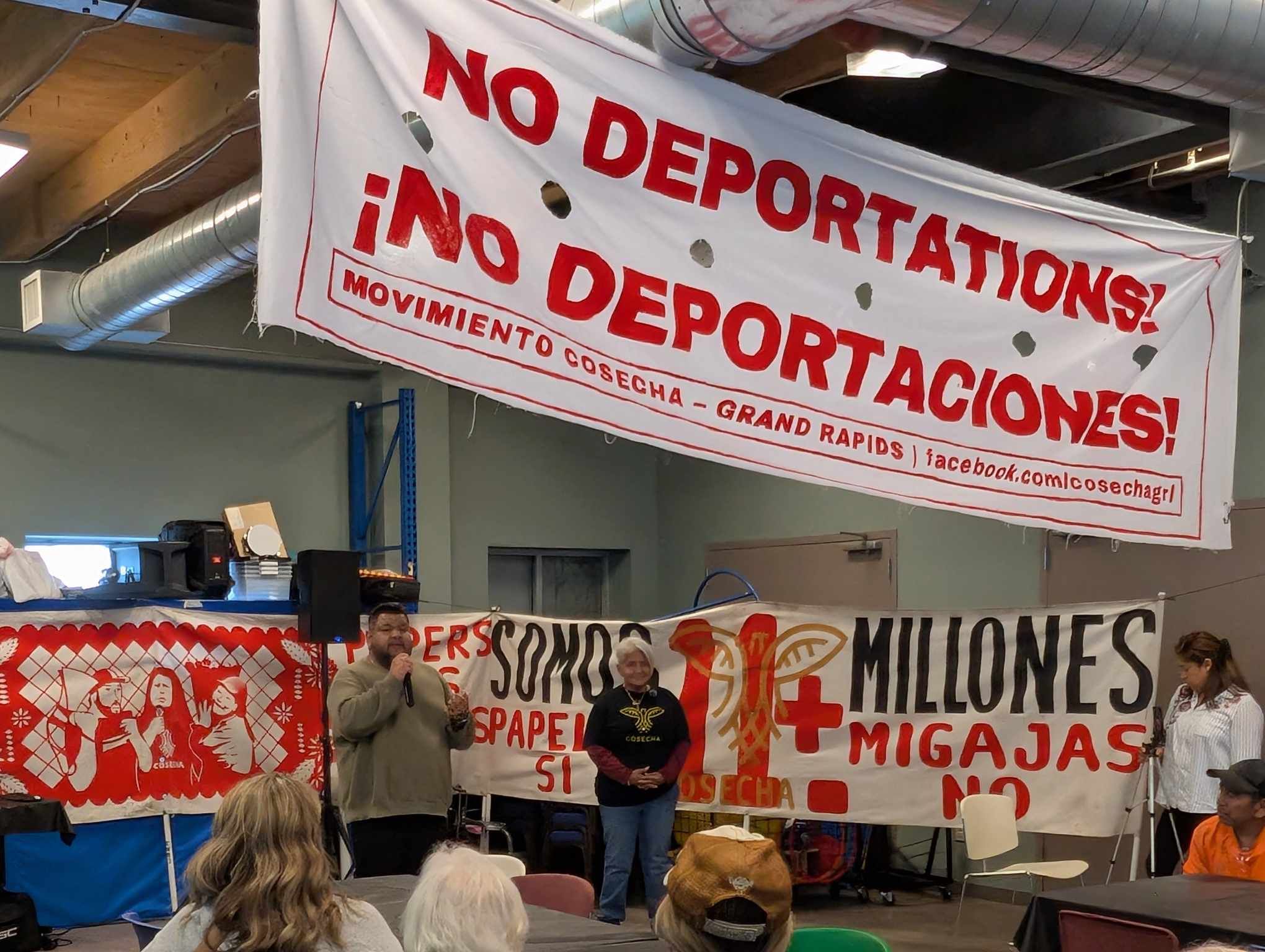
It is always vitally important for those that are engaged in resistance and movement work to engage in building community. Last night’s cultural event organized by Movimiento Cosecha did just that.
First, there was the great food. Second, there was amazing music and dancing. Third, there was the pinatas that engaged lots of children. Fourth, and most importantly, the event provided a wonderful opportunity for people to meet, to talk, to share stories and to deepen relationships. Relationship are critical for movement work, since we can not only build trust, we can collectively take action at a deeper level, as Southerners on New Ground (SONG) reminds us with their relational organizing model.
 However, on top of all the beautiful aspects of the community building and cultural event that Cosecha fostered last night, there was an additional act of inspiration. The event was held at SECOM on Friday night, an early on in the event, the director of SECOM, Pablo DeNooyer Garcia, made the announcement that SECOM would also be a Sanctuary space for undocumented immigrants.
In the span of 5 days, there have now been two community-based organizations that have publicly announced they would be safe spaces for the communities affected by the threat of mass deportation. On Monday, LincUp declared their commitment to being a Sanctuary space, and last night SECOM.
As Cosecha organizer Gema Lowe has said recently, “If the City of Grand Rapids or Kent County won’t declare themselves a sanctuary space, then the community will do it. We take care of ourselves.”
On Friday morning, MLive reported that the Michigan State House passed legislation that, “would withhold a majority of state funding from counties and cities that limit cooperation with federal immigration authorities.”
MLive also noted that “the bill was passed with support from all Republicans and five Democrats – state Reps. Peter Herzberg, D-Westland, Tullio Liberati, D-Allen Park, Denise Mentzer, D-Mount Clemens, Mai Xiong, D-Warren, and Angela Witwer, D-Delta Township.” The bill now goes to the Michigan Senate to see if they will also adopt an anti-sanctuary position.
 What we have been hearing from local government, with the City of Grand Rapids and from the Kent County Commission, on why they won’t adopt a sanctuary policy comes down to one of two things. First, some have said that immigration is a federal policy, which they have no control over, so they won’t take a position. The second reason that we have heard repeatedly is that if the City or the County adopted a sanctuary policy it would put a target on their back, from both the federal government and now potentially the State of Michigan.
One response that immigrant organizers have given to these justifications from local government officials is that immigrant communities always have a target on their backs. In the midst of these kind of repressive policies, when the federal, and possibly the state government, wants to punish people, now is the time to stand with those most impacted by the repression. Indeed, this is the very essence of solidarity, when those who carry more privilege are willing to defy systems of power and oppression and stand with those most affected. This is what SECOM did last night!
Editor’s note: As a matter of transparency, I was one of the police liaisons for the Cosecha May Day march.
Movimiento Cosecha kicked off their four day strike and boycott with their annual May Day march. The march began at Clemente Park in the southwest part of Grand Rapids, which is the heart of the Latino community.

As people began to slowly trickle in to the park, a group of 10 GRPD bike cops rode in and and positioned themselves across the street from Clemente Park. Several minutes later the two GRPD cops made their way over to the park, ignored the police liaison who attempted to speak with them, and came over to the park pavilion area to address those who came to support Cosecha.
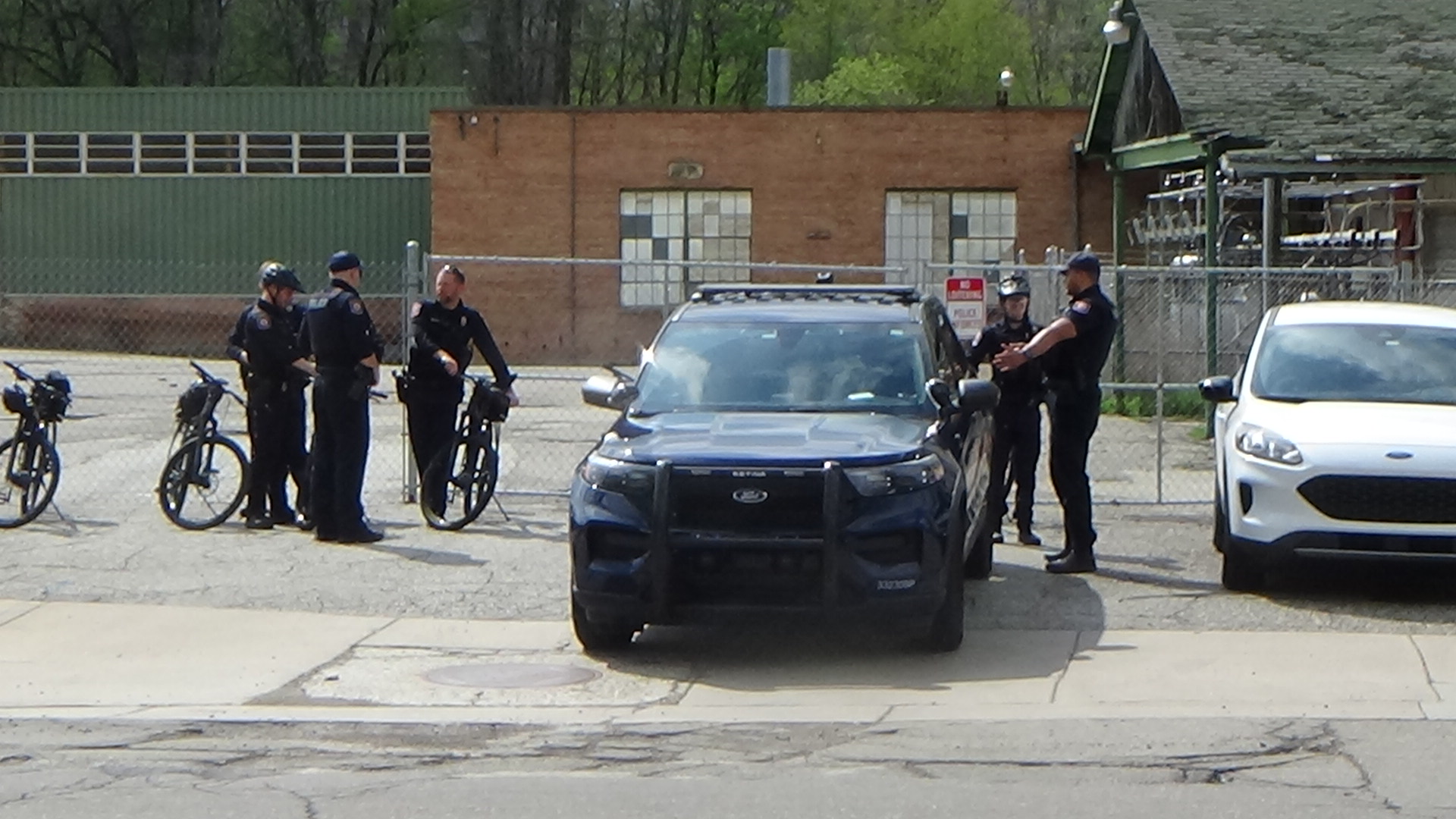
The GRPD then announced that they were there to clear a path for the march and make sure that our first amendment rights would be protected. Besides being a load of bullshit, this was meant to be a PR stunt for those who were present. A few minutes later they shared their real intention for being at the march, which was to threaten people with arrest. The GRPD cops told the police liaison that if anyone marched in the street they would be arrested. If the started in the street and moved to the sidewalk they would be arrested. If the march included a safety vehicle in the front or the rear of the march, the drivers would be arrested and their vehicle impounded.
Back at Clemente Park, Cosecha organizers providing a framework for why May 1st is an important day for both workers and immigrants alike. This was followed by a local Latino minister offering up prayers for safety and for justice. However, just before the march began, we founded out the legal observers who were present that the GRPD had pulled over the Cosecha vehicle and gave them a ticket for “excessive horn honking.”
The marching finally got underway, with people walking on the sidewalk down Godfrey to Market Avenue. The GRPD bike cops followed along the route making sure that people did not walk on the street.

The marchers made their way to Wealthy Street and then crossed over US 131 on the Wealthy Street overpass. One thing about the GRPD’s threat of arrest against marching in the street is that they don’t realize that walking on the sidewalk stretches the march further then it would be if people were in the street. I say this only to point out that walking on the sidewalk actually disrupts traffic more, particularly at major intersections and the overpass roads.

 The Cosecha march arrived at the corner of Wealthy and Division, where people gathered in front of the Catholic Diocese building. There were a few speakers at this point, with the main speaker being from Cosecha. The immigrant-led organization chose to stop in front of the Catholic Diocese building to challenge them to take action in favor of immigrants and to publicly oppose the threat of mass deportation coming from the Trump Administration. After reading a statement, Cosecha organizers then took a copy of the statement, in both Spanish and English, and taped them to the front door of the Catholic Diocese building, Martin Luther-like.
At this point the plan was for people to use the crosswalks at the intersection of Wealthy and Division, starting on the east side of the intersection walking south, then cross Division going west, then cross Wealthy going north, etc. Again, since we were walking 2 or 3 abreast, marchers took a while to cross the intersection, which also disrupted traffic. However, those marching only crossed when there was a signal to walk, thus following the traffic signals.
At this point the GRPD were rather enraged at what was happening and they pulled both of the police liaisons off to the side to question them, using bike cops to kettle them from those participating in the march. We were told that we were being detained. Eventually, the police liaisons were let go and the march continued south along Division, then eventually made their way west on MLK Street, back over US 131, then jogging over to Rumsey Street and back to Clemente Park.
Cosecha organizers thanked everyone for coming, talked about the next several days of events/actions, along with announcing the upcoming Cosecha Assembly that will take place on May 16th in the evening at the Linc Up gallery near Hall and Madison SE. Check the Movimiento Cosecha GR Facebook page for updates on the May 16th Assembly, where information should be posted soon.
GRIID weekly audio digest – #4
 In the fourth installment of the GRIID audio digest, we bring you the following six stories from this week:
- Local news coverage leading up to Schurr’s trial has been influenced by his lawyers, experts, a failure to provide community voices and a pro-GRPD bias
- Grand Rapids Clergy sign a statement of confession to work for justice
- Linc Up partners with Movimiento Cosecha to declare themselves a sanctuary space for undocumented immigrants
- Rep. DeSana announced legislation in Grand Rapids on Monday that would provide greater legal protections for cops at the same time the Schurr trial began
- Before Trump arrives in Macomb, Michigan today, he received a letter from Senators Gary Peters and Elissa Slotkin saying they want to work with him
- Grand Rapids Chamber of Commerce video is filled with misinformation, crafted moments and self-serving commentary by Dick DeVos
GRIID invites our readers to share this audio digest and suggest platforms that we can share these weekly audio versions of our posts.
Editors Note: The fact that Episode #4 aired last night, while white people and other police apologists are still defending Schurr, and a BIPOC organizer sits in jail because they dared to resist state carceral violence, should tell us something about the absurdity of this TV series.
Episode #1 affirmed stereotypes about Black people, thus perpetuating structural racism. The episode also demonstrated that this TV series will be a highly constructed show with the GRPD dictating the narrative about who they are and what they do.
Episode #2 once again centered on a criminal case involving Black people, where Police Chief Winstrom said people who don’t want to talk with cops suffer from “generational mistrust.”
In Episode #3 follows the case of a Black person charged with a shooting, which further normalizes the white supremacist belief that Black people are inherently deviant and violent. In addition, the Black woman who was charged with the shooting experienced domestic violence from the man she shot. The GRPD uses this opportunity to talk about Domestic Violence and how there is a new Domestic Violence court. However, police and domestic violence cases are problematic, as cops don’t know how to deal with domestic violence, plus they often perpetrate more harm in domestic violence cases, which is discussed in this toolkit.

At the beginning of Episode #4 a GRPD cop attempts to create a narrative about how he “shows compassion” to people who are unhoused and addicted. The GRPD then shows up to Heartside Park, where a Black woman has probably overdosed and the GRPD give her narcan. The video cuts back to the same cop we hear from at the beginning who says, “we are sometimes the only people out there that give them any compassion.” To provide some counter context, this is the same GRPD that evicted several dozen people who were staying at Heartside Park in an encampment, just days before Christmas of 2020, in the midst of the pandemic. In addition, the GRPD enforces the City’s ordinance that was passed in the summer of 2023, where unhoused people can be arrested for sleeping on benches in the downtown area or asking people for money, which city officials refer to as “harassment.”
The episode then takes a turn with the story about another overdose case the year before, which the GRPD then claims it might be a homicide, where the person who provided the drugs purposely included other substances.
The case continues, where the GRPD goes back to the cemetery, then cuts to family members and friends talking about this woman. Those who knew the victim showed an image of her on their phone, so now viewers know the woman who died in the cemetery was Black.
Back at the GRPD headquarters, they have a picture of the person who is suspected of providing the laced drugs to the woman found dead in the cemetery. The picture is of an African American man.
The episode then brings us back to Heartside Park, where the GRPD are responding to another overdose case, with Chief Winstrom making the claim that synthetic fentanyl has “taken over the country.” The cops come upon 2 people who have overdosed and both of them are Black people. While dealing with the overdose cases, the GRPD then spot the guy who they had a picture of in the morning’s meeting, which is the same Black man they believe created a bad batch of drugs.
The GRPD Vice Unit then gets involved and decides to go undercover in Heartside Park. The episode then uses drone footage with the undercover cop attempting to buy drugs.
The GRPD are once again back in their headquarters with an update on the undercover cop in Heartside. They say there are 10 potential suspects and then the camera cuts to a document, with someone leafing through it, and viewers see that the 3 suspects they show are all Black men.
In the next scene, the GRPD are back in the park and they ID several of the suspects from the document and apprehend at least three of them, all of which are African Americans. The scene cuts to drone footage, with text across the screen that reads – since the arrests, the mass overdoses have stopped.
The episode ends with the GRPD calling the family members back to their headquarters where they reveal what they have been doing on this case. The family members are understandably emotional and Chief Winstrom tries make it sound that this is some form of closure for them.
After four episodes, every person who is a shooting suspect, a drug dealer, an informant or a victim is Black. The Grand Rapids All Access PD series is not only awful TV, it perpetuate racist stereotypes and it completely exonerates the GRPD for the all the awful shit they do in this city.
Grand Rapids Chamber of Commerce video is filled with misinformation, crafted moments and self-serving commentary by Dick DeVos
The recent 43 second video that celebrates the ground breaking for the new soccer stadium in Grand Rapids was produced by the GR Chamber of Commerce. You can watch the 43 second video here, but what follows is a deconstruction of the video, both what it presented and what it didn’t present.
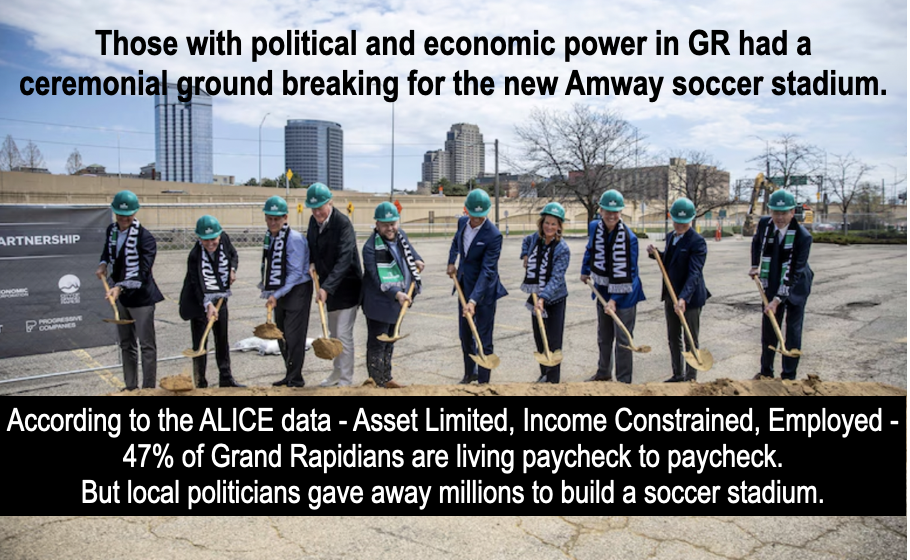
The voiceover for this video is from Dick DeVos, whom you can see in the first few seconds of the video, with his name included and the words Grand Action 2.0 below his name. However, Dick DeVos isn’t just with Grand Action 2.0 in this capacity, his family and the Van Andel family purchased the naming rights to the soccer stadium, which will now be called the Amway Soccer Stadium. In addition, the DeVos and Van Andel families will own the professional soccer team that will play in the Amway Soccer Stadium.
The narrative for the video begins by saying:
Another new chapter opens today, as we break ground for the Amway Stadium. Another chapter opens for the westside of Grand Rapids that has been defining and redefining itself and is now adding a new definition to the westside of Grand Rapids as the home of West Michigan soccer.
The GR Chamber of Commerce video fails to mention several things in the first part of the video, which is the fact that Grand Action 2.0 got the City of Grand Rapids and Kent County to provide millions in public funds for this project, which means the video omitted the public’s role in this development project. The video also omits the fact that the GR Chamber, Grand Action 2.0 and their friends spent about $500,000 to push the hotel tax increase ballot initiative in August of 2024.
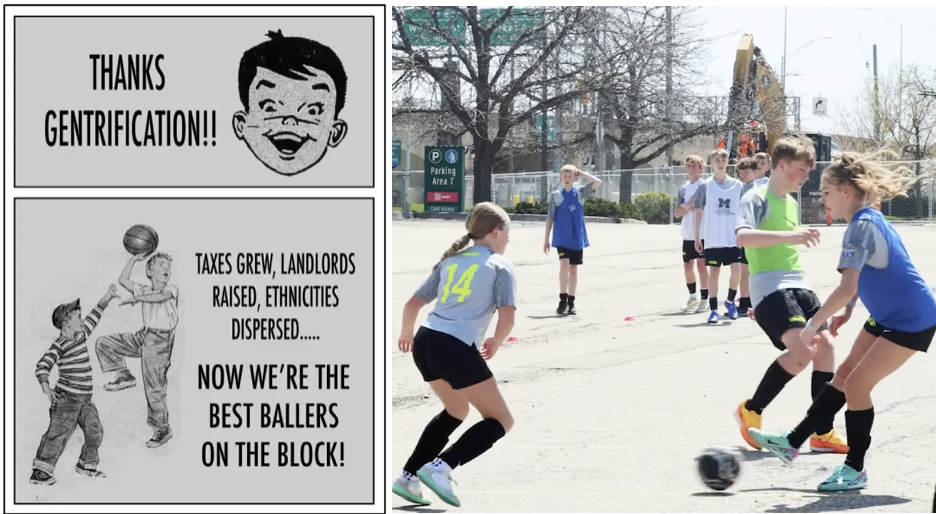
The video shows a group of white kids (these kids were probably brought in from Ada) playing soccer on a parking lot that will be torn up for the soccer stadium. This means there will be less parking around the soccer stadium, which west-siders are up in arms about. There is already a shortage of parking in that area, plus Grand Rapids and Kent County officials are hell bent on attracting as much tourism to downtown as possible. Tourism will bring even more cars to an area where parking is difficult to find, with the added dynamic that Grand Rapids just upped the cost of parking, which also included extending the hours for parking and increasing rates for events.
The GR Chamber of Commerce video ends with these words:
You’re going to have a world class facility, that is going to be able to host world class events, in the middle of a world class city.
World Class?
- Grand Rapids was just named the 27th worst city in the US for Air Quality/Air Pollution, according to the American Lung Association.
- Grand Rapids’ Black homeownership rate is worst among 50 largest U.S. metros.
- According to the ALICE data, 47% of Grand Rapids residents are living paycheck to paycheck.
While Dick DeVos and the GR Chamber of Commerce make a video about the soccer stadium, which will make them millions, the trial for the cop that murdered Patrick Lyoya is happening, and the GRPD continues to brutalize and over-police in Black and Brown neighborhoods. Do you think that is what Dick DeVos meant by when he said Grand Rapids was a world class city?
Donald Trump will be in Macomb, Michigan today to celebrate his first 100 days in office. There are numerous groups throughout Michigan and in the midwest that are planning on being there to protest his visit, especially considering all the harm his administration has caused to working class people, immigrants, those opposing the US-financed Israeli genocide in Gaza, anti-Trans policies and attacks against public education, just to name a few.
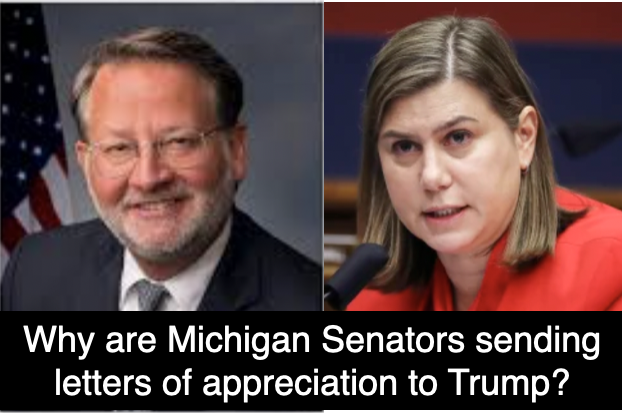
However, people might be surprised that both Michigan Senators Gary Peters and Elissa Slotkin posted a Press Release on Monday, underscoring their willingness to work with President Trump and his Administration to secure a new fighter mission at Selfridge Air National Guard Base in Macomb County. In a letter to President Trump, Peters and Slotkin expressed their appreciation of his recent commitment to base a new fighter mission at Selfridge, which builds on the long-term bipartisan efforts of Peters, Slotkin, and the Michigan delegation at-large to achieve this goal.
So much for being an opposition party.
The letter that Slotkin and Peters sent to Trump states:
Dear President Trump,
“We appreciate your recent commitment to base a new fighter mission at Michigan’s Selfridge Air National Guard Base. Michigan has always stepped up to defend our nation. In World War II, Detroit earned the title “Arsenal of Democracy,” by producing the tanks, airplanes, and equipment that powered the forces of freedom’s victory over fascism and tyranny. Today, that same spirit of grit and innovation lives on at Selfridge. Selfridge is the ideal location for a future fighter mission with the experienced pilots, crews and maintainers, access to world class exercises and training ranges with state-of-the-art infrastructure. As you highlighted, Selfridge has enjoyed bipartisan support from the Michigan Congressional delegation, state and local leaders and the Macomb County community to recapitalize the 107th Fighter Squadron’s A10 aircraft with an advanced fighter. Your announcement is an important step towards realizing our long-held goal and we are ready to work with you, the Department of Defense and the Air Force to identify and base a new advanced fighter mission at Selfridge.”
With all the harmful shit that the Trump Administration has initiated over the past 100 days, one might think that Senators Gary Peters and Elissa Slotkin would be sending Trump a letter of condemnation for how his policies are hurting Michiganders. Instead, the letter includes comments like, “We appreciate your recent commitment”, and “We stand ready to work closely with you and the Department of Defense to make this new mission a reality.”
Now, if people have been paying attention to where Peters and Slotkin have stood on militarism, they would know that Peters not only sits on the Armed Services Committee and has voted for every US military budget bill during his time in the Senate, along with voting in favor of US funding for Israel (Peters has received $626,444 from Pro-Israel groups).
Senator Elissa Slotkin is former CIA and has consistently voted in favor of the annual US military budget while she was a member of Congress. Elissa Slotkin was also the 14th largest recipient of campaign funding from the Military/Defense industry in the 2024 Election.
There are two things that both Democrats and Republicans are equally committed to – the protection and perpetuation of Capitalism, and US Imperialism. This is evident in how Senators Peters and Slotkin have approached President Trump with open arms for the purpose of expanding US military operations at the Selfridge Air National Guard Base in Macomb County. I wonder if people will be protesting against Trump’s potential support for expanding US military operation in Michigan, with the help of Senators Sloktin and Peters?
On Monday, Michigan State Rep. James DeSana (R) was in Grand Rapids to promote legislation that he will introduce on Tuesday with State Sen. Jim Runestad, legislation that according to MLive will, “provide civil immunity to Michigan police officers who use deadly force when acting in self-defense.”
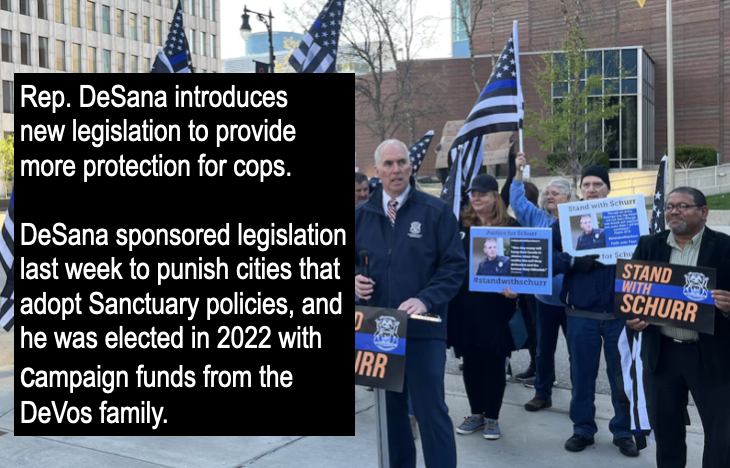
Rep. DeSana made this announcement in front of the Kent County Court House today and he was joined by people who are with Back the Blue Michigan, a pro-police group that formed in 2021. You might remember that I wrote a piece about Back the Blue Michigan last June, an article that exposed the group for their deceitful attempt to collect signatures for a ballot initiative to change municipal charters so that public money would compensate cops for any injury they sustained. Rep. DeSana chose to announce his legislation because it would provide greater legal justifications for cops like Christopher Schurr who’s lawyers are arguing that Schurr was merely defending himself.
MLive said that the legislation that Rep. DeSana will introduce on Tuesday, “would provide civil immunity to Michigan police officers who use deadly force when acting in self-defense.” However, the Michigan Senate Republican site states:
“These bills would protect Michiganders from unjust lawsuits by reinforcing their right to defend themselves without the fear of financial ruin from lengthy and expensive court battles,” said DeSana, R-Carleton. “By establishing a presumption of immunity for those acting in lawful self-defense, this legislation ensures individuals aren’t burdened by civil lawsuits when they’ve done nothing wrong.”
What Rep. DeSana did not tell the media on Monday was that Michigan already has qualified immunity for cops and other government employees under the Governmental Tort Liability Act (MCL 691.1407), which was adopted in 1964.
The MLive article also failed to mention the fact that Rep. DeSana was first elected in 2022 to the Michigan State House and received $1050.00 each from eight members of the DeVos family.
Last week, Rep. DeSana voted for a bi-partisan bill last week (it passed 104 – 4), which would local police departments more money every year.
In addition, it is worth noting that just last week Rep. DeSana sponsored House Bill 4342, which would penalize any municipality that doesn’t cut its sanctuary policies, by withholding state revenue sharing dollars, which fund local police and fire departments, as well as road repairs and sewage systems.
Rep. DeSana said, “My goal in speaking here today is to stress how reckless sanctuary policies are and how they shield criminals and put them before Michigan residents who want to raise their families in safe communities. Communities that choose to ignore our federal immigration laws are putting lives at risk and it’s time we hold them accountable.”
Thus, it seems quite clear that Rep. DeSana is endorsing legislation that mirror’s what the Trump Administration is doing at the federal level, plus he is funded by one of the most powerful families in West Michigan, the DeVos family.
Linc Up partners with Movimiento Cosecha to declare themselves a sanctuary space for undocumented immigrants
Earlier today, Linc Up, Movimiento Cosecha GR and GR Rapid Response to ICE hosted a Press Conference to announce that Linc Up would become a sanctuary space for undocumented immigrants, since their organization serves the undocumented community through their services.
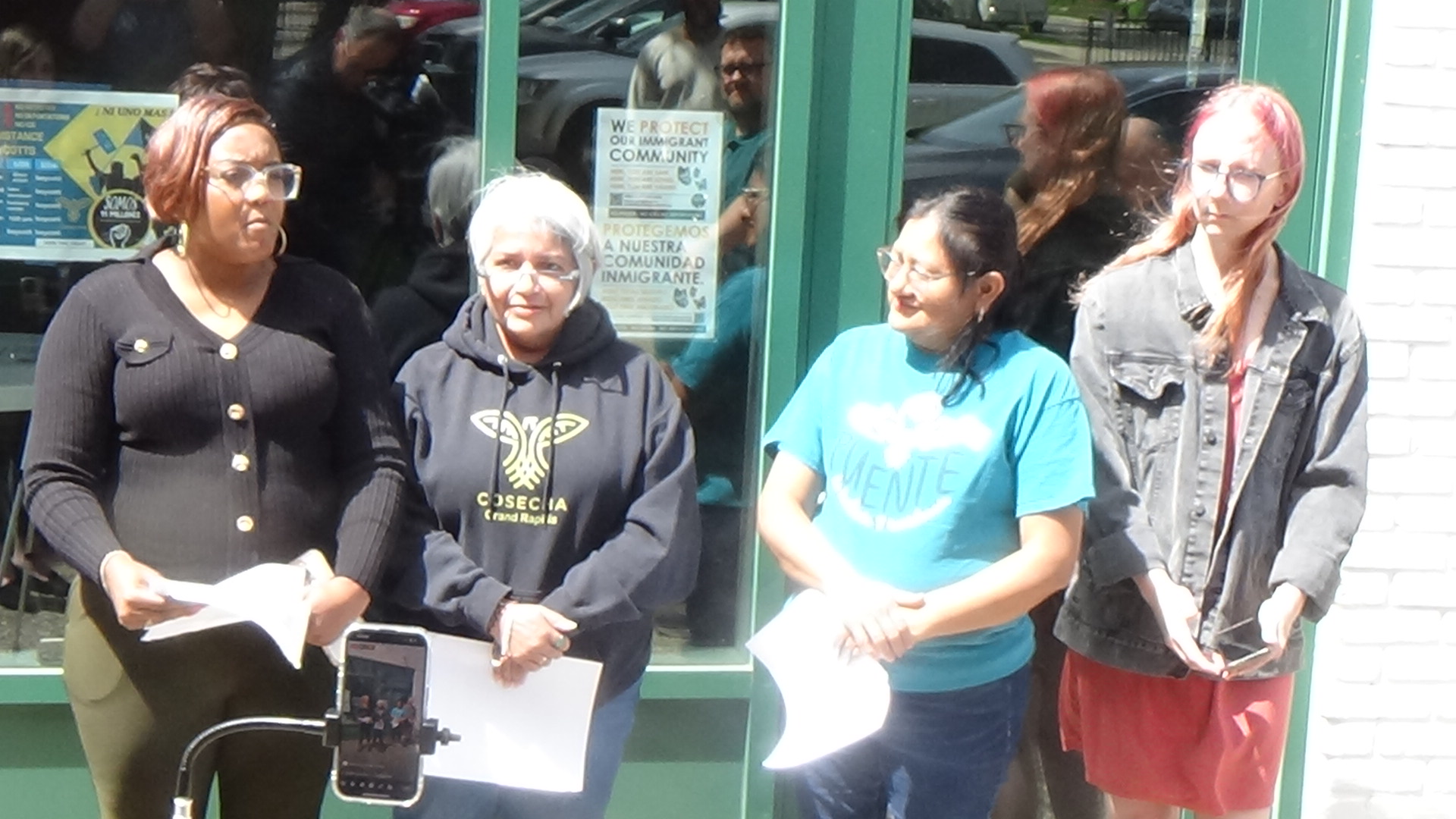
The Executive Director of Linc Up stated:
This event reflects LINC UP’s ongoing alignment with Cosecha’s vital work on the ground to protect immigrant communities and uplift collective care. As part of this effort, LINC UP is also affirming its role as a sanctuary space—a place where immigrant families are supported, seen, and safe.
Gema Lowe, a volunteer organizer with Movimiento Cosecha said:
We are grateful that the first official Sanctuary Space in Grand Rapids begins here with LINC UP Nonprofit Housing Corporation. But our hope doesn’t stop here — we believe this is just the beginning. We call on other organizations, churches, mosques, synagogues, healthcare clinics, and community centers to follow this lead and declare themselves Sanctuary Spaces. Together, we can confront the immediate harm caused by police and ICE violence, while building the collective power needed to create lasting, systemic change for our immigrant community. Our safety, dignity, and humanity cannot wait.
A spokesperson with GR Rapid Response to ICE applauded Linc Up’s decision to become a sanctuary space and, “invited other non-profits and local institutions to do the same, since sanctuary declarations sends a message to the affected community that they are valued and supported, plus it sends a message to those in power that we will not be silent or live in fear, especially when ICE arrests, detains and disappears people from this community.”
After the Press Conference I was able to speak with someone from Linc Up and Movimiento Cosecha who provided brief comments on the importance of this announcement.
For organizations that want to join Linc Up in declaring their space a sanctuary space contact Movimiento Cosecha GR movimientocosechagr@gmail.com or GR Rapid Response to ICE info@grrapidresponsetoice.org.
On Sunday, roughly 25 people gathered at Riverside Park in Grand Rapids to publicly, and collectively, make a statement regarding the belief that, “justice work is not optional to the gospel but central to the call of discipleship”
I was invited to be part of a low key event, where people broke bread together and made a public commitment to be “in covenant with the marginalized, oppressed, and vulnerable.”
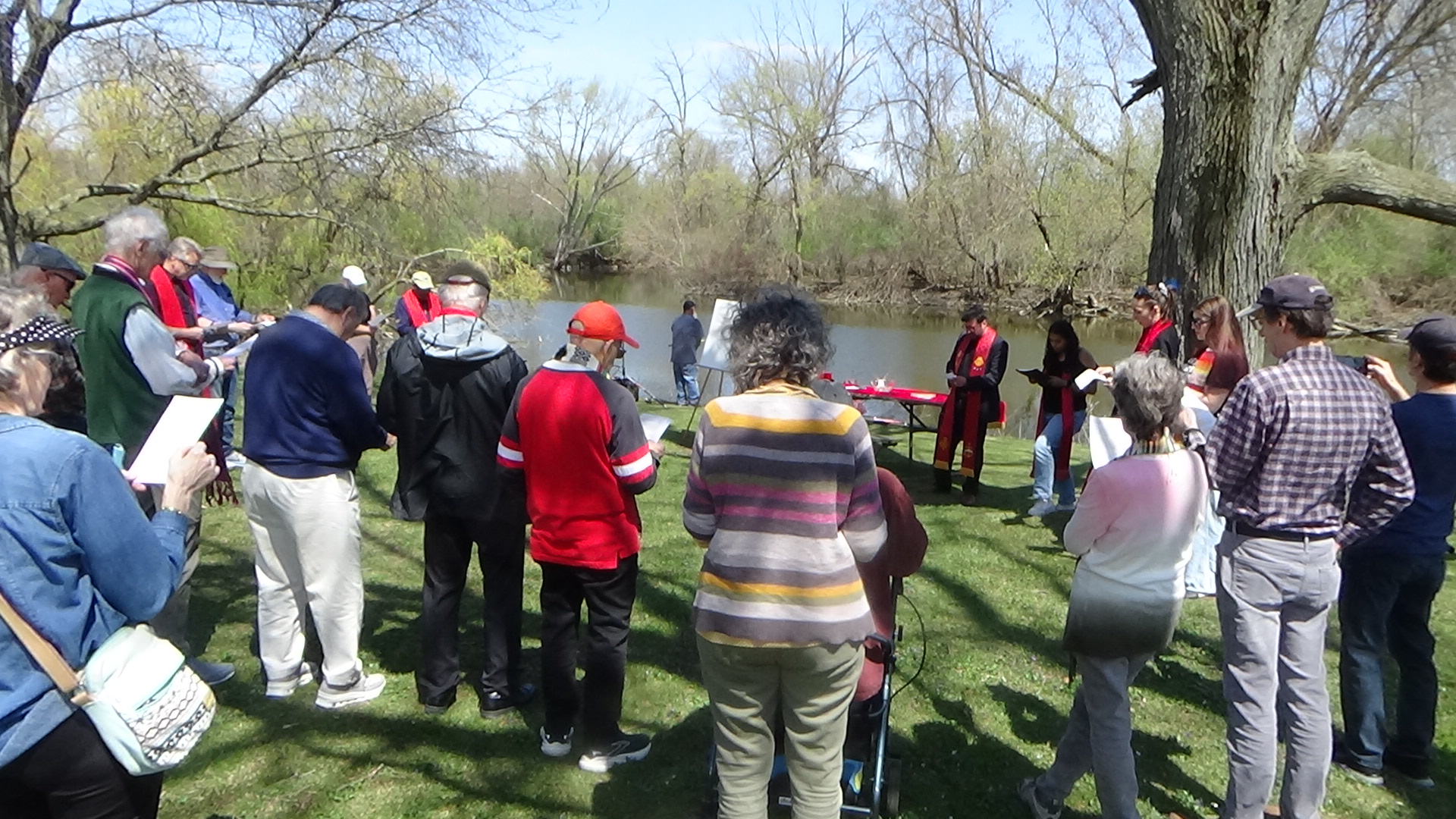
After people introduced themselves, they collectively read the following statement:
Grand River Confession of 2025
As Christian clergy in West Michigan, we confess that justice is at the heart of God’s kingdom. We believe that the gospel calls us to seek justice, love mercy, and walk humbly with our God (Micah 6:8). We affirm that Christ’s ministry was one of liberation, reconciliation, and radical love, and we commit ourselves to following Jesus’ example.
We confess that injustice persists in our communities and that the church has been complicit in systems of oppression. As followers of Jesus, we affirm a theology that calls us to combine our historic faith with the work of justice. We hear and believe that to love God is to love our neighbor, and we repent of the ways we have failed to act for the benefit and in covenant with the marginalized, oppressed, and vulnerable. We will follow the call from Jesus to:
- Love the Lord our God
- Love our neighbor
- Love ourselves. (Matthew 22:37-39)
Rooted in the hope of the resurrection and the promise of God’s kingdom, we will work for justice in our congregations and our communities (Romans 8:18-25). We will stand with the poor, the immigrant, and the oppressed, advocating for policies and practices that align with the values of God’s reign (Psalm 82:3-4).
We find strength in Christ, who came to proclaim good news to the poor and freedom for the oppressed (Luke 4:18). We stand together as communities of faith, believing that justice work is not optional to the gospel but central to the call of discipleship.
After reading the statement, those in attendance were invited to sign the statement, following in the tradition of the many religious groups when confronted with living in difficult times. Many German Christians signed what became known as the Barmen Declaration of Faith, which was also a statement of confession in 1934 in the early years of the Nazi regime. These Christians were part of the Confessing Church.
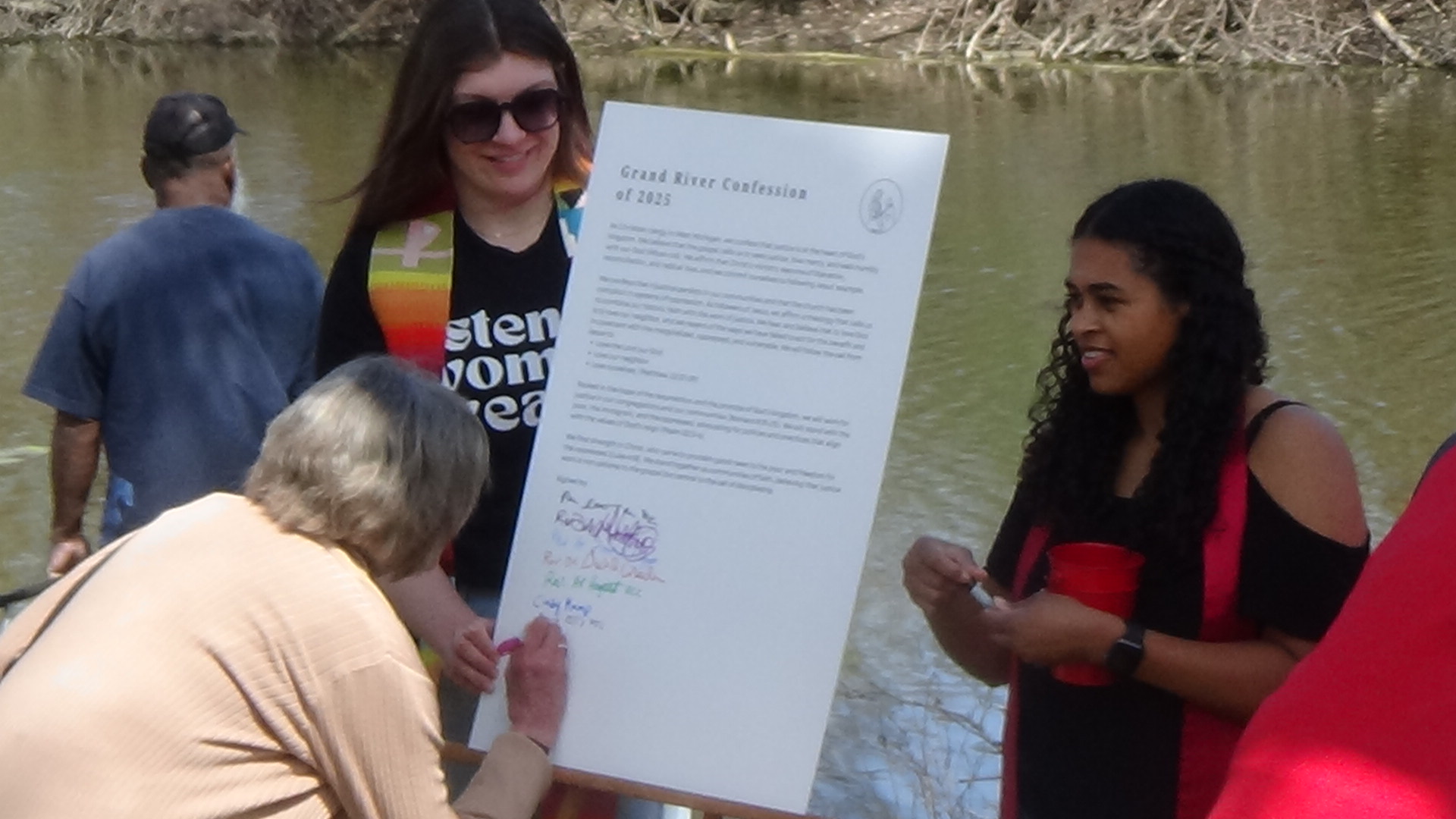
While I don’t identify with the Christian faith, such a public act can motivate and inspire others to do the same. Having said that, statements in and of themselves don’t mean much until faith-based groups put their words into action.
It would be wonderful to see this group of clergy do things like:
- Practice radical hospitality and provide housing to people on a temporary or permanent basis.
- Offer Sanctuary to undocumented immigrants, regardless of the consequences the state might want to impose.
- Practicing an economics that was based on cooperation and meeting people’s basic needs rather perpetuating Capitalism.
- Denounce systems of power and oppression, then actively resisting those same systems.
- Condemn militarism and US imperialism in the same manner that Dr. King did in his 1967 speech, Beyond Vietnam. Dr. King said, “A nation that continues year after year to spend more money on military defense than on programs of social uplift is approaching spiritual death.”
- Stand up for Trans and queer people and fight like hell to make sure they have safe spaces in this city.
- Make commitments to BIPOC communities, to interrogate their own complicity in white supremacy, along with practicing reparations.
- Practice environmental justice and provide space and resources in the fight for Climate Justice.
Just like politicians, we need to hold faith leaders accountable for what they say and what they do. This public declaration and confession was a good start.
 Grand Rapids Institute for Information Democracy