Obama’s EPA Shuts Down Damning Fracking Study
This article by Steve Horn is re-posted from CounterPunch.
The Associated Press has a breaking investigative story out today revealing that the Obama Administration’s Environmental Protection Agency (EPA) censored a smoking gun scientific report in March 2012 that it had contracted out to a scientist who conducted field data on 32 water samples in Weatherford, TX.
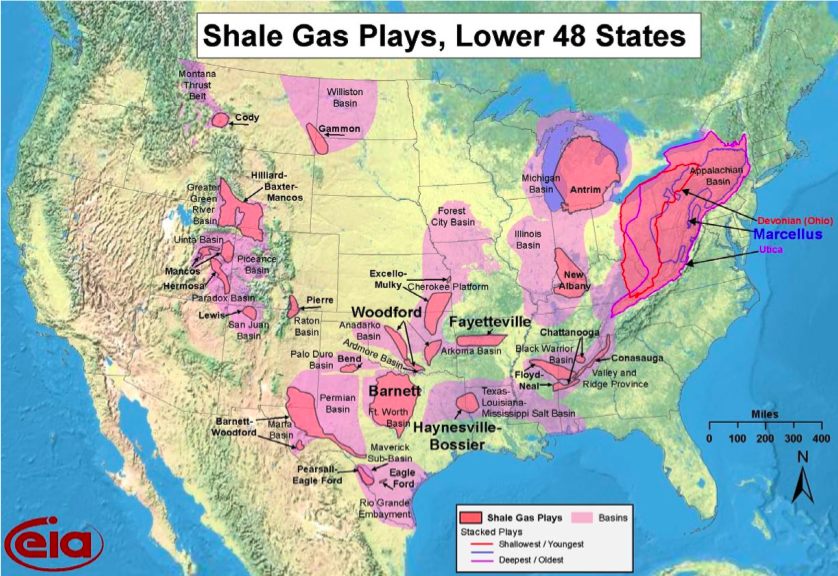
That report, according to the AP, would have explicitly linked methane migration to hydraulic fracturing (“fracking”) in Weatherford, a city with 25,000+ citizens located in the heart of the Barnett Shale geologic formation 30 minutes from Dallas.
It was authored by Geoffrey Thyne, a geologist formerly on the faculty of the Colorado School of Mines and University of Wyoming before departing from the latter for a job in the private sector working for Interralogic Inc. in Ft Collins, CO.
This isn’t the first time Thyne’s scientific research has been shoved aside, either. Thyne wrote two landmark studies on groundwater contamination in Garfield County, CO, the first showing that it existed, the second confirming that the contamination was directly linked to fracking in the area.
It’s the second study that got him in trouble.
“Thyne says he was told to cease his research by higher-ups. He didn’t,” The Checks and Balances Project explained. ”And when it came to renew his contract, Thyne was cut loose.”
From Smoking Gun to Censorship: Range Resources Link
The Obama EPA’s Weatherford, TX study was long-in-the-making, with its orgins actually dating back to a case of water contamination in 2010. The victim: Steve Lipsky.
“At first, the Environmental Protection Agency believed the situation was so serious that it issued a rare emergency order in late 2010 that said at least two homeowners were in immediate danger from a well saturated with flammable methane,” the AP wrote.
AP proceeded to explain that Lipsky had “reported his family’s drinking water had begun ‘bubbling’ like champagne” and that his “well…contains so much methane that the…water [is] pouring out of a garden hose [that] can be ignited.”
The driller in this case was a corporation notorious for intimidating local communities and governmental officials at all levels of governance: Range Resources. Range, in this case, set up shop for shale gas production in a “wooded area about a mile from Lipsky’s home,” according to the AP.
As DeSmogBlog revealed in November 2011, Range Resources utilizes psychological warfare techniques as part of its overarching public relations strategy.
Due to the grave health concerns associated with the presence of methane and benzene in drinking water, the Obama EPA “ordered Range…to take steps to clean their water wells and provide affected homeowners with safe water,” wrote the AP.
Range’s response? It “threatened not to cooperate” with the Obama EPA’s study on fracking’s link to water contamination. The non-cooperation lead to the Obama EPA suing Range Resources.
It was during this phase of the struggle where things got interesting. As the AP explained,
Believing the case was headed for a lengthy legal battle, the Obama EPA asked an independent scientist named Geoffrey Thyne to analyze water samples taken from 32 water wells. In the report obtained by the AP, Thyne concluded from chemical testing that the gas in the drinking water could have originated from Range Resources’ nearby drilling operation.
Despite this smoking gun, everything was soon shut down, with the Obama EPA reversing its emergency order, terminating the court battle and censoring Thyne’s report. The AP explained that the Obama EPA has “refused to answer questions about the decision.”
“I just can’t believe that an agency that knows the truth about something like that, or has evidence like this, wouldn’t use it,” Lipsky, who now pays $1,000 a month to have water hauled to his family’s house, told the AP.
“Duke Study” Co-Author Confirms Veracity of Thyne’s Study
Robert Jackson, a Professor of Global Environmental Change at Duke University and co-author of the “Duke Study” linking fracking to groundwater contamination did an independent peer review of Thyne’s censored findings. He found that it is probable that the methane in Lipsky’s well water likely ended up there thanks to the fracking process.
Range predictably dismissed Thyne and Jackson as “anti-industry.”
Americans Against Fracking: An “Unconscionable” Decision
Americans Against Fracking summed up the situation best in a scathing press release:
It is unconscionable that the Environmental Protection Agency (EPA), which is tasked with safeguarding our nation’s vital natural resources, would fold under pressure to the oil and gas industry…It is again abundantly clear that the deep pocketed oil and gas industry will stop at nothing to protect its own interests, even when mounting scientific evidence shows that drilling and fracking pose a direct threat to vital drinking water supplies.
There’s also a tragic human side to this tale.
“This has been total hell,” Lipsky told the AP. “It’s been taking a huge toll on my family and on our life.”
On Sunday, we posted an article by feminist activist Eve Ensler on the international action planned for February 14, to call attention to global violence against women.
We just came across information for events planned in Grand Rapids, of which there are two.
On action is called One Billion Rising: Grand Rapids Style. The event listing states:
Whether you are a mother, sister, brother, father, cousin, grandma, friend, or anyone in between, we want you there. Come join us for some live music and performances. Don’t forget to bring your dancing shoes! We will celebrate, we will unite, we will rise and we will be One Billion Rising.
Remember violence against women affects each and every one of us so do your part and come dance to show that you care. As we unite in solidarity we are saying enough is enough. All ages welcome, free entry, and cash bar.
Thursday, February 14
5:00 – 11:00 PM
Eastern Avenue Hall
506 Eastern, NE Grand Rapids

The second event planned is Flash Mob Grand Rapids (Start a Rising), which states the following:
I personally invite you to join to be a part of a flash mob being held in Grand Rapids on February 14, 2013. The mob will take place in a public space in Grand Rapids (to be announced). Please look for us on facebook Grand Rapids Flash Mob One Billion Rising. Lets stand, rise together, and say enough is enough! ***The exact location of this event will be announced soon.***
On V-Days 15th Anniversary, 2.14.13, we are inviting ONE BILLION women and those who love them to WALK OUT, DANCE, RISE UP, and DEMAND an end to this violence. ONE BILLION RISING will move the earth, activating women and men across every country. V-Day wants the world to see our collective strength, our numbers, our solidarity across borders. What does ONE BILLION look like? On February 14th, 2013, it will look like a REVOLUTION.
Thursday, February 14
7:00 – 8:00PM
Amway Grand Plaza Hotel
187 Monroe Ave NW, Grand Rapids
Driving Influence: Auto Industry Lobbying
This article is re-posted from Open Secrets.
The automotive industry is showing its best side this week at the North American International Auto Show in Detroit. But it also looked pretty good to political candidates in the last election, with automakers giving an unprecedented level of campaign donations. Since the industry bailout in 2009, automotive companies have seen considerable growth — and seem to be cashing in some of that spending power in the political realm.
In the last election cycle, automotive companies spent more than $27.8 million — the most the industry has ever spent on an election by a mile — almost entirely on Republican candidates. In the 2008 election, they spent just $20.3 million. Although the automotive industry has historically favored Republicans, it typically has contributed an average of 76 percent of all donations to Republicans since 1990.
The automotive market as a whole grew by 13.4 percent, with Chrysler seeing the biggest increase (20.6 percent) in domestic sales, and General Motors and Ford posting sales gains of 3.7 percent and 4.7 percent, respectively, according to a New York Times report.
Although General Motors donated $58,266 to President Barack Obama in the 2012 election cycle, it spent more on Republicans ($222,211) than on Democrats ($141,750) for the first time since 2006.
While the last election saw an increase in direct contributions to candidates by the industry, the Big Three’s lobbying numbers vary. Fiat, now the majority owner of Chrysler, spent $4.8 million in just the first three quarters of 2012, as much as it spent in all of 2011 (Fiat’s lobbying expenditures soared in 2011 after it became Chrysler’s biggest shareholder).
Ford Motors, another heavy hitter, spent $5.13 million in 2012 through Sept. 30, putting it on track to beat its $6.7 million outlay in 2011. General Motors, on the other hand, one of our lobbying heavy hitters, spent just $5.68 million through September 2012, so likely didn’t surpass its level of almost $11 million in 2011.
This Day in Resistance History: 1992 Ceasefire in El Salvador
Twenty one years ago today, the then US-backed government of El Salvador signed a ceasefire agreement with the armed insurgent movement, known as the FMLN, ending more than a decade of armed conflict.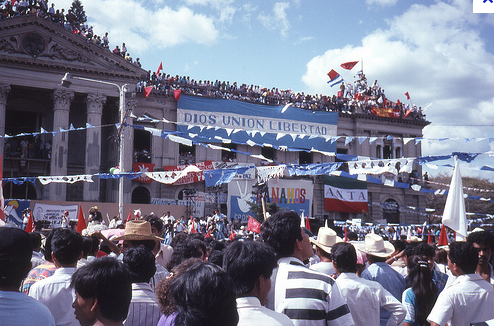
The ceasefire was a major victory for the FMLN and popular movements in El Salvador, which had been fighting government repression for decades.
I was fortunate to be in El Salvador when the ceasefire was announced and was able to participate in the national celebrations that were taking place throughout the country by the FMLN and the popular movements.
I was traveling with three friends and we first went to the department of Chalatenango, which is in the northern part of El Salvador, near the Honduran border. Chalatenango was one of the regions of the country that was controlled by the FMLN during most of the 1980s, leading up to the ceasefire.
When we arrived in Chalatenango, we went to a press conference held by some of the comandancia, the leadership of the FMLN. However, that night we participated in a big baile (dance), where rank & file members of the FMLN were. We are black beans & tortillas, drank punch and danced for hours to local music and the occasional America tune.
The next day we bused it back to the capital of San Salvador and were invited to stay at the office of Co-Madres, a human rights organization that formed just after the assassination of Salvadoran Archbishop Oscar Romero in 1980.
Co-Madres was one of the most vocal groups in the country in terms of denouncing human rights violations and because of that were the constant target of government repression. They invited us to stay with them to provide an international presence and to help translate their newsletter into English.
On January 16, the official day of the ceasefire, it was announced that there would be a mass rally in the plaza in downtown San Salvador. The Cathedral was located there, the same church that Romero presided over and the location of a government massacre of people who were present to mourn at Romero’s funeral.
Co-Madres and other popular movement groups, which included student groups, women’s groups, labor unions and other sectors would converge on the plaza coming from four directions. Co-Madres asked us to march with them, since it was still not safe to publicly defy the government.
The march was amazing and reflected the hopes and aspirations of thousands of people who turned out to celebrate both the end of the counter-insurgency war and the victory for the left. We heard dozens of speakers, poets, musicians and guests from other countries address the audience throughout the afternoon and into the night. The celebration lasted until the early morning hours of the next day, with people pouring into the streets celebrating with laughter and tears.
This ceasefire was significant on several levels. First, it was a clear sign that the Salvadoran army could not defeat the FMLN militarily. This was despite the fact that for most of the previous decade the US government was providing $1 million a day (in military aid) to a country the size of Massachusetts.
This victory by the FMLN not only was inspiring for the people in El Salvador, but it sent a message to popular movements through the world that US backed counter-insurgencies were beatable.
The next year, the United Nations set up a Truth Commission to investigate the human rights violations committed between 1980 – 1992. US government officials had up until this point made the claim that the FMLN was equally responsible for human rights atrocities as the Salvadoran military.
However, the report that came out in 1993, which was based on testimony from thousands of Salvadorans, government documents and third party sources, demonstrated that over 90% of the human rights abuses were committed by the US-backed Salvadoran armed forces. This was a clear indictment of the claims that were made by both the Salvadoran and US governments.
El Salvador continues to recover from more than a decade of war and centuries of economic exploitation, but the January 16, 1992 celebration was an amazing moment in resistance history.
MLive promotes McDonald’s in story about Conklin apple farmer

Yesterday, MLive ran a story about a Conklin apple farmer that will be featured in a new McDonald’s commercial promoting the fast food giant’s apples slices on their menu.
The article reads more like a public relations piece, with a hyperlink to McDonald menu page and information about a commercial watching party that the apple farmer is having with friends in Sparta.
The story doesn’t even have information about how much the apple farmer was paid to be in the McDonald’s commercial and the only useful information was that McDonald’s plans on using the West Michigan apples in all 14,000 restaurants across the country. So much for being local.
MLive doesn’t bother to ask questions about the significance of such a contractual agreement nor the impact that fast food companies like McDonald’s has on food policy or local food movements.
According to Eric Schlosser’s book, Fast Food Nation, McDonald’s has a horrendous history of providing low quality food. Research by other activists has demonstrated that fast food companies like McDonald’s contributed to environmental destruction, poor public health, animal cruelty and even deceptive advertising practices that target children. These themes are dealt with in detail in the powerful documentary, MicLibel.
In addition to failing to talk about the function that McDonald’s plays in the current food system, the MLive article didn’t tell us anything about the apple farmer, apart from how many acres he owns.
According to the Environmental Working Group, Leo Dietrich and Sons Orchards has been the recipient of $78,764 worth of government subsidies between 1995 and 2011. Some of these subsidies are to cover costs from natural disasters, like last years early frost, but other subsidies are for commodities in general and conservation practices.
Some might say that the local family’s contract with McDonald’s is a good thing, since it keeps them in business, but this should not prevent MLive from exploring what these kinds of contracts with fast food companies have on local food production and food policies.
For months we have been attempting to get the 990 financial reports from ArtPrize for 2011, but every time we would send a request we were ignored.
Fortunately, this is public information and the online Non-Profit resource, GuideStar, posted the 990s for ArtPrize from 2011.
We have written in pervious years about the political economy of ArtPrize and who were the main funders of ArtPrize, both primary sources and sponsors.
The 990 for ArtPrize in 2011 is consistent with the first few years, in that the primary funding source is the Dick & Betsy DeVos Foundation.
According to the 990 for 2011, the Dick and Betsy DeVos Foundation have provided ArtPrize with $5.2 million. There is some income from merchandize and sponsors, but the bulk of the money is provided by the foundation of the parents of Rick DeVos.
Additional financial information worth noting is that there were three “independent contractors” used by ArtPrize in 2011 – On Stage Services ($192.852), Square One Design ($152,617) and Pomegranate Studios ($559, 327). Independent is a loose term to use considering that Square One Designs does lots of other DeVos family business work (Amway, Windquest & Reserve Bar) and Pomegranate Studios is run by the DeVos family.
One last aspect of the financials of ArtPrize is based on a question that is asked of non-profit entities in the 990 form, section IV, which asks – Did the organization engage in direct or indirect political campaign activities on behalf of or in opposition to candidates for public office? The answer that ArtPrize put for this was no, which is technically correct. However, this does not mean the public shouldn’t reconsider the significance of such a question, particularly as it relates to what the Dick & Betsy DeVos Foundation funds.
After the Michigan Legislature pushed through a Right to Work law in December it was revealed that Dick & Betsy DeVos have been major funders of Rights to Work policies, primarily through their contributions to the Mackinac Center for Public Policy. The Mackinac Center has been pushing Right to Work policies in Michigan for years and was one of the main architects for the state’s new law.
Dick & Betsy DeVos (along with other DeVos family members) have been part of the work of the West Michigan Policy Forum, which has made Right to Work one of its main priorities, since the group was founded in 2008. Right to Work policy was a significant part of the last conference, held in September of 2012.
What this all means is that the same people who fund ArtPrize are the same people that made Right to Work a law in Michigan. This should raise lots of questions for all of us, whether you are a supporter of ArtPrize or not. What is the significance of the relationship between people who funded a 19 – day art event in downtown Grand Rapids and the same people who attack workers and unions in Michigan?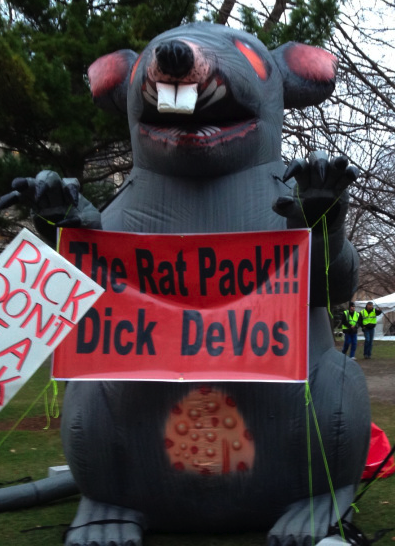
Another way to frame this is by asking what is the significance of those who engage in cultural management who also engage in the management of public policy? The DeVos family understands the importance of public relations and ArtPrize is in many ways a PR coup for the family. How could anyone be critical of people who put on such a large cultural event as ArtPrize?
It’s not a question of whether or not there are any positive outcomes of ArtPrize. The world is not black and white and we must avoid looking at the world through a binary lens of good and evil. Instead we have to think critically about the nuances of how systems of power work.
If labor unions and other sectors of Michigan want to come to terms with how the Right to Work law came into being, they are going to have to grapple with the strategic use of DeVos family money. Such grappling will have to go beyond the simplistic GOP vs Democrats analysis and see how their funding strategies are primarily about wealth accumulation and social management.
If I wanted to fight back against the Right to Work policies, I would use ArtPrize as a forum to challenge the DeVos family’s political and economic influence.

The group Left Forum will host an event next Thursday, January 24 to discuss ways to respond to the anti-worker legislation that was rammed through in December by the Michigan Legislature and signed into law by Gov. Snyder.
The forum is entitled, When Capitalists Attack—Right to Work Laws. The Facebook event page states:
How “right to work” laws will negatively impact Michigan workers-both union and non-union. Discuss what it means in the work place and for electoral politics. What can workers and unions do to turn this around and rebuild a vibrant labor movement?
This event is free and open to the public.
When Capitalists Attack – Right to Work Laws
Thursday, January 24
7:00PM
IGE – 1118 Wealthy St. Grand Rapids
New Report Shows Inextricable Link Between Food, Water and Energy
This article is re-posted from EcoWatch.
Food, water and energy systems are inextricably linked, and as recent events like droughts, oil spills and increasing food prices make clear, the U.S. can no longer view these systems in isolation. A new paper from the GRACE Communications Foundation explains that when the food, water and energy nexus becomes unbalanced, there are clear consequences for public health, our economy and the environment. The paper, Food, Water and Energy: Know the Nexus, describes how and where these systems intersect, how they rely upon each other to function and how they can have a significant impact on each other.
For example:
- Nearly half of all water withdrawals—both freshwater and ocean water—in the U.S. are used for cooling at thermoelectric power plants.
- Water-related energy use in California consumes approximately 20 percent of the state’s electricity.
- 25 percent of all freshwater consumed in the U.S. is associated with discarded food; about as much as the volume of Lake Erie.
- In 2010 nearly 40 percent of U.S. corn was converted into ethanol.
“Know the Nexus” provides three case studies that illustrate these interdependencies:
- Food Waste in the U.S.: Discarding food means squandering the water and energy required to grow crops and raise livestock.
- Sacramento-San Joaquin Delta: The competing demands for food, water and energy are growing, and the complex mix of agencies and regulations that govern them need to be better coordinated.
- Browns Ferry Nuclear Plant: The current energy system is overly dependent upon water resources and vulnerable to extreme weather shifts and climate change.
The paper, which also touches upon hydraulic fracturing, the farm bill and energy subsidies, urges individuals, businesses and government to take a “nexus approach,” which requires a strong understanding of the relationships among these three systems and how to ensure food, water and energy security for an ever-growing population.

“In recent months, government agencies and major corporations have identified the food, water and energy nexus as a global priority from a planning and management perspective,” says Kyle Rabin, director of the GRACE Water and Energy programs. (Examples of agencies and corporation include the U.S. Energy Information Agency, National Defense Council, Royal Dutch Shell, Masdar and SABMiller.)
“Some experts wisely include climate change in the nexus because of its impact on food, water and energy security. This is exactly the kind of comprehensive thinking needed today, given that billions of people worldwide still lack access to clean drinking water, safe sanitation facilities, food and electricity. As we enhance access to food, water and energy, we must do so in an environmentally and socially responsible manner.”
While the paper provides examples of individuals, businesses and local governments already benefiting from a nexus approach, the U.S. government has largely ignored the nexus, as indicated by legislation and policies that rarely account for interconnections in any combination among food, water or energy. Know the Nexus documents how the nation is not effectively monitoring the condition—or coordinating the management—of food, water and energy systems. As the paper concludes, the U.S. needs policies that address the complexity of the nexus at all levels of government, factoring in unique regional characteristics.
“The food, water and energy nexus is a new way of thinking about the systems we depend on and how we can best manage and plan for a more sustainable future,” says Scott Cullen, executive director of GRACE. “We hope to stimulate a much broader conversation to help knock down the silo approach of isolated resource management because what we do every day affects the nexus and the nexus, in turn, affects our everyday life.”
GRACE’s new website reflects the interconnected nature of food, water and energy systems.
GRACE Communications Foundation builds partnerships and develops innovative media strategies that increase public awareness of the relationships among food, water and energy systems. By mobilizing philanthropic resources and collaborating with like-minded non-profits and academic institutions, we educate consumers and advocate for policies that:
- address the environmental and public health effects of industrial food systems;
- support the development of sustainable food distribution networks;
- result in common sense use of water resources for energy and food production;
- provide clean energy alternatives to conventional power systems; and
- create and promote prevention techniques individuals and communities can use to improve their health.
The Media and Immigration arrests in West Michigan
Last week, I was at a meeting of people in Grand Rapids who are working on changing the federal immigration policy, to make it less punitive and more just.
At this meeting it was mentioned by several people in the room that Immigration Customs Enforcement (ICE) officials had arrested people they knew and were detaining them in Battle Creek.
Last Friday, the local news media ran stories about the ICE arrests, each of which mentioned that 97 arrests had been made, with the majority of those arrested identified as either Mexican or Guatemalan.
The MLive story only provides some particulars on the arrests made in West Michigan, with two specific cases. The only source cited in this story was an ICE official based in Detroit.
The story reads almost like a Press Release and that’s because the MLive story is pretty much a re-printing of the Press Release from ICE, including the comment from the ICE official.
The MLive reporter could have at least informed their readers that the article was nothing more than a re-printing of the government news release.
It’s bad enough that the reporter didn’t actually practice any journalism in this case, they didn’t even question the claims made by ICE or seek out other sources of information in the community that might know something about these cases.
I spoke with immigration attorney Richard Kessler who said that some of the individuals arrested, were from charges that were 20 years old, while others were from simple drivers license violations. Such charges are in stark contrast to what those highlighted in the ICE Press Release and the MLive article.
MLive was not the only media outlet to just redistribute the Ice Press Release. The Holland Sentinel also used the same language in their story, as did WOOD TV 8. In fact, the channel 8 story even encouraged people to contact ICE officials if they saw, “suspicious activity.”
Noam Chomsky: The Responsibility of Privilege
This interview with Noam Chomsky is re-posted from Al Jazeera.
In this episode of Talk to Al Jazeera, Noam Chomsky sits down with Rosiland Jordan to talk about the two main tracks of his life: research and political activism.
The interview deals with topics such as organizing, the responsibility of intellectuals, Occupy, the climate crisis, the Obama administration policies and US media.
Chomsky’s most recent books are Occupy and Power Systems: Conversations on Global Democratic Uprisings and the New Challenges to U.S. Empire.
 Grand Rapids Institute for Information Democracy