Are America’s Nutrition Professionals in the Pocket of Big Food?
This article by Dave Murphy is re-posted from EcoWatch.
Ever have that creeping feeling that those in charge of watching over our food supply or making recommendations about what constitutes a healthy diet have lost their way? Sadly, the Academy of Nutrition and Dietetics’ looks like it has fallen sway to big money corporate contributions and sponsorships from Big Food like junk food giants Coke, Pepsi and Nestlé.
Public health attorney and author Michele Simon asks: Are America’s nutrition professionals in the pocket of Big Food? While the Academy of Nutrition and Dietetics’ 74,000-member trade group partners with the likes of Coke and Hershey’s, the nation’s health continues to suffer from poor diet.
The largest trade group of nutrition professionals—the Academy of Nutrition and Dietetics—has a serious credibility problem. In a damning report released yesterday, industry watchdog Eat Drink Politics examines the various forms of corporate sponsorship by Big Food that are undermining the integrity of those professionals most responsible for educating Americans about healthy eating.
The report details, for example, how registered dietitians can earn continuing education units from Coca-Cola, in which they learn that sugar is not a problem for children and how Nestlé, the world’s largest food company can pay $50,000 to host a two-hour “nutrition symposium” at the Academy’s annual meeting. Additional disturbing findings from the report include:
- Beginning in 2001, the Academy listed 10 food industry sponsors; the 2011 annual report lists 38, a more than three-fold increase;
- Companies on the Academy’s list of approved continuing education providers include Coca-Cola, Kraft Foods, Nestlé and PepsiCo;
- At the 2012 annual meeting, 18 organizations—less than five percent of all exhibitors—captured 25 percent of the total exhibitor space. Only two out of the 18 represented whole, non-processed foods;
- The Corn Refiners Association (lobbyists for high fructose corn syrup) sponsored three “expo impact” sessions at the 2012 annual meeting;
- A majority of registered dietitians surveyed found three current Academy sponsors “unacceptable” (Coca-Cola, Mars, and PepsiCo);
- 80 percent of registered dietitians said sponsorship implies Academy endorsement of that company and their products;
- The Academy has not supported controversial nutrition policies that might upset corporate sponsors, such as limits on soft drink sizes, soda taxes, or Genetically Modified Organisms (GMO) labels;
- Sponsors and their activities appear to violate the Academy’s own sponsorship guidelines.
Among the report’s recommendations are for the Academy to:
1) provide greater transparency on corporate funding sources;
2) gather input from all members on corporate sponsorship;
3) reject all corporate-sponsored education; and
4) provide better leadership on controversial nutrition policy issues.
Registered dietitian and academy member Andy Bellatti, who has long criticized his professional group’s conflicted corporate sponsorships said:
Michele Simon’s report on the Academy of Nutrition and Dietetics is thoroughly researched and expertly points out the different ways in which the nation’s leading nutrition organization harms its reputation, efficacy and members by forming partnerships with food companies that care more about selling products than they do about improving the health of Americans. Anyone concerned about public health will realize that the Academy of Nutrition and Dietetics is in dire need of systemic change if it hopes to take a leadership role and be taken seriously as the home base of the nation’s nutrition experts.
MLive reported yesterday that two West Michigan companies have received contracts from a major project being undertaken by the largest oil company in the world, Exxon/Mobil.
Dooge Veneers Inc. and Herman Miller have both landed contracts with Exxon/Mobil, which is building a massive company campus near Houston, Texas.
The MLive story talks about the significance of these contracts, particularly with spokesperons from Dooge Veneers Inc, which is procuring wood from around the world to be used for walls in the new Exxon/Mobil campus.
The spokesperson for Dooge Veneers Inc. talks with enthusiasm about this new contract and Herman Miller’s CEO Brian Walker says this is “one of the largest contracts” the Zeeland company has ever had.
All of this seems pretty straight forward, with the local news media celebrating the financial gains that two West Michigan companies are making from this project. So what’s the problem?
The problem is that the corporation that the West Michigan companies have contracts with is quite possibly the single largest private contributor to climate change.
Exxon/Mobil is the largest global petroleum company that operates in over 100 countries, has a long history of colluding with dictators, destroying ecosystems around the world and spending millions to influence public policy.
Steve Coll’s book Private Empire: ExxonMobil and American Power is an excellent source that exposes the kind of power this global company has. We are all familiar with the environmental devastation from the Exxon Valdez oil disaster off the coast of Alaska, a disaster that the company tried to blame on the ship’s captain.
However, the more egregious crimes committed by Exxon/Mobil is its contribution to global warming. The company is the largest extractor of oil and gas in the world, but in addition to their role in creating climate change, which impacts all life on this planet, the company has vigorously funded think tanks to deny climate change is even an issue.
Expose Exxon has documented the amount of money and institutions that the petroleum giant has contributed to in order to promote the idea that climate change is a hoax.
The level of violence done by Exxon/Mobil to human and non-human life is difficult to quantify, but it is one of the most dangerous corporations on the planet that makes billions while the world is on the brink of ecological catastrophe.
The question we should ask ourselves is, how is it that the major news media continues to treat one of the biggest environmental criminals on the planet as it was a good global citizen?
New Media We Recommend
Below is a list of new materials that we have read/watched in recent weeks. The comments are not a “review” of the material, instead sort of an endorsement of ideas and investigations that can provide solid analysis and even inspiration in the struggle for change. All these items are available at The Bloom Collective, so check them out and stimulate your mind.
A Secret History of Coffee, Coca & Cola, by Ricardo Cortez – This 40 – paged book is a gem. Not only does the author include fabulous illustrations about the recreational narcotics millions consume, but a beautiful literary approach to sharing information about these substances. However, what makes this book so fabulous, is that it provides new information about recently discovered documents. These documents show a long standing relationship with officials from Coca Cola and the US Federal Bureau of Narcotics, which not only resulted in domestic drug policies, but international anti-narcotics treaties adopted by the United Nations. These agreements essentially made coca production illegal by anyone, with one exception…….the Coca Cola Company. It is not surprising information, but should provide further evidence of the sinister nature of the largest global beverage company and why they should be despised by everyone with a conscience. Not your average coffee table book.

Power Systems: Conversations on Global Democratic Uprisings and the New Challenges of US Empire, Interviews with Noam Chomsky – by David Barsamian – This is the latest collection of interviews between Chomsky and Barsamian and they are as fresh and dynamic as the ones between these two that were done 20 years ago. Covering a two-year period from Spring of 2010 through Spring of 2012, these interviews deal with the Arab Uprising, the US Occupy Movement, organizing, the Obama administration, the Middle East, Latin America and Southeast Asia. Chomsky and Barsamian have a long-standing relationship, which makes the interviews flow and easier to follow. Like much of what Chomsky has to say, I found this collection of interview inspiring and intellectually stimulating.
Our Food, Our Right: Recipes for Food Justice, published by the Community Alliance for Global Justice – The book was a community project that involved dozens of people who are passionate about food and food justice. If you are looking for a great resource on how food justice and food sovereignty are practiced, then Our Food, Our Right is worth looking at. This is a collection of fact sheets, poetry and local stories on food justice. The book includes profiles of farmers involved in this project, examples of transnational solutions to hunger and sustainable agriculture, plus pages of delicious recipes. There are even pages devoted to canning, drying a freezing. This is one of the best and most comprehensive collection of writings on food justice as it should be practiced. Highly recommended.
Precious Knowledge: Arizona’s Battle over Ethnic Studies (DVD) – Precious Knowledge interweaves the stories of students in the Mexican American Studies Program at Tucson High School. While 48 percent of Mexican American students currently drop out of high school, Tucson High’s Mexican American Studies Program has become a national model of educational success, with 100 percent of enrolled students graduating from high school and 85 percent going on to attend college. Lawmakers and politicians mount a public relations campaign to discredit the passionate students, claiming that Paulo Freire’s textbook The Pedagogy of the Oppressed teaches victimization and sedition. Officials ask that the classroom’s Che Guevara posters be replaced with portraits of founding father Benjamin Franklin. Meanwhile, the students answer back by fighting for what they believe is the future of public education for the entire nation, especially as the Latino demographic continues to grow.
Obama Endorses Stonewall?
This article by Gary Leupp is re-posted from CounterPunch.
At first I wasn’t sure I had heard right. “…Seneca Falls, and Selma, and Stonewall.”
Does Obama, I wondered, mean that Stonewall? Or is there some battle by that name I’ve never learned about?
It soon became clear, that yes, he was referring to the Stonewall Riots of 1969. “Our journey is not complete until our gay brothers and sisters are treated like everyone else under the law.”
This is significant, I thought. A Reuters report this morning notes that “Obama’s inclusion of gay rights—still opposed by many conservatives—among his list of priorities might have been unthinkably divisive as recently as his first inauguration in 2009.” It would at least have been unthinkably risky for a traditional, centrist politician with an instinctive inclination towards compromise.
But much has changed. Public opinion polls show rising support for gay rights including the right to marry; over the last few years those in support for the latter have become significantly more numerous than opponents. A USA TODAY poll shows 73% of 18 to 29 year olds supporting gay marriage.
Seven states legalized same-sex marriage during Obama’s first term. In July 2011 a federal appeals court effectively ended the military’s “Don’t ask, don’t tell” policy. (Now openly gay people can drop bombs on Waziristan.) The National Cathedral is now performing gay marriages. Nobody bats an eyelash when Anderson Cooper comes out as gay. School bullying of gays has declined. Gay-straight alliances have become mainstream, and the influence of religion-based homophobia is on the wane.
Internationally, six more countries have legalized same-sex marriage in the last several years. In June 2011 the UN Human Rights Council passed, 23 to 19, a resolution condemning violence and discrimination against persons based on their sexual preference. In Europe, social democrats who have sold their souls to austerity programs are trying to bolster their progressive credentials by embracing gay rights. It has become less risky politically; indeed, in some places, it’s become de rigueur.
Obama describes his views on gay marriage as “evolving” and points to the influence of his wife and daughters on his evolving thought. (Joe Biden’s announcement for his own support for gay marriage, which slightly preceded Obama’s statement in favor last June, may have influenced the timing of the latter.) They are evolving to mirror the attitude shift we see throughout society. He has more to gain than lose politically for taking his stand at this point.
Still, the specific reference to Stonewall—to several days of violent anti-police rioting in Greenwich Village—was risky. Wasn’t he endorsing rock-throwing? Hundreds fought back in the wee hours of the morning June 28, 1969, when cops busted into a Mafia-owned gay bar called the Stonewall Inn, announcing “Police! We’re taking the place!” They miscalculated as they tried to force patrons (divided into cross-dressers, whom the police wanted to search and, if found to be male, arrest, other gay men, and lesbians) into separate rooms where they were searched and asked for identification. Many refused to produce IDs or submit to searches; a large crowd amassed, police vehicles were attacked, cops were hit with coins and rocks, garbage cans set ablaze.
This was no Seneca Falls (a peaceful two-day women’s rights convention in New York in 1848) or Selma, Alabama (where non-violent actions in 1965 contributed to the passage of the Voting Rights Act). It was violent resistance. That Obama should feel a need to validate it in such a high profile forum is significant.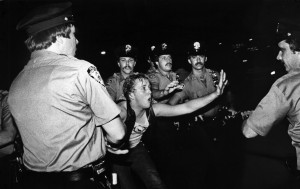
But meanwhile, in many respects, Obama remains a continuation of Bush. As he announced that “a decade of war is now ending,” his drone war killed three more “suspected militants” in Yemen—another statement that the U.S. has the right to target anyone, anywhere suspected of wanting to attack U.S. nationals or the forces of governments that work with the U.S. are fair targets for annihilation at the president’s discretion.
Obama withdrew from Iraq, but in accordance with the agreement signed by the U.S. and the Iraqi regime of al-Maliki at the end of Bush’s second term. He can take no credit for this, other than to note that he didn’t try to undo it very aggressively—although he did, in fact, try to persuade the Iraqis to accept the ongoing presence of thousands of U.S. troops. (They declined.)
Obama not only continued the unwinnable war in Afghanistan, but dramatically escalated it, making it his own. Over 70% of U.S. fatalities in that dozen year-old war have occurred under his administration, while the Taliban continues to resist, while “green-on-blue” attacks proliferate, while U.S. commanders conclude a military over the Taliban is impossible, while intelligence reports confirm that the entire operation is spreading anti-American feeling and hence further jeopardizing U.S. security rather than enhancing it.
In foreign policy Obama has differed from Dubya in several respects. Aside from ordering the “surge” in Afghanistan, he has made drones his weapon of choice, his signature contribution to the global war Bush called the “War on Terror.” His 298 drone strikes in Pakistan have killed between 500 and 800 civilians, infuriated the Pakistani people and destabilized that populous, nuclear-armed nation.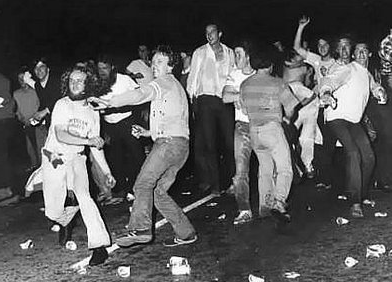
While distancing himself somewhat from the Israeli government, mildly criticizing its illegal settlements policy and declining (so far) to attack Iran on Israel’s behalf, Obama continues to threaten Iran. He continues to encourage the false perception encouraged by the media that Iran has a nuclear weapons program threatening Israel and the world. Following the joint U.S.-NATO operation to topple Qadafy in Libya (producing an even worse regime), he mulls over intervening in Syria, and already orders his air force to deliver French troops to the battlefields of yet another war-of-choice, this time in Mali.
Thus you can be the president of an imperialist country, carrying on as normal, killing from the Af-Pak borderlands to the Sahel, presiding over much evil, and still pose as a cutting-edge advocate of human rights, in this case declaring that “if we are truly created equal, then surely the love we commit to one another must be equal as well.” Powerful words equalizing hetero- and homosexual loves.
But where are the soaring cadences affirming the equal right of the dispossessed Palestinians to the lands appropriated by Zionist settlers? Or the equal right of Iranians to develop nuclear energy under IAEA supervision with the right of the Israelis, who have never signed the NPT and refuse any supervision of their nuclear weapons program, to build power plants?
Where’s the ringing affirmation of the people of Bahrain to topple their oppressive regime (that sponsors the U.S. Fifth Fleet), as the Tunisians, Egyptians and Yemenis toppled theirs? And how is Obama standing up to the Iraqi regime’s assault on gay rights once grudgingly conceded by the secularist Baathist regime? Where the support for the right of marginalized, frightened, oppressed people thousands of miles from Greenwich Village to attack the police having been attacked by them?
Obama selects his causes carefully, politically. It’s good he has, in his own understated way, paid tribute to the Stonewall uprising. I’m sure many thousands are Google-searching that term since the speech, maybe some feeling inspired by what they learn. But as we revisit the Stonewall experience, should we not also recall how the Obama administration arms the police in countries like Saudi Arabia where gays are flogged, lashed or executed? And should we not note that the campaign for gay rights, however important, is no substitute for a campaign to topple U.S. imperialism, the endless source of war?
Sierra Club announces it will engage in civil disobedience……finally
Yesterday, the Sierra Club announced that its board of directors has for the first time in the organization’s 120-year history endorsed the use of civil disobedience.
The announcement read in part: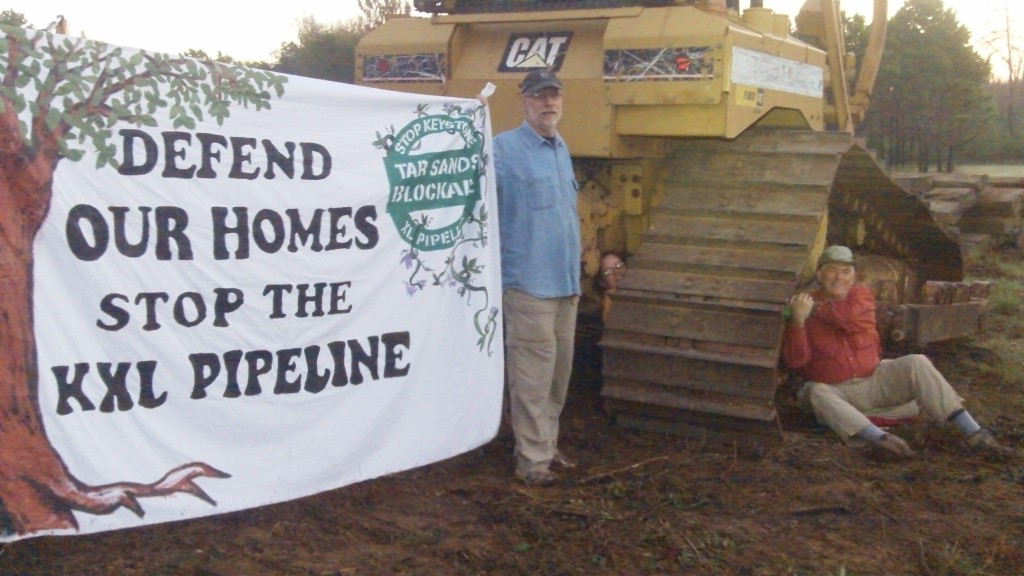
As citizens, for us to give up on stopping runaway global temperatures would be all the more tragic if it happened at the very moment when we are seeing both tremendous growth in clean energy and firsthand evidence of what extreme weather can do. Last year, record heat and drought across the nation wiped out half of our corn crop and 60 percent of our pasturelands. Wildfires in Colorado, Texas, and elsewhere burned nearly nine million acres. And superstorm Sandy brought devastation beyond anyone’s imagining to the Eastern Seaboard.
It is encouraging to see the Sierra Club come to this conclusion and endorse direct action as a necessary tactic to stop the madness of global climate disaster. The announcement also stated:
The Sierra Club has refused to stand by. We’ve worked hard and brought all of our traditional tactics of lobbying, electoral work, litigation, grassroots organizing and public education to bear on this crisis. And we have had great success—stopping more than 170 coal plants from being built, securing the retirement of another 129 existing plants and helping grow a clean energy economy. But time is running out, and there is so much more to do. The stakes are enormous. At this point, we can’t afford to lose a single major battle. That’s why the Sierra Club’s board of directors has for the first time endorsed an act of peaceful civil disobedience.
Let us hope that this announcement leads to large numbers of Sierra Club members willing to put their bodies between the machinery of the oil & gas industry and the ecosystems that cannot afford to be pillaged any longer.
The LGBT Resource Center at GVSU is hosting a screening of an important documentary that explores the intersectionality of today’s most pressing social justice issues.
Angela Davis and Tim Wise, two of this country’s leading racial and social justice scholar-activists, join moderator Rose Aguilar onstage for a rare, unscripted and free ranging conversation on the state of contemporary global politics.
They explore how our culture’s uncritical embrace of pervasive individualism, the myth of meritocracy and entrenched institutional inequality have led to racialized public policy, the privatization of education, health care and the environment, and the commodification of many of our basic needs, including water and food.
Through bold discourse, wit, and an optimism of the will, Angela and Tim call for new vocabularies – a different kind of fluency and a different quality of literacy. With a shared reverence for historical memory and today’s activism, they invoke the power of a new language to restore clarity and to unify global communities.
One comes away from this conversation with a sense of renewed faith in humanity and with the realization that ordinary people can, and do, and will achieve the extraordinary. As Angela notes in her commentary, “as isolated individuals we will always be powerless…but as communities we can achieve anything.”
Vocabulary of Change
Monday, January 28
4:00PM
GVSU Allendale Campus
Kirkhof Center – Pere Marquette Rm
This event is free and open to the public.
Dirty Wars: Jeremy Scahill and Rick Rowley’s New Film Exposes Hidden Truths of Covert U.S. Warfare
This interview is re-posted from Democracy Now!
Premiering this week at the Sundance Film Festival in Utah, the new documentary “Dirty Wars: The World is a Battlefield” follows investigative reporter Jeremy Scahill to Afghanistan, Somalia and Yemen as he chases down the hidden truths behind America’s expanding covert wars. We’re joined by Scahill and the film’s director, Rick Rowley, an independent journalist with Big Noise Films.
“We’re looking right now at a reality that President Obama has essentially extended the very policies that many of his supporters once opposed under President Bush,” says Scahill, author of the bestseller “Blackwater: The Rise of the World’s Most Powerful Mercenary Army” and a forthcoming book named after his film. “One of the things that humbles both of us is that when you arrive in a village in Afghanistan and knock on someone’s door, you’re the first American they’ve seen since the Americans that kicked that door in and killed half their family,” Rowley says. “We promised them that we would do everything we could to make their stories be heard in the U.S. … Finally we’re able to keep those promises.”
40th Anniversary of Roe v Wade: 5 Things I Learned About Abortion by Checking My Assumptions at the Door
This article by Samara Azam-Yu is re-posted from Colorlines.
When it comes to the 40th anniversary of Roe v. Wade, I have this deep, yet complicated sense of gratitude to people who poured their hearts into the issue of making abortion a legal right. It is humbling to think about all the work that came before this moment in the civil rights, social change, and social justice movements.
As a young woman of color and an activist, it can feel like being a tiny, relatively unimportant drop in a formidable tide of change. But one thing makes me certain I must continue to do this work: somehow, women of color, young women, low-income women, immigrant women, and women in rural areas are still waiting while barriers to sexual and reproductive health care, including abortion, continue to trump legal rights and provision of health services, human dignity, and self-determination.
After college, while working on public policy related to reproductive health, I began to see a gap in the way our institutions treat people of color, and believe that I must do something to help change the situation. I volunteered for ACCESS Women’s Health Justice in 2007, providing rides and housing to women traveling long distances because they could not access abortion services in their area. On a very basic level, I volunteered because, were I to need help, I would want someone to be there for me.
I grew up in a conservative area and had internalized some challenging attitudes about abortion, poverty, and the death penalty—attitudes aligned with policy that worked against my (and my family’s) interests. Still, I discovered that I was ready to drop everything for a friend who needed my help. Eventually, I learned to hold this level of compassion for complete strangers, too.
While volunteering, I had the honor of meeting incredible, resilient women who chose to terminate their pregnancies. The most striking part of this experience was when I realized that despite how seemingly different each woman is, we are also all deeply connected by the human experience, and that I needed to check my assumptions at the door.
Here are some things I learned when I began to leave my assumptions behind.
1) Teens often include their parents and have their parents’ support in making decisions.
One of the first young women who came to stay with me was still in high school. She came to the San Francisco Bay Area on a bus with her mom. They didn’t have a suitcase and had to borrow her mom’s boyfriend’s duffle bag and cell phone to make the journey. The mother was exhausted from a long bus ride from the Central Valley, but she really needed someone to talk to about her daughter. The mother also told me that she got pregnant and had her daughter at her daughter’s age. Things had been difficult raising her daughter, and she wanted a better life for her. At least, she wanted her daughter to have the opportunity that she never had—to graduate from high school. It was hard for her to see her daughter pregnant, feeling sick, and vomiting, knowing that this was only the beginning.
2) Real life is not a movie or a story with a neat conclusion.
The same mother and daughter both called me to say they felt relieved and exhausted after the daughter’s pregnancy termination. They had made it all the way home, but someone stole their bags, including the lunches I packed for them, their clothes, their money, and the mother’s boyfriend’s cell phone. The mother and the daughter were moving forward, but the lost phone and bag seemed like it would put a strain on their relationship with the mom’s boyfriend. I quickly learned that helping someone access abortion services is but one moment in their broader lives.
3) Many women who get an abortion already have kids.
When I was pregnant with my daughter, I became worried about continuing to volunteer and putting women in a potentially uncomfortable position being around someone who wanted to keep a pregnancy. But I continued, and one day I picked up a woman in Fresno who was proud of her three kids. She and a friend who came with her (who had two kids of her own) gave me all their tips on what made them feel better from pregnancy to pregnancy. They could see I was pretty freaked out about the prospect of labor and coping with pain. They were brutally honest about what it was like for them and how hard the recovery can be, but helped me to know I would be just fine. They also had a great sense of humor about what the first year could be like, depending on the child, since every kid is so different.
4) Economic and health barriers compound the problem of access for pregnant women seeking abortion services.
Low-income women and women of color are more likely to experience diabetes, heart disease, asthma, and obesity, all of which may contribute to difficult pregnancies and high health care costs. Furthermore, these women may struggle to access abortion services in their area and must often travel long, expensive distances to find a provider and receive care. For example, I worked with a woman in West Oakland who worked in a salon. The salon only paid her commissions, which meant she earned around $8.00/week—not per hour, per week. She had two adorable children that she struggled to support and was pregnant with a third. She wanted an abortion, but was unable to have one nearby because she had diabetes. The closest place she could go was San Francisco, but she had never been on BART before in her life. Despite its close proximity, San Francisco may as well have been a world away.
5) Terminating a pregnancy is not the only pressing medical issue a woman is dealing with.
A woman and her husband came to stay with me, and in the middle of the night they came to wake me up. I thought maybe there was a complication and I was getting ready to take her to the hospital. But then her husband let me know that she was in an enormous amount of pain from her teeth. Since she was laid off from her job and he had limited work doing construction, they couldn’t afford insurance. She was in excruciating pain, but was unable to see a dentist.
What I’ve learned and experienced has been a gift in my life. But I’m still overwhelmed by the thought that women are forced to make tough health care decisions for themselves and their families without adequate supports and services. This is simply unacceptable.
I am now the Executive Director of ACCESS. When I think of the anniversary of Roe v. Wade, it strikes me that ACCESS is receiving an increasing number of calls from women in California who face tremendous barriers in accessing all reproductive health care—not just abortion. Persistent social inequity is at the root of my mixed feelings around this anniversary, and it is why I am honored to continue working for reproductive justice for all people.
The Extremist Cult of Capitalism
This article by Paul Buchheit is re-posted from Common Dreams.
A ‘cult,’ according to Merriam-Webster, can be defined as “Great devotion to a person, idea, object, movement, or work..(and)..a usually small group of people characterized by such devotion.”
Capitalism has been defined by adherents and detractors: Milton Friedman said, “The problem of social organization is how to set up an arrangement under which greed will do the least harm, capitalism is that kind of a system.” John Maynard Keynes said, “Capitalism is the astounding belief that the most wickedest of men will do the most wickedest of things for the greatest good of everyone.”
Perhaps it’s best to turn to someone who actually practiced the art: “Capitalism is the legitimate racket of the ruling class.” Al Capone said that.
Capitalism is a cult. It is devoted to the ideals of privatization over the common good, profit over social needs, and control by a small group of people who defy the public’s will. The tenets of the cult lead to extremes rather than to compromise. Examples are not hard to find.

Extremes of Income
By sitting on their growing investments, the richest five Americans made almost $7 billion each in one year. That’s $3,500,000.00 per hour. The minimum wage for tipped workers is $2.13 per hour.
Our unregulated capitalist financial system allows a few well-positioned individuals to divert billions of dollars from the needs of society. If the 400 richest Americans lumped together their investment profits from last year, the total would pay in-state tuition and fees for EVERY college student in the United States.
Extremes of Wealth
The combined net worth of the world’s 250 richest individuals is more than the total annual living expenses of almost half the world – three billion people.
Within our own borders the disparity is no less shocking. For every one dollar of assets owned by a single black or Hispanic woman, a member of the Forbes 400 has over forty million dollars. That’s equivalent to a can of soup versus a mansion, a yacht, and a private jet. Most of the Forbes 400 wealth has accrued from nonproductive capital gains. It’s little wonder that with the exception of Russia, Ukraine, and Lebanon, the U.S. has the highest degree of wealth inequality in the world.
Extremes of Debt
Up until the 1970s U.S. households had virtually no debt. Now the total is $13 trillion, which averages out to $100,000 per American family.
Debt appears to be the only recourse for 21- to 35-year-olds, who have lost, on average, 68% of their median net worth since 1984, leaving each of them about $4,000.
Extremes of Health Care
A butler in black vest and tie passed the atrium waterfall and entered the $2,400 suite, where the linens were provided by the high-end bedding designer Frette of Italy and the bathroom glimmered with polished marble. Inside a senior financial executive awaited his ‘concierge’ doctor for private treatment.
He was waiting in the penthouse suite of the New York Presbyterian Hospital.
On the streets outside were some of the 26,000 Americans who will die this year because they are without health care. In 2010, 50 million Americans had no health insurance coverage.
Extremes of Justice
William James Rummel stole $80 with a credit card, then passed a bad check for $24, then refused to return $120 for a repair job gone bad. He got life in prison. Christopher Williams is facing over 80 years in prison for selling medical marijuana in Montana, a state which allows medical marijuana. Patricia Spottedcrow got 12 years for a $31 marijuana sale, and has seen her children only twice in the past two years. Numerous elderly Americans are in prison for life for non-violent marijuana offenses.
Banking giant HSBC, whose mission statement urges employees “to act with courageous integrity” in all they do, was described by a U.S. Senate report as having “exposed the U.S. financial system to ‘a wide array of money laundering, drug trafficking, and terrorist financing'” in their dealings with Mexico’s Sinaloa cartel, which is considered the deadliest drug gang in the world.
HSBC received a fine equivalent to four weeks’ profits. The bank’s CEO said, “we are profoundly sorry.”
In the words of Bertrand Russell, “Advocates of capitalism are very apt to appeal to the sacred principles of liberty, which are embodied in one maxim: The fortunate must not be restrained in the exercise of tyranny over the unfortunate.”
Accurate to the extreme.
ExxonMobil Donates $260,000 to Obama Inauguration
This article by Steve Horn is re-posted from DeSmogBlog.
President Barack Obama will be publicly sworn in today—on Martin Luther King Jr. Day—to serve his second term as the 44th President of the U.S.
Today is also the three-year anniversary of Citizens United v. FEC, a U.S. Supreme Court ruling that—in a 5-4 decision—deemed that corporations are “people” under the law. Former U.S. Sen. Russ Feingold (D-WI)—who now runs Progressives United (a rhetorical spin-off of Citizens United)—said in Feb. 2012 that the decision “opened floodgates of corruption” in the U.S. political system.
Unlike for his first Inauguration, Obama has chosen to allow unlimited corporate contributions to fill the fund-raising coffers of the entity legally known as the Presidential Inaugural Committee. Last time around the block, Obama refused corporate contributions for the Inauguration Ceremony as “a commitment to change business as usual in Washington.”
But not this time. With a fundraising goal of $50 million in its sights, the Obama Administration has “opened floodgates” itself for corporate influence-peddling at the 57th Inaugural Ceremony.
A case in point: the Obama Administration’s corporate backers for the Inaurguation have spent more than $283 million on lobbying since 2009, the Center for Public Integrity explained in a recent report.
“It’s a deeply disturbing move, and a reversal from the positive steps they took in 2009,” Robert Weissman, president of Public Citizen told Roll Call. “Corporations make donations to events like the inaugural festivities because they get something back in return.”
One of the biggest givers so far is none other than what Pulitzer Prize winning investigative journalist Steve Coll calls a “Private Empire“—ExxonMobil.
ExxonMobil: More than $260,000 to Obama’s Inauguration Committee
According to a scoop by The Hill, ExxonMobil contributed $250,000 to the Inaugural Committee. Additionally, ExxonMobil attorney Judith Batty has given the Committee $10,750, according to the Center for Responsive Politics. Thus, ExxonMobil has given the Committee a grand total of more than $260,000.
ExxonMobil earned a profit of $41.1 billion in 2011 and in the first three quarters of 2012 earned a profit of $34.92 billion, well on pace to surpass its 2011 profit margin.
Some mathematical context is warranted. This means ExxonMobil earned $9,935 per minute in the first three quarters of 2012, $596,107 per hour and $14.3 million per day in profits.
Despite these oligarchic-type bottom lines, ExxonMobil doesn’t even pay its fair share in taxes, as ThinkProgress explained in a March 2012 article:
Citizens for Tax Justice reported Exxon paid only 17.6 percent taxes in 2010, lower than the average American, and a Reuters analysis using the same criteria estimates that Exxon will pay only 13 percent in effective taxes for 2011. Exxon paid zero taxes to the federal government in 2009.
In practice, this means that ExxonMobil actually pays less in taxes by percentage than an average Middle Class American family.
For a corporation with financial wealth of this magnitude and one that, to boot, evades paying taxes, $260,000 is truly a “drop in the bucket.” And yet in a political system favoring those who can “pay to play,” it’s a true game-changer in terms of gaining direct access to the Administration.
Obama Administration Responds … Sort Of
Critics say it’s more of the same out of an Obama Administration that in the first term had a cozy relationship with corporate patrons.
“It fits into a pattern of not treating this campaign-finance issue with concern when in fact it is of great concern to the integrity of the political process and our democratic system,” Fred Wertheimer, president of Democracy 21, told The Hill.
The Obama team’s response? According to them, they are champions of campaign-finance reform and anti-corruption measures.
“This president has done more to reduce the influence of special interests in Washington than any administration in history,” White House spokesman Eric Schultz told The Hill.
It looks as if Oil Change International has hit the nail on the head in framing this one, asking and answering the following question with an accompanying graphic co-created with The Other 98%:
 Grand Rapids Institute for Information Democracy