Keystone XL Blockader Disrupts TransCanada Meeting
This article and video is re-posted from Common Dreams.
Ramsay Sprague, a spokesperson for Tar Sands Blockade, was arrested Thursday after disrupting a planned speech by TransCanada executive Tom Hamilton by chaining himself to the room’s audio equipment and telling security officials attempting to remove him: “I don’t have key.”
Sprague’s protest comes less than a week after 19 activists and environmental organizations agreed to a repressive settlement preventing them from trespassing on Keystone XL property to protest Tar Sands pipeline owned by Hamilton’s company.
Hamilton was scheduled to speak before a crowd of 300 pipeline construction executives about safety and regulations on the KXL pipeline. But approximately 10 minutes into Hamilton’s speech, Sprague interrupted by chaining himself to the equipment and telling attendees that the “slow industrial genocide” caused by the pipeline must end.
“Toxic Tar Sands extraction should not be allowed to continue,” Sprague said. “We’ve been inside the pipe, light shining through at morning, with photographic and video evidence that the their wells are inadequate. That pipe went into the ground less than an hour later.”
“TransCanada’s safety record is beyond deplorable,” he continued. “Their wanton disregard for the health of our communities is demonstrated by their countless toxic tar sands spills. I’m compelled to take action today and shed light on the dangerous material this multinational corporation is pumping through our homes.”
Along with Sprague, three other activists were detained but released and escorted from the conference, the group said in a release.
Sprague is among 19 individual activists, along with Tar Sands Blockade, Rising Tide North America and Rising Tide North Texas, who on January 25 agreed, under threat of a $5 million lawsuit, not to trespass on Keystone XL property.
As part of the settlement, the activists agreed to no longer trespass or cause damage to Keystone XL property throughout the pipeline’s entire southern leg, including any demonstrations “aimed at interfering with pipeline construction,” the Toronto Star reports.
But Sprague vowed at the time to continue protesting the dangerous pipeline.
“TransCanada is dead wrong if they think a civil lawsuit against a handful of Texans is going to stop a grassroots civil disobedience movement,” he said in a statement. “This is nothing more than another example of TransCanada repressing dissent and bullying Texans who are defending their homes and futures from toxic tar sands.”
This article by Sundiata Acoli is re-posted from Black Agenda Report.
This article previously appeared on the website dedicated to political prisoner/prisoner of war Sundiata Acoli. It was written to accompany Dan Berger, author, anarchist and college professor on his January, 2013 book tour thru Germany. Dan is author of “Outlaws in America: The Weather Underground Organization” and is the editor of “The Hidden ’70s.”
America has millions of prisoners locked away in its dungeons, many for 20, 30 and 40 years or more – yet astonishingly, it claims there are no Political Prisoners or Political Prisoners of War (PP/POWs) in its prisons – and that it has no PPs.
That makes the u.s. the only country in the world that has MASS INCARCERATION, has more prisoners, period, than any other country – and has prisoners locked in secret CIA prisons around the world, but no PPs.
Since it has no PPs, it obviously has no masses of poor, hungry, homeless or unemployed people, nor does it have hordes of oppressed nationalities and lower classes herded into reservations, barrios, ghettoes, ‘hoods, trailer parks and housing projects who are daily subjected to various forms of discrimination, racial profiling and police brutality, murder and mass imprisonment.
If the u.s. has no PPs, then apparently there’s no MASS INJUSTICE in america because that’s where MASS INCARCERATION and PPs come from. MASS INCARCERATION is the barometer, the main indicator of MASS INJUSTICE in society.
PPs are those in every land and throughout every era, who are imprisoned for fighting INJUSTICE in their societies and the same holds true today for the relationship between MASS INJUSTICE, MASS INCARCERATION and PPs in u.s. society – and who must be freed! Not only PPs – but ALL those imprisoned by unjust policies.
The latest 30-year prison-building/mass-incarceration spree has left the land dotted with thousands of new prisons overfilled with millions of prisoners – all of which has convinced state legislators that they cannot incarcerate their way out of the defects in this political system and that the current budget-busting levels of incarceration are too costly to sustain any longer.
So at this moment it seems very possible for social movements to succeed in reducing prison populations. But any reductions under the present policy would only postpone the next INCARCERATION binge to some more cost-efficient time in the future although MASS INCARCERATION itself is the problem! Not crime, not drugs nor violent offenders per se, but MASS INCARCERATION itself is the problem. Crime rates, for serious crime, were as low in 2011 as they were in 1964. Rates for violent and nonviolent crimes have been declining for at least five years but the national prison population is functionally the same size. So it’s clear that incarceration rates are “policy” driven, not “crime” driven. And history shows that america’s incarceration is driven primarily by “unjust racial/class” policies.
The 1st instance of america’s unjust racial policy occurred at inception with its incipient genocide against Indigenous american, theft of their land and Chattel Slavery – unjust on its face – became racially so when it switched to enslaving Blacks ONLY. Confinement of Indigenous americans on reservations, their captured Chiefs and Braves in military prisons and the enslaved Afrikans on plantations for 300 years was the first MASS INCARCERATION committed by the colonial nation. Every slave confined on a plantation or runaway detained in jail was a POW. So was every Indigenous american forced onto reservations or detained in military prisons – as was any other person detained for resisting american genocide, enslavement, rape and robbery of their lands and nations.
The 2nd instance, which began at the end of the Civil War and continued until the 1970s, was the use of Black Codes and Jim Crow segregation laws to re-enslave the newly freed Blacks and people of color in general through mass imprisonment in the penal system. At the time Whites were the overwhelming majority of the nation’s prison population when the percentage of Blacks in the southern prisons jumped from near zero to 33% within 5 years. Others imprisoned during the ensuing 100 year struggle against Jim Crow segregation and other racial/class oppressions were the increasing number of poor immigrants and other such agricultural and industrial workers, union organizers, war resisters, ghetto heroin addicts and the rising number of Civil Rights workers and revolutionaries of all stripes: Black Panther Party, Puerto Rican Young Lords, Anti-imperialist Weather Underground Organization, Chicano Brown Berets, American Indian Movement, the Asian I WOR KUEN and numerous others which resulted in the defeat of Jim Crow (de jure) segregation during the mid-’60s. By 1975, Black and other people of color made up nearly half of the 250,000 prison population. The period between 1865 and 1975 produced a great number of PP/POWs, including Big Bill Haywood, Sacco and Vanzetti, Sitting Bull, Marcus Garvey, and Pedro Albizo Campus; George Jackson, Angela Davis, Marilyn Buck, Huey P. Newton, Assata Shakur and many others.
And the 3rd instance of unjust racial/class policies began around 1975, a decade after the defeat of Jim Crow (legal, not actual) segregation. In that intervening period and beyond, numerous revolutionary organizations who were fighting injustice – the Black Liberation Army, FALN of Puerto Rico, American Indian Movement, Weather Underground Organization, the United Freedom Front, MOVE and others – were attacked by the police who killed or imprisoned several of their members. Those imprisoned joined the ranks of other unrecognized PP/POWs already in prison. Ronald Reagan set widespread injustice in motion by flooding South Central L.A. with “crack” cocaine to secretly finance the Nicaraguan Contra War in the early 1980s, and incarceration rates skyrocketed. “Crack” spread quickly, devastated ghettoes nationwide and escalated the racist, hypocritical War on Drugs and racial profiling schemes that mainly targeted people of color, White hippies and the poor as crime suspects and targeted communities of color for saturation with Street Crime Units to terrorize, mass imprison and paint its inhabitants with felony convictions later used to deny their right to vote, deny their right to work jobs/trades requiring certain licenses and certificates, deny the right to live in public housing, deny food stamps, deny student loans for college/trade course etc., all of which relegated felons to a permanent 2nd-class status, exploded the prison population from 250,000 in the mid-’70s to 2.3 million today and so aptly verified noted author Michelle Alexander’s statement that: “MASS INCARCERATION is the New Jim Crow.” This era produced PP/POWs Oscar Lopez Rivera, Kuwasi Balagoon, Mumia Abu Jamal, David Gilbert, Leonard Peltier, Move 9, Susan Rosenberg, Carlos Alberto Torres, Tom Manning, Jaan Laaman and numerous Muslim, Earth Liberation Front, Animal Liberation Front, Environmentalist and Occupy Wall Street PPs, plus Sekou Odinga and the liberation of Assata Shakur followed by her political asylum in Cuba. Blacks had become the absolute majority of the prison population at about 55% but the number is even higher since approximately 5 to 10% of the Black population is hidden in under the “Hispanic” ethnic category in the census, which often omit racial designations so that the “official” percentage of Black prisoners is listed at about 45% followed by a fast growing number of Browns: Latino/as, Hispanics, Indigenous americans and Asians, with Whites declining to less than 20%.
Since america’s MASS INCARCERATION is driven by unjust racial/class policies then the real solution to MASS INCARCERATION is MASS “DECARCERATION.” In other words, drastic cuts to ALL prisoner’s TIME, since TIME is the currency, the legal tender, the great equalizer and righter of wrongs in prison.
Many prison and human rights activists are in agreement with a position forwarded by Michelle Alexander, which calls for incarceration rates to be reset to 1980 levels, or even to the post-Jim Crow level of the 1970s, which are levels before Ronald Reagan flooded South Central and set off the “Crack” epidemic in america. Decarceration opens the door to struggle over the life and scope of the system more generally; it can be shrunk well beyond its earlier levels! To “DECARCERATE,” many activists advocate some form of time-served plus prisoner-age combination that automatically put a prisoner out the door when the combination adds up to a certain number. The main proposal for this strategy, advocated by POWs like Russell Maroon Shoatz, calls for 25/50 and out: that is, if a prisoner is over 50 and has served 25 years or more, than s s/he is “automatically out the door” or discharged immediately. This strategy will free those imprisoned by, or long held for, biased and unjust policies – including many PPs as well.
Thank you for your attention – and i hope we can find ways to work together in support of PPs, prison struggles and progressive movements in both our countries. Our main PP organization is The Jericho Movement at nycjericho@gmail.com. Feel free to contact them on any issue regarding solidarity work for PPs in the u.s.
i also bring you solidarity greetings from those who have been on a rolling on hunger strike in the California state prisons. They’re joined in a fierce struggle to end solitary confinement, some of whom have been held in solitary 20 years or more; 20 years in conditions described by their outside representative thusly:
“The long-term (indeed life long) indefinite isolated solitary confinement in 7′ 7″ x 11′ 7″ concrete boxes for 22 1/2 hours per day in California’s Pelican Bay and Corcoran Secure Housing Units (SHUS) is torture. It is cruel. Without phone calls, without human touch, degrading and humiliating routines, bad food, insufficient clothing, no fresh air and they NEVER see natural sunlight, terrible mattresses… without hope of ever escaping, all this most often for reasons that have nothing to do with behavior, or even disciplinary matters. This is unprecedented in the history of the United States. Isolated for life for alleged associations, for what books you read, what art you draw or for what you believe in…. this is commonplace in the California system – a system which takes up more than half of California’s budget.”
They’re also struggling against an insidious gang debriefing program that requires them to “give up” or “make up” info (i.e., “snitch”) on another prisoner as their only ticket out of solitary. As expected, or designed, the program creates or greatly aggravates hostility between prison gang members and ethnic groups. In return the Hunger Strike leaders have initiated a Truce Movement among the various gangs and ethnic groups that’s well worth your support and worth emulation by other states. To find out how you can support the California Prisons’ Hunger Striker contact their outside representatives at:
Anne Weills and Carole Travis Siegel and Yee 499 14th St. Suite 300 Oakland, CA 94612 and/or contact any of the following prisoner Hunger Strike leaders:
Todd Ashker, C58191, D1-119
Arturo Castellanos, C17275, D1-121
Sitawa Nantambu Jamaa (Dewberry) C35761, D1-117
Antonio Guillen, P81948, D2-106
Paul Redd, B72683, D2-117
Pelican Bay mail to prisoners is addressed to: P.O. Box 7500 Cresent City, CA 95532
Thank you.
In Struggle, Sund
This article by Brian Tashman is re-posted from Right Wing Watch.
Tony Perkins of the Family Research Council has joined American Family Association’s Buster Wilson in linking the repeal of Don’t Ask Don’t Tell to the military’s suicide rate. Discussing the Pentagon’s new policy on allowing women to serve in combat units yesterday on his radio program, Perkins said that the Obama administration’s work in “driving Christianity out [and] putting homosexuality in” are “adding additional stress” that leads to a higher rate of suicide.
Perkins cited no evidence to back up his claim, but as with his ominous and incorrect predictions regarding the consequences of DADT’s repeal, he apparently doesn’t see a need to substantiate his outrageous allegations.

Perkins: The volume of these decisions coming out of this administration is unbelievable, unbelievable. The stress in our military, when you look how they have used the military for their social experimentation: driving Christianity out, putting homosexuality in, suicide rate going through the ceiling. I think it was last year if I recall the numbers there were 349 suicides in 2012 and I believe that’s more than were killed in combat, that’s the highest number since the Pentagon began tracking suicides back in 2001. And what are they doing? Adding additional stress by this social engineering. Unbelievable.
Enbridge Resisting Final Clean-Up of Its Michigan Oil Spill
This article by Lisa Song is re-posted by InsideClimate News.
Two and a half years after the costliest oil pipeline spill in U.S. history, the company responsible for the disaster is balking at digging up oil that still remains in Michigan’s Kalamazoo River.
The cleanup has been long and difficult because the ruptured pipeline was carrying bitumen, a heavy oil from Canada’s tar sands region. Bitumen is so thick that it can’t flow through pipelines until it’s mixed with liquid chemicals to form diluted bitumen, or dilbit. When more than one million gallons of dilbit poured out of the broken pipeline in July 2010, the chemicals evaporated and the bitumen began sinking to the riverbed.
Today, regulators and oil spill experts are still struggling to deal with the accident, which was the first major spill of dilbit into a U.S. waterway. The cleanup tools and techniques developed for conventional oil spills—which mostly float on water—are ineffective for submerged bitumen, so experts have had to come up with new methods.
In October, the U.S. Environmental Protection Agency asked Enbridge Inc., the pipeline’s Canadian owner, to clean up several miles of the river where submerged oil is still accumulating. The proposed order told Enbridge to dredge 80 to 100 acres of the riverbed. The request was based on the results of a yearlong study the EPA conducted with oil cleanup experts, Michigan state regulators and a committee of about 15 scientists.
The dredging is needed, the agency said, because the oil could spread into uncontaminated areas of the river if it isn’t removed.
Steve Hamilton, a Michigan State University professor and a scientist on the committee, said the number of acres could change as the EPA continues to study the situation. “No specifics have been decided…Further recovery actions in the most contaminated sediments—potentially including dredging—are being contemplated.”
Enbridge responded to the request by asking the EPA to delay issuing its final order until the agency completes some ongoing scientific studies. In a Nov. 2 letter obtained by InsideClimate News, the company questioned the EPA’s assertion that the submerged oil is “mobile” and could contaminate sections of the river that are already clean.
“Studies and activities are currently ongoing to better understand the extent, if any, of submerged oil transport, containment of oil and recovery of oil-containing sediment related to the Line 6B release,” Enbridge wrote.
The EPA is drafting its response to the letter and declined to comment about its discussions with Enbridge.
Nick Schroeck, executive director of the Great Lakes Environmental Law Center, said the Clean Water Act gives the EPA authority to order whatever cleanup it determines is needed. But in these types of cases, the agency likes to work with the responsible parties, he said, and make its orders as “least burdensome as possible” to avoid court challenges.
Enbridge, Canada’s largest transporter of crude oil, was fined a record $3.7 million for the 2010 spill by the U.S. Department of Transportation. The National Transportation Safety Board blasted the company for a “complete breakdown of safety.” The EPA is conducting a separate investigation of the accident.
The slow pace of the cleanup has angered Deb Miller, whose home is about 300 feet from Ceresco Dam, one of the locations targeted for dredging. When an area near the dam was dredged in 2010, Miller and her husband, Ken, lived for months with the noise of helicopters and machinery. So much heavy equipment blocked the roads by their nearby carpet and flooring store that their customers couldn’t reach them.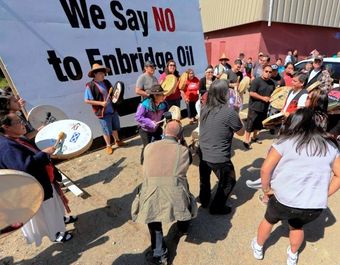
Still, Miller wants Enbridge to abide by the EPA’s order and dredge again near her home.
“It just really frustrates me, that our federal government allows a company to put a product through [a pipeline] where they don’t know the effects and don’t know how to clean it up,” Miller said in an interview last week.
In 2010, Miller testified before Congress about the spill and she has joined the New Voices Project, an outreach group created by the nonprofit Pipeline Safety Trust, which advocates for improved pipeline regulations and practices.
Last fall, Miller took a garden rake and stirred up the bottom of the river. She said the oil “just came up black.” Now that the river has frozen over, there’s no visible contamination, yet Miller remains worried.
“There’s no way I will ever let my 14-year old grandson step foot in the river,” she said. “Us property owners [are] sitting with a river that’s absolutely contaminated and changed forever. We were promised this would be made whole, that the river would be made better than it was before…In my mind, it comes down to a bottom line. They don’t want to put the money into dredging.”
Hamilton, the Michigan State professor, said the EPA committee is conducting a number of research projects, including examining the submerged oil’s effects on aquatic life, refining a hydrodynamic model to track the oil’s movement and analyzing the environmental impacts of dredging and the effectiveness of less intrusive methods of oil removal. He spoke with InsideClimate News as an individual scientist, not as a representative of the EPA.
“My personal interest is to be more ready for the next spill,” said Hamilton, who has spent years studying the Kalamazoo’s hydrology and water quality.
U.S. imports of dilbit are projected to quadruple in the next decade, and dilbit would be carried on the proposed Keystone XL pipeline, which crosses the critically important Ogallala aquifer. Earlier this month, the Nebraska Department of Environmental Quality concluded that a dilbit spill in the Ogallala would be less serious than a spill into surface water, because groundwater moves slowly within the aquifer. But the agency did not model the impact of a dilbit spill on Nebraska’s rivers or lakes.
Spill Forced EPA to Improvise Cleanup Techniques
The debate over the Kalamazoo cleanup underscores how little is known about dilbit and how to remove it from waterways.
To gauge the extent of damage after the spill, the EPA developed a method it calls “poling” to map the amount and location of the oil. Using hand-held poles, workers agitated the sediment in the riverbed to see if oil floated to the surface. They found that the current was sweeping clumps of oil downstream, allowing them to collect in low-lying areas, where they were sometimes buried in up to six inches of sediment.
Results from the latest survey show that oil is pooling near Ceresco Dam, Mill Ponds and Morrow Lake Delta. Oil is also showing up in places that were once oil-free, and the EPA is concerned it could move further downstream during floods.
Enbridge disputes these conclusions.
“Poling is a rough, subjective method to determine the general location of submerged oil without accounting for volume, source of oil or potential for migration,” the company said in its letter.
Hamilton acknowledged that the technique is flawed, but says it’s the best method they have given the unique challenges of this spill. “Poling remains to this day the only practical method of going out in the field and trying to find submerged oil,” he said.
Enbridge also argues that the dredging would do more harm than good.
Last year an InsideClimate News investigation of the spill showed that regulators and scientists have constantly struggled to balance oil cleanup with protecting the ecosystem. The EPA’s proposed order acknowledges that dredging is too destructive for some parts of the river. But it also says that after consulting its scientific committee and other experts, it determined that the benefits outweigh the potential damage in the three areas tagged for cleanup.
“The decision has been made, by EPA at least, that we should go after [the oil] while we can,” Hamilton said. “Once it gets spread all around it’s harder to [clean up].”
Enbridge has used less intrusive methods in many parts of the river, including agitating sediment and collecting any oil that floats to the surface. In its letter objecting to the EPA’s plan, it said it prefers to continue with those techniques.
The EPA is studying whether these methods are effective, Hamilton said. But so far, no one has “properly measured what fraction of the oil is collected that way.”
Jay Wesley, a fisheries expert with Michigan’s Department of Natural Resources, said the three areas targeted by the EPA already have been heavily disturbed by cleanup activities over the past two years, “so some additional dredging…probably won’t affect the ecosystem too badly.”
Under orders from the EPA, Enbridge used an even more intrusive method in 2011 to clean up Talmadge Creek, a Kalamazoo tributary that received the brunt of the damage from the ruptured pipeline. The creek was so badly contaminated that Enbridge had to essentially rebuild two miles of it.
“They dug out the whole stream and its valley, carted it [away] in trucks and brought in clean materials…It’s 100 percent new,” Hamilton said.
The dredging the EPA is proposing now would be much less intrusive than that, but the process could still take months and substantially increase the cost of the cleanup, which already totals more than $809 million.
Before any work can begin, Enbridge will have to apply for permits from Michigan’s Department of Environmental Quality.
Michelle DeLong, who leads a response team the MDEQ formed to deal with the Kalamazoo spill, said the permitting process would take at least a month.
If Enbridge ends up dredging 100 acres, it would be “a pretty large scale operation,” she said. A staging ground would be needed for the heavy equipment, and Enbridge would have to submit a detailed work plan to the MDEQ. Impacted property owners would have an opportunity to comment on the plan and could request a public hearing. If that happened, DeLong said the permitting process could extend to two months.
Hamilton said the EPA will conduct another survey of the submerged oil in the spring, which could alter the dredging plan. But he doesn’t expect the oil to move much over the winter because the river is running low after a severe summer drought and there’s been little rain over the past few months.
Long-Term Effects Unknown
As the EPA struggles with the cleanup, Michigan authorities continue to assess the spill’s impacts on human and environmental health.
Wesley, the fisheries expert, said little is known about how bitumen will affect the aquatic ecosystem. Most of the impact would be on mussels, insects and other macroinvertebrates, he said, and any problems they experience would in turn affect the rest of the food chain.
“This was a really heavy crude, and huge volumes were put into the river,” Wesley said. It’s “very unusual.”
Michigan’s Department of Community Health determined last year that contact with submerged oil could cause skin irritation but no long-term health effects. The agency is still studying the health risks posed by the chemicals that evaporated into the air after the spill, as well as the risks of eating fish from the river.
Deb Miller, the Ceresco resident, said concerns about the spill’s long-term effects forced her and her husband to close their carpet store on Nov. 30 and accept Enbridge’s offer to buy selected properties along the river.
“I sold the property back to Enbridge, at a loss, because I don’t know what the future holds,” Deb Miller said. “At 60 years old, I can’t take the chance at staying at a property that may be contaminated…I pray no other community has to go through what we did.”
This article by Nick Alexandrov is re-posted from CounterPunch. Editor’s Note: The information in this article is not only important, since he could expose the US role in supporting the genocidal policies of former Guatemalan President Rios Montt, it could result in setting a legal precedence that has significant ramifications for Guatemalans living in the US. There are currently an estimated 4,000 Guatemalans living in West Michigan.
Efraín Rios Montt, Guatemala’s former dictator, may yet face the consequences of his actions. Last Monday, Judge Miguel Angel Gálvez announced that both Montt, 86, and José Mauricio Rodríguez Sánchez, another former general, must “stand trial on charges of genocide and crimes against humanity,” Elisabeth Malkin wrote in the New York Times. Her article, in accordance with Times standards, left a few things out, among them the fact that Montt completed coursework at the School of the Americas (SOA) three decades before taking power. (The school is now known as the Western Hemisphere Institute for Security Cooperation, or WHINSEC, but “there are no substantive changes besides the name,” one of its former instructors testified shortly after the rebranding.) His 14 months in charge were brutal, even by the standards SOA grads have set: “an estimated 70,000 unarmed civilians were killed or ‘disappeared;’ hundreds of thousands were internally displaced,” according to Amnesty International. And his “Operation Sofia” was “aimed at massacring thousands of indigenous peasants,” the National Security Archive website explains—and was quite successful, given the 600 Mayan villages it destroyed.
The National Security Archive is housed at George Washington University, which is worth bearing in mind. That a prominent university could name itself after the man the Iroquois dubbed “Town Destroyer” in the 1770s reveals much about this country’s prevailing intellectual culture, and its sense of history. Seneca Chief Cornplanter explained that, whenever someone mentioned that Founding Father’s name, “our women look behind them and turn pale, and our children cling close to the necks of their mothers.” Washington was hardly an innovator in this regard, and similar to the man who, centuries earlier, “set forth across the countryside, tearing into assembled masses of sick and unarmed native people, slaughtering them by the thousands.” That was Columbus’ March 1495 rampage across Hispaniola, as described by historian David Stannard. Montt was a worthy heir to this Western barbarism.
And his policies were right in line with Washington’s goals for the region. As World War II drew to a close, U.S. State Department planners wrote of the “problem,” as they saw it, with “the other American republics,” which were “manifesting an increasingly strong spirit of independence and jealous insistence on complete sovereignty.” This nuisance presented difficulties in light of Washington’s efforts to secure “long-term rights for the use…of certain naval and air bases,” and its wish “to maintain the economies” of Latin American nations in accordance with its principles—“quite apart from equity, it is to the selfish interest of the United States” to do so, planners emphasized.
These statements appear in documents from 1943-44, indicating Washington’s ensuing support for dictatorships had little to do with a “Cold War climate” warping the otherwise good intentions of U.S. officials. From the perspective of these men, Guatemala entered a decade-long crisis as WWII drew to a close. In 1944, a popular revolt brought down Jorge Ubico, the dictator Washington supported. His successor, Juan José Arévalo, won overwhelmingly in the election held that December; he started democratizing the country while in office. In 1951, voters elected Jacobo Árbenz, whose Agrarian Reform Law was part of a broader strategy to limit the power of major corporations. Under Ubico, Susanne Jonas explains, the government was “active…in protecting and subsidizing (but never regulating or restricting) private enterprise;” it also repressed most of the population, keeping workers poor, terrified, and atomized—and profits high.
But ultimately it was Guatemala’s “increasingly strong spirit of independence” under Árbenz, more so than any specific policies limiting, say, United Fruit’s ability to operate, that led to his downfall in the 1954 CIA coup. That ouster was one of the CIA’s earliest, though not without its difficulties: one official, as former CIA staff historian Nick Cullather revealed, “rallied his dispirited troops with a reminder that ‘the morale of the Nazis in the winter of 1932, just before their seizure of power in Spring 1933, was at an all-time low ebb.’” Once Árbenz was out of the picture, the Guatemalan government acted on U.S. Embassy instructions, hunting down thousands of perceived subversives and torturing many of them in an effort to terrorize the population back into submission. Under these conditions, the public could do little to protest, say, the 1955 Petroleum Code, which Jonas notes was written in English and a “giveaway measure” for foreign companies.
Washington’s 1960s restructuring of the security forces followed, doubling the army’s size and creating the Mobile Military Police, which expanded the state’s reach into rural regions. These changes coincided with U.S. training for counterinsurgency units, both at the SOA and in-country, as when Colonel John D. Webber traveled to Guatemala in 1966 to monitor the new squadrons’ instruction. Despite official rhetoric to the contrary, government repression was “totally disproportionate to the military force of the insurgency,” according to authors of the 1999 UN-backed Historical Clarification Commission—it was state terror, in plain terms, due to which perhaps 8,000 paid the ultimate price between 1966 and 1968. But things weren’t all bad. In 1962, a Chase Manhattan Bank report noted “the more favorable business climate” of the post-Árbenz era, in which its authors were confident foreign investment would “begin to pick up.”
Efforts to crush even the slightest trace of progressive politics intensified in the following years, and were pursued with utter ferocity in the 1980s. The 1981-1983 period was the one in which “agents of the State of Guatemala, within the framework of counterinsurgency operations”—developed with Washington’s help, it cannot be overemphasized—“committed acts of genocide against groups of Mayan people,” according to the 1999 truth commission. Rios Montt was running the show by this point, with the help of his cabinet, two-thirds of which—like the dictator himself—had studied at the SOA. These were the men who unleashed “Operation Sofia” on the Mayan communities: documents on the National Security Archive’s website demonstrate that the highest levels of Guatemala’s government were involved in its planning and direction.
Another human rights report, compiled by the Guatemalan Archdiocese’s Human Rights Office, gives a sense of what this “more favorable business climate” was like. One testimony recalls “burned corpses, women impaled and buried as if they were animals ready for the spit, all doubled up, and children massacred and carved up with machetes.” A second described how soldiers tied up a family inside a house, and then torched it; a two-year-old was among those burned to death. Yet another tells how a pregnant woman “in her eighth month” came face-to-face with counterinsurgency forces: “they cut her belly, and they took out the little one, and they tossed it around like a ball.” And in 1980, after shooting a woman lame, a group of soldiers “left their packs and dragged her like a dog to the riverbank. They raped and killed her.”
These are just four examples of thousands, and part of the broader policy of brutalization for which, in particular, Defense Minister Héctor Gramajo Morales bore major responsibility. U.S. officials honored him for his efforts at the SOA’s December 1991 commencement exercises in Fort Benning, GA, after which Harvard’s John F. Kennedy School of Government awarded him a Mason fellowship. Samantha Power, whose Pulitzer Prize-winning “A Problem from Hell” never mentions Guatemala, taught at the Kennedy School before Obama tapped her for his National Security Council, confirming Harvard’s status as a safe haven for contributors to the cause of Guatemalan genocide denial. But in civilized arenas, it seems more difficult to get away with overseeing the slaughter of thousands—one of several reasons why close attention should be paid to Rios Montt’s trial as it unfolds.
MLive article on LGBT Equality report amplifies anti-gay voices
Yesterday, we posted a story about the new Michigan Department of Civil Rights (MDCR) report on LGBT equality in Michigan. We provided an overview of the report, which included current state policy, documented cases of discrimination, testimony from public hearings and recommendations.
This morning MLive also reported on the new report and focused exclusively on just one aspect of the report, which is that LGBT discrimination is bad for Michigan’s economy.
In addition, the MLive story sought out comments from several sources. Besides comments from spokespersons from the Michigan Department of Civil Rights, the reporter talked to three independent sources, two that are opposed to LGBT equality and one in support.
The two anti-LGBT equality were cited first, beginning with Brian Burch, one of the five Holland City Council members who voted against recommendations from the Holland Community Relations Commission to include the LGBT community in the City’s anti-discrimination ordinance. Burch avoids talking about his denial of equality in Holland and instead redirects the conversation around the “brain drain” in Michigan. Burch, who is the lead PR person for ArtPrize, has defended his decision to vote against LGBT equality on numerous occasions since the June 2011 Holland City Council vote.
The other anti-LGBT equality source cited in the MLive article was James Muffett, president of Citizens for Traditional Values (CTV), a group that MLive identifies as “a conservative organization based in Lansing.”
Muffet is cited as saying, “Civil rights protections should include immutable characteristics that can’t be changed.” This is just code to mean that civil rights apply only to what their group believes as immutable characteristics, which for the CTV are heterosexual characteristics.
Citizens for Traditional values also believes that the US was founded on Christian principles and are strong advocates against women’s reproductive rights. In addition, CTV is a political action committee and has donated to rightwing and reactionary politicians and candidates.
It is not until the end of the very end of the MLive article that we read the only pro-LGBT comments from someone other than the Michigan Department of Civil Rights, which was a spokesperson from Equality Michigan.
Besides providing limited information and no analysis of the MDCR report, MLive gives more prominence to anti-LGBT voices than those who support LGBT equality.
Yesterday, former Secretary of State Madeleine Albright spoke at the Ford Museum in Grand Rapids.
MLive sent a reporter who acted primarily as a stenographer. What the Clinton administration Secretary of State said, the MLive reporter wrote. No questions asked, no verification of what she said and no mention of any major foreign policy matters she omitted.
The Mlive article focuses on a story that Albright shared about the Cuban use of the word cajones (Spanish for balls), which MLive never translates for readers. However, the more important point about this story was that Albright justified a practice of US intimidation and harassment of Cuba, with regular US military fly-overs being one aspect of that policy.
The MLive article continues with Albright talking about other major foreign policy matters during her tenure in the Clinton administration. Albright “expressed pride over U.S. intervention in Kosovo and regret that the country did not try to stop genocide in Rwanda.”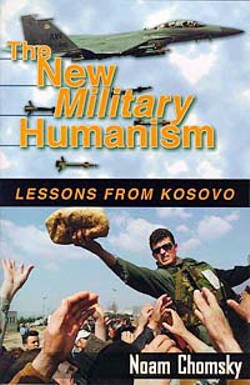
Again, the MLive reporter does not question Albright’s assertions about these policies, but accepts them as fact. Noam Chomsky refers to the US/NATO intervention in Kosovo as war crimes, a claim that was supported by an independent tribunal held in August of 1999.
On the matter of Rwanda, it is true that the US did not intervene militarily, but it doesn’t mean they were neutral. The fact is that the majority of weapons used in the Rwandan genocide were small arms, most of which came from the US and some European countries, as has been documented by Human Rights Watch and other independent foreign policy analysts. The trafficking of small arms was rampant during the Clinton years.
The MLive article continues with Albright commenting briefly on current US foreign policy, followed by a series of one-liner comments that were light hearted.
In addition to MLive’s failure to challenge or verify any of the major foreign policy claims by former Secretary of State Madeleine Albright, they also omitted one major foreign policy matter during her years in the Clinton administration. There is no mention of Iraq in the 1990s.
This is no minor omission, since the Clinton administration facilitated the harshest form of international sanctions ever imposed on a country. After the Gulf War in 1991, the US/UN imposed sanctions on Iraq, a policy which lead to two different UN diplomats resigning in protest because of the brutality of these sanctions. One official that resigned was Denis Halliday. Halliday resigned because the sanctions resulted in the deaths of thousands of Iraqi children, in a policy that Halliday referred to as genocide.
The United Nation’s estimated that roughly 500,000 Iraqi children died as a result of sanctions. This is a statistic that the US and particularly Madeleine Albright did not dispute. While being interviewed on CBS, Albright was asked if the death of 500,000 Iraqi children was worth it, to which Albright responded, “We think the price was worth it.” Here is the exchange between Albright and Leslie Stahl.
American Military Power: Interview with William Blum
This interview conducted by Paul Gottinger is re-posted from Dissident Voice.
William Blum’s work may not be as prominent as many other writers on the left, however that is not due to its lack of importance. This longtime critic of U.S. imperialism left the State Department in protest against the Vietnam War and founded the alternative paper ‘Washington Free Press’. His books Killing Hope and Rogue State meticulously document U.S. military and covert CIA interventions, as well as U.S. assassinations around the world. For over forty years he has been working to shatter the dominant narrative inside America that U.S. foreign policy is guided by humanitarian principles. In 1999 he received the Project Censored’s Award for writing the number five top-censored story of the year. The article was about how a 1994 U.S. Senate report showed that between 1985 and 1989, U.S companies provided microorganisms needed for Iraq’s chemical and biological warfare against Iran. In 2006 he was the subject of media attention when Osama Bin Laden recommended that all Americans read Rogue State. His upcoming book is entitled: America’s Deadliest Export: Democracy-The Truth about US Foreign Policy and Everything Else. My conversation focuses on recent events such as Obama’s increased military presence in Asia, the situation in Syria, and recent coups in Latin America.
Paul Gottinger: Given your extensive knowledge of US military and CIA interventions: How do you think US corporate and transnational corporate interests influence US foreign policy?
William Blum: The international corporations have a lot of feedback into the administration, much more than you or I do-that’s for sure. But, they also have more than feedback. They have money. They keep people like Obama in power. When you give millions of dollars in physical contributions you expect something in return. Obama is completely aware of it. This is common knowledge and common sense. So, there shouldn’t be any surprise that any president will cater to the needs of these international corporations. This is especially true of the ones that are in the military area. They reap huge benefits. Like one of the reasons the US has expanded NATO so much is because every new member of NATO has to spend something like 2 billion dollars on new military equipment to reach a certain standard of NATO. And the US companies, not surprisingly, sell more of this equipment to these new members than any other nation. That’s one example of the many ways in which US foreign policy benefits these multinationals.
PG: Jeremy Scahill writing in The Nation has stated that there has been a substantial transformation in the CIA since 9-11. He states that, “the agency has strayed from [collecting] intelligence to paramilitary-type activities” What are your thoughts?
WB: I would agree that is what happened. Although that’s not entirely new. The CIA was engaged in paramilitary activities a long way back. In China in the 1940s and early 1950s, the CIA was attempting to aid in the overthrow of the communist government. There are other examples I can give. It’s more open now than it ever was. In the example I just mentioned and others I could the CIA was very covert. It was only years later that the information came out. Now the CIA fears no publicity and it just goes in as the CIA and acts like it’s the defense department. That’s a change.
PG: In regard to Obama’s ‘Asian Pivot’ do you see any potential for a serious military confrontation with China or do you think that is unlikely?
WB: As much as the US intervenes it rarely picks on a country which can defend itself and China is one of those countries. I don’t think the US will actually intervene militarily against China. China can shoot down US planes and retaliate in many ways on the sea, on the land, and in the air. It’s easy to invade and bomb Iraq, Libya, Iran, and so on. But China is something quite different. Actually, Iran may be an exception. They certainly have been hinting at all kinds of new weapon developments and if its not hyperbole they may have protected themselves from a US invasion. We’ll see.
PG: What do you think is behind the movement of more US military personal to the Pacific if you don’t think a military attack on China is likely? Is it just posturing?
WB: The US has also made countless moves against Russia in the past ten years. The US is almost surrounding Russia. In the cold war it did many similar things. The US is constantly looking to surround its potential enemies. Russia and China are the only two nations in the world that pose a real threat to the US Empire and its unlimited expansion. So, the US, almost as a reflex, surrounds these countries with bases and allies. Whether they would use it is something else. It’s a form of intimidation. Just to let these countries know they can’t do anything they want. They have to take into account the power of the United States.
PG: How do you see what’s happening in Syria?
WB: I see the situation as very similar to Libya. This is a government that the US wants removed from power, as it does with almost any third world country that is not a good client and not a believer in the Holy Triumvirate (US, EU, and NATO). Any country that dares to stand up to the Triumvirate is marked for extinction. This was the case in Libya with Gaddafi. Assad is not a good client. Plus, the fact that Israel has wanted him out of power for a long time. Those are two sufficient reasons for the US and the nations in NATO to get involved. I think the only reason the US has not had soldiers on the ground or gotten involved more is that for once the US is a bit shy about being on the same side as terrorists. In Libya it really backfired. Their allies assassinated the American ambassador and a few CIA people. The US may have learned something, which is unusual. That is don’t get too close to Al Qaeda type terrorists. It is partly a civil war and partly a Jihad from outside the country. The so-called rebels in Syria have a large number of Jihadists from all over the Middle East and North Africa.
PG: Can you describe the current situation in Afghanistan?
WB: Well, I know it’s not a happy land for the people of Afghanistan or for the NATO forces. I mean there are more suicides amongst American soldiers than there are combat deaths. That is an amazing statistic. There may be no historical precedent for that. That by itself would be an overriding argument for the US to get the hell out of there. But, they don’t care. Such statistics bother the average citizen, but our leaders are not the same as you and I. They don’t really care about such things. This is really hard for American people to believe. Their leaders, including Obama, don’t care about the suffering of the GIs. No matter what they say. They can’t come out and say ‘we don’t care about the fate of the GIs’. They have to express their great sympathy and attachment for them and call them heroes and this and that, but this isn’t to be taken with any seriousness.
PG: The Obama administration officially ended the Iraq war at the end of 2011, but the US is still heavily involved in the country. Can you talk about the continued US military presence in the country?
WB: You have to keep in mind what they have next door in Kuwait and other places. They’re close enough to intervene if they have to. But it’s a good thing that they’re out because they were killing many people. In addition to what the Iraqis were doing and still are doing to each other. The US was doing even worse things. And of course, we’re not losing as many GIs there as before. But, nothing is final. The US military is close enough to come back into Iraq if they want in probably a days notice. The main reason they left was because of Wikileaks. The exposure of Wikileaks made it just impossible for the Iraqi government to give the US what it insisted it had to have. That is criminal immunity for its soldiers. The US insists upon this wherever they station their forces in the world. The US will not take the chance of their soldiers being arrested for murder or other crimes if they can help it. The revelations by Wikileaks exposed so much horror that even the very corrupt government of Iraq had no choice but to refuse to concede to the demand of Washington to make the American soldiers exempt from prosecution.
PG: Switching to Latin America. Ecuadorian president Rafael Correa has said the CIA may try to assassinate him before his upcoming election. Given the US history of assassinations in the region do you think his concern is reasonable?
WB: Its totally reasonable. I’m surprised they haven’t done it yet. I have a long list I’ve compiled of US assassination attempts of foreign leaders. There are more than 50 leaders on it. There’s no reason why Correa should be exempt or feel safe. There was a coup attempt against him in 2010, which threatened to culminate in his assassination, but somehow he escaped. The only reason why the US may not attempt to assassinate him is that it would be too obvious. Like with Chavez of Venezuela. If either Chavez or Correa were assassinated the whole world would not accept any alibi from Washington.
PG: The former president of Paraguay Fernando Lugo was ousted from power in June of 2012 in what has been called a ‘soft coup’. Do you think the US played any role in this?
WB: I’m not certain. The Paraguayan parliament has enough right-wingers in it, as they’ve had for decades, for them to do it on their own. But, I would guess given past experiences the coup plotters would not have gone ahead until they had the approval of Washington. In Honduras, the people who overthrew the progressive government in 2009 first met with Washington in Honduras and in the US to get the approval. That’s standard procedure. So, I would assume in Paraguay that is what happened.
PG: There seems to be a greater degree of general independence in South American countries from US dominance characterized by more left leaning leaders and policies aimed at improving the lives of the poor. A prime example is Evo Morales in Bolivia who has nationalized oil, mining, gas, and communications and has reduced extreme poverty in the country. Why are these leaders being allowed this independence from the US when in the past they may have just been assassinated?
WB: The US has already overthrown two of these governments in Honduras and Paraguay. The US is not sitting back and allowing this to happen. It caught them by surprise to some extent. But, I worry about all the others. I worry about Bolivia and Venezuela and so on. There’s other leftist governments besides the ones we mentioned who are not as outspoken. Like in Uruguay. The leader there is a leftist, but he has kept his comments to himself. He hasn’t attacked American imperialism like Chavez has, which may keep him in power a bit longer and may save his life. But I don’t know about the others. There are two down and about five or six more to go. The US is not going to sit back and rest on its laurels.
PG: What’s the legacy of the US funded death squads in El Salvador, Guatemala, and Honduras? How have the countries recovered and in what ways are the countries still impacted by the death squads?
WB: Of all the US interventions of the past 65 years probably the most horrible one was in Guatemala and maybe El Salvador was second. The carnage in those two places was just extraordinary. The US overthrew a leftist government in Guatemala and in El Salvador it suppressed a leftist movement. The results in both cases were very, very bloody civil wars. The people of those two nations are still suffering from that. They may never recover. The countries had a chance to achieve a certain level of development, maybe escape mass poverty, under Arbenz in Guatemala and under the leftists in El Salvador, but the US said no and that’s put an end to those movements. I can’t say how long it will take before there is recuperation in either place.
PG: Jimmy Carter stated that he wanted US foreign policy to be guided by human rights. Would you say you’ve seen any difference between any presidents (Republican or Democrats) in their use of covert military actions or foreign policy in general?
WB: Jimmy Carter has become much more of a progressive out of office than he ever was in office. In office they are all about the same. Carter was in office when the Sandinistas came to power and he did his best to sabotage their revolution in various ways. It’s only afterwards that he became a somewhat progressive person. Otherwise, there’s nothing to distinguish one Democrat or Republican from any other.
Michigan Department of Civil Rights releases report on LGBTQ policy and discrimination
Last year, the Michigan Department of Civil Rights hosted public hearings across the state in order to gather information about current forms of discrimination that the LGBTQ community was experiencing and to make some recommendations about the current anti-discrimination laws in Michigan.
We attended and reported on hearings that were held in both Holland and Grand Rapids.
The Michigan Department of Civil Rights released a statement yesterday about the new report, which was based on their research and information gathered from the various public hearings.
The statement read in part:
The Department also did not set out to determine whether it would, or would not, support amending the Elliott Larsen Civil Rights Act (ELCRA) to include protections based on sexual orientation or gender identity/expression. This Department and the Civil Rights Commission have long been on record as supporting this and other public policy changes that would ensure lesbian, gay, bisexual and transgender individuals are treated fairly and equally in the public sphere.
It went on to say:
We do not believe that this report mandates particular conclusions must be drawn on the merits of particular legislation; instead we assert that the report conclusively establishes that the economic implications of LGBT inclusion/exclusion are real, they are substantial, they are predictable and they must be a part of any informed policy discussion.
The report itself is 124 pages long and is divided in five major sections. The first section looks at the existing legal framework for federal law, state law, local ordinances and public opinion in Michigan.
Section two provides an assessment of the current state of sexual orientation, gender identity/expression discrimination in Michigan. This section has a great deal of data, as well as documented reporting of discrimination and evidence of discrimination provided at either the public hearings or online. There is plenty of evidence that there is significant discrimination against those who identify as LGBTQ in the form of employer discrimination, housing, public accommodations and education.
The third section outlines the effects that not prohibiting discrimination based on sexual orientation and gender identity/expression is having on Michigan citizens, families, communities, and the economy. Many people who identified as heterosexual delivered testimony on behalf of their LGBT children, parents, siblings, and friends. These testimonials provided a reminder that it is not only those who are discriminated against who are impacted.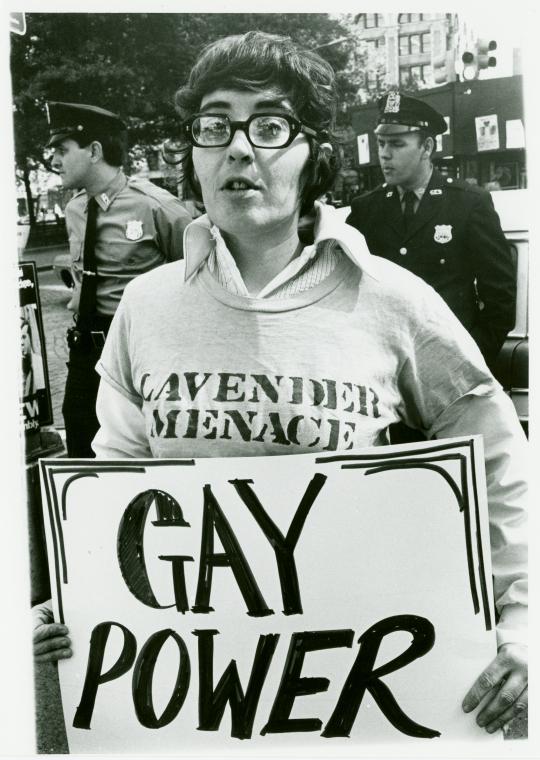
The fourth section is a response to some of what was offered in testimonials provided at the public forums. This section is not a comprehensive response to those who oppose LGBT inclusive laws. Neither is this report intended to support or refute anyone’s views about “homosexuality.” The purpose of this project, this report is to add analytical and anecdotal evidence to the public policy debate about whether Michigan should adopt more inclusive legislation by asking whether the decision has economic implications.
The last section of this report, includes recommendations for the future. The emphasis here is on legislative action, which is far too limiting for what can actually be done and ignores the history of the LGBTQ movement, which has made numerous gains from direct action.
Despite the shortcomings of the report, it does provide further evidence of the level of current anti-LGBTQ discrimination in Michigan, evidence that can inform short-term and long-term strategies for change.
Filling Quotas or Setting Priorities? ICE Announcement to Increase Deportations Raises Concerns
This article by Michele Waslin is re-posted from Immigration Impact. Editor’s Note: This is a follow up story to the recent ICE arrests in West Michigan and how the local news media reported on it.

U.S. Immigration and Customs Enforcement (ICE) recently announced that it would pull 150 agents from desk jobs and add them to Fugitive Operations Teams—teams created to locate and detain “fugitive immigrants” who pose a threat to the nation or the community or who have a violent criminal history—in order to find and deport additional “criminal aliens.” According to the LA Times, ICE reported it was “experiencing a shortfall in criminal removals for the fiscal year” and need to increase the numbers. While it’s a good idea for ICE to use limited resources pursuing serious criminals, the reality is that ICE’s definition of “criminal alien” is very broad and the Fugitive Ops Team end up deporting unauthorized immigrants who pose no threat to the community.
“Fugitives immigrants” are defined as immigrants with outstanding orders of deportation who have not been deported. In some cases, these immigrants have fled, but in many others, they were unaware that they had a deportation order or the order was sent to an incorrect address. The Fugitive Ops Teams, however, frequently go beyond their mission of targeting dangerous fugitives.
According to a 2009 report by the Migration Policy Institute (MPI), while the number of immigrants apprehended by Fugitive Ops teams had increased, they have netted fewer violent criminals and arrested greater numbers of unauthorized immigrants with no criminal history. Many of those arrested were “ordinary status violators”—individuals whom the teams believe are unauthorized or in violation of immigration laws, but who have not been charged with anything.
MPI concluded that the Fugitive Operations Program “has failed to focus its resources on the priorities Congress intended when it authorized the program. In effect, [the program] has succeeded in apprehending the easiest targets, not the most dangerous fugitives.”
The LA Times also reported that each Fugitive Ops team has been given a new goal of arresting 50 suspects per month. ICE denied having set quotas, but this is not the first time the issue of quotas has arisen. In 2010, the Washington Post reported that an ICE official issued a memo stating that ICE had set a quota of 400,000 deportations for the year without regard to whether those individuals were criminals or not, and laid out strategies for doing so. Later that day, ICE issued a statement clarifying that the internal memo did not reflect their policies and was sent without proper authorization, and that ICE remained “strongly committed to carrying out [its] priorities to remove serious criminal offenders first and [they] definitely do not set quotas.”
The Obama administration has made many statements about focusing resources and prioritizing the deportation of serious criminals. However, we’ve seen again and again that many of those categorized as serious criminals have not been convicted of serious or violent crimes, and some have no criminal convictions.
Furthermore, it should raise eyebrows when ICE claims it’s falling behind on deportations and needs to deport more people. There’s an inherent inconsistency between focusing on serious criminals and trying to maintain large numbers of deportations. Increasing the number of deportations all too often means deporting immigrants who are not serious criminals.
 Grand Rapids Institute for Information Democracy