I Think I’m Emma Goldman

This video by subMedia is re-posted from dissident voice.
I have not rocked out a mash-up in quite some time, and I forget how much I enjoy it. This one is for a new track by anarcho-rapper MC SOLE with beats by DJ Pain 1 in an homage to the legendary american anarcho-feminist Emma Goldman.
Nationally renown activist, LaDonna Redmond, to lead OKT’s April 27 Convening on food justice
 LaDonna Redmond is at the forefront of the food justice movement. She currently leads an Institute for Agriculture and Trade Policy (IATP) project that focuses on health, justice and the food system. The project centers on health disparities resulting from the food system, from the farm to consumers—particularly as they affect low‐income populations and communities of color. It also entails creating universal Food Justice Principles. Our Kitchen Table, managers of the Southeast Area Farmers’ Market, attended IATP’s Food + Justice =Democracy conference September 2012 and took part in the co‐creation of these food justice principles.
As a next step, local collective gatherings across the nation are reviewing the draft principles.Redmond will lead part 4 of the Grand Rapids area Convening, hosted by OKT, 9 a.m. to 1 p.m. Saturday April 27 at Madison Square Church, 1441 Madison SE.
A speaker, radio host and former Food and Society Policy Fellow, Redmond was one of 25 citizen and business leaders named a Responsibility Pioneer by Time Magazine. She successfully worked to get Chicago Public Schools to evaluate junk food, launched urban agriculture projects, started a community grocery store and worked on federal farm policy to expand access to healthy food in low‐income communities.
“We have a food system that has largely been built on the backs of people who don’t have a lot of rights and access to our public policy infrastructure,” said Redmond. “We need to collectively better understand the inequities in the food system and make sure we include people who have faced these inequities in finding solutions.”
Here is a video of Redmond presenting at TEDxTC
This article by Steve Horn is re-posted from CounterPunch.
On March 1, the U.S. State Department published its long-awaited Environmental Impact Statement (EIS) on the TransCanada Keystone XL (KXL) tar sands pipeline.
The KXL is slated to bring tar sands crude – also known as diluted bitumen or “dilbit” – from Alberta, Canada to Port Arthur, TX. From Port Arthur, it will be refined andexported to the global market.
Flying in the face of the slew of scientific studies both on the harms of burning tar sands andon the KXL itself, State determined that laying down the pipeline is environmentally sound.
Unmentioned by State: the study was contracted out to firms with tar sands extraction clientele, as revealed by InsideClimate News.
“EnSys Energy has worked with ExxonMobil, BP and Koch Industries, which own oil sands production facilities and refineries in the Midwest that process heavy Canadian crude oil. Imperial Oil, one of Canada’s largest oil sands producers, is a subsidiary of Exxon,” InsideClimate News explained. “ICF International works with pipeline and oil companies but doesn’t list specific clients on its website.”
Writing for Grist, Brad Johnson also revealed the name of a third contractor – Environmental Resources Management (ERM) Group – which TransCanada hired on behalf of the State Department to do the EIS.
“(ERM) was paid an undisclosed amount under contract to TransCanada to write the statement, which is now an official government document,” Johnson explained. “The statement estimates, and then dismisses, the pipeline’s massive carbon footprint and other environmental impacts, because, it asserts, the mining and burning of the tar sands is unstoppable.”
ERM, a probe into the University of California-San Francisco (UCSF) Tobacco Archives reveals, has deep historical ties to Big Tobacco. Further, a key employee at ICF International – via familial ties – is tied to the future of whether hydraulic fracturing (“fracking”) for shale oil and gas becomes a reality in New York’s portion of the Marcellus Shale.
TransCanada Utilizes Tobacco Playbook in Hiring ERM Group
ERM Group – headquarted in the City of London – a square mile sub-section of Londoninfamous for its role in serving as a tax shelter for multinational corporations – has aided the tobacco industry in pushing the “Tobacco Playbook.”
Many fossil fuel industry public relations flacks learned the tactics of mass manipulation by reading the “tobacco playbook,” meticulously documented in Naomi Oreskes’ and Erik Conway’s classic book, “Merchants of Doubt.”
“Doubt is our product,” a tobacco industry document once laid out the playbook, “since it is the best means of competing with the ‘body of fact’ that exists in the minds of the general public. It is also the means of establishing a controversy.”
ERM has done studies on behalf of both R.J. Reynolds and Philip Morris, penning a report titled “Fundamentals of Environmental Management” for the latter.
It was also a former member of the American Tort Reform Association, a group that fights to limit the tort law rights of citizens to sue for damages inflicted upon them by corporations and featured in the documentary film, “Hot Coffee.”
ERM: In-Service to Big Oil, like Big Tobacco
In the 2000 version of its website, ERM referred to climate change advocates as having an “agenda.”
“[T]he gloabl (sic) climate change agenda has very specific implications for the oil and gas industry, and factoring CO2 emissions into operations is a key concern,” read ERM’s website at the time.
The firm has also boasted of doing its studies in service to the oil and gas industry’s bottom lines.
“ERM works around the world with the private sector assessing how their business is likely to be impacted by environmental and social issues, new regulations, consumer concerns, and supply chain issues and help companies develop appropriate policies and management systems to manage these business risks,” its website proclaimed in 2000.
This all sits, of course, in juxtaposition to the needs of the decaying ecosystem andincreasingly severe and horrifying climate crisis.
The ICF/New York Fracking Decision Connection
ICF Consulting is a thread tying the forthcoming fracking decision in New York by Democratic Party Gov. Andrew Cuomo to the Obama State Department decision on the Keystone XL.
Though ICF doesn’t list its clients on its website, its vice president Karl Hausker is the husband of Kathleen (“Katie”) McGinty, one of the members of the New York Department of Environmental Conservation (DEC) Hydraulic Fracturing Advisory Panel.
McGinty formerly served as Vice President Al Gore’s top climate aide under the Clinton Administration, segueing from that position into one as chair of the Clinton Council on Environmental Quality from 1993-1998. From 2003-2008, she served as head of the Pennsylvania Department of Environmental Protection under Democratic Gov. Ed Rendell, helping usher in the state’s ongoing fracking boom.
Named as a member of the industry-stacked Obama DOE fracking subcommittee in May 2011, McGinty now works as an Operating Partner alongside Rendell at Element Partners, a Philadelphia, PA-based firm that has capital investments in several firms operating in Pennsylvania’s portion of the Marcellus Shale. McGinty also serves on the Board of Directors of NRG Energy, an electricity-generating utilities corporation that owns natural gas-fired power plants around the U.S.
Tying it all together, Ernest Moniz is leaving his position on ICF’s Board and his professorship at Massachusetts Institute of Technology (MIT), where he was a major “frackademic,” to serve as head of the Obama DOE.
In chess, moves of this sort are known as “check” and “checkmate.”
The weeks and months ahead will demonstrate if the chess match is over with regards to the destiny of the Keystone XL pipeline and fracking in the Empire State.
Wealth Inequality in America
This video info-graphic is reposted from Portside.org.
This video presents a series of infographics on the distribution of wealth in America, highlighting both the inequality and the difference between our perception of inequality and the actual numbers. The reality is often not what we think it is.
While the information and graphics are very useful in visualizing the current wealth inequality in the US, some of the comments about redistribution are limiting. For instance, the video sort of dismisses the possibility of anything other than Capitalism, which is the reason why there is such inequality in America to begin with. The narrator points on the gap between CEO income and the average workers, and rightly criticizes it. However, such a disparity will not change until people organize at the workplace or start a revolution.
Violence, Brutality and Militarism in 2012 Films
This is the third is a series of four studies GRIID is conducting in our investigations into Hollywood films released in 2012. The first study looked at Gender Representation in films and the second one provides an analysis of Product Placement in films. Warning: Some of these images used in this report may be disturbing.

In this study we look at violence and militarism. While militarism and violence are often interconnected, we wanted to look at both the use of gratuitous violence in films and films that involved the US military. This investigation will be broken down into three sections: fantasy violence, gratuitous violence and militarism & violence. Some of the films fall under more than one category, which speaks to the pervasive nature of violence in almost any Hollywood genre. Of the 67 films we looked at in our overall 2012 film study, 35 films used either fantasy violence, gratuitous violence or military violence. The 35 films identified in this study are listed at the end.
Fantasy Violence & Killing
When looking at films where fantasy violence is a central part of the script, we understand that it is an inherent part of films that has heroes. It would be hard to produce a film with superheroes, where no violence or force was used.
Films that we identified as using fantasy violence are Abraham Lincoln Vampire Hunter, Battleship, Chronicle, Dredd, Hunger Games, John Carter, Looper, Lockout, Men in Black 3, Prometheus, Resident Evil: Retribution, Snow White and the Huntsman, The Amazing Spider Man, The Avengers, The Dark Knight Rises, The Hobbit, The Raven, Total Recall and Twilight Breaking Dawn 2.
Each of these films is based upon a super hero or heroes (Spiderman, The Avengers, Batman), a science fiction or futuristic reality (Dredd, John Carter, Prometheus), and some are based on fictional literature (The Raven, The Hobbit).
Again, it is hard to imagine such films without the use of violence or force, but some of these films used violence in ways that were more than just a battle between “good & evil.”
For instance, while the characters in The Avengers fought off an alien army, there is no gratuitous violence or excessive violence. We do not see lots of blood or viciousness in the depictions of violence.

However, with a film like The Raven, we do see more brutal displays of violence. The Raven is a story about a murderer who uses the stories of Edgar Allan Poe to kill his victims. In this film we see the murder of women and men in brutal ways, some which involved torture.
In a remake of the 1980s film Dredd, there are scenes involving rape, torture and mutilation, with both sides of the conflict engaging in brutality.
In some of the films in this category, the kill rate is rather high, so viewers will be subjected to the deaths of dozens or even a hundred people during the film. The film Resident Evil: Retribution is an example where the number of deaths is high, even if they are “zombies.” In one scene someone is even killed with a chainsaw. This is the kind of film that George Gerbner talked about in his research entitled The Killing Screens, where the increase in movie deaths has been occurring for decades, as movie goers have become numb to just a few killings per film.
Even fantasy films like Hunger Games and Twilight: Breaking Dawn 2 displayed scenes where people, mostly young people, are killed is brutal ways. These are films where the heroes generally present characteristics that we can identify with, but still use harsher forms of violence in the script in ways that may not seem necessary or enhancing of the main storyline.
Gratuitous Violence
Films that we identified in this category were Dredd, Lockout, Prometheus, Resident Evil: Retribution, The Raven, Cabin in the Woods, Chernobyl Diaries, Contraband, Hit and Run, House at the End of the Street, Lawless, Safe House, Savages, Taken 2, The Expendables 2 and The Man with the Iron Fist.
Some of these were already identified in the fantasy violence section, but are included here, since they involved scenes with harsh forms of murder, torture and rape.
In the film The Cabin in the Woods, several college students go off to a remote cabin, only to discover that they are part of a plan to sacrifice humans to appease certain gods. In one scene, a young woman is cut in half with a large bow saw and most of the college students end up being killed in horrible ways.

There are other young adult-themed films like Chernobyl Diaries and House at the End of the Street that also include some harsh violence, as does the Alien movies series prequel, Prometheus.
In Prometheus, there are numerous people who are killed, often brutally. In one scene, viewers see a man’s arm being broken by an alien, another one having his face melted off with acid and a scene where one of the scientists, who has been infected, is burned alive. Perhaps the most difficult scene to watch is when another scientist has to surgically remove an alien from her womb.
Then there are the films that feature gratuitous violence that are more true to life, in that they deal with street violence, violence at the hand of the law enforcement and political violence. These films would include Lockout, Contraband, Hit and Run, Lawless, Safe House, Savages, Taken 2, The Expendables 2 and The Man with the Iron Fist.
In the film Lockout, the pseudo-hero must rescue the President’s daughter from a prison in space, which has been taken over by the prisoners. Once they have taken control of the space prison, the former inmates engage in brutal violence against the guards and anyone who tries to stop them.
In the Oliver Stone film Savages, we witness brutal violence at the hands of a Mexican Drug Cartel, police and US drug dealers who seek revenge against the drug cartel. There are scenes of torture, mutilation and numerous brutal killings. And while the brutality of the Mexican drug war is real, one wonders why Stone decided to include so much violence in this film.

Another film with a significant amount of brutality is the movie Lawless. Lawless is a period film, which looks at a family involved in trafficking alcohol during prohibition in the US. The three male members of this family all engage in acts of violence, particularly gun violence. However, the FBI is also part of the plot, it also engages in brutal violence throughout the movie.
There is also a significant amount of violence in the movie Hit & Run, where a former bank robber, is being chased by his former bank robbing partners, along with the police officers.
While some of these movies depict some cops as corrupt (Savages and Premium Rush), most of the films normalize the violence necessary in police work. In fact, police violence is often not portrayed as violence, since it is “necessary” to protect the public good. Thus, police violence, which is institutional or structural violence is often overlooked in studies on media violence.
The films 21 Jump Street, Taken 2, Safe House, Contraband, Dredd, The Amazing Spiderman and even The Dark Knight Rises, all depict police in a positive light and as the “good guys.” Films like these normalize the structural violence of law enforcement, since their actions are merely meant to protect us.
Normalizing US Militarism
The last theme we want to tackle in this study is US militarism in 2012 films. The following films depicted the US military and/or US foreign policy, either in the present or the past. Abraham Lincoln Vampire Hunter, Battleship, The Avengers, Safe House, Argo, The Bourne Legacy, Taken 2 and The Expendables 2.
Some of these films deal with military intelligence, covert operations forces or the CIA. Safe House and The Bourne Legacy both deal with CIA personnel, both with some negative connotations. The CIA assassin in The Bourne Legacy comes to terms with his role as a hit man for the Agency and in Safe House, a CIA agent finds out that other members of the Agency have been engaged in illegal activity, even killing some of their fellow agents.

In Taken 2 and The Expendables 2, there are former CIA agents or former US military personnel involved. In Taken 2, an ex-agency man must rescue his wife and daughter from a sex-trafficking ring that had several of its members killed in the original film. In The Expendables 2, former US military and agency members act as a private army to engage in covert military operations to stop someone who wants to traffic in nuclear weapons. And in The Avengers, S.H.I.E.L.D. organizes the superheroes to take out forces from another planet. There are numerous scenes where S.H.I.E.L.D. is clearly using US military or US military-like equipment, thus normalizing its role is “protecting the planet.”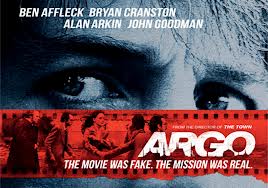
There are two period films in this section, Abraham Lincoln Vampire Hunter and Argo. In Abraham Lincoln Vampire Hunter, there is a section of the movie near the end, where the Union Army is battling the Confederate Army, which is being aided by an army of vampires. The Union Army wins because Lincoln is able to get silver bullets to the troops in order to defeat the vampire assisted Confederate soldiers. This film is of course fictional, but it does add a new twist to how we think about the Confederate Army.
In the movie Argo, we see the story of the early days of the 1979 Iranian Revolution, told through the eyes of US diplomats and State Department officials. There is some contextual history presented at the beginning the film, but Argo is fundamentally a US State Department propaganda piece that grossly misrepresents what US policy was towards Iran in the late 70s after the Shah was deposed.

The last film we want to look at in this study, was the summer 2012 film Battleship. Battleship is a fictional film about aliens attacking the earth, particularly the US military. Much of the film surrounds characters aboard a US aircraft carrier, so viewers were given the whole tour of the ship and US military practices throughout. This film clearly relied on US military cooperation, which means that since US military personnel and equipment were used in the film, the Pentagon had a say in the script.
Battleship ends with US military personnel figuring out the aliens’ weakness and defeating them with US weaponry. Therefore, Battleship functions as a wonderful public relations tool for the US military that was seen by millions.

In this study we sought to look at examples of fantasy violence, gratuitous violence and US military violence that fulfills numerous functions. Such use of violence not only normalizes the amount of violence, but the brutal violence often used in Hollywood films.
We also noted that in this film study, numerous institutions are affirmed, particularly those that use violence, such as police departments, the CIA, FBI, DEA and the US military. These entities are most often depicted as using necessary violence for the greater good, thus normalizing structural violence that experienced by millions of people in the real world both in the US and abroad in a much different way that what Hollywood depicts.
Here is a listing of the 2012 films used in this study:
21 Jump Street, Abraham Lincoln Vampire Hunter, Argo, Battleship, Cabin in the Woods, Chernobyl Diaries, Chronicle, Contraband, Dredd, Hit and Run, House at the End of the Street, Hunger Games, John Carter, Lawless, Lockout, Looper, Men in Black 3, Premium Rush, Prometheus, Resident Evil: Retribution, Safe House, Savages, Skyfall, Snow White and the Huntsman, Taken 2, The Amazing Spider Man, The Avengers, The Bourne Legacy, The Dark Knight Rises, The Expendables 2, The Hobbit, The Man with the Iron Fist, The Raven, Total Recall, Twilight Breaking Dawn 2.
This article by Dave Zirin is re-posted from Edge of Sports.
The death of Venezuelan President Hugo Chávez will mean unseemly celebration on the right and unending debate on the left. Both reflect the towering legacy of Chavismo and how it challenged the global free market orthodoxy of the Washington consensus. 
Less discussed will be that the passing of Hugo Chávez will also provoke unbridled joy in the corridors of power of Major League Baseball.
Historically, Venezuela has trailed only the Domincan Republic in the global race to provide a cheap source of Major League Baseball talent. In 2012, 58 players on MLB rosters were born in Venezuela, second only to the DR’s 64.
For decades, teams had set up unregulated “baseball academies” in both countries where children as young as 15 could be signed for a pittance, and then, for 97 percent of major league hopefuls, casually disposed without any future prospects. A Mother Jones article published this week exposed in excruciating detail the DR baseball “sweatshops” and the preventable death of young Washington Nationals teenage prospect Yewri Guillen. They describe the academies as a deadly breeding ground for tragedy defined by “corruption and youth exploitation.”
This is exactly what Chávez, a baseball fanatic himself, was aiming to challenge. Venezuela is the birthplace of towering talents such as the 2012 Triple Crown Winner Miguel Cabrera, “King” Félix Hernández and World Series MVP Pablo Sandoval. In the last twenty years, 200 Venezuelans have played in the Major Leagues with more than 1,000 in the minors.
But the academies also left a wreckage of young lives behind, a status quo Chávez sought to challenge. He told MLB that they would have to institute employee and player benefits and job protections. He wanted education and job training, subsidized by MLB, to be a part of the academies. He also insisted that teams pay out 10 percent of players’ signing bonuses to the government. Chávez effectively wanted to tax MLB for the human capital they blithely take from the country.
As the CS Monitor put it, “the threat of expropriations and onerous foreign exchange controls make teams wary of doing business in Venezuela.”
Sure enough over the last decade, the number of teams with “academies” in Venezuela has dwindled from 21 to 5. The threats of kidnapping and violence are often cited by teams as the primary reason for this move, but the facts say otherwise. As one major league executive said anonymously to the LA Times, “Teams have left Venezuela because of issues with the government and security that have made it more difficult to do business there. Absent those problems, there would be a lot more teams here using academies.”
Major League Baseball has never been shy in their rage that Chávez wasn’t “rolling out the red carpet” for them “like they do in the Dominican Republic.” Lou Meléndez, senior advisor to the MLB’s international relations department, said in 2007, “We don’t pay federations money for signing players anywhere in the world, and we don’t expect to do so. It’s certainly not a way to conduct business…. When you see certain industries that are being nationalized, you begin to wonder if they are going to nationalize the baseball industry in Venezuela.”
But despite the academy closures, baseball never stopped strip-mining Venezuela’s baseball hopefuls. Instead, they now sign Venezuelan children and whisk them off to the Dominican Republic to be trained, miles and an ocean apart from their families. Rather than be more humane in response to Chávez, MLB was just more brutal.
I spoke with Illinois history professor and author of Playing America’s Game, Adrian Burgos, Jr. He said it in perfect albeit wrenching fashion:
The irony is palpable. On the same day Mother Jones publishes an article on Yewri Guillen’s death and the Washington Nationals’ lack of having a certified medical official on staff at its Dominican academy, Venezuelan president Hugo Chávez dies. Certainly, Chávez’s demise makes MLB officials excited at the prospect of re-establishing their own blueprint for a baseball academy system being put into place in Venezuela, an effort that Chávez had forestalled. I still wonder who is/are the Latino representative(s) within the Commissioner’s Office speaking for Latinos. Do we need any more teenagers [like] Yewri Guillen, MLB prospect, dying for a lack of access to proper medical care due to a lack of health insurance and funds in the DR or Venezuela—health care that ought to have been, would have been, provided for such a signed prospect in the US? Dead prospects and dead president—I am weary of the road ahead in Venezuela and on its baseball diamonds.
Obama’s Mass Deportations
This article by Tanya Golash-Boza is re-posted from CounterPunch.
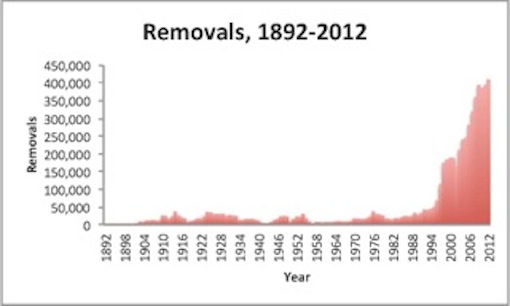
The United States has witnessed a tremendous rise in the number of people detained and deported since 1997.
Between 1892 and 1997, there were 2.1 million deportations from the United States. Since then, there have been nearly twice as many: the sum total of deportations between 1998 and 2012 is over 4.1 million. At current rates, President Obama is on track to deport more people in his first six years as President than all deportations prior to 1997.
Alongside deportation rates, detention rates have skyrocketed, from a daily average of 5,532 in 1994 to upwards of 30,000 today.
Mass deportation and detention has cost the United States billions of dollars a year. It has taken a budget crisis for the federal government to reconsider its policies. In light of impending budget cuts, the federal government is considering releasing thousands of detainees.
The federal government should reconsider its entire detention and deportation regime because it is misguided and costly.
The most recent escalation in deportations has not been because of a new influx of undocumented immigrants. In fact, fewer people are crossing the border illegally now than when mass deportation began in 1997. The primary reason we are seeing unprecedented numbers of deportees is that the federal government is spending extraordinary amounts of money on immigration law enforcement. And, it is doing that in the name of keeping the United States safe from terrorists and criminals.
There is very little evidence that mass deportation is making the country safer. There may be some credence to the appeal to public safety, but the appeal to terrorism is entirely unfounded. When the government finds terror suspects, it does not deport them. They may be sent to Guantanamo or prosecuted, but they are not among the 400,000 deportees sent almost exclusively to Latin America and the Caribbean each year.
According to U.S. Department of Homeland Security (DHS) removal data, 97.5 percent of deportees are sent to the Americas. DHS almost never deports people to countries that the U.S. Department of State identifies as sponsoring terrorism: Iran, Iraq, Syria, Libya, Cuba, North Korea, and Sudan. In 2010, for example, 387,242 people were deported. Among these were 55 Iranians, 54 Iraqis, 48 Syrians, 95 Cubans, and 21 Sudanese.
President Obama often touts the fact that he is deporting criminals. However, according to ICE removal data, less than 10 percent of deportees are sent to their countries of birth after being convicted of a violent offense. The other 90 percent either have no criminal conviction or have been convicted of a non-violent offense.
Deportation does not make us safer, but it does destroy families. Last year, 100,000 parents of U.S. citizens were deported – representing a ten-fold increase over the previous decade. Vern, a Guatemalan citizen, is one example. Vern entered the United States in 1991 and applied for political asylum. He received a work permit while waiting for his case to be processed. He found a job in a frozen food processing plant in Ohio where he met Maria, a Honduran woman who was also applying for political asylum. Each year, they received work permits that allowed them to continue working. Hopeful their cases would eventually be resolved, Vern and Maria married, and had their first child in 1996. In 1998, Vern received notice he should leave the United States – his asylum application had been denied. Vern was devastated – he had established a life in the United States, and had few ties to Guatemala. He decided to stay, hoping his wife’s application would be approved, and that she could apply for him to legalize his status. However, before that could happen, in 2009, immigration agents raided his home, took him to detention, and he was deported to Guatemala, leaving behind his wife and two children. Because Vern ignored his deportation order, he was a fugitive alien and thus subject to a raid on his home.
Americans may find comfort reading headlines that criminal, fugitive, and illegal aliens are being deported. But, the government does not have unlimited resources and deporting people is tremendously expensive. Thus, we must ask: at what cost?
Mass deportation may seem to be the logical solution when we have large numbers of undocumented immigrants. However, it is not the way the country has usually dealt with this issue. It has been much more common historically to find ways to legalize undocumented immigrants. Mass deportation has been the exception. Why now? Why is the United States spending so much money on immigration law enforcement? The reason is that immigration law enforcement has been wrongly conceived of as part of the War on Terror.
The federal government has an enormous budget, and the citizenry has given the government authorization to spend a substantial proportion of it on national security. So, it has – primarily through one government agency: DHS.
The Department of Homeland Security (DHS) was created in 2003. Since then, it has grown into a massive government agency. The FY 2011 budget for DHS was $56 billion. To put this $56 billion in perspective, the Department of Education FY 2011 budget was $77.8 billion, and the Department of Justice $29.2 billion. The rise in detention and deportation over the past decade primarily stems from Executive Branch decisions to expand immigration law enforcement, as part of the broader project of the War on Terror.
Fully 30 percent of the DHS budget in FY 2011 was directed at immigration law enforcement through Immigration and Customs Enforcement (ICE) and Customs and Border Patrol (CBP). Another 18 percent of the total went to the U.S. Coast Guard and five percent to U.S. Citizenship and Immigration Services—meaning over half of the DHS budget is directed at border security and immigration law enforcement.
A recent report by the Migration Policy Institute found that the U.S. government spends more on federal immigration enforcement than on all other principal federal criminal law enforcement agencies combined. My calculations confirm this: immigration enforcement spending heavily outweighs domestic law enforcement spending. In FY 2011, the U.S. government spent $27 billion on ICE, CBP, and the U.S. Coast Guard. In contrast, the U.S. government spent a total of $13.7 billion on domestic law enforcement, including the FBI, the DEA, the Secret Service, the U.S. Marshal, and Alcohol, Firearms, and Tobacco.
Thus, while some detractors may shout: “deport them all,” we have to realize that the United States is spending unprecedented amounts of money and we still have ten million undocumented immigrants in this country. A much saner approach would be to legalize undocumented immigrants. This is what was done historically, and it is the right thing to do.
The federal government has made it clear what they are capable of: they can set a quota of 400,000 deportees a year and meet it. They can detain over 400,000 people a year.
Now that we have seen that they can do this, it is time to stop. Zealous enforcement of immigration laws over the past decade has barely put a dent in the population of undocumented immigrants in the United States. This population has declined from 11 million to 10 million people, yet most experts attribute this decline to the economic recession.
With projections for immigration reform this year, it is time to stop mass deportation. Instead of detaining and deporting people who are in the country without authorization, DHS could redirect its resources towards legalization programs.
A recent report from the Cato Institute found that “comprehensive immigration reform would raise wages, increase consumption, create jobs, and generate additional tax revenue.” The author, Raúl Hinojosa-Ojeda, estimates that “comprehensive immigration reform would yield at least $1.5 trillion in added U.S. gross domestic product (GDP) over 10 years.”
Continuing to enforce immigration laws at the current rate is a colossal waste of resources. In a time of budget crisis, the best thing to do is to stop deporting and detaining people and work on legalization.
Thousands of immigrant detainees awaiting their hearings can be put on supervised release until their hearing happens. Advocates such as Human Rights First have long fought for more alternatives to detention. Cost-saving is one reason. ICE spends $2 billion a year on detention. Human Rights First calculates that “ICE’s alternatives to detention programs cost 30 cents to $14 per day, as compared to $164 per day for detention.”
The good news here is that the federal government can easily stop detaining immigrants and quickly save a lot of money. This is because the vast majority of immigrant detainees are not held in federal buildings. Instead, they are held in private detention centers and in county jails which contract out bed space to the federal government. Relying on private prisons has made it more feasible for the Department of Homeland Security (DHS) to achieve its quota of 34,000 beds a day.
There are many critiques one could make of the privatization of prisons. However, the upside of privatization is that the federal government could cancel its contracts with these detention centers and save a bundle of money. Leslie Berestein calculates that the federal government could save $3.4 million a month for each 1,000 detainees it releases.
Since 84 percent of ICE’s detained immigrants are housed in either contracted facilities owned by private companies or in state or local facilities where ICE rents space on contract, it should be relatively seamless for ICE to release them.
Of course, this will be bad news for Corrections Corporation of America (CCA) and the GEO Group – the two private prison companies that hold the largest numbers of immigrant detainees. However, that is their problem, not the problem of the federal government.
Mass detention and deportation are costly, ineffective, and harmful policies and must stop.
Tanya Golash-Boza is an Associate Professor of Sociology at the University of California, Merced. She is the author of: Yo Soy Negro Blackness in Peru, Immigration Nation: Raids, Detentions and Deportations in Post-9/11 America, and Due Process Denied: Detentions and Deportations in the United States. She blogs at: http://stopdeportationsnow.blogspot.com
Resisting the Rainbow: The American Family Association
This article is re-posted from Political Research Associates. Editor’s Note: The American Family Association has a history of activity in West Michigan and has been the recipient of substantial amounts of money from West Michigan individuals and families.
The purported goals of the American Family Association (AFA) are to protect “traditional moral values” and to combat “the radical homosexual agenda,” with considerable emphasis on the latter in recent years. It was formed in 1977 by evangelical pastor Donald E. Wildmon as the National Federation for Decency, based in Tupelo, Mississippi. Initially, the group focused on lobbying against indecency on television, but soon developed broader goals and changed its name in 1988. AFA’s leaders target media outlets, corporations, and public officials who they believe are promoting the homosexual agenda contrary to conservative Christian views. After Donald Wildmon’s retirement in 2010, his son Tim took over the group, which today boasts a sizable base of support comprised of 3.5 million online supporters and 180,000 subscribers to its AFA Journal. AFA also reaches an even wider audience through broadcasts on nearly 200 radio stations. Through its news division One News Now, which purports to be non-partisan and objective, AFA gives a platform to anti-gay activists.
In 2009, AFA hired Bryan Fischer, former executive director of the Idaho Values Alliance, as director of issues analysis for government and policy. Known for his extreme anti-LGBTQ views and controversial statements, Fischer has advocated for the criminalization of homosexuality and forcible “reparative therapy” for homosexuals. But perhaps the most inflammatory was his claim that “Homosexuality gave us Adolph Hitler, and homosexuals in the military gave us the Brown Shirts, the Nazi war machine and 6 million dead Jews.” Furthermore, Fischer claimed that Hitler was an “active homosexual” who recruited gays “because he could not get straight soldiers to be savage and brutal and vicious enough.”
Over the years, AFA has perpetuated many other myths and dubious claims regarding homosexuality, associating it with pedophilia, incest, polygamy, bestiality, and other taboo sexual practices. For instance, the group has alleged that homosexuals are more promiscuous, are more likely to have sexually transmitted diseases, and often transmit these diseases to children. According to AFA of Kentucky’s Dr. Frank Simon, “There are hundreds of children in America who are dying of AIDS because they were sexually abused by homosexuals.” In addition, AFA champions the conspiracy theory that an insidious “homosexual movement” is obsessed with “infiltrating the public school system” to strategically recruit children. In the early 2000s, a direct mailing from Don Wildmon argued, “For the sake of our children and society, we must OPPOSE the spread of homosexual activity! Just as we must oppose murder, stealing, and adultery! Since homosexuals cannot reproduce, the only way for them to ‘breed’ is to RECRUIT! And who are their targets for recruitment? Children!” [emphasis in the original] The AFA spreads anti-gay propaganda to arouse fear and disapproval of homosexuality in the American public, and for this reason, the Southern Poverty Law Center included the AFA on its 2010 list of anti-gay “hate groups.”
STRATEGIES
Aiming to influence public policy and opinion, AFA utilizes many strategies, including e-newsletters, direct mailings, petitions, and boycotts. Above all, the group pressures businesses to conform to “traditional Christian values,” organizing boycotts of gay-friendly corporations that offer non-discrimination policies, domestic partner benefits, or contributions to gay-friendly causes. AFA has discouraged its followers from patronizing many such companies, including but not limited to: Kraft Foods, Disney, Procter & Gamble, Wal-Mart Stores Inc., Citigroup, PepsiCo, American Airlines, Allstate Insurance, and the Coca-Cola Company. In 2005, AFA called for a national boycott of Ford Motor Co. due to its sponsorship of gay pride events and advertising in LGBTQ publications. In 2011, the group initiated a boycott of Home Depot, dubbing the company “Homo Depot” because it provides financial support to gay pride rallies. Since then, AFA has taken credit for Ford’s drop in sales and for a drop in Home Depot’s support of gay pride events. One Million Moms, a division of AFA, attacked JCPenny in2012 for their decision to hire openly gay TV personality Ellen DeGeneres as a spokesperson, and attempted to pull advertisers from the show Glee for promoting “deviant sexuality.” During GLSEN’s “Day of Silence” campaign in 2012 to raise awareness of bullying of LGBTQ children, AFA called on parents to keep their children home and pressure their local schools to cancel the event.
In July 2008, AFA launched a boycott against McDonald’s because one of its executives was on the board of the National Gay and Lesbian Chamber of Commerce. Deferring to AFA, the executive stepped down and the company conceded that it would henceforth be “neutral on same-sex marriage or any ‘homosexual agenda’ as defined by the American Family Association.” McDonald’s’ remorseful response illustrates the increasingly powerful influence of AFA on corporate policy.
In recent years, AFA has become more directly involved in politics. Many state chapters conduct grassroots organizing on a state and local level, using petitions and referendums to fight LGBT rights. In 2010, AFA joined the campaign to oust the three Iowa Supreme Court justices who had ruled in favor of same-sex marriage, pledging to spend $200,000 on this cause. On the national level, AFA endorsed Mike Huckabee for president in 2008 and Newt Gingrich in 2012. Through the AFA Radio Network, it has also given a platform to Republican candidates Michelle Bachmann, Rick Perry, and Tim Pawlenty.
FUNDING
Funded entirely by private donors, AFA aggressively solicits donations on its website and generates a massive amount of revenue. The group brought in nearly $19 million in 2010 and $18 million in 2011, and regularly donates hundreds of thousands of this revenue to promote anti-LGBT politicians and legislation. However, the donors supporting this financial powerhouse remain a mystery, with no names disclosed on AFA’s 990 tax forms or website. One might reasonably speculate that Christian conservative groups are the main donors, since AFA was founded by an evangelical pastor and declares its mission is “to motivate and equip citizens to change the culture to reflect Biblical truth.” Only one known donor is listed in Right Wing Watch’s database: the Bill and Berniece Grewcock Foundation, which donated a total of $90,000 through six grants from 1998 to 2003.
Marshaling tens of millions of dollars each year, AFA has morphed into a power player in the political arena, donating $500,000 to the Yes on Prop 8 campaign alone. In August 2011, amid much hype, AFA spent $1 million to fund Republican presidential candidate Rick Perry’s rally at a Texas stadium, which was billed as a day of fasting and prayer “to save America.” Dubbed “The Response,” the event signified that AFA has become much more than just a typical nonprofit group with the more modest goal of fighting indecent television. It has grown into a formidable force in American politics today, a mighty behemoth with the funds and support base to sway not only mass media content, but public policy on a national scale as well.
This profile is part of a series on key anti-LGBTQ opponents adapted from Political Research Associates’ Resisting the Rainbow report.
Foundation Profile: Peter and Emajean Cook Foundation
This foundation profile is part of a series in our new project, the Non-Profit Industrial Complex in Grand Rapids.
The Peter and Emajean Cook Foundation has a long history of supporting conservative causes and organizations within the Religious Right. 
The foundation is named after Peter Cook, a local businessman who died in 2010.
In looking at the 990s for 2009 – 2011, there was a definite decline in funding overall, with most of the money staying local. The Peter and Emajean Cook Foundation also significantly decreased its funding to far right groups, with the exception of a $5,000 contribution to the Mackinac Center for Public Policy in 2010.
The Peter and Emajean Cook Foundation instead has directed its money at West Michigan organizations such as the Grand Rapids Art Museum, the YMCA, the Hispanic Center of Western Michigan and the Grandville Arts Academy.
The foundation named after Peter Cook still gives to numerous Christian organizations, such as Wedgewood Christian Services, In the Image, Abundant Life Ministries, Heartside Ministries and Wealth’s Wisdom Ministries.
One thing that was notable about the 990s for the Peter and Emajean Cook Foundation was the fact that they also included where the foundation had its money invested. The foundation was making money off of investments in the Altria Group, Boeing, Bristol Myers-Squibb, Chevron, DuPont, General Electric, Eli Lilly, Microsoft, Phillip Morris, Shell and Verizon, just to name a few. These corporations are some of the most environmentally destructive and many have a history of human rights abuses.
The Foundation listed its assets at $1,332,131 on the 2011 990s and contributed at total of $547,872 during that year. What this means is that foundations are a great way for wealthy individuals and families to hide their wealth in non-taxable enclaves, continue to invest in the stock market, make more money, then give a small portion away and be seen as community heroes.
This dynamic is explored in more detail in books like Foundations of the American Century and Foundations and Public Policy.
Noam Chomsky on Presumption of Innocence
This brief interview with Noam Chomsky is reposted from Jan Wellman’s blog.
The most bizarre part of Section 1021(b)(2) of the National Defense Authorization Act (NDAA) is that almost no one has heard about it.
And whoever has heard about it, doesn’t want to talk about it.
It’s almost as if someone took Dr. Goebbels’ “The bigger the lie, the more it will be believed” –dictum and mutated it into a 21st century super weapon:
“Tell the truth, but make it so shocking that no one wants to hear about it.”
No one wants to hear about the military having the power to detain you on American soil, without due process, indefinitely, at the discretion of the President. It sounds too Stalin. It reeks of conspiracy theory. Besides, it’s clearly unconstitutional. So let’s go get some lunch.
That’s why on December 4, 2012, the new NDAA passed the Senate with a 98-0 vote. Almost everyone was out at lunch.
Except seven individuals who decided to sue Obama instead. But other than that, the resulting rumpus was minor.
Since February 13th, “The Seven” are on their way to the Supreme Court. But no one wants to hear about it. A few individuals against the United States government sounds too Matthew McConaughey, unless you’re a natural-born activist.
Chris Hedges, the leading plaintiff in the case against Obama and former New York Times war correspondent, writes about “NDAA and the Death of the Democratic State.” But no one wants to really read about it.
Most aspiring journalists and independent minds who become curious about NDAA find that there is a deafening silence around the topic. When they try to raise questions, the silence deafens them further.
Then there are the conspiracy buffs. They distance the problem from the main stream audience even further. No one wants to be associated with folks who think that the President could be a reptile.
And then there is Noam Chomsky. He looks at the situation from the orbit, comfortably snug in his multidisciplinary mental space station, focusing on the connections between events – rather than the events themselves.
 Grand Rapids Institute for Information Democracy