Obama’s Mass Deportations
This article by Tanya Golash-Boza is re-posted from CounterPunch.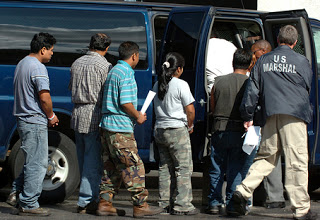
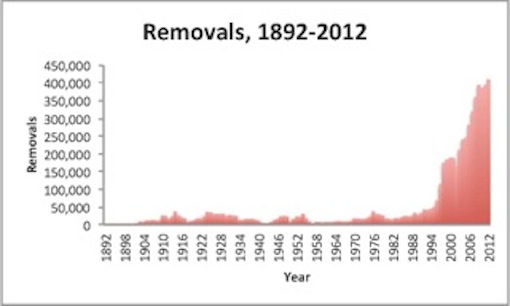
The United States has witnessed a tremendous rise in the number of people detained and deported since 1997.
Between 1892 and 1997, there were 2.1 million deportations from the United States. Since then, there have been nearly twice as many: the sum total of deportations between 1998 and 2012 is over 4.1 million. At current rates, President Obama is on track to deport more people in his first six years as President than all deportations prior to 1997.
Alongside deportation rates, detention rates have skyrocketed, from a daily average of 5,532 in 1994 to upwards of 30,000 today.
Mass deportation and detention has cost the United States billions of dollars a year. It has taken a budget crisis for the federal government to reconsider its policies. In light of impending budget cuts, the federal government is considering releasing thousands of detainees.
The federal government should reconsider its entire detention and deportation regime because it is misguided and costly.
The most recent escalation in deportations has not been because of a new influx of undocumented immigrants. In fact, fewer people are crossing the border illegally now than when mass deportation began in 1997. The primary reason we are seeing unprecedented numbers of deportees is that the federal government is spending extraordinary amounts of money on immigration law enforcement. And, it is doing that in the name of keeping the United States safe from terrorists and criminals.
There is very little evidence that mass deportation is making the country safer. There may be some credence to the appeal to public safety, but the appeal to terrorism is entirely unfounded. When the government finds terror suspects, it does not deport them. They may be sent to Guantanamo or prosecuted, but they are not among the 400,000 deportees sent almost exclusively to Latin America and the Caribbean each year.
According to U.S. Department of Homeland Security (DHS) removal data, 97.5 percent of deportees are sent to the Americas. DHS almost never deports people to countries that the U.S. Department of State identifies as sponsoring terrorism: Iran, Iraq, Syria, Libya, Cuba, North Korea, and Sudan. In 2010, for example, 387,242 people were deported. Among these were 55 Iranians, 54 Iraqis, 48 Syrians, 95 Cubans, and 21 Sudanese.
President Obama often touts the fact that he is deporting criminals. However, according to ICE removal data, less than 10 percent of deportees are sent to their countries of birth after being convicted of a violent offense. The other 90 percent either have no criminal conviction or have been convicted of a non-violent offense.
Deportation does not make us safer, but it does destroy families. Last year, 100,000 parents of U.S. citizens were deported – representing a ten-fold increase over the previous decade. Vern, a Guatemalan citizen, is one example. Vern entered the United States in 1991 and applied for political asylum. He received a work permit while waiting for his case to be processed. He found a job in a frozen food processing plant in Ohio where he met Maria, a Honduran woman who was also applying for political asylum. Each year, they received work permits that allowed them to continue working. Hopeful their cases would eventually be resolved, Vern and Maria married, and had their first child in 1996. In 1998, Vern received notice he should leave the United States – his asylum application had been denied. Vern was devastated – he had established a life in the United States, and had few ties to Guatemala. He decided to stay, hoping his wife’s application would be approved, and that she could apply for him to legalize his status. However, before that could happen, in 2009, immigration agents raided his home, took him to detention, and he was deported to Guatemala, leaving behind his wife and two children. Because Vern ignored his deportation order, he was a fugitive alien and thus subject to a raid on his home.
Americans may find comfort reading headlines that criminal, fugitive, and illegal aliens are being deported. But, the government does not have unlimited resources and deporting people is tremendously expensive. Thus, we must ask: at what cost?
Mass deportation may seem to be the logical solution when we have large numbers of undocumented immigrants. However, it is not the way the country has usually dealt with this issue. It has been much more common historically to find ways to legalize undocumented immigrants. Mass deportation has been the exception. Why now? Why is the United States spending so much money on immigration law enforcement? The reason is that immigration law enforcement has been wrongly conceived of as part of the War on Terror.
The federal government has an enormous budget, and the citizenry has given the government authorization to spend a substantial proportion of it on national security. So, it has – primarily through one government agency: DHS.
The Department of Homeland Security (DHS) was created in 2003. Since then, it has grown into a massive government agency. The FY 2011 budget for DHS was $56 billion. To put this $56 billion in perspective, the Department of Education FY 2011 budget was $77.8 billion, and the Department of Justice $29.2 billion. The rise in detention and deportation over the past decade primarily stems from Executive Branch decisions to expand immigration law enforcement, as part of the broader project of the War on Terror.
Fully 30 percent of the DHS budget in FY 2011 was directed at immigration law enforcement through Immigration and Customs Enforcement (ICE) and Customs and Border Patrol (CBP). Another 18 percent of the total went to the U.S. Coast Guard and five percent to U.S. Citizenship and Immigration Services—meaning over half of the DHS budget is directed at border security and immigration law enforcement.
A recent report by the Migration Policy Institute found that the U.S. government spends more on federal immigration enforcement than on all other principal federal criminal law enforcement agencies combined. My calculations confirm this: immigration enforcement spending heavily outweighs domestic law enforcement spending. In FY 2011, the U.S. government spent $27 billion on ICE, CBP, and the U.S. Coast Guard. In contrast, the U.S. government spent a total of $13.7 billion on domestic law enforcement, including the FBI, the DEA, the Secret Service, the U.S. Marshal, and Alcohol, Firearms, and Tobacco.
Thus, while some detractors may shout: “deport them all,” we have to realize that the United States is spending unprecedented amounts of money and we still have ten million undocumented immigrants in this country. A much saner approach would be to legalize undocumented immigrants. This is what was done historically, and it is the right thing to do.
The federal government has made it clear what they are capable of: they can set a quota of 400,000 deportees a year and meet it. They can detain over 400,000 people a year.
Now that we have seen that they can do this, it is time to stop. Zealous enforcement of immigration laws over the past decade has barely put a dent in the population of undocumented immigrants in the United States. This population has declined from 11 million to 10 million people, yet most experts attribute this decline to the economic recession.
With projections for immigration reform this year, it is time to stop mass deportation. Instead of detaining and deporting people who are in the country without authorization, DHS could redirect its resources towards legalization programs.
A recent report from the Cato Institute found that “comprehensive immigration reform would raise wages, increase consumption, create jobs, and generate additional tax revenue.” The author, Raúl Hinojosa-Ojeda, estimates that “comprehensive immigration reform would yield at least $1.5 trillion in added U.S. gross domestic product (GDP) over 10 years.”
Continuing to enforce immigration laws at the current rate is a colossal waste of resources. In a time of budget crisis, the best thing to do is to stop deporting and detaining people and work on legalization.
Thousands of immigrant detainees awaiting their hearings can be put on supervised release until their hearing happens. Advocates such as Human Rights First have long fought for more alternatives to detention. Cost-saving is one reason. ICE spends $2 billion a year on detention. Human Rights First calculates that “ICE’s alternatives to detention programs cost 30 cents to $14 per day, as compared to $164 per day for detention.”
The good news here is that the federal government can easily stop detaining immigrants and quickly save a lot of money. This is because the vast majority of immigrant detainees are not held in federal buildings. Instead, they are held in private detention centers and in county jails which contract out bed space to the federal government. Relying on private prisons has made it more feasible for the Department of Homeland Security (DHS) to achieve its quota of 34,000 beds a day.
There are many critiques one could make of the privatization of prisons. However, the upside of privatization is that the federal government could cancel its contracts with these detention centers and save a bundle of money. Leslie Berestein calculates that the federal government could save $3.4 million a month for each 1,000 detainees it releases.
Since 84 percent of ICE’s detained immigrants are housed in either contracted facilities owned by private companies or in state or local facilities where ICE rents space on contract, it should be relatively seamless for ICE to release them.
Of course, this will be bad news for Corrections Corporation of America (CCA) and the GEO Group – the two private prison companies that hold the largest numbers of immigrant detainees. However, that is their problem, not the problem of the federal government.
Mass detention and deportation are costly, ineffective, and harmful policies and must stop.
Tanya Golash-Boza is an Associate Professor of Sociology at the University of California, Merced. She is the author of: Yo Soy Negro Blackness in Peru, Immigration Nation: Raids, Detentions and Deportations in Post-9/11 America, and Due Process Denied: Detentions and Deportations in the United States. She blogs at: http://stopdeportationsnow.blogspot.com
Resisting the Rainbow: The American Family Association
This article is re-posted from Political Research Associates. Editor’s Note: The American Family Association has a history of activity in West Michigan and has been the recipient of substantial amounts of money from West Michigan individuals and families.
The purported goals of the American Family Association (AFA) are to protect “traditional moral values” and to combat “the radical homosexual agenda,” with considerable emphasis on the latter in recent years. It was formed in 1977 by evangelical pastor Donald E. Wildmon as the National Federation for Decency, based in Tupelo, Mississippi. Initially, the group focused on lobbying against indecency on television, but soon developed broader goals and changed its name in 1988. AFA’s leaders target media outlets, corporations, and public officials who they believe are promoting the homosexual agenda contrary to conservative Christian views. After Donald Wildmon’s retirement in 2010, his son Tim took over the group, which today boasts a sizable base of support comprised of 3.5 million online supporters and 180,000 subscribers to its AFA Journal. AFA also reaches an even wider audience through broadcasts on nearly 200 radio stations. Through its news division One News Now, which purports to be non-partisan and objective, AFA gives a platform to anti-gay activists.
In 2009, AFA hired Bryan Fischer, former executive director of the Idaho Values Alliance, as director of issues analysis for government and policy. Known for his extreme anti-LGBTQ views and controversial statements, Fischer has advocated for the criminalization of homosexuality and forcible “reparative therapy” for homosexuals. But perhaps the most inflammatory was his claim that “Homosexuality gave us Adolph Hitler, and homosexuals in the military gave us the Brown Shirts, the Nazi war machine and 6 million dead Jews.” Furthermore, Fischer claimed that Hitler was an “active homosexual” who recruited gays “because he could not get straight soldiers to be savage and brutal and vicious enough.”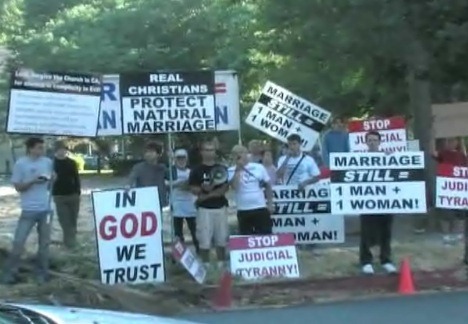
Over the years, AFA has perpetuated many other myths and dubious claims regarding homosexuality, associating it with pedophilia, incest, polygamy, bestiality, and other taboo sexual practices. For instance, the group has alleged that homosexuals are more promiscuous, are more likely to have sexually transmitted diseases, and often transmit these diseases to children. According to AFA of Kentucky’s Dr. Frank Simon, “There are hundreds of children in America who are dying of AIDS because they were sexually abused by homosexuals.” In addition, AFA champions the conspiracy theory that an insidious “homosexual movement” is obsessed with “infiltrating the public school system” to strategically recruit children. In the early 2000s, a direct mailing from Don Wildmon argued, “For the sake of our children and society, we must OPPOSE the spread of homosexual activity! Just as we must oppose murder, stealing, and adultery! Since homosexuals cannot reproduce, the only way for them to ‘breed’ is to RECRUIT! And who are their targets for recruitment? Children!” [emphasis in the original] The AFA spreads anti-gay propaganda to arouse fear and disapproval of homosexuality in the American public, and for this reason, the Southern Poverty Law Center included the AFA on its 2010 list of anti-gay “hate groups.”
STRATEGIES
Aiming to influence public policy and opinion, AFA utilizes many strategies, including e-newsletters, direct mailings, petitions, and boycotts. Above all, the group pressures businesses to conform to “traditional Christian values,” organizing boycotts of gay-friendly corporations that offer non-discrimination policies, domestic partner benefits, or contributions to gay-friendly causes. AFA has discouraged its followers from patronizing many such companies, including but not limited to: Kraft Foods, Disney, Procter & Gamble, Wal-Mart Stores Inc., Citigroup, PepsiCo, American Airlines, Allstate Insurance, and the Coca-Cola Company. In 2005, AFA called for a national boycott of Ford Motor Co. due to its sponsorship of gay pride events and advertising in LGBTQ publications. In 2011, the group initiated a boycott of Home Depot, dubbing the company “Homo Depot” because it provides financial support to gay pride rallies. Since then, AFA has taken credit for Ford’s drop in sales and for a drop in Home Depot’s support of gay pride events. One Million Moms, a division of AFA, attacked JCPenny in2012 for their decision to hire openly gay TV personality Ellen DeGeneres as a spokesperson, and attempted to pull advertisers from the show Glee for promoting “deviant sexuality.” During GLSEN’s “Day of Silence” campaign in 2012 to raise awareness of bullying of LGBTQ children, AFA called on parents to keep their children home and pressure their local schools to cancel the event.
In July 2008, AFA launched a boycott against McDonald’s because one of its executives was on the board of the National Gay and Lesbian Chamber of Commerce. Deferring to AFA, the executive stepped down and the company conceded that it would henceforth be “neutral on same-sex marriage or any ‘homosexual agenda’ as defined by the American Family Association.” McDonald’s’ remorseful response illustrates the increasingly powerful influence of AFA on corporate policy.
In recent years, AFA has become more directly involved in politics. Many state chapters conduct grassroots organizing on a state and local level, using petitions and referendums to fight LGBT rights. In 2010, AFA joined the campaign to oust the three Iowa Supreme Court justices who had ruled in favor of same-sex marriage, pledging to spend $200,000 on this cause. On the national level, AFA endorsed Mike Huckabee for president in 2008 and Newt Gingrich in 2012. Through the AFA Radio Network, it has also given a platform to Republican candidates Michelle Bachmann, Rick Perry, and Tim Pawlenty.
FUNDING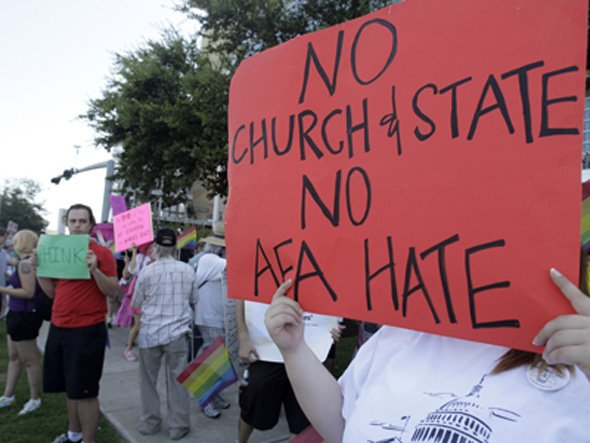
Funded entirely by private donors, AFA aggressively solicits donations on its website and generates a massive amount of revenue. The group brought in nearly $19 million in 2010 and $18 million in 2011, and regularly donates hundreds of thousands of this revenue to promote anti-LGBT politicians and legislation. However, the donors supporting this financial powerhouse remain a mystery, with no names disclosed on AFA’s 990 tax forms or website. One might reasonably speculate that Christian conservative groups are the main donors, since AFA was founded by an evangelical pastor and declares its mission is “to motivate and equip citizens to change the culture to reflect Biblical truth.” Only one known donor is listed in Right Wing Watch’s database: the Bill and Berniece Grewcock Foundation, which donated a total of $90,000 through six grants from 1998 to 2003.
Marshaling tens of millions of dollars each year, AFA has morphed into a power player in the political arena, donating $500,000 to the Yes on Prop 8 campaign alone. In August 2011, amid much hype, AFA spent $1 million to fund Republican presidential candidate Rick Perry’s rally at a Texas stadium, which was billed as a day of fasting and prayer “to save America.” Dubbed “The Response,” the event signified that AFA has become much more than just a typical nonprofit group with the more modest goal of fighting indecent television. It has grown into a formidable force in American politics today, a mighty behemoth with the funds and support base to sway not only mass media content, but public policy on a national scale as well.
This profile is part of a series on key anti-LGBTQ opponents adapted from Political Research Associates’ Resisting the Rainbow report.
Foundation Profile: Peter and Emajean Cook Foundation
This foundation profile is part of a series in our new project, the Non-Profit Industrial Complex in Grand Rapids.
The Peter and Emajean Cook Foundation has a long history of supporting conservative causes and organizations within the Religious Right. 
The foundation is named after Peter Cook, a local businessman who died in 2010.
In looking at the 990s for 2009 – 2011, there was a definite decline in funding overall, with most of the money staying local. The Peter and Emajean Cook Foundation also significantly decreased its funding to far right groups, with the exception of a $5,000 contribution to the Mackinac Center for Public Policy in 2010.
The Peter and Emajean Cook Foundation instead has directed its money at West Michigan organizations such as the Grand Rapids Art Museum, the YMCA, the Hispanic Center of Western Michigan and the Grandville Arts Academy.
The foundation named after Peter Cook still gives to numerous Christian organizations, such as Wedgewood Christian Services, In the Image, Abundant Life Ministries, Heartside Ministries and Wealth’s Wisdom Ministries.
One thing that was notable about the 990s for the Peter and Emajean Cook Foundation was the fact that they also included where the foundation had its money invested. The foundation was making money off of investments in the Altria Group, Boeing, Bristol Myers-Squibb, Chevron, DuPont, General Electric, Eli Lilly, Microsoft, Phillip Morris, Shell and Verizon, just to name a few. These corporations are some of the most environmentally destructive and many have a history of human rights abuses.
The Foundation listed its assets at $1,332,131 on the 2011 990s and contributed at total of $547,872 during that year. What this means is that foundations are a great way for wealthy individuals and families to hide their wealth in non-taxable enclaves, continue to invest in the stock market, make more money, then give a small portion away and be seen as community heroes.
This dynamic is explored in more detail in books like Foundations of the American Century and Foundations and Public Policy.
Noam Chomsky on Presumption of Innocence
This brief interview with Noam Chomsky is reposted from Jan Wellman’s blog.
The most bizarre part of Section 1021(b)(2) of the National Defense Authorization Act (NDAA) is that almost no one has heard about it.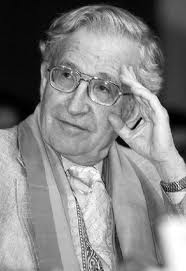
And whoever has heard about it, doesn’t want to talk about it.
It’s almost as if someone took Dr. Goebbels’ “The bigger the lie, the more it will be believed” –dictum and mutated it into a 21st century super weapon:
“Tell the truth, but make it so shocking that no one wants to hear about it.”
No one wants to hear about the military having the power to detain you on American soil, without due process, indefinitely, at the discretion of the President. It sounds too Stalin. It reeks of conspiracy theory. Besides, it’s clearly unconstitutional. So let’s go get some lunch.
That’s why on December 4, 2012, the new NDAA passed the Senate with a 98-0 vote. Almost everyone was out at lunch.
Except seven individuals who decided to sue Obama instead. But other than that, the resulting rumpus was minor.
Since February 13th, “The Seven” are on their way to the Supreme Court. But no one wants to hear about it. A few individuals against the United States government sounds too Matthew McConaughey, unless you’re a natural-born activist.
Chris Hedges, the leading plaintiff in the case against Obama and former New York Times war correspondent, writes about “NDAA and the Death of the Democratic State.” But no one wants to really read about it.
Most aspiring journalists and independent minds who become curious about NDAA find that there is a deafening silence around the topic. When they try to raise questions, the silence deafens them further.
Then there are the conspiracy buffs. They distance the problem from the main stream audience even further. No one wants to be associated with folks who think that the President could be a reptile.
And then there is Noam Chomsky. He looks at the situation from the orbit, comfortably snug in his multidisciplinary mental space station, focusing on the connections between events – rather than the events themselves.
On the second anniversary of the Fukushima nuclear disaster in Japan, Cecile Pineda, anti-nuclear activist and critically acclaimed author, is touring the Great Lakes and will speak in Grand Rapids this Thursday.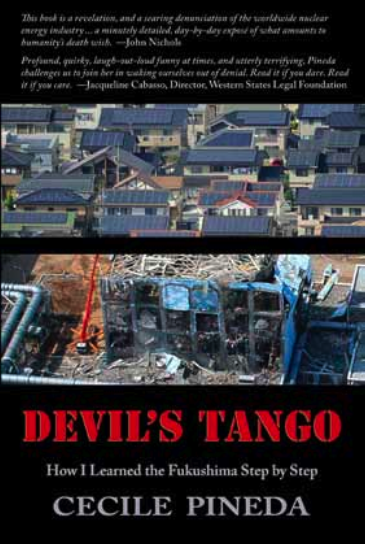
The author of Devil’s Tango: How I learned the Fukushima Step by Step, Cecile will give her stirring insight of the nuclear industry and update us on the consequences of the tragic event that began to unfold on March 11, 2011, with the meltdown of three reactors at the Fukushima Daiichi nuclear facility. Devil’s Tango is an anguished dissection of the nuclear industry in which a crazy quilt of multiple voices, pieced together day-by-day, reflects Cecile’s attempt to come to terms with Fukushima’s catastrophic consequences to the planet.
Pineda will speak twice on Thursday, March 14th at the following times and locations:
12:15 pm
Aquinas College, Wege Ballroom
Wege Student Center
2:30 pm
Raybrook Manor (Friendship Room)
2121 Raybrook SE, Grand Rapids
Both events are free and open to the public.
Co sponsored by: Kent County Women’s International League for Peace and Freedom, POLIS (Aquinas College Student group), Don’t Waste Michigan, Left Forum, Micah Center. For more info. contact smaki1@hotmail.com or (616) 897- 5107.
This Day is Resistance History: Women’s Suffrage Movement does direct action at National Gallery in London in 1914
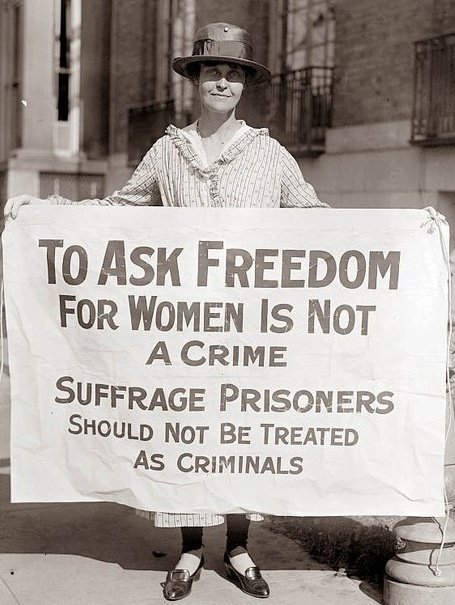
On this day ninety-nine years ago, a group of women suffragettes in London engaged in an action at the National Gallery in London in order to push for their demand for the right to vote.
Mary Richardson, a member of the Women’s Social and Political Union (WSPU), a group which had organized and carried out numerous actions in the struggle for suffrage beginning in 1903. Members of the WSPU had been jailed for several acts, involving civil disobedience and property destruction.
In 1913, WSPU member, Emily Davison, had run out onto a horse race track, where the King’s horse was competing, to protest the English government’s failure to grant women the right to vote. Emily ended up being trampled by a horse and die.
The death of Emily Davis raised the stakes for members of the WSPU and women like Mary Richardson decided to raise the cost of the struggle against the British government.

On March 10, 1914, Richardson entered the National Gallery in London and slashed a famous painting known as the Rokeby Venus. Richardson was attacked by some tourists who were in the gallery and then by London police. Richardson was then arrested and tried for property destruction.
At her trial, Richardson stated:
I have tried to destroy the picture of the most beautiful woman in mythological history as a protest against the Government for destroying Mrs Pankhurst, who is the most beautiful character in modern history. Justice is an element of beauty as much as colour and outline on canvas. Mrs Pankhurst seeks to procure justice for womanhood, and for this she is being slowly murdered by a Government of Iscariot politicians. If there is an outcry against my deed, let everyone remember that such an outcry is an hypocrisy so long as they allow the destruction of Mrs Pankhurst and other beautiful living women, and that until the public cease to countenance human destruction the stones cast against me for the destruction of this picture are each an evidence against them of artistic as well as moral and political humbug and hypocrisy.
Richard spent some time in jail for this action, but it did not deter her participation in future action for women’s suffrage. Richardson and other women were arrested again for more acts at the National Gallery.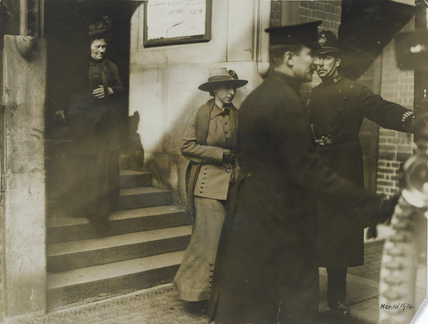
Because of these actions and many more like them, the Women’s Suffrage Movement forced the British government to grant women the right to vote in 1928.
In 2003, it was discovered that the British government had engaged in espionage against the suffragettes, particularly the WSPU. You can see the archived documents, showing that the suffragettes were scene by the British government to be a threat in the early part of the 20th century.
On this day, we honor women like Mary Richardson who had the courage to take risks and put their own safety on the line for greater freedom and equality. These brave women demonstrate that justice is never a gift and must be demanded and fought for, no matter what the cost.
Vandana Shiva on Int’l Women’s Day: “Capitalist Patriarchy Has Aggravated Violence Against Women”
This interview with Vandana Shiva is re-posted from Democracy Now!
AMY GOODMAN: We continue our conversation on this International Women’s Day with world-renowned feminist, activist, thinker from India, Dr. Vandana Shiva. India witnessed nationwide protests earlier this year following the brutal gang rape and murder of a 23-year-old student in Delhi in December. The rape brought attention to other instances of sexual violence in India, where one woman is raped every 20 minutes, according to the national crime registry there. The conviction rates in the rape cases in India have decreased from 46 percent in 1971 to 26 percent in 2012.
To talk more about the significance of International Women’s Day, we go to Los Angeles to speak with Vandana Shiva, where she’s on tour right now. She’s the author of many books, including Earth Democracy: Justice, Sustainability, and Peace, Staying Alive: Women, Ecology, and Development. Her most recent book is Making Peace with the Earth.
Vandana, welcome to Democracy Now! As you travel in the United States from India right now—you’re an environmental leader, you’re a feminist, you’re a scientist—what is your message on this International Women’s Day?
VANDANA SHIVA: I’m here in Los Angeles to address a conference on International Women’s Day on global ecologies, on how globalization, shaped by a very patriarchal mindset, a capitalist, patriarchal mindset, has actually aggravated the violence against women, that we are living in a very violent economic order to which war has become essential—war against the earth, war against women’s bodies, war against local economies and war against democracy. And I think we need to see the connections between all these forms of violence, which impact women most. Whether it’s climate change or biodiversity erosion or seed monopolies, all of it is connected. It’s one piece.
AMY GOODMAN: Vandana Shiva, talk about the activism in India right now against violence against women and how that fits into your overall issue, especially as you deal with issues like the environment.
VANDANA SHIVA: You know, my recognition that there was a very deep connection between the women’s movement in India and the protection of the environment started in the early ’70s with the very inspiring movement called Chipko, where I became a volunteer as a young student. “Chipko” means to hug. And women of my region came out and said, “You can’t cut these forests. These forests protect our soil, our water. They’re not timber mines.” Ten years of protest it took to eventually have the government recognize that the first function of the forests of the Himalaya is to provide stable water supply to avoid floods and drought, not the value of the square foot of timber after a tree is cut.
Today, the protests that are taking place are a result of a number of things. First, the young, rising middle class woke up to the fact that the new India was not safe for women and young men. After all, that young woman who was raped brutally had a friend who was attacked brutally. And therefore, for the first time, the demand for safety for women was joined by a large number of young men.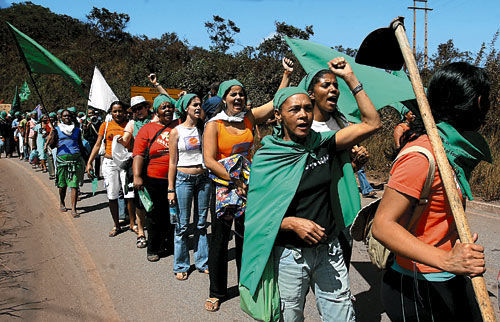
I think the second thing that became so clear through those protests in December and January is that the government, which should be protecting people, the state which should be protecting people, is afraid of people, and so there were attacks—water cannons, tear gas—and young people who were living innocently in India realized we are living in a militarized police system. That wake-up call to larger democracy, larger issues of freedom, I think, is a big shift in the consciousness of the Indian public.
Of course, in the coastal Orissa, where three people have just been killed about four days ago, because Wall Street, which now owns this Korean steel plant, which is investing in India to create one of the biggest steel plants of the world, wants 4,500 acres. That’s a war against the land and against the earth and against women. Soni Sori, a young tribal woman, arrested, raped, tortured, just because she was telling the world how there is a war going on in the heart of India, which has created a Naxalite movement. Thirty percent of India is not controlled by the government.
This violent economic order can only function as a war against people and against the earth, and in that war, the rape against women is a very, very large instrument of war. We see that everywhere. And therefore, we have to have an end to the violence against women. If we have to have the dignity of women protected, then the multiple wars against the earth, through the economy, through greed, through capitalist, patriarchal domination, must end, and we have to recognize we are part of the earth. The liberation of the earth, the liberation of women, the liberation of all humanity is the next step of freedom we need to work for, and it’s the next step of peace that we need to create.
AMY GOODMAN: Vandana Shiva, I was wondering if you can comment on this David-versus-Goliath case that the Supreme Court heard, the 75-year-old farmer from Indiana against Monsanto, the world’s largest seed company. The dispute began when the soybean farmer Vernon Bowman bought and planted a mix of unmarked grain typically used for animal feed. Monsanto said their patented seed was there. He planted it. He violated their patents. They own something like 90 percent of soybeans in Indiana, containing the gene which allows it to survive when sprayed with the company’s Roundup pesticide. Can you talk about the significance of this case, as you take on Monsanto in India and around the world, as well?
VANDANA SHIVA: I think this case is not just about Bowman, the Indiana farmer. It’s about every farmer, every person and every seed in the world. First, the idea that Monsanto can patent a seed by putting a toxic gene for Roundup resistance into a plant, that that is a creation of seed, that has evolved over millennia, been bred over thousands of years in East Asia, not by Monsanto—how can we be governed by an illusion that introducing a toxic gene is creation of life? It’s an error. And it is this error that compelled me 26 years ago to start Navdanya, the movement for seed saving in India, because I do not think seed is invented, and therefore, a patent on seed is wrong from the first step.
Secondly, actually, Roundup-resistant seeds are not controlling weeds. They have created superweeds. Fifty percent of the farmland of the U.S. is now overtaken by superweeds. Monsanto actually should be paying two compensations to farmers: one, for putting so toxic genes into the plant and contaminating others’ crops; second, for creating an unreliable, failed technology that is leading to more lethal herbicides like 2,4-D, a component of Agent Orange, from being used.
In India, this kind of false claim to creation, false claim to invention, the collection of royalties from seed, has led to Monsanto controlling 95 percent of the cottonseed supply, 95 percent through a monopoly, not through the choice of the farmers, as it’s often made out to be. Farmers are getting indebted because the price of seed jumped 8,000 percent, and there’s no option, except the little options we are creating through Navdanya by saving open-pollinated seed.
Two hundred and seventy thousand Indian farmers have committed suicide since Monsanto entered the Indian seed market. That’s more than a quarter-million. It’s a genocide. And every farmer who commits suicide leaves behind a widow. For me, this is a prime example of violence against women through violent economic means.
And I do hope that the Supreme Court will act for the larger public good. And if it fails to do so, because we, too, get affected, let us call globally for a seed satyagraha. A satyagraha is the fight for truth. When the British tried to monopolize salt, Gandhi walked to the beach and said, “Nature gives it for free; we will continue to make our salt.” We need to tell Monsanto and the governments of the world, they’ve received these seeds from nature, from our ancestors, from communities across the world. We have a duty to protect them. A law that says saving seed, growing seed and our seed freedom is a crime is a law that must be made illegal. We have to act for higher law, the law of the earth, the law of social justice and, most importantly, the law of women’s knowledge and women’s skills in seed saving. As long as seed was in woman’s hand, no crop failed, no farmer committed suicide. As soon as seed moved into Monsanto’s hands, we have illegitimate laws, we have genocide, we have ecocide, we have butterflies and bees being killed, we have soil organisms being killed. This is no future for humanity or the earth.
AMY GOODMAN: Vandana Shiva, I want to thank you so much for being with us, environmental leader, feminist thinker from India. She’s in Los Angeles now speaking on International Women’s Day and will be at the Brooklyn Botanical Garden on Saturday speaking, as well. Among her many books,Earth Democracy: Justice, Sustainability, and Peace, as well as Making Peace with the Earth.
MLive writer and the death of Hugo Chavez: More unsubstantiated claims and false information
Earlier today, MLive ran a column from a regular guest writer, Ken Braun, on what’s wrong with the mainstream media coverage of the death of Venezuelan President Hugo Chavez.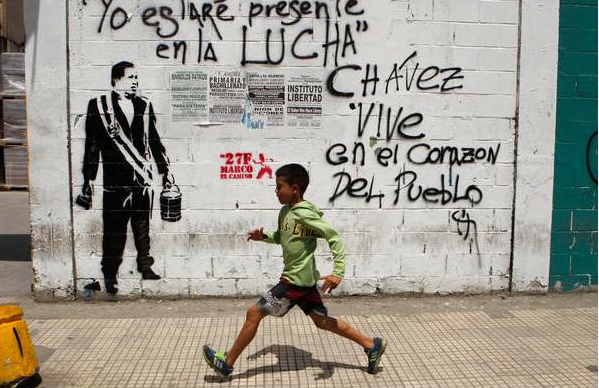
Braun makes his case that the mainstream media is wrong on Venezuela, based on one story he cites on NPR, which is hardly a case at all. Not surprising, since Braun works for the Job Creators Network, which is a pro-capitalist entity founded by businessmen Bernie Marcus and Herman Cain, with the intent of providing a voice for CEOs and corporate America to talk about how they create jobs and business solutions. Like CEOs and corporation don’t already have enough representation, particularly in the media, to state their case.
The Job Creators Network is actually part of a consortium, which also includes Job Creators Solutions and Job Creators Alliance. All three of these entities are nothing more than a front group for corporate America, which is exactly why Braun is so anti-Chavez.
Since Chavez came to power in 1999, Venezuela has re-directed much of the national wealth to eliminating poverty, providing health care, education, paying off the IMF/World Bank debt and assisting other Latin American nations to be debt free as well. The Chavez government and many of the other South American countries have not been receptive to foreign investors, wanting instead to create a more independent trade block in the south, particularly independent of the US.
Braun might know these facts if he bothered to learn something about Venezuela that wasn’t the dominant narrative from the US government or commercial media. People would do well to read books like Changing Venezuela by Taking Power, Venezuela Speaks: Voices from the Grassroots, Hugo Chavez and the Bolivarian Revolution or The Chavez Code: Cracking US Intervention in Venezuela.
There are also several really good independent documentaries on the Chavez years, beginning with the US-backed coup in 2002 The Revolution Will Not Be Televised. Other good films are No Volverán: The Venezuelan Revolution Now and Venezuela: Revolution From the Inside Out.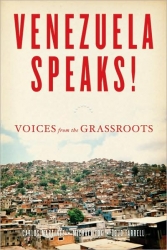
On top of the films and books there are also several good online sources that provide solid analysis of politics and social movements in Venezuela, such as Venezuela Analysis, Upside Down World and the Washington Office on Latin America.
Again, Braun makes the claim that the mainstream US media is wrong on Chavez, even though one cannot use a single example on NPR as a credible assessment. The national US media watchdog group, Fairness & Accuracy in Reporting, has been monitoring major US news sources over the past 14 years since Chavez became President of Venezuela and their conclusion is that the US media as been antagonistic towards Venezuela, often mimicking US diplomats.
In addition to making a false claim about US media coverage of Venezuela and Hugo Chavez, Braun pins his whole case on a recent report from Human Rights Watch that claims that Venezuela is one of the worst human rights violators in the world. Such a claim is so absurd and flies in the face of evidence, even previous evidence that Human Rights Watch has provided.
In response to Ken Braun’s use of the Human Rights Watch (HRW) claim, we are going to reprint an article by Joe Emersberger, which does the best job we have seen of dissecting the HRW claim.
The death of Hugo Chavez provoked HRW to immediately (within hours) smear the Chavez government’s legacy.
“Chávez’s Authoritarian Legacy: Dramatic Concentration of Power and Open Disregard for Basic Human Rights” said the Washington DC based NGO.
If that isn’t harsh enough, in a tweet sent out in June of 2012, Ken Roth, executive director of HRW, described Venezuela as being one of the “most abusive” in Latin America. Ecuador and Bolivia were the other two states that Roth singled out.
In November of 2012, HRW also rushed out a letter demanding that Venezuela be excluded from the UN’s Human Rights Council on the grounds that the Chavez government “fell far short of acceptable standards”
It is staggeringly obvious that HRW did not simply regard the Chavez government as one which could be validly criticized, like any other in the world, on human rights grounds. HRW regarded Venezuela under Chavez as one of the “most abusive” countries in the world. Make no mistake, if Venezuela is more abusive than Colombia, as Roth alleged, then that would easily place Venezuela among the worst human rights abusers on earth.
The day Hugo Chavez died, HRW rehashed the accusations it has been making for years:
1) “Assault on Judicial Independence”
2) “Assault on Press Freedoms”
3) “Rejection of Human Rights Scrutiny”
4) “Embracing Abusive Governments”
Without exploring any details at all about these criticisms something should stand out right away. Putting aside HRW’s remarkably shoddy attempts to substantiate them, how could these criticisms place the Chavez government among the most abusive countries in the world? How could HRW’s assessment, even taken at face value, make Venezuela unworthy to sit on the UN’s Human Rights Council next to the USA?
Daniel Kovalik pointed out the following amazing facts last year in a Counterpunch article:
…in a November 19, 2009 U.S. Embassy Cable, entitled, ” International Narcotics Control Strategy Report,” the U.S. Embassy in Bogota acknowledges, as a mere aside, the horrific truth:257,089 registered victimsof the right-wing paramilitaries. And, as Human Rights Watch just reported in its 2012 annual report on Colombia, these paramilitaries continue to work hand-in-glove with the U.S.-supported Colombian military….
….the U.S. has been quite aware of this death toll for over two years, though this knowledge has done nothing to change U.S. policy toward Colombia — which is slated to receive over $500 million in military and police aid from the U.S. in the next two years
….Indeed, as the U.S. Embassy acknowledges in a February 26, 2010 Embassy Cable entitled, ” Against Indigenous Shows Upward Trend,” such violence is pushing 34 indigenous groups to the point of extinction. This violence, therefore, can only be described as genocidal.
Either Ken Roth is unfamiliar with his own organization’s reports, or something very rotten drives his groups’ ludicrously disproportionate criticism of Venezuela.
I’ll borrow from HRW’s playbook and do some rehash of my own. I’ll rehash some of the questions I’ve been asking them for years. HRW has never attempted to answer.
1) When a coup deposed Chavez for 2 days in 2002, why did HRW’ public statements fail to do obvious things like denounce the coup, call on other countries not to recognize the regime, invoke the OAS charter, and (especially since HRW is based in Washington) call for an investigation of US involvement?
2) Very similarly, when a coup deposed Haiti’ democratically elected government in 2004, why didn’t HRW condemn the coup, call on other countries not to recognize the regime, invoke the OAS charter, and call for an investigation of the US role? Many of these things were done by the community of Caribbean nations (CARICOM). A third of the UN General Assembly called for an investigation into the overthrow of Aristide. Why didn’ HRW back them up?
3) Since 2004, why has HRW written about 20 times more about Venezuela than about Haiti despite the fact that the coup in Haiti created a human rights catastrophe in which thousands of political murders were perpetrated and the jails filled with political prisoners? Haiti’ judiciary remains stacked with holdovers from the coup installed regime.
In honour of Chavez and of the Venezuelan movements which will hopefully expand on the progress made towards making Venezuela a more democratic and humane country, lets recall some achievements of his government on the international stage that HRW would never applaud. Let’s remember Hugo Chavez strongly opposing the US bombing of Afghanistan in 2001; the war in Iraq, the 2004 coup in Haiti, the 2009 coup in Honduras, NATO’s bombing of Libya, the lethal militarization of the conflict in Syria, the attempted coups against Morales in Bolivia and against Correa in Ecuador, Israel’s aggression in Lebanon and in the Occupied Territories.
None of that impressed HRW in the least. It may even have aggravated HRW’s hatred of the Chavez government, but it should impress people who really care about human rights.
The Life and Legacy of Hugo Chavez
This video is re-posted from The Real News Network.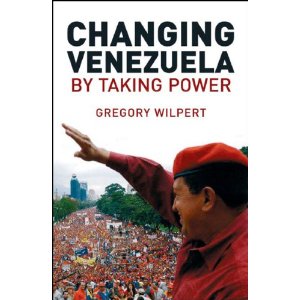
Gregory Wilpert, who lived in Venezuela between 2000 and 2008, taught at the Central University of Venezuela and worked as a freelance journalist — looks at the achievements, failures and life of the leader of Venezuela’s Bolivarian Revolution.
Wilpert, who also wrote the book Changing Venezuela by Taking Power, edits the highly informative blob Venezuela Analysis, which provides regular updates and some of the best analysis of what is happening on the ground in Venezuela, along with ongoing analysis of US antagonism of that South American country.
Earlier this week, MLive ran a guest column from the Sierra Club’s State Director for Michigan, Anne Woiwode.
The article focused on the Keystone XL Tar Sands Pipeline and why is would be bad for Michigan, the country and our collective environmental future.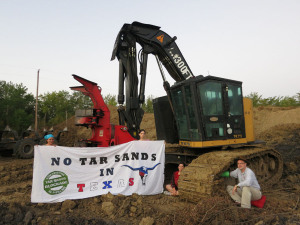
Woiwode made solid points about how the Keystone Tar Sands Project is the dirtiest form of fossil fuel being proceed anywhere in the world. She also made it clear that the realities of Climate Change are becoming too apparent to ignore and the urgency of Climate Change requires “drastic changes.”
The Michigan Director for the Sierra Club states in the first paragraph, “Our country needs a solid economic boost, but not one that comes with the risk of poisoned drinking water and a massive contribution to climate disruption.” This is sound commentary, but beyond the obvious of why the Keystone Tar Sands Project is a disastrous idea, the Sierra Club spokesperson is just plain naïve and even wrong on some critical aspects of this issue.
The first naïve notion is that President Obama made the right decision last year by not approving the Keystone XL Pipeline. Obama was working an election year and didn’t want to unnecessarily alienate environmentally minded voters, so he backed off from the Keystone XL Pipeline, which is different than denying it, as Woiwode suggests.
Secondly, the Obama administrations, like all administrations since fossil fuels have become the primary energy source, is beholden to the fossil fuel industry. Woiwode mentions people going from Michigan to DC to protest the Keystone XL Pipeline, but where was the President that weekend? Obama was out of town playing golf with oil executives.
Third, the Sierra Club Director for Michigan seems to think that Sen. Carl Levin would be an advocate against the Keystone XL Pipeline. I’m not sure how she draws this conclusion, since Levin is the Chair of the Armed Services Committee and a staunch defender of US militarism, which is one of the most fossil fuel dependent and environmentally destructive forces on the planet. (see Barry Sander’s book, The Green Zone)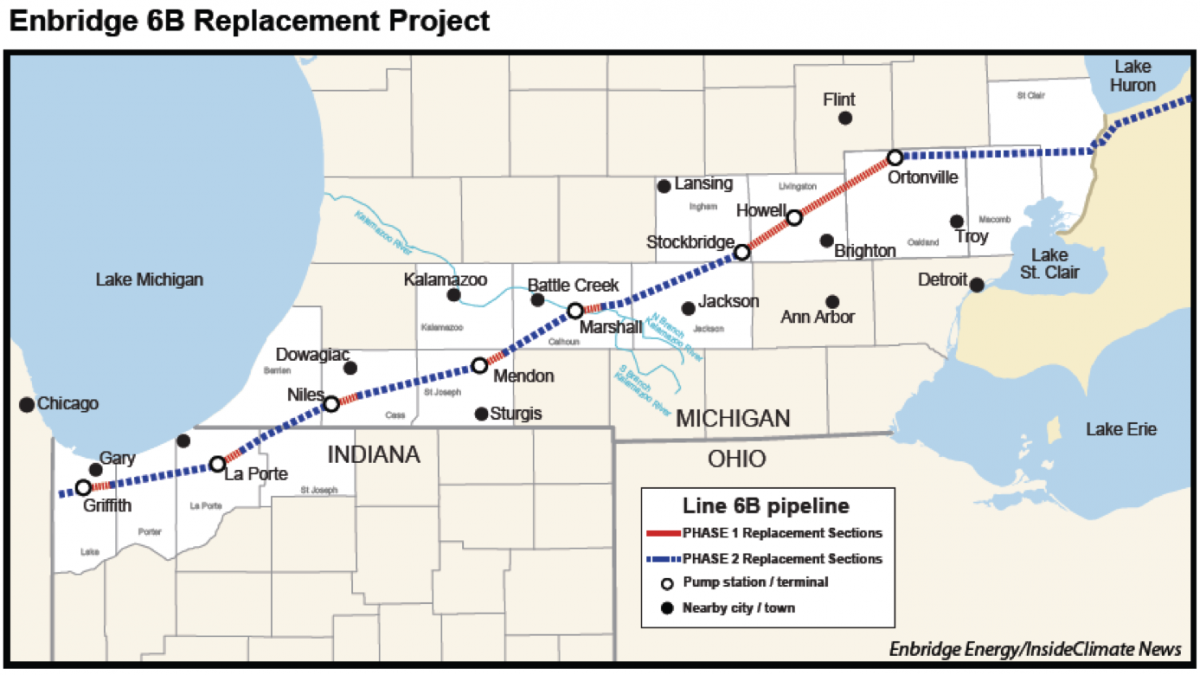
Most importantly, it is naïve to think that the President is going to stop the Keystone XL Pipeline from happening, especially since it is already being built around the country and in Michigan. The excellent work of the folks at LineB6 Citizen’s Blog, has been tracking the construction of the Enbridge tar sands pipeline in Michigan for over a year, with regular postings and pictures of the new pipe that is being laid.
What this really means is that the Keystone Pipeline is a done deal, unless people decide otherwise and engage in direct action to stop it from becoming a reality. This is not really a choice, since as Dr. James Hansen has said over and over again, if the Keystone XL tar sands pipeline is completed it will be a death sentence for climate. When groups like the Sierra Club to continue to put stock in the safe and ineffective strategy of lobbying for change, they send a message that the political system in the US still works. More importantly, they send the message that there is no real urgency on this issue, since they are not calling on people to put their bodies and their lives on the line to stop this madness.
 Grand Rapids Institute for Information Democracy