Foundation Profile: Jerry & Marcia Tubergen Foundation
This foundation profile is part of a series of West Michigan foundation profiles, which is included in our Grand Rapids Non-Profit Industrial Complex Project.
Jerry Tubergen is part of the DeVos Family inner circle. He sits on the boards of some of the DeVos Family foundations and works for the DeVos-owned RDV Corp.
Jerry and his wife Marcia have their own foundation, that also serves as a mechanism for funding the kinds of projects that reflect his conservative, pro-capitalist, Christian worldview.
In looking at the foundation’s 990s for 2009 – 2011, we found that a great deal of their contributions went to conservative or reactionary Christian groups. Most of their money went to West Michigan organizations, but there were some from out of state that have received large sums. For instance, the Magdi Yacoub Foundation, which does medical work with children, received roughly $2,000,000 from their foundation, based on the most recent financial reports. The Jerry & Marcia Tubergen Foundation have also contributed substantially to the Cure International, Inc, which also provides medical treatment for children, but with an exclusively conservative Christian focus.
Closer to home, their foundation has contributed roughly $100,000 to Mel Trotter Ministries in Grand Rapids and other church ministries projects. The foundation has also funded anti-abortion groups like Michigan Right to Life ($5,000) and The Pregnancy Resource Center ($30,750).
We also notice a $50,000 contribution to Donors Trust, which has recently been receiving some attention because of their clandestine methods of funding everything from Right to Work campaigns to climate denial. When the Center for Public Integrity uncovered much of the information on the role of Donors Trust, we discovered that one of the main contributors to that group was Richard DeVos. This is not surprising, considering that Tubergen is a loyal employee of the DeVos family, but it further demonstrates the inter-locking systems of power and influence in West Michigan.
Video deconstructs Global Wealth Inequality
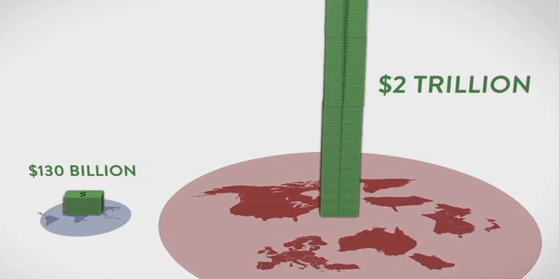
This video is produced by and re-posted from The Rules. Editor’s Note: While we find the video informative and useful for framing the global wealth gap, the group that put this video together does not offer ways to challenge global capitalism beyond reformism.
The richest 300 people on earth have the same wealth as the poorest 3 billion. This is no accident – those in power write the rules. Together, we have the power to change those rules.
Can Civilization Survive Really Existing Capitalism?
This video is re-posted from ZNet.
One of the world’s leading intellectuals and political activists, Professor Noam Chomsky has been awarded the UCD Ulysses Medal, the highest honor that University College Dublin can bestow.
Professor Chomsky was presented with the UCD Ulysses Medal by the President of UCD, Dr Hugh Brady, following a public lecture hosted by the UCD Philosophy Society and the UCD School of Philosophy at University College Dublin on Tuesday 02 April 2013.
Healing Children of Conflict to host 2 fundraising events this month for Iraqi boy who lost leg in US missile strike

Nearly two years ago we reported on the efforts of the local group Healing Children of Conflict, which brought an Iraqi boy and his father to Grand Rapids.
Then, 8-year old Hamzah, was being fitted for a prosthetic leg, a leg which he lost from a US missile strike outside of his home in Baghdad.
Hamzah and his father are returning to Grand Rapids this week so that the now 10-year old Iraqi boy can be re-fitted for a new prosthetic leg.
To welcome back Hamzah and his father Imad, Healing Children of Conflict will be hosting two fundraising events in April. Hamzah and his father will be at both events to share their stories and talk about life in Iraq in 2013.
Healing Children of Conflict is hoping that both events will help cover the costs of the medical services needed and to provide an opportunity to educate the West Michigan community on the ongoing legacy of US foreign policy in Iraq.
Healing Children of Conflict April Fundraising Events
Wednesday, April 17 at 7:00PM (doors open at 6:30)
Notos Old World Italian Dining
6600 28th St, Grand Rapids
Friday, April 26 at 6:30PM
Plymouth United Church of Christ
4100 Kalamazoo SE, Grand Rapids
Both events are fundraisers and people can purchase tickets ahead of time by contact Nidal Kanaan at nidal_kanaan@hotmail.com 616-262-4525 or Christine Yard cayared@comcast.net or 363-9041.
Mainstream Green Is Still Too White
This article by Brentin Mock is re-posted from Colorlines.
Last year was the hottest on record for the continental United States, and it wasn’t an outlier. The last 12 years have been the warmest years since 1880, the year the National Oceanic and Atmospheric Administration began tracking this information. And climate scientists predict that the devastating blizzards, droughts, hurricanes and wildfires we’ve been experiencing lately will worsen due to climate change.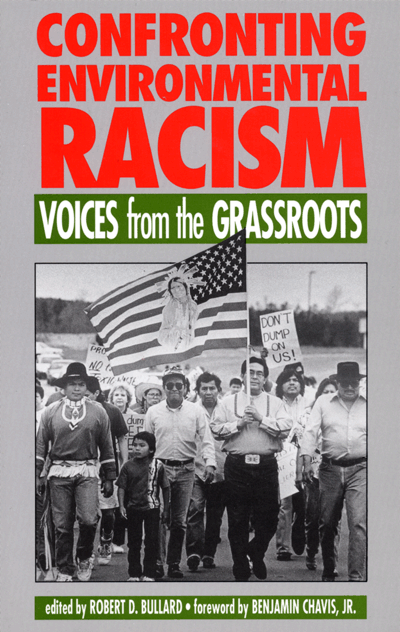
In many ways these punishing weather events feel like Mother Nature seeking revenge for our failure to reduce greenhouse gas emissions, the primary cause of global warming. Despite abundant evidence, the U.S. government has yet to pass a law that would force a reduction in these emissions.
During his first term, President Obama did make climate change a priority, both in his campaign and in office. The American Clean Energy and Security Act that Congress produced passed through the House in June 2009 by a narrow margin. Yet the bill never reached a vote in the Senate, and it died quietly.
Environmentalists have been flummoxed ever since. One prominent cause-of-death theory says that large mainstream (and predominantly white) environmental groups failed to mobilize grassroots support and ignored those who bear a disproportionate burden of climate change, namely poor people of color.
With Obama in for a second term and reaffirmed in his environmental commitments, climate legislation has another chance at life. Now, observers are wondering if mainstream environmentalists learned the right lessons from the first climate bill failure and how they’ll work with people of color this time around.
Anatomy of a Conflict
To hear some environmental leaders tell it, their defeat wasn’t due to a lack of investment in black and brown people living in poor and working class communities, but to an over-investment in Obama. For example, Dan Lashof, climate and clean air director for Natural Resources Defense Council (NRDC), has blamed the president for having the audacity to push health-care reform and he’s pointed the finger at green groups for being too patient with Obama.
Asked what environmental advocates who led the first climate bill effort could have done differently in 2009, Bill McKibben, founder of the online grassroots organizing campaign 350.org, says their game plan was too insular. “There was no chance last time because all the action was in the closed rooms, not in the streets,” he tells Colorlines.com.
Yet that “action” took place behind closed doors for a reason: Major mainstream green groups including the Environmental Defense Fund and The Nature Conservancy teamed up with oil companies and some of the biggest polluters and emitters in the nation to form the United States Climate Action Partnership (USCAP). This ad hoc alliance was the driving force behind the failed 2009 bill and there were no environmental justice, civil rights or people-of-color groups at the USCAP table.
Obama can’t be blamed for the blindspots of major groups. As recent Washington Post and Politico articles have pointed out, their leadership and membership simply don’t reflect the race or socieconomic class of people most vulnerable to climate change’s wrath.
Sarah Hansen, former executive director of the Environmental Grantmakers Association, argued recently that the mainstream has been stingy with funding and resources and inept at engaging environmental justice communities. In a National Committee for Responsive Philanthropy (NCRP) study, “Cultivating the Grassroots: A Winning Approach for Environmental and Climate Funders,” Hansen reported that philanthropies awarded most of their environmental dollars to large, predominantly white groups but received little return in terms of law and policy. Meanwhile, wrote Hansen, too few dollars have been invested in community- and environmental justice-based organizations.
According to the NCRP report, environmental organizations with $5 million-plus budgets made up only 2 percent of green groups in general but in 2009 received half of all grants in the field. The NCRP also found that 15 percent of all green dollars benefitted marginalized populations between 2007 and 2009. Only 11 percent went to social justice causes.
In January, Harvard professor Theda Skocpol released a study of the first climate bill campaign’s failure and faulted green groups involved for choosing direct congressional lobbying over grassroots organizing. Some of the major organizations did spend money on field organizers, wrote Skocpol, but only to push public messaging like billboards and advertisements.
“The messaging campaigns would not make it their business to actually shape legislation — or even talk about details with ordinary citizens or grassroots groups,” Skocpol wrote in the report. The public “is seen as a kind of background chorus that, hopefully, will sing on key.”
Take One for the Team?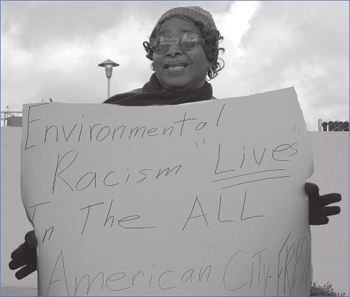
That the environmental movement thought billboards and ads could replace educating and organizing actual people was their biggest flaw, a position shared by Hansen and Skocpol. In comparison, health reform advocates took a lobbying and grassroots approach while the climate-change bill made the rounds and got a law passed.
“If you want to gain the trust of the emerging non-white majority, it’s not just a messaging thing,” explains Ryan Young, legal counsel for the California-based Greenlining Institute, a policy research non-profit focused on economic, environmental and racial justice. “It’s a values thing. You must understand the values of these communities and craft policy around that.”
Why does this matter?
Consider how the website of the National Wildlife Federation (NWF) recently featured an article on city bird sanctuaries from the group’s print magazine titled “Urban Renewal.”
Having people of color on staff might have helped NWF understand that for some, “urban renewal” signifies a historical legacy of black and Latino neighborhoods being effectively erased by development projects such as sports stadiums. Cultural snafus like this have led to white environmental groups being clowned in influential outlets including The Daily Show.
In an interview about the unintended message of “Urban Renewal,” Jim Lyon, NWF’s vice president for conservation policy, told Colorlines.com that the group doesn’t “always get everything right” and that “he’d take it back to his staff.” (Ironically, one of the harshest critiques of urban renewal came from Jane Jacobs, a white conservationist.) On the topic of staff diversity, Lyon said the organization isn’t where they want it to be, but that they’ve made “good progress.” He would not release staff demographics, but said NWF achieves diversity through partnerships with other groups and programs like Eco-Schools USA, which he says “engages more than one million children of color” daily.
Beverly Wright, who heads the New Orleans-based Deep South Center for Environmental Justice, says racial oversights of traditionally white groups are the main reason black and Latino environmentalists have formed their own organizations. The culturally divided camps sometimes use the same words, but they’re often speaking different languages.
Take “cap and trade,” a scheme that would commodify greenhouse gas emissions for market-trading as a way to reduce those emissions. The first climate bill centered on cap and trade because most major environmental groups supported it. But cap and trade was anathema to environmental justice because it did nothing to curb local co-pollutants such as smog and soot, direct threats to communities of color. That’s not to mention that cap and trade was the brainchild of C. Boyden Gray, a conservative member of the Federalist Society and leader of FreedomWorks, today a major Tea Party funder.
Wright says major green groups tried to coax EJ organizations into supporting cap and trade by claiming it was for the “greater good.”
“But that meant white people get all the greater goods and we get the rest,” says Wright. “Until they want to have real discussions around racism, they won’t have our support. That’s what happened last time with the climate bill. It did not move, because they did not have diversity in their voices.”
“Diversity” doesn’t just mean hiring more people of color. As the 30-year-old Center for Health, Environment and Justice stated earlier this month, the diversity conversation “really needs to be about resources and assistance to the front line communities rather than head counting.”
What’s Next?
So in the new round of climate bill talks, will large environmental groups meaningfully engage community-based EJ groups?
The prognosis is mixed. Look at MomentUs, a mammoth collaborative started in January to ramp up support for new climate legislation. While MomentUs claims to be a game-changer, the strategy behind it seems very similar to that of USCAP’s—the one that failed to deliver a climate-change law the first time around. On its website, MomentUs describes its board of directors as “cultural, environmental, business, and marketing leaders who offer the diversity of viewpoints and keen insight vital to advancing MomentUs’s mission.” At press time, all of the directors are white. So is the staff, except for one office administrator.
Looking at MomentUs partners, it appears that the same traditionally white environmental organizations who teamed up for USCAP are now working with corporations including ALEC funder Duke Energy, predatory subprime mortgage king Wells Fargo, perennial labor union target Sodexho, and Disney. At press time there are no environmental justice or civil rights groups involved.
On the other side of the spectrum, The Sierra Club—one of the nation’s largest and whitest green groups—has had an expansive role in environmental justice and advocacy, particularly in the Gulf Coast. In January it joined the NAACP and labor unions in launching the Democracy Initiative, which will tackle voting rights, environmental justice and other civil rights concerns.
To be sure, it’s way too early to make a conclusion about MomentUs or the Democracy Initiative, but the latter appears to be a step in the right direction in terms of highlighting the intersection between poor environmental outcomes and racism.
McKibben, the 350.org founder, has helped cultivate a multicultural fight against the Keystone XL pipeline project, but he admits that the overall environmental movement has “tons of work to do” on racial equity and inclusion.
“The sooner [mainstream environmentalists] absorb the message and are led by members of the environmental justice movement, the better,” he says.
In that case, the question is a matter of timing and power, of who decides when and which EJ activists get to lead.
Stay tuned.
The Grand Rapids Infoshop, the Bloom Collective, will be hosting a speaker later this month on tour with the US/Mexico Solidarity Network.
The event is entitled, “Sowing Struggle: Urban and rural social movements in Tlaxcala, Mexico,” and will feature Luz Rivera Martinez of the Consejo National Urbano Campesino (CNUC).
Luz Rivera Martinez will speak about her 20 years of experience constructing autonomy, organizing outside the electoral system, and resisting free trade. Luz is an inspiring speaker and her talk will have important lessons for anyone interested in women’s, peasant, and labor movements.
According to the Bloom Collective Facebook event page:
During the Mexican Revolution support for Emiliano Zapata was strong in Tlaxcala, and under the slogan of “the land belongs to those who work it” many peasants occupied the plantations their families had labored on as serfs for generations.
Today, the Revolution lives on through the work of the Consejo Nacional Urbano Campesino (CNUC). Luz established CNUC in the early 1990s to coordinate resistance to the impending North American Free Trade Agreement, especially regarding its dismemberment of Article 27 of the Mexican Constitution, which enshrined peasants’ right to communally own the ejido farm lands redistributed during the Revolution.
As CNUC’s lead organizer, Luz has worked tirelessly to demand government accountability, defend family farms, resist the use of GMO seeds, and build inspiring, community-based autonomous projects. CNUC has a long history of disposing of corrupt leaders, democratizing the budget, coordinating community-driven infrastructure projects, including peoples’ history in education, and expanding access to healthcare.
Luz and CNUC also work closely with the Apizaco merchants union, a bus-drivers’ cooperative, and the National Assembly of Braceros. CNUC is also a member of the Zapatistas’ Other Campaign, an international network of organizations struggling against neoliberalism and for autonomy from the grassroots.
This event is free and open to the public, although donations will be accepted. Luz will also be bringing items from Mexico to sell.
Sowing Struggle
The Bloom Collective
Wednesday, April 17
7:00PM
8 Jefferson SE, Grand Rapids
How Capitalism Conquered the Internet
This article by Robert McChesney is re-posted from ZNet.
In 1787, as the Constitution was being drafted in Philadelphia, Thomas Jefferson was ensconced in Paris as this young, undefined nation’s minister to France. From afar he corresponded on the matter of what was required for successful democratic governance. The formation of a free press was a central concern. Jefferson wrote:
The way to prevent these irregular interpositions of the people is to give them full information of their affairs thro’ the channel of the public papers, and to contrive that those papers should penetrate the whole mass of the people. The basis of our governments being the opinion of the people, the very first object should be to keep that right; and were it left to me to decide whether we should have a government without newspapers, or newspapers without a government, I should not hesitate a moment to prefer the latter. But I should mean that every man should receive those papers and be capable of reading them.
For Jefferson, having the right to speak without government censorship is a necessary but insufficient condition for a free press and therefore democracy, which also demands that there be a literate public, a viable press system and easy access to this press by the people.
But why, exactly, was this such an obsession to Jefferson? In the same letter, he praised Native American societies for being largely classless and happy, and he criticizes European societies—like the France he was witnessing firsthand on the eve of its revolution—in no uncertain terms for being their opposite. Jefferson described the central role of the press in stark class terms when he described its role in preventing exploitation and domination of the poor by the rich:
Among [European societies], under pretence of governing they have divided their nations into two classes, wolves and sheep. I do not exaggerate. This is a true picture of Europe. Cherish therefore the spirit of our people, and keep alive their attention. Do not be too severe upon their errors, but reclaim them by enlightening them. If once they become inattentive to the public affairs, you and I, and Congress, and Assemblies, judges and governors shall all become wolves. It seems to be the law of our general nature, in spite of individual exceptions; and experience declares that man is the only animal which devours his own kind, for I can apply no milder term to the governments of Europe, and to the general prey of the rich on the poor.
In short, the press has the obligation to undermine the natural tendency of propertied classes to dominate politics, open the doors to corruption, reduce the masses to powerlessness and eventually terminate self-government.
Jefferson was not alone. In the early republic, with no controversy, the government instituted massive postal and printing subsidies to found a viable press system. There was no illusion that the private sector was up to the task without these investments. For the first century of American history, most newspapers were distributed by mail, and the Post Office’s delivery charge for newspapers was very small. Newspapers constituted 90 to 95 percent of its weighted traffic, yet provided only 10 to 12 percent of its revenues.
As Jefferson noted in his assessment of the situation in 1787, one group definitely benefits from a lack of journalism and from information inequality: those who dominate society. The Wall Street banks, energy corporations, health insurance firms, defense contractors and agribusinesses are Jefferson’s wolves. None of them desires a journalism that will engage the electorate and draw the poor and working class into the political system. They might not say so in public, but their actions speak louder than words. Journalism? No, thank you.
Plugging WikiLeaks
The extent of the crisis in journalism is underappreciated by most Americans, including many serious news and political junkies. The primary reason may well be the Internet itself. Because many people envelop themselves in their favored news sites and access so much material online, even surfing out onto the “long tail,” the extent to which we are living in what veteran editor Tom Stites terms a “news desert” has been obscured. Moreover, using dissident websites, social media and smartphones, activists have sometimes “bypassed the gatekeepers” in what The Nation’s John Nichols calls the “next media system.” Its value is striking during periods of public protest and upheaval, but the illusion that this constitutes satisfactory journalism is growing thinner. Nothing demonstrates the situation better than the release by WikiLeaks of an immense number of secret U.S. government documents between 2009 and 2011. To some this was investigative journalism at its best, and WikiLeaks had established how superior the Internet was as an information source. It clearly threatened those in power, so this was exactly the sort of Fourth Estate a free people needed. Thanks to the Internet, some claimed, we were now truly free and had the power to hold leaders accountable.
In fact, the WikiLeaks episode demonstrates precisely the opposite. WikiLeaks was not a journalistic organization. It released secret documents to the public, but the “documents languished online and only came to the public’s attention when they were written up by professional journalists,” as journalist Heather Brooke put it. “Raw material alone wasn’t enough.” Journalism had to give the material credibility, and journalists had to do the hard work of vetting the material and analyzing it to find out what it meant. That required paid, full-time journalists with institutional support. The United States has too few of these, and those it has are too closely attached to the power structure, so most of the material still has not been studied and summarized for a popular audience—and it may never be in our lifetimes.
Moreover, there was no independent journalism to respond when the U.S. government launched a successful PR and media blitz to discredit WikiLeaks. Attention largely shifted from the content of these documents to overblown and unsubstantiated claims that WikiLeaks was costing innocent lives, and to a personal focus on WikiLeaks leader Julian Assange. Columnist Glenn Greenwald was only slightly exaggerating when he stated, “There was almost a full and complete consensus that WikiLeaks was satanic.” The onslaught discredited and isolated WikiLeaks, despite the dramatic content that could be found in the documents WikiLeaks had published. The point was to get U.S. editors and reporters to think twice before opening the WikiLeaks door. It worked.
Abundant security
It seems obvious that if the Internet is really reviving American democracy, as its celebrants claim, it’s taking a roundabout route. The hand of capital seems heavier and heavier on the steering wheel, taking us to places way off the democratic grid, and nowhere is the Internet’s failure clearer or the stakes higher than in journalism.
The Internet and the broader digital revolution are not inexorably determined by technology; they are shaped by how society elects to develop them. Reciprocally, our chosen way of development will shape us and our society, probably dramatically. We ought to be debating a number of policy issues and suggesting the type of reforms that could put the Internet and our society on a very different trajectory, changing America for the better and making it a much more democratic society. Yet none of these policy reforms has a chance because of the corruption of the policy-making process.
This situation results not necessarily from a conspiracy, but from the quite visible, unabashed logic of capitalism itself. Capitalism is a system based on people trying to make endless profits by any means necessary. You can never have too much. Endless greed—behavior that is derided as insanity in all noncapitalist societies—is the value system of those atop the economy. The ethos explicitly rejects any worries about social complications, or “externalities.”
Capitalists are constantly locating new places to generate profits, and sometimes that entails taking what had been plentiful and making it scarce. So it is for the Internet. Information on it is virtually free, but commercial interests are working to make it scarce. To the extent they succeed, the GDP may grow, but society will be poorer.
Pause to consider how far the digital revolution has traveled from the halcyon days of the 1980s and early 1990s to where it is today. People thought that the Internet would provide instant free global access to all human knowledge. It would be a noncommercial zone, a genuine public sphere, leading to far greater public awareness, stronger communities and greater political participation. It would sound the death knell for widespread inequality and political tyranny, as well as corporate monopolies. Work would become more efficient, engaging, cooperative and humane. To the contrary, at what seems like every possible turn, the Internet has been commercialized, copyrighted, patented, privatized, data-inspected and monopolized; scarcity has been created. One 2012 survey concludes that digital technologies, far from relieving workloads, have made it possible for the typical American worker to provide as much as a month and a half of unpaid overtime annually, just by using their smartphones and computers for work at all hours while outside the workplace: “Almost half feel they have no choice.” The economy is topped by gazillionaires who have succeeded in creating digital fiefdoms and adding to the GDP, but the public wealth is much less. Our wealth of information is increasingly accessible only by entering walled gardens of proprietary control feeding into monopolistic pricing systems. To make the Internet a capitalist gold mine, people have sacrificed not just their privacy—and to skeptics, their humanity—but much of the great promise that once seemed possible.
To win any of the Internet policy fights will require a broader political movement motivated by a general progressive agenda, not one specifically focused on the Internet or media. Only then will there be the enormous numbers possible to defeat the power of big money. As the legendary community organizer Saul Alinsky put it, the only thing that can beat organized money is organized people, lots of them.
In “normal” times, such movements are mostly hypothetical in the United States. The political economy has been successful enough to prevent a groundswell of grassroots popular opposition. But these are not normal times, and we are getting further away from normal with every passing day. One need only look at the great protests of 2011—the likes of which we have not seen for decades—against rampant inequality, corporate domination of the economy and politics, a deathlike embrace of austerity, endless war making, and a stagnant political economy that has no apparent use for young people, workers or nature.
Nobel laureate economist Joseph Stiglitz captured the spirit of the protest movements in the United States and worldwide in 2012:
Underlying most of the protests were old grievances that took on new forms and a new urgency. There was a widespread feeling that something is wrong with our economic system, and the political system as well, because rather than correcting our economic system, it reinforced the failures. The gap between what our economic and political system is supposed to do—what we were told that it did do—and what it actually does became too large to be ignored. … universal values of freedom and fairness had been sacrificed to the greed of the few.
Those primarily concerned with Internet policies and hesitant to stick their toes into deeper political waters need to grasp the nature of our times. This isn’t a business as-usual period, when the system is ensconced and reformers need the benediction of those in power to win marginal reforms. The system is failing, conventional policies and institutions are increasingly discredited and fundamental changes of one form or another are likely to come, for better or worse.
Can one reform the Internet and make it a public good with capitalism still intact? Information technology accounts for some 40 percent of all nonresidential private investment in the U.S., quadrupling the figure from 50 years ago. Internet-related corporations now comprise nearly one half of the 30 largest firms in the U.S. in terms of market value. If one challenges the prerogatives of the Internet giants, odes to the catechism notwithstanding, one is challenging the dominant component of really existing capitalism.
This is an important question, too, for those who have paid little attention to Internet policies but are deeply concerned about injustice, poverty, inequality and corruption. At times, one senses among such activists the celebrants’ notion that digital technologies can create a new capitalist economy that is dramatically superior and that the existing Internet giants are allies, not adversaries, in creating a new friendly capitalism that will deliver the goods. The logic is sound: In the past, massive investments in railroads and automobiles (and related spin-off industries) propelled entire eras of capitalism to much higher growth rates and standards of living. When seeing the enormous investments in information technology, one wonders why it can’t be that way again, and this time without all the environmental damage? The problem is simple: Despite endless claims about the great new capitalism just around the bend thanks to digital technologies, there is little evidence to back them up. In particular, the Internet giants comprise 13 of the 30 most valuable U.S. firms, but only make up four of the 30 largest private employers. There is clearly a lot of money for those at the top—who want to keep it that way—but little evidence that it is passing benefits down the food chain. Quite the contrary.
Efforts to reform or replace capitalism but leave the Internet giants riding high will not reform or replace really existing capitalism. The Internet giants are not a progressive force. Their massive profits are the result of monopoly privileges, network effects, commercialism, exploited labor, and a number of government policies and subsidies. The growth model for the Internet giants, as one leading business analyst put it, is “harvesting intellectual property,” i.e., making scarce what should be abundant.
Internet and media issues must be in the center of any credible popular democratic uprising. Given the extent to which the digital revolution permeates and defines nearly every aspect of our social lives, any other course would be absurd.
For an increasing number of people, the logic suggests one thing: It is time to give serious consideration to the establishment of a new economy. “The capitalist system was able to thrive, on and off, during the 18th, 19th, and 20th centuries,” Jerry Mander wrote in 2012. “But it’s now obsolete, nonmalleable, and increasingly destructive.” Capitalism “had its day. If we care about the future well-being of humans and nature, it’s time to move on.”
Mander’s conclusions elicit incredible fury in the contemporary United States. Capitalism has become what Mander terms “a kind of ‘third rail’ of politics—forbidden to touch.” He acknowledges, “It remains okay to critique certain aspects of the system,” but the capitalist system itself “occupies a virtually permanent existence, like a religion, a gift of God, infallible.” The reason is obvious: Those in power do not wish the system that makes them powerful to be questioned. Keeping capitalism off-limits to critical review is essential for that system, because it generates demoralization, disengagement and apathy. This is not a political economy that can withstand much engaged political participation.
During the depths of the Great Depression, Keynes wrote an extraordinary essay acknowledging that economists, as well as business and political leaders, had been woefully wrong about the economy and how to make it work for the bulk of the population. “The decadent international but individualistic capitalism, in the hands of which we found ourselves after the war,” Keynes wrote in 1933, “is not a success. It is not intelligent, it is not beautiful, it is not just, it is not virtuous—and it doesn’t deliver the goods.” He argued that what was necessary was a wide-open period of debate and experimentation because the existing theories and policies had proven so disastrous and bankrupt.
What Keynes proposed in the early 1930s is precisely the approach we need today. We need to be open-minded and to experiment. We have to escape the shackles of the current system and see what can work. We “need to imagine a different social order,” Chris Hayes writes, “to conceive of what more egalitarian institutions would look like.” Certain values appear in most writing on the subject, especially from economists like Richard Wolff, Juliet Schor and Gar Alperovitz:
- The wealth of a community has to be controlled by the people of that community.
- Decentralized and local community control should be emphasized, with the state reinforcing local planning.
- There must be a strong commitment to a variety of cooperatives and nonprofit organizations.
Democratic control of enterprises by their workers is imperative.
Environmentally sound production and distribution must be emphasized.
In the American context, such words can make someone question an author’s sanity; they seem so far removed from existing reality and conventional wisdom. But beneath the surface, there has been a rise in new kinds of economic ventures. In distressed communities like Cleveland, they are a source of promise for the future. We are beginning to develop some experience about what a democratic, post-capitalist economy might look like and how it could function. There will be markets, there will be for-profit enterprises, but under the overarching logic of the system, the surplus will be mostly under nonprofit community control.
Absolutely central to building this new political economy will be constructing nonprofit and noncommercial operations to do journalism, produce culture, provide Internet access and serve as bedrock local institutions. These can range from community radio and television stations and Internet media centers to cultural centers, sports leagues and community ISPs.
Left on their current course and driven by the needs of capital, digital technologies can be deployed in ways that are extraordinarily inimical to freedom, democracy and anything remotely connected to the good life. Therefore, battles over the Internet are of central importance for all those seeking to build a better society. When the dust clears on this critical juncture, if our societies have not been fundamentally transformed for the better, if democracy has not triumphed over capital, the digital revolution may prove to have been a revolution in name only, an ironic, tragic reminder of the growing gap between the potential and the reality of human society.
New Media We Recommend
Below is a list of new materials that we have read/watched in recent weeks. The comments are not a “review” of the material, instead sort of an endorsement of ideas and investigations that can provide solid analysis and even inspiration in the struggle for change. All these items are available at The Bloom Collective, so check them out and stimulate your mind.
Behind the Kitchen Door, by Saru Jayaraman – With all the talk about eating healthy and eating local, one would think that there would be lots of discussion about how workers are treated at restaurants. Well, this is exactly what one gets with this new book that exposes the restaurant industry in the US. More importantly, this powerful book is about the experiences and courage of workers who have joined one of the fastest growing unions in the country, the Restaurant Workers Centers United. Restaurant workers are one of the few industries that do not pay minimum wage and utilize a disproportionately large number of recent immigrants, thus allowing them to further take advantage of workers. An excellent book for those who care about justice when eating out, those who care about worker rights and those looking for inspiration from workers who have organized themselves to fight for dignity.

Edible Landscaping, by Rosalind Creasy – This book is packed with ideas for how to use urban space for growing food using non-traditional methods. Challenging the notion that vegetable gardens must be in rows and not mixed with other plant life, this book demonstrates that we all could grow more of our own food and create beautiful urban spaces at the same time. While the book tends to offer some ideas for those with more stable incomes, one can still use the ideas presented to design food-growing spaces wherever they live. Edible Landscaping is a valuable resource for anyone interested in local food production and food justice.
Everyday AntiRacism: Getting Real About Race in School, edited by Mica Pollock – In Everyday Antiracism leading educators deal with the most challenging questions about race in school, offering invaluable and effective advice. The contributors describe concrete ways to analyze classroom interactions that may or may not be “racial,” deal with racial inequality and “diversity,” and teach to high standards across racial lines. Topics range from using racial incidents as teachable moments and responding to the “n-word” to valuing students’ home worlds, dealing daily with achievement gaps, and helping parents fight ethnic and racial misconceptions about their children. Questions following each essay prompt readers to examine and discuss everyday issues of race and opportunity in their own classrooms and schools. An valuable resource for educators, parents and student who are committed to racial justice.

How Racism Harms White Americans (DVD) – Distinguished historian John H. Bracey Jr. offers a provocative analysis of the devastating economic, political, and social effects of racism on white Americans. In a departure from analyses of racism that have focused primarily on white power and privilege, Bracey trains his focus on the high price that white people, especially working class whites, have paid for more than two centuries of divisive race-based policies and attitudes. Whether he’s discussing the pivotal role slavery played in the war for independence, the two million white Americans who died in a civil war fought over the question of slavery, or how business owners took advantage of the segregation of America’s first labor unions and used low-wage, non-unionized black workers to undercut the bargaining power of white workers, Bracey’s central point is that failing to acknowledge the centrality of race, and racism, to the American project not only minimizes the suffering of black people, but also blinds us to how white people have been harmed as well.
Land Day Protests around the World
This video is re-posted from The Real News Network.
Every year Palestinians and solidarity activists commemorate the Land Day events of 1976. This year the demonstrations seem as relevant as ever, while Israel pushes to confiscate additional Bedouin land and to expand colonies.
Seeds of Suicide
This article by Vandana Shiva is re-posted from ZNet.
“Monsanto is an agricultural company. We apply innovation and technology to help farmers around the world produce more while conserving more.” “Producing more, Conserving more, Improving farmers lives.”
These are the promises Monsanto India’s website makes, alongside pictures of smiling, prosperous farmers from the state of Maharashtra. This is a desperate attempt by Monsanto and its PR machinery to delink the epidemic of farmers’ suicides in India from the company’s growing control over cotton seed supply — 95 per cent of India’s cotton seed is now controlled by Monsanto.
Control over seed is the first link in the food chain because seed is the source of life. When a corporation controls seed, it controls life, especially the life of farmers.
Monsanto’s concentrated control over the seed sector in India as well as across the world is very worrying. This is what connects farmers’ suicides in India to Monsanto vs Percy Schmeiser in Canada, to Monsanto vs Bowman in the US, and to farmers in Brazil suing Monsanto for $2.2 billion for unfair collection of royalty.
Through patents on seed, Monsanto has become the “Life Lord” of our planet, collecting rents for life’s renewal from farmers, the original breeders.
Patents on seed are illegitimate because putting a toxic gene into a plant cell is not “creating” or “inventing” a plant. These are seeds of deception — the deception that Monsanto is the creator of seeds and life; the deception that while Monsanto sues farmers and traps them in debt, it pretends to be working for farmers’ welfare, and the deception that GMOs feed the world. GMOs are failing to control pests and weeds, and have instead led to the emergence of superpests and superweeds.
The entry of Monsanto in the Indian seed sector was made possible with a 1988 Seed Policy imposed by the World Bank, requiring the Government of India to deregulate the seed sector. Five things changed with Monsanto’s entry: First, Indian companies were locked into joint-ventures and licensing arrangements, and concentration over the seed sector increased. Second, seed which had been the farmers’ common resource became the “intellectual property” of Monsanto, for which it started collecting royalties, thus raising the costs of seed. Third, open pollinated cotton seeds were displaced by hybrids, including GMO hybrids. A renewable resource became a non-renewable, patented commodity. Fourth, cotton which had earlier been grown as a mixture with food crops now had to be grown as a monoculture, with higher vulnerability to pests, disease, drought and crop failure. Fifth, Monsanto started to subvert India’s regulatory processes and, in fact, started to use public resources to push its non-renewable hybrids and GMOs through so-called public-private partnerships (PPP).
In 1995, Monsanto introduced its Bt technology in India through a joint-venture with the Indian company Mahyco. In 1997-98, Monsanto started open field trials of its GMO Bt cotton illegally and announced that it would be selling the seeds commercially the following year. India has rules for regulating GMOs since 1989, under the Environment Protection Act. It is mandatory to get approval from the Genetic Engineering Approval Committee under the ministry of environment for GMO trials. The Research Foundation for Science, Technology and Ecology sued Monsanto in the Supreme Court of India and Monsanto could not start the commercial sales of its Bt cotton seeds until 2002.
And, after the damning report of India’s parliamentary committee on Bt crops in August 2012, the panel of technical experts appointed by the Supreme Court recommended a 10-year moratorium on field trials of all GM food and termination of all ongoing trials of transgenic crops.
But it had changed Indian agriculture already.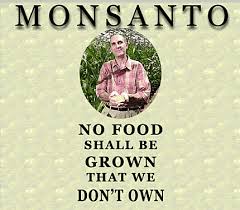
Monsanto’s seed monopolies, the destruction of alternatives, the collection of superprofits in the form of royalties, and the increasing vulnerability of monocultures has created a context for debt, suicides and agrarian distress which is driving the farmers’ suicide epidemic in India. This systemic control has been intensified with Bt cotton. That is why most suicides are in the cotton belt.
An internal advisory by the agricultural ministry of India in January 2012 had this to say to the cotton-growing states in India — “Cotton farmers are in a deep crisis since shifting to Bt cotton. The spate of farmer suicides in 2011-12 has been particularly severe among Bt cotton farmers.”
The highest acreage of Bt cotton is in Maharashtra and this is also where the highest farmer suicides are. Suicides increased after Bt cotton was introduced — Monsanto’s royalty extraction, and the high costs of seed and chemicals have created a debt trap. According to Government of India data, nearly 75 per cent rural debt is due to purchase inputs. As Monsanto’s profits grow, farmers’ debt grows. It is in this systemic sense that Monsanto’s seeds are seeds of suicide.
The ultimate seeds of suicide is Monsanto’s patented technology to create sterile seeds. (Called “Terminator technology” by the media, sterile seed technology is a type of Gene Use Restriction Technology, GRUT, in which seed produced by a crop will not grow — crops will not produce viable offspring seeds or will produce viable seeds with specific genes switched off.) The Convention on Biological Diversity has banned its use, otherwise Monsanto would be collecting even higher profits from seed.
Monsanto’s talk of “technology” tries to hide its real objectives of ownership and control over seed where genetic engineering is just a means to control seed and the food system through patents and intellectual property rights.
A Monsanto representative admitted that they were “the patient’s diagnostician, and physician all in one” in writing the patents on life-forms, from micro-organisms to plants, in the TRIPS’ agreement of WTO. Stopping farmers from saving seeds and exercising their seed sovereignty was the main objective. Monsanto is now extending its patents to conventionally bred seed, as in the case of broccoli and capsicum, or the low gluten wheat it had pirated from India which we challenged as a biopiracy case in the European Patent office.
That is why we have started Fibres of Freedom in the heart of Monsanto’s Bt cotton/suicide belt in Vidharba. We have created community seed banks with indigenous seeds and helped farmers go organic. No GMO seeds, no debt, no suicides.
 Grand Rapids Institute for Information Democracy