The tragedy and injustice of what took place in Orlando, Florida over the weekend is almost too difficult to write about. What does one do in the face of such hate and violence?
The news media has already done tremendous harm in how they are framing the issue. It’s either about guns, the identity of the shooter or it is about the outpouring support that is being demonstrated all across the country and the world.
What the news media is not doing is offering much substantive analysis of why this happened, and more importantly, the historical context for this kind of repression against a marginalized population. One of the best things I have seen so far is this amazing video, Familia: Trans Queer Liberation Movement, which gives critical voice to queer and trans people of color. The video is also powerful, because it properly frames the Orlando shooting in an historical context.
Creating a homophobic, transphobic climate
As the voices in the Trans and Queer Liberation Movement make clear, this violence has been going on for centuries and is properly named in the video as White Supremacy. White Supremacy is too often ignored, downplayed or denied as a major factor in the current level of violence and repression that communities of color face.
White Supremacy takes on many forms, such as an economic, legislative, religious and cultural form. All of these dynamics play a role in creating, maintaining and normalizing the violence and repression that so many people of color face. Add to this, queer and trans people of color and the level of systemic and structural violence increases exponentially.
For instance, many people in the case of the Orlando shooting, are grateful for the role that law enforcement plays. However, what communities of color and what queer and trans people of color have understood for a long time, is that the use of state violence is a false solution.
This brings us to some of the larger context of what has been happening in Orlando and throughout the state of Florida, in terms of creating a climate of hate against those who identify as gay, lesbian, bisexual, transgender and queer.
Let’s be clear that this kind of hate is happening everywhere, but for the purposes of the article, let’s just focus on Florida.
The Southern Poverty Law Center’s Hate Map, identifies three main anti-LGBTQ groups operating in Florida; the American College of Pediatricians, Liberty Counsel and Dr. James Kennedy Ministries.
The American College of Pediatricians has only been around since 2002 and is essentially a hate group that targets transgender youth.
The Liberty Counsel, which is based in Orlando, has been around since 1989 and plays a more integral part of the religious rights ongoing war against the LGBTQ community. The founder of Liberty Counsel, Matthew Staver, came from Jerry Falwell’s Liberty University. The organization works closely with other religious right groups, such as Dr. James Dobson’s group, Focus on the Family, committed to blocking the rights of the LGBTQ community.
Liberty Counsel is also the former home of Matt Barber, the viciously anti-gay pundit who now runs a right-wing propaganda site, BarbWire. Matthew Staver, the organization’s founder, once compared pro-equality Republicans and those who don’t share social conservatives’ priorities to cockroaches.
Recently, Staver’s wife, Anita, announced that she would start carrying her Glock .45 into the bathroom in response to Target saying it would not discriminate against transgender customers.
Liberty Counsel is an aggressively anti-gay organization, praising repressive anti-gay legislation in other countries and arguing that it is immoral for the U.S. government to encourage other countries to decriminalize homosexuality. Liberty Counsel also represents the rabidly anti-gay activist Scott Lively, who has campaigned against legal equality for LGBT people in the U.S. and around the globe.
The other major anti-LGBTQ entity in Florida, is Dr. James Kennedy Ministries, formerly known as Truth in Action and Coral Ridge Presbyterian Church. Kennedy has been dead since 2007, but he has been one of the most anti-LGBTQ pastors for decades. Kennedy had organized a national conference for the religious rights for years called, “Reclaiming America for Christ.”
One newsletter from D. James Kennedy’s Coral Ridge Ministries featured a photograph of very young children under the headline “SEX WITH CHILDREN? HOMOSEXUALS SAY YES!” The newsletter asserts “Adult sex with children has been a crucial component of the homosexual movement all along, and officially since the 1993 March on Washington when it was included as a demand (#55) in their famous manifesto.”
Over the years, Kennedy emphasized anti-gay rhetoric, particularly in his TV ministry. He recommended as “essential” the virulent work of R.J. Rushdoony, who believed practicing gays should be executed.
The West Michigan Connection
Considering the strong religious right presence in West Michigan, it should come as no surprise that people like Richard DeVos have been a major donors to anti-LGBTQ groups in Florida.
In 2008, the DeVos family was the largest contributor to the Florida4Marriage group, which put Amendment 2 on the ballot calling for marriage between only a man and a woman. The Amendment passed in 2008 and outlawed same sex marriages in Florida until that decision was overturned by the US Supreme Court decision last year.
In addition, the DeVos family owns the Orlando Magic basketball team, which has allowed the arena to be used for Evangelical Christian Faith Nights. These Christian rallies have also provided a platform for anti-LGBTQ organizing in Orlando. (See Bad Sports, by Dave Zirin)
Fore more than three decades, the Richard and Helen DeVos Foundation has donated hundreds of thousands of dollars to Kennedy’s ministry on an annual basis. Although the DeVos family no longer contributes to Coral Ridge Presbyterian Church, the millions of dollars they have donates over the years to anti-LGBTQ groups in Florida played a significant role in creating a climate that legitimized and normalized violence and hate directed at the LGBTQ community.

Over the years I have observed that when GRIID posts articles critical of the local power structure, particularly about the DeVos family, people give some of the most interesting responses.
The dominate response goes something like this; “Where would Grand Rapids be without the generosity of the DeVos family?” It is an interesting question. Where indeed would Grand Rapids be without the DeVos family or any other members of the local power structure?
So here are our top reasons why we disagree with the idea that Grand Rapids is better off with the likes of DeVos, Seechia, Jandernoa, Kennedy, Meijer, etc.
These families and individuals promote and fund a tremendous amount of hate. For decades, many of the families and individuals that make up the local power structure have promoted and funded hate. Maybe the most obvious has been the anti-LGBT efforts led by the DeVos and Prince families. They have funded hate to support ballot initiatives, to block ballot initiatives and to fund organizations committed to spiritual violence and the social oppression of those who identify as gay, Lesbian, bisexual and transgender. Listen to the anti-LGBT message from Richard DeVos.
2. The local power structure does harm locally because they are the primary beneficiaries of neo-liberal economic policies. Let’s be clear, the local elite are primarily interested in their own well being. They have made massive amounts of money through exploitation and have used the legislative process to divert public funds, taxpayer money, for subsidies and for funding their own pet projects. The families and individuals that make up the Grand Rapids power structure has made billions of dollars off the backs of other people. We can stop with the nonsense about them being job creators or wealth creators. Wealth is actually created by those who do the work, not those who collect the profits.
These same families and individuals also manipulate the political system to increase their wealth and to divert more public money to support their interests. This is why they contribute significantly to political campaigns and participate in groups like the West Michigan Policy Forum, the Grand Rapids Chamber of Commerce and The Right Place inc.
3. The local power structure was instrumental in making Michigan a Right to Work state. The West Michigan Policy Forum made it a goal from the organization’s inception, to attack unions and workers by making Michigan a Right to Work state. Such an attack on working class individuals and families demonstrates their disregard for people who are not part of the ownership class. The individuals and families who are power of the local power structure have a long history of engaging in anti-worker and anti-union activities, as is evidenced by their funding of neo-liberal capitalist entities such as the American Enterprise Institute, The Heritage Foundation, The Mackinac Center for Public Policy, the Acton Institute and the Competitive Enterprise Institute. 
4. Grand Rapids would have a stronger public school system if many of the local elites would stop funding campaigns to undermine public education. Dick and Betsy DeVos have been some of the national leaders behind policies to undermine public education.
Researcher Rachel Tabachnick identifies Betsy DeVos as the Four Star General of the School Privatization Movement, in an article she wrote for the Political Research Associates. The article states:
Rob Boston of Americans United for Separation of Church and State described Betsy DeVos as the “four-star general” of the school privatization movement shortly after DeVos announced the formation of the “new” American Federation for Children (AFC) in March 2010. As Boston noted, the American Federation for Children was not new, but a rebranding of an organization called Advocates for School Choice.
The American Federation for Children is now the umbrella organization for two nonprofits that have been at the center of the pro-privatization movement for over a decade. In addition to the renamed Advocates for School Choice, it includes the Alliance for School Choice, formerly known as the Education Reform Council. Both entities received extensive funding from the late John Walton, one of the Wal-Mart heirs. The boards of the two related entities included movement leaders Betsy DeVos–scion of a Christian Right family who married into the Amway home goods fortune–William Oberndorf, Clint Bolick, John Kirtley, Steve Friess (son of Foster Friess), James Leininger, John Walton, and Cory Booker.
These two nonprofits–Alliance for School Choice, a 501(c)(3) and Advocates for School Choice a.k.a. American Federation for Children, a 501(c)(4)– provided over $17 million in grants to 35 other national and state-level pro-privatization nonprofits from 2006 to 2010. These grants represented a significant portion of the total budgets for many of the state organizations. Today Betsy DeVos and John Kirtley are the chair and vice chair of both boards.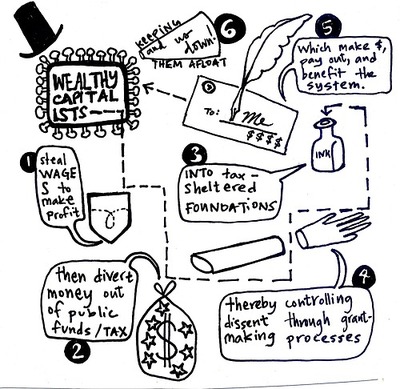
5. Don’t the Grand Rapids political and economic elites donate to local causes? These families and individuals do provide money from their foundations to some local organizations. However, the tend to only fund groups that do not conflict with their politics and it gives the illusion that they are great philanthropists. The reality is much different. Foundations are a tax haven for the rich, it acts as a propaganda tool to divert public attention from focusing on how they acquired the massive amounts of wealth they have and the philanthropic contributions are another way of participating in social management. (see The Revolution Will Not Be Funded.)
In addition, the amount of of money donated by these wealthy individuals and families pales in comparison to the amount of money they give to organizations and candidates. On top of that, the groups and candidates they fund promote policies that actually contribute to the root causes of social problems, like poverty, that some of the non-profits groups who are recipients of their foundation money are claiming to combat.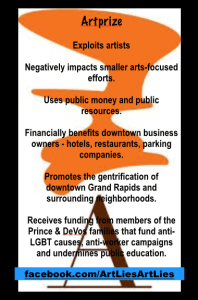
6. Haven’t these wealthy families been part of reviving downtown Grand Rapids? If one thinks about the building of the arena, the convention center, the downtown market and other major construction projects over the years, rich people often are given credit for their creation. However, in every single project there have been massive amounts of public money, federal, state and local money that has also made these projects a reality, often without public consent. Also, the “revival” of downtown Grand Rapids has also been driven by the fact that the economic elite will also make tremendous profits, since so many of them owned so much property downtown – hotels, office spaces, restaurants, etc. The revival of downtown Grand Rapids and its ongoing gentrification ultimately serves the interests of the local power structure, a reality that can be seen with the spectacle called ArtPrize. 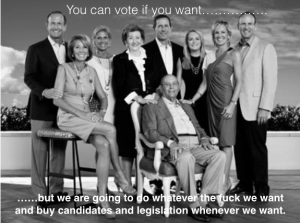
7. Imagine what the combined wealth of the local power structure could do to alleviate poverty in Grand Rapids? According to the Forbes list of wealthiest people on the planet for 2016, Hank & Doug Meijer are worth $8.2 billion and Richard DeVos is worth $4.7 billion. With the combined wealth of these individuals, which is roughly $13 billion, imagine what could happen if that wealth were in the hands of the most vulnerable people in Grand Rapids. With $13 billion, which is only part of the total wealth of the rest of the power structure, no one in Grand Rapids would be homeless, or go hungry, be malnourished or be denied access to health care. With $13 billion dollars there would be affordable housing for everyone, free college tuition and funding for fighting climate change.
Lets us really imagine what this kind of funding could do for Grand Rapids. In fact, if we had an economic system that was not based on making profits for the wealthy few, but one that would radically alter how we lived in this community, imagine what we could do.
These are just some of the reasons why I don’t buy the idea that Grand Rapids is better off with the likes of DeVos.

For several years now, MLive has been including in their news feed, what they called Sponsored Content. These are actually stories that are written by corporations or corporate associations, but often pass as news articles.
Last month, MLive posted one of these Sponsored Content stories written by the Michigan-based corporation, Kellogg’s. The article’s headline read, Better Foods for Your Family and the Earth. Such a claim is presented as fact, since there is no fact checking or investigation from MLive. Kellogg’s in effect, gets to say whatever it wants to and make whatever claims it wants to, with no accountability.
The Sponsored Content in question does not include much text, rather some well crafted info graphics, which are meant to dazzle the eye with their bright colors and fun images.
We have written about the Green Capitalism claims that Kellogg has been making for many years. In 2011, the Battle Creek corporation was making the claim that the company is certified for its sustainable practices, through groups like the Roundtable on Sustainable Palm Oil. 
Author Heather Rogers (Green Gone Wrong) also has a critical take on the RSPO practices in a chapter on the ecological and social consequences of bio-fuels and palm oil. Rogers, who spent a great deal of time in Borneo doing research says that companies that are members of the RSPO have not only displaced local communities in order to plant palm tree plantations they have also cut down old growth forests in the process.
The company also has claimed for years that their business practices are actually fighting climate change. In an article we wrote in September of 2011, Kellogg’s claimed that the Carbon Disclosure Project has also given them high marks for fighting climate change.
This is the strongest message in the most recent Sponsored Content on MLive, where Kellogg’s is claiming to make commitments to reducing greenhouses gases. One example is an interview that the CEO of Kellogg’s did last year during the Paris Climate Summit. You can watch this interview by going to the Kellogg’s Sponsored Content linked page, Open for Breakfast. 
In this interview, the CEO of Kellogg’s talks about how their customers care about products like Pop Tarts and Pringles. The head of Kellogg’s also talks about their commitment to getting farmers around the world to grow in a sustainable manner. However, we should ask ourselves how it is possible for a company like Kellogg’s, which relies on so much grain production to make its processed foods, to actually practice climate justice. Wouldn’t it be better for the earth, as Kellogg’s claims, for people to not only eat locally, but to eat whole grains that did not end up being the products that Kellogg’s makes? What if the corn, rice and wheat that farmers grew for companies like Kellogg’s was grown for local consumption and eaten in a less processed form? Imagine the amount of energy and resources (like packaging) that would not be used if people we re allowed to eat unprocessed foods that were not controlled by the likes of Kellogg’s?
These are basic and obvious questions that need to be asked. They need to be asked because it would expose the false solutions to climate change that companies like Kellogg’s claims to fight.
Yesterday, MLive ran a story entitled, Developer wants to bring excitement back to his old West Side neighborhood. The article focuses on the person of Mike VanGessel, the CEO of Rockford Construction, who was raised on the westside of Grand Rapids.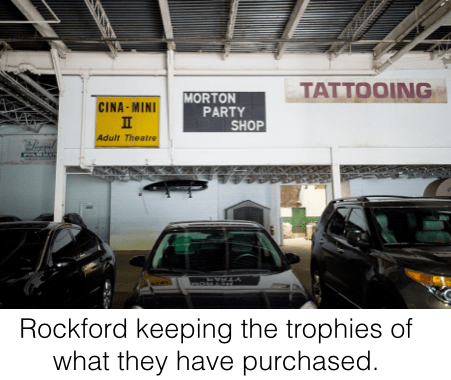
The MLive article has all the components of acting as a stenographer to power: pulling yourself up by your bootstraps narrative, associations with other “investors” and gentrifying a neighborhood and calling it exciting.
Still doing Business on the Westside
The MLive paints a narrative about Mike VanGessel that makes it sound as if anyone from humble beginnings can end up be wealthy. With both print and video, MLive takes us through VanGessel’s old neighborhood attempting to frame his westside roots and his company’s takeover of the westside as another Great American success story. But then, we get what the westside native is really up to:
Three years after moving the company’s headquarters into the neighborhood, VanGessel is working on a series of plans and projects aimed at revitalizing the gritty, working-class neighborhood into an entertainment, shopping and residential neighborhood.
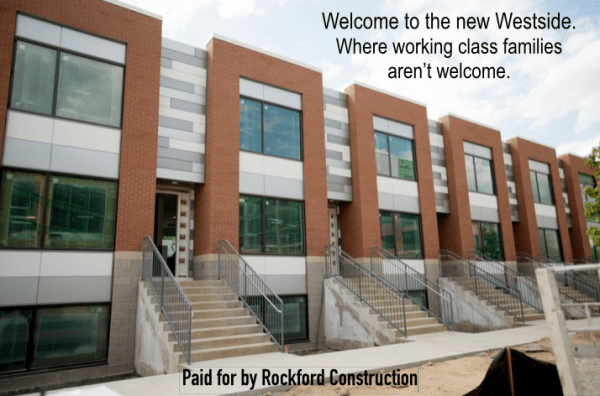
The Rockford CEO wants to transform the neighborhood from a working class neighborhood and make it upscale. In fact, the development projects that Rockford has in the works on the westside will mean that many of the traditional westsiders could not even afford to live in the new apartments. It is as if VanGessel and friends want to write out of history the 1911 furniture workers strike. Or maybe, what VanGessel and company are really doing is saying that just like the furniture barons, they will dictate the future of politics on the westside.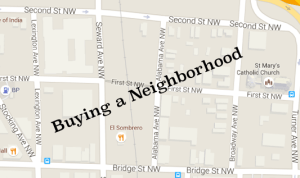
Well-heeled Investors?
The MLive article also reveals that the Rockford CEO has developed important relationships over the years with other power players in the area, specifically Rich DeVos, Mike Jandernoa and Pete Secchia. While these powerful individuals are referred to as “well-heeled investors,” nothing is said about their contempt for working class people.
DeVos, Jandernoa and Secchia all have a long history of buying politicians and influencing public policy. Each of these men and their families are part of the political and economic elite in West Michigan. They all are part of the Grand Rapids Chamber of Commerce, the West Michigan Policy Forum and sit on numerous boards to make sure that they get what they want. This means they all were in favor of making Michigan a Right to Work state, imposing economic austerity measures that have been brutal for working class families and have attacked public sector unions. By acknowledging that VanGessel sees these men as trusted partners, means that he puts himself in the same class as them.
Buying a neighborhood
However, the real focus of the MLive article is on the numerous gentrification projects that Rockford has embarked on just west of the Grand River. In every instance, the MLive article communicates that these so-called development projects should elicit nothing but praise. Market rating (read upscale) housing, beer gardens and other forms of commerce are the focus of what Rockford is really doing on the westside. In addition to the new projects, they continue to buy property along Bridge and Stocking streets, in what VanGessel calls “the super block.”
We know these projects are having negative impacts on the working class families that make up much of the westside. There is displacement from these development projects, with houses being bulldozed in recent years and more buildings to be “demolished” on the super block.
Then there are the other, more hidden dynamics, with increased property taxes, increased rental costs and the radical change of the neighborhood culture on the westside. Having spoke with numerous near westside residents about these issues at recent housing forums, it is disconcerting that there are no voices critical of the Rockford projects. However, this is the role that news media plays when when they act as stenographers to power.
MLive article promotes Trans Pacific Partnership and corporate voices like Wolverine World Wide Inc.
On Friday, MLive ran a story entitled, How Obama’s trade deal could save Michigan footwear giant $20M a year.

The article focuses on how the Trans Pacific Partnership (TPP) trade agreement would specifically benefit Wolverine Worldwide, the West Michigan footwear giant.
More specifically, Ambassador Robert Holleyman, Deputy United States Trade Representative, was in Big Rapids at the Wolverine manufacturing plant as part of a tour in several states to promote the Obama administration’s push for the Trans Pacific Partnership (TPP) trade agreement.
In addition to the Holleyman, the only other sources cited in the article were Michael Jeppesen, president of the Wolverine’s global operations group, and Matt Priest, president of Footwear Distributors and Retailers of America, a Washington D.C. trade group. Jeppesen is also the Treasurer for the Footwear Distributors and Retailers of America, a point the MLive article failed to mention.
The article doesn’t provide a critical view of the TPP or voices to counter the claims made by the corporate and government spokespersons. The only thing in the article that can even be remotely considered as oppositional are the following statements: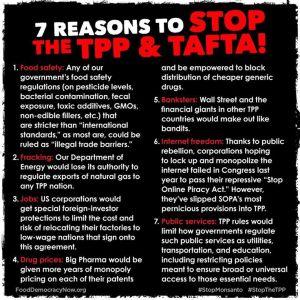
Critics claim trade agreements cost jobs by making it easier for foreign products to compete with locally made versions.
In response to critics who say the deal will cost 500,000 U.S. jobs, he points to a U.S. International Trade Commission report concluding TPP will maintain and potentially create new jobs.
In both cases, there are no sources of who these “critics” are and why they oppose the Trans Pacific Partnership (TPP). The MLive story does say that Michigan Rep. Dan Kildee is a “vocal critic.” However, the criticism of Kildee is only referenced by a hyperlink to a 2015 MLive article. There is no mention of the massive opposition from labor groups, environmental groups, health organizations, food safety groups and public interest groups that are concerned about the future of internet freedom.
In addition, the MLive reporter doesn’t event bother to look at how previous trade agreements have impacted Wolverine Worldwide. According to statistics from the Department of Labor, the North American Free Trade Agreement (NAFTA), resulted in at least 173 jobs lost at Wolverine World Wide Inc.

The Trans Pacific Partnership (TPP) will primarily benefit corporations and hurt workers, the environment and public health. You wouldn’t know this by reading the MLive article, which essentially acts as a promotional piece for the Trans Pacific Partnership.
State Senator from Michigan who Introduced anti-Trans Legislation, also a recipient of DeVos money
State Senator Tom Casperson (R-Escanaba) introduced a North Carolina-style bathroom inspection bill right here in Michigan yesterday.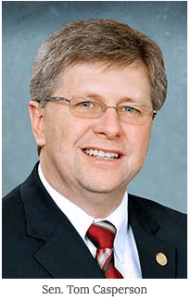
The State Senator from Escanaba has been outspoken on this issue for some time now. Since March of this year, he has been threatening to introduce legislation, after a Department of Education Draft Guidance document, entitled “Safe and Supportive Learning Environments for Lesbian, Gay, Bisexual, Transgender, and Questioning (LGBTQ) Students” went public.
On March 29, Casperson wrote, “It is hard to believe that a state board, which is clearly out of touch with Michigan residents, got assistance from equally out of touch unelected bureaucrats to develop such a document to fundamentally change Michigan’s public education system without the public’s prior knowledge or consent. In the pursuit of social justice, this so-called draft guidance document creates numerous problems, from the elimination of parental authority and notification to threatening student safety and beyond. My bill would stop this policy dead in its tracks.”
More DeVos Funding
Campaign Finance records show that in 2014, the DeVos family contributed $9,000 to Senator Casperson. In addition, the DeVos family between 2013/2014 was the largest contributor to the Senate Republican Campaign Committee in Michigan, contributing in that 2-year span $520,000. The next closest contributor was was Blue Cross/Blue Shield at $60,000.
Petition Against Legislation
There is an online petition attempting to stop Senator Casperson’s anti-Trans legislation, organized by Equality Michigan. To sign the petition, click here.
Community organizing as points of intervention in the Food System: A Grand Rapids perspective
Editor’s note: I was asked to participate in a series of video presentations that ACCESS of West Michigan is hosting around food justice and food sovereignty in Grand Rapids. The following is what I shared for the video as part of their Good Food curriculum.
My task today is to talk about how we can use community organizing as a way to change the current food system. This is no easy task, since the current food systems has been evolving over the past 100 years, and like any system of oppression, the current food system will resist change.
However, just as the Abolitionist movement ended slavery in the US a century and a half ago, changing the current food system is possible, especially if it is part of a larger social movement.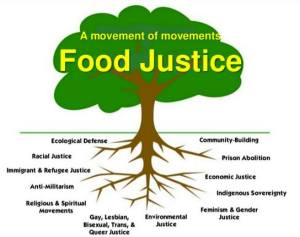
Before I talk about specific strategies and tactics we can use to change the current food system, I think it is important to talk about some important processes for organizing around food.
First, it is important that we have an intersectional view of the current food system. What I mean by that is that it is essential to look at the issue of food and the food system through a variety of analytical lenses. We can not separate how economics, race, gender, the environment, etc. impact how we understand the current food system and how we want to respond to it. To do so might mean we end up doing either more harm than we wanted to and our actions might be woefully inadequate.
Secondly, it is important that we simultaneously work to create a new food system while working to dismantle the existing one. The current food system will not go away on its own. What we have learned from previous social movements is that we need to not only fight against the current system of oppression, in this case the food system, while simultaneously work to create the kind of food system we want. This two sides of the coin approach is not only necessary, it also provides important entry points for people to become engaged in the work. This idea of creating new models while dismantling the old ones comes from Stephen D’Arcy’s important essay, Environmentalism as if Winning Mattered: A Self-Organization Strategy.
Ok, so now that we have a little bit of a framework about how to organize to change the food system, lets look at actual strategies that will help us to accomplish the goal of changing the current food system. These are not in any particular order, but they do need to be implemented simultaneously if we are to be truly effective in our efforts.
I. Community Skill Building Strategy – In this strategy it is crucial that we create opportunities that would allow as many people as possible to learn skills that are centered around food growing, food preservation and healthy nutrition. With this strategy we can employ a number of tactics to help people learn important food-centered skills. Tactic #1 – Food growing. It is important to create opportunities for people to grow some of their own food. This will not only give them some critical skills, it will them with new ways of seeing how the current food system is unhealthy and unsustainable. People can grow food in containers, raised beds, in the ground directly, through community gardens and be part of Community Supported Agriculture, which often allows those involved to be part of the food growing and harvesting process. Tactic #2 – Food preparation. The more we all have the skills to prepare food from scratch, the more likely it is for us to be dependent on the current food system. Food preparation is an important skill, but in the current economic system it is difficult for many people to eat well based on what they can afford and what they have time for. Therefore, one way to think about food preparation is to view it as a communal activity. If we had community kitchens that were neighborhood based, we could make food collectively to save money and time. Community kitchens could be located in people’s homes, in churches or other community spaces that would allow people to prepare food collectively, share recipes and make enough food for multiple meals. Community kitchens would allow people who work long hours and those who make poverty-level wages an opportunity to eat better, save money, save time and building  community. Tactic #3 – Food Preservation – Food preservation skills would help us to become less dependent on the current food system. Food preservation skills would consist of canning, freezing and drying of foods. These skills could also be practiced in community kitchen spaces and would also contribute to community building. We should also think about including seed saving as a form of food preservation, since seeds are increasingly becoming genetically modified as to not allow them to be self-reproducing. Additionally, if more of us practiced seed saving we could create a local seed bank, which would not only preserve biological diversity, it would allow more people access to the opportunity to grow more of their own food. Local organizations that promote skill building around food are: Baxter Community Center, United Church Outreach Ministry, Our Kitchen Table and Gardens for Grand Rapids.
II. Food Worker Strategy – This strategy is important because it exposes how the current Foodie 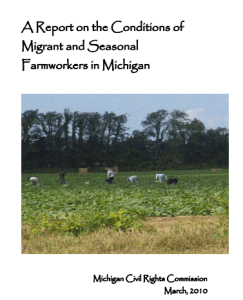 Movement is highly privileged. A food worker strategy would force the larger society to look more closely at the current food system, but it would also create possibilities for grassroots food worker organizing. Tactic #1 – Organizing farm workers – Organizing farm workers is not a new thing, but there is little attention given to one of the few jobs that doesn’t guarantee any minimum wage requirements. Farm worker organizing is an important tactic, because it not only exposes the exploitative nature of this labor force, it would provide an opportunity for the larger society to see how unjust, how racist and unsustainable the current food system is. (See Michigan Civil Rights Commission report on Migrant Workers in Michigan.) Tactic #2 – Restaurant worker organizing – Increasingly, many of us ask if the food served at restaurants is grown locally, but we rarely ask whether or not restaurant workers make a living wage and are allowed to organize as workers. Restaurant workers, like farm workers, make poverty-level wages and work in exploitative conditions. Creating greater opportunities for restaurant workers to organize would not only challenge the chain restaurants power within the current food system, it could lead to more collective forms of organizing around food.
III. Just Food Policy Strategy – The current food system is able to survive, in part, by federal and state policies. These policies, which provide massive subsidies, means that we all pay for an unhealthy, unjust and unsustainable food system. Instead, we need policies and practices that are based on food justice and food sovereignty. Tactic #1 – Direct Action for Just Food Policies – Considering how unjust the current democratic process is in the US and how money largely influences electoral politics, it would be more effective to have a mass movement to force federal and state policy to adopt food policies that are bioregional, that supports small community-based agriculture and redirects tax subsidies for food justice work. If the current Farm Bill funding, which is billions of dollars, were redirected to local food production where everyone made a livable wage, imagine how much new local food could be produced that was just and sustainable. (See Farm Bill subsidies for Michigan.) Tactic #2 – Practicing Food Sovereignty – If taxpayer funds were redirected toward local food sovereignty initiatives, we would not only have more financial resources to make sure everyone eats well, but to recreate a food system where everyone would be allowed to actively participate in decided what kind of food system we want. This is what food sovereignty is, to practice collective decision-making about food, that is local and sustainable. Tactic #3 – Just Land Use – Just land use would mean that the way we use land for food production would be radically altered away from mono-crop food production that is based upon expanding food markets. Just land use would mean food would be grown in both rural and urban settings that produced fresh food that could be more directly consumed, instead of using the bulk of land in the country for mass production of cash crops. Just land use would also mean that food would not have to travel over a thousands miles before it is eaten, since food would stay within the bioregions that it is grown.
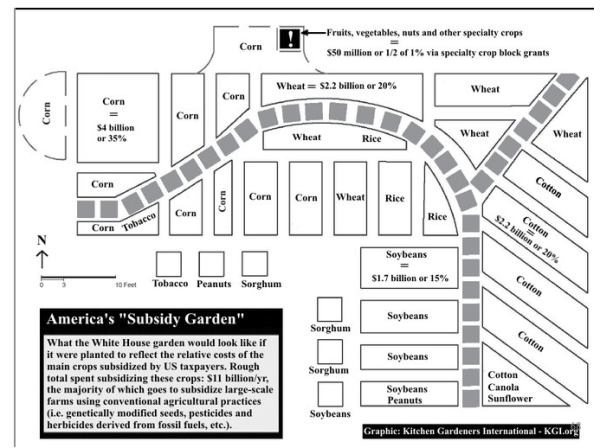
IV. Civil Society Food Strategy – A civil society food strategy would mean that more people take an active roll in both creating a new food system and resisting the current food system. Tactic #1 – Creating Food Councils and hold Food Assemblies – As a new food system is created and in the development process, there needs to be localized efforts to create food councils and host food assemblies, which can guarantee greater public participation. These food councils and food assemblies would develop policies and practices to ensure that food justice and food sovereignty principles were enacted. Tactic #2 – Direct Action for Resisting the current food system – Direct action against the current food system could take the form of boycotts, educational campaigns, preventing the misuse of land, community occupation of agribusiness land, shutting down the transportation ability of major food corporations ship food abroad, ending the advertisement of unhealthy/processed foods and any other means of making it difficult for the current food system to continue to exploit workers, create unhealthy food and destroy the environment.
Lastly, it is important to say that we need to continue to provide food assistance programs, such as food pantries and meal sites. But we also need to ensure that these programs make room for equity and food system justice work. Such work facilitates conversations with those experiencing food insecurity. The strategies and tactics just discussed can be implemented at food pantries or food assistance sites and its important to recognize and support both.
We need safety nets to make sure that people are not experiencing food insecurity and malnutrition as we work toward creating new food systems. The kind of food system we create should be a food system that is based on justice, ecological sustainability, good health and compassion for all.

Last week, Northwood University dedicated a new school of management. Not surprising, it was named after Amway co-founder, Richard DeVos.
Richard DeVos has donated millions to Northwood University over the years through the Richard and Helen DeVos Foundation. In fact, the private school, which is dedicated to “developing the future leaders of a global, free-enterprise society,” also has other DeVos connections.
Dan DeVos graduated from Northwood with a BA in 1980 and since 1997 is on the Northwood Board of Trustees. The university gives out an Outstanding Business Leader award every year, since Northwood, “firmly believes that American business leaders deserve the highest forms of personal recognition for their contributions to this great nation and the world.” Richard DeVos won the award in 1983, Dan DeVos in 2007 and Dick DeVos won it in 2014.
The second generation of DeVos family members have also contributed to Northwood through their family foundations. According to the most recent 990s that are available on Guidestar, the Dan and Marie DeVos Foundation gave $1,312,500 in both 2013 and 2012. The Dick and Betsy DeVos Foundation contributed $200,000 in both 2013 and 2012.
The DeVos Family’s commitment to Northwood University comes as no surprise, especially when considering what the university claims as its core values. The school’s website proudly displays the values as follows:
We believe in:
- the advantages of an entrepreneurial, free-enterprise society.
- individual freedom and individual responsibility.
- functioning from a foundation of ethics and integrity.
- promoting and leveraging the global, diverse and multi-cultural nature of enterprise.

Translated, what these values mean is that Northwood University, like the DeVos family, believes that capitalism should dictate how society functions, that government should get out of the way of “the market” (except when they need tax breaks, subsidies or want to privatize more of the public sector) and that freedom and responsibility really means our class has freedom and everyone else but us needs to be responsible. The notion that the DeVos family is ethical would make most reasonable people fall out of their chairs laughing, and “promoting and leveraging the global, diverse and multi-cultural nature of enterprise” just means that they welcome all cultures and races to be part of the capitalist system.
The dedication to the school named after Richard DeVos was reported on MLive last week, where the commercial media entity played their normal role of being nothing more than a cheerleader for the DeVos family.
Local politics is often the most critical. People are more likely to be engaged at the local level and often feel they can have a direct impact on policy.
However, local politics also has has a tendency to allow people with greater privilege to gain access to decision-making, whether this is through elected office or board appointments. In Grand Rapids, the amount of money spent on running for city commission seats has grown exponentially and board appoints often are determined insiders and those connected within certain political circles.
Take for example the Grand Rapids Planning Commission Board. This board is made up of 9 members, who, like most boards in Grand Rapids, are appointed, not elected. Being appointed often translates into those who have greater access, greater privilege and disproportionately higher class status.
The current make up of the Grand Rapids Planning Commission Board is disproportionately made up of professionals or those who own businesses. Here are the 9 Planning Commission Board members and what status they hold within the community.
- Kyle Van Strien – Co-Owner of Long Road Distillery
- Thomas H Koetsier – Koetsier Realty LLC
- Stephen Ruis – Co-Owner of Art of the Table
- Paul Rozeboom – Professional Engineer and principal shareholder of C2AE, a consulting engineering and architecture firm
- Rick Treur – Director of Annual Giving and Alumni Engagement at Calvin College, Leadership Grand Rapids graduate
- Erica Curry Van Ee – Urban Curry Consulting, LLC
- Reginald Smith – Calvin Theological Seminary
- Mary Angelo – former Director of Roosevelt Park Neighborhood Association
- Walter M Brame – Insurance Sales Representative at Bankers Life and Casualty Company & former Director of the Grand Rapids Urban League.
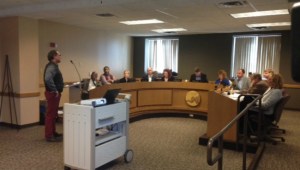
Given the current make up of the Planning Commission Board, it doesn’t come as a major surprise that the majority of them have been approving many of the development projects that have come before them over the past few years. Many of them would benefit in some ways to have new developments approved, because it would bring more upscale consumers and residents to the city and in some cases near the businesses they own and operate. These new development projects and the upwardly mobile class status of those the develop projects have attracted, are one of the major factors in the ongoing gentrification of Grand Rapids.
This is even reflected in a recent exchange between someone with Grand Rapids Homes for All and members of the Planning Commission Board/Staff in a document dated April 28, 2016.
Mr. Bartley related receipt of an email from Chuck Skala, Grand Rapids Home for All, regarding the GVSU Medical Education facility expansion, Coit Square condo project and the Rise project on Benson, and other proposed developments involving the demolition of existing rental homes and the displacement of families residing in those homes. He asked that as these projects come before the Planning Commission for review that they consider the impact on displaced families, especially with the current crisis in lack of availability of replacement housing for these families. He asked that the Planning Commission ask staff to include displacement impact as part of their analysis of proposed projects. He asked that the Planning Commission ask developers how they plan to accommodate families they are displacing. It has been their experience that displaced renters aren’t likely to attend public hearings regarding projects affecting them. In such cases decision makers sometimes rely on the opinion of neighborhood associations that may be disproportionately weighted in favor of home owners that stand to benefit from new development contrasted with renters who will be displaced. They request that the Planning Commission make a concerted effort to determine the impact on displaced families and provisions to accommodate them.
Mr. Bartley explained that he shared the communication because it is public comment, they were asked to share it, and it is certainly something to think about. Mr. Bartley advised that staff doesn’t believe the Planning Commission can include that as a Standard of review however; it isn’t a land use Standard. Staff intends to craft a response to explain their position.
Ms. Curry Van Ee asked if there is anything included in the Great Housing Strategies report regarding displacement that could be referenced in staff’s response.
Mr. Bartley replied that depending how you look at it the entire report affects that. There are no mechanisms to control rent and none of the strategies or recommendations from the report includes rent control.
Ms. Angelo asked if staff has any knowledge about how many people are being displaced with these projects. When visiting proposed project sites that include proposed demolition it seems that the homes are largely vacant. Mr. Van Strien asked the vacancy rate in the city.
Mr. Koetsier advised that the vacancy rate of active rentals is 1%; the lowest in the country. Not only is development removing homes but rental homes that go on the market are being purchased by owner-occupants and tenants are being displaced. He noted that development is part of the solution. When tearing down 11 houses and replacing them with 60+ apartments gradually the situation will improve.
Ms. Turkelson related that staff continues to have meetings on Great Housing Strategies and ways to implement it. She advised that staff is working on an analysis for the City Commission regarding how many units are being lost to development and how many units are replacing them. With the vast majority of the projects more units are being created by the new development.
Mr. Rozeboom asked if the City Commission can deny a rezoning request based on affordability.
Mr. Forshee advised that he would discourage that. The City Commission should be using similar Standards that the Planning Commission considers. His opinion is that because zoning flows from the Zoning Enabling Act that it limits that power. Ms. Turkelson added that they are also bound by the Master Plan.
What is instructive is the perspective. Mr. Koetsier, with Koetsier Realty LLC, states:
“Not only is development removing homes but rental homes that go on the market are being purchased by owner-occupants and tenants are being displaced. He noted that development is part of the solution. When tearing down 11 houses and replacing them with 60+ apartments gradually the situation will improve.”
First, many of the homes that Mr. Koetseir says are being purchased by by owner-occupants isn’t consistent with what has been happening in many of the recent development projects. For example, in the Belknap area, houses have been demolished, and the newly approved RISE Real Estate project on Michigan will demolish roughly a dozen homes and several commercial buildings.
Mr. Koetsier also states, “development is part of the solution.” This has not been the case when it come to affordable housing. Virtually everything that is being proposed is either “market-rate” or very high end. Ms. Turkelson also states, “With the vast majority of the projects more units are being created by the new development.” While it is acknowledged that there are more new units being created, a very small percentage of them are not affordable for working class individuals or families.

One can see from the graphic above when the term for each of the Planning Commission board members will end. What would it take to have new board members come from the ranks of those most impacted by gentrification? Is this even possible? Should those most impacted from ongoing development projects engage in movement building instead? Should both be done? Important questions for those who care about housing justice.
The Unaffordability of Grand Rapids
On Monday, MLive ran yet another story about new housing development projects in Grand Rapids, entitled, High-end, micro apartment projects up for tax breaks.
The brief article looks at four proposed housing development projects seeks approval from the city of Grand Rapids, along with the possibility of tax breaks for each project. The four projects are: a 616 Lofts project on Quimby NE; Maplegrove Development LLC project on Market Avenue; Green Cane Property ( in conjunction with Orion Construction) project on Wealthy in Uptown, and; a Third Coast Development project in the Firestone building on Jefferson SE, near Fulton.
However, the brief MLive article focuses mostly on the Green Cane Property project at the site of the old McDonald’s on Wealthy SE and their micro apartments. The only source cited is a representative with Green Cane Property. In addition, the article does mention that the Grand Rapids City Commission would be deciding on all four of these projects at their May 10 meeting and whether or not to offer tax breaks for each of the projects.
According to the City Commission Agenda Packet for their May 10 meeting, the Green Cane Property project will be getting significant tax breaks. There was no additional information from said City Commission packet on tax breaks for the other three housing development projects.
The MLive article states at one point, “Grand Rapids commissioners have been exploring ways to encourage development of more “affordable” housing, with rents below market rate. Recent ordinance changes include the addition of parking incentives for construction of “micro-units” that are 475 square-feet or smaller.”
The question should be asked, what exactly is it that the City Commissioners are doing to explore and implement ways to make affordable housing a reality in Grand Rapids? The same sentiments were shared during an April 12 City Commission meeting, a meeting where they unanimously approved a $300,000 per condo development project. At that April 12 meeting every commissioner commenting on the need to increase affordable housing, but none of them offered up a plan on how to make affordable housing a reality. 
Everyone of the four housing development projects mentioned in the MLive article will not be offering truly affordable housing options for individuals or families, like almost all of the new housing development announcements in recent months. Almost all of the housing options with these four development projects are listed as market rate, with the 616 Lofts project on Plainfield listing rental rates between $850 to $1,500 per month; the Maplegrove Development project on Market Ave. listing rental rates between $935 to $1,795 per month; the Third Coast Development project on Jefferson SE listing rental rates between $1,250 to $2,000; and the Green Care Property/Orion Construction project on Wealthy SE listing rental rates between $700 to $1,400 per month.
Someone making $10 an hour, which is the reality for thousands of people in the Grand Rapids area, equals $22,400 a year. The rate of the lowest rental cost of the four new projects is $700 per month for a micro apartment. Rent at such a location for one year is $8,400, over one-third of the income of someone making $10 an hour. A single person might be able to survive on that income, but not someone with children or those supporting other family members. Grand Rapids is quickly becoming a city that is unaffordable for thousands of working class individuals and families.
 Grand Rapids Institute for Information Democracy