For years there has been a growing concern expressed by writers, activists, historians and organizers who have objected to the sanitizing of Dr. Martin Luther King Jr., especially during the national MLK holiday. Well, same thing is happening to the legacy of farmworker organizer Cesar Chavez.
Yesterday, in Grand Rapids, was the annual Cesar Chavez march, where very little of what took place seemed to honor the legacy of the work of Cesar Chavez and the struggle of farmworkers.
There was nothing said before the march took place that gave attention to farmworkers. In fact, there was no evidence of farmworker presence and no farmworker was asked to speak before the march. In fact, the only people who spoke before the march, was the chair of the Committee to Honor Cesar Chavez, the current Mayor of Grand Rapids (Rosalynn Bliss) and the former Mayor of Grand Rapids (George Heartwell).
The march was led by an escort of GRPD vehicles, followed by roughly 25-30 JRROTC students marching in military formation. This was followed by a banner that was held by local “Leaders” and then students and other community members followed.
First, it seemed strange to have so much of a hyper-military presence with JrROTC students and GRPD officers on foot and in cars. Chavez was pretty militant about his commitment to non-violence, so their presence seemed rather contradictory. In fact, one of the “leaders” who was invited to hold the main banner near the front was the Grand Rapids Police Chief.
More importantly, having police presence sends a strong message to people who are undocumented and live in the Grandville Ave area. The ongoing deportations and raids conducted by ICE and other law enforcement officials is a reality that those who are undocumented must face on a daily basis. Having law enforcement officials present at such an event only discourages farmworkers and undocumented migrants from participating, even though they are the ones who have most in common with the legacy of Chavez and and current farmworker struggles.
Second, the “leaders” holding the banner were mostly made up of politicians and professionals. Now maybe some of these people have direct connection to the farmworker community, but it seems likely that most are not practicing or promoting the work that Chavez and the United Farm Workers (UFW) engaged. How many of these “leaders” are involved in or in solidarity with labor organizing efforts by farmworkers today and how many of them support or participate in the kinds of direct action campaigns (strikes, boycotts, etc) that are the bread and butter of UFW campaigns?

Lastly, members of the group Foco Rojo were present and passed out flyer in English and in Spanish that asked many of these same questions. Here is the English text of the flyer they handed out:
WE DEMAND JUSTICE FOR MIGRANT WORKERS NOW!
Today we honor the memory and legacy of Cesar Chavez. We honor him by marching and we honor him by fighting for justice today.
Migrant workers are some of the most exploited workers in our community. They work long hours, in difficult working conditions and make very little money. In fact, migrant workers are one of the few jobs where minimum wage laws do not apply.
In 2010, the Michigan Civil Rights Commission published a report, based on testimony from farm workers, that concluded the living and working conditions for farm workers today is as bad, if not worse, than it was 50 years ago.
Migrant farm workers continue to live in poverty and many of them live in fear of harassment and deportation, since many of these workers are undocumented.
To honor the legacy of Cesar Chavez, which is to honor the lives of migrant farm workers, we ask, why are there no campaigns to organize migrant farm workers in West Michigan? We cannot truly honor the legacy of Cesar Chavez by holding symbolic marches while migrant farm workers and their families struggle to survive.
Migrant farm workers are organizing themselves all across the country through organizations such as the United Farm Workers, the Farm Labor Organizing Committee and the Coalition of Immokalee Workers. However, no such efforts to organize migrant farm workers is currently taking place in West Michigan, in spite of the fact that this area has one of the highest concentration of migrant farm workers in the country.
Honoring the legacy of Cesar Chavez should not be a day to make us feel good about ourselves, it should be a day where we commit ourselves to standing in solidarity with migrant farm workers. It should be a day where we hear the voices of migrant farm workers, not from politicians and other so-called leaders.
The United Farm Workers movement that Cesar Chavez was part of, was a movement that was committed to union solidarity, to the use of tactics like boycotts, strikes and other forms of direct action to force agribusiness to respect the dignity of migrant farm workers. This is the kind of movement we need today.
United Farm Workers http://www.ufw.org/
Farm Labor Organizing Committee http://www.floc.com/wordpress/ Coalition of Immokalee Workers http://www.ciw-online.org/
It has been publicly revealed in the past week that Rockford Construction has been working on a development plan for a several block area of the southeast part of Grand Rapids.
The development project became public when someone from Linc posted information on Facebook and in their online news section. The online news piece is entitled, Rockford Construction’s “Hushed” Plan for Southeast Redevelopment Brought to Light .
The Linc news piece states in part, We would like to send a couple messages to our community – 1, that we didn’t have ANY involvement in this plan – and 2, we NEED to step up as a community and have a voice in this matter before the developing takes place. Our future here as a Southtown community is dependent on it.
The “Hushed Plan” that Linc is talking about is a 43 – page document, ironically titled, Complete Neighborhood. This plan was developed last year, with the date in the corner of the document being June 23, 2015. This means that for at least the past year, this plan has been in “the works” without the knowledge of the neighborhood that Rockford Construction has targeted.
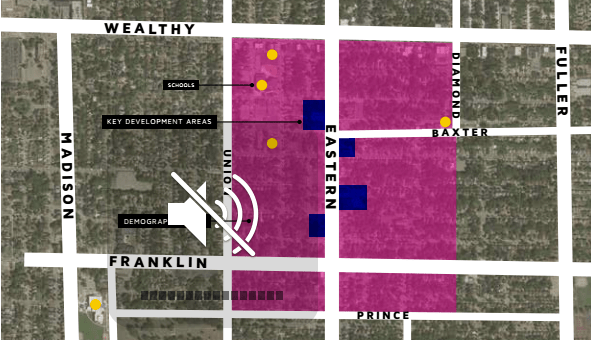
The area that Rockford is proposing to develop can be seen here in this map.
Now, I don’t really want to look at the particulars of the plan that Rockford Construction has put forth, rather I think it is more important to discuss the process.
Let’s be clear, what Rockford Construction has done up to this point, with this “plan” is to affirm the fears that neighbors have about outside investors making determinations about neighborhoods, without consulting or considering what people who live in those neighborhoods want.
What Rockford Construction is doing with this plan is engaging in both gentrification and White Savior politics. The plan developed by Rockford and their failure to even bother finding out what residents want is a way of practicing gentrification, where the development project with likely displace poor & working class residents, who are disproportionately African American.
White Savior politics refers to western people going in to “fix” the problems of struggling nations or people of color without understanding their history, needs, or the region’s current state of affairs. This also applies to neighborhoods as well.
The White Savior politics dynamic is further demonstrated by the fact that in their development plan they acknowledge that they have talked to people, just not those who live in the neighborhood. Rockford Construction has had conversations with The Right Place. Inc, Huntington Bank and Seyferth PR, all entities that have no idea what the residents in the neighborhood in question might want.
Regardless of their intentions, Rockford Construction is practicing a very dangerous form of racism. If you read the plan they suggest the following:
- Over 1,000 permanent new jobs created targeted to the exact demographics of the unemployed living in the neighborhoods around the developments.
- A large number of new local African American owned new businesses created to help establish these jobs
- Robust education and training to ensure that the people in the neighborhood can qualify for the jobs.
- A large number of new housing units for rent and ownership with a 50/50 mix between affordable and market rate.
Now, these might seem like very noble endeavors. However, the main issue here is that Rockford Construction is making decisions, developing plans and talking to financial institutions without EVER having talked to those who actually live in the neighborhood the company has targeted.
In addition, what Rockford Construction has ignored is the historical factors that have determined the high level of poverty for the neighborhood they have targeted.
It should be said that the “hushed plan” has angered and mobilized people around the future of the area of the southeast that Rockford Construction has targeted. In fact, there is a meeting tonight (Tuesday, March 15) at Linc from 5 – 9pm.

On Monday, March 21st, the Econ Club of Grand Rapids is hosting a luncheon featuring Michigan Governor Rick Snyder.
In the promotional statement for Snyder’s talk, the Econ Club boasts that during Snyder’s tenure as governor of Michigan the state is experiencing economic growth and stability. The statement concludes by saying, “Governor Snyder will offer remarks on Michigan’s successful economic comeback and future growth potential.”
Such a statement speaks volumes about the Econ Club and its members. Snyder will be speaking in Grand Rapids on the heels of ongoing information that is surfacing about the criminal and callous state policy decisions in Flint.
However, Flint is just one aspect of the current administration’s policies, which have expanded the number of cities throughout the state under Emergency Managers and implemented severe austerity measures that have weakened organized labor, gutted funds for public services and redirected more and more public money to the private sector.
In addition, the state has passed legislation making Michigan a Right to Work state and provided even greater tax breaks to business owners. In short, state policy has been extremely beneficial to the economic elite in the state and detrimental to working class families and individuals, many of which now live well below the poverty line.
So who will come to hear Snyder on March 21st and who makes up the Econ Club of Grand Rapids?
The Econ Club of Grand Rapids has been around for nearly 40 years and is a membership driven organization with the following mission statement:
To shape an environment designed to initiate, inform, and inspire conversation on contemporary economic issues with local implication and global perspectives. To serve the diverse business community of Grand Rapids as the preeminent forum for learning and discussion on the most relevant topics of the day.
The reality is that the Econ Club of Grand Rapids is a forum for the capitalist class of West Michigan to get together and figure out ways to increase their wealth and influence. The Econ Club is made up of the wealthiest families in West Michigan, policy makers and the heads of universities, hospitals, foundations and other entities that shape social, political and economic decisions that impact everyone.
There are of course the usual list of power brokers, like members of the DeVos and Van Andel families, Mike Jandernoa, John Kennedy and other corporate leaders. Then there are those who represent foundations (Diana Sieger – GR Community Foundation), universities (Tom Hass/GVSU and Richard Pappas/Davenport), directors of non-profits (Kathy Crosby/Goodwill and Joe Jones/Urban League) and commercial media (Janet Mason/WZZM 13).
All of these sectors play a vital role in promoting and facilitating economic policies that primarily benefit the capitalist class. We are often led to believe that West Michigan is a highly philanthropic community, but the reality is that public giving from the wealthiest sectors are used to manage those experiencing poverty and to create tax havens for those with wealth – also known as foundations.
The Econ Club of Grand Rapids is an incestuous group of capitalist who give each other awards, such as the Business Person of the Year Award.
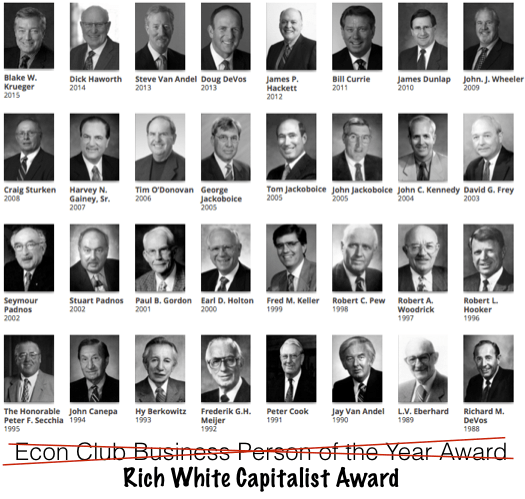
Therefore it should be no surprise that Governor Snyder is coming to Grand Rapids to talk about Michigan’s successful economic comeback and future growth potential. The people who will be in the room at the JW Marriott on March 21st are the very people who have benefited the most from the so-called economic comeback. Profits for the members of the Econ Club are up, investment opportunities are up and the shift of funding from the public sector to the private sector are up.
The austerity measures and Emergency Management systems that have been imposed on places like Flint, Detroit and Benton Harbor benefit people who are members of the Econ Club and their counterparts throughout the state. This means however, that the members of the Econ Club are actively participating in policies that disproportionately impact communities of color. To be more specific, members of the Econ Club are engaged in supporting and profiting from systemic racism across the state.
These people are not the saviors of our community, they are the thieves that rob us daily with their influence and their ability to buy policy.
We invite you to stand against such criminality and thievery, by joining people to protest the Econ Club of Grand Rapids event on March 21st and say that Snyder is Not Welcome in Grand Rapids.
To further explore the significance of the state policy decisions that have devastated Detroit, click here. http://www.d-rem.org/facts/
To have a deeper understanding of the Emergency Management impact in Flint and the ongoing water crisis, watch this in depth documentary produced by the ACLU of Michigan.
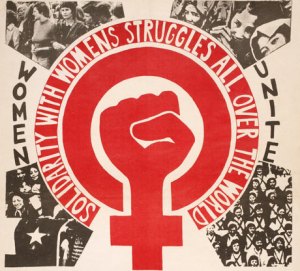
On Tuesday, March 8, women and men around the world will celebrate International Women’s Day (IWD). However, there is a growing tendency to ignore the origins of IWD and merely use the day or Women’s History Month as a marketing opportunity or to acknowledge the accomplishments of women, even if they conflict with the spirit of International Women’s Day or simply promote a vague notion of identity politics.
International Women’s Day evolved out of a growing effort amongst women’s and working class groups to fight for more equality for women at the end of the 19th century and the beginning of the 20th century.
In 1908, 15,000 women marched in New York City demanding shorter work hours, better wages and the right to vote. In 1909, the Socialist Party of America designated February 28 as the first National Women’s Day, which was to be celebrated on the last Sunday of every February.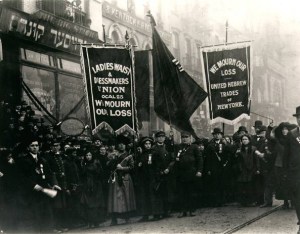
In 1910, at the Second International Conference for Working Women, there was a proposal to have an international women’s day, where women around the world would press for their demands on the same day. The proposal was not adopted until the following year and International Women’s Day (IWD) was celebrated in several countries around the world. However, something happened just one week later that would galvanize this new international movement.
On March 25, a fire began at the Triangle factory in New York City. It was common practice for factory owners to lock the workers inside until the work day ended and because of that practice 140 women, most Jewish and Italian immigrants, burned to death in that fire. The international women’s movement, labor and socialist movements mobilized around the world to mourn these women and to organize for worker and women’s rights.
For years after the first, the Triangle factory fire became the focus of International Women’s Day and gave birth to the Bread and Roses Campaign. The Bread and Roses Campaign was begun by workers (mostly women) who went on strike at a textile factory in Lawrence, Massachusetts. This strike was organized by the Industrial Workers of the World (IWW) with the slogan, “We want Bread, but we want Roses too!”
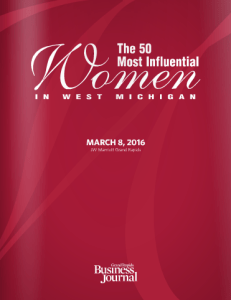
Juxtapose this radical working class women’s history with an event being hosted by the Grand Rapids Business Journal on International Women’s Day. The Business Journal will be recognizing the 50 Most Influential Women in West Michigan at their event, which will be held at the J.W. Marriott in downtown Grand Rapids. The irony is that the women who change the sheets at the JW Marriott and clean the rooms at the DeVos-owned hotel have more in common with the women who died during the Triangle Factory fire or the women behind the Bread and Roses campaign than the women being recognized for their “influence” at the Business Journal event. Many of the women being recognized at the Business Journal event are fundamentally modern day versions of the factory owners that the working class women organized against.
It is a strange world we live in where a day that is rooted in the radical politics of working class women is co-opted in order to honor mostly business women. Of course, if you don’t want to attend such a corporate event, there is always the International Women’s Day Celebration and Pub Crawl.
Such irony begs the question, which side of History are you on?
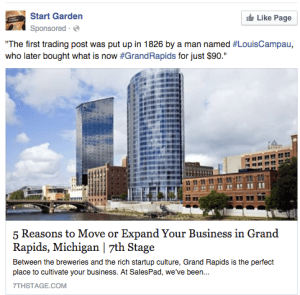
It is common place to see sponsored messages show up in your Facebook feed. People, most often with economic privilege, will pay to spread their message beyond their friend-base.
The other day I saw a sponsored message from the local venture capitalism entity started by Rick DeVos, Start Garden. The sponsored message, shown here, was a posting from the tech-business, SalesPad.
The sponsored message was a blog posting from SalesPad entitled, 5 Reasons to Move or Expand Your Business in Grand Rapids, Michigan. Let’s take a look at the 5 reasons and see what kind of narrative they have created about Grand Rapids.
1. Constant Growth
The narrative begins with a focus on growth, specifically economic growth, by saying, “Grand Rapids is the ninth “fastest growing economy in the US.” The source for such a claim is an MLive story from January of 2015 based on a report from the Brookings Institute. The narrative from both MLive and SalesPad never defines growth, but more importantly they never ask the question of “growth for whom?”
While Grand Rapids is booming for some sectors, it also means that a significant portion of the population here still living in poverty. Based on recent US Census data, nearly 30% of the population of Grand Rapids is living in poverty. Those disproportionately impacted by the poverty are communities of color.
The Wall Street Journal in October of last year ran an article that looked at the 10 worst US cities for Black Americans and Grand Rapids was number 5. The data they cite looks at employment, unemployment, median household income and the increased risk of going to jail.
Another article that shows that the “growth” in Grand Rapids does not benefit Black people comes from Forbes magazine, which stated that of the 52 largest cities in the US, Grand Rapids is the second worst for Blacks.
When people talk about the economy being a growth economy, one should always ask for whom.
2. Nickname: Beer City
Breweries are not much of a selling point if you are experiencing poverty. Oh, it would also be good to ask if any of the “over 40 breweries- that’s a craft beer” are owned by people of color.
3. Entertainment
The narrative lists ArtPrize, Meijer Gardens and Founders Brewing Company’s Founders Fest as the list of entertainment sources which makes Grand Rapids such a good place to start a business. I’ve written plenty on what is problematic about ArtPrize and the other 2 entertainment sources given just continues a narrative that really speaks to the young, white professional class and not to working class families.
4. Convenient Business-ing
This reason is essentially a promo for the Gerald R. Ford Airport.
5. Old meets New
Reason number 5 is in many ways the most instructive in terms of how we understand the narrative that SalesPad has created. The narrative states:
The first trading post was put up in 1826 by a man named Louis Campau, who later bought what is now Grand Rapids for just $90. Today, buildings are being renovated, houses and apartment communities are being built and the culture appears to be thriving.
What is instructive is the use of Louis Campau as an example of entrepreneurship. Campau was indeed a businessman and a shrewd one at that. His presence along the Grand River in the 1820s was the direct result of settler colonialism, where Europeans were entering tribal territory with the goal of taking it over. Campau was just part of the first wave of settler colonists to occupy land which was inhabited by the Anishinaabe. To say that Campau bought Grand Rapids for $90 only perpetuate a narrative of settler colonialism and ignores the narrative of the native communities that lived in the area now known as Grand Rapids in relative peace before Europeans invaded.
Reason number five also acts as a meta-narrative for the first four reasons, since it seeks to legitimize why people should start or bring businesses to Grand Rapids. In many ways, the 5 reasons should be seen as a White Supremacist and Neo-Liberal Capitalist narrative, which is exactly why it was fitting that Start Garden paid for the sponsored message that featured the narrative about Grand Rapids from SalesPad.
What’s in a Name: A Popular Guide to Wealth & Influence at GVSU
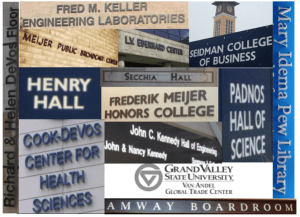
A couple of years back, there was a controversy at GVSU when students raised questions and concerns over the influence that wealthy donors had on the campus and its politics. Students were told to be quiet about it and that they should be “grateful” for these wealthy donors.
As a response to these attempts to silence students and to normalize the the influence that wealthy donors have to university politics, we have put together a 17-page document entitled, A Popular Guide to Wealth & Influence at GVSU.
In this guide you will find an explanation of the importance of such a guide, how to use it, maps of both the Allendale and Grand Rapids campuses, a listing of some of the more prominent donors, narratives on how these people acquired their wealth, their politics and how it has influenced GVSU. There are also additional pages that, through images/graphics, shed light on the power and influence these individuals/families have on West Michigan as a whole. Lastly, there are two pages of resources used for the guide, for those wanting to read more about who the most powerful people are in the area that have donated to GVSU and how their wealth has negatively impacted people. 
This guide is an organic document, which we hope will be used widely by students, faculty and the larger community. We also would love to see people add their own information and analysis to the document, since our work only provides a portion of the information on the power and influence of the individuals and families listed in the guide.
Thoughts on the reactions to the DeVos Family Power article
Last Thursday, I posted an article headlined, “it is impossible to have justice and equity as long as the DeVos family has power.”
The article got about 3,000 hits over the past 4 days on the GRIID site, plus an additional 60 shares on Facebook. There were a variety of reactions, which are worth discussing here, since they reveal some interesting aspects of our current political climate.
Hate mail and irrational outrage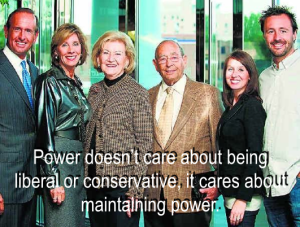
As I have come to expect with any posting that exposes or challenges our understanding of power, especially in West Michigan, there were responses where people made threats or wrote rants that were often difficult to follow. Often these sorts of responses use derogatory name calling as part of the rant and sometimes suggest that if I don’t like it here I should move to North Korea. This is a curious response, since I never said that I didn’t like it here and I fail to see how they equate my critique with a desire to go to North Korea. Regardless of the lack of logic, what the hate-driven responses usually want, is to draw you into an endless argument that leads no where, sort of like the MLive comment section, which should be avoided at all cost.
Strategic Annoyance
A second kind of response takes the form of trying to deceive you by creating what appear to be bogus blogs that hyperlink to the GRIID site. I have received dozens of such notifications where a GRIID article is hyperlinked on another blog and all of these hyperlinks have to do with something specific to one of the members of the DeVos family, particularly the information we have about the various DeVos family foundations. What is curious about these blogs is that they all celebrate the benevolence of the DeVos family, which is interesting, since the hyper links from the GRIID site have a very critical analysis of those family foundations. I find it hard to believe that there are dozens of blogs out there with writers waxing eloquently about the wonders of the DeVos family. Instead, it seems like this is a tactic that is used by media & PR people who work with or support the DeVos family to annoy anyone who questions their politics. Thankfully, one can avoid approving the hyperlinks by having their wordpress settings reflect pre-approval.
Internalizing the dominant narrative
A third reaction is somewhat disturbing, but not surprising, considering the role that commercial news media and other institutions play in determining the dominant narrative about powerful families like the DeVos’s. As we have been documenting for over the past 20 years, West Michigan news media presents the DeVos family as being pillars of the community, generous philanthropists and even the main reason for reviving the downtown of Grand Rapids.
One common retort is, “where would Grand Rapids be without their generosity?” Such a response is understandable, since this is how commercial media presents the DeVos family, but such a reaction is based on a faulty and simplistic narrative. There is rarely any mention of how much public money the DeVos family is able to utilize for their many endeavors – ArtPrize, the Downtown Market, the Arena, etc.; no critique of the function of the funds they use for social engineering through their tax havens, known as foundations; and there is even less coverage of the political funding they engage in that does concrete harm to working class families, the LGBTQ community, public education and secular society in general.
However, what is more disturbing than the mimicking of this dominant narrative by a broad range of people is when working class people, even people who are struggling, internalize the dominant narrative. What is equally important is that many of these working class people who defend the DeVos family also identify as liberals. I’m not suggesting that liberals can’t or shouldn’t internalize the dominant narrative about people with power, instead I merely want to point out that liberals often embrace the dominant narrative as zealously as those who identify as conservative, despite the fact that such support negatively impacts their own well being.

Liberals with Power & Wealth?
A fourth, and final response, also comes from progressives who really like it when we post articles that are critical of the DeVos family. Often, the commentary that follows the liking or sharing of such postings make it clear that their distain for the DeVos family is based on their own partisan bias. This is instructive for two reasons. First, when we post critiques directed at the DeVos family we make it clear that the issue is not the conservative nature of their politics or their devotion to the GOP, the critique is directed at the nature of power their wield.
The second reason such responses are instructive is that it reveals the fact that these progressives have no real problem with individuals, families or institutions wielding the kind of power that the DeVos family does, as long as it fits their worldview. So rarely have I come across people who roundly condemn the DeVos family political influence and then apply the same condemnations to people like George Soros or any number of the liberal billionaires like Bill Gates or more recently Mark Zuckerberg. This kind of thinking is dangerous because it means progressives don’t question how “rich liberals” acquired their wealth and more importantly, it means that they ultimately don’t question systems of power and oppression like capitalism, white supremacy and Imperialism, which equally important to rich liberals and rich conservatives alike.
Such contradictions can clearly be seen currently in the push by liberals and progressives to encourage and often shame others into voting for candidates like Hillary Clinton and Bernie Sanders. Advocating for Democrats at the federal level often results in having millions of people spend lots of time and donating hundreds of millions of dollars to support a corrupt and undemocratic political process that will not fundamentally challenge the kind of power exemplified by the DeVos family. In fact, all this energy and money often results in fortifying the very systems of power and privilege that Rich, Dick, Betsy and the rest of the DeVos clan are constantly fighting to maintain.
We have written a few articles recently about the kind of political, economic and cultural influence the DeVos family has in West Michigan.
In September we posted an Indy Media Guide to ArtPrize, which looks at the deeper function of the annual spectacle in Grand Rapids. On October 1, we looked at the relationship of Rick DeVos to the same political forces that his parents and grandparents have.
On October 28, we provided a detailed look at how the DeVos family influences state legislation, by grossly outspending everyone to buy politicians that will support their reactionary policies. On January 5, our post critiqued MLive’s weak reporting on DeVos family foundation donations and made it clear that they only contribute with clear political objectives. These are only the most recent posts that look at the political power the DeVos family wields in Grand Rapids and across the state.
The power this one family has is astounding and there is no evidence that this will change anytime soon. If one looks at the most recent campaign finance data from OpenSecrets.org for the 49503 zip code, you can see that the largest donors based on the maximum amount one can donate each time are members of the DeVos family. In fact, of the top 200 donations from the 49503 zip code, 199 of those are from a member of the DeVos family. The only non-DeVos contributor in the top 200 donations was Hank Meijer. This means that the DeVos family has contributed hundreds of thousands for the 2016 election cycle and will likely exceed a million dollars before the November election.
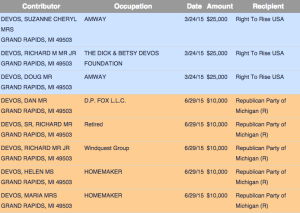 Collectively the DeVos family donates to entities like the Republican Party of Michigan, Jeb Bush’s Right to Rise PAC, the Upper Hand Fund and various state and Congressional candidates. A great deal of these funds are going to key races and candidates that the DeVos family plans to use to continue to push through legislation that meets their agenda. Rumors are already swirling that getting school voucher legislation passed will be a a focus for 2016.
But effecting legislation is just the tip of the iceberg for the DeVos family. They use their tax havens, known as foundations, to influence economic, social and cultural outcomes in West Michigan. In addition, they sit on various boards and are apart of numerous entities (Grand Action, West MI Policy Forum, Right Place Inc.) that also use their power to push for things like the transfer of public money to private projects, with a recent example being the Downtown Market.

Collectively the DeVos family is worth around $10 billion. Ten Billion. Imagine what that amount of money could be used for in Grand Rapids. We could probably eliminate homelessness, hunger and poverty. Everyone could own their own home and not have any debt. Health care expenses could be taken care of and people would not have to agonize over weather or not to pay the heating bill or buy groceries this month. In other words, their wealth could be used to end a great deal of suffering………but that is not what they plan to do with it.
The point to all of this is not to single out the DeVos family, they are merely a local example of how the current economic and political systems function and who they really serve. Living in an economic system of Neoliberal capitalism means that there will be a small percentage of people who have a disgusting amount of wealth, while the masses live on the edge. Families like the DeVos’s didn’t become wealthy by their own efforts, rather through exploitation of workers, the environment and the use of a political system to redirect public money and pass policies that benefit their bottom line.
Which brings us to the title of this posting. Do you really think that there can be justice and equity as long as the economic system of neoliberal capitalism and the neo-fascist political system ( as embodied by families like the DeVos’s) are allowed to exist?
Movements for social justice and revolutionary transformation have always had to come to terms with the function of systems of oppression and power. As the great abolitionist Frederick Douglass said, “Power concedes nothing without a demand.” Slavery in the US was not ended because plantation owners one day decided to let blacks go free or because someone reasoned with them. Slavery was ended because slaves rose up and won their freedom, often by killing the slave master and burning the plantation.
Workers in the US did not win an 8 hour work day, better wages, benefits, workers compensation, the end of child labor, etc., because bosses gave these things to workers. Workers had to organize, fight, risk arrest, risk being beaten, jailed or even killed in order to win even marginal labor rights.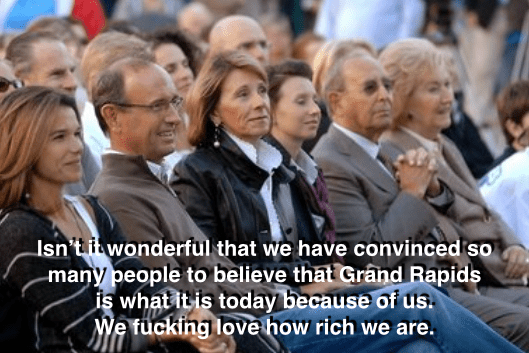
The revolutionary uprisings by communities of color from the 1950s til today are what brought about any substantive change for those communities. The political and economic system gave them nothing, they had to fight, organize, go to jail, risk being lynched, fired from their jobs, evicted from their homes or end up being murdered in order to make the gains they have made. None of it was a gift.
I know there are those who say that we should focus on what we can do for ourselves, what kind of justice we can create for ourselves and not worry about the power and influence of these systems of power and oppression that are embodied by the DeVos family. I agree that we need to always be figuring out what kind of world we want to live and and what it will look like. I agree, that we need to create justice in our homes, our neighborhoods and in our lives. We can do the work of building community gardens, worker run operations and housing collectives. We can make our homes places of hospitality for those with no place to live and spaces where patriarchy, white supremacy, ablism and exploitation are not tolerated.
BUT. We cannot ignore that there are forces who need injustice, inequity and exploitation to maintain their power and privilege over others. Do you really think it is possible to work for a transformative society and not challenge the systems of oppression and power symbolized locally by the DeVos family? We have to do both, because power concedes NOTHING without a demand.
Yesterday, members of Amalgamated Transit Union Grand Rapids, GVSU United Students Against Sweatshops and community activists participated in a variety of actions to put pressure on The Rapid, which has been harassing workers and threatening to alter or end bus driver pensions.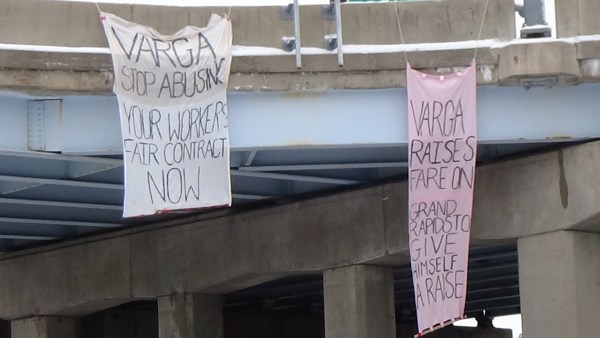
The battle for worker justice has been going on for roughly nine months, ever since The Rapid has refused to negotiate a contract settlement with ATUGR members. As we have reported in the past, The Rapid has threatened workers engaged in educating the public about their campaign, denied them their free speech rights and have failed to participate in collective bargaining. These threats against bus drivers have all come at the same time that rates for riding the bus have increased and the CEO of the Rapid was given a substantial salary increase.
The Day of Action began at noon, when banners were hung just off the Wealthy Street exit of US 131, banners which lays the blame for worker abuse and lack of contract negotiations at the feet of The Rapid CEO Peter Varga.
Shortly after the banners were hung, about 15 people gathered at the Central Bus Station to initiate a fare strike. Activists got on a number of buses and handed the drivers a quarter sheet stating that they were not paying the fare. The drivers then called dispatch to say what was happening, while those involved in the fare strike then passed out flyers to everyone else on the bus telling them to use the flyer as a ticket, refuse to pay and tell the driver why.
The flyer that was being handed out read in part, “The Rapid’s recent actions toward you and your riders is a form of economic violence that I won’t condone. Because it is illegal for union bus drivers like you to go on strike in Michigan, I am doing the closest thing that I can as a rider by engaging in this one-day fare strike.”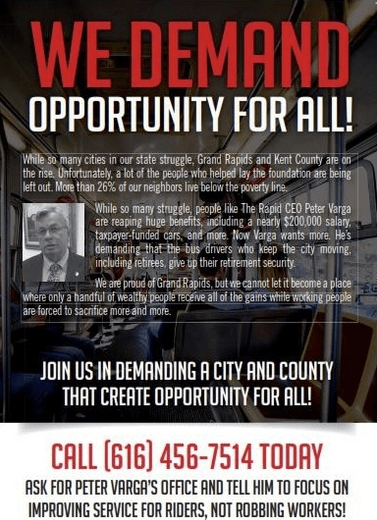
This tactic was fairly effective since it not only sent a message to management, it provided a forum to engage in popular education with riders. Several hundred flyers were handed out during the fare strike and many people whom this writer observed taking the flyers were both supportive and somewhat shocked to find out about how bus drivers were being treated.
The third component of the Day of Action was to flood The Rapid with phone calls telling them to stop harassing workers, to stop threatening bus driver pensions and to negotiate a contract settlement. Not only were people in West Michigan participating in the call-in action, but people from across the state and the country were participating as a show of solidarity with the fight for worker justice in Grand Rapids.
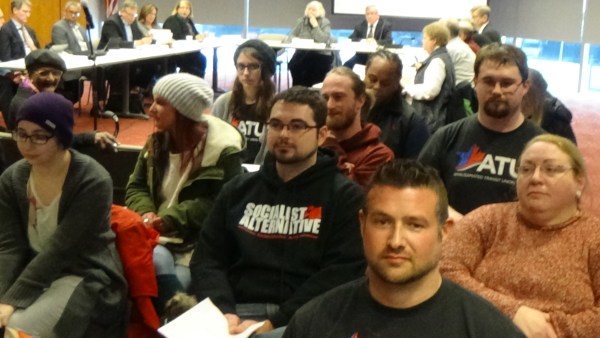
The last part of the action took place during the monthly ITP board meeting, which began at 4pm at the Central Station headquarters. About 30 people, again consisting of union members, students and community activists, showed up to participate in this part of the action.
During public comment, there were several people who got up to address the treatment of workers and the injustice of giving the CEO a raise, while raising the fare and threatening worker pensions. After public comment was closed these 30 activists turned their seats around so that their backs were facing the ITP board members. This symbolic act was to demonstrate their frustration with the ITP’s unwillingness to truly listen to the concerns of people and move towards negotiations.
After the board got through the agenda, they then planned to have a closed meeting to talk about collective bargaining. ATU Local 836 President RiChard Jackson had asked during the public comment to allow him and other union members to be part of that discussion, but the ITP board members refused to respond to that request.
At this point some people got up and made statements directed at the board members while a group of about 15 people sat on the floor right in front of the ITP board members and began chanting with the expressed intention of disrupting their “closed meeting.” Here is some video from the sit in part of the Day of Action, which includes the ITP security and the GRPD forcing people to leave to room.
The ITP Board members were clearly bothered by the sit in, with some getting up and leaving the room, while others just decided to look at their phones. None of the board members even bothered to talk to those sitting in, nor did they go out to lobby area to engage union members. At one point, a board member came up to this writer wanting to know what I thought about the union’s desire to create a “special class of people.” I told him that he should talk directly to the union if he wanted to debate class politics.
The Grand Rapids Police were called almost immediately, but did not enter the room until about an hour and fifteen minutes into the protest. At that time they told those still sitting in the board room that if they didn’t leave they would be arrested. Those who were taking place in the sit in then decided to get up and leave. The doors were closed and then the cops told people that they could no longer be in the building (despite the fact that it is public space) and even harassed folks to not stand outside in front of Central Station unless they were all the way to the curb area.
People can debate the effectiveness of such actions, but to this writer it seemed to not only involved lots of people, it also motivated people to want to continue to be involved in the campaign and increase the pressure against The Rapid.
We spoke with ATU Local 836 President RiChard Jackson about his thoughts on the Day of Action.
Also, as of this posting, there was no other media coverage of these actions in Grand Rapids, although MLive did run a nice piece about National Chocolate Cake Day.
Racism and White Supremacy are deeply entrenched in Grand Rapids: Seeing the World through the eyes of Dr. King Part III
This is part 3 of a three part series in honor of the legacy of Dr. Martin Luther King Jr. All three articles are based on what King referred to as the Evil Triplets of militarism, capitalism and racism in his 1967 speech, Beyond Vietnam. Part I dealt with militarism, Part II on capitalism, thus Part III will focus on racism.
As we have noted in the previous 2 articles in this three part series, Dr. King’s understanding of the world evolved over time. The great orator for the Black Freedom Struggle went from fighting for desegregation to fighting institutionalized racism in all its forms, most notably in economic policy, social policy and through state violence.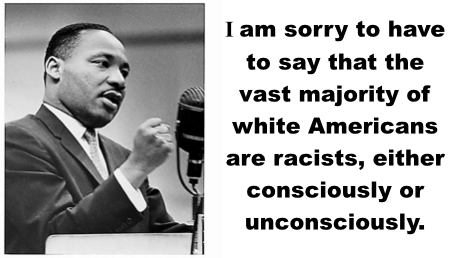
In the remaining years before his assassination King didn’t sound as much like The Dreamer as he did a Prophet. And as a prophet, King did not shy away from calling out the systems of power and oppression in the US, particularly the system of White Supremacy.
In his 1967 speech entitled, Which Way Its Soul Shall Go, Dr. King stated what you see next to his picture.
These kind of assessments were the result of King coming to terms with how deeply entrenched White Supremacy was in America. Once King moved his efforts to the north, he began to see more clearly how racism was part of the very fabric of white society.
Reflecting on the struggle against segregation in the south, Dr. King had some very keen observations in a speech he gave in Canada in 1967, entitled, Impasse in Race Relations. King states:
Negroes were outraged by inequality; their ultimate goal was freedom. Most of the white majority were outraged by brutality; their goal was improvement, not freedom nor equality. When Negroes could use public facilities, register and vote in some areas of the South, find token educational advancement, again in token form find new areas of employment, it brought the Negro a sense of achievement, but it brought to the whites a sense of completion. When Negroes assertively moved on to ascend the second rung of the ladder, a firm resistance from the white community developed. This resistance characterized the second phase, which we are now experiencing. In some quarters it was a courteous rejection, in others it was a stinging white backlash. In all quarters unmistakably it was outright resistance. The arresting of the limited forward progress by white resistance revealed the latent racism that was deeply rooted in US society.
It seems pretty clear that what King is pointing out is that white society was only willing to allow for blacks to have limited access or limited, almost token equality. Such an astute analysis by King in 1967 is equally important for today.
We are told over and over that black Americans have gained full equality and opportunity in the US. Indeed, with the election of a black president, we are now living in a post-racial era of America. The only problem is, most black Americans are as bad off (or maybe worse) now as they were in 1967. If we look at social indicators, one can see, as King stated, that racism is deeply rooted in US society.
The data on racism in West Michigan
Recent data on the percentage of those living in poverty in Grand Rapids is quite alarming. based on census data for 2014, an estimated 26.7% of people in Grand Rapids are experiencing poverty. These numbers are proportionately higher for blacks and latinos/as. Kids Count data says that 23% of children overall are experiencing poverty, but for black children that number is 47%.
When looking at the number of blacks in Kent County, the census data says that 10.4% of the population are black. However, when one looks at the percentage of blacks in the Kent County Jail, the number is significantly higher. Poverty is certainly one of the contributing factors in a disproportionate number of blacks in the Kent County Jail, but so is the practice of police targeting the neighborhoods where the majority of blacks live in Grand Rapids.
Last year there was some sobering data released on the worst cities for blacks to live in and Grand Rapids was one of the worst. The research looked at income and unemployment in the Grand Rapids area and found the following:
The typical black household in Grand Rapids earns $25,495 annually, less than half of the $57,186 the typical white household earns and also about $10,000 less than the $35,481 the typical American black household earns in a year. The unemployment rate for blacks is 13%.
When one looks at the numbers around infant mortality, the data shows that Black babies are twice as likely as white babies to die in the first year. According to one report, “The African American infant mortality rate in Grand Rapids is just slightly better than the overall rate in the Gaza Strip.” The same disparity exists in other health-related areas, such as heart disease and obesity.
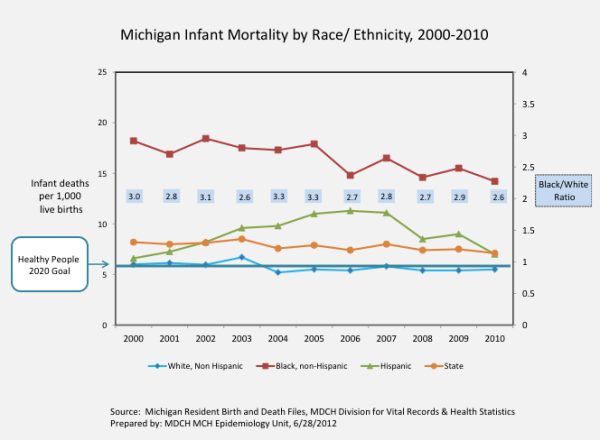
In addition, the recent practices of Mercantile Bank, which denied loans to blacks in Grand Rapids and the gentrifying impact on the black community in numerous parts of the city, also demonstrates how deeply entrenched racism and White Supremacy is in Beer City.
Based on the data, it is safe to say that if King were alive today and visiting Grand Rapids, he would most likely still say, “I am sorry to have to say that the vast majority of white Americans are racists, either consciously or unconsciously.”
Such an assessment flies in the face of all the claims about diversity and inclusion that many whites in Grand Rapids are quick to claim. It is quite possible that white society in Grand Rapids is in denial about the realities of racism and white supremacy or they recognize that in order to maintain power and privilege the racial disparities that exist must remain in place.
I would argue the later. Therefore, if white people are serious about ending racism and white supremacy in Grand Rapids, then we need to put our energy towards dismantling the power and privilege that white people have in this city.
 Grand Rapids Institute for Information Democracy