MLive article promotes Trans Pacific Partnership and corporate voices like Wolverine World Wide Inc.
On Friday, MLive ran a story entitled, How Obama’s trade deal could save Michigan footwear giant $20M a year.

The article focuses on how the Trans Pacific Partnership (TPP) trade agreement would specifically benefit Wolverine Worldwide, the West Michigan footwear giant.
More specifically, Ambassador Robert Holleyman, Deputy United States Trade Representative, was in Big Rapids at the Wolverine manufacturing plant as part of a tour in several states to promote the Obama administration’s push for the Trans Pacific Partnership (TPP) trade agreement.
In addition to the Holleyman, the only other sources cited in the article were Michael Jeppesen, president of the Wolverine’s global operations group, and Matt Priest, president of Footwear Distributors and Retailers of America, a Washington D.C. trade group. Jeppesen is also the Treasurer for the Footwear Distributors and Retailers of America, a point the MLive article failed to mention.
The article doesn’t provide a critical view of the TPP or voices to counter the claims made by the corporate and government spokespersons. The only thing in the article that can even be remotely considered as oppositional are the following statements: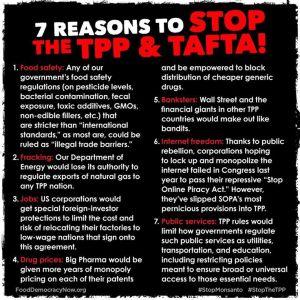
Critics claim trade agreements cost jobs by making it easier for foreign products to compete with locally made versions.
In response to critics who say the deal will cost 500,000 U.S. jobs, he points to a U.S. International Trade Commission report concluding TPP will maintain and potentially create new jobs.
In both cases, there are no sources of who these “critics” are and why they oppose the Trans Pacific Partnership (TPP). The MLive story does say that Michigan Rep. Dan Kildee is a “vocal critic.” However, the criticism of Kildee is only referenced by a hyperlink to a 2015 MLive article. There is no mention of the massive opposition from labor groups, environmental groups, health organizations, food safety groups and public interest groups that are concerned about the future of internet freedom.
In addition, the MLive reporter doesn’t event bother to look at how previous trade agreements have impacted Wolverine Worldwide. According to statistics from the Department of Labor, the North American Free Trade Agreement (NAFTA), resulted in at least 173 jobs lost at Wolverine World Wide Inc.
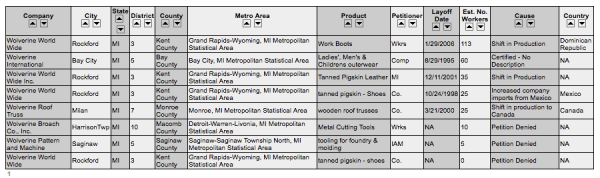
The Trans Pacific Partnership (TPP) will primarily benefit corporations and hurt workers, the environment and public health. You wouldn’t know this by reading the MLive article, which essentially acts as a promotional piece for the Trans Pacific Partnership.
State Senator from Michigan who Introduced anti-Trans Legislation, also a recipient of DeVos money
State Senator Tom Casperson (R-Escanaba) introduced a North Carolina-style bathroom inspection bill right here in Michigan yesterday.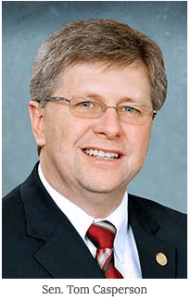
The State Senator from Escanaba has been outspoken on this issue for some time now. Since March of this year, he has been threatening to introduce legislation, after a Department of Education Draft Guidance document, entitled “Safe and Supportive Learning Environments for Lesbian, Gay, Bisexual, Transgender, and Questioning (LGBTQ) Students” went public.
On March 29, Casperson wrote, “It is hard to believe that a state board, which is clearly out of touch with Michigan residents, got assistance from equally out of touch unelected bureaucrats to develop such a document to fundamentally change Michigan’s public education system without the public’s prior knowledge or consent. In the pursuit of social justice, this so-called draft guidance document creates numerous problems, from the elimination of parental authority and notification to threatening student safety and beyond. My bill would stop this policy dead in its tracks.”
More DeVos Funding
Campaign Finance records show that in 2014, the DeVos family contributed $9,000 to Senator Casperson. In addition, the DeVos family between 2013/2014 was the largest contributor to the Senate Republican Campaign Committee in Michigan, contributing in that 2-year span $520,000. The next closest contributor was was Blue Cross/Blue Shield at $60,000.
Petition Against Legislation
There is an online petition attempting to stop Senator Casperson’s anti-Trans legislation, organized by Equality Michigan. To sign the petition, click here.
Community organizing as points of intervention in the Food System: A Grand Rapids perspective
Editor’s note: I was asked to participate in a series of video presentations that ACCESS of West Michigan is hosting around food justice and food sovereignty in Grand Rapids. The following is what I shared for the video as part of their Good Food curriculum.
My task today is to talk about how we can use community organizing as a way to change the current food system. This is no easy task, since the current food systems has been evolving over the past 100 years, and like any system of oppression, the current food system will resist change.
However, just as the Abolitionist movement ended slavery in the US a century and a half ago, changing the current food system is possible, especially if it is part of a larger social movement.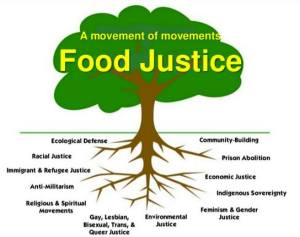
Before I talk about specific strategies and tactics we can use to change the current food system, I think it is important to talk about some important processes for organizing around food.
First, it is important that we have an intersectional view of the current food system. What I mean by that is that it is essential to look at the issue of food and the food system through a variety of analytical lenses. We can not separate how economics, race, gender, the environment, etc. impact how we understand the current food system and how we want to respond to it. To do so might mean we end up doing either more harm than we wanted to and our actions might be woefully inadequate.
Secondly, it is important that we simultaneously work to create a new food system while working to dismantle the existing one. The current food system will not go away on its own. What we have learned from previous social movements is that we need to not only fight against the current system of oppression, in this case the food system, while simultaneously work to create the kind of food system we want. This two sides of the coin approach is not only necessary, it also provides important entry points for people to become engaged in the work. This idea of creating new models while dismantling the old ones comes from Stephen D’Arcy’s important essay, Environmentalism as if Winning Mattered: A Self-Organization Strategy.
Ok, so now that we have a little bit of a framework about how to organize to change the food system, lets look at actual strategies that will help us to accomplish the goal of changing the current food system. These are not in any particular order, but they do need to be implemented simultaneously if we are to be truly effective in our efforts.
I. Community Skill Building Strategy – In this strategy it is crucial that we create opportunities that would allow as many people as possible to learn skills that are centered around food growing, food preservation and healthy nutrition. With this strategy we can employ a number of tactics to help people learn important food-centered skills. Tactic #1 – Food growing. It is important to create opportunities for people to grow some of their own food. This will not only give them some critical skills, it will them with new ways of seeing how the current food system is unhealthy and unsustainable. People can grow food in containers, raised beds, in the ground directly, through community gardens and be part of Community Supported Agriculture, which often allows those involved to be part of the food growing and harvesting process. Tactic #2 – Food preparation. The more we all have the skills to prepare food from scratch, the more likely it is for us to be dependent on the current food system. Food preparation is an important skill, but in the current economic system it is difficult for many people to eat well based on what they can afford and what they have time for. Therefore, one way to think about food preparation is to view it as a communal activity. If we had community kitchens that were neighborhood based, we could make food collectively to save money and time. Community kitchens could be located in people’s homes, in churches or other community spaces that would allow people to prepare food collectively, share recipes and make enough food for multiple meals. Community kitchens would allow people who work long hours and those who make poverty-level wages an opportunity to eat better, save money, save time and building  community. Tactic #3 – Food Preservation – Food preservation skills would help us to become less dependent on the current food system. Food preservation skills would consist of canning, freezing and drying of foods. These skills could also be practiced in community kitchen spaces and would also contribute to community building. We should also think about including seed saving as a form of food preservation, since seeds are increasingly becoming genetically modified as to not allow them to be self-reproducing. Additionally, if more of us practiced seed saving we could create a local seed bank, which would not only preserve biological diversity, it would allow more people access to the opportunity to grow more of their own food. Local organizations that promote skill building around food are: Baxter Community Center, United Church Outreach Ministry, Our Kitchen Table and Gardens for Grand Rapids.
II. Food Worker Strategy – This strategy is important because it exposes how the current Foodie 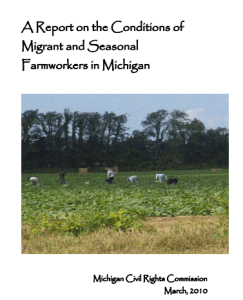 Movement is highly privileged. A food worker strategy would force the larger society to look more closely at the current food system, but it would also create possibilities for grassroots food worker organizing. Tactic #1 – Organizing farm workers – Organizing farm workers is not a new thing, but there is little attention given to one of the few jobs that doesn’t guarantee any minimum wage requirements. Farm worker organizing is an important tactic, because it not only exposes the exploitative nature of this labor force, it would provide an opportunity for the larger society to see how unjust, how racist and unsustainable the current food system is. (See Michigan Civil Rights Commission report on Migrant Workers in Michigan.) Tactic #2 – Restaurant worker organizing – Increasingly, many of us ask if the food served at restaurants is grown locally, but we rarely ask whether or not restaurant workers make a living wage and are allowed to organize as workers. Restaurant workers, like farm workers, make poverty-level wages and work in exploitative conditions. Creating greater opportunities for restaurant workers to organize would not only challenge the chain restaurants power within the current food system, it could lead to more collective forms of organizing around food.
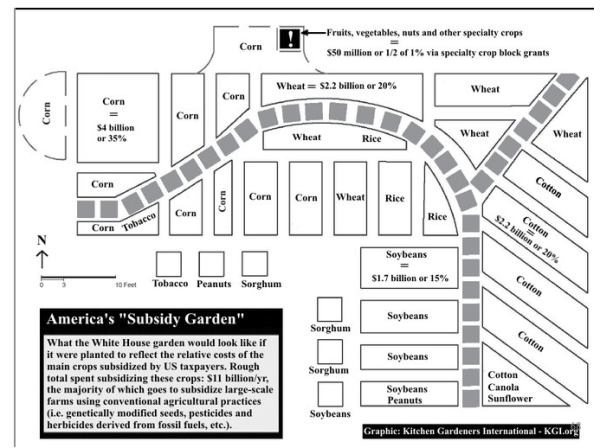
III. Just Food Policy Strategy – The current food system is able to survive, in part, by federal and state policies. These policies, which provide massive subsidies, means that we all pay for an unhealthy, unjust and unsustainable food system. Instead, we need policies and practices that are based on food justice and food sovereignty. Tactic #1 – Direct Action for Just Food Policies – Considering how unjust the current democratic process is in the US and how money largely influences electoral politics, it would be more effective to have a mass movement to force federal and state policy to adopt food policies that are bioregional, that supports small community-based agriculture and redirects tax subsidies for food justice work. If the current Farm Bill funding, which is billions of dollars, were redirected to local food production where everyone made a livable wage, imagine how much new local food could be produced that was just and sustainable. (See Farm Bill subsidies for Michigan.) Tactic #2 – Practicing Food Sovereignty – If taxpayer funds were redirected toward local food sovereignty initiatives, we would not only have more financial resources to make sure everyone eats well, but to recreate a food system where everyone would be allowed to actively participate in decided what kind of food system we want. This is what food sovereignty is, to practice collective decision-making about food, that is local and sustainable. Tactic #3 – Just Land Use – Just land use would mean that the way we use land for food production would be radically altered away from mono-crop food production that is based upon expanding food markets. Just land use would mean food would be grown in both rural and urban settings that produced fresh food that could be more directly consumed, instead of using the bulk of land in the country for mass production of cash crops. Just land use would also mean that food would not have to travel over a thousands miles before it is eaten, since food would stay within the bioregions that it is grown.
IV. Civil Society Food Strategy – A civil society food strategy would mean that more people take an active roll in both creating a new food system and resisting the current food system. Tactic #1 – Creating Food Councils and hold Food Assemblies – As a new food system is created and in the development process, there needs to be localized efforts to create food councils and host food assemblies, which can guarantee greater public participation. These food councils and food assemblies would develop policies and practices to ensure that food justice and food sovereignty principles were enacted. Tactic #2 – Direct Action for Resisting the current food system – Direct action against the current food system could take the form of boycotts, educational campaigns, preventing the misuse of land, community occupation of agribusiness land, shutting down the transportation ability of major food corporations ship food abroad, ending the advertisement of unhealthy/processed foods and any other means of making it difficult for the current food system to continue to exploit workers, create unhealthy food and destroy the environment.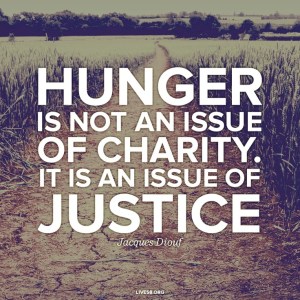
Lastly, it is important to say that we need to continue to provide food assistance programs, such as food pantries and meal sites. But we also need to ensure that these programs make room for equity and food system justice work. Such work facilitates conversations with those experiencing food insecurity. The strategies and tactics just discussed can be implemented at food pantries or food assistance sites and its important to recognize and support both.
We need safety nets to make sure that people are not experiencing food insecurity and malnutrition as we work toward creating new food systems. The kind of food system we create should be a food system that is based on justice, ecological sustainability, good health and compassion for all.

Last week, Northwood University dedicated a new school of management. Not surprising, it was named after Amway co-founder, Richard DeVos.
Richard DeVos has donated millions to Northwood University over the years through the Richard and Helen DeVos Foundation. In fact, the private school, which is dedicated to “developing the future leaders of a global, free-enterprise society,” also has other DeVos connections.
Dan DeVos graduated from Northwood with a BA in 1980 and since 1997 is on the Northwood Board of Trustees. The university gives out an Outstanding Business Leader award every year, since Northwood, “firmly believes that American business leaders deserve the highest forms of personal recognition for their contributions to this great nation and the world.” Richard DeVos won the award in 1983, Dan DeVos in 2007 and Dick DeVos won it in 2014.
The second generation of DeVos family members have also contributed to Northwood through their family foundations. According to the most recent 990s that are available on Guidestar, the Dan and Marie DeVos Foundation gave $1,312,500 in both 2013 and 2012. The Dick and Betsy DeVos Foundation contributed $200,000 in both 2013 and 2012.
The DeVos Family’s commitment to Northwood University comes as no surprise, especially when considering what the university claims as its core values. The school’s website proudly displays the values as follows:
We believe in:
- the advantages of an entrepreneurial, free-enterprise society.
- individual freedom and individual responsibility.
- functioning from a foundation of ethics and integrity.
- promoting and leveraging the global, diverse and multi-cultural nature of enterprise.

Translated, what these values mean is that Northwood University, like the DeVos family, believes that capitalism should dictate how society functions, that government should get out of the way of “the market” (except when they need tax breaks, subsidies or want to privatize more of the public sector) and that freedom and responsibility really means our class has freedom and everyone else but us needs to be responsible. The notion that the DeVos family is ethical would make most reasonable people fall out of their chairs laughing, and “promoting and leveraging the global, diverse and multi-cultural nature of enterprise” just means that they welcome all cultures and races to be part of the capitalist system.
The dedication to the school named after Richard DeVos was reported on MLive last week, where the commercial media entity played their normal role of being nothing more than a cheerleader for the DeVos family.
Local politics is often the most critical. People are more likely to be engaged at the local level and often feel they can have a direct impact on policy.
However, local politics also has has a tendency to allow people with greater privilege to gain access to decision-making, whether this is through elected office or board appointments. In Grand Rapids, the amount of money spent on running for city commission seats has grown exponentially and board appoints often are determined insiders and those connected within certain political circles.
Take for example the Grand Rapids Planning Commission Board. This board is made up of 9 members, who, like most boards in Grand Rapids, are appointed, not elected. Being appointed often translates into those who have greater access, greater privilege and disproportionately higher class status.
The current make up of the Grand Rapids Planning Commission Board is disproportionately made up of professionals or those who own businesses. Here are the 9 Planning Commission Board members and what status they hold within the community.
- Kyle Van Strien – Co-Owner of Long Road Distillery
- Thomas H Koetsier – Koetsier Realty LLC
- Stephen Ruis – Co-Owner of Art of the Table
- Paul Rozeboom – Professional Engineer and principal shareholder of C2AE, a consulting engineering and architecture firm
- Rick Treur – Director of Annual Giving and Alumni Engagement at Calvin College, Leadership Grand Rapids graduate
- Erica Curry Van Ee – Urban Curry Consulting, LLC
- Reginald Smith – Calvin Theological Seminary
- Mary Angelo – former Director of Roosevelt Park Neighborhood Association
- Walter M Brame – Insurance Sales Representative at Bankers Life and Casualty Company & former Director of the Grand Rapids Urban League.
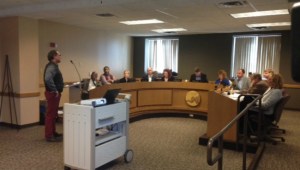
Given the current make up of the Planning Commission Board, it doesn’t come as a major surprise that the majority of them have been approving many of the development projects that have come before them over the past few years. Many of them would benefit in some ways to have new developments approved, because it would bring more upscale consumers and residents to the city and in some cases near the businesses they own and operate. These new development projects and the upwardly mobile class status of those the develop projects have attracted, are one of the major factors in the ongoing gentrification of Grand Rapids.
This is even reflected in a recent exchange between someone with Grand Rapids Homes for All and members of the Planning Commission Board/Staff in a document dated April 28, 2016.
Mr. Bartley related receipt of an email from Chuck Skala, Grand Rapids Home for All, regarding the GVSU Medical Education facility expansion, Coit Square condo project and the Rise project on Benson, and other proposed developments involving the demolition of existing rental homes and the displacement of families residing in those homes. He asked that as these projects come before the Planning Commission for review that they consider the impact on displaced families, especially with the current crisis in lack of availability of replacement housing for these families. He asked that the Planning Commission ask staff to include displacement impact as part of their analysis of proposed projects. He asked that the Planning Commission ask developers how they plan to accommodate families they are displacing. It has been their experience that displaced renters aren’t likely to attend public hearings regarding projects affecting them. In such cases decision makers sometimes rely on the opinion of neighborhood associations that may be disproportionately weighted in favor of home owners that stand to benefit from new development contrasted with renters who will be displaced. They request that the Planning Commission make a concerted effort to determine the impact on displaced families and provisions to accommodate them.
Mr. Bartley explained that he shared the communication because it is public comment, they were asked to share it, and it is certainly something to think about. Mr. Bartley advised that staff doesn’t believe the Planning Commission can include that as a Standard of review however; it isn’t a land use Standard. Staff intends to craft a response to explain their position.
Ms. Curry Van Ee asked if there is anything included in the Great Housing Strategies report regarding displacement that could be referenced in staff’s response.
Mr. Bartley replied that depending how you look at it the entire report affects that. There are no mechanisms to control rent and none of the strategies or recommendations from the report includes rent control.
Ms. Angelo asked if staff has any knowledge about how many people are being displaced with these projects. When visiting proposed project sites that include proposed demolition it seems that the homes are largely vacant. Mr. Van Strien asked the vacancy rate in the city.
Mr. Koetsier advised that the vacancy rate of active rentals is 1%; the lowest in the country. Not only is development removing homes but rental homes that go on the market are being purchased by owner-occupants and tenants are being displaced. He noted that development is part of the solution. When tearing down 11 houses and replacing them with 60+ apartments gradually the situation will improve.
Ms. Turkelson related that staff continues to have meetings on Great Housing Strategies and ways to implement it. She advised that staff is working on an analysis for the City Commission regarding how many units are being lost to development and how many units are replacing them. With the vast majority of the projects more units are being created by the new development.
Mr. Rozeboom asked if the City Commission can deny a rezoning request based on affordability.
Mr. Forshee advised that he would discourage that. The City Commission should be using similar Standards that the Planning Commission considers. His opinion is that because zoning flows from the Zoning Enabling Act that it limits that power. Ms. Turkelson added that they are also bound by the Master Plan.
What is instructive is the perspective. Mr. Koetsier, with Koetsier Realty LLC, states:
“Not only is development removing homes but rental homes that go on the market are being purchased by owner-occupants and tenants are being displaced. He noted that development is part of the solution. When tearing down 11 houses and replacing them with 60+ apartments gradually the situation will improve.”
First, many of the homes that Mr. Koetseir says are being purchased by by owner-occupants isn’t consistent with what has been happening in many of the recent development projects. For example, in the Belknap area, houses have been demolished, and the newly approved RISE Real Estate project on Michigan will demolish roughly a dozen homes and several commercial buildings.
Mr. Koetsier also states, “development is part of the solution.” This has not been the case when it come to affordable housing. Virtually everything that is being proposed is either “market-rate” or very high end. Ms. Turkelson also states, “With the vast majority of the projects more units are being created by the new development.” While it is acknowledged that there are more new units being created, a very small percentage of them are not affordable for working class individuals or families.

One can see from the graphic above when the term for each of the Planning Commission board members will end. What would it take to have new board members come from the ranks of those most impacted by gentrification? Is this even possible? Should those most impacted from ongoing development projects engage in movement building instead? Should both be done? Important questions for those who care about housing justice.
The Unaffordability of Grand Rapids
On Monday, MLive ran yet another story about new housing development projects in Grand Rapids, entitled, High-end, micro apartment projects up for tax breaks.
The brief article looks at four proposed housing development projects seeks approval from the city of Grand Rapids, along with the possibility of tax breaks for each project. The four projects are: a 616 Lofts project on Quimby NE; Maplegrove Development LLC project on Market Avenue; Green Cane Property ( in conjunction with Orion Construction) project on Wealthy in Uptown, and; a Third Coast Development project in the Firestone building on Jefferson SE, near Fulton.
However, the brief MLive article focuses mostly on the Green Cane Property project at the site of the old McDonald’s on Wealthy SE and their micro apartments. The only source cited is a representative with Green Cane Property. In addition, the article does mention that the Grand Rapids City Commission would be deciding on all four of these projects at their May 10 meeting and whether or not to offer tax breaks for each of the projects.
According to the City Commission Agenda Packet for their May 10 meeting, the Green Cane Property project will be getting significant tax breaks. There was no additional information from said City Commission packet on tax breaks for the other three housing development projects.
The MLive article states at one point, “Grand Rapids commissioners have been exploring ways to encourage development of more “affordable” housing, with rents below market rate. Recent ordinance changes include the addition of parking incentives for construction of “micro-units” that are 475 square-feet or smaller.”
The question should be asked, what exactly is it that the City Commissioners are doing to explore and implement ways to make affordable housing a reality in Grand Rapids? The same sentiments were shared during an April 12 City Commission meeting, a meeting where they unanimously approved a $300,000 per condo development project. At that April 12 meeting every commissioner commenting on the need to increase affordable housing, but none of them offered up a plan on how to make affordable housing a reality. 
Everyone of the four housing development projects mentioned in the MLive article will not be offering truly affordable housing options for individuals or families, like almost all of the new housing development announcements in recent months. Almost all of the housing options with these four development projects are listed as market rate, with the 616 Lofts project on Plainfield listing rental rates between $850 to $1,500 per month; the Maplegrove Development project on Market Ave. listing rental rates between $935 to $1,795 per month; the Third Coast Development project on Jefferson SE listing rental rates between $1,250 to $2,000; and the Green Care Property/Orion Construction project on Wealthy SE listing rental rates between $700 to $1,400 per month.
Someone making $10 an hour, which is the reality for thousands of people in the Grand Rapids area, equals $22,400 a year. The rate of the lowest rental cost of the four new projects is $700 per month for a micro apartment. Rent at such a location for one year is $8,400, over one-third of the income of someone making $10 an hour. A single person might be able to survive on that income, but not someone with children or those supporting other family members. Grand Rapids is quickly becoming a city that is unaffordable for thousands of working class individuals and families.
For 31 years, numerous businesses, trade associations, universities and non-profits have come organized what has become known as West Michigan World Trade Week. 
The event is primarily organized through the Van Andel Global Trade Center, which is part of Grand Valley State University. The Van Andel Global Trade Center is located in the Seidman College of Business, which has grown to be the primary source for creating new “talent” for local businesses that have a global reach.
The proponents of West Michigan World Trade Week claim that the benefits of their efforts are as follows:
- Highlight the link between international trade and Michigan’s economic well-being
- Recognize the contributions of international trade to job creation in Michigan
- Celebrate companies succeeding in the global marketplace
- Share knowledge, resources and ideas to facilitate business success internationally
While points 3 and 4 are true, in that they both celebrate local companies that do global business; and they do share resources and ideas that benefit local companies that profit in the world market, the first two points are false claims or capitalist myths.

Capitalist Myth #1 – Highlight the link between international trade and Michigan’s economic well-being
The link between international trade and the economic “well-being” of Michigan’s economy is a rather slick way of saying that businesses in Michigan that engage in global trade are making a hefty profit. There is no such thing as Michigan’s economy and more than there is a Grand Rapids economy. We all are subjected to the economic system of Capitalism, and Capitalism as we know primarily benefits the ownership class.
Even if we accepted the idea that Michigan had its own economy, we could discern its well-being by looking at certain factors. First, what percentage of the children are currently experiencing poverty? According to the most recent data from the Michigan League for Public Policy (2014), 22.6% of children between 0 – 17, are experiencing poverty. If we looked at just Kent County, the percentage of children living in poverty is 20%. If one looks at the poverty rates for African American and Latino/a children living in poverty, it’s almost 1 out of 3.
Does this seem like the economy of Michigan is well off? Of course, those who truly believe in a Michigan economy are those who most benefit from capitalism that is practiced locally. Those who are experts on Michigan’s economy are people who represent firms such as Anderson Economic Group, which are the same experts that represent big business in Michigan. If on the other hand you spoke to working class people, people making poverty level wages, working long hours and constantly struggling to make ends meet, they you could get a very different picture of “Michigan’s economy.” However, we almost never hear from these people, especially not from commercial media sources.
Capitalist Myth #2 – Recognize the contributions of international trade to job creation in Michigan
Another indicator is the so-called link between international trade and job creation in Michigan. While some of the larger companies that engage in global trade have added some jobs, thousands of jobs in Michigan have been lost due to global trade.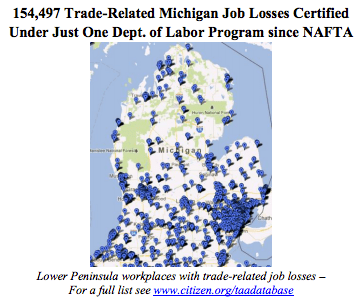
According to a recent study done by Public Citizen,
Over 21 years, a series of trade agreements not only have failed to meet their corporate and political backers’ glowing promises of job creation, but instead have contributed to unprecedented and unsustainable trade deficits, the net loss of nearly 5 million U.S. manufacturing jobs and more than 55,000 factories, the offshoring of higher-wage service sector jobs, flat median wages despite significant productivity gains and the worst U.S. income inequality in the last century.
For most working class people, they recognize that trade deals such as the North American Free Trade Agreement (NAFTA), the Central American Free Trade Agreement (CAFTA), the Korean Free Trade Agreement and the most recent Trans Pacific Partnership (TPP) have resulted in the loss of manufacturing jobs. Under NAFTA alone, according to the US Labor Department, 154,497 jobs were lost in Michigan since the agreement was signed in 1994.
Countering World Trade Week and local capitalism
The West Michigan World Trade Week will not be challenged until there is a substantial multi-issue movement that can make the link between local capitalism and their own experiences. As of right now, such resistance is a long way off. There have been some encouraging and even inspiring actions that are challenge neo-liberal capitalism on the local level, particularly the bus drivers union and Students Against Sweatshops, but there needs to be a much larger movement with a broader vision if the local capitalist class is to be challenged.
First, we need to shift our energies away from the empty promises of electoral politics. The two-party system in the US is essentially just 2 branches of the capitalist class. If more energy and resources we re-directed to mass movement, the capitalist class would feel threatened.
Second, there is no real hope in the non-profit industrial complex. Too many non-profits not only rely on a disproportionate amount of funding from the capitalist class, they have deep relationships with them in the form of projects, who sits on the board of directors and the internalization of the values that is the foundation of neo-liberal capitalism.
Lastly, there are no significant intersectional movements in West Michigan that can challenge local capitalism. Too often organization and movements are operating in silos and do not, or will not, see the connection to other pressing issues of the day. This is often of no fault of their own, since it is difficult to survive in this capitalist economy, especially if you are against war, poverty and racism.
However, this does not mean that we have to accept the status quo. We can chose to put our efforts into movement building. We can chose to organize in grassroots and autonomous ways, and we can develop a more robust intersectional analysis that can actually challenge the local economic and political systems of power. We can also be encouraged by the numerous existing global movements that do make the links and do operate outside of mainstream politics, movements such as the MST in Brazil, the PAH in Spain, the Zapatistas in Mexico and the Idol No More movement in the occupied territories of Canada and the US.
The indigenous movement in southern Mexico known as the Zapatistas has a saying about what real leadership is. Mandar Obedeciendo means to “Lead by Obeying.”
The principle behind this philosophy is that true leaders follow the will of the people, the desires of the larger community. This principle challenges authoritarianism in the communities, and representatives who are not accountable to the widespread desires of the community will be ousted from their positions.
This is not the typical form that leadership takes, especially in dominant cultures like the US. Here, leadership often exists to perpetuate itself, amassing power and making decisions for others. This is the Neo-liberal Capitalist model. Even in the non-profit world, leadership often mimics the corporate world, with a board of directors and a CEO or Executive Director.
This model of leadership development is practiced right here in Grand Rapids through the Center for Community Leadership.
The Center for Community Leadership (CCL) is a project of the Grand Rapids Chamber of Commerce. The creation of such a program was first proposed in the early 1980’s. The mission of the CCL is to, “equip talented professionals with intensive training, active networks, and meaningful resources to shape their careers, innovate within their companies, and engage in community change.”
The CCL offers a 9-month program where “community leaders” interact with participants to give them insights on how to be a leader in this community. The themes that are discussed are:
- Essential Needs

- Talent Development
- Public Safety
- Community Health
- Economic Prosperity
- Quality of Life
- Community Trusteeship
- Philanthropy
This 9-month program invites anyone to apply, as long as you can pay $2950. Now, some employers will foot the bill for staff to apply and there are a few scholarships available, but by charging such a fee, it is clear that the program is designed to create leaders that will not challenge the hierarchical Neo-liberal model.
First, the major sponsors of the CCL program are the same businesses that benefit from Neo-liberal capitalism, such as: Meijer, Amway, Steelcase, Fifth Third Bank, Spectrum Health, Lacks Enterprises, Wolverine Worldwide, Metro Health, Blue Cross-Blue Shield, Foremost Insurance, etc.
Second, the Center for Community Leadership Council is made up of essentially people from the same companies listed above, along with Chamber of Commerce representation and a few of the local universities. Thus, the CCL perpetuates itself by developing leadership that internalizes Neo-liberal values.
Third, addition leadership development projects are offered to continue to mold people within the CCL framework, such as the Emerging Leaders Series, Leadership Advantage and Leadership: An Inside-Out Perspective. Each of these programs are also come with a fee – $750, $2750 and $1,250 respectively.
If one signed up for all four of the Center for Community Leadership programs, they could end up spending $7,700. Such cost automatically eliminate most people in the community and ends up serving those with tremendous privileges. But that is the point of the CCL programs, to foster the kind of leadership which embraces the values of an economic and political system which rewards the privileged few and marginalizes the majority of the community.
If one thinks about the great social movements that have arisen in the US over the past 150 years. Beginning with the abolitionist movement, what kind of leaders did these movements produce – Harriet Tubman, Frederick Douglas, Sojourner Truth, Angela Grimkie, Lucy Parsons, Mother Jones, Eugene Debs, Big Bill Haywood, Dorothy Day, W.E.B. Du Bois, Ida B. Wells, A.J. Muste, Rosa Parks, Dan Berrigan, Martin Luther King Jr., Stokley Carmichael, Cesar Chavez, Dolores Huerta, Fannie Lou Hamer, Ella Baker and Angela Davis……just to name a few. What these leaders (and some of them bristled at the title leader) had in common was a deep commitment to their communities, the willingness to take serious risks and to fight against systems of oppression and for structural transformation. I ask you, is this what the Center for Community Leadership is all about.
By way of ending, I wanted to share another principle of leadership that guides the Zapatista movement. Todo Para Todos, Nada Para Nosotros, which means, Everything for Everyone, and Nothing for Ourselves.
This principle is predicated on the idea that Leaders are not in power to benefit themselves personally, but to fight for benefits for everyone in the community. If there is a type of leadership that we should advocate for, then this is that type of leadership, not the kind that the Center for Community Leadership produces.
Editor’s Note for transparency: When I used to work for the Community Media Center, the Center for Community Leadership used to come to the CMC. I facilitiated a critical thinking/Media Literacy workshop for 2 years, but then told my former boss I would no longer do this workshop, since it did not support the values I embraced of what I thought the CMC embraced.
Senator Peters follows in the footsteps of Carl Levin with unquestioning support for Israel
Last week the it was reported that the US government plans to increase the amount of annual aid to Israel, from $3 billion to $5 billion. 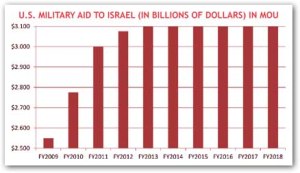
Israel has been the number one recipient of US military aid for the past 40 years, but despite the level of US support, the Israeli government is demanding an increase. This is no surprise when considering the near unanimous US Congressional support that Israel has received over the past 4 decades, along with every administration during that same time period.
Michigan Senator Carl Levin was one of the biggest cheerleaders on behalf of Israel and he was rewarded handsomely by being one of the largest recipient’s of money from the Israeli Lobby – over $1 million during his time in the US Senate.
Senator Levin demonstrated over and over that he was deeply committed to being an apologist for Israel and Israeli war crimes, whether it was on the Israeli treatment of Palestinians, the Israeli occupation of Palestine or the Israeli position on Iran.
Sen. Peters: an apologist for Israel
Elected to replace Carl Levin, Senator Gary Peters is now following in the footsteps of Levin by continuing a legacy of unquestioning allegiance to Israeli policies. According to Senator Peters’ website, “Last year, Peters helped introduce an amendment included in the National Defense Authorization Act authorizing joint U.S.-Israel anti-tunnel defense research, development, and test activities in order to better detect and destroy tunnels which have been utilized by terrorist groups. Funding for this research and development was included in the year-end government spending bill signed into law by the President Obama last December.”
Now Senator Peters, along with 82 other Senators, has sent a clear message to the Obama administration about the so-called need to increase US military aid to Israel. “In light of Israel’s dramatically rising defense challenges, we stand ready to support a substantially enhanced new long-term agreement to help provide Israel the resources it requires to defend itself and preserve its qualitative military edge,” wrote Peters and his colleagues.
Senator Peters was 19th on the list of top Senate candidate recipients of the Israeli lobby in the 2014 election, receiving $113,849 from several pro-Israel groups since his 2014 run as a Michigan Senator. However, the most recent letter that he and his fellow Senators have sent President Obama demonstrates his ideological commitment to maintaining Israeli and US supremacy in the Middle East.

Here is the text of the letter sent to President Obama from Senator Peters and his colleagues last week:
Dear Mr. President:
We commend you for your continued work on negotiating a new Memorandum of Understanding (MOU) for security assistance to Israel. In light of Israel’s dramatically rising defense challenges, we stand ready to support a substantially enhanced new long-term agreement to help provide Israel the resources it requires to defend itself and preserve its qualitative military edge. As you know, a strong and secure Israel remains a central pillar of our national strategy to achieve peace and stability in the Middle East. Israel remains America’s strongest ally in this troubled region.
Unfortunately, Israel faces a variety of threats which require increasing the resources devoted to its defense. Hezbollah has positioned up to 150,000 rockets and missiles to Israel’s north, and promises to attack at a time of its choosing. Disorder in Syria has spawned multiple terrorist groups dedicated to Israel’s destruction, including affiliates of al Qaeda and ISIS. Iran’s intervention in Syria has brought the Islamic Revolution Guard Corps and Shi’ite militias near Israel’s border. In the south, Hamas has grown its rocket and missile inventory and is actively rebuilding tunnels to attack Israel. The Sinai has become a lawless haven for militant Islamist groups. Iran is actively helping most of these groups, in addition to illicitly testing sophisticated ballistic missiles capable of carrying nuclear warheads. Earlier this month, two such weapons were launched bearing the ominous words in Hebrew: “Israel should be wiped out.”
In addition to these immediate threats, Israel must take into account the possibility that regional instability could lead to toppling of one or more of America’s friends. Given the extraordinary levels of weapons pouring into in the Middle East, Israel could quickly find itself on the wrong end of the regional military balance. This problem is compounded by the mounting cost of the new aircraft and other weapons systems that Israel must acquire to keep pace with its neighbors. Moreover, Israel must prepare for the likelihood that Iran will resume its quest for nuclear weapons.
Members of Congress from both parties have been proud to work with you and previous administrations to provide Israel the essential resources it needs to survive in a very tough neighborhood. The nature and breadth of the current threats, however, mean that the United States must enhance its investment in the long-term security requirements of our closest Middle East ally. Already this year, we intend to consider increasing U.S. funding in FY17 for cooperative missile defense programs, much as we have done over the past several years. Most importantly, we urge you to conclude an agreement with Israel for a robust new MOU that increases aid while retaining the current terms of our existing aid program. That MOU should pledge aid at a level that will enable Israel to combine our assistance with its own increased defense budget to meet its essential defense needs over the coming decade. We look forward to working with you on this critical issue.
More displacement = more Market Rate Housing for GR

Two days ago MLive posted a story about yet another development project that has received the green light.
The development in question will take place on the north side of Michigan street, between Grand and Benson, just south of the I-196 highway. RISE Real Estate Development will head up the project. The Georgia-based developer has this to say about themselves on their website:
Rise is a nonprofit organization that connects key groups working to revitalize communities and neighborhoods. Rise partners with communities to develop affordable market-rate housing in partnership with community development corporations, particularly in neighborhoods with the potential to enhance economic diversity.
Seems like they use all the right buzz words, but lets look at the reality of what they are doing with this new development project along the Michigan Street corridor.
First, the $53 million apartment project has been given permission to keep $8.9 million in local and school taxes. This means they will “capture $4.3 million in local property 
taxes and $4.6 million in school taxes over the next 14 years. Eligible expenses include demolition of existing buildings, site grading, new streets and the installation of new utilities.”
How is it that this project gets such a large tax break? $8.9 million is just under one-fifth of the total cost of the project, plus they won’t have to pay taxes for 14 years. How does this benefit the city? Can you imagine if people who wanted to stay in their homes and make improvements would get comparable tax breaks. How about giving comparable tax breaks to people who wanted to purchase and fix up the houses in this neighborhood? Wouldn’t they be revitalizing the neighborhood?
Second, the tax breaks were approved by the Michigan Strategic Fund Board, which is part of the Michigan Economic Development Corporation (MEDC). The MEDC is a public-private partnership that seeks to promote tourism and economic development in Michigan. The reality is that the MEDC is predominantly made up of people from the private sector, with a few representatives from local government. These people are appointed, not elected.
The Michigan Strategic Fund Board, which approved the $8.9 million in tax breaks for the RISE Real Estate Development project, is also an unelected group and is made up mostly by members of the private sector and two state government bureaucrats. Thus, it is evident as to why tax breaks were provided for this development project. However, it makes it difficult for this writer to understand how RISE is going to enhance economic diversity with such a project, especially when 16 homes are being demolished and so many people are being displaced to promote “market-rate” housing.

Third, how do you think the 16 houses currently occupied by individuals and families will feel about RISE and its commitment to “revitalize communities and neighborhoods.” This is a critical point, since it is not likely that those being displaced will feel revitalized. The question with all of these development projects is not whether it will be a community benefit. The question is, which people within the community will benefit. There are clear winners and clear losers, with the winners being RISE, real estate speculators, and other development projects or potential development projects in the area. The clear losers are those who are being displaced, working class families and disproportionately community of color, who are statistically more vulnerable to displacement. This is Grand Rapids.
 Grand Rapids Institute for Information Democracy