We’re Rich and We Do What We Want: A DeVos Family Reader
 In Howard Zinn’s monumental book, A People’s History of the United States, he constantly juxtaposes the amazing things that people did to fight for liberation and the people behind the systems of oppression that social movements were fighting against.
This is exactly why I have spent years monitoring, investigating and critiquing the DeVos Family. They are the most recognizable and powerful manifestation of the systems of power and oppression in West Michigan. Now, I know there are plenty of people who share the belief that without the DeVos Family, Grand Rapids wouldn’t be where it is today. I fully agree with that belief, but for reasons that are the exact opposite of those who hold the most powerful family in West Michigan in high regard.
When Rich DeVos and Jay Van Andel founded the Amway corporation, they did so by embracing some of the most deeply entrenched lies about this country. Rich DeVos has written numerous books that promote his values. In his book Believe, DeVos, in talking about freedom, states, “that call of freedom went forth from a rugged wilderness, and Europe and Asia and Africa sent their sons of adventure to hew out a new society in a land of forests and savages.”
This statement from DeVos is essentially an affirmation in his belief of Manifest Destiny. For those who don’t know, the company that DeVos founded with Jay Van Andel, was originally going to be called The American Way, but was changed to Amway so as to abbreviate their take on Manifest Destiny.
In addition to believing in Manifest Destiny, Rich DeVos is also deeply committed to the values of capitalism, or what he likes to refer to as the free enterprise system. In his book Believe, DeVos states, “The free-enterprise system has outperformed, outproduced any other in the world. It is a gift of God to us, and we should understand it, embrace it, and believe in it.”
The above statement is the perfect encapsulation of what the patriarch of the family, Rich DeVos, believes and is firmly committed to. The DeVos Family is a deeply religious family, regardless of how one defines religious beliefs. The family comes out of the Calvinist tradition and are members of the Christian Reformed Church. However, the DeVos Family, in many ways embraces a form of Christian Reconstruction. Those who practice Christian Reconstruction theology believe that society should be governed by biblical values, rather than secular values. This is exactly why the family has for decades developed relationships and funded organizations that are deeply committed to homophobia, anti-reproductive rights, patriarchy, white supremacy and free market capitalism.
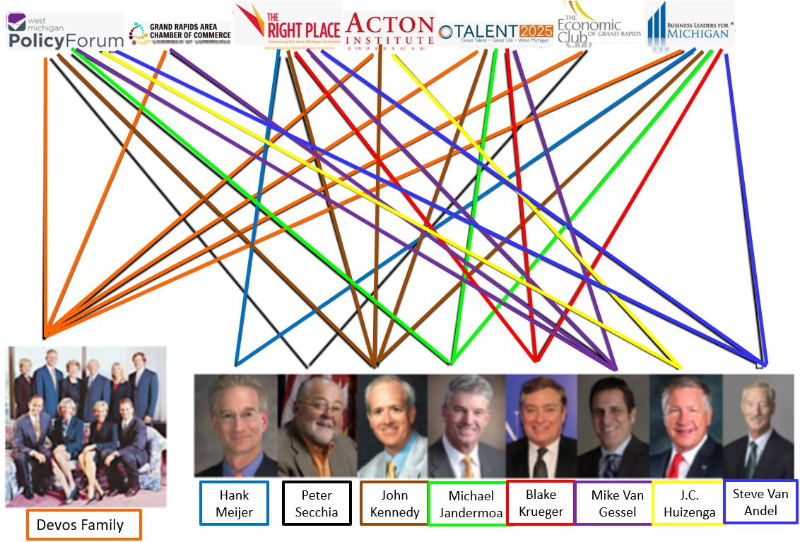
The DeVos Family not only supports these religiously motivated values by their support of certainly organizations, but by their deep commitment to influencing public policy. The family has been one of the largest donors to the Republican Party for several decades now, at the federal, state and local level, as is documented in this collection of articles. In addition to supporting the Republican Party and GOP candidates, they also contribute to organizations that are committed to influencing public policy. In West Michigan, the DeVos Family has been involved in the financing, planning and development of groups like the West Michigan Policy Forum, the Acton Institute and the Right Place Inc. These groups all embrace the capitalist economic system and public policy decisions, which benefits and expands the power of those who make up these groups, including the DeVos Family.
What is ironic about the candidates and public policy that the DeVos Family endorses, is that those same policies end up negatively impacting communities of color, those who identify as LGBTQ, those experiencing poverty and immigrants. The irony is that the DeVos Family foundations end up contributing millions to West Michigan non-profits that provide services to the very same people who are negatively impacted by these neoliberal economic policies.
These are the kinds of themes that are explored in the DeVos Family Reader. In addition, we look at how the local news media has reported on the most powerful family in West Michigan, which has played a role in creating public misinformation. We also look at the strategic function of ArtPrize and what impact it has had on West Michigan. We argue that in many ways, ArtPrize functions has a great PR tool for the DeVos Family and its goals. In fact, such a belief was confirmed early on in the evolution of ArtPrize, when Sam Cummings, co-founder of CWD (of which the DeVos Family is part of) said, “Our long-term goal is really to import capital – intellectual capital, and ultimately real capital. And this (ArtPrize) is certainly an extraordinary tool.”
Lastly, we look at Betsy DeVos’ ascent to the White House as Secretary of Education in the section listed as Betsy DeVos Watch.
As I stated at the beginning of the introduction, I have spent years monitoring, investigating and critiquing the DeVos Family. This is an ongoing project and the DeVos Family Reader will continue to be updated. The contributions to the DeVos Family Reader have come from a variety of sources such as the Grand Rapids People’s History Project, an Indy newspaper from the 90s called The FUNdamentalist, Media Mouse and the Grand Rapids Institute for Information Democracy.
Also, as stated before, I believe that in order to promote collective liberation and social justice for those most marginalized, we have to understand and resist the systems of power and oppression in this community. Looking into the history and practices of the DeVos Family, provides us with a clear example of how systems of power and oppression function in this community. I am deeply indebted to those who have been involved in this struggle and it is my hope that the DeVos Family Reader can be a useful tool in the ongoing struggle for justice.
Over 500 pages on the DeVos family are in our reader, which you can access at our Documents section, then clicking on DeVos Family Reader.
Follow the Money: Campaign Finance reports and notable West Michigan Campaign Contributors
 The deadline for this quarter’s campaign finances were due on October 25th. As always, if you want to understand electoral politics you have to follow the money.
Campaign contributors, especially those with economic power, only contribute in order to gain access and often to get politicians to adopt policies that are beneficial to their interests. For example, at the federal level, the Oil & Gas industry has contributed just over $790 Million since 1990. This industry is not contributing just for the fun of it, they are expecting easy access to politicians, but more importantly, they want politicians to propose and pass legislation which will benefit their industry.
There are other reasons for campaign contributions. People sometimes contribute to a candidate for ideological reasons, or they contribute because they just want the opposing candidate to lose. However, the dominant reasons for contributions are access and to influence policy.
Michigan Governor’s Race
MLive recently reported that Gov. Gretchen Whitmer had raised $3.1 Million in the last quarter. The article also noted that since Whitmer is facing a recall, the amount that individuals can contributed exceeds the normal limit. The largest contributor to Whitmer’s campaign this quarter was, “William Parfet, a businessman and heir to Upjohn Co. founder W.E. Upjohn, and retired Western Michigan University Professor Timothy Light, who each gave $50,000.”
There are several Republican candidates running for Governor, with James Craig raising the most during this quarter, at $1.4 Million. Some of the notable contributors to Craig’s campaign are Timothy Schowalter (CEO of Pioneer Construction) $14,300, former Michigan Governor John Engler $7,150, Michele Engler $7,150, Mark Murray (Engler administration, former President of GVSU and the Meijer Corporation) $7,150, and other members of the Grand Rapids Power Structure – Sam Cummings (CWD) $2,500, John Kennedy (Autocam) $1,039, and Michael Jandernoa (42 North Partners) $1,000.
28th Senate District
The 28th Senate District is on the ballot in November, since Peter MacGregor vacated the seat to run as Kent County Treasurer. Republican Mark Huizenga is the top candidate in fundraising, with over $60,000 from the Michigan Catholic Conference and thousands of dollars from several members of the DeVos family.
According to the most recent quarterly filings, Huizenga also received $5,000 from the Grand Rapids Fire Fighters Union. I sent the union a message on Monday asking why they had contributed $5,000 to Huizenga’s campaign, but have not received an answer as of this posting.
Huizenga’s Democratic challenger is Keith Courtade, who has only raised $450. It seems that the Democrats have already conceded this race, thus allowing the GOP to continue to control the Michigan legislature,.
Other notable contributions
The Grand Rapids Chamber of Commerce, like all Chambers, have a long history of contributing to candidates. For this quarter, the Grand Rapids Chamber of Commerce has contributed to numerous state races, mostly GOP candidates, but one Democrat. The GR Chamber also contributed twice to a Kentwood City Commission candidate, Jessica Ann Tyson, who is the sister of Kent County Commissioner Monica Sparks.
Power Over or Power With: A Power Analysis of the top 200 most powerful business leaders in West Michigan, according to the Grand Rapids Business Journal
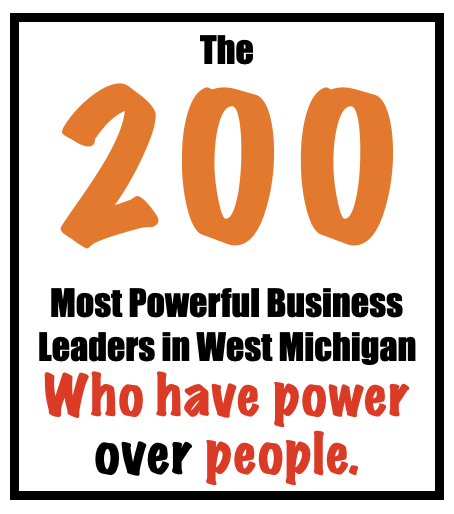 The Grand Rapids Business Journal recently released their list of The 200 Most Powerful business Leaders in West Michigan.
The brief editorial comment about this list (page 12) states:
But have you ever stopped to ask yourself why you live in Grand Rapids? It’s a big country and there are plenty of great places to live. Yet, you chose West Michigan. Why? I suspect it has a lot to do with the 200 people profiled in this magazine, even if you don’t know them personally or even by name.
There are a few more quaint comments from the editor of the Grand Rapids Business Journal (GRBJ), Tim Gortsema, but he ends his comments by saying, “I would argue that these 200 people (and countless others just like them) are the reason you chose to live in West Michigan. In the end, living in West Michigan is more about the people than it is about cool things to see and do.”
Unfortunately, the GRBJ never provides a definition of what they mean by powerful, even though it is the title of the document, The 200 Most Powerful Business Leaders in West Michigan. There are certainly a lot of people on this list who have a great deal of economic, political and social power. This kind of power can be identified as having power over people, because of their wealth, businesses, influence in politics and other social dynamics. In fact, many of the people in the GRBJ list of 200 are either part of the first or second tier in the Grand Rapids Power Structure.
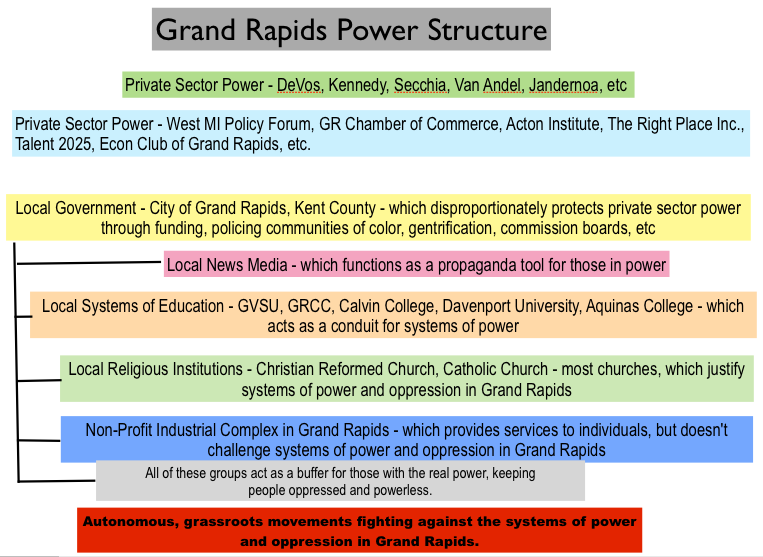
The most powerful people in Tier 1 are those who are millionaires or billionaires, such as members of the DeVos, Van Andel and Meijer families. In addition to their wealth, the make a great deal of their wealth off of those who work for their companies and institutions. Then there is the dynamic of these families and individuals who contributed a great deal of money to politicians and political candidates, with the goal of influencing public policies that benefit their economic and ideological position.
Another reason why these people are part of Tier 1 of the most powerful, has to do with the fact that many of them have their own foundations, which not only works to hide some of their wealth from being taxed, the foundations allow these powerful people to engage in population management. Foundation funding generally has strings attached, so that non-profits which apply for grants will not be able to use the funding dollars for addressing the root causes of social issues, but simply to manage the individuals who access specific non-profit resources. This dynamic is what social theorist and anti-racist organizer, Paul Kivel, refers to as non-profits acting as a buffer for those in power. One last dynamic that the Tier 1 most powerful engage in, is to sit on the boards of organizations to further influence social, economic and political outcomes. Some of the entities that Tier 1 people act as board members would be the West Michigan Policy Forum, the Right Place Inc., the Acton Institute, and the Grand Rapids Chamber of Commerce.
Tier 2 members of the Grand Rapids Power Structure often work in leadership positions of the businesses or the organizations that Tier 1 people have created. Many of these people also sit on the boards, along with often acting as participants and cheerleaders for the kinds of policies and social outcomes that Tier 1 members will champion. Tier 2 members could also be identified as part of the managerial or professional class and generally have less wealth than those in Tier 1.
Tier 2 people also consist of local politicians, police chiefs and even some of the directors of non-profit organizations that are fundamentally not committed to social justice or challenging systems of power and oppression. Some of these people are Grand Rapids City Manager Mark Washington, Mayor Rosalynn Bliss, the police chief, the Kent County Sheriff, and non-profit leaders like Phil Weaver with Hope Network or Bridget Clark Whitney with Kids Food Basket.
There are a handful of people who could be considered powerful people, but in this case it is power with others and not power over others. Some examples might be George Bayard, the Executive Director of the Grand Rapids African American Museum and Archives, or Jazz McKinney, the Executive Director of the Grand Rapids Pride Center.
Most of the people identified as part of the 200 most powerful in West Michigan, according to the Grand Rapids Business Journal, are those that practice power over others. In fact, it would be my contention that the current wealth gap in this community is in large part due to most of those on this list of 200. Most of these people have tremendous wealth, while tens of thousands are living in poverty.
Most of the people on this list are the perpetrators of systemic racism in West Michigan, along with being the beneficiaries of systemic racism. Most of the people on this list of 200 are also responsible for much of the gentrification in Grand Rapids, the tremendous amount of food insecurity, and the general maintenance of business as usual in this community. In fact, most of the top 200 most powerful on this list are the primary obstacles to the ability of grassroots groups to achieve social justice in this community. This is why, in social movement work, we name what we did in this article, as a Power Analysis.
 Betsy DeVos and her husband, Dick DeVos, have been at the forefront of the anti-public education movement for more than three decades. They both embraced the Heritage Foundation’s effort to undermine the public school system, which began during the Reagan years.
In 2000, Betsy DeVos led a campaign to put the issue of school vouchers on the ballot in Michigan. That ballot initiative failed, but DeVos did not give up. Betsy made the decision to diversify the kind of tactics that the so-called School Choice movement. These tactics included financially backing candidates at the state and federal level, candidates who would push for an anti-public education platform.
A second tactic employed by Betsy DeVos, was to attack public teacher unions. This involved putting out misinformation about public school educators, but it also meant that policies would be adopted that undermined teacher unions and hurt them financially, forcing school districts to diminish public school teacher benefits.
A third tactic used by the former US Education Secretary was to work with far right think tanks like the Mackinac Center for Public Policy, the Acton Institute, and any other think tank that was a member of the State Policy Network. This tactic was useful in that this network of think tanks would craft position papers, engage in public misinformation campaigns and work to influence state legislators on public school policies. In addition, Betsy DeVos and other members of her family would make significant financial contributions to these think tanks, along with acting as members of the Board of Directors.
One last tactic that Betsy used, a tactic that began right after her 2000 School Voucher ballot initiative was defeated, was to create her own front group in Michigan, known as the Great Lakes Education Project (GLEP). GLEP became a primary mechanism to influence state legislators and to attack public education and public school teachers unions.GLEP has been instrumental in weakening public school districts across Michigan, with Detroit being one of the best examples.
In 2006, Dick DeVos ran for Governor of Michigan, which included a “school choice” platform. Dick DeVos lost that election, but ten years later, Betsy DeVos would land an even bigger political position, becoming the US Secretary of Education in the Trump administration. As Secretary of Education, DeVos used her position to continue to push for education policies that would further undermine public education and promote charter and other private or religious schools. One major policy initiative that Betsy DeVos pushed was Education Freedom Scholarships, which would allow public money to be used for private and religious education. The legislation that Michigan adopted last week, is essentially what Betsy DeVos intended with her Education Freedom Scholarships, which would allow individual states to determine the use of public money for private and religious education.
Michigan Legislators passes bills to further the DeVos education agenda
On Tuesday, MLive reported:
Senate Bills 687 and 688 and House Bill 5405 passed Tuesday morning through House and Senate education committees and were approved by the Senate 20-16 shortly after. The House voted 55-48 Tuesday afternoon on a separate, similar package.
Republican sponsors of the legislation say it would offer more flexibility and choices in education and would address disparities in educational options available to students.
These bills will allow for public money to be used for private and religious education. In laying out the tactics used by Betsy DeVos above, you can see how those tactics were utilized in the passage of these new bills last week.
First, the DeVos family and their friends have contributed millions to state legislators to make sure they will introduce and vote for legislation that undermines public education.
Second, the Mackinac Center for Public Policy, was one of the main proponents of the education bills passed last week.
Third, the DeVos-created Great Lakes Education Project, on the same day as the anti-public education bills passed, posted a statement in support of these same bills.
Last year, after the November Election, we posted an article talking about why it is important to continue to monitor the activities of Betsy DeVos, even after she stepped down as Secretary of Education.
What happened in Lansing last week, with the adoption of these set of bills that will further erode public education, clearly demonstrates that the influence of Betsy DeVos and her vast network are just as effective as having her in the Trump cabinet. The question for all of us is, how do we further prevent this type of attack on public education in the future?
The Devil is in the Details: The Business of Grand Rapids is Business and Business Development……as long as the public pays for it
 This is our latest installment of The Devil is in the Details, which takes a critical look at Grand Rapids politics and policies, based primarily on the public record, such as committee agendas and minutes.
In this installment we look at The Right Place Inc. and their push to get the City to provide more funding for development projects and Rockford Construction’s growing influence in the Southeast part of Grand Rapids;
As we have reported in the past, the Right Place Inc. is a major player in supporting the private sector, they have convinced City officials for years to turn over public dollars to support more and more business growth. The Right Place agenda to push for more business development with public money should come as no surprise, given the fact that the Right Place Inc’s Board of Directors is made up of members of the Grand Rapids Power Structure.
The presentation that the Right Place Inc made to the Economic Development Team on October 12 is a great example of how they are selling public/private development, ie. using public money for private benefit. On pages 6 – 12 of the Economic Development Agenda Packet, you can read all the rhetoric they use to win over public officials.
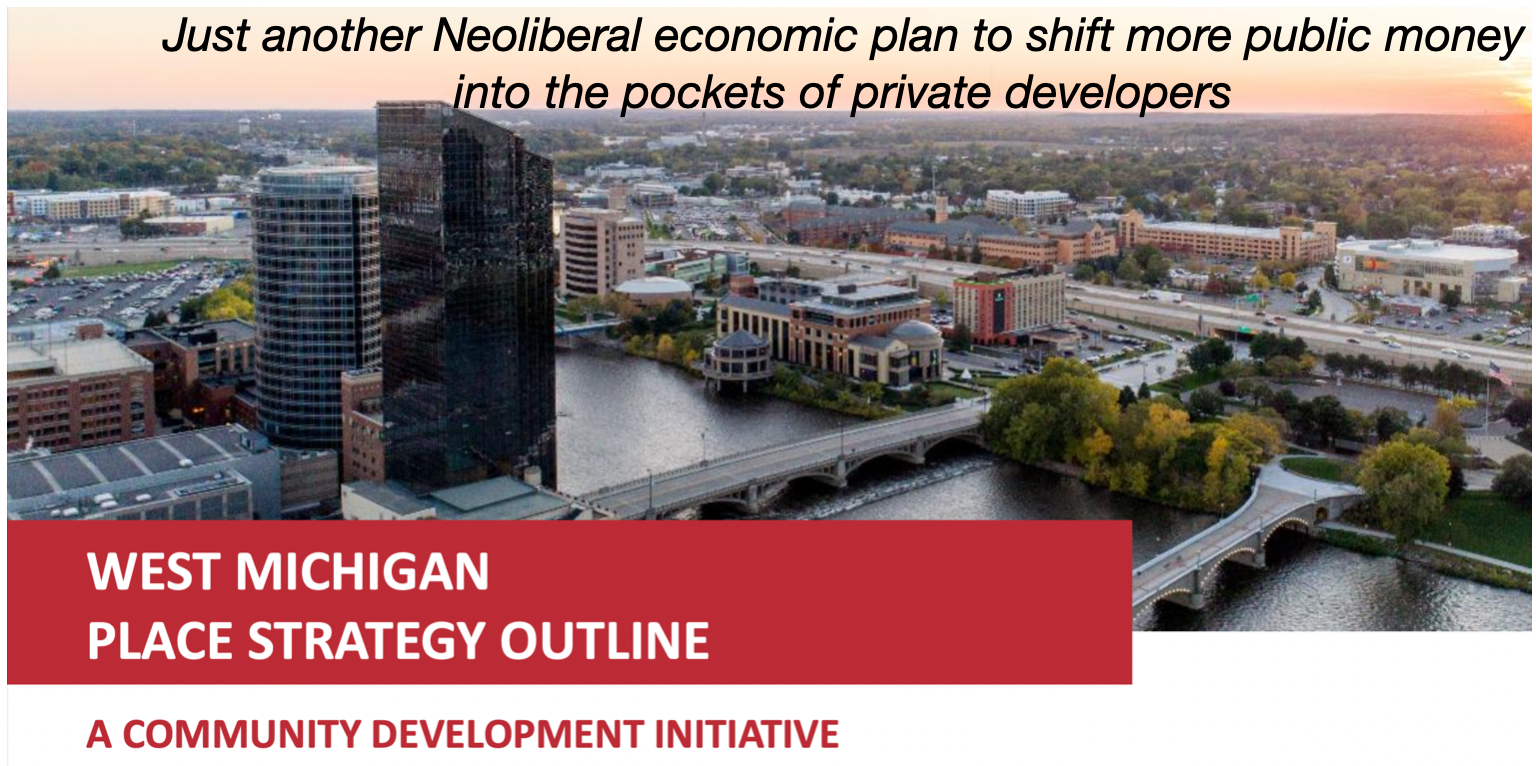
They use place-based vision and place-based strategy, especially since these are highly popular terms within the Neo-Liberal economic world. However, one should not be fooled by this kind of rhetoric, since it is fundamentally just another austerity measure imposed on the public, while the private sector reaps all the benefits.
Here is a sampling of this neoliberal word play from the Right Place Inc.:
1. Transformational Sites and Projects
- Provide comprehensive development support for projects and sites that have potential to be a positive catalyst for the local community.
- Real Estate Development Support: Solving real estate challenges related to: “revisioning” legacy sites and properties, financing, brownfield development, catalytic uses, community engagement, housing needs, partnerships, planning, etc.
District/Corridor Development Assistance: Drive the development and enhancement of traditional downtown districts and commercial corridors. - Public Art and Commercial/Industrial Design: Assist communities in the development enhancement of creative arts and public art projects.
2. Infrastructure
a. Support communities, businesses, and developers with innovative & collaborative project-based solutions related to: water, sewer, broadband, roads, rail, air, mobility, and trails.
3. Smart Sustainable Communities
a. Convene efforts to take on smart city-based initiatives such as: community based ai, sensors, green tech, smart mobility, etc., including possible collaborations with The Right Place Tech Council.
4. Community Growth Aspirational Strategies
a. Provide aspirational growth and planning assistance to communities such as: community visioning/planning, commercial/industrial development, infrastructure planning, leadership & capacity development, etc.
Now, this sort of language might seem inspiring, but what the Right Place Inc is essentially doing is to get the City of Grand Rapids to give up more public money for their little pet projects, projects which primarily benefit those who are already wealthy. Some of those pet projects that the Right Place Inc. has included in their presentation to the City are, the Kent County Sustainable Business Park, Grand River/Whitewater engagement, and Developer Day.
Our second example further demonstrates how Rockford Construction is leveraging their influence in the Southeast part of Grand Rapids, after they partnered with the DeVos family to buy up dozens of parcels of land.
The Grand Rapids Planning Commission Agenda Packet for October 14 (Pages 97 – 120) has information about Rockford Construction’s latest endeavor for having longterm control over development planning for the Madison Square area. The Planning Commission document refers to Rockford Construction as a “non-profit lending, real estate consulting, research, and community development firm.” Rockford Construction wants to re-develop space on Madison Avenue SE for a ground floor office.
The information included with Rockford Construction’s proposal has to do with the larger strategic plan for the Madison Square area, which is why the westside company wants a more permanent presence in the Southeast part of Grand Rapids. How much this decision to create an office on the Madison Square area and Rockford Construction’s role in the AmplifyGR projects, has yet to be determined, but people would be foolish to not pay attention to these developments. As we have noted previously, Rockford Construction has been working to insert themselves in the development of the part of town with the largest Black population since at least 2014. However, Rockford Construction, along with the DeVos family, only revealed that they had purchased dozens of parcels of land in the Southeast part of GR in 2017. What this new office satellite will mean is hard to determine at this point, but people would be wise to pay close attention to how this will impact that part of the City’s 3rd Ward.
 The opportunity for the public to have input in who will be the next Chief of Police in Grand Rapids is about to close. In many ways, it was never really open.
The City of Grand Rapids has promoted four virtual meetings, with the last one happening tonight, October 19. I participated in one of these meetings, the one that the City hosted on Saturday, October 16, from 3 – 4:30pm.
There were 4 residents of Grand Rapids, one City staffer and the meeting was hosted by Gary Peterson. Peterson and his firm were hired to formalize the search for the next Grand Rapids Chief of Police. The firm that was hired to find the next Chief of Police, Public Sector Search & Consulting, is a California-based firm that specializes exclusively on “recruiting police executives.”
The meeting I listened in on was run by someone who is not from Grand Rapids, but was paid to do the search. The questions that were asked were basically, “what kind of qualities should the next Chief of Police Possess” and “what should the be the priorities of the next Chief of Police.”
However, the paid consultant began by telling those of us on the zoom call that his firm had conducted several stakeholder meetings, which included business, faith, mental health professionals, etc. These meetings were not publicly announced, so either the paid consulting firm, city staff, or both, made determinations about who would be invited to those meetings. In addition, the public will probably never know what was said during those meetings, nor the parameters of the conversation.
If you couldn’t make the virtual meetings, you could take an online survey as well. The online survey is brief and managed as well, with questions like what qualities are most important for the next Chief of Police, or a ranking of the top 5 areas of career experience. There were a few questions asked that allowed people to write responses, but even those questions are vague, and more importantly, to providing any real opportunities for people to have a much larger conversation about the function of policing in this community and how Black and Brown people have been the primary targets of GRPD harassment, intimidation and arrests.
Equally important is how the paid consulting firm is presenting what Grand Rapids is like, based on their own police chief search application. The 14 page document paints Grand Rapids as the ideal city, with great public/private partnerships and a great place to raise a family. The page on the GRPD has no language that is critical of the department nor any reference to recent examples of how the police target Black and Brown communities. Oh, and the document also presents Grand Rapids as a city that is vibrant and rich in culture.
So, it appears that Public Sector Search & Consulting is not only selling Grand Rapids to police chief candidates, they have done a fabulous job of managing how the public provides any input on the matter.
Radical democracy and real community engagement
As one can see, the whole process of looking for the next Chief of Police is really being done by people who are being paid to find the next top cop. The Who community engagement process was just another box to check off, so that it can be said that they provided many opportunities for public input, despite the input being highly managed.
It is sort of like voting in this county. You have no real choices, yet if you refuse to participate in the charade, you are belittled for not participating and often told that you have no right to complain or critique. In fact, Mr. Peterson, from Public Sector Search & Consulting, said pretty much the same thing in his opening comments of the virtual meeting I sat in on, in regards to the Police Chief search.
The larger problem is that those who have power do not really want the rest of us to have any say in the future. Those in power create the choices and the process, despite the fact they they are highly managed and do not allow for much larger and broader public engagement.
On the matter of the search for the next Chief of Police, the public is not afforded an opportunity to have ongoing, robust, unmanaged conversation about the history and function of policing in Grand Rapids. This has especially been the case since the 2020 uprising in Grand Rapids, where city officials and those with real power in this community have made it known that criticism of the GRPD is only mildly tolerated, but discussion about police funding, particularly defunding of the GRPD is completely unacceptable.
What would it even look like if the public demanded there be ongoing conversation and dialogue that not only encouraged a healthy critique of the GRPD, but allowed for and encouraged people to talk about how we can create public safety that doesn’t rely on heavily armed people who are trained to use force as the normal approach to conflict.
What would it look like if people were allowed to and encouraged to talk about things like:
- Is there concrete evidence that the GRPD prevents crime or solves crime?
- How does structural violence and structural racism impact people, especially since it is legal for institutions to practice structural racism and structural violence?
- What would real community safety look like?
- What if the necessary resources were available to people, would that eliminate the need for street level crime?
- What if the current police budget were re-imagined into meeting the real needs of people?
These are the necessary conversations that we all need to have. We need to stop allowing the systems of power and oppression to dictate how we have community engagement and how we practice participatory democracy.
The fact is, those with power in this city, particularly those with economic and political power, have already determined what they want in the next Chief of Police. They have been having this conversation for months and the process of community engagement is really nothing more than a distraction, a con, meant to make us feel like they care about what the public thinks.
West Michigan Far Right Watch for the week of October 18: Patriot Streetfighters, so-called labor shortages and the Restoration of America
 Welcome to the next installment of West Michigan Far Right Watch, where we keep tabs on the far right in this area and provide a summary of what they are up to and what kind of messages they are promoting in this community. As a matter of clarification, when we say the Far Right, we mean those in the streets who fight to defend White Supremacy, those who promote far right ideology, and those with political and economic power.
In today’s post investigating the Far Right in West Michigan, we take a look at two religious right events, along with what one Acton Institute writer believes is causing the current so-called labor shortage.
We begin in an event that takes place in Holland on October 18, an event that is billed as The American Restoration: A Message of Hope, Renewal and Revival to America’s Leading Cities and Churches. The event is co-sponsored by the Ottawa County Patriots and Faith Wins. The Ottawa County Patriots is led by Steve Redmond and their website states that there mission is:
 Promoting awareness and understanding of American Government, the free enterprise system, traditional American values and related political or civic issues through education and citizen involvement.
More accurately, the Ottawa County Patriots are far right Trump supporters, who, amongst many other far right views, despise Black Lives Matter and regularly have retired cops as speakers at their events.
Faith Wins is a national group that attempted to mobilize faith leaders to influence government and public policy. Faith Wins is promoting their American Restoration tour, which will be at the Holland Civic Arena on October 18. One of the cosponsors of the American Restoration Tour is the Pacific Justice Institute, which the Southern Poverty Law Center identifies as an anti-LGBT hate group. The Pacific Justice Institute is currently suing the City of Los Angeles, because they are requiring police officer to be fully vaccinated.
The big speaker at this event is David Barton, the founder of WallBuilders. WallBuilders is another Christian group that seeks to influence government, specifically in a far right direction, which upholds a system of power and privilege that centers whiteness, patriarchy and capitalism.
Patriot Streetfighter
 The second Religious Right event in Wednesday, October 20th at the Crossroad Conference Center, which is near 68th Street and US 131. This event features Scott McKay, a life-long entrepreneur, who has been involved in politics for several decades, but really got excited when Donald Trump announced he was running in 2016. McKay writes, “finally someone that won’t get caught up in the corruption in DC.” McKay also does a show called Tipping Point Radio.
Joining McKay, are several other white dudes, from chiropractors, financial advisers and former rock stars. This event, which center’s the person of Scott McKay, is essentially a way to rally Trump supporters, based on the most recent posts on McKay’s Facebook page. The photos and video of McKay’s Patriot Streetfighter tour, is almost exclusively unmasked white people, which is not exactly a surprise.
So-called Labor Shortage
The last example for our Far Right Watch today, is a recent article from the Grand Rapids-based Far Right Think Tank, the Acton Institute. The article in question is entitled, The current labor crisis started before the pandemic and has much to teach us.
The Acton Institute writer essentially blames the current education system, with an emphasis on dismissing college degrees. What the Acton Institute writer is advocating for is more people getting into a skills trade. The Acton Institute writer then shifted their focus to the message of Mike Rowe. Rowe has conservative/neo-liberal economic views, and leans towards a conservative political view.
What is missing from the Acton Institute article, which is not surprising, is the analysis that the so-called labor shortage, is not a shortage at all, but an awakening of working class people who are realizing their power to demand better wages and working conditions. What is happening around workers and employers right now, is what Jack Rasmus refers to as The Great Strike of 2021. Rasmus’ main point is summarized in his article, stating:
That fact is evident today as millions of US workers are refusing to return to their jobs. They are ‘withholding their labor’ searching for better pay and a future.
This assessment is radically different from what the Acton Institute writer presents, which is not surprising, since the Acton Institute is fundamentally pro-Capitalism Think Tank, that always defends the free market system of Capitalism.
 On Tuesday morning, at the Committee of the Whole, the Grand Rapids City Commission unanimously approved the funding for changing Franklin Street to Martin Luther King Jr Street and Granville Avenue to Cesar Chavez Avenue.
Besides comments from City Commissioners, there were comments from the street naming committee as well, both of which talked about how the street names are a way of honoring the legacy of these two men.
The question for all of us is, how does naming streets after two Civil Rights icons honor their legacy?
Let’s start with Cesar Chavez, the labor organizer who fought for decades to organize farmworkers and fight for their rights. Chavez, who was mentored and recruited by Fred Ross Sr., the radical organizer.
Chavez, along with Dolores Huerta, helped to found the United Farm Workers (UFW), a union specifically for farmworkers, that began in California. The UFW engaged in strikes, boycotts, work slowdowns, leafletting campaigns, marches and hunger strikes, all of which were tactics used in the farmworker movement.
The United Farm Workers were effective in getting better wages, working conditions and fighting for bargaining rights with the agribusiness industry. The UFW created their own banking system and community-based health care, which were things that the community of farmworkers had made priorities.
Cesar Chavez and other organizers with the UAW came to West Michigan several times over the years, yet there has never been a labor union created for migrant farmworkers here in West Michigan.
Wouldn’t an organized campaign, consisting of fundraising and legal support be a better way to honor the thousands of farmworkers that live in the area, particularly along the Grandville Avenue corridor and the Burton/Buchanan area? What about a food cooperative or a tenant union for those migrant farmworkers who are often exploited by absentee landlords and property management companies? Wouldn’t these kinds of organizing efforts be a better way to honor the legacy of a farmworker and an organizer?
In addition, it should be mentioned that some of the same commissioners that agreed to the street change, presided over and said nothing about the GRPD showing up at the homes of students who were organizing with the local transit union, to intimidate them into ending their efforts to support transit workers. The United Farm Workers, the same union that Cesar Chavez founded, sent a scathing letter to Mayor Bliss, that read in part:
“On behalf of the more than 10,000 members of the United Farm Workers, I am writing to express our deep disappointment in the breathtaking hypocrisy demonstrated by your administration this past week. On Thursday, March 17, you marched under our banner to commemorate the work of an American icon and our founder, Cesar Chavez. The very next day, on Friday, March 18, you dispatched Grand Rapids Police to the homes of student activists to intimidate them for organizing a January sit in to support transit workers represented by Amalgamated Transit Union (ATU) Local 836.
You cannot march in the name of Cesar Chavez one day and use police officers to suppress all that he fought for the next. The United Farm Workers stands in solidarity with our ATU brothers and sisters struggling to preserve their retirement security and the United Students Against Sweatshops (USAS) who, in an inspiring acts of selflessness, have embraced their elders fight as their own.”
Now, we can move on to talk about Dr. Martin Luther King Jr. Here was a man who was part of the Black Freedom Struggle/Civil Rights Movement, specifically working through the Southern Christian Leadership Conference. Dr. King was a great orator and a prolific writer, but his legacy is really about his commitment and sacrifice in service to freedom and justice.
Dr. Martin Luther King Jr. was arrested dozens of times for civil disobedience, spent many days in jail for civil resistance, used strikes, boycotts, marches and other tactics to fight against the White Supremacist policies of the Jim Crow South.
When Dr. King moved north to Chicago in 1965, he became even more radical, condemning landlords, police brutality, the economic system of Capitalism and the US war in Southeast Asia, specifically Vietnam. Dr. King famously stated, “A nation that continues year after year to spend more money on military defense than on programs of social uplift is approaching spiritual death.”
In his last organizing campaign, the Poor People’s Campaign, Dr. King helped to bring together Black, Chicano, Puerto Rican, Indigenous and white people to demand an economic bill of rights, which included a call for the federal government to prioritize helping the poor with a $30 billion (in 1968) anti-poverty package that included, among other demands, a commitment to full employment, a guaranteed annual income measure and more low-income housing.
Now Blacks in Grand Rapids have the highest levels of poverty and unemployment in the city. Since the May 30th, 2020 uprising in Grand Rapids, mostly young Black organizers, along with other allies, have been demanding an end to the GRPD’s targeting of Black and Brown residents, the repression of activists who organize with Justice for Black Lives, and to defund the GRPD.
Considering the living conditions of so many Black people in Grand Rapids and the GRPD’s repression of Black organizers, do you honestly think that naming a street after Dr. Martin Luther King Jr. is the best way to honor his legacy?
In the case of both Cesar Chavez and Dr. Martin Luther King Jr., doesn’t it seem a bit hypocritical for the City of Grand Rapids to change the names of streets instead of fighting for the same demands that these two civil rights icons, and the movements they were part of, fought for?
Indigenous People’s Day: As White people, we need to come to terms with Settler Colonialism Part II
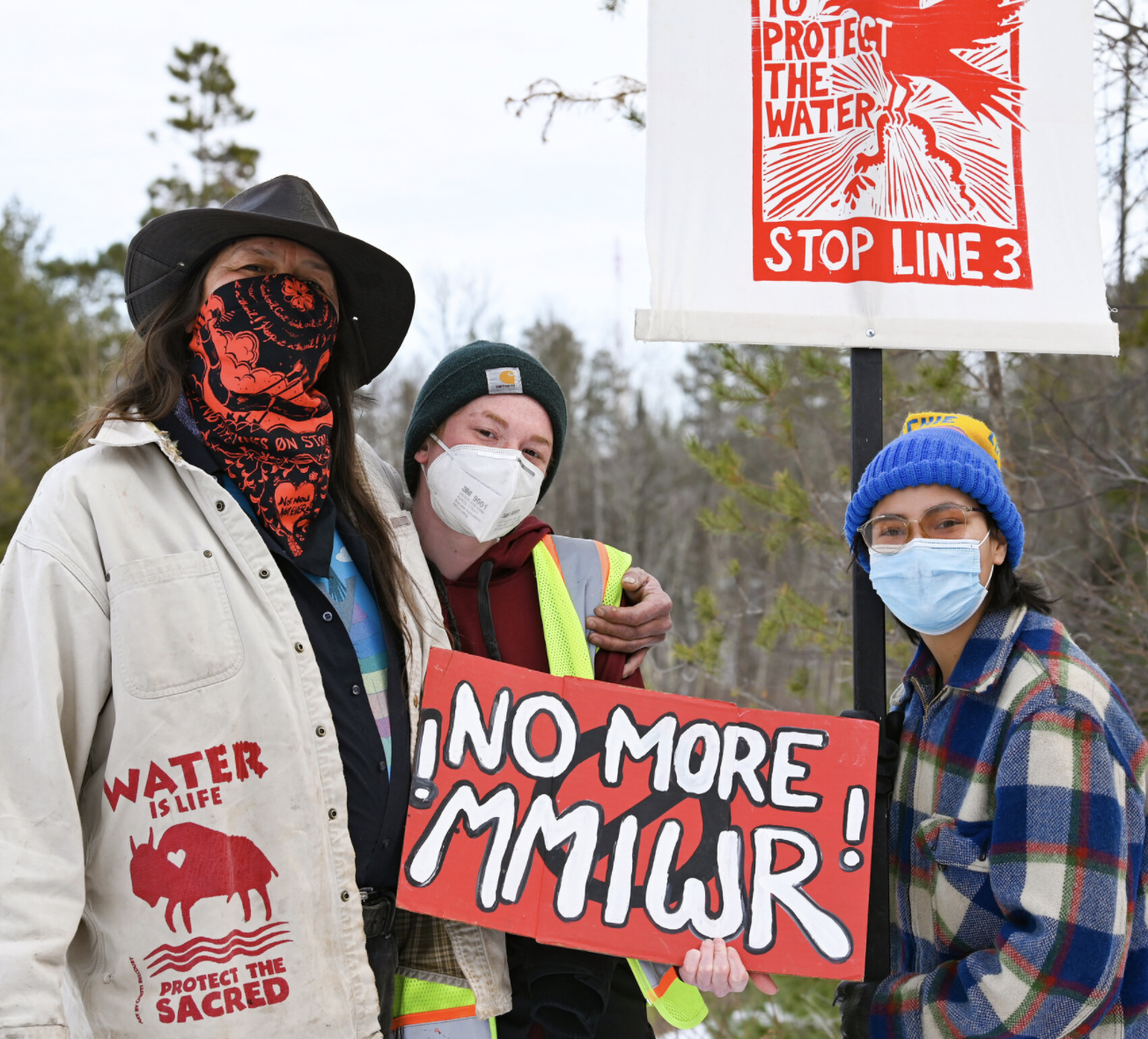 “And the Biden administration is just sitting by and watching it happen. I mean, I’m watching river after river get frac-outs on them in northern Minnesota. These are pristine river systems. You know, I’m watching things get destroyed as Enbridge ravages through our country. And then I’m watching hundreds of people get arrested trying to protect our water and to stop the climate disaster that Enbridge’s Line 3 represents.”
Winona LaDuke on Democracy Now 7/23/2021
In Part I we looked a bit at the historical legacy of Settler Colonialism, particularly in West Michigan. In Part II, we will explore issues around contemporary Settler Colonialism, specifically oil pipelines, Climate Justice, the disappearance & murder of Indigenous women/girls, and the brutal legacy of so-called Boarding Schools.
Confronting the Black Snake
The real resistance to all the fossil fuel pipelines (what Native people refer to as the Black Snake) that are happening in North America, is being led by Indigenous communities and organizers. What we saw at Standing Rock, what we are seeing by the Wet’suwet’en Nation territory, and the Indigenous-led resistance to Enbridge pipelines in Minnesota (Line 3) and Michigan (Line 5) are the result of people having a direct relationship with the land that is being threatened by extractivist practices and multinational corporations.
For those of us who are white, we need to 1) follow the lead of Indigenous communities when it comes to pipeline projects that directly impact their ancestral lands, and 2) we need to fully support – with financial contributions, with education/awareness, and by participating in direct action campaigns – to shut down any and all fossil fuel pipeline projects.
In a recent report entitled, Indigenous Resistance Against Carbon, it states:
Indigenous resistance has stopped or delayed greenhouse gas pollution equivalent to at least one-quarter of annual U.S. and Canadian emissions.
This is the meaningful and concrete types of resistance that we need to support, because it actually is making a difference. For white people, we need to stop wasting our time appealing to politicians and to support Indigenous-led campaigns opposing pipelines.
As we said early, much of this resistance has to do with Indigenous peoples relationship to the land. This gets back to our Part I posting, which talks about Settler Colonialism.
What Indigenous people are saying and writing about, is one simple fact. Decolonization of Indigenous lands is essential to the future of humanity. The authors of the book, The Red Deal: Indigenous Action to Save Our Earth, make it clear that decolonization of Indigenous lands is a major part of future of Climate Justice. If white people are serious about fighting for Climate Justice, then we have to see that decolonization of Indigenous lands is absolutely necessary in that fight. And it must be stated that the current New Green Deal proposal does NOT include the decolonization of Indigenous land. As white people, we need to demand the decolonization of Indigenous land if we are serious about Climate Justice.
Another major issue that plagues Indigenous people in this hemisphere, is the disappearance and murder of Indigenous women & girls. The U.S Department of Justice found that American Indian women face murder rates that are more than 10 times the national average. These are alarming numbers, but Indigenous people are not content with leaving the data up to Settler Colonial entities like the DOJ. In fact, the group Data for Indigenous Justice states:
Our most important value is to do this work in a good way with and for our community. Our goal is to be self-determined and have sovereignty over our MMIWGS2 data in order to inform research, policy and systemic change at local, state, and federal levels and in solidarity with all Indigenous peoples. We are doing what we know is needed to strategically create change. Decolonizing data is having sovereignty over our own data. We are utilizing our data as a resource for true systemic change led by Indigenous people. We seek justice on every front.
It is instructive to note that one significant aspect of the assault and murder of Indigenous women/girls, is the relationship between fossil fuel pipeline workers and the violence against Indigenous women. An article in The Guardian from this past June states:
“Before Minnesota approved the pipeline, violence prevention advocates warned state officials of the proven link between employees working in extractive industries and increased sexual violence. Now their warnings have come true: two Line 3 contract workers were charged in a sex-trafficking sting, and crisis centers told the Guardian they are responding to reports of harassment and assault by Line 3 workers. Johnson said VIP, a crisis center for survivors of violence, has received more than 40 reports about Line 3 workers harassing and assaulting women and girls who live in north-western Minnesota.”
The Indigenous-led resistance to Line 3 in Minnesota had documented this fact a few months before The Guardian, even including an Enbridge document that demonstrates the Canadian Corporation’s anticipation in pipeline workers assaulting Indigenous women, stating:
The assaults and reports of harassment were described in a request for reimbursement from Enbridge’s public safety fund, submitted last month by the anti-violence and anti-human trafficking nonprofit Violence Intervention Project. State permits for pipeline construction stipulated that Enbridge had to create the fund to cover some law enforcement costs and anti-human trafficking efforts associated with the project.
Just as corporations consider environmental degradation a form of collateral damage, the brutalization of Indigenous women is anticipated and expected while corporations engage in “resource extraction.”
For those of us who are white, we need to condemn the relationship to extractivism and the brutalization of Indigenous women/girls, then support whatever demands the Indigenous community has around this issue.
Boarding Schools as Genocide
When people think of genocide, they often think it means the outright slaughter of a group of people. While this does constitute genocide, there are numerous other things that can result in genocide. According to the 1948 Convention on the Prevention and Punishment of the Crime of Genocide:
In the present Convention, genocide means any of the following acts committed with intent to destroy, in whole or in part, a national, ethnical, racial or religious group, as such:
- Killing members of the group;
- Causing serious bodily or mental harm to members of the group;
- Deliberately inflicting on the group conditions of life calculated to bring about its physical destruction in whole or in part;
- Imposing measures intended to prevent births within the group;
- Forcibly transferring children of the group to another group.
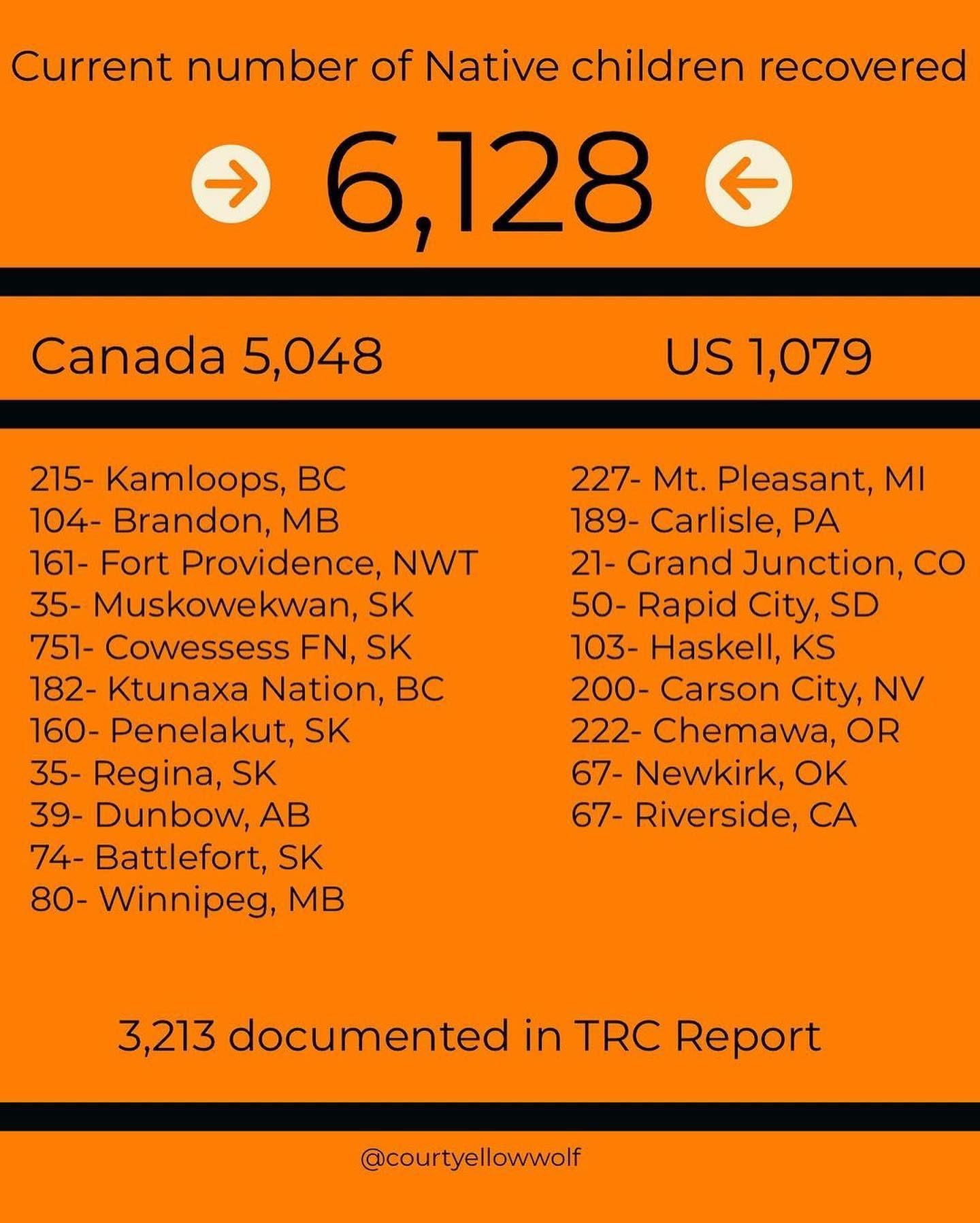 The history of so-called Boarding Schools in the US and Canada was fundamentally about forcibly transferring Indigenous children to government run or christian schools. In other words, it was a form of genocide.
Governments and Christian churches are now scrambling in the face of newly uncovered evidence of the common practice of murdering Indigenous children while attending so-called Boarding Schools. In the fact of this, the Indigenous community is exposing and pressuring these institutions for the role or their complicity in such crimes, as did the local Indigenous community did with an action this past June in Grand Rapids.
So what do White people do in this case? Again, we need to follow the lead of Indigenous communities and provide whatever support they are asking of us. In addition, we need to be challenging Christian Churches to come clean with their role in the history of so-called Boarding Schools, allow Indigenous people access to documentation and spaces where so-called Boarding Schools existed, pay reparations and put an end to any ongoing Christian-run schools for Indigenous children.
Indigenous People’s Day: As White people, we need to come to terms with Settler Colonialism Part I
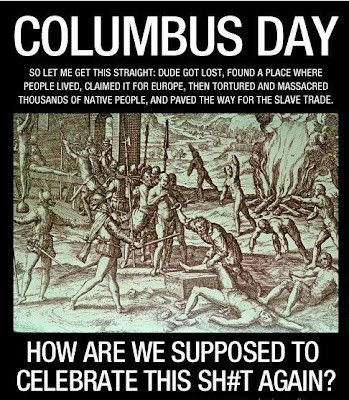 As Native American peoples in this red quarter of Mother Earth, we have no reason to celebrate an invasion that caused the demise of so many of our people, and is still causing destruction today.”
Suzan Shown Harjo – Creek & Cheyenne
There are still too many white people who celebrate Columbus Day. The US government still recognizes Columbus Day as a federal holiday and has not replaced it with Indigenous People’s Day. Federal employees and many state and local employees will get the day off because the federal government still designates today as Columbus Day.
Just a few days ago, the Biden Administration released a proclamation on behalf of Indigenous Peoples Day, but it is a weak and patronizing statement that does little in terms Tribal Sovereignty and fails to acknowledge the historical and ongoing Settler Colonialism that the US government practices and benefits from.
Releasing proclamations is a meaningless gesture, when Sovereign Native nations are demanding things like an end to oil pipelines, the end to the murder and disappearance of Indigenous women/girls, along with justice & reparations for the horrendous history of so-called US Boarding Schools.
Challenging the legitimacy of Columbus Day is an important anti-racist act, but it must be seen in the larger context of challenging White Supremacy.
It is increasingly imperative that we come to terms with the function that Columbus played in the European conquest/colonization of the what we now call the Americas. Columbus was commissioned by the Spanish Crown and sanctioned by Catholic Church (through a 1493 Papal Bull) to conquer new lands and extract resources to benefit Spain. Therefore, Columbus not only is the primary symbol of the 500 years of genocide and slavery that has plague the western hemisphere, he is the symbol of political, religious, social and cultural imperialism that continues to the present by a White Supremacist system of Capitalism.
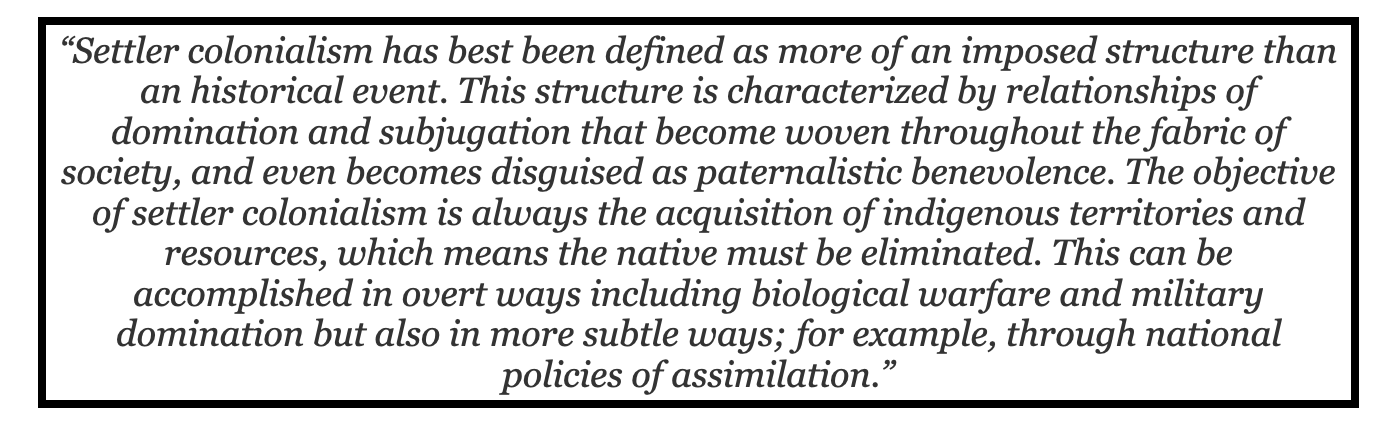
Grand Rapids was founded on Settler Colonialism – As a foundational framework, it is vital that we come to terms with the fact that Grand Rapids, like virtually all US cities were founded on what Native scholar Roxanne Dunbar Ortiz calls Settler Colonialism. Settler Colonialism in West Michigan is the result of a larger White Supremacist strategy that included legal means (treaties), forced relocation, spiritual violence (role of churches) and cultural imperialism, most radically seen with the policy of putting Native children in boarding schools with the goal of, “Killing the Indian, Saving the Man.”
We know that hundreds of Native children from the Three Fires Nations were taken and put into boarding schools by settler colonialists, many of which were run by christians. In these instances Native children were denied the right to speak their own languages and practice their own spiritual traditions. Most of the removal of Native children from their communities happened in the later part of the 19th Century and first half of the 20th Century.
However, on the matter of christian missions attempting to make converts of Native communities in the 1820s and 1830s along the Grand River, it is less clear on whether or not this could be defined as a form of genocide. How much free will did Native people have on choosing another religion? Was the adoption of christian beliefs a form of assimilation into the dominant culture and was it tied to larger socio-economic issues like food and land?
It should come as no surprise that right after the 1821 Treaty of Chicago was signed, the first christian missions came to what is now West Michigan. The Baptist Church established a mission in 1824, under the leadership of Isaac McCoy, and Catholic missions were begun in 1833 by Fr. Frederic Baraga.
One of the things that lured missionaries to the area after the signing of the Treaty of Chicago, was a provision in the treaty which allowed funds for people to work as teachers of blacksmiths amongst the Native people along the Grand River. The government treaty called this, the “civilization fund,” a phrase that underscores the settler colonial mentality.
Isaac McCoy first arrived in 1823, only to discover: “Many Odawa were drinking and few responded to his call for a council. After some inquiries McCoy learned that the majority regarded the 1821 treaty as fraudulent and viewed his visit as an attempt to trick them into ratifying it.” (pg. 7, from Gathered at the River: Grand Rapids, Michigan and Its People of Faith)
Such a statement reflects not only that the Native people along the Grand were not in support of the government imposed treaty, but that many Natives were negatively impacted by alcohol. Alcohol was introduced by French fur traders, particularly Louis Campau and should be seen as another tool used by settler colonialism to control Native people.
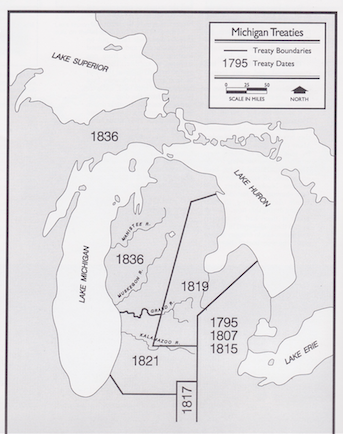 McCoy, however, was not deterred from his initial observations and continued to use all means at his disposal to “win over” the hearts and minds of Native people. In 1826, McCoy set up the Thomas Mission on the westside of the Grand River (as shown in this map). McCoy’s greatest contribution during his time along the Grand River was his relationship with Native leader Nawequageezhig, whom the white settlers call Noonday.
Noonday was one of the few Native leaders who signed the 1821 Treaty of Chicago and was viewed by many as a traitor or collaborator with the settler colonialists. Noonday went as far as to be baptized by McCoy’s successor, Rev. Leonard Slater in the summer of 1827. Another Native leader in the area, Kewwaycooshcum, also known as Blackskin, did not sign the 1821 treaty, but did develop a relationship with the catholics through his connection to Campau. It is hard to know from the limited documentation of that time, whether or not the Native people were using the tensions between the various christian factions to their benefit or if the christian were using Native compliance with the government as a means to an end. One gets a sense of the christian rivalry in a comment from Fr. Baraga, who said, “Mary, to who it is given to root out all heresies of the world……to destroy the false [Protestant} teachings with which some of the poor Indians were already infected, and suffer on His gospel to reign everywhere.” (pg. 12, from Gathered at the River: Grand Rapids, Michigan and Its People of Faith)
However, whatever tensions existed, they were most useful in pushing Native people out of the area as more white settlers colonialists came to the area. This increase in settler colonialists, along with greater desire for land and settler colonial expansion, resulted in a new treaty being drawn up, the Treaty of Washington in 1836. This treaty turned over an additional 13,837,207 acres of land to settler colonialism’s expansionist desires.
It seems that all along, the goal with relations of Native people along the Grand were to take the rest of their land. Whether or not there was direct complicity with the early christian missions to this land takeover is not relevant, the fact remains that they did nothing to resist such an effort.
The end of chapter one from Gathered at the River: Grand Rapids, Michigan and Its People of Faith, states of the fate of Native people in West Michigan:
Keeping title proved difficult, however, as fraud, inexperience, and incompatibility of family farming with tribal tradition took their toll.
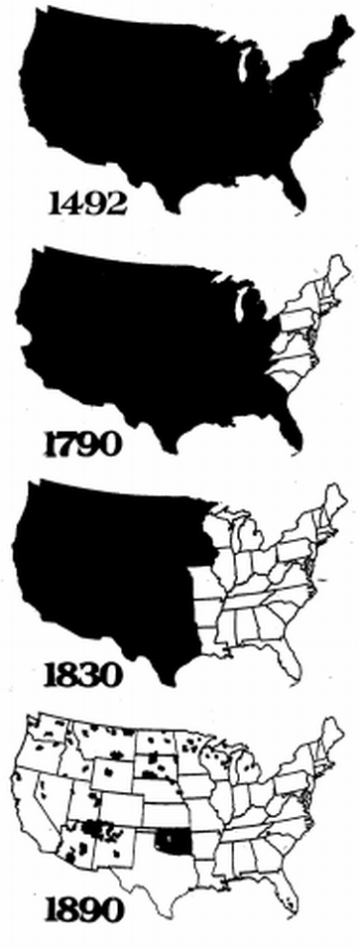 It indeed took its toll, but the authors of Gathered at the River do not call it land theft or settler colonialism or even acknowledge the role that early missions played here in the ongoing genocidal policies of US expansionism. The plight of Native people is not addressed in the rest of the book, which simply goes on to celebrate the history of christian churches in Grand Rapids. However, it seems apparent to this writer that the history of christianity in West Michigan is founded on genocide and settler colonialism.
In Part II we will explore issues around contemporary Settler Colonialism, specifically oil pipelines, Climate Justice, the disappearance & murder of Indigenous women/girls, and the brutal legacy of so-called Boarding Schools.
Some Resources:
The Canary Effect (film) https://www.youtube.com/watch?v=lD7x6jryoSA
An Indigenous People’s History of the United States, by Roxanne Dunbar Ortiz
All Our Relations: Native Struggles for Land and Life, by Winona LaDuke
The 500 Years of Resistance Comic Book, by Gord Hill
Custer Died for Your Sins, by Vine Deloria Jr.
A Little Matter of Genocide: Holocaust and Denial in the Americas 1492 to the Present, by Ward Churchill
 Grand Rapids Institute for Information Democracy