The Political function of Philanthropy: DeVos Family Foundations – CDV5 Foundation, the Cheri DeVos Foundation
“In any case, the hidden hand of of foundations can control the course of social change and deflect anger to targets other than elite power.”
– Joan Roelofs, Foundations and Public Policy
For the past 10 years, GRIID has been monitoring foundations in West Michigan, particularly the large family foundations that those who are part of the Grand Rapids Power Structure have created. Our monitoring of local foundations has been part of our larger critique of the Non-Profit Industrial complex in Grand Rapids.
GRIID has been providing information and analysis on the various DeVos Family Foundations, using the most recent 990 documents that foundations are legally required to submit. These 990 documents must be submitted within a three-year period, which is why the 990s that we will be examining are from 2020, since most foundations prefer to submit their 990 documents at the last minute, thus minimizing public scrutiny. So far we have posted articles about the Richard and Helen DeVos Foundation, the Dick and Betsy DeVos Foundation, the Doug and Maria DeVos Foundation and the Dan and Pamela DeVos Foundation.
CDV5 – Cheri DeVos Foundation
GRIID has always begun our Foundation Watch work by looking at the foundations associated with the most powerful family in West Michigan, the DeVos family. The Cheri DeVos Foundation has been one of the larger foundations in West Michigan, and was also founded in 1992. According to GuideStar, in 2020, the Cheri DeVos Foundation contributed $8,308,020, leaving them with $62,463,632 of funds left in their foundation. To see the 990 document for 2020 from the Cheri DeVos Foundation, go here.
The Cheri DeVos Foundation made contributions to dozens of entities in 2020, but there are some clear categories of groups they contributed to, such as the Religious Right, Think Tanks, Education-centered groups, and social service entities, to name a few. Below is a listing of each from these categories, with a dollar amount and a brief analysis.
We also include groups that are DeVos owned or created, along with liberal non-profits. With the liberal non-profits, we believe that funding from foundations like the DeVos family foundations is a form of hush money. When we say hush money, we mean that these entities will not publicly challenge the system of Capitalism, the wealth gap, structural racism and other systems of oppression, which the DeVos family benefits from and perpetuates through their own political funding.
Religious Right
- Base Camp Urban Outreach – $30,000
- Bridge St. House of Prayer – $70,000
- Christian Leaders NFP – $50,000
- Mel Trotter Ministries – $25,000
- Partners Worldwide – $30,000
- Young Life – $50,000
- Zuni Christian Mission School – $30,000
Life the other DeVos Family Foundations, contributing money to religious right groups is important for Cheri DeVos. Groups like the Bridge St. House of Prayer and Mel Trotter Ministries prey on those who are financially struggling or unhoused in order to evangelize them, while perpetuating the harm that Capitalism creates that actually is the root cause of economic hardship for thousands in Grand Rapids.
Far Right Think Tanks and Free Market groups
- FII National – $1,225,000
- Greater Grand Rapids Chamber Foundation – $130,000
The DeVos family has always been deeply committed to free market Capitalism. They contributed $1,225,000 to FII National, also known as UpTogether, which believes that poverty is a choice and that people can chose to get out of poverty by starting their own business. Another interesting group is the Greater Grand Rapids Chamber Foundation, which is currently focused on supporting the Housing Next program, which was created by the Grand Rapids Chamber of Commerce and believes that market-based solutions will solve the housing crisis.
Education-centered groups
- Grand Rapids Christian Schools – $160,000
- Grand Rapids Community College Foundation – $250,000
- Grand Rapids Student Advancement Foundation – $720,000
- Grand Valley State University – $200,000
- Hope Academy of West Michigan – $78,500
- Hope College – $50,000
- Potters House – $90,000
- Rehoboth Christian School – $120,000
- Wake Forest University – $25,000
DeVos-owned, created or connected groups
- ArtPrize – $50,000
- Grand Action Foundation – $50,000
- Grand Rapids Initiative for Leaders – $20,500
- Orlando Magic Youth Foundation – $90,000
- Spectrum Health Foundation – $385,000
- West Michigan Aviation Academy – $365,000
Like the other DeVos Family Foundations, the Cheri DeVos Foundation makes it a point to fund other DeVos created projects, which means that DeVos family members are just shuffling money to each other and calling it a charitable contribution.
Groups receiving Hush $
- Baxter Community Center – $40,000
- Bethany Christian Services – $260,000
- Children’s Assessment Center – $40,000
- Dégagé Ministries – $60,000
- Family Promise – $155,000
- Feeding America West MI – $50,000
- Heart of West MI United Way – $345,000
- ICCF – $25,000
- Kent Habitat for Humanity – $300,000
- Kids Food Basket – $150,000
- Safe Haven Ministries – $90,000
- Wedgewood Christian Services – $215,000
Foundations rarely make contributions without strings attached. The Cheri DeVos has a long history of funding far right and religious right groups, which GRIID documented 10 years ago when we started this project. Lastly, it is worth noting that the Cheri DeVos Foundation, like all of the DeVos family foundation, compliments the campaign contributions they make to further impact public policy and promote their religious and capitalist ideologies.
The far right think tank, the Acton Institute for the Study of Religion and Liberty, continues to demonstrate how much they defend the systems of White Supremacy and Institutionalized racism.
Last week, the Acton Institute posted on their blog an article entitled, Affirmative Action and the Imago Dei. Like most groups that defend White Supremacy, the Acton Institute uses religion to justify their position that policies like Affirmative Action are wrong and that the US Supreme Court’s decision to overturn Affirmative Action for college admissions. Here is the concluding comments used to justify the anti-affirmative action policy:
Unfortunately, there are no easy solutions to the racial and social tensions that plague us. But a good starting point is to recognize and respond to the image of God as it presents itself in our neighbors, and to remember that while we are certainly different in big and small ways, we share at least that in common. Our attempts to resolve these tensions will be and have been halting, difficult, and suffer many setbacks. But in solidarity with our neighbors, with whom we share God’s image, we can imperfectly work toward just resolutions that the Constitution of our democratic republic allows the space to pursue.
Now, the person who wrote this post is a white guy named Trey Dimsdale. Dimsdale used to work for the Acton Institute, but is now employed by another far right think tank, known as the First Liberty Institute.
The First Liberty Institute is the largest legal organization in the nation dedicated exclusively to defending religious liberty for all Americans, according to their website. However, if you spend anytime on their website it pretty much means they defend Christians who want to impose their absurd ideological beliefs on the rest of society. In fact, the organization lists as experts and leaders that endorse their work, Ted Cruz, Rick Perry and Mike Huckabee, which speaks volumes.
More anti-Black Lives Matter rhetoric
It wasn’t bad enough that the Acton Institute posted an article justifying the end of Affirmative Action in college admissions, they also provided space for another far right writer to dismiss the Movement for Black Lives.

On July 3rd, there was an interview conducted by the Action Institute with Ian Rowe, a senior fellow at the American Enterprise Institute, which is possibly the most influential conservative policy institute.
Maybe the most outrageous thing that Ian Rowe had to say in the interview with the Acton Institute was,
Since the death of George Floyd, there has been an explosion in completely useless, insulting, and hopelessly ineffective actions that are purportedly intended to make progress toward racial “equity.”
Essentially, what Rowe is saying is that calling for the abolition of systems of power and oppression, engaging in Mutual Aid work, elevating the voices and lived experiences of Black people, resisting institutionalized racism, creating community bond funds, fighting back against groups like the Proud Boys and developing community gardens are “hopelessly ineffective actions.”
What Ian Rowe advocates for is personal responsibility, and for Black people to stop blaming Structural Racism. What is unfortunate is that Ian Rowe is a Black man, or what Malcolm X would refer to as a House Negro, someone who defends the plantation owner. This is just the latest example of how the Acton Institute has nothing but contempt for the Movement for Black Lives.
3 reasons why I don’t believe West Michigan Business leaders when they say that immigrants are good for the economy
A few weeks back, the now monopoly business publication, Crain’s Grand Rapids, post a story with the headline, West Michigan business leaders refocus on immigration to fill talent gap, boost population.
The article begins by stating, “A new collaboration between the Grand Rapids Area Chamber of Commerce, Grand Valley State University and Global Detroit will push policy makers and the business community to embrace immigration as a way to meet talent needs in West Michigan.”
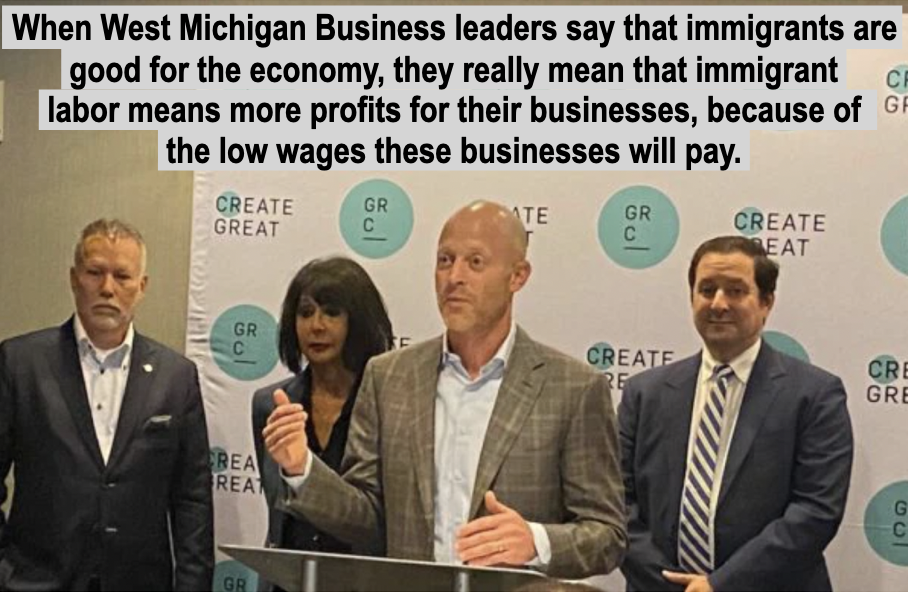
The Crain’s article then goes on to say that one of the first things these business leaders want to do is to gather more data to demonstrate how immigrants benefit the economy. You may remember that in 2018, there was a report on how immigrants benefit the economy. GRIID wrote about that report and made the point that it isn’t so much about immigrants benefiting the economy, instead the issue is who benefits economically from immigrant labor.
Interestingly enough, the President of the Grand Rapids Chamber of Commerce was quoted as saying, “The Grand Rapids Chamber urges our congressional leaders to fix our broken immigration system to support our growing economy. There is no excuse for delay. While we wait for federal action, we look to drive our strategies forward.”
Such a comment from the President of the Grand Rapids Chamber of Commerce is worth looking at, especially through a critical lens. So here are 3 reasons why I don’t believe that the GR Chamber nor West Michigan Business leaders are committed to immigrant justice or immigration policy that would truly benefit immigrants.
First, the Grand Rapids Chamber of Commerce and West Michigan Business leaders have a long track record of primarily endorsing and providing campaign contributions to GOP candidates at all levels of government. The Republican Party has rejected any and all aspects of Immigration Reform over the past several decades, even the mildest of immigration reforms. Not that the Democratic Party embraces any sort of immigration justice, but there have been several attempts since the Obama years to adopt some sort of Immigration Reform policies. (See the book, All-American Nativism: How the Bipartisan War on Immigrants Explains Politics as We Know It, by Daniel Denvir.)
Second, the North America Free Trade Agreement (NAFTA), along with other such trade policies, have undermined workers and displaced small farmers in countries like Mexico, which has led to massive numbers of immigrants coming to the US. These trade policies have been fully endorsed by the US Chamber of Commerce and the regional ones, like the Grand Rapids Chamber of Commerce. I remember attending an event at San Chez in 1995, which was co-sponsored by the GR Chamber, and was all about how businesses can market their products in Mexico after NAFTA had been adopted in 1994. The GR Chamber spokesperson even wore a fucking sombrero during his welcoming remarks to the event attendees.
Third, the GR Chamber of Commerce and many West Michigan businesses love immigrant workers, primarily because they are willing to work for low wages. There are literally tens of thousands of migrant workers (mostly of whom are immigrants) in West Michigan that make very little money for doing physically demanding work. Then there are all thousands more in West Michigan that work in the service sector – fast food industry, restaurants, janitorial, construction and hotel workers – all of which make low salaries. If the GR Chamber of Commerce and West Michigan Business leaders wanted to truly celebrate immigrant workers, they would pay people a living wage and be an outspoken advocate for people to earn no less than $20 an hour, regardless of the kind of work they do.
While the President of the GR Chamber of Commerce and the other West Michigan Business leaders talk a good game about US immigration policy, the need to fill the talent pool gap, and how much immigrants benefit the economy, what they really mean is that they are the ones who benefit from immigrant laborers in the current neoliberal capitalist economy.
Over the past six weeks, the City of Grand Rapids and some of their committees have been discussing proposed policy decisions that would negatively impact those who are unhoused in this city.

In May, we wrote:
At the Public Safety Committee’s May 23rd meeting, members of that committee made some pretty awful comments about the unhoused and those struggling with mental health issues.
Just two weeks ago we wrote:
Now the City of Grand Rapids is proposing new ordinances in order to deal with the unhoused, which they see as a nuisance. On top of that, the City’s ordinance proposal shares some of the same language and punishments directed at the unhoused that the Grand Rapids Chamber of Commerce proposed 6 months ago. However, the City of Grand Rapids will not adopt the proposed ordinance before allowing the public to weigh in at their 2pm meeting on July 11, a meeting which is conveniently at a time when most people are unavailable.
The City of Grand Rapids made this decision to host a public hearing during that June 13th meeting of the Committee of the Whole. You can read the newly proposed ordinance language at this link, beginning at page 109. It is worth reading these new proposals side by side with the Grand Rapids Chamber of Commerce proposal, which you can find here.
In response to these proposed ordinances, the Grand Rapids Area Tenant Union and a coalition of other grassroots/autonomous groups have organized a campaign called, Housing Not Jail. The Housing Not Jail campaign not only opposes the proposed ordinances that the City of Grand Rapids is considering, they highlight what is fundamentally wrong with the proposals with these talking points:
- The proposed City ordinances will further criminalize the unhoused, with fines they will be unable to pay and jail time, simply because they are asking people for money or for having their possessions with them in certain public spaces.
- The proposed City ordinances do not address the root causes of people being unhoused, primarily the decades of federal, state and local government austerity measures that have nearly eliminated the safety net for people who are financially insecure.
- The City of Grand Rapids is adopting some of the same language as the Grand Rapids Chamber of Commerce proposed ordinance from last December. These similarities are designed to criminalize the unhoused and to protect the economic interests of the downtown business community, essentially profit over people.
- The Grand Rapids Chamber of Commerce and the many of the 120 signatories in support of the Chamber ordinance proposal, have contributed a great deal of money to candidates/politicians over the years that have implemented economic austerity policies, while simultaneously cutting taxes for businesses and the wealthy.
- The Grand Rapids Chamber of Commerce has provided campaign contributions, amount included, to the following City Commissioners who will ultimately vote on whether or not these ordinance proposals will pass: Commissioner Robbins – $10,500, Commissioner O’Connor – $750, Commissioner Ysasi – $1250, Mayor Bliss – $1350.
You can take Action to oppose these proposed ordinances
Write an email by going to this link, sharing on social media and getting your friends to do the same thing. tinyurl.com/HNJEmail
If you are part of an organization or know of organizations to approach, have them sign the statement at this link: tinyurl.com/HNJStatement
Come and speak at the public hearing on Tuesday, July 11, during the 2pm Grand Rapids City Commission meeting. Details can be found here tinyurl.com/HNJHearing

Graphics created by Aly Thee Activist
Nearly a century ago, thousands of Klan members descended on Grand Rapids to celebrate the 4th of July
I would be shocked if the City of Grand Rapids, or Grand Rapids-based news agencies, would make it a point to remind people that thousands of KKK members, from 50 counties throughout the state, came to this city to show their patriotic spirit in 1925.

Both the Grand Rapids Press and the Grand Rapids Herald reported on the gathering of Klan members 98 years ago. In fact, one of the headlines of the Grand Rapids Herald read, Klan, Looking for 16,000 here today, erects tent city.
Klan members started arriving on July 3rd, 1925, in order to prepare for the parade they would hold on July 4th. Now the parade began on the westside, at Lincoln Park and moved east on Bridge Street. According to the Grand Rapids Herald, the parade started at 3pm. “Passing along Monroe Avenue it was greeted by throngs which crowded into the streets to witness the pageant. The crowd was orderly and for the most part friendly, breaking into applause frequently as one or another patriotic float passed.” It is also worth noting that the parade was led by a “squad of motorcycle police.”
After passing along Monroe Avenue, the parade turned right on Fulton and went all the way down to John Ball Park, where the thousands of Klan members held a rally. What is interesting, is that none of the newspaper reporters happened to mention anything about what was said at the rally, which means they completely ignored the message and the platform of the KKK gathering, which was always a central part of their rallies.
What we do know about the 2nd wave of the Klan, is that they were anti-Catholic, anti-Jewish, anti-immigrant and anti-Black, yet there was no reporting on the Klan platform and no one from the Catholic, Jewish, recent immigrant or Black communities was asked to comment on the large gathering of the White Nationalist and White Supremacist organization in 1925. (See Craig Fox’s book, Everyday Klansfolk: White Protestant Life and the KKK in 1920s Michigan, for additional background on the Klan.)
Equally important is the fact that this Klan gathering didn’t just happen, where KKK members happened to come to Grand Rapids in 1925. In fact, the Kent County chapter of the KKK hosted this gathering of Klan members from across the state.
Additionally, according to a retrospective piece by GR Press writer Garrett Ellison, written in 2012, where he relies on GVSU history professor Matthew Daley, Ellison, “Members began arriving in Grand Rapids in the weeks ahead of July 4 and set up a tent city on the municipal outskirts near the Bridge Street hillside. Daley said mentions of “a symbol” seen atop the hill the night of July 3 suggest Klansmen fired off a cross, possibly with a matching one over Belknap, to announce their presence the next day.” Such a display certainly sent a message to the residents of Grand Rapids.
So the Klan set up a tent city on the outskirts of Grand Rapids, which suggests that the tent city was legal. Interesting, considering that the City of Grand Rapids will not tolerate tents being put up in Grand Rapids by those who are unhoused. In fact, on July 11, there will be a public hearing on proposed ordinances that will impose fines and jail time for people who repeatedly asked for money, keep their belongings with them during the day and attempt to set up tents in the city.
All of this is to say that it was quite normal for the KKK to show up for a parade in Grand Rapids in 1925, where the public applauded them, where there were no visible signs of opposition and the GRPD even provided a motorcycle escort for the parade.

However, the normalization of White Supremacist values continues to be entrenched in Grand Rapids even today. Sure, we don’t see throngs of KKK members in their white robes, but we do see lots of white people rallying to support white political candidates in Grand Rapids and white people applauding the massive investments into the downtown, while Black and Brown neighbors experience disinvestment. We still see white people opposing the support of immigrants in this City and white opposition to Black people when they demand accountability for the brutality of the GRPD, or when they call for a defunding of the police. We see white people and white dominated organizations calling for the criminalization of the unhoused. We see white people silent on the contemporary manifestations of White Supremacy. You know who you are. We see you!
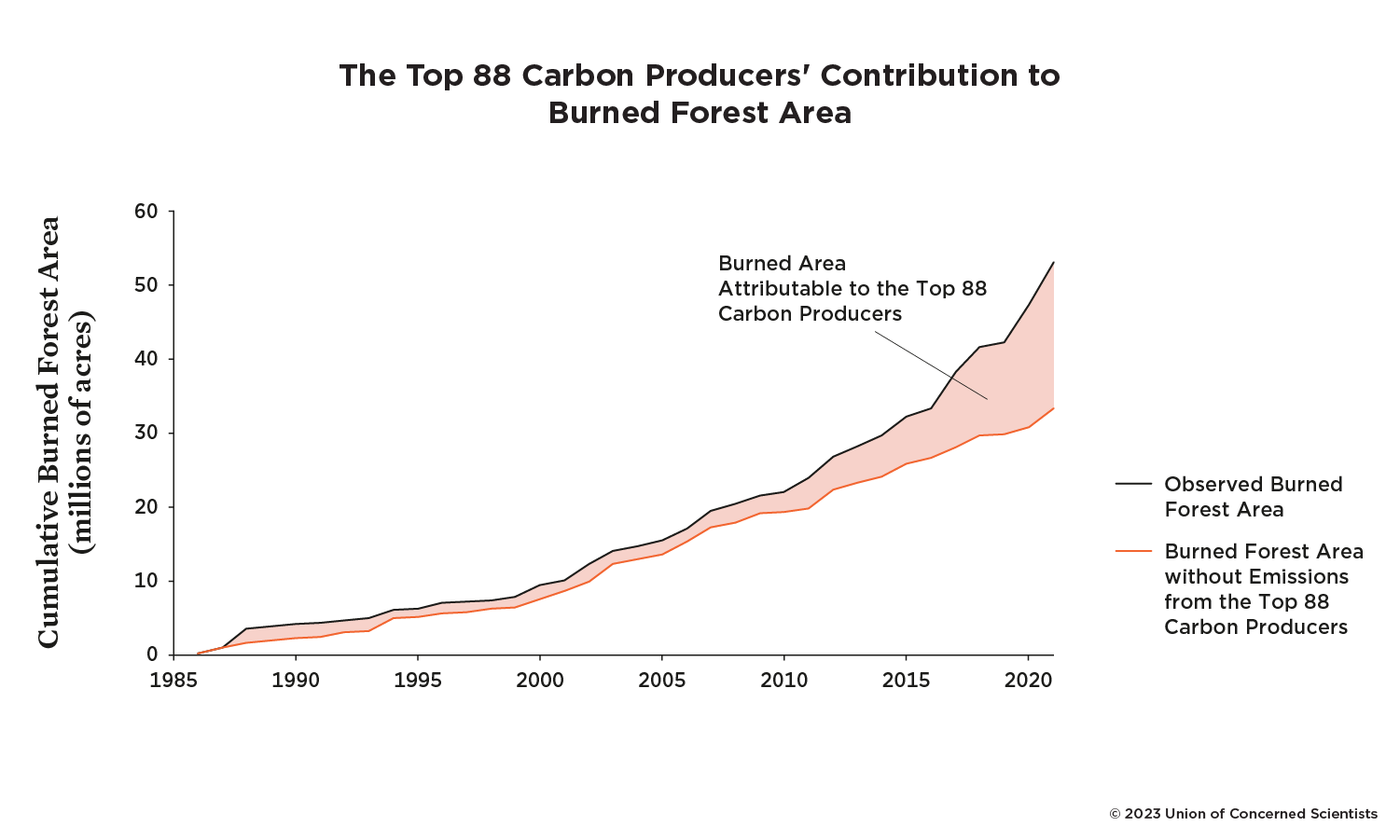
The Union of Concerned Scientists (UCS) recently released a ground breaking report, entitled, “The Fossil Fuels behind Forest Fires,” which found that:
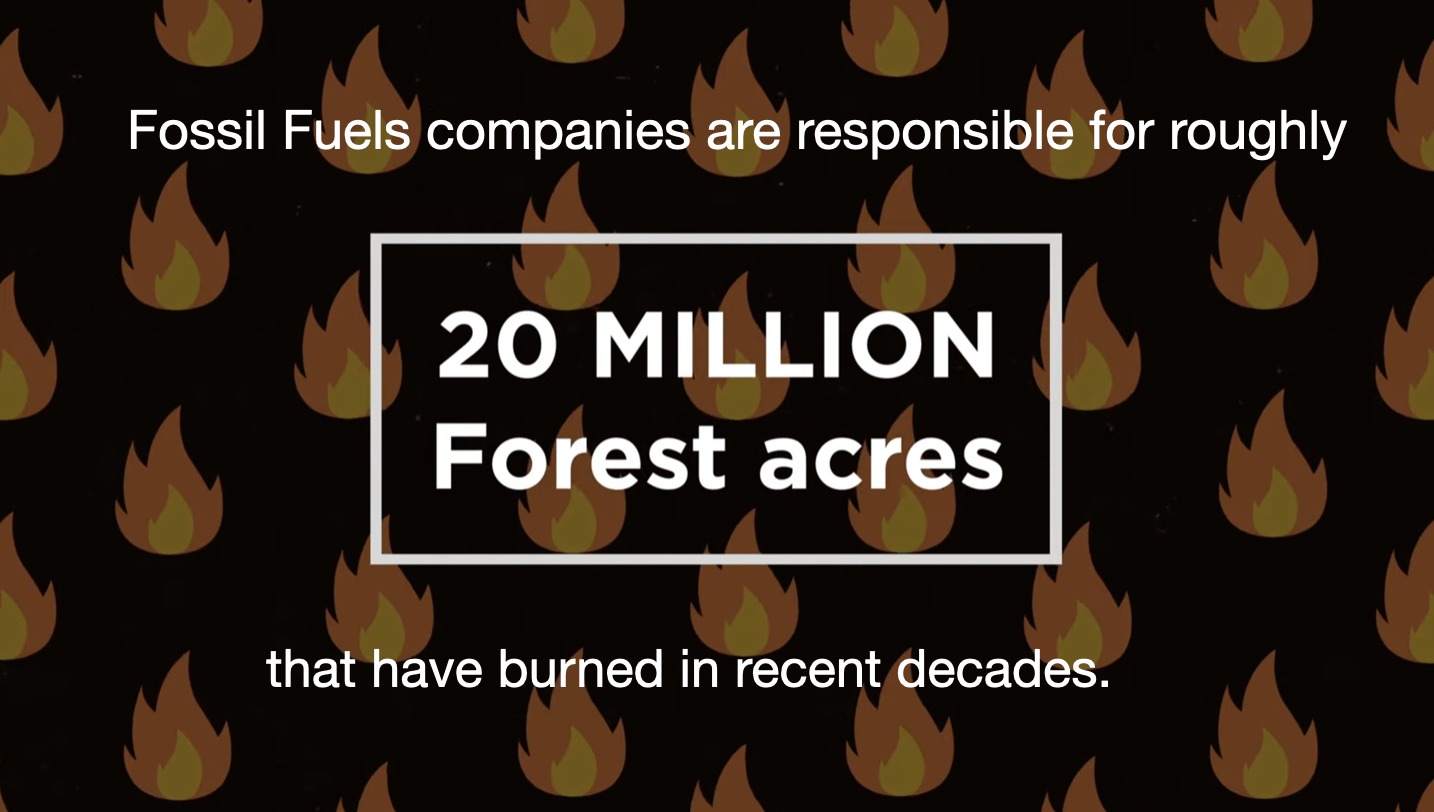
“19.8 million acres burned—37% of the total area scorched by forest fires in the western United States and southwestern Canada since 1986—can be attributed to heat-trapping emissions traced to the world’s 88 largest fossil fuel producers and cement manufacturers. Emissions from these companies also contributed to nearly half of the observed increase in conditions that raise the risk of large, severe forest fires across the region since 1901, the study found. The findings provide new data that can advance efforts to hold companies accountable for past, present, and future climate damages and risks.”
The report findings go on to say:
The study builds on a growing body of climate attribution studies that connect emissions from the extraction and use of fossil fuel products to increased average temperature of the Earth’s surface, global sea level rise, and ocean acidification. Using attribution research like this as a foundation, more than 30 states, cities, and counties are currently suing major oil and gas corporations to seek redress for the harm they have suffered from climate change and to limit future emissions. The novel, interdisciplinary findings in this UCS research are positioned to accelerate improved corporate accountability.
More importantly, BIPOC communities and low income communities are at a higher risk because of the air quality from wild fires, in part caused by heat trapped emissions from the extraction of fossil fuels. The report states:
Communities of color and low-income communities face disproportionate public health risks from wildfire due to systemic socioeconomic injustices and are less able to recover. People of color, particularly Native Americans, are also more geographically at risk of wildfires and smoke exposure.
This video provides for an excellent explanation of the new report, with compelling visuals on how BIPOC communities are impacted.
Despite this crisis, US President Joe Biden will not declare a Climate Emergency, despite pressure from hundreds of environmental groups. As we wrote earlier this week, we cannot rely on governments to solve the Climate Crisis, we must engage in direct action to reduce the amount of suffering that will continue if we do not act.
The Political function of Philanthropy: DeVos Family Foundations – Dan and Pamela DeVos Foundation
“In any case, the hidden hand of of foundations can control the course of social change and deflect anger to targets other than elite power.”
– Joan Roelofs, Foundations and Public Policy
For the past 10 years, GRIID has been monitoring foundations in West Michigan, particularly the large family foundations that those who are part of the Grand Rapids Power Structure have created. Our monitoring of local foundations has been part of our larger critique of the Non-Profit Industrial complex in Grand Rapids.

Over the next several weeks, GRIID will provide some information and analysis of the most recent 990 documents that foundations are legally required to submit. These 990 documents must be submitted within a three-year period, which is why the 990s that we will be examining are from 2020, since most foundations prefer to submit their 990 documents at the last minute, thus minimizing possible scrutiny. So far we have posted article about the Richard and Helen DeVos Foundation, the Dick and Betsy DeVos Foundation, and the Doug and Maria DeVos Foundation.
Dan and Pamela DeVos Foundation
GRIID has always begun our Foundation Watch work by looking at the foundations associated with the most powerful family in West Michigan, the DeVos family. The Dan and Pamela DeVos Foundation has been one of the largest in West Michigan, which was founded in 1992. According to GuideStar, in 2020, the Dan and Pamela DeVos Foundation contributed $8,735,200, leaving them with $11,167,253 of funds left in their foundation. To see the 990 document for 2020 from the Dan and Pamela DeVos Foundation, go here.
The Dan and Pamela DeVos Foundation made contributions to dozens of entities in 2020, but there are some clear categories of groups they contributed to, such as the Religious Right, Think Tanks, Education-centered groups, and social service entities, to name a few. Below is a listing of each from these categories, with a dollar amount and a brief analysis.
We also include groups that are DeVos owned or created, along with liberal non-profits. With the liberal non-profits, we believe that funding from foundations like the DeVos family foundations is a form of hush money. When we say hush money, we mean that these entities will not publicly challenge the system of Capitalism, the wealth gap, structural racism and other systems of oppression, which the DeVos family benefits from and perpetuates through their own political funding.
Religious Right
- Alliance for Children Everywhere – $100,000
- Base Camp Urban Outreach – $20,000
- Bridge St. House of Prayer – $50,000
- Christian Leaders NFP – $50,000
- Keystone Community Church – $120,000
- Life International – $100,000
- Luis Palau Association – $150,000
- Partners Worldwide – $40,000
- Pregnancy Resource Center – $30,000
- Ron Ball Evangelistic Association – $90,000
- Tall Turf Ministries – $100,000
- US Conference of Catholic Bishops – $30,000
- West Michigan Christian Foundation – $450,000
- Young Life – $50,000
Life the other DeVos Family Foundations, contributing money to religious right groups is important for Dan and Pamela DeVos. For example, they contributed $450,000 to the West Michigan Christian Foundation, which according to their 2022 Impact Report, donated $5.7 Million to anti-abortion groups. Another example is the Ron Ball Evangelistic Association, which received $90,000 from the foundation. Ron Ball does large revival-like gatherings and partners with the Heritage Foundation to promote American Capitalism.
Far Right Think Tanks and Free Market groups
- Acton Institute – $75,000
- American Enterprise Institute – $500,000
- FII National – $1,225,000
- Greater Grand Rapids Chamber Foundation – $160,000
- Junior Achievement of the Michigan Great Lakes – $265,000
- Mackinac Center – $50,000
- National Constitution Center – $2,000,000
- Purdue Research Foundation – $5,175,000
- The Seminar Network Inc – $500,000
The DeVos family has always been deeply committed to free market Capitalism. They contributed $1,225,000 to FII National, also known as UpTogether, which believes that poverty is a choice and that people can chose to get out of poverty by starting their own business. Another interesting group is The Seminar Network Inc. (also known as Stand Together), which is an entity that promotes social entrepreneurs, was founded by the Koch Brothers and creates education material that denies Climate Change.
Education-centered groups
- Calvin University – $100,000
- Cornerstone University – $30,000
- Early Neighborhood Learning Collaborative – $265,500
- Godwin Heights Public Schools – $48,000
- Grand Rapids Christian Schools – $161,000
- Grand Rapids Community College Foundation – $631,000
- Grand Rapids Student Advancement Foundation – $545,000
- Grand Rapids Public Schools – $93,500
- Grand Valley State University – $195,000
- Hope Academy of West Michigan – $78,500
- K-Connect – $125,000
- Kent School Services Network – $50,000
- Leading Educators Inc. – $1,855,250
- Ottawa Area ISD – $87,000
- Potters House – $125,000
- Rehoboth Christian School – $200,000
- NYC Leadership Academy Inc – $345,000
- Wake Forest University – $250,000
DeVos-owned, created or connected groups
- ArtPrize – $50,000
- Grand Action Foundation – $50,000
- Grand Rapids Initiative for Leaders – $30,5000
- Orlando Magic Youth Foundation – $90,000
- Spectrum Health Foundation – $492,500
- West Michigan Aviation Academy – $315,000
Groups receiving Hush $
- Baxter Community Center – $50,000
- Bethany Christian Services – $475,000
- Children’s Assessment Center – $40,000
- Dégagé Ministries – $165,000
- Dwelling Place – $200,000
- Family Promise – $135,000
- First Steps Kent – $75,000
- Guiding Light Mission – $20,000
- Heart of West MI United Way – $525,000
- ICCF – $30,000
- Kent Habitat for Humanity – $125,000
- Kids Food Basket – $27,500
- Lifequest – $20,000
- Safe Haven Ministries – $120,000
- The Other Way Ministries – $60,000
- Wedgewood Christian Services – $250,000
Foundations rarely make contributions without strings attached. The Dan and Pamela DeVos has a long history of funding far right and religious right groups, which GRIID documented 10 years ago when we started this project. Lastly, it is worth noting that the Dan and Pamela DeVos Foundation, like all of the DeVos family foundation, compliments the campaign contributions they make to further impact public policy and promote their religious and capitalist ideologies.
Confronting the harsh realities of breathable air, the need for Climate Justice and Radical Imagination
Grand Rapids has the worst air quality in the US right now. This is the headline that I keep seeing over and over on numerous news outlets.
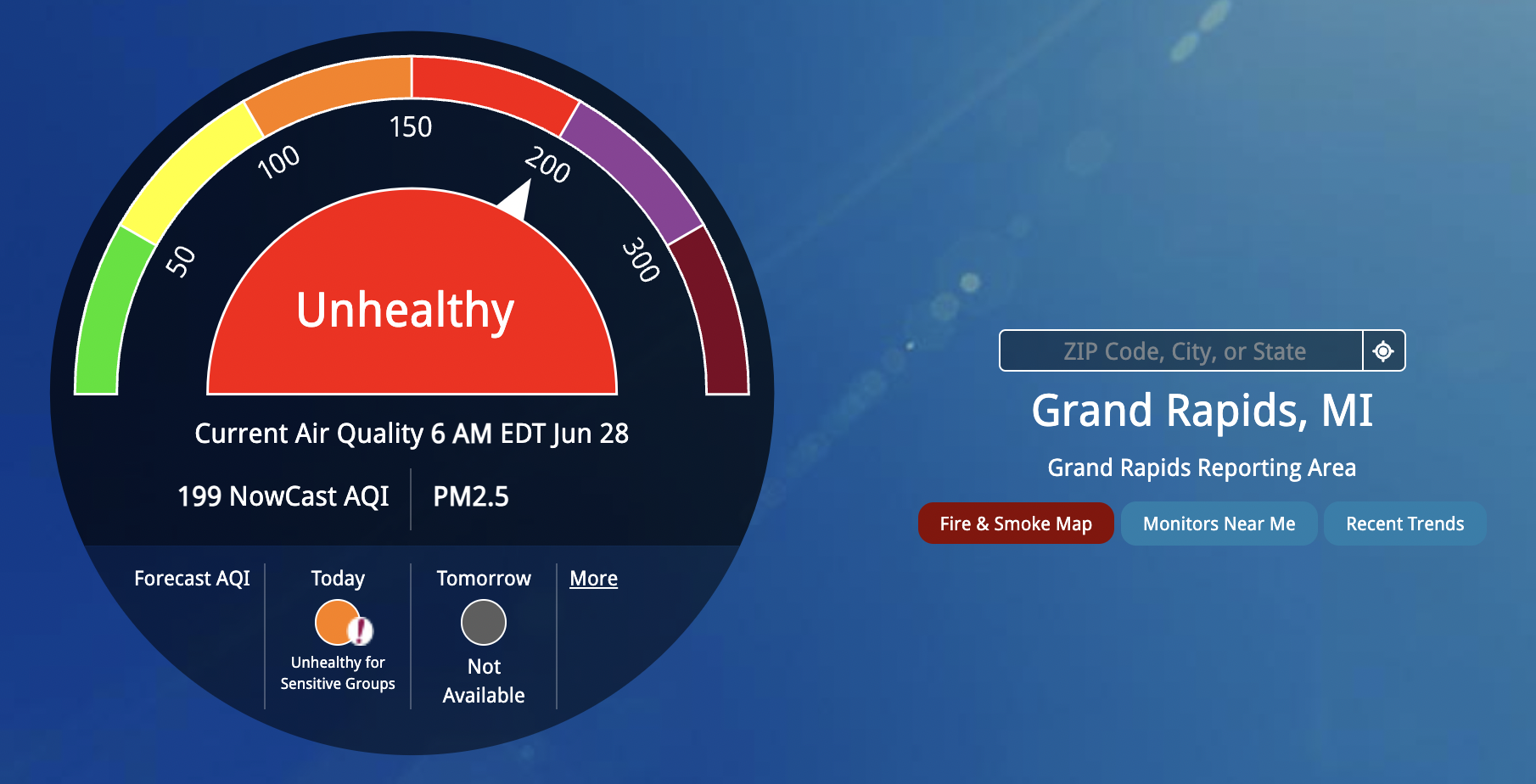
If you go to AirNow.gov and put in your zip code, you can see what the air quality is right now. While I am writing, it says that the Air Quality Index is 202 of Particle Pollution, which means that the air is very unhealthy to breathe and can cause damage to the lungs and heart. It is especially dangerous for those who already have sensitive or compromised respiratory issues.
Right now, it is not safe for me to go outside and work in my garden, so I will stay inside until I have to go to work, where most of the residents in the adult foster care facility I work at have health conditions that put them at a very high risk with the current air quality.
What is it that we were saying at the beginning of the COVID pandemic, that this was the new normal. Lets’ face it, the current air quality is not just because of the Canadian wildfires, it is the result of the current Climate Disaster that we are facing on a global scale. We cannot be content with the fact that rejoining the Paris Accords is an adequate response to the current Climate Catastrophe, especially since the Paris Accords are largely a market based solution to the Climate Crisis.
It is important that we come to terms with the fact that the US environmental movement, since the first Earth Day in the early 70s, has primarily been a white movement. This is not to say that the mainstream environmental movement has not done important work, but the white-led movement has not made the lives of Black, indigenous of latinx people a priority. And it’s not a question that environmental groups need to start recruiting Black, indigenous and latinx members, since that is definitely an inappropriate response, indeed, it is a racist response. What environmental groups need to do is to educate themselves about how larger ecological issues are impacting communities of color, they need to listen to Black, indigenous and latinx voices and then ask what they can do to support the ecological concerns of those communities.
A good place to start would be to learn about the Environmental Justice Movement, which began in the early 1980s, and was specifically a response to the white environmental-led organizations and their failure to see structural racism as an environmental issue. Read the statement and principles that came out of the Environmental Justice Movement, which is radically different than what white eco-groups were/are about. The preamble to the Environmental Justice Movement state reads:
WE, THE PEOPLE OF COLOR, gathered together at this multinational People of Color Environmental Leadership Summit, to begin to build a national and international movement of all peoples of color to fight the destruction and taking of our lands and communities, do hereby re-establish our spiritual interdependence to the sacredness of our Mother Earth; to respect and celebrate each of our cultures, languages and beliefs about the natural world and our roles in healing ourselves; to ensure environmental justice; to promote economic alternatives which would contribute to the development of environmentally safe livelihoods; and, to secure our political, economic and cultural liberation that has been denied for over 500 years of colonization and oppression, resulting in the poisoning of our communities and land and the genocide of our peoples, do affirm and adopt these Principles of Environmental Justice:
The Environmental Justice Movement is rooted in the struggle against Settler Colonialism, White Supremacy and Capitalism, thus any white-led environmental group needs to be about the same kinds of things.
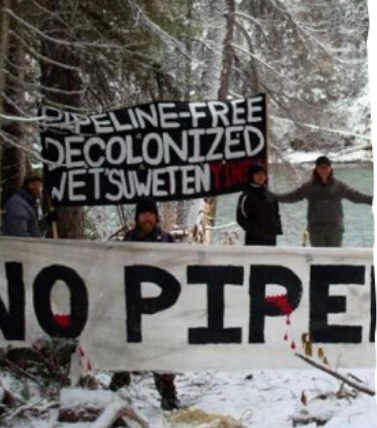 White-led environmental groups put too much faith in government to make the changes we seek. How can we realistically expect governments, at any level, to actually fulfill the will of the people? Governments are too compromised by the power of the fossil fuel industry and business in general. All one has to do is look at how much money corporations give to candidates and how much money they spend on lobbying to realize that local, state and federal governments are help captive by the power of these corporations, plus they are compromised by their allegiance to the economic system of capitalism.
Again, we need to learn from to global climate justice movement, which is primarily led by Black, indigenous and other communities of color. We need to see how the resistance at Standing Rock and all other indigenous-led struggles against fossil fuel companies are using Direct Action as their strategies for resistance, not collaborating with big business, like most of the mainstream, white-led eco groups, often referred to as Gang Green.
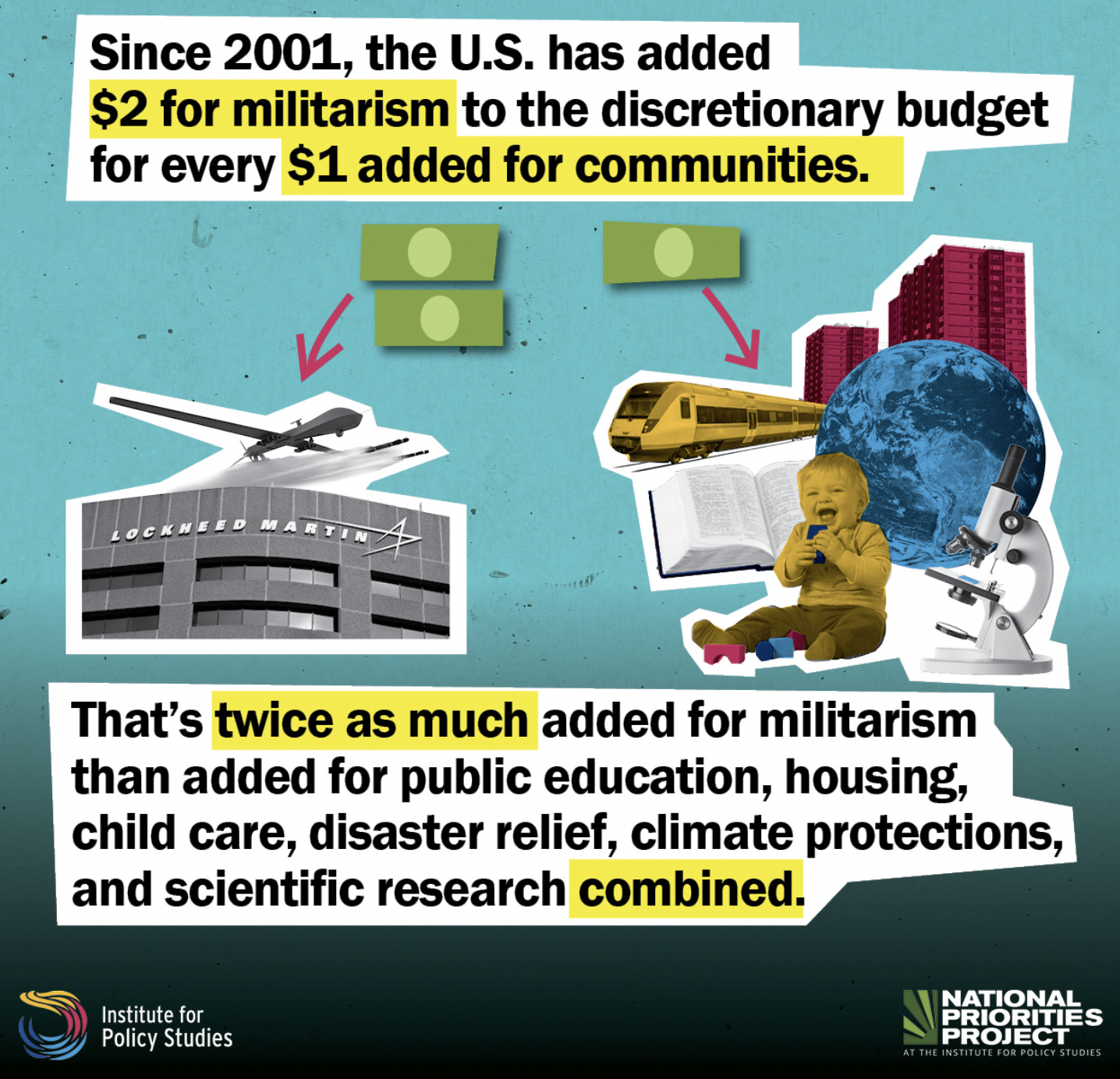
Another critical issue with the mainstream, white-led eco groups is their failure to take a stand against militarism. US militarism and US imperialism is one of the main driving forces behind Climate Change. A recent report from the National Priorities Project and the Institute for Policy Studies, shows that 62% of discretionary sending by the US is on militarism, which is a major contributor to the current Climate Catastrophe. How can we claim to fight for Climate Justice and a real sustainable future, when the US spends nearly two-thirds of its budget on militarism?
Virtually every week there is a new study that comes out about human-caused climate change and the need for radical structural change before it is too late. Unfortunately, most of the white-led environmental groups are still spending most of their energy trying to either get people to change their personal consumption habits or appeal to governments to enact change. We have to stop being fooled by these approaches, start coming to terms with the seriousness of climate change and start learning from Black, indigenous and other communities of color that are rooted the struggle against White Supremacy, Settler Colonialism and Capitalism.
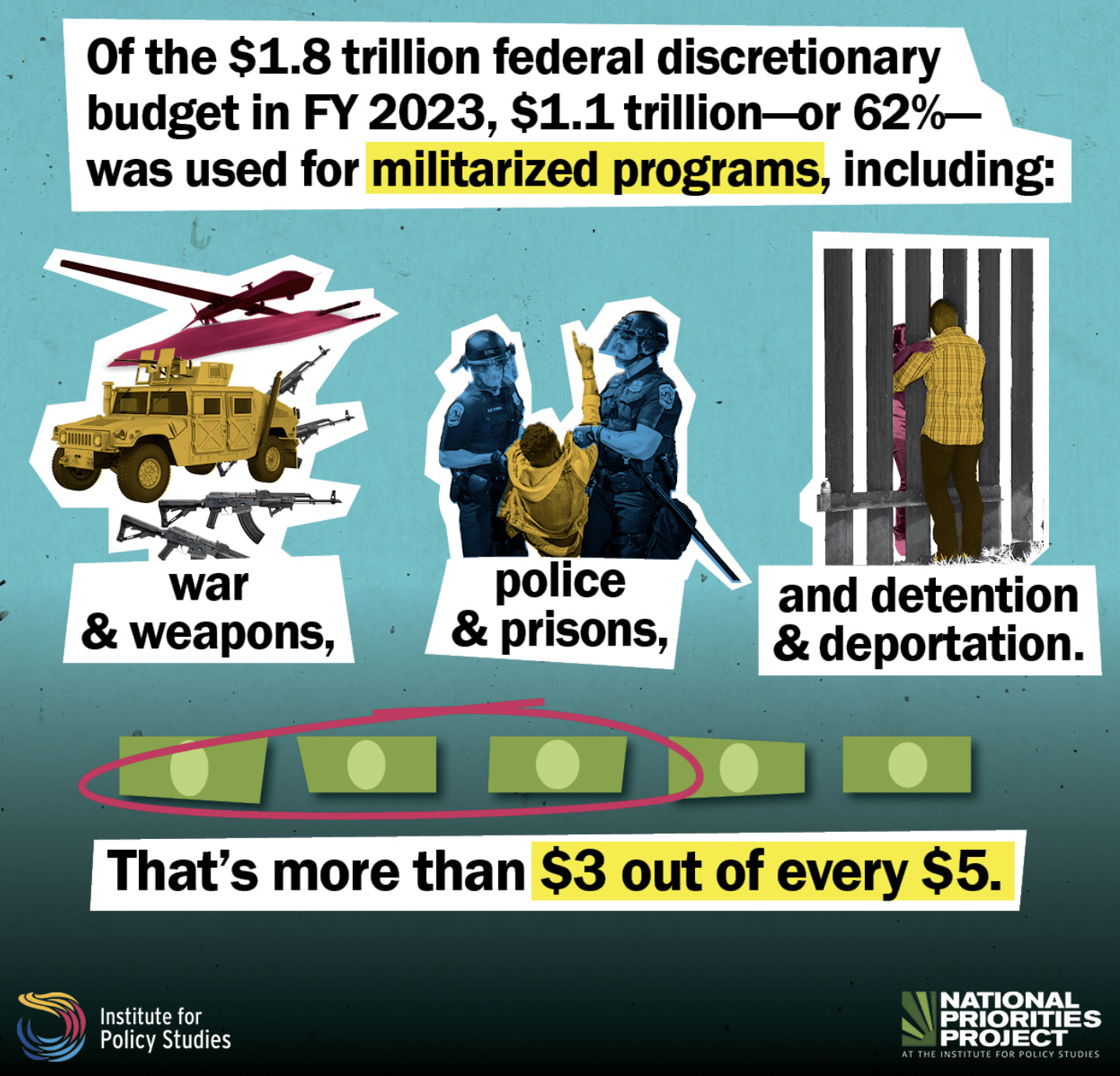
We need to radically imagine a different kind of future. We can no longer afford to think that we can maintain our current levels of consumption and our way of life, by simply using green energy. This is a false solution and it is a lie. We cannot return to normal after the pandemic, since before the pandemic, the systems of White Supremacy, Capitalism, Heterosexism, Ablism and Patriarchy were the norm and still are. If we want a future as human beings, then there needs to be serious, radical and revolutionary goals to work towards. Here is a short list, all of which are connected to Climate Justice, if we are willing to do the intellectual, emotional, social and cultural work to see how these things are connected.
- We need to acknowledge that we are all living on indigenous land.
- We need to ask indigenous communities what they want from us moving forward.
- We need Defund the US military. The US military is one of the largest consumers of fossil fuels and its primary function is to occupy other people’s lands and protect the interests of global capitalists.
- If we Defund the US military ($886 billion for 2023), imagine how that kind of funding on an annual basis could radically alter lives of people, particularly BIPOC communities.
- Abolish the Police. Again, it would reduce violence against, Black, indigenous and latinx communities and re-direct police budgets to those communities.
- All environmental groups must incorporate into their missions an anti-Settler Colonial, anti-White Supremacy, anti-militarism, and anti-Capitalist framework.
- Abolish the Prison Industrial Complex.
- Abolish Immigration and Customs Enforcement.
- Abolish the Agri-business system of food and practice Food Justice and Food Sovereignty.
- End all Fossil Fuel Subsidies and demand reparations from the fossil fuel industry for decades of ecological destruction, the murder of countless Black, indigenous and latinx people and the role that the fossil fuel industry has played in deny climate change.
- Make all utilities publicly controlled, and by public I mean community-based control.
- Make public transit free.
- Make housing free for everyone.
- Make health care free for everyone.
- End wage slavery.
- End representative government and move towards direct democracy and local control.
There are plenty on news entities that exist in the greater Grand Rapids area, many of which GRIID has monitored over the past 25 years.
With the digital age of journalism, the amount of news has grown exponentially, but such growth hasn’t often resulted in more drive-by journalism, journalism that doesn’t hold systems of power accountable, and journalism that provides little or no historical context.
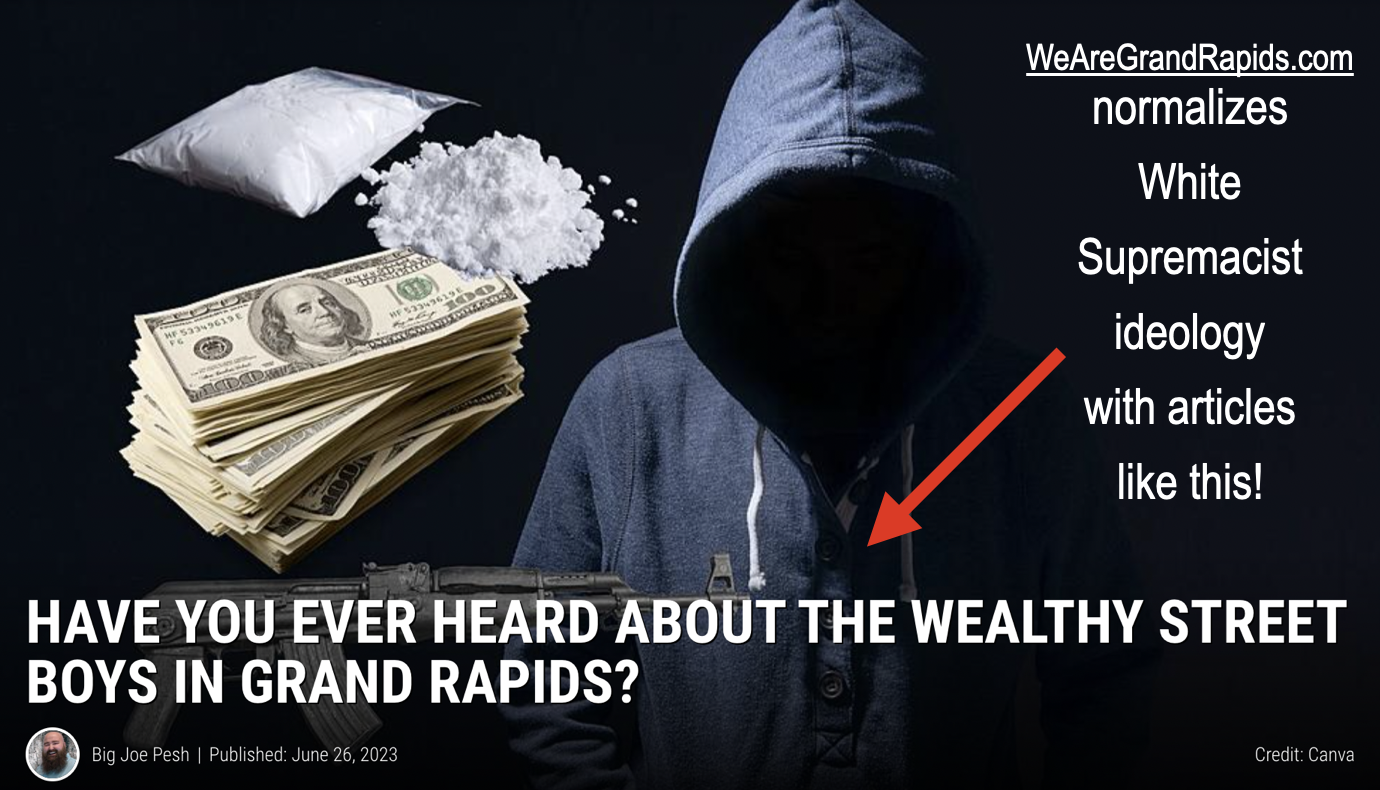
How many people have heard of wearegrandrapids.com? It is a more recent local “news” entity that practices drive-by journalism, which is journalism that tries to get clicks and rarely provides any follow up stories or contextual information. wearegrandrapids.com is owned by Town Square Media, a media conglomerate that is the largest owner of radio stations in the country, with 357 radio stations and 74 websites like wearegrandrapids.com.
Yesterday, wearegrandrapids.com post such a story, entitled, Have You Ever Heard about the Wealthy Street Boys in Grand Rapids? The article is written by Joe Pesh, who is an on air personality for WGRD radio. He has no formal training in journalism and his story is primarily based on stories that Joe’s wife’s uncle told him when he was a patrol officer with the GRPD in the 1990s. In addition, the images used with the story are nothing more than stills taken from a WOODTV8 news clip from 1997.
The article was essentially a joke by any reasonable journalistic standards. However, what the article actually does is to first, normalize White Supremacist ideology, and secondly, to engage in historical revisionism, by presenting a Black gang that dealt crack cocaine as nostalgia.
Both of these dynamics are deeply problematic. The story normalizes White Supremacy, since it presents mostly images of Black people who fit all the stereotypes about that most white people believe when it comes to drugs and Black people. Even asking the question, Have You Ever Heard about the Wealthy Street Boys in Grand Rapids?, reflects a White Supremacist ideology, since the writer had no intention of discussing the larger historical context about the very existence of a Black gang in Grand Rapids.
When it comes to historical revisionism, the post on wearegrandrapids.com fails to explore a who range of issues that would be extremely relevant to our collective understanding on the larger War on Drugs in the US that began with the Nixon Administration. For those wanting to explore more deeply how the US War on Drugs was designed to specifically target Black communities, with a strategic plan to expand the use of state violence against the Black population, then read Clarence Lusane’s book, Pipe Dream Blues: Racism and the War on Drugs.
In addition, it is vitally important that we understand the larger context of why there was a Black gang on Wealthy Street in the late 1990s in the first place. Here are some of the major contributing factors:
- During the 1960s, and especially after the 1967 riot in Grand Rapids, white people were leaving the urban core of Grand Rapids in large numbers. This resulted in a massive disinvestment in neighborhoods that had become predominantly Black.
- The US economy had become de-industrialized, especially beginning in the 1970s and culminated with the passing of the North American Free Trade Agreement (NAFTA) in 1994, which has resulted in massive job displacement, which Public Citizen has documented.
- Part of the massive dis-investment in the urban core was caused by white flight, but it was also the result of the 1995 ballot initiative in Grand Rapids to increase the number of cops and to provide even more of the City’s budget to the GRPD. This meant that a minimum of 33% of the City’s budget would now be spent on policing.
- Members of the Grand Rapids Power Structure wanted to make downtown Grand Rapids a tourist destination. There became a massive effort to “revitalize” downtown, an effort that was largely led by the DeVos family and led to the creation of Grand Action in the early 1990s to design development projects that those with deep pockets would primarily benefit from. The first project was the Van Andel Arena.
- In 1996, the Clinton Administration functionally ended welfare as we know it, by signing into law the Personal Responsibility and Work Opportunity Reconciliation Act. This policy was designed to force people who were utilizing the state’s safety net to get work, which resulted in the perpetuation and expansion of poverty in the US, particularly in BIPOC communities.
Therefore, when you dismantle much of the manufacturing sector, reduce government assistance, disinvest in Black neighborhoods and increase the number of cops and budgets for policing, you will create a cause and effect dynamic that both forces people into illegal means of making money, and a justification to punish them at the same time. All of this should be understood as Structural Racism in Grand Rapids, which I discuss in Chapter 2 of my book, A People’s History of Grand Rapids.
On Saturday, some 20 members of Movimiento Cosecha made the trek from West Michigan to Detroit to pay a visit to Rep. Tullio Liberati’s home.

Everyone rode down together, which provided opportunities for people talk and visit with each other, especially since it was a 3 hour drive. Most of the people who were talking were from Mexico, and they were talking about what part of the country they were from and regional language differences. However, what caught my attention most, was the conversations they were having about food. While I sat there listening to these conversations I thought to myself that these people not only have great relationships with each other, but they are rooted in and connected by deep cultural bonds.
Once we arrived to our destination, we parked about 6 blocks away from Rep. Liberati’s home. The group decided to walk there with signs and banners, but waited until they arrived at the Representative’s home before unfurling the banner, engaging in chants and live-streaming the action.
Most of the Cosecha members stood on the sidewalk, facing the house and began chanting Driver’s Licenses Now! A small delegation walked up to Rep. Liberati’s home and knocked on the door, hoping to engage him in conversation about the current Driver’s Licenses bill. After several knocking attempts, no one came to the door. However, the group continued to chant and livestream the action, explaining why passing Driver’s Licenses for All was so urgent and important.
Eventually, several neighbors came out of their homes and a few walked over the see what was happening. One Latina mother was very receptive to the Cosecha action and talked with organizers for several minutes. Then there was an older white man who seemed confused about what was happening and thought that since the Representative wasn’t home, that it didn’t make sense to keep chanting. As the crowd safety person I let him know that this action was being livestream, so continuing the action was still relevant and important for sending a message.
A few other people driving in the vehicles, stopped to take pictures/video and most seemed supportive of what was happening.
Why target Rep. Liberati, a Democrat?
Ever since the November 2022 Election, it has been know that the Democrats now controlled the State House, the State Senate and the Governor’s office in Michigan. They have set their priorities and already passed some mild reforms. However, not all of the Democrats in the State House support passing a Driver’s Licenses for All bill, with Rep. Liberati being one of them.

The coalition of groups that haver been working on passing this legislation, known as Drive Michigan Forward, has been working in the inside game, hoping to pressure State lawmakers to adopt the introduced legislation on driver’s licenses. They have been meeting with elected officials, doing some public education and phone banking to get the driver’s licenses bill passed.
Movimiento Cosecha has been working on this issue for a longer period of time, at least since 2018, even before there was proposed legislation. This immigrant justice movement chose to work on this issue, because that is what the undocumented immigrant group has been demanding. Movimiento Cosecha has also been working with Drive Forward Michigan to get this current legislation passed and encouraging people to contact legislators to support the bill.
However, Cosecha also believes in pressuring elected officials in multiple ways, especially using Direct Action as a tactic to pressure politicians to meet their demands. Cosecha has continued to visit the offices and homes of Democrats who are either not on board with passing the current driver’s licenses bill or those who are not moving quickly enough on this urgent matter. I wrote about the lack of Democratic Party participation in the May Day march organized by Cosecha, which included the Senate Majority leader Winnie Brinks.
What people have to realize is that without driver’s licenses, the undocumented immigrant community is at risk of arrest, detention and deportation. Like any family, they primarily rely on driving cars to go to work, to buy groceries, take their kids to school or to medical appointments. Movimiento Cosecha went to Rep Liberati’s home on Saturday to communicate this urgency, especially because of the fact that if the Democrat-control Michigan legislature doesn’t pass this bill before next Thursday, they will be off for the next two months.
It is urgent that people send messages to the people in the graphic here below and tell them to make passing a driver’s licenses bill a top priority. The undocumented immigrant community lives in constant fear and many of them don’t have the luxury of taking time off to vacation, like the members of the Michigan legislature. Democrats can’t continue to to claim to support progressive issues and then not take action to adopt policies that the communities most impacted are demanding.


