Why is the State of Michigan using public money to subsidize the production of electric vehicles?
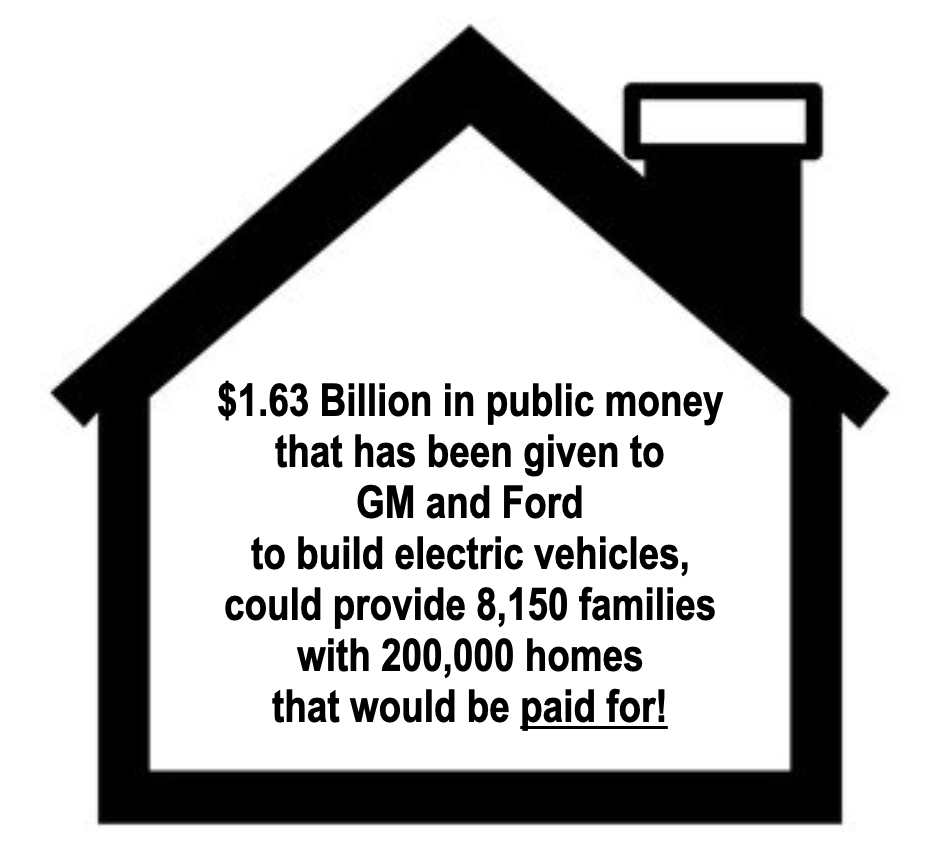 On March 1st, MLive reported that the Michigan Senate approved $629.7 million for the Ford EV Project. If you add to that the $1 billion in subsidies (although the State of Michigan likes to call it “incentives”) that the State of Michigan provided to General Motors last year for EV production, that puts the total at $1,630,000,000 in public money that has gone to two of the largest US multinational corporations.
Now, politicians, businesses and others will say that this “investment” by the state of Michigan is important and necessary, since it will create jobs. Now I always thought that Capitalism and Capitalists didn’t like the government interfering in the economy. The so-called Free Market will make the investment, since they will make it back many times over in sales.
Last year, when The Guardian wrote a piece about the $1 Billion going to GM in subsidies, they addressed the issue of job creation. In that Guardian article, GM claims that the new investments in EV vehicle production would result in 4,000 new jobs.
The article goes on to say:
But what’s good for GM may make less sense for state taxpayers, a Guardian analysis of the deal finds. Once again large corporate subsidies – paid for by taxpayers – look set to benefit the corporations while leaving taxpayers out of pocket.
Michigan has effectively agreed to compensate GM more than $310,000 for each job created, but during the next 20 years, the positions are unlikely to generate more than $100,000 in tax revenue in the very best case scenarios.
Collectively, the plants’ jobs will probably return less than $300m of the state’s $1b investment when contributions to state income, sales, property and other taxes are factored in.
The question then becomes, where does the rest of the public subsidy go? We know exactly where it goes, it goes into the coffers of GM.
Now, let’s compare the amount of public money that is going to GM and Ford to say affordable housing. In January, Governor Whitmer announced that the State of Michigan would contribute $176.6 million to build or improve nearly 700 affordable housing units across 17 projects from Cheboygan to Detroit. However, let’s be clear here, the housing money will not go to people to purchase housing, it will go to developers, both private and non-profit, for them to build or rehab 700 housing units. Those who would be moving into these 700 housing units would still be paying rent or a mortgage.
Wouldn’t it be a more direct benefit to people who are housing insecure, to give public money to families to be able to purchase a home. For instance, if we used the $1,630,000,000 in public money that has gone to GM and Ford and gave it to families to purchase say a $200,000 home, which is a moderate cost for a house these days, how many families would be able to buy a house? For the amount of public money given to GM and Ford over the past 12 months, 8,150 families could buy a $200,000 home. This would also mean that these families would have no mortgage, since the house would be paid for and they could then spend money in other areas, which would also stimulate the economy.
Just imagine, what a fundamentally radical shift this would be in how public money could be used. Plus, this is just public money that the State of Michigan could provide in one year, based on the subsidies to just two corporations. It is never a question of whether or not there is enough money to fund housing for all or a single payer health care system, but it is a question of priorities. We all need to radically imagine other possibilities and then organize to win those possibilities.
32 years ago, the US committed a major war crime in Iraq, which led anti-war activist to take action in Grand Rapids
On February 27th, 1991, the US military committed war crimes against Iraqis in what is famously known as the Highway of Death.
The highway I am speaking of was Highway 8, which went from Kuwait to Iraq. At the very end of the US military assault on Iraq in what the US military referred to as Operation Desert Storm, Iraqi troops were retreating on Highway 8.

Baghdad radio had just announced Iraq’s acceptance of a cease-fire proposal and, in compliance with UN Resolution 660, retreating Iraqi troops were ordered to withdraw to positions held before August 2, 1990. Then US President George H. W. Bush, was not happy about this announcement, so after consulting with military personnel, he gave the green light to what was to happen next.
As Iraqi soldiers were beginning to retreat on Highway 8, US fighter pilots began to carpet bomb the caravan of vehicles that were on the road in retreat. In a post-Operation Desert Storm report on US War Crimes, the Lebanese-American journalist Joyce Chediac, reported, “U.S. planes trapped the long convoys by disabling vehicles in the front, and at the rear, and then pounded the resulting traffic jams for hours. “It was like shooting fish in a barrel,” said one U.S. pilot.
Chediac went on to write:
“Every vehicle was strafed or bombed, every windshield is shattered, every tank is burned, every truck is riddled with shell fragments. No survivors are known or likely. The cabs of trucks were bombed so much that they were pushed into the ground, and it’s impossible to see if they contain drivers or not. Windshields were melted away, and huge tanks were reduced to shrapnel.”
Former US Attorney General Ramsey Clark, who was also involved in the US War Crimes documentation, made it clear that Iraqi soldiers were not the only ones killed in the US bombing of Highway 8 that day. Clark wrote, “Many of those massacred fleeing Kuwait were not Iraqi soldiers at all, but Palestinians, Sudanese, Egyptians, and other foreign workers.”
The murder of civilians is always a War Crime, according to the Geneva Convention, but so are the murder of combatants, if they are not actively engaged in fighting.
“Persons taking no active part in hostilities, including members of armed forces who have laid down their arms and those placed hors de combat by sickness, wounds, detention, or any other cause, shall in all circumstances be treated humanely, without any adverse distinction founded on race, color, religion or faith, sex, birth or wealth, or any other similar criteria.” (Common Article 3 to the four 1949 Geneva Conventions of 1949)
The photo I included above, with the Iraqi soldier burnt alive in his vehicle, was an image that was widely shared after the Highway of Death incident. My friend and comrade in the resistance to Operation Desert Storm, Karen Henry, put that picture on foam board and took it whenever she spoke about the US War in the Gulf or US policy in the Middle East.
Another war crime that received attention later, was the revelation that the US military was putting snow plows on the front of Abrams M1 tanks and burying Iraqi soldiers alive in the desert. The independent media had reported on this earlier, but here is a link from a New York Times article later that year. It was this crime that got the attention of several anti-war activists in Grand Rapids.
In late June of 1991, the Grand Rapids Press announced that George H.W. Bush would be coming to town to celebrate the 4th of July. It was also reported that the same kind of tanks that were used to bury Iraqi soldiers alive in the desert just months earlier, would also be in a parade that Grand Rapids would be having for President Bush.
Three Grand Rapids anti-war activists decided that they would protest not only Bush’s visit, but the tanks that were used to violate international law, which would be in the parade. You can see from a GR Press photo below, that the three activists tried to lay down in front of the tanks, but were quickly stopped by Secret Service and local cops.
The three activists decided to challenge their arrest by using International Law as a defense. The group went to trial in November 1991 and defended themselves. The day before the trial the court change the judge, who would no longer allow them to use International Law as a defense, despite the fact that they had submitted a 40-page brief.
Judge Christensen would not allow them to use an International Law argument, so the three activists just tried to get the jury to hear their side of the story. The three activists were charged with blocking a roadway. However, the jury did not find the three activists guilty, since the cops dragged them out of the way so fast that the parade never missed a beat.
The Grand Rapids City Attorney was so upset, since he was beaten by three young activists who defended themselves. Unfortunately, there was no other resistance to the Gulf War or its aftermath, like the ongoing US bombing of Iraq in the No Fly Zones that took place during the entire 8 years of the Clinton Administration, right through the first two years of the George W. Bush administration, until another war/invasion of Iraq took place in March of 2003.
On Friday, Michigan Senator Gary Peters announced that he has re-introduced bipartisan legislation to help American businesses combat human rights abuses.
The Combating Human Rights Abuses Act, SB4101, the bill would also direct the Commerce Department to offer guidance to U.S. exporters to help them avoid doing business with foreign entities that may be implicated in forced labor or human rights violations, according to a Press Release by Senator Peters.

At first glance, the idea seems solid, but after reading the language of the bill I have lots of questions about The Combating Human Rights Abuses Act, SB4101.
First, the language of SB4101 only names one country that violates human rights or labor rights, which is China. Most countries on the planet violate some form of labor or human rights, such as Israel, which violates the human rights of Palestinians on a daily basis. (See reports from the Israeli Human Rights group B’Tselem) If one spends any time on the websites of Human Rights Watch or Amnesty International you will find dozens and dozens of human rights and labor abuses in countries that US business have dealings with.
Second, in Senator Peters’ Press Release he names China and Russia as human rights abusers. This is instructive, since the Biden Administration has been ramping up anti-China and anti-Russian rhetoric over the past two years. Again, why only identify these countries and not countries that the US has close relations with such as Israel, Saudi Arabia, Indonesia, Colombia, Mexico, etc.?
Third, at the end of SB4101, “the language states, make clear that the guidance is for advisory purposes and that the Department of Commerce is not responsible for certifying the accuracy or completeness of the information provided in the guidance.” Therefore, there will be no enforcement or certification, it is mere an information sharing mechanism for US business that do business abroad. In other words it is just for show or a performative piece of legislation that has no teeth.
Fourth, why doesn’t the proposed legislation include US businesses that violate human rights or labor abuses abroad? We know that most apparel companies utilize sweatshop labor abroad, as do sneaker companies such as Nike, which United Students Against Sweatshops have been documenting for years. What about US corporations that engaged in harmful environmental degradation abroad, whether it is toxic waste, clearcutting rainforests or fossil fuel pipelines that have tremendous negative impact on ecosystems and humans in countries across the globe? Why isn’t Senator Peters speaking out or proposing legislation that prevents US businesses for human rights and labor abuses abroad?
Fifth, why are there no real standards on how US businesses violate human rights here in the United States? Look at the harm done by companies like Norfolk Southern in Ohio recently, or US businesses that use prison labor, discriminate against the LGBTQ community, or have a legacy of racial discrimination.
Like so much of US policy, the legislation that Senator Peters has introduced only blames other countries for human rights abuses, doesn’t have an enforcement mechanism, doesn’t name countries the US has cozy relationships with and doesn’t apply the same intended scrutiny on US businesses in general, whether they do business abroad, within the US or both, this legislation appears to be both biased and meaningless in its execution.
Acton Institute writer claims that the Reagan Administration was the embodiment of the Sermon on the Mount phrase, Blessed are the Peacemakers, in new book review
Last week, editor of The American Spectator, Paul Kengor, who has written numerous books about former US President Ronald Reagan, reviewed a new book for the Acton Institute’s blog, entitled, The Peacemaker: Ronald Reagan, the Cold War, and the World on the Brink.
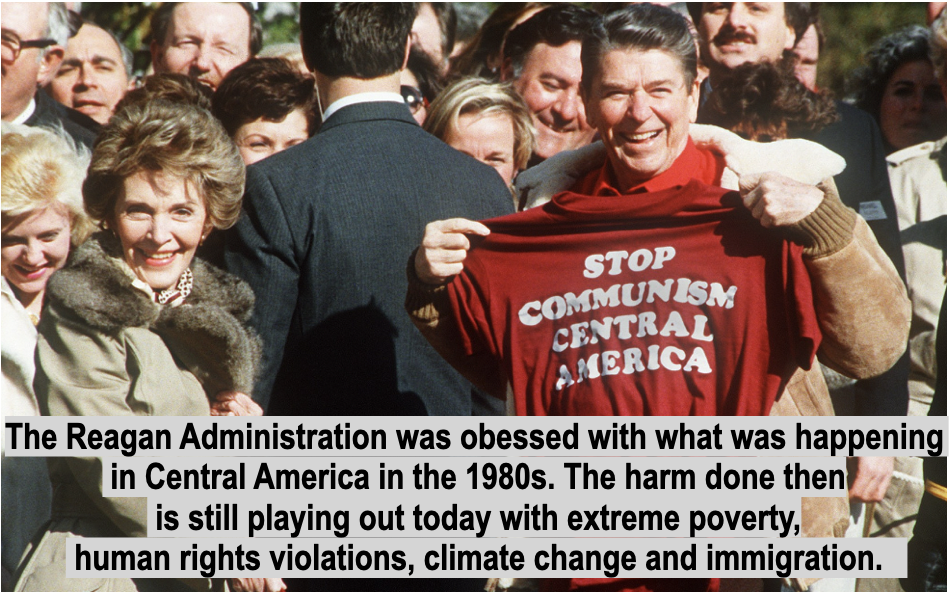
In his book review, Kengor makes the claims that the Reagan Administration peacefully won the Cold War, embracing the principle of “peace through strength.” Kengor concludes his book review by writing:
All along, Clark, like Reagan, was buoyed by a strong sense, literally a spiritual sense, of what he and Reagan called “the DP,” the Divine Plan. They believed that they had established a policy and plan to peacefully end the Cold War—a plan that they hoped and prayed was God’s will. It worked, and the rest is history.
The Cold War between the United States and the former Soviet Union was anything but peaceful. If the Acton writer thinks that US military build up during the Reagan years, the “peace through strength” principle didn’t have any negative consequences, then Kengor is either ignorant or more likely, ideologically compromised.
The massive US military build up during the Reagan years (which has been a constant right up to the present), meant that the US was deciding to make weapons of war instead of investing in the country’s infrastructure, education system, health care, housing and renewable energy, just to name a few. However, the more absurd notion that Kengor puts forward is that the US won the Cold War peacefully.
From the late 1940s through the fall of the Soviet Union in 1991, both countries invested heavily in militarism, while their domestic populations suffered. And while the US and the former Soviet Union didn’t directly engage in warfare with each other, especially during the Reagan years, the US government certainly engaged in proxy wars, support for dictatorships, Low-Intensity Conflicts, massive weapons sales abroad, the use of CIA, Green Berets and DEA agents to undermine foreign governments or to help facilitate narco-trafficking on a global scale.
Here is but a brief summary of the US militarism and Imperialism during the Reagan years:
Afghanistan – the Reagan Administration provided billions of dollars in US military aid in the form of training, advisors and weapons, to a group of Islamic insurgents that became the Afghan Moujahedeen. Amongst the Afghan insurgents was Osama bin Laden, along with several other future members of the Taliban and other fanatical right wing groups. The Reagan Administration wanted to undermine the Soviet occupation of Afghanistan and force the Soviet government to get caught up in a Vietnam – like protracted war.
Iran/Iraq war – The US was providing weapons and military aid to both Iran and Iraq during the 1980s in an attempt to destabilize the region. Some of the weaponry provided to Iraq WMDs, specifically chemical weapons, used against Iranian civilians and the Kurds.
Israel – The Reagan Administration continued to policy that began in the mid-1970s, which was to provide Israel the largest amount of US military Aid to any single country annually. The Israelis used the US military aid to brutalize the Palestinians and displace them from their lands, thus making way for the expansion of Israeli Settlements. In addition, the US provided key diplomatic and military support to Israel for their invasion of Lebanon, resulting in an estimated 23,000 civilian deaths.
Grenada – The Reagan Administration invaded Grenada to get rid of a leftist government, killing 400 Grenadians and 84 Cubans, mostly construction workers.
Cuba – The Reagan Administration maintained the decades long US embargo of Cuba, along with numerous attempted assassinations of Fidel Castro, a massive disinformation campaign and the ongoing US occupation of Guantanamo, Cuba, where the US maintained a military base.
Nicaragua – The Reagan Administration was incensed by the Sandinista Revolution that took power in 1979. The government provided US military Aid to the former Somozan National Guardsmen, known as the Contras, which regularly attack civilians, farming cooperatives, health clinics and Christian-base communities. When the US Congress cut off aid to the Contras, the Reagan Administration engaged an illegal drug and weapons trade that also involved Iran, in what later became known as the Iran-Contra scandal.
El Salvador – The Reagan Administration continued what began during the Carter years, which was to provide $1 million in US military aid on a daily basis to the death squad government, which was run by the Arena Party. Tens of thousands of Salvadoran civilians were murdered during the Reagan years, including numerous Christian clergy and other religious workers.
Guatemala – The Reagan Administration supported a series of military dictatorships, most notably Rios Montt. According to Amnesty International, the Rios Montt regime engaged in a genocidal campaign against the Mayan people of Guatemala, with thousands murdered, tortured, disappeared and displaced.
Honduras – The Reagan Administration deeded to expand the US military presence in Honduras in the 1980s, turn that country into a US military base providing more immediate US military support for the wars in El Salvador, Nicaragua and Guatemala. The US also supported the Honduran death squads known as the 316 Battalion during the Reagan years.
South Africa – The Reagan Administration supported the Apartheid regime in South Africa during the height of the global anti-Apartheid movement.
Angola – The Reagan Administration supported the brutal government of Jonas Savimbi, who was head of the UNITA Party in Angola.
Libya – The Reagan Administration engaged in numerous tactics to destabilize the Qaddafi government.
Philippines – The Reagan Administration supported the dictatorship of Ferdinand Marcos, who allowed the US military base to operate freely for military interventions in the region.
These are just some of the examples of how the US was using the pretext of the Cold War for military interventions, proxy wars and weapons trafficking in the 1980s. Several million civilians were killed during the Reagan years, plus millions more who were displaced and countless people who were tortured. The fact that the Acton Institute writer referred to the Reagan Administration as peacefully winning the Cold War, not only demonstrates how ideologically compromised he is, but how heartless he could be for not acknowledging the mountains of bodies of dead civilians that took place during the Cold War years.
Editors note
Books used as source material for this article:
- The Cold War and the New Imperialism: A Global History, 1945 – 2005, by Henry Heller
- The Violent American Century: War and Terror since World War II, by John Dower
- Overthrow: America’s Century of regime Change from Hawaii to Iraq, by Stephen Kinzer
- Rogue State: A Guide to the World’s Only Superpower, by William Blum
- Boomerang: How Covert Wars Have Created Enemies Across the Middle East and Brought Terror to America, by Mark Zepezauer
- Killing Hope: US Military and CIA Interventions Since World War II, by William Blum
- Lying for Empire: How to Commit War Crimes With a Straight Face, by David Model
- War Made Easy: How Presidents And Pundits Keep Spinning Us to Death, by Norman Soloman
A more honest assessment of the GRPD 2023 Strategic Plan
In addition to the GRPD introducing their plan to purchase and use drones on Tuesday, Chief Winstrom also presented the latest GRPD Strategic Plan to City officials.
Both WOODTV8 and WXMI 17 reported on the release of the updated GRPD Strategic Plan. Like the MLive article we critiqued yesterday, the channel 8 and channel 17 stories only cited Chief Winstrom and offered no critical assessment or challenging questions about the GRPD’s 2023 Strategic Plan.
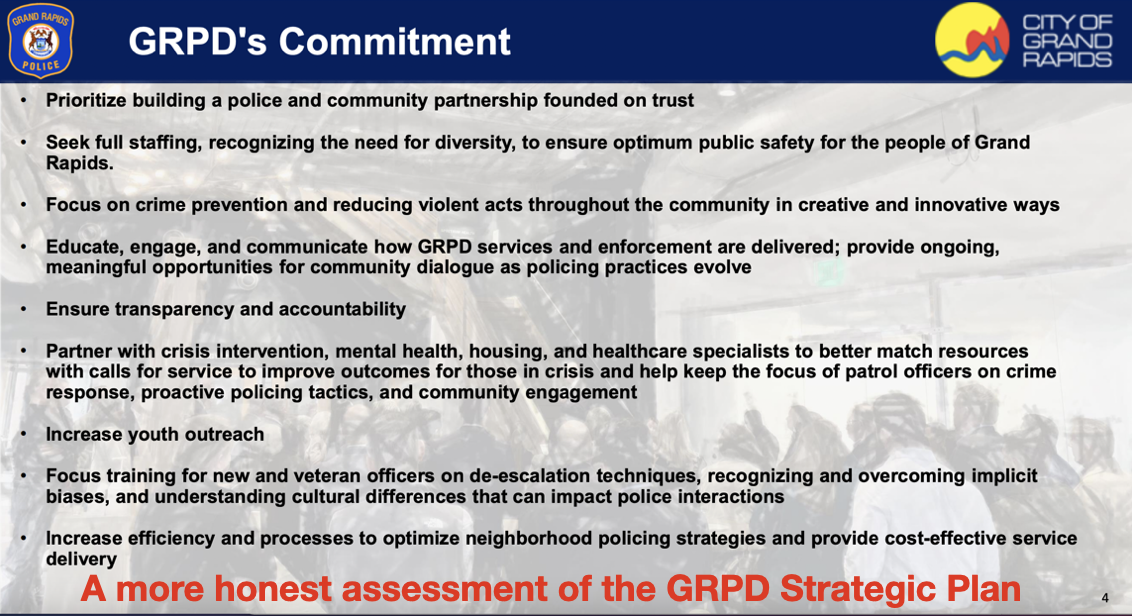
The 2023 GRPD Strategic Plan is 17 pages long, although there are lots of graphics and images to fill those pages. One could critique each page, but for our purposes, the most important page is page #4 (shown here above), which lays out their primary goals. The rest of this post will focus on critiquing the nine points on page 4, along with offering some alternative views and links to resources that come out of an abolitionist view of policing.
Point #1 – Prioritize building a police and community partnership founded on trust. This point borders on insulting. How can the GRPD claim to want to build trust with residents, when they disproportionately have a presence in Black and Brown neighborhoods, and they disproportionately detain, arrest and brutalize Black and Brown residents? Here is a list compiled by the Bridge:
- In March 2017, police officers pulled over and aimed guns at a group of five young unarmed Black boys. The incident was followed by heated community discussions at City Commission meetings. Former Chief of Police Dave Rahinsky, who has since retired, apologized to the boys, their families and the Black community, but he maintained that officers followed protocol.
- The next month, a traffic study was released that showed Black motorists in Grand Rapids were twice as likely to be pulled over as white motorists despite the fact that the city’s Black population was around 14 percent at the time.
- As a result of the traffic study, the department hired consulting firm 21st Century Policing to evaluate its policies and procedures and find and remove examples of implicit bias. Some of the recommendations the firm made were to increase cultural competency training for officers and host discussions between the community and police.
- In December 2017, the police faced scrutiny when an officer pointed a gun at an unarmed 11-year-old Black girl before searching and handcuffing her. This incident led to the department adopting a new youth interactions policy that was implemented to protect other children from unnecessary police force.
- In 2018, there were two more incidents of police officers either pointing guns at or handcuffing unarmed Black and Brown children, prompting the department to update its youth interaction policy just a year after it was created. Police made changes to how youth would be handcuffed, when a child would be put in a police cruiser, and when officers should draw a firearm.
- In November 2018, citizens criticized the department after a police captain called U.S. Immigration and Customs Enforcement (ICE) on U.S. citizen and Marine combat veteran Jilmar Ramos-Gomez, even though he was carrying multiple forms of identification that proved he was an American citizen.
- In 2019, the American Civil Liberties Union and Michigan Immigrant Rights Center filed civil rights complaints against police for the situation with Ramos-Gomez and an unrelated incident where police officers pulled over two unarmed teens, one of whom was a 15-year-old of Mexican descent.
- The complaints led the Michigan Department of Civil Rights to host two public hearings during which residents voiced concerns about the way Grand Rapids police treat Black and Brown people. The state opted against opening an investigation.
- In late 2019, a city-sponsored survey found 3 in 10 Grand Rapids residents didn’t trust the police department. Unlike the traffic study from 2017, this was an anonymous online survey only.
- In May 2020, the police budget was increased by $700,000 to $61 million despite calls from some activists to decrease funding to police. (Budgets to many other police agencies nationwide also increased around this time as well.)
- Later that month, the murder of George Floyd by police in Minneapolis led to several days of protests in Grand Rapids, including some that resulted in property damage, broken windows and police dispersing crowds with tear gas and flash bangs.
- Following the protests, Grand Rapids officials said they are willing to make police reforms to make the department more accountable and safer for residents. At the time, many activists were still calling for the department to be defunded to better invest in community services.
- On the morning of April 4, 2022, 26-year-old Congolese immigrant Patrick Lyoya was shot and killed by a Grand Rapids police officer. Chief Eric Winstrom said the investigation, which is being handled by the Michigan State Police, is ongoing. Winstrom wouldn’t give the name of the officer who killed Lyoya, but said the officer was “in shock” following the incident.
I would add to this list the ongoing harassment, monitoring, intimidation and arrests of activists who have been challenging GRPD practices of targeting Black and Brown residents.
Point #2 – Seek full staffing, recognizing the need for diversity, to ensure optimum public safety for the people of Grand Rapids. The GRPD are continually calling for more cops, which means a bloated budget that is rarely questioned. More importantly, the GRPD uses the oldest myth about what there function is, which is to prevent crime and create public safety. I would encourage people to read the report put out by Interrupting Criminalization, entitled, Cops Don’t Stop Violence, which deconstructs the whole notion of crime, how crime data is misused to serve policing interests and how police consistently engage in their own crimes against people they stop, detain and arrest.
 The report is well researched and full of data, that is presented in a very readable fashion. The report concludes with the following statement:
It’s time to recognize that decades of pouring more money, resources, and legitimacy into policing in an effort to increase safety have failed — because policing is functioning as it is intended to: to contain, control, and criminalize Black and Brown communities rather than to prevent and reduce violence. It’s time to invest in meeting community needs and building non-police community safety strategies. It’s time to invest in just recovery.
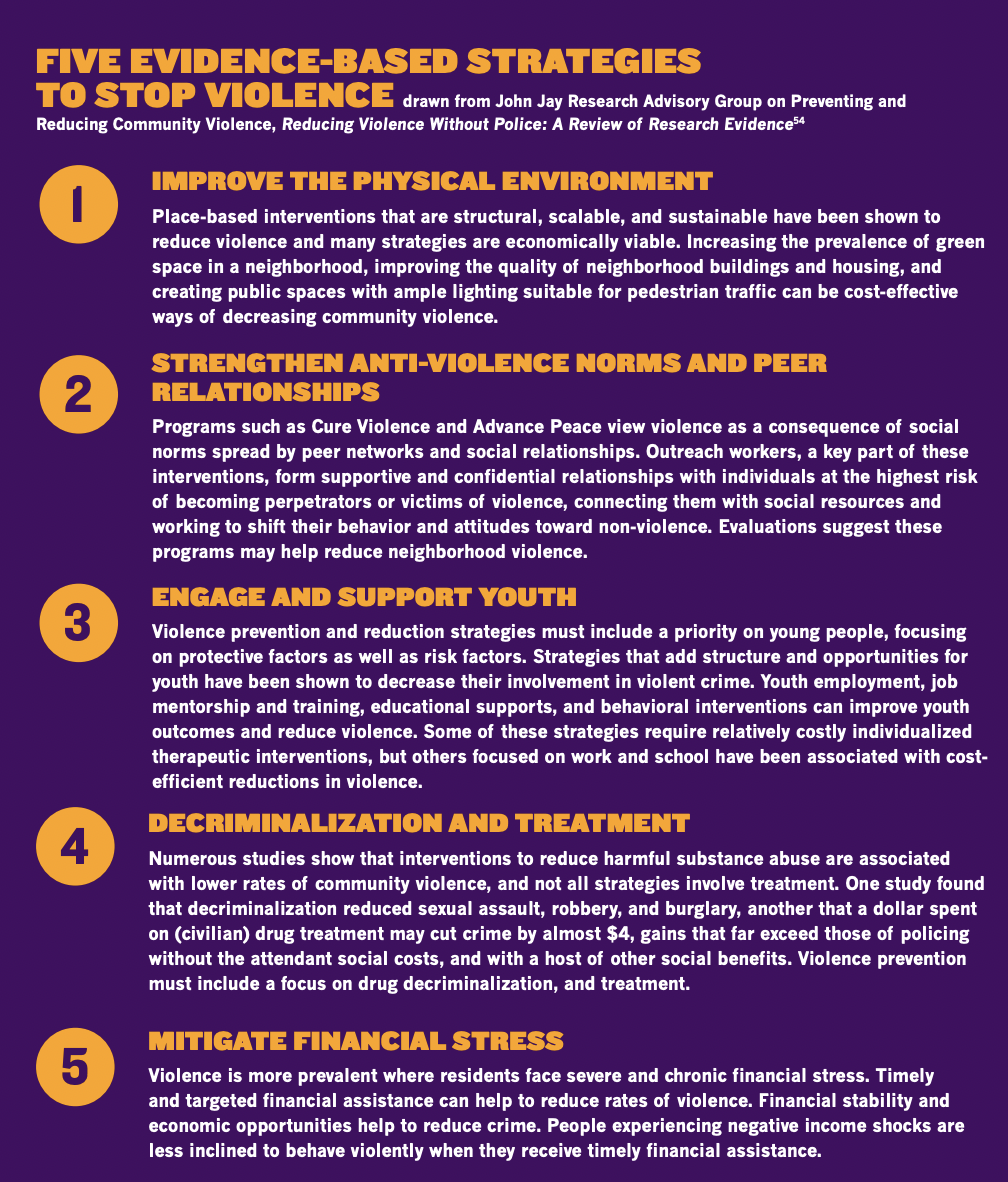
What an increasing number of people are demanding across the country is based in the principle that when more resources are spent on meeting the basic needs of communities, cops become obsolete. Here is an excellent graphic with 5 evidence based strategies to reduce violence and crime, also from Interrupting Criminalization.
Point #3 – Focus on crime prevention and reducing violent acts throughout the community in creative and innovative ways. Cops do not and cannot prevent crime, they only show up after the fact. As was stated in the previous point, if communities are fully resourced, police become unnecessary. The GRPD wants to justify their work with youth or clergy as doing violence prevention, but the fact remains that the needs of youth or other marginalized communities are best served by the communities they come 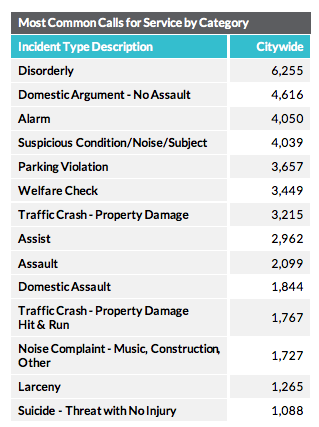 from. In 2019, the study done by Hillard Heintze LLC (beginning on page 53 of the link), determined that 70% of calls to the GRPD are non-emergency calls. You can see here on the right, the breakdown of types of calls that the GRPD responds to. With 70% being non-emergency, wouldn’t it follow that conflicts or complaints could be dealt with, without the need of police officers.
Point #4 – Educate, engage, and communicate how GRPD services and enforcement are delivered; provide ongoing, meaningful opportunities for community dialogue as policing practices evolve. Point #4 assumes that the GRPD has something important to offer the public in terms of education. The reality is that Point #4 would impose a narrative on the public, as opposed to educating them. What the public really needs is education/training on Knowing Your Rights, so that we can be less intimidated and less bullied by cops when they show up in our communities. Here are some useful Know Your Rights links:
https://www.aclu.org/know-your-rights/stopped-by-police
https://www.nlg.org/know-your-rights/
https://icasa.org/docs/legal%20forms/kyr%20when%20encountering%20law%20enforcement_aclu.pdf
Point #5 – Ensure transparency and accountability. Police Departments are inherently not transparent and there is little accountability. When the public files a Freedom of Information Act request (FOIA), it is common practice for the GRPD to black out the majority of the documents requested. In 2019, the undocumented immigrant justice group, Movimiento Cosecha, submitted a FOIA request (which cost $551) most of the information was redacted, as you can see at this link. The GRPD’s argument for not revealing information about how they were monitoring the immigrant justice group was, “ It is the City’s position that the public interest in the disclosure of this information is outweighed by the public interest in keeping this information private.”
Point #6 – Partner with crisis intervention, mental health, housing, and healthcare specialists to better match resources with calls for service to improve outcomes for those in crisis and help keep the focus of patrol officers on crime response, proactive policing tactics, and community engagement. There is absolutely no need for cops to be involved in most of the calls that the public makes, based upon the 2019 study we cited in Point #3. Instead of having cops “partner” with community-based resources, how about we simply inform the public about the resources available, similar to what the group Defund the GRPD has done with their refrigerator magnets that have community resources and contact information that would completely bypass the GRPD. 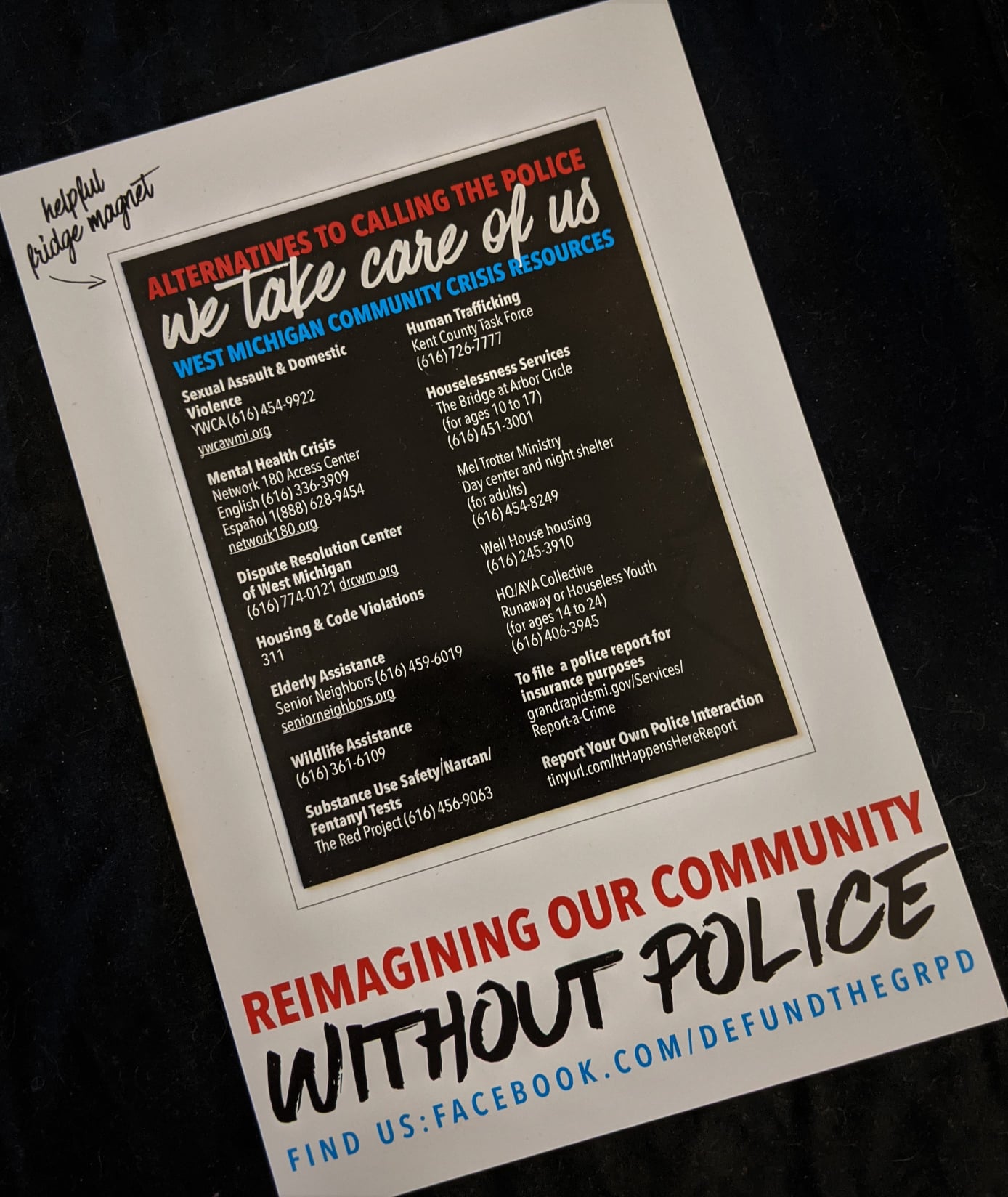
Point #7 – Increase youth outreach. The GRPD has made it clear in recent years, that their youth outreach work is fundamentally a recruiting mechanism for future cops. If communities have financial and other resources necessary for providing healthy, safe and creative spaces and opportunities for youth, then the GRPD would never have to craft programs which are completely unnecessary.
Point #8 – Focus training for new and veteran officers on de-escalation techniques, recognizing and overcoming implicit biases, and understanding cultural differences that can impact police interactions. Alex Vitale, author of the insightful book, The End of Policing, has this to say about more training for cops:
“Many advocates also call for cultural sensitivity trainings designed to reduce racial and ethnic bias. A lot of this training is based on the idea that most people have at least some unexamined stereotypes and biases that they are not consciously aware of but that influence their behavior. Controlled experiments consistently show that people are quicker and more likely to shoot at a black target than a white one in simulations. Trainings such as “Fair and Impartial Policing” use roleplaying and simulations to help officers see and consciously adjust for these biases. Diversity and multicultural training is not a new idea, nor is it terribly effective. Most officers have already been through some form of diversity training and tend to describe it as politically motived, feel-good programming divorced from the realities of street policing. Researchers have found no impact on problems like racial disparities in traffic stops or marijuana arrests; both implicit and explicit bias remain, even after targeted and intensive training. This is not necessarily because officers remain committed to their racial biases, though this can be true, but because institutional pressures remain intact.”
Point #9 – Increase efficiency and processes to optimize neighborhood policing strategies and provide cost-effective service delivery. Kristian Williams, in his book, Life During Wartime: Resisting Counterinsurgency, examines the history of community policing and the disastrous impact it has had on communities of color and poor communities.
In Williams’ book, he looks at the research done by the RAND Corporation, which studied community policing. The Rand Corporation says this about community policing as its paradigm for counterinsurgency:
Pacification is best thought of as a massively enhanced version of the ‘community policing’ technique that emerged in the 1970s. Community policing centered on a broad concept of problem solving by law enforcement officers working in an area that is well-defined and limited in scale, with sensitivity to geographic, ethnic, and other boundaries. Patrol officers form a bond of trust with local residents, who get to know them as more than a uniform. The police work with local groups, businesses, churches, and the like to address the concerns and problems of the neighborhood. Pacification is simply the expansion of this concept to include greater development and security assistance.
More to the point of what community policing really is, Williams states:
Community policing, meanwhile, helps to legitimize police efforts by presenting cops as problem-solvers. It forms police-driven partnerships that put additional resources at their disposal and win the cooperation of community leaders. And, by increasing daily, friendly contacts with people in the neighborhood, community policing provides a direct supply of low-level information (Rosenau 2007). These are not incidental features of community policing; these aspects speak to the real purpose.
If we had a real oppositional form of journalism in Grand Rapids, this is the kind of critique they would provide of the GRPD’s 2023 Strategic Plan. Instead, they simply act as stenographers for the GRPD, without questioning the real function of policing in Grand Rapids.
MLive article about the GRPD’s proposal to use drones presents the issue as a done deal
On Tuesday, Police Chief Eric Winstrom presented to both the Committee of the Whole and the Public Safety Committee, his department’s intention to purchase and use drones.
MLive wrote about the GRPD’s proposal to use drones in an article headlined, Rules for police drones to be considered by Grand Rapids.

For me, the headline suggests that the issue of the GRPD using drones is not in question, only what they will be used for. If one reads the MLive article it becomes clear that the GRPD’s desire to use drones is presented as if whatever the City Commission needs to decide, is simply a formality.
First, Police Chief Winstrom is the only person cited in the MLive article, thus readers do not get to hear other perspectives on the matter.
Second, the arguments that Chief Winstrom is making in the article allows him to control the narrative. Maybe this is what Winstrom was saying during his presentation to the Public Safety Committee, when he said that the local news has said to him that he has been available to do more interviews than the previous police chiefs. (Go to this video of Tuesday’s Public Safety Committee meeting) Winstrom even had the audacity to use traffic congestion during ArtPrize as a justification for the department to use drones.
Third, the MLive article states, “The Grand Rapids City Commission would still have to approve the department using drones. Before that consideration, a public hearing on using the new technology would be required.” If the City Commission needs to approve the GRPD’s use of drones, why did MLive not ask Commissioners what their initial thoughts were on this matter?
The MLive article also states, “In addition to that public hearing, Winstrom said he also foresees a community meeting in each of the city’s three wards that at the very least would communicate, explain and answer questions around how the department would use the drones.” Again, MLive allows Chief Winstrom to control the narrative, since there are no community meetings scheduled at this point – which makes the Chief look as if he is community minded – plus he would share how the drones would be used, which is fundamentally different from the question of whether the GRPD should be even allowed to use drone. Once again, Chief Winstrom got to dictate the narrative.
Fourth, there is the issue of cost. Chief Winstrom does mention the issue of budgeting at the end of the MLive article, but no dollar amounts are provided as to the cost of drones that the police department would use, nor how many they want to purchase. In addition, there would be the cost to operate these drones, which means that GRPD personnel would be paid to operate the drones, go through all of the data that would be gathered, and present said information to the department. Therefore, the use of drones by the GRPD might be another justification to increase the GRPD budget. This is what Naomi Murakawa names as one of the Three Traps of Police Reform, where police reform translates into increased budgets. (Cited in the book, Abolition for the People) Whenever there is push back against police departments, cops always use the opportunity to say that they need more money for training, technology or additional officers, which is how Chief Winstrom is framing the issue of drones, when he says it would make the GRPD more “efficient.”
 A fifth, and final reason why the MLive article is so problematic, has to do with what was not said in the article. The MLive reported didn’t talk to other people in the community, particularly organizers that have been challenging the practice of policing in Grand Rapids in recent years.
In addition, there are no references to what national groups have ben saying about drone technology, surveillance and civil rights. The Electronic Frontier Foundation has an important post from 2022 on this topic, as does the ACLU from 2020, just weeks after the country erupted with protests following the police murder of George Floyd.
Lastly, it is worth noting that the MLive article did mention that the GRPD had considered acquiring the technology known as ShotSpotter, but the reporter failed to acknowledge that it was defeated because of the organized opposition in 2020. With Police Chief Winstrom acting as though the departments purchasing of drones sounds in just a formality, it seems like the perfect opportunity to oppose the GRPD’s use of drones, which would add to their already bloated budget and eliminate another way the GRPD could monitor the public.
 In Part I of our series looking back at the 20th anniversary of the public resistance to the US invasion/occupation of Iraq in 2003, we focused on early organizing efforts to build an anti-war movement before the US war on Iraq even began. In Part II, we looked at the protest when President’s Bush’s visited Grand Rapids the day after his State of the Union address and the GRPD’s response during that protest. In Part III, we looked at the Women in Black actions, the global protest against the war march that took place in Lansing, along with the People’s Alliance for Justice & Change workshops on civil disobedience that were offered to a growing number of people who wanted to do more than just hold signs.
In today’s post, we will look back at the students organizing that was taking place at a few colleges in Grand Rapids, plus the sit in that took place in the Federal Building to confront Congressman Ehlers on his complicity in the US war against Iraq.
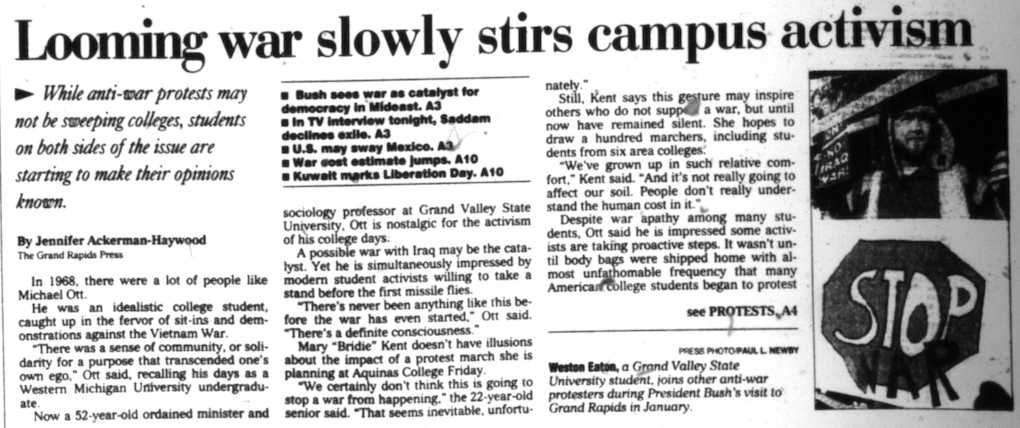
Beginning in the fall of 2002, college students in the greater Grand Rapids area began to be involved with anti-war organizing efforts. Some of those students were part of the People’s Alliance for Justice & Change, but most of them were organizing on their campus. The above article from the Grand Rapids Press attempted to show that college students were becoming active, but the main problem with the article was that they were n’t really talking to students who were actively involved in resisting the US invasion of Iraq.
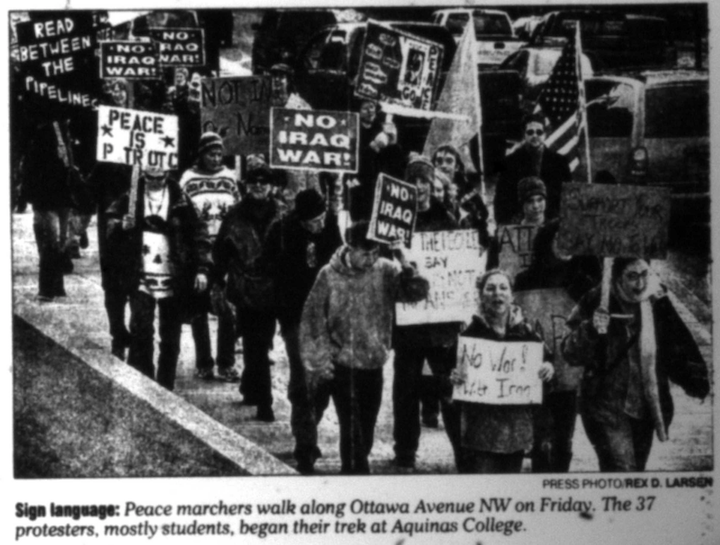 On March 1st, 2003, an estimated 50 people marched from Aquinas College to the federal building in downtown Grand Rapids to protest the looming war with Iraq. (As this picture here on the right shows) Students from GVSU, Calvin College and Aquinas College made up the bulk of those marching. The march numbers were small, mostly because the action began at noon on a Friday and went til about 4pm, which made it difficult for working class people to participate.
However, some students who participated in the march were wanting to do more. The People’s Alliance for Justice & Change organized a civil disobedience training the following week, which then led to an action at the office of Rep. Vern Ehlers.

The GR Press article headline was misleading, since the group didn’t really care if Rep. Ehlers was there or not, they just wanted to make a statement about the impending US invasion of Iraq.
There were a few GVSU students who participated in this action, along with members of the People’s Alliance for Justice & Change. Six people were arrested when they refused to leave the federal building, so the US Federal Marshals called the GRPD.
The group had people there to speak to the news media and to hand out two flyers, one with information about the illegality of the US war/sanctions on Iraq and another handout, which was a poster of a WANTED sign for Rep. Ehlers, which called for his immediate arrest for supporting war crimes.
 A few months later, the People’s Alliance for Justice & Change organized a People’s Trial of Rep. Vern Ehlers. The mock trial was a piece of performance art designed to dramatize the human rights violations and war crimes that the West Michigan Congressman was complicit in, since he consistently voted for ongoing military operations and funding for the US military invasion/occupation of Iraq.
The trial organizers did send a People’s Subpoena to Congressman Ehlers office in Grand Rapids, but he never responded. The trial script was written by John Rich, a script you can read here, along with supporting documents on the war crimes committed by the US military in Iraq, crimes which the Congressman supported.
The trial was also broadcast on the public access TV station, GRTV, as well as being posted on line. The video is 33 minutes long and involved several characters to address specific issues related to the US invasion/occupation of Iraq. Here below is the video of the People’s Trial of Vern Ehlers.
In Part V, we will look at organizing to support the Arab American and Muslim communities in Grand Rapids, along with the final action that took place before the US began bombing Iraq on March 20, 2003.
False solutions and the housing crisis: Why groups like Housing Next in Kent County are a danger to a movement for housing justice
Last week, MLive posted a story with the headline, Grand Rapids, Kent County need 34,699 new housing units by 2027. Can it be done?
The article begins by stating:
The housing gap in Grand Rapids and Kent County has jumped 56%, with an estimated 34,699 new units needed by 2027 to meet projected population growth, a new study released by the group Housing Next shows.
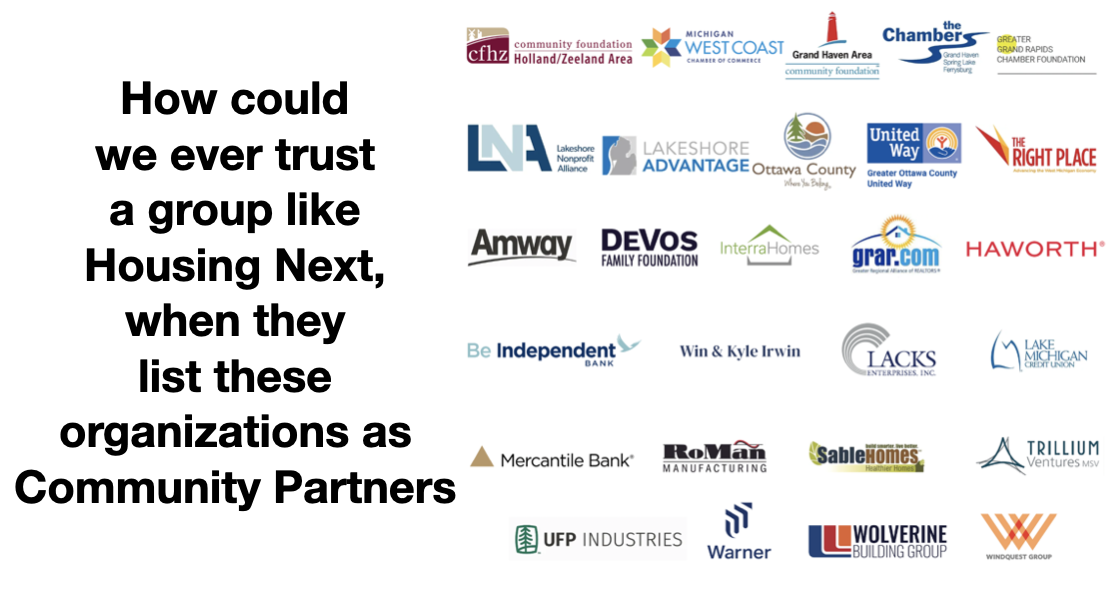
This MLive article is based on a gathering that was hosted by the Grand Rapids Chamber of Commerce, which involved a few government officials, Chamber members, but mostly developers. At that meeting both government officials and developers lauded the importance of growth for Grand Rapids and Kent County, but ignored the realities of the current housing crisis.
Central to this story was the Housing Next study. If people are not aware, Housing Next is an entity that was essentially created by the Chamber of Commerce, primarily as a way to insert themselves into the housing discussion and to influence housing policy.
The “solution” to the current housing crisis, according to Housing Next, involves local government, developers and non-profits. The fact of the matter is, Housing Next offers no real solution to the housing crisis, only the same old model, the market. This is not a solution or maybe more aptly named a false solution. This is because under a market system, housing is nothing more than a commodity that can be bought and solid to make profits. For the Chamber and those sectors of society who believe in the market, housing is not a fundamental human right. Housing within a market economy, particularly home ownership, is for those who can afford it, which leaves out millions of people in the US alone.
If you want to understand who is really behind the Housing Next effort, along with the ideological framework they operate under, just look at the list of “community partners” in the graphic above.
The market-based solution that Housing Next is suggesting doesn’t even make sense within a market context. If those who are committed to a market economy, those who want to see homes being purchased and apartments being rented, then they have to recognize that people need to make enough money in order to purchase a home or pay the rental costs that the market dictates. This would require that individuals and families wouldn’t have to earn enough money to pay a mortgage or cover the monthly cost of rent. According to the National Low Income Housing Coalition, people need to earn $20.02 an hour to afford the average cost of rent in Grand Rapids. Not only are there thousands of people in Grand Rapids which DO NOT make $20 an hour, the community partners that Housing Next listed above has fought for decades against an increase in the minimum wage in Michigan, which is currently $10.10 an hour. So, you see, those who want to use a market-based solution to the current housing crisis, don’t even want to play by the rules of the market, which would pay people wages that would allow them to afford a home mortgage or monthly rental costs.
Last month, GRIID posted an article that critiqued how the City of Grand Rapids was viewing the issue of how to address the rising number of unhoused people in this city. In that article we identified several tactics to address the current housing crisis, including:
- Paying people a livable wage, which right now would be $25 an hour minimum
- Reducing the wealth gap in Kent County, where there are over 600 millionaires, but 25% of the population subjected to poverty.
- Government regulated rent control
- The creation of Tenant Unions
- Stop the influence peddling by Real Estate and Rental Property Associations, especially during election cycles, as we documented in 2022.
- Re-direct part of the massive US Military Budget ($858 Billion for 2023) and use it to provide housing for people, particularly the most marginalized communities.
- Practice Radical Hospitality, particularly in the faith communities. Imagine home many people who are currently housing insecure, could benefit from the resources and hospitality of the faith communities.
- Limit large corporate property management companies or real estate investors from operating in Grand Rapids/Kent County.
- End government subsidies/tax breaks for developers.
- Promote cooperative housing and Community Land Trusts.
There are lots of other possible tactics and strategies that could be developed to address the current housing crisis, but we need a social movement to confront the current market driven housing system and to implement non-market housing solutions. We cannot be fooled by groups like Housing Next, nor can we allow them to continue to dictate the narrative about how to address the current housing crisis.
Our latest update to the DeVos Family Reader: Monitoring the most powerful family in West Michigan
In Howard Zinn’s monumental book, A People’s History of the United States, he constantly juxtaposes the amazing things that people did to fight for liberation and the people behind the systems of oppression that social movements were fighting against.
This is exactly why I have spent years monitoring, investigating and critiquing the DeVos Family. They are the most recognizable and powerful manifestation of the systems of power and oppression in West Michigan. Now, I know there are plenty of people who share the belief that without the DeVos Family, Grand Rapids wouldn’t be where it is today. I fully agree with that belief, but for reasons that are the exact opposite of those who hold the most powerful family in West Michigan in high regard.
 Three times a year we try to update our DeVos Family Reader, a collection of articles that looks at the family’s history, the influence on election & public policy, their foundations, how they are reported on in the news media, ArtPrize and the section entitled Betsy DeVos Watch.
This updated version of the DeVos Family Reader includes information and analysis on a variety of topics, since our last update, which was 4 months ago. There have been a total of 8 new articles included in the DeVos Family Reader, including pieces on the outdoor amphitheater, the proposed soccer stadium, DeVos foundations, their 2022 campaign contributions, Betsy DeVos at GVSU and Doug DeVos podcast.
The DeVos Family Reader is now up to 700 pages of history, analysis and information about the most powerful family in West Michigan.
Will the Democrats reverse Michigan’s Right to Work Law: Low hanging fruit in today’s Class War
In December, we wrote about the campaign to make Michigan a Right to Work state, which took place in 2012. In that article, we noted that there were several West Michigan entities that played a major role in making Right to Work a reality in Michigan. Some of those same groups are now making noise in order to maintain Right to Work for Michigan.
Legislation to dismantle the Right to Work policy in Michigan were introduced on January 12, with House Bill 4004 and Senate Bill 0005.
These bills were both sent to the Committees on Labor, which has held no hearings on the matter, nor made any decisions. The Labor committees in both the Michigan House and Senate are dominated by Democrats, which begs the question, Why have they not acted to dismantle Right to Work?
Groups that pushed for Right to Work in 2012 are now making it a priority to keep Right to Work
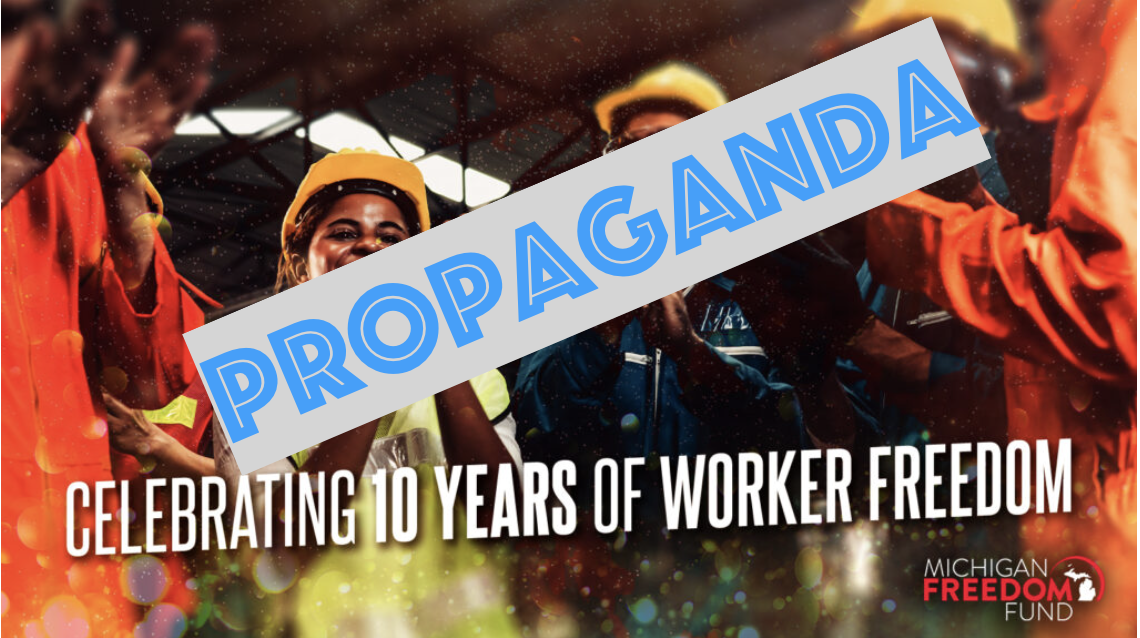
The organizations that were involved in pushing Right to Work legislation from 2008 – 2012, such as the West Michigan Policy Forum, the Chamber of Commerce, the Mackinac Center for Public Policy and the Michigan Freedom Fund, have made the issue of maintaining a Right to Work policy a priority in Michigan.
Fir instance, the Michigan Freedom Fund has only had 3 blog posts on their site since the November 2022 elections, with all three devoted to the importance of maintaining a Right to Work policy in Michigan.
The West Michigan Policy Forum has made five separate blog posts about the importance of having a Right to Work law in Michigan, often using propaganda to justify their stance on Right to Work. For instance, their most recent blog post about Right to Work is from February 8th, with the headline, Fact Check: Right-to-work Helps All Americans Prosper. Not surprisingly, the WMPF blog post provides no hard evidence that Right to Work laws benefit everyone.
The Mackinac Center for Public Policy has also made a push to maintain Right to Work in Michigan. In fact, since the November 2022 election, the Mackinac Center has posted 16 separate Right to Work articles on their site. In fact, when you go to the main page of there Mackinac Center, at the top of their webpage the issue of Right to Work is featured. They have even created a stand alone page dedicated to Right to Work, where people can post stories about how wonderful Right to Work has been for them https://protectmiworkers.com/.
One interesting side note about these groups that are zealously defending Right to Work laws in Michigan, is the fact that all of them have a direct connection to the DeVos family and their considerable wealth. The DeVos family fully funded the Michigan Freedom Fund, they have contributed millions to the Mackinac Center for Public Policy and DeVos family members have served on the Board of Directors for both the Mackinac Center and the West Michigan Policy Forum. The fact that the DeVos family has been so involved in the work to create and maintain a Right to Work law in Michigan speaks volumes and may have something to do with why the Democrats have yet to take action on the proposed legislation that would dismantle Right to Work in the state.
One would think that it should be easy for the Democrats to get rid of the Right to Work policy in Michigan, especially since it is very low hanging fruit. Getting rid of Right to Work should be a decisive and swift decision for the Democrats, since the claim to be for workers and have benefitted from the millions that labor unions have contributed to candidates in recent years. In fact, once the Democrats have dismantled Right to Work laws in Michigan, they should make it a priority to raise the minimum wage in Michigan to $25 an hour, which would be more of a livable wage, along with taxing the hell out of the rich to fund housing, education, health care and climate justice work that we can’t wait another decade for.
Unfortunately, the Democratic Party will not push for more substantive policies that would essentially redistribute wealth in this society, especially since the Dems are also deeply committed to the system of Capitalism. This means that in order to win a contemporary class war, we will need to be in the streets, to democratize our workplaces, to engage in strikes, boycotts and numerous other tactics that will demonstrate our collective power. As Frederick Douglass said so eloquently in 1857, “Power concedes nothing without a demand. It never did and it never will. If there is no struggle, there is no progress.”
 Grand Rapids Institute for Information Democracy