A Power Analysis of the Grand Rapids Public Schools
For several years I have been writing about what I refer to as the Grand Rapids Power Structure. Since November, I have been doing some public presentations that provide a power analysis of Grand Rapids. You can access the slides I have been using for these presentations here.
Last Friday, I was invited to present a power analysis of the Grand Rapids Public Schools to a student union known as SALT – (Student Association for Leadership and Transformation). What follows is what I presented to the student union, but a more expanded analysis because of time constraints during the student union meeting. You can download all 6 slides here.
GRPS Power Analysis
In order to begin to talk about a power analysis about the GRPS, we have to start with state education policy and the structures & entities that craft and influence those policies, which is in the first slide below.
First, the Michigan State government holds the most power, since they determine funding for public education throughout the state, along with adopting policies that impact public education and curriculum guidelines. The State House and the State Senate both have Education Committees, which are the first people to discuss proposed legislation or to craft legislation on education matters. If you want to see how state policy makers are voting regarding education policy, you can go to michiganvotes.org, click on votes, then in the topics menu click on education and chose which year you want to look at, then hit the search button. You should never take seriously what politicians say, we should judge them on their voting record.
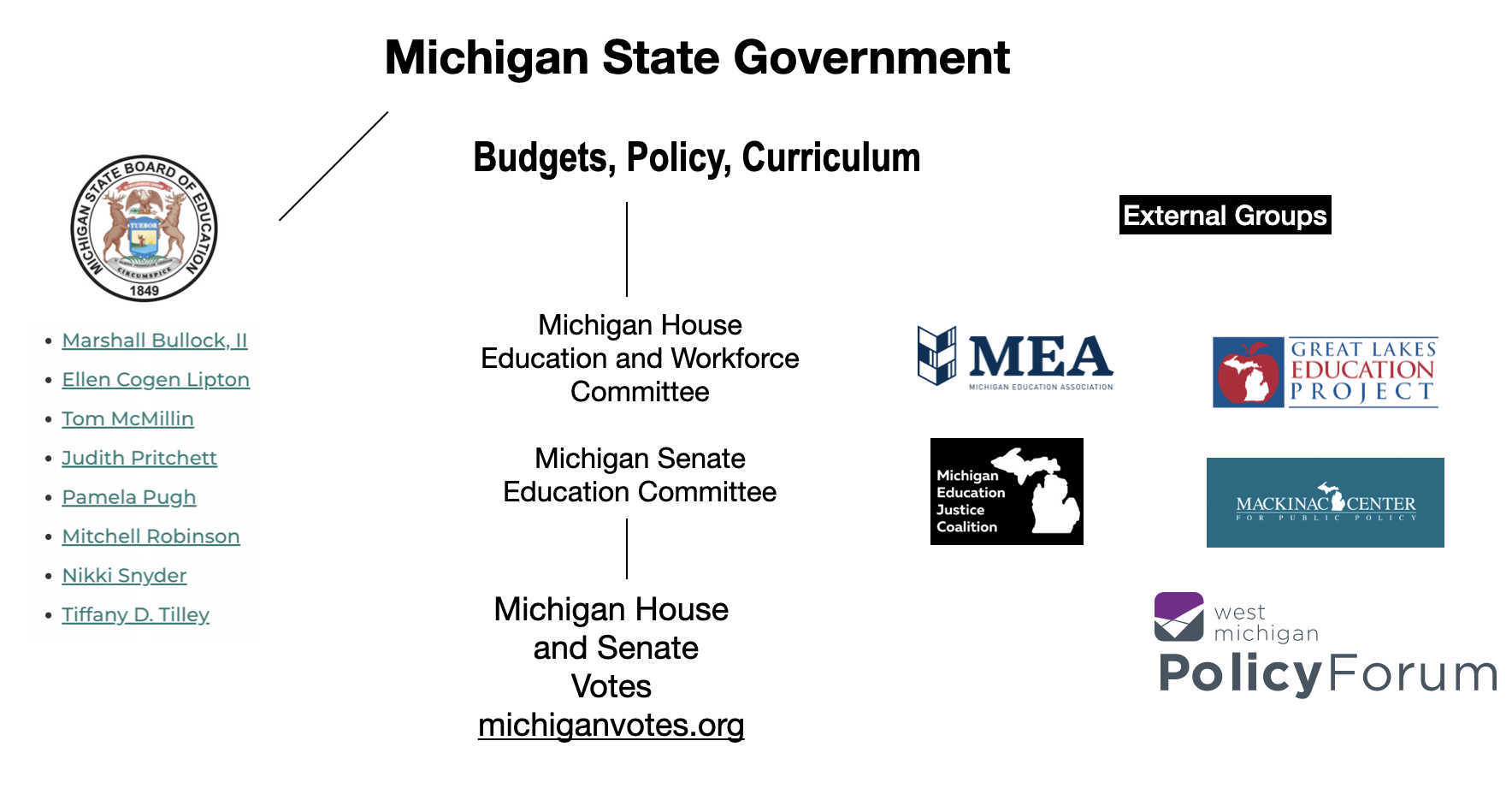
Next, there is the Michigan State Board of Education, which is also included in the slide above. You can access information about the State Board of Education here, along with reading past meeting minutes and learning a bit more about the members of this board.
After the State Education power structure, it is important to look at external groups that also seek to influence Public Education policies in Michigan. There is the Michigan Education Association (MEA), which is the public school teachers union. There is also the Michigan Education Justice Coalition. Both of these groups work to advocate to improve the Public School system in Michigan.
Then you have organizations that inherently oppose public education and work to undermine it. First, there is the Great Lakes Education Project, which was created by Betsy DeVos right after her failed attempt to get a school vouchers ballot initiative passed in 2000. Another organization that seeks to undermine public education is the Mackinac Center for Public Policy, which I have written about over the passed 15 years. Lastly, there is the West Michigan Policy Forum, which has pushed regressive public education policies for more than a decade, along with the fact that it is an organization that grew out of the Grand Rapids Chamber of Commerce and is made up of members of the GR power structure.
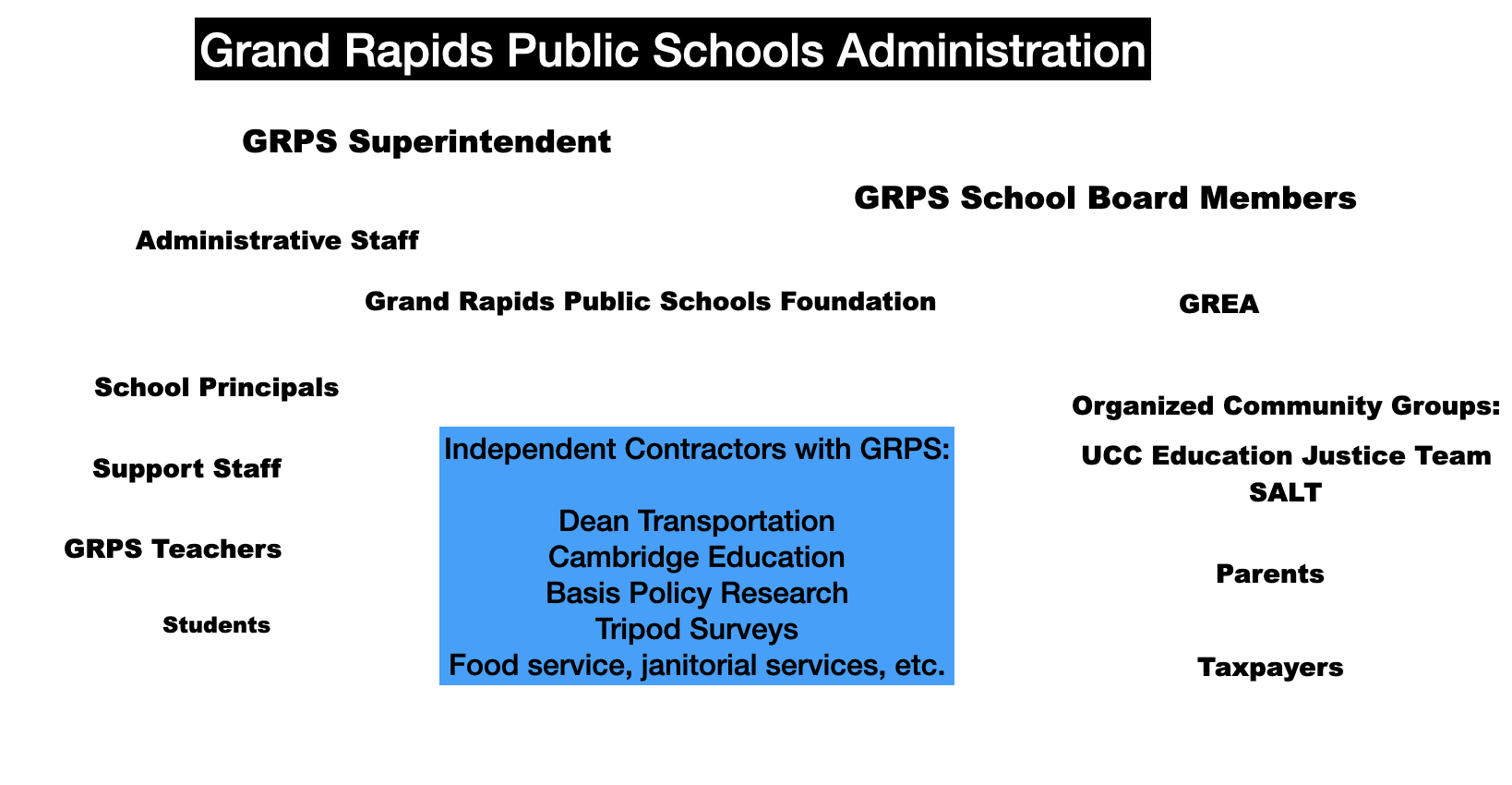
The power of the Grand Rapids Public Schools resides primarily in the Superintendent, which is currently Dr. Roby. Dr. Roby has an administrative staff that works for her, then there are school principals, teachers, support staff and students. The more that teachers and students are organized, the more influence they can have pub school policy.
Next is the GRPS Board of Education, which is a 9 member board that holds public meetings on a regular basis. For anyone who has ever attended school board meetings, you know that they are not the most democratic spaces, where the superintendent and the board members talk, but there is a public comment period, where people get 3 minutes to speak or two minutes if there are lots of people wanting to speak. Like any elected official, we should not judge GRPS board members on their rhetoric, but on their voting record and campaign finances, which you can find in the slide here below.

Then there are organizations in the community and connected to the GRPS, which are inherently attempting to make the Grand Rapids Public Schools not only more democratic but more horizontal, especially when it comes to decision-making. There is the GREA, which is the union that represented teachers in the GRPS. There is also the student union known as SALT, along with the Education Justice Team with the Urban Core Collective (UCC). The UCC group has been organizing for several years in the community and has empowered parents, students and community members to become more involved with the the Grand Rapids Public Schools. GRIID has written about this group, along with providing a link to their most recent community report card on the GRPS district.
There is also the potential for parents, community members and taxpayers in Grand Rapids, all of which have a stake in how the GRPS operates and how it should function to serve students.
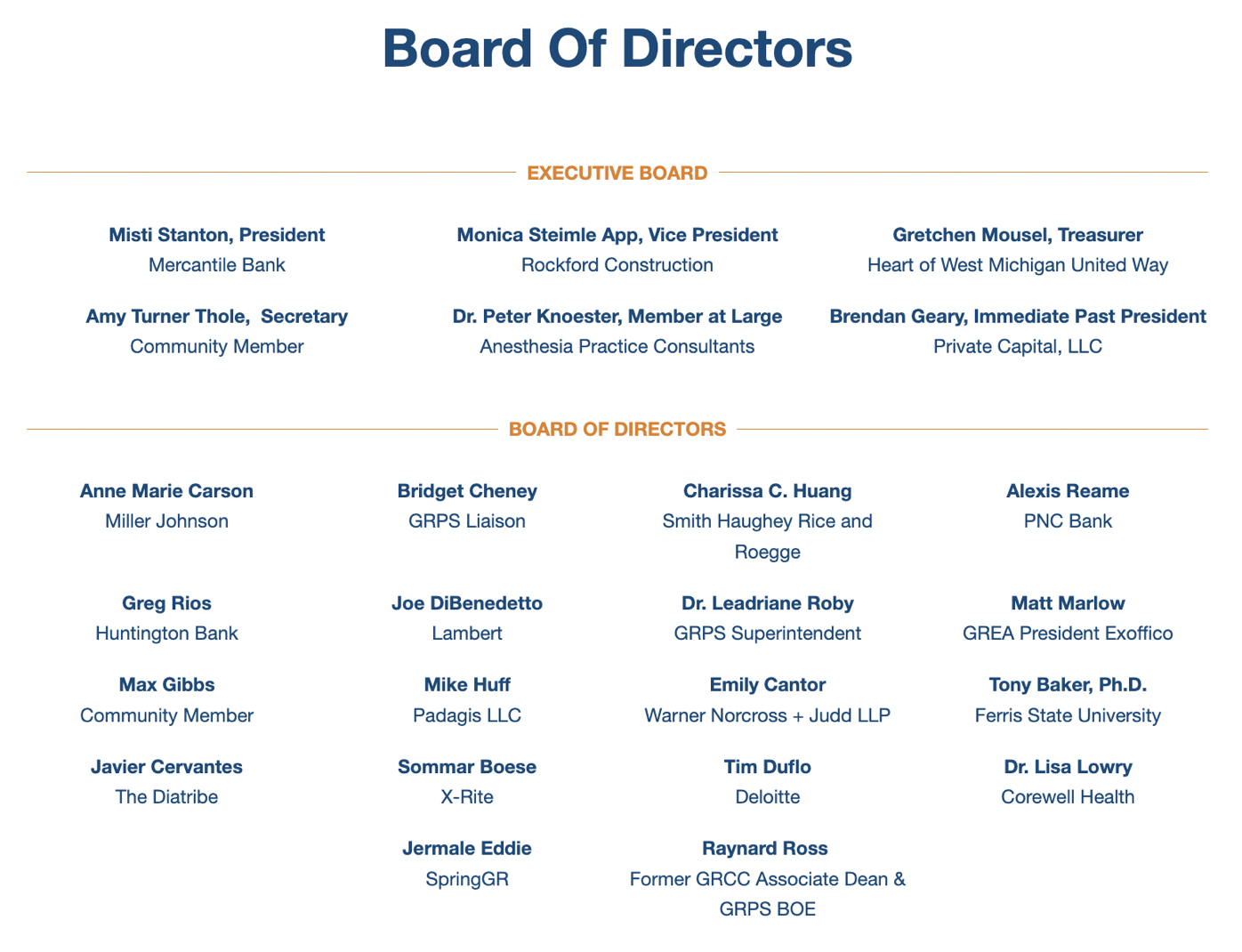
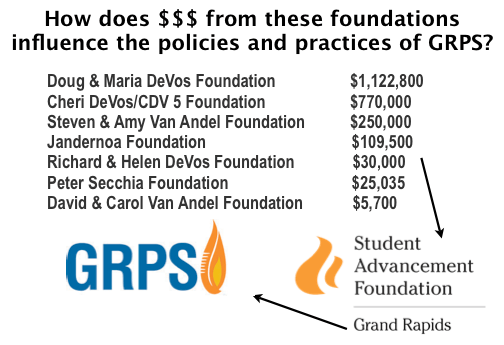
There is also the Grand Rapids Public Schools Foundation, which was created in 1993 for the purpose of raising funds for the school district outside of what the state budget provides and what taxpayers in Grand Rapids contribute. In the slide below, you can see who sits on the board of this foundation, which is primarily represented from people from the professional class and not so much from regular people. The foundation also has a history of receiving large sums of money from members of the GR Power Structure, like the DeVos family foundations, which I have also written about. Unfortunately, the funds raised by the GRPS Foundation are not very transparent and we don’t know what can of influence large donations have on GRPS policy. Several years ago the group Grand Rapids Education for Justice submitted a FOIA request on how private contributions were being used by the GRPS, which you can find here.
Lastly, there are the vendors/entities that the GRPS has contracts with, such as Dean Transportation. It is worth noting that the GRPS has shifted to using more and more privatized services, like transportation and janitorial services over the past few decades. In addition, it has not always been easy to get information about contracts that the GRPS has with private entities, which makes it hard for community groups to engage in accountability.
Based on the conversation that I had with the student union on Friday – many of who felt that the GRPS leadership was not paying attention to them, nor acting on their demands – it seems that there needs to be more pressure applied to meet the demands of the various groups that have been presenting in recent years, along with the need to have a more horizontal and inclusive decision making process that doesn’t rely only on the superintendent and the school board.
 Grand Rapids Institute for Information Democracy
Comments are closed.