How the Local News reported on Senator Levin’s visit
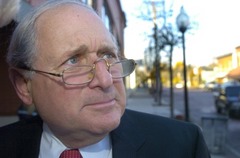
As we reported on Monday, Michigan Senator Carl Levin was in Grand Rapids to speak at a luncheon hosted by the Economic Club of Grand Rapids. There were several news agencies present during Senator Levin’s talk and it is worth looking at what they reported on.
Both Channel 8 and 13 have stories posted on their websites. We can’t verify if these stories are what they broadcast, but this tends to be the case based on what they have done in the past when it comes to posting locally produced stories.
You can see from the video in both the WOOD TV 8 story and the WZZM 13 story that they filmed Senator Levin at the Economic Club luncheon. What is interesting about both stories is that neither of them dealt with what the Senator had to say at the noon luncheon. Instead, both local TV stations decided to ask the Senator his thoughts on the upcoming Michigan Governor’s race and the answers are almost identical.
The Grand Rapids Press was the only other GR-based news outlet that reported on Senator Levin’s visit yesterday. However, the Press also did not report on the Senator’s comments at the Econ Club luncheon, instead they asked the Senator five questions. The five questions consisted on one on the difficulties that incumbent candidates will face in this year’s election, the likelihood of health care legislation passing, one on Dick Cheney’s criticism of President Obama and two questions on the US war in Afghanistan.

However, Press reporter Kyla King did nothing more than print a sampling of what Senator Levin had to say about each question. There is no evidence that the reporter had any follow up questions to the comments made by the Senator, nor is their any indication that the reporter tried to verify any of the claims made by Michigan’s senior Senator.
This is a clear example of what media critics like Jeff Cohen would call journalism as stenography, where reporters just write what politicians say. This flies in the face of basic principles of journalism, which have been adopted by groups like Committee of Concerned Journalists.
These principles include the idea that reporters should practice verification, so as to try to substantiate claims made by people the talk to. One other important principle is the idea that journalists must serve as independent monitors of power. The local news media practiced neither of these principles of journalism, thus limiting the ability of people in West Michigan to adequately engage in the democratic process.
 Grand Rapids Institute for Information Democracy
What democratic process?
Eileen, while I agree that there isn’t much of a democratic process, unless news agencies actually begin to hold power accountable there isn’t likely to be any substantial organizing or movement building to challenge political power.