GRIID Class on US Foreign Policy since WWII – Week #7: US involvement in the Global Drug Trade
 In week #1 I provided some foundational documents and a framework for how to look at no what country the US is engaged in. I also used the framework document to assess the history of Iraq, particularly the US relationship with that country.
For week #2 we focused on US government efforts, primarily through the CIA to undermine the elections in Italy 1947-48, and to orchestrate coups in Iran in 1953 and Guatemala in 1954.
For week #3 we continued to used William Blum’s book, Killing Hope: US Military and CIA Interventions since WWII. The three countries we focused on were the Congo, Indonesia, and Chile during the 1960s. In week#4 we discussed how the US undermined Angola, Libya and Nicaragua in the 1970s and 80s. For week #5 we looked at Bulgaria 1990/Albania 1991, Afghanistan 1979 – 1992, and Haiti 1986 – 1994.
The topic shifted a bit for week #6, where we looked at economic aspects of US foreign policy and institutions like the WTO, the World Bank, the IMF and trade policies like NAFTA. For week #7, we investigated the US relationship and involvement in the global drug trade.
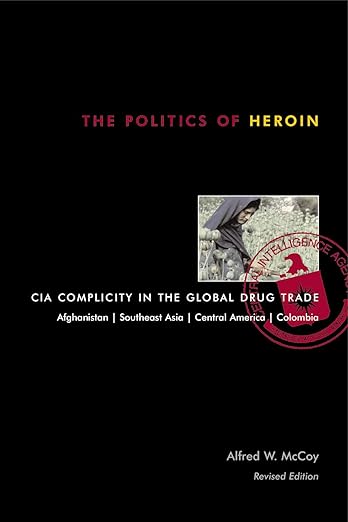
We began the discussion by listening to an excerpt from a lecture by Al McCoy, who is the author of one of the most influential books on the global drug trade, The Politics of Heroin: CIA Complicity in the Global Drug Trade. We then talked about an essay that McCoy had written, which you can access here.
McCoy’s book and lecture deal primarily with the opium/heroin production in Southeast Asia and how the US military used drug lords as assets during the war in the 1960s and 70s. McCoy also writes about how roughly 34% of US soldiers had become addicted to heroin at this time, since the drug was so available to US troops.
Version 1.0.0
The discussion then shifted to looking at the drug trade in the Western Hemisphere, specifically in Latin America in the 1980s and 90s. Class participants were provided with the 1988 US Senate report on the drug trade in Latin America, which documents how US agencies were collaborating with know drug traffickers as they often assets of the CIA and the US military.
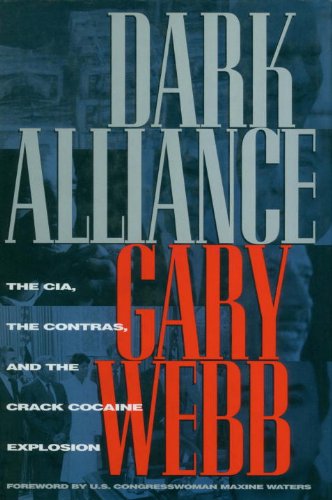
Participants also watched a Democracy Now! Interview with Gary Webb, the San Jose Mercury News reporter who uncovered how the CIA was involved in bringing cocaine into the US in the 1980s and selling it to regional drug traffickers like Ricky Ross in Los Angeles. I also shared an article about how the CIA monitored Webb and engaged in the tactic of character assassination to discredit the journalist. The escalated attack on Webb became worse after he published his book, Dark Alliance: The CIA, the Contras, and the Crack Cocaine Explosion. We also watched a clip of a Hollywood film about Gary Webb called Kill the Messenger, specifically a court scene where a CIA asset was called as a witness against Ricky Ross.
Next, we watch a portion of a documentary entitled, AMERICAN DRUG WAR: the Last White Hope. The part we watched had to do with a community forum hosted by US Representative Maxine Waters in California, which involved the Director of the CIA at that time, John Deutch. Deutch and the CIA were exposed during this public forum in the heart of the Black community, where it was revealed that the CIA knowingly sold cocaine, which was converted into crack that devastated so many urban communities across the country. Begin watching at 48:40 into the video.
We also talked about how this aspect of US foreign policy, where government agencies were collaborating with or involved directly in selling illegal narcotics and it’s impact on communities across the country. We talked about the book that Clarence Lusanne wrote entitled, Pipe Dream Blues: Racism and the War on Drugs. Lusane was invited to Grand Rapids in the early 1990s to talk about his book at a forum organized to deal with state violence, mass incarceration and the drug trade in the US and Grand Rapids.
 Grand Rapids Institute for Information Democracy
Comments are closed.