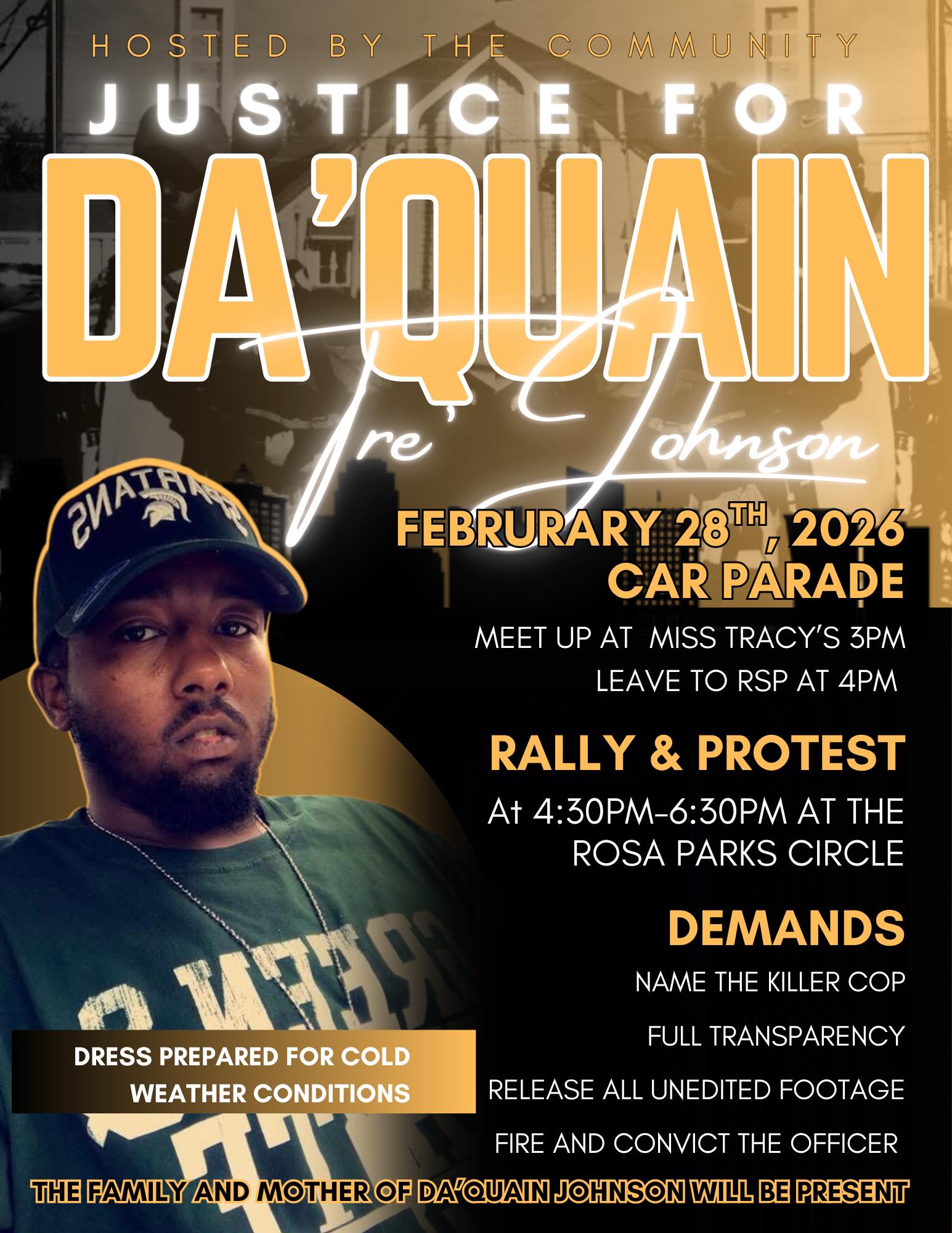
Should the issue of defunding the GRPD be a strategy moving forward in Grand Rapids after the police killing of Da’Quain Johnson?
 Based on the statements from the GRPD and Grand Rapids City officials right after the GRPD killed Da’Quain Johnson, along with the responses from the Mayor and GR City Commissioners during Tuesday night’s meeting, it seems unlikely that we can expect any substantive or structural changes to policing.
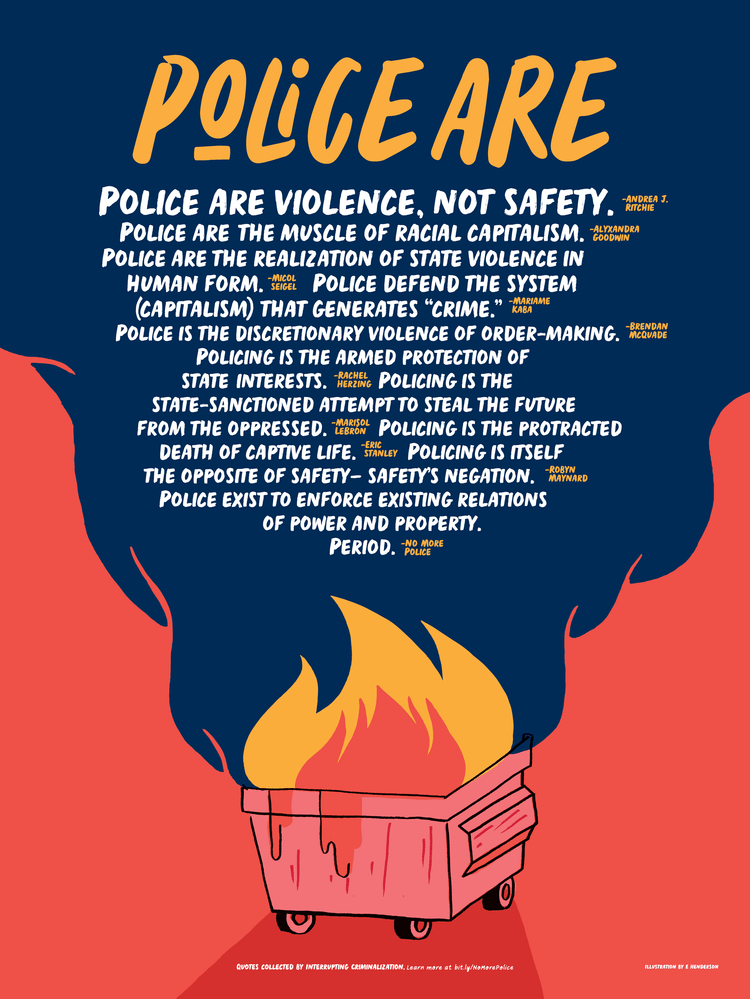
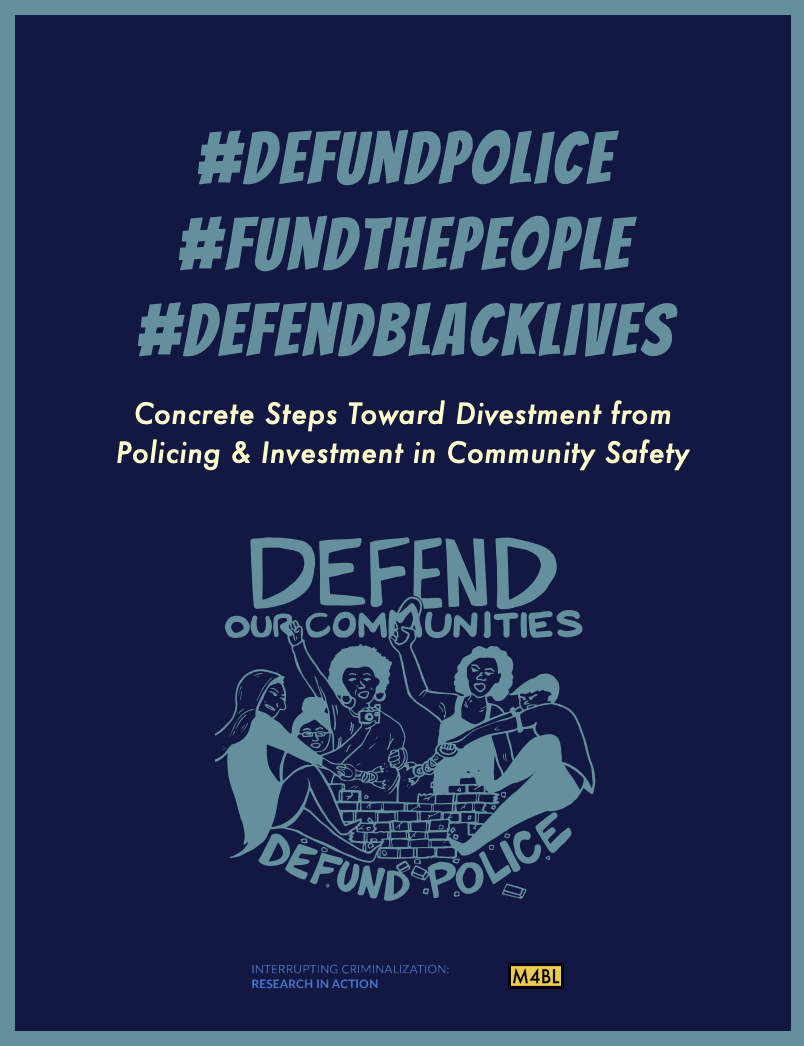
There is no shortage of ways that people can get organized and resist police violence and the carceral state. One strategy that emerged during the 2020 uprising and came directly from the Movement for Black Lives was to Defund the Police. The Movement for Black Lives even created a Defund the Police Toolkit, which provides clear strategies and tactics to take money away from policing and put it in the hands of affected communities to support concrete needs and to create community-based safety and community care projects that don’t relay on the carceral state.
The City of Grand Rapids will likely say they need more cops, they need more training and they need more resources. Historically this has never worked to keep people safe, especially Black and Brown people.
In her important book, America on Fire: The Untold History of Police Violence and Black rebellion Since the 1960s, Elizabeth Hinton makes a clear correlation between increased federal spending on policing as a response to Black militancy. For instance, after the 1967 riots occurred in cities across the country, Congress passed The Omnibus Crime Control and Safe Streets Act of 1968. This legislation not only increased funding for the police, it provided an upgrade in weaponry.
 The same thing was happening in Grand Rapids. We see this same correlation with increased federal funding for policing as a direct response to Black people not falling in line. In 1965, the GRPD budget was $2,003,380. By 1969, the GRPD budget had more than doubled, increasing to $4,022,565. By 1994, the GRPD budget was $23,762,515. In 1995, the City Charter was changed to make it so that at least 32% of the City’s budget would be allocated to the GRPD. By 1996, the GRPD budget grew by more than 3 million, totaling $27,865,047. But how did this come about?
The Crime Bill passed under a Democratic Party leadership, using white supremacist fear-mongering as a tactic to get public support for the legislation. Not surprisingly, Grand Rapids took a page from the Crime Bill’s playbook, to not only get 95 more police officers added to the GRPD, they got voters to support a change to the City’s Charter to guarantee that 32% of the annual budget would be allocated to the Grand Rapids Police Department.
With the help of the wonderful people at the Grand Rapids Public Library, I was able to access much of the news coverage and material that was produced by the Safety 95 Campaign Committee, all of which you can view on the Grand Rapids People’s History Project site.
The Safety 95 Campaign Committee, was made up of 32 people, even though we have been unable to find out who most of them were. We do know that former Grand Rapids Mayor, Gerald Helmholdt and Ella Ramirez, who lost two sons to murder, were the Safety 95 Campaign Committee’s co-chairs, based on a story in the GR Press (page 7 of the 44 pages we have on the Safety 95 Campaign Committee) The campaign also hired David Doyle, who has run numerous ballot initiatives over the years in Grand Rapids and was the former director of Silent Observer in Grand Rapids.
Looking at the GR Press coverage, one can see that then Police Chief William Hegarty was a major source cited throughout the campaign. Rarely do we hear the voices of residents in Grand Rapids and even less from black and brown residents, even though the Chief Hegarty often cited urban crime as a major problem. There is included in the documentation (on page 14), a copy of a flyer that was in the Afro American Gazette, published in late February of 1995. This flyer, with the headline No Means No, dismantles the argument that the city needs more cops.
On page 8 of the collected documents, there is a GR Press article with the headline that reads, Crime drops as city asks for more police. The article also includes data showing that crime, particularly violent crimes had declined.
There was also an instructive article on page 16/17, which provided some information on who had made financial contributions to the Safety 95 Campaign. The article reveals that the Michigan Consolidated Gas Co. contributed $5,000 to the campaign, and Butterworth Hospital donated another $1,500. Other notable contributors to the campaign to get more cops and change the City’s charter to guarantee that one-third of the City’s budget automatically goes to the GRPD, were Mayor John Logie, City Manager Kurt Kimball and City Commissioners Linda Samuelson, Roy Schmidt and George Heartwell. Members of the Downtown Development Authority (DDA) also contributed, along with David Frey, one of the co-chairs of Grand Action.
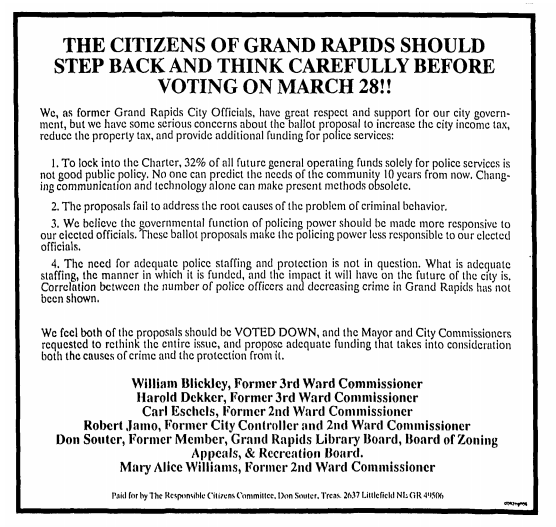
On pages 18/19, there is a GR Press article about six former city officials who opposed the need to add more cops to the GRPD. In addition, these six former city officials took out a paid ad (page 35) in the GR Press expressing their opposition to more police and to the change in the city charter, seen here below.
On page 20, the GR Press writes that the Grand Rapids police union was endorsing the tax increase, which would be used for an additional 95 cops.
Then on pages 37 – 41, there are examples of what the Safety 95 Campaign Committee were distributing, along with what the City of Grand Rapids was sending out to voters before the March 28, 1995 vote. So, not only did the Mayor of Grand Rapids and half of the City Commissioners contribute to the Safety 95 Campaign, the City used public money to encourage residents to vote for more police and to change the City Charter to solidify a third of the budget for the GRPD. Part of the language in the pamphlet that the City sent out before the vote included this:
The Grand Rapids Police Department plans to assign officers to all of our neighborhoods all of the time. Police officers will be able to more promptly respond to calls; prevent and control neighborhood problems such as property thefts, disorderly youth, gang activity, drug violations, and traffic complaints; and work directly with neighborhood associations, block clubs, and neighborhood schools.
 According to a GR Press story from March 29 (page 43-44), 18.9% of the City’s voting population turned out, with the income tax increase passing by more than 2,000 votes, but the charter change barely passing by a margin of 804 votes. One of the reasons that these two ballot initiatives passed, especially the income tax increase initiative, was because property taxes would be reduced by 2 mills over two years. We know that home owners vote at a higher percentage than those who rent, which is what the Safety 95 Campaign Committee was banking on.
Therefore, it seems that Safety 95 Campaign Committee was using the same fear tactics that got the Crime Bill pass just a few short months before Grand Rapids was asked to vote. Add to that the financial incentives offered to home owners, along with City officials endorsing the campaign and using public money to turn out the vote, and you have a solid formula. White fear, white privilege and white liberals were used to solidify more cops and more funding for the GRPD, so they could primarily patrol black and brown neighborhoods, thus protecting white lives. This is how it has been done in Grand Rapids and continues to be done in Grand Rapids.
 Grand Rapids Institute for Information Democracy
Comments are closed.