There is significant pushback on data centers, but the organized resistance cannot get comfortable here in West MI
In recent weeks there have been numerous news stories about public opposition to proposed data centers.
Monitor Township has become the latest Bay County municipality to issue a temporary moratorium on the use of data centers within its borders. Sterling Heights city council approved a one-year moratorium on new data centers Tuesday, Feb. 3, putting a temporary pause on approvals while the city updates zoning rules. Similar opposition occurred in Kalamazoo.
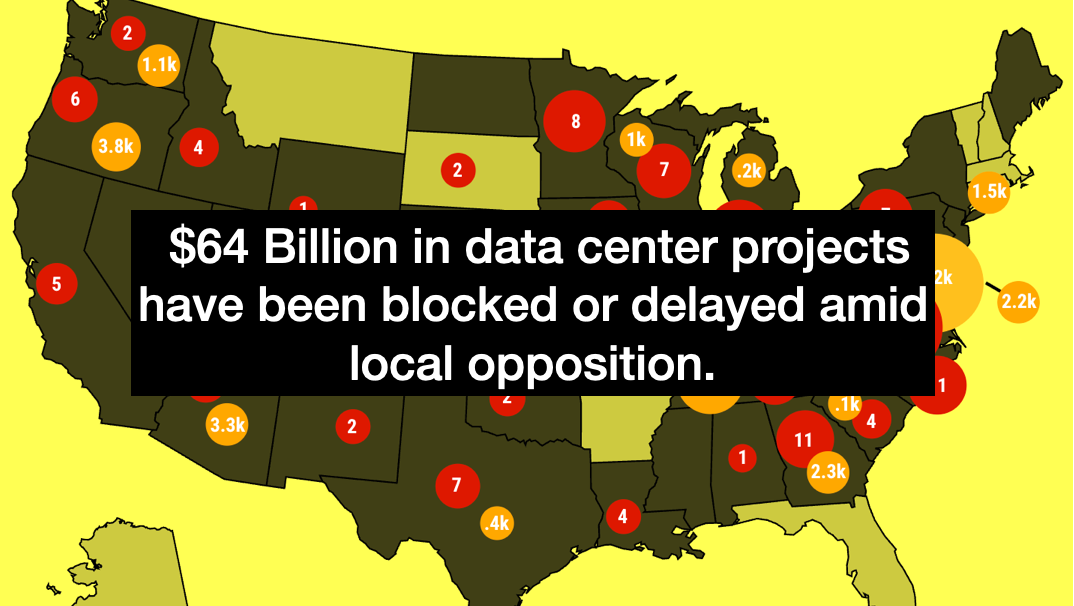
In West Michigan this opposition is also happening. In Solon Township there will be no date centers for at least six months and the organized effort in Lowell and Lowell Township has also been substantial.
Just last week, MLive reported that the Microsoft Corporation, in a letter to the Gaines Township Planning Commission, wants to delay the public hearing scheduled for February 12, “until late March to give the tech giant time to update its rezone application and organize a community meeting to share the revised preliminary concepts and answer questions.” The tactic to delay public hearings is a old tactics used by large corporations so they can buy time to better prepare for public opposition. The delay tactic also gives companies like Microsoft additional time to influence local news media, to get groups like the Chamber of Commerce in to provide more credibility or to offer kickbacks for groups that are willing to support their plans for the data center.
The MLive article did not really explore the reasons behind the Microsoft letter, nor did they provide readers with additional information or analysis of the economic, social and environmental impacts of data centers. MLive could have told readers that the Microsoft corporation already has 133 operational data centers, with 139 more planned. Based on the most recent quarterly earnings, Microsoft data centers are a large part of their profits.
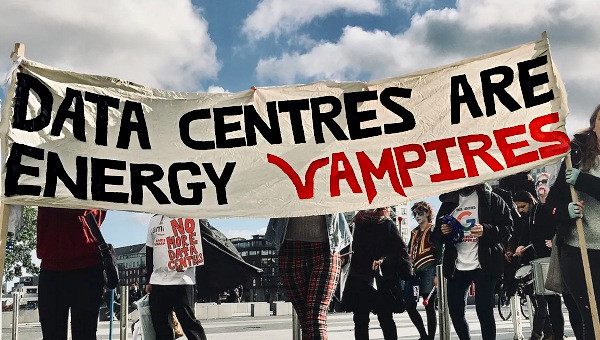
With so much money on the line for big tech companies, they will not give up easily in their efforts to con the public into more and more data centers. According to a recent report from Data Center Watch there has been $65 billion of data center projects that have been blocked because communities have become organized.
 However, this type of opposition cannot let up. In a recent article on Truthdig entitled, The Fight to Stop Data Center Creep, the writers states:
Finally, we need to continue publicizing the very real environmental costs of data centers, because their advocates are going to push a narrative that they’re not a problem. There’s already a movement to downplay the groundwater that they’re using up. Thirty years ago, consensus on climate change was bipartisan and broad, but decades of astroturfing and right-wing echo chambers undermined it. The AI industry is going to run the same playbook this time; we need to be louder.
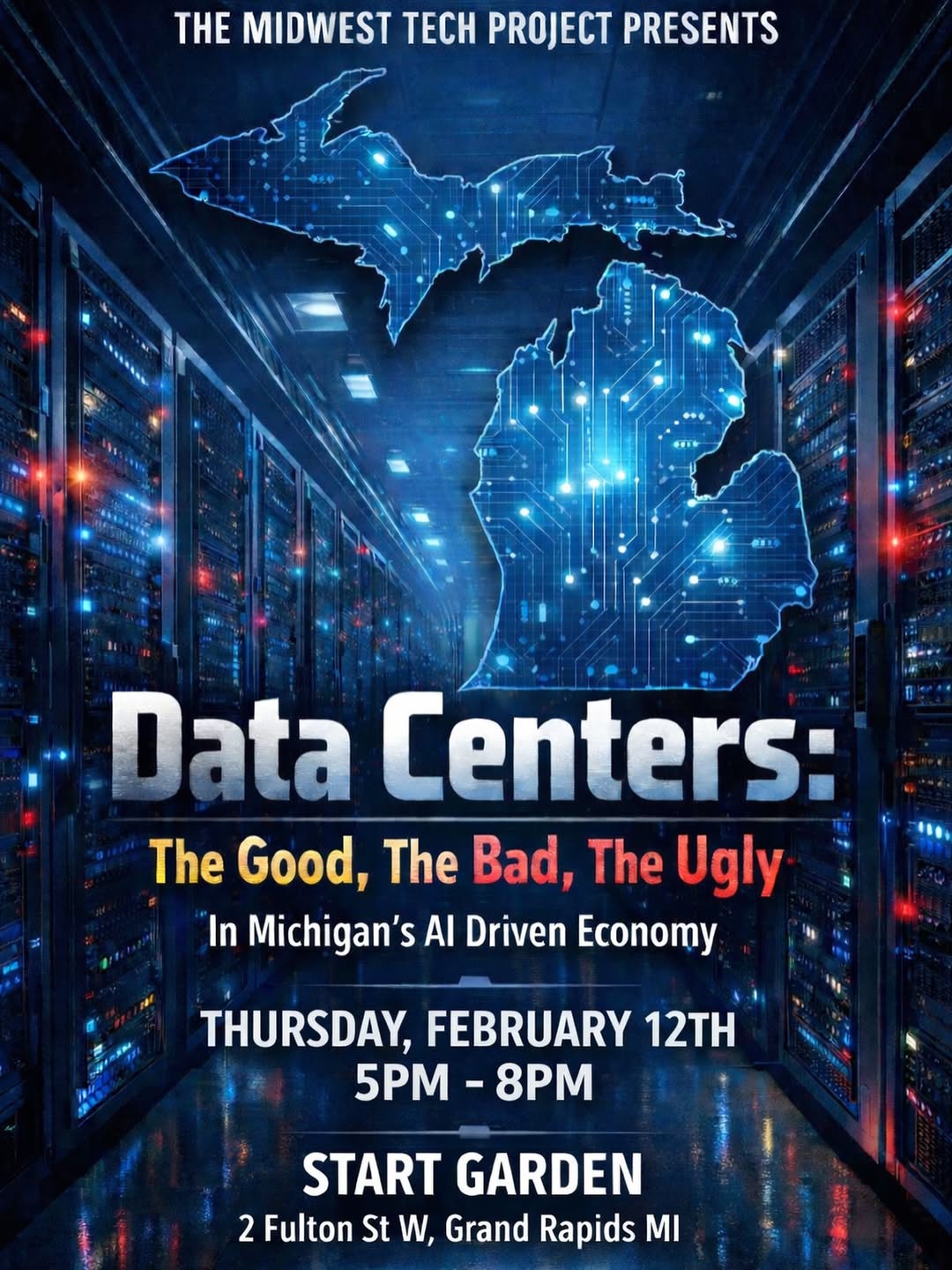
I would also say that we need to be strategic and we need to not rely on local, state or federal governments to protect us from Big Tech’s data center projects. Also, there is a pro-data center/AI forum in Grand Rapids tonight, shown here in the graphic.
 Grand Rapids Institute for Information Democracy
Trackbacks
Comments are closed.