GRIID Class on US Foreign Policy since WWII – Week #3
In week #1 I provided some foundational documents and a framework for how to look at no what country the US is engaged in. I also used the framework document to assess the history of Iraq, particularly the US relationship with that country.
For week #2 we focused on US government efforts, primarily through the CIA to undermine the elections in Italy 1947-48, and to orchestrate coups in Iran in 1953 and Guatemala in 1954.
For week #3 we continued to used William Blum’s book, Killing Hope: US Military and CIA Interventions since WWII. The three countries we focused on were the Congo, Indonesia, and Chile during the 1960s.
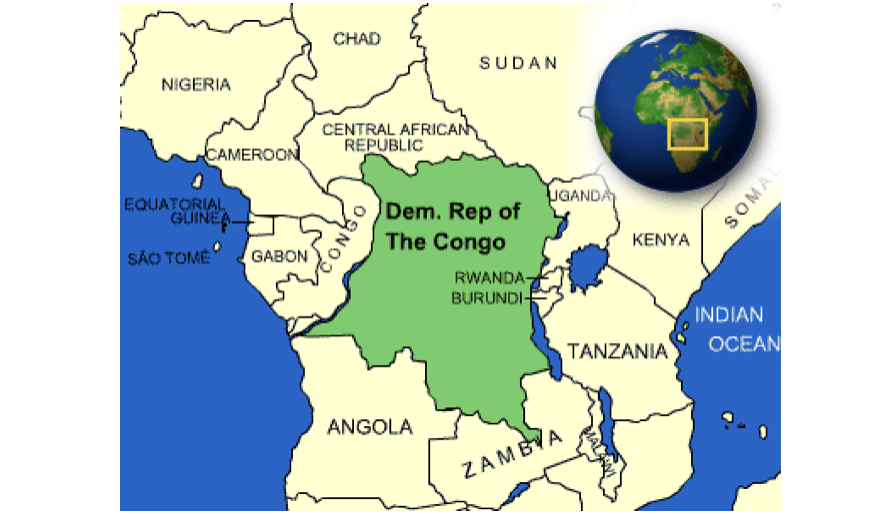
The Congo
The Congo had been colonized by Belgium for decades, primarily under the rule of King Leopold who was responsible for an estimated 10-15 million Congolese that were killed.
Eventually the Congo wanted to get out from under the boot of Belgium and began working for independence in 1960. The US always pays attention to countries that are seeking to be independent of colonialism and when they discovered that one of the leaders of the independence movement, Patrice Lumumba, was not only a charismatic speaker, but a sharp organizer.
According to Blum’s book (chapter 26) the CIA got involved and began looking for Congolese leaders who would be more sympathetic to long-term US interests, specifically mining interests. There is no consensus who who actually killed Lumumba, but it is clear that the CIA played a significant role in his death.
Once Lumumba was dealt with the US and Belgium collaborated to control economic and political dynamics in the Congo until they found the perfect leader who would be submissive to US longer interests, Mobutu. Mobutu had been recruited by the CIA as early as the 1950s, and in 1965 Mobutu seize power in the Congo with the assistance of the CIA. Mobutu was a dictator and plundered the national wealth for his own benefit. He was eventually forced out in 1990, thus ending 25 years of rule.
Today, the Congo still is one of the poorest countries in the world and continues to have its natural resources plundered by multinational corporations, which is well documented in the book, Cobalt Red: How the Blood of the Congo Powers Our Lives, by Siddharth Kara.
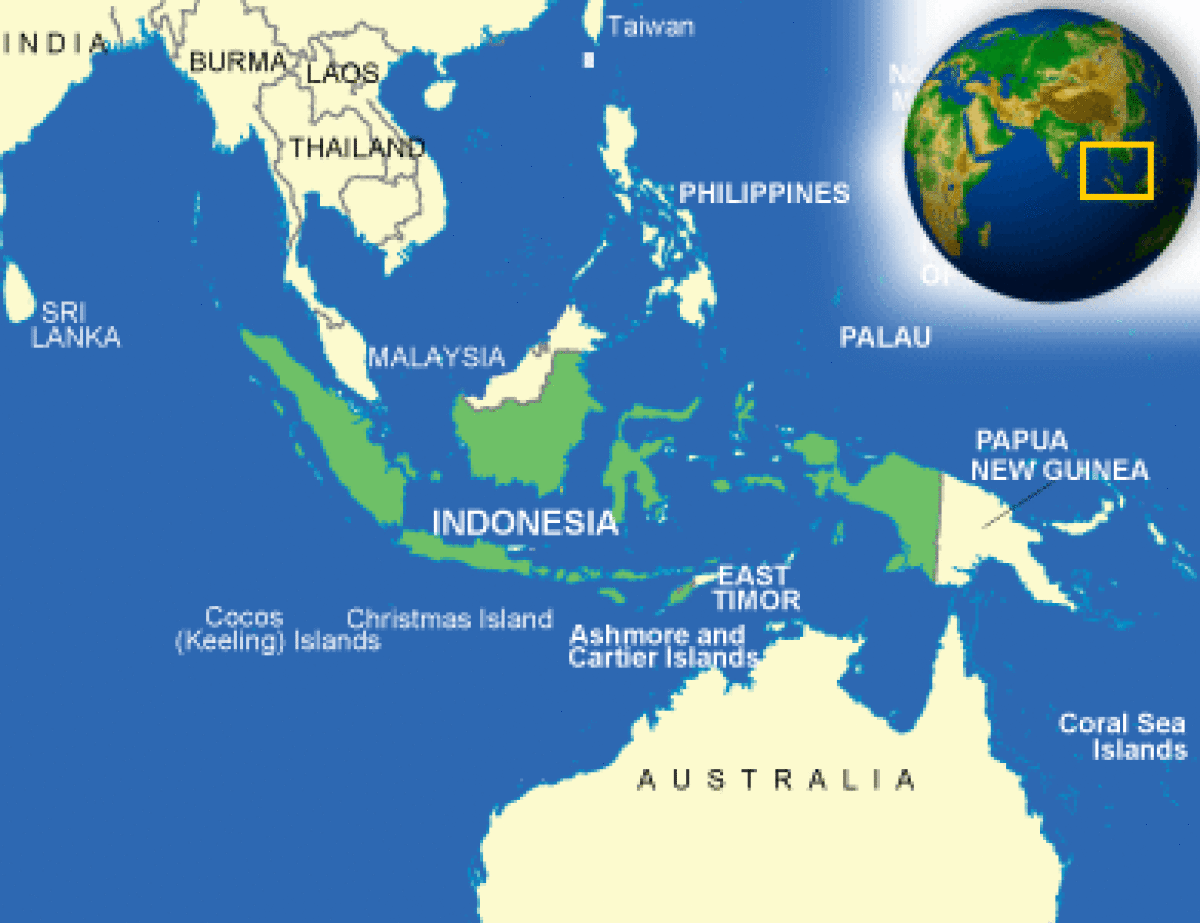
Indonesia 1965
In October of 1965, there was a coup (involving the CIA) with the goal of ousting President Sukarno. According to Blum’s book the coup/purge resulted in 50,000 deaths:
Twenty-five years later, American diplomats disclosed that they had systematically compiled comprehensive lists of “communist” operatives, from top echelons down to village cadres, and turned over as many as 5,000 names to the Indonesian army, which hunted those persons down and killed them. The Americans would then check off the names of those who had been killed or captured. Robert Martens, a former member of the US Embassy’s political section in Jakarta, stated in 1990: “It really was a big help to the army. They probably killed a lot of people, and I probably have a lot of blood on my hands, but that’s not all bad. There’s a time when you have to strike hard at a decisive moment.”
In many ways this was a purge of anyone who was identified as a communist. Blum goes on to write:
The desire of the US government to be rid of Sukarno—a leader of the nonaligned and anti-imperialist movements of the Third World, and a protector of the PKI—did not diminish with the failure of the Agency-backed military uprising in 1958. Amongst the various reports of the early 1960s indicating a continuing interest in this end, a CIA memorandum of June 1962 is strikingly to the point. The author of the memo, whose name is deleted, was reporting on the impressions he had received from conversations with “Western diplomats” concerning a recent meeting between President Kennedy and British Prime Minister Macmillan. The two leaders agreed, said the memo, to attempt to isolate Sukarno in Asia and Africa. Further, “They agreed to liquidate President Sukarno, depending upon the situation and available opportunities. (It is not clear to me [the CIA officer] whether murder or overthrow is intended by the word liquidate.)”
This purging of communists put General Suharto in power, who was a longtime ally of the US. In 1975 Indonesia invaded the former Portuguese colony of East Timor, which lies at the eastern end of the Indonesian archipelago and which had proclaimed its independence after Portugal relinquished control. It was the beginning of a massacre that continues into the 1990s. By 1989, Amnesty International estimated that Indonesian troops, with the aim of forcibly annexing East Timor, had killed 200,000 people out of a population of between 600,000 and 700,000.29 The level of atrocity has often been on a par with that carried out against the PKI in Indonesia itself.
Suharto was able to do this after meeting with US President Gerald R. Ford and Henry Kissinger, who gave Suharto the green light to invade East Timor and cause one of the worst atrocities of the 20th century. See the declassified US documents collected by the National Security Archives. Also see the documentary, The Trials of Henry Kissinger, which documents the role the US played in the Indonesian invasion of East Timor.
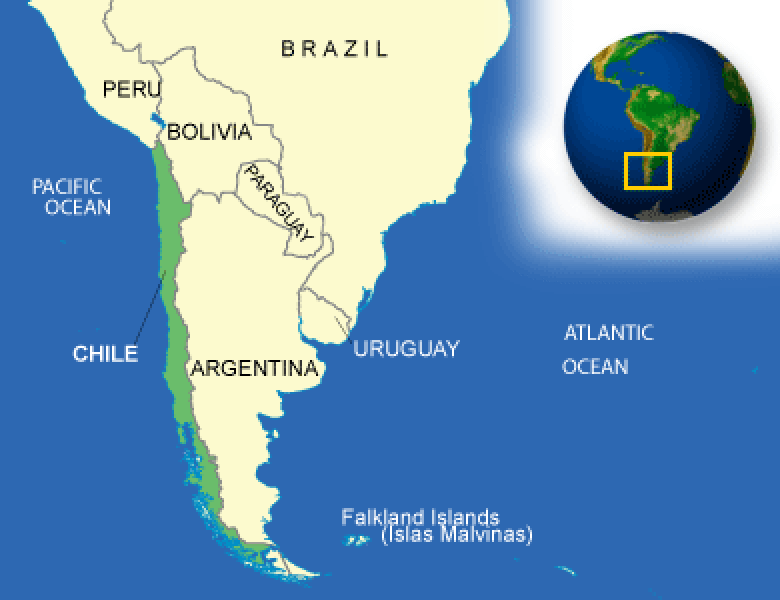
Chile 1964 – 1973
The US will not tolerate socialism in any country, especially in the Americas. This is why the US State Department, the CIA and the Johnson and Nixon Administrations worked tirelessly to overthrow the democratically elected government in Chile, with President Allende.
According to Blum’s book:
The CIA is an ongoing organization. Its covert activities are ongoing, each day, in each country. Between the 1964 and 1970 presidential elections many of the programs designed to foster an anti-leftist mentality indifferent sections of the population continued; much of the propaganda and electioneering mechanisms remained in place to support candidates of the 1965 and 1969 congressional elections; in the latter election, financial support was given to a splinter socialist party in order to attract votes away from Allende’s Socialist Party; this reportedly deprived the party of a minimum of seven congressional seats.
The CIA also began supporting some labor unions, which were connected to US labor unions and also collaborated with US efforts to squash socialism. See Jeff Schuhrke’s book, Blue-Collar Empire: The Untold Story of US Labor’s Global Anticommunist Crusade.
US multinational corporations also got involved, since the Allende government wanted to use Chilean resources for Chile. Companies like ITT and Kennecott Copper, which provided logistical support to US agencies seeking to overthrown the Chilean government.
Again, Blum writes:
In September the military prevailed. “It is clear,” said the Senate investigating committee, “the CIA received intelligence reports on the coup planning of the group which carried out the successful September 11 coup throughout the months of July, August, and September 1.973.”
The American role on that fateful day was one of substance and shadow. The coup began in the Pacific coast port of Valparaiso with the dispatch of Chilean naval troops to Santiago, while US Navy ships were present offshore, ostensibly to participate in joint maneuvers with the Chilean Navy. The American ships stayed outside of Chilean waters, but remained on the alert. A US WB-575 plane—an airborne communications control system—piloted by US Air Force officers, cruised in the Chilean sky. At the same time, 32 American observation and fighter planes were landing at the US air base in Mendoza, Argentina, not far from the Chilean border.
The CIA coup led to the rise of Augusto Pinochet, who ruled Chile with an iron fist, eliminated public dissent and adopted economic policies that were favorable to Chilean elites and foreign investors. Pinochet invited US economists to Chile to restructure the economy.
Milton Freidman was the prominent US economist and intellectual architect behind the neoliberal restructuring of Chile following the 1973 CIA-backed coup against Salvador Allende. Friedman advised the “Chicago Boys”—Chilean economists trained at the University of Chicago—who implemented radical free-market reforms, including privatization, deregulation, and austerity under dictator Augusto Pinochet.
For more details on the CIA coup, see the National Security Archives documents here and part of the documentary, The Trials of Henry Kissinger.
 Grand Rapids Institute for Information Democracy
Trackbacks
Comments are closed.