Community Historians workshop focuses on the Grand Rapids Public Schools in the 1980s
In September I wrote about the first Community Historians workshop, which focused on the 1960s. In that session
Those in attendance that went to South High talked a great deal about what went down during that period and how it has continued to impact public education and the Black community since. Several of those who were students tin the 1960s talked about how the impact of the closure of South High and how it ties to the way the Grand Rapids Public School district has evolved, especially with the two-tiered system, where some schools, like City High, cater to students from privilege, while other students are often taught by substitute teachers, with fewer resources, along with lower expectations for the students who attend Union or Ottawa Hills.
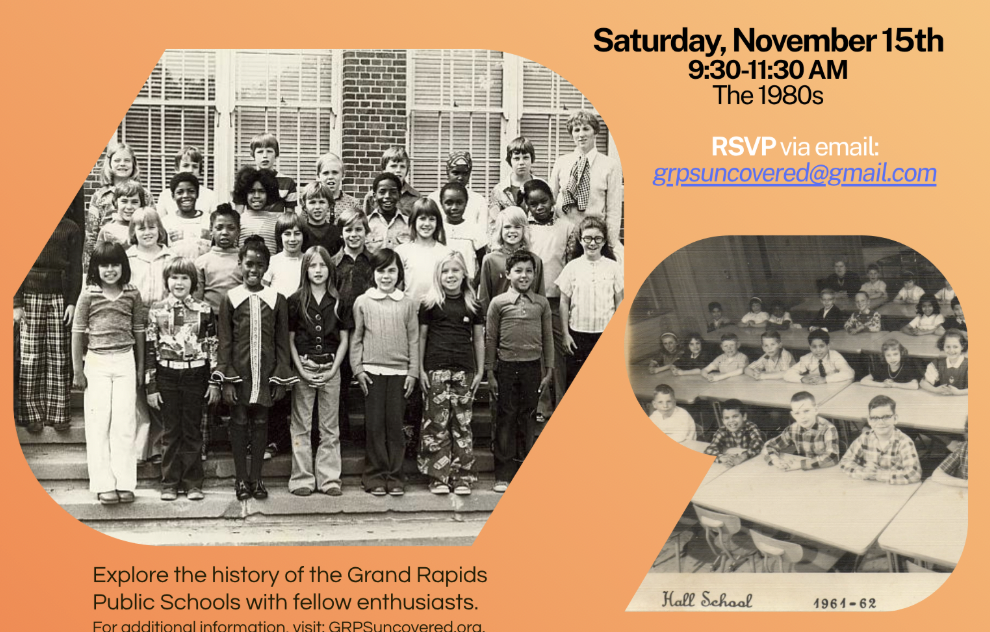
I was unable to attend the second session in the Community Historians series, but did attend the 3rd session held on Saturday. I was also asked to present some information up front, contextual information regarding larger policy dynamics in the US, along with social and economic realities that impacted what was taking place in the Grand Rapids Public School District.
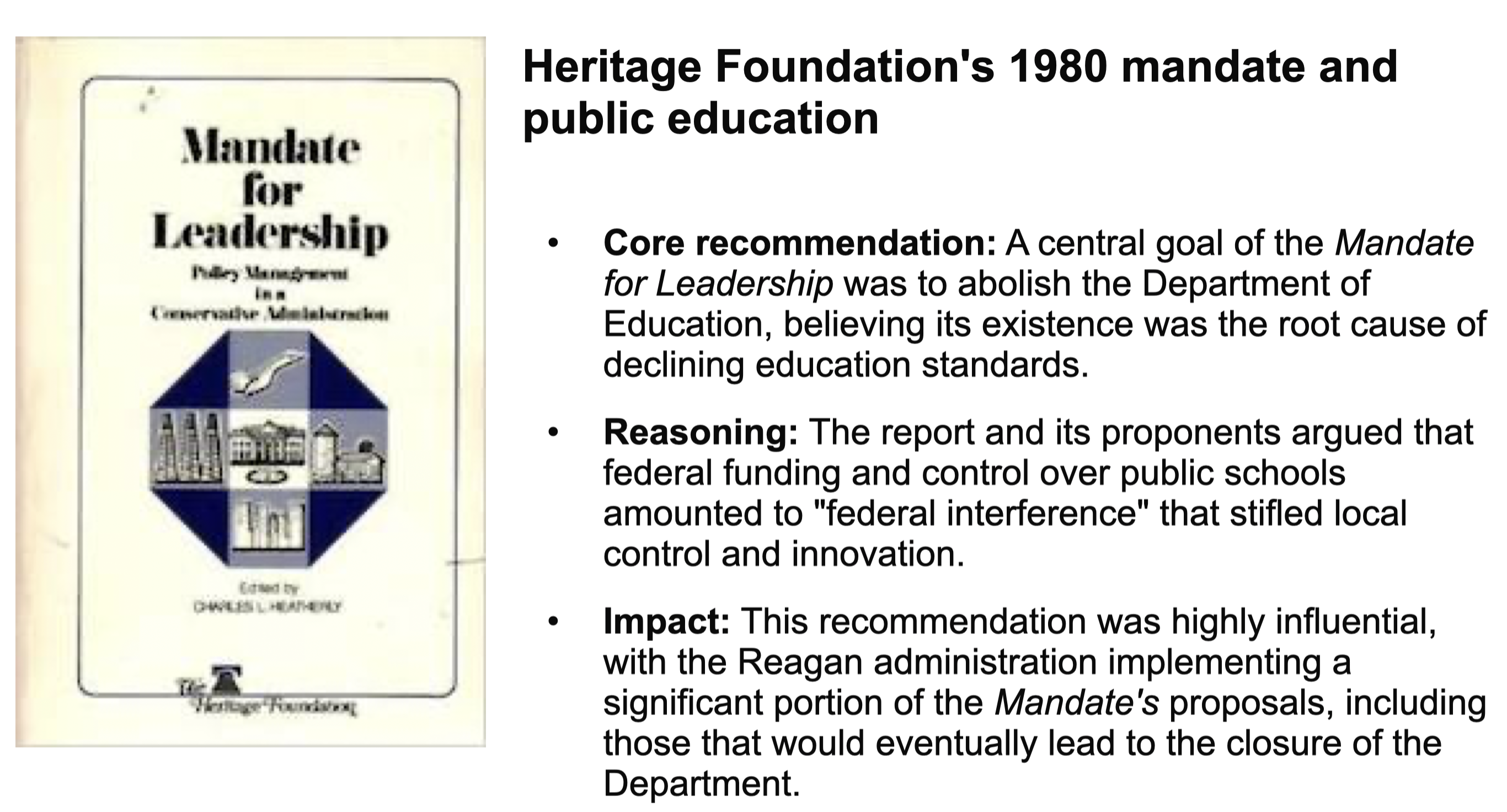
I presented several slides, beginning with the one here above, which focused on the Heritage Foundation’s Mandate for Leadership document, which was fundamentally adopted by the Reagan Administration, especially concerning public education.
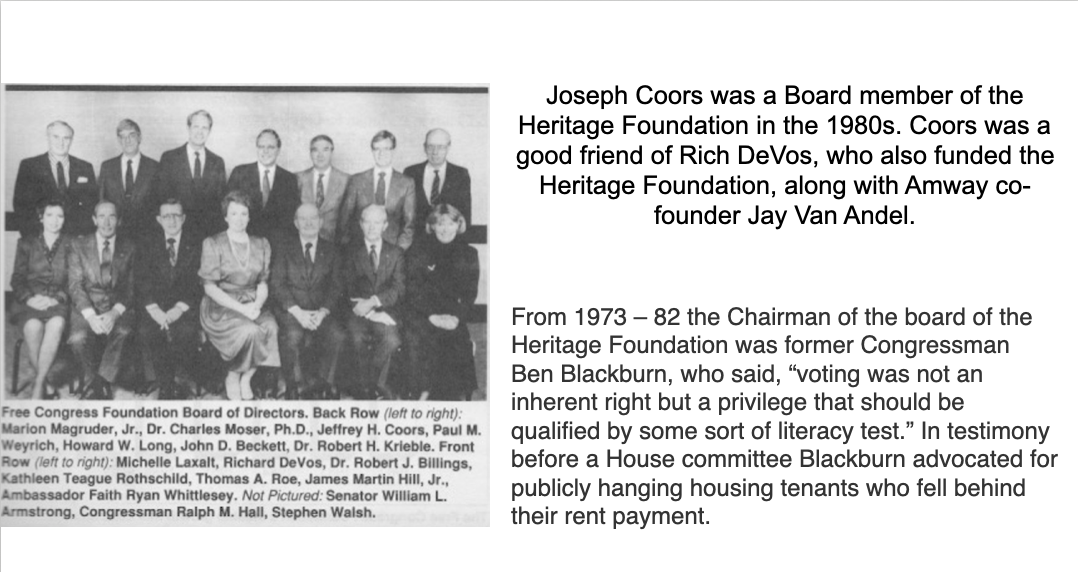
A second slide shows some of the members of the Free Congress Foundation, specifically Joseph Coors and Rich DeVos, both of which provided millions of dollars to the Heritage Foundation beginning in the mid-1970s.
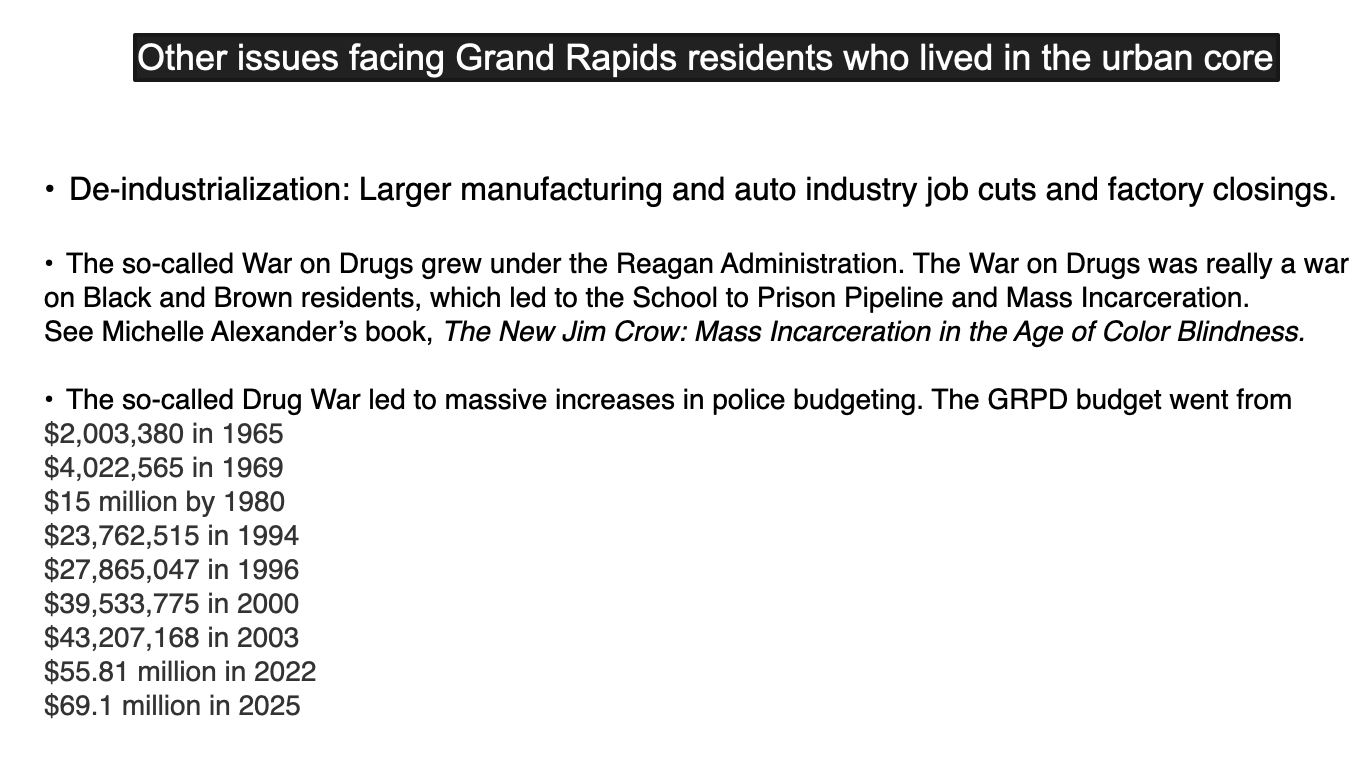
In the 3rd slide you can see economic factors that impacted families in Grand Rapids, the loss of good paying jobs for working class people, the advent of an accelerated Drug War in Grand Rapids and how the GRPD budget exponentially grew over time.
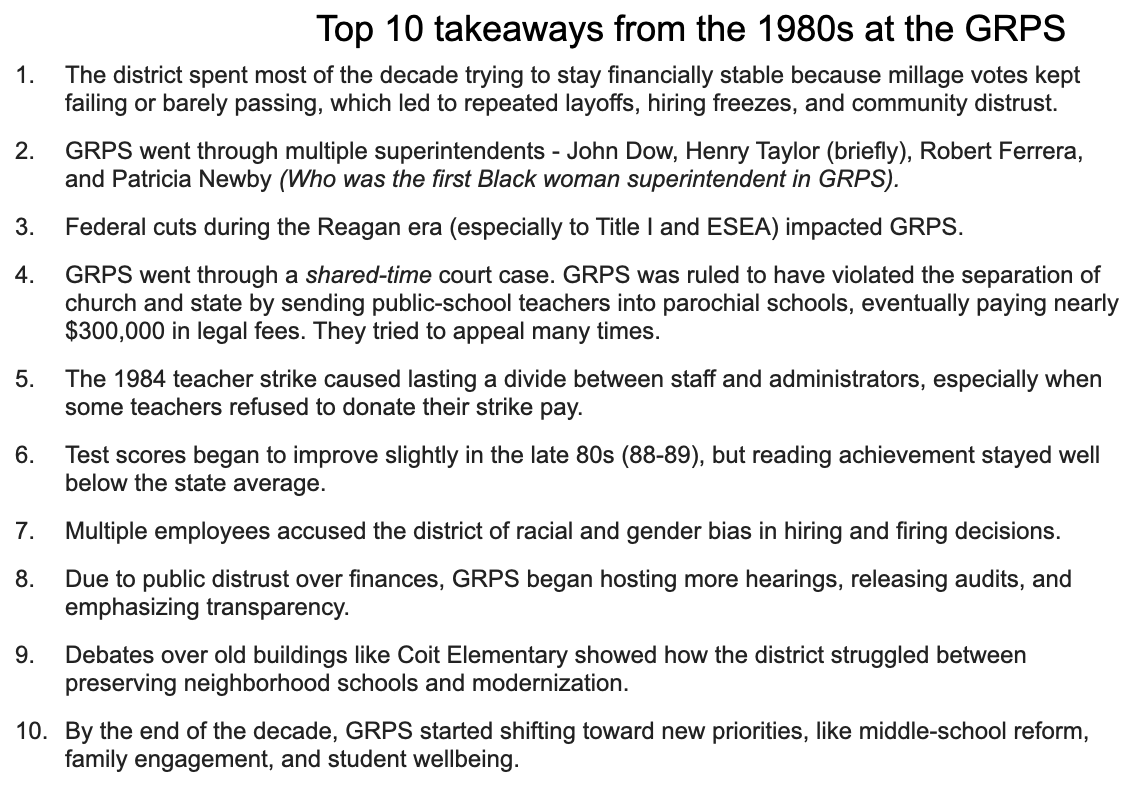
The fourth slide involved content created by a graduate student who has been looking at GR Press coverage and other source documents on the GRPS from the 1980s. Here is the summary of the top ten issues they came away with.
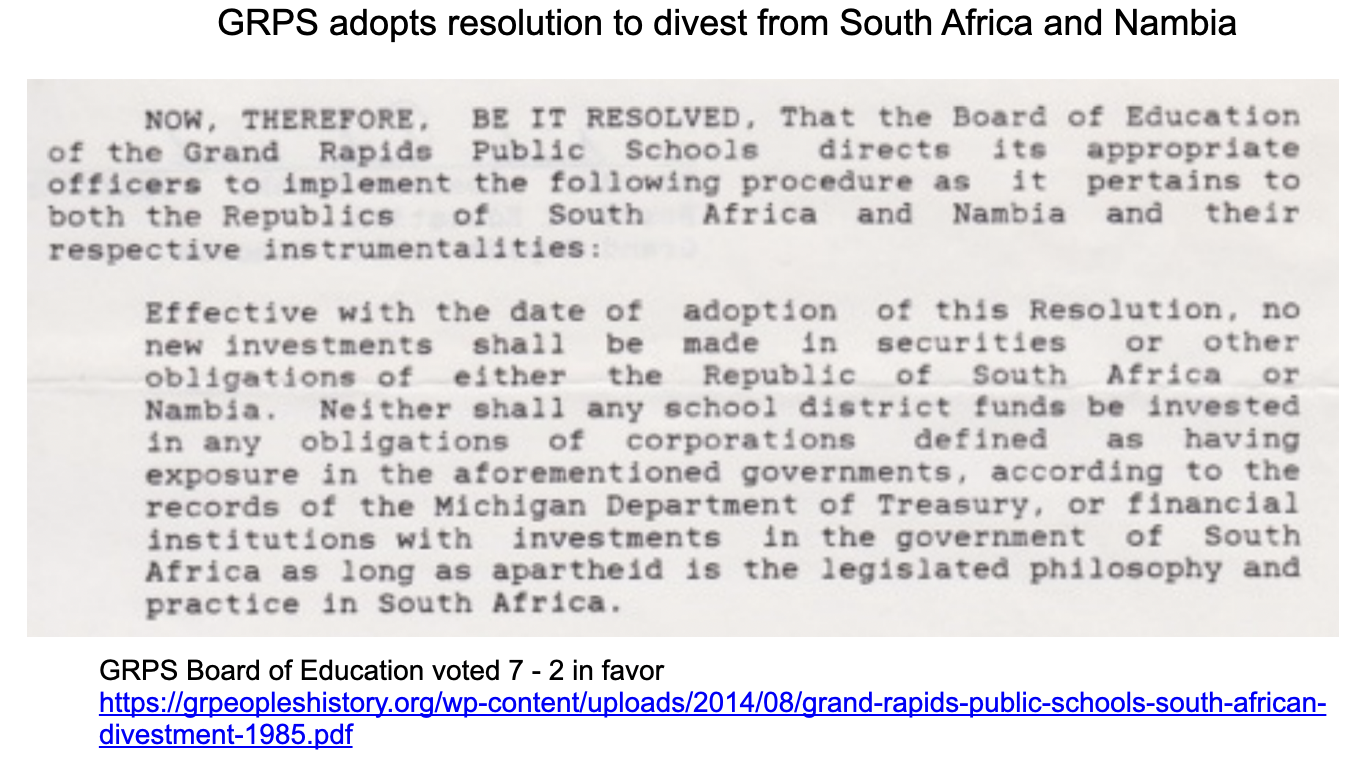
A final slide here below has information about a resolution that was passed by the GRPS Board of Education, which agreed to divest from South African in 1985. You can read about this campaign at this link.
Once the contextual information was presented, the workshop was then open to participants, some of which either were students or teachers during the 1980s at GRPS. Ned Andree shared information about two GRPS schools that were built in the 1970s in predominantly Black neighborhoods, Alexander School and Sigssbee Elementary, both of which were designed by architects who also built prisons. This information led to a larger discussion about the school to prison pipeline and how there was a not so public sentiment within the GRPS to assume that certain students would end up in jail or prison.
Other people talked about there own experience at GRPS, such as Jermar Sterling who was a student in the 1980s and was the subject of an interview in the oral history project that Professor Kang has been doing for the past 2 years.
Other major themes that were discussed dealt with the beginning of school closings in the 1980s, what role religious schools played in taking students away from the public schools, the shift from schools being a place to teach life skills to a business-centric focus, how white flight impacted the GRPS, where Latinx students fit into the GRPS narrative at this time, and how the financial instability of the Grand Rapids Public Schools saw good teachers leave for other districts because of job insecurity.
The discussion was lively and engaging, making the 2 hour workshop time fly by. There will be three more of these workshops offer in 2026 and Professor Kang invited people to offer up ideas on topics people would like to explore for future session. For updates on future Community Historians workshops go here https://grpsuncovered.org/.
 Grand Rapids Institute for Information Democracy
Trackbacks
Comments are closed.