The history of Grand Rapids, according to the GR Chamber of Commerce
“History can untie our minds, our bodies, our disposition to move — to engage life rather than contemplating it as an outsider. It can do this by widening our view to include the silent voices of the past, so that we look behind the silence of the present.”
The quote above is from radical historian Howard Zinn. Zinn gave us the gift of looking at history through the lens of regular everyday people especially those most marginalized in the dominant society. In contrast, the GR Chamber of Commerce, which has not only represented Captain of Industry, they have been part of the local power structure since they were founded in the late 19th Century.
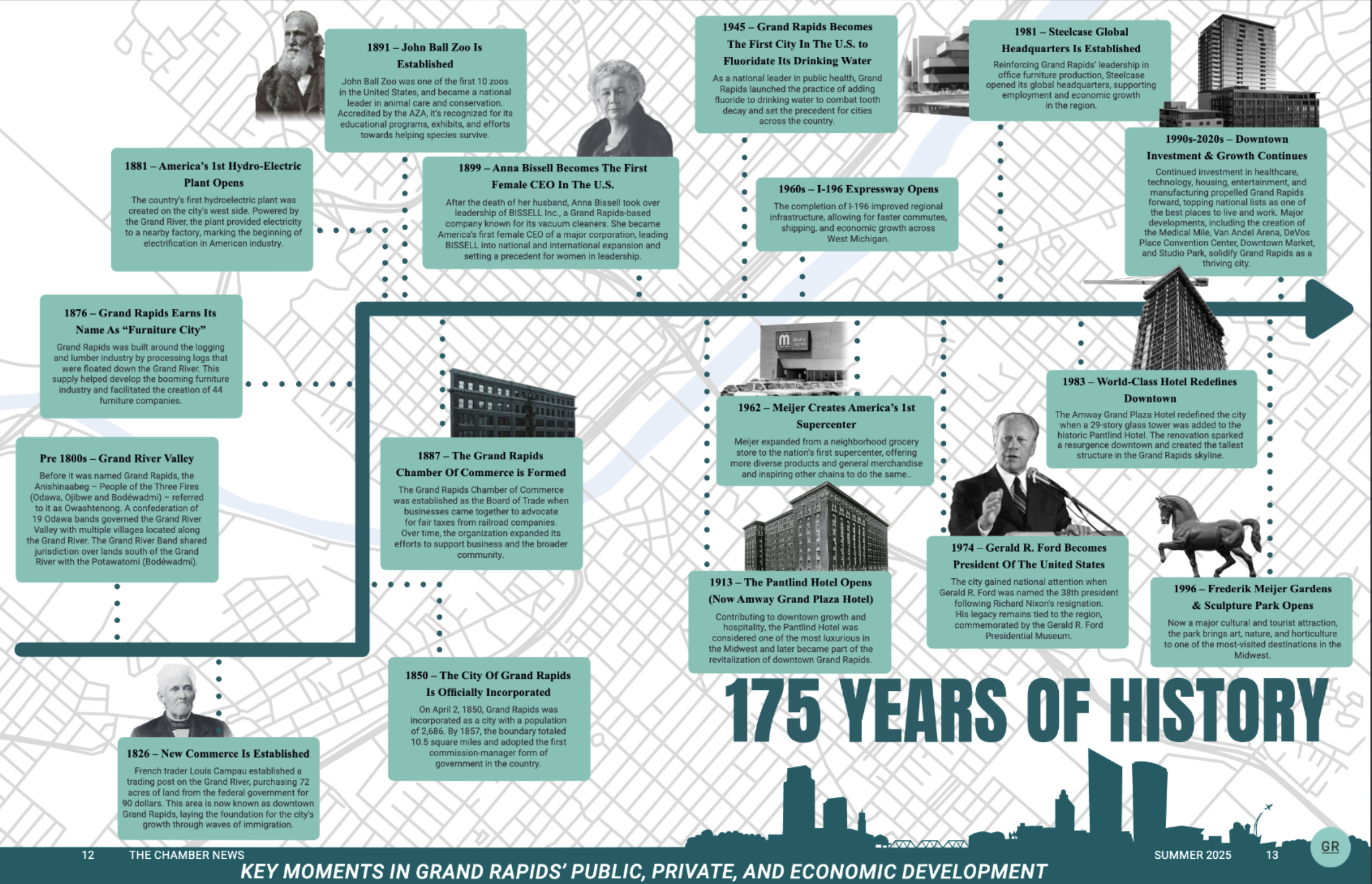
The GR Chamber of Commerce reveal what they think about local history, by posting the infographic above in their most recent newsletter. This infographic reveals the ideological framework that the GR Chamber of Commerce works from, thus providing us with an understanding of what they value and what priorities they have.
What follows is a frame by frame deconstruction of this infographic, with a GR People’s History response.
Pre 1880s – Grand River Valley – The GR Chamber of Commerce acknowledges that Indigenous people lived in this area before it became Grand Rapids, but they never mention how the Indigenous population was displaced, nor do they talk about the Settler Colonial history of the founding of Grand Rapids.
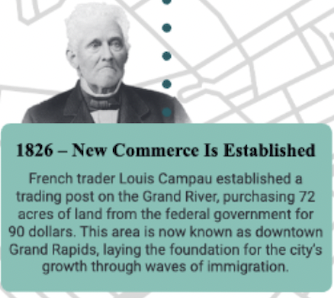 1826 – New Commerce is established – Here the GR Chamber celebrates Louis Campau as starting commerce, but they omit the role he played in Settler Colonialism. It was Campau’s role as a fur trader that positioned him to be one of the first Euro-Americans to introduce alcohol to Indigenous people in this part of Michigan. Like many fur traders, Campau worked closely with the Catholic missions along the Grand River, aligned in the goal of settler colonialism.
1850 – The City of Grand Rapids is Officially Incorporated – The GR Chamber celebrates the founding of the City of Grand Rapids, but fails to offer any honest assessment of what that meant. See my recent article, What are we really celebrating on the 175th Anniversary of Grand Rapids? The 1850 narrative also says that Grand Rapids had a Commission-Manager form of government, which is not true. Grand Rapids changed their charter in 1916 to go from a Strong Mayor form of government to a City Manager style of government, because the furniture barons were concerned about the previous government structure after the 1911 furniture workers
  strike.
1876 – Grand Rapids Earns Its Name as “Furniture City” – Here the Chamber ignores the history of labor exploitation that happened in the Furniture industry. People should read Jeffrey Kleiman’s book, Strike: How the Furniture Workers Strike of 1911 Changed Grand Rapids, along with what the Grand Rapids People’s History Project has written about the topic.
 1881 – America’s 1st Hydro-Electric Plant Opens – The GR Chamber is quick to celebrate energy production for industry, but fails to discuss what sort of environmental impact this had on the Grand River and surrounding water sheds. Check out the GR People’s History article entitled, The Grand River: Flooding, Forests and Factories.
 1887 – The Grand Rapids Chamber of Commerce is Formed – No surprise that with this date the GR Chamber celebrates their founding and then throws in the line, “expanded its effort to supporter business and the broader community.” Of course they offer no verification that they supported the broader community. Since 2010, GRIID has posted dozens of articles that have provided critical analysis of the GR Chamber of Commerce, which challenges the notion that they supported the broader community.
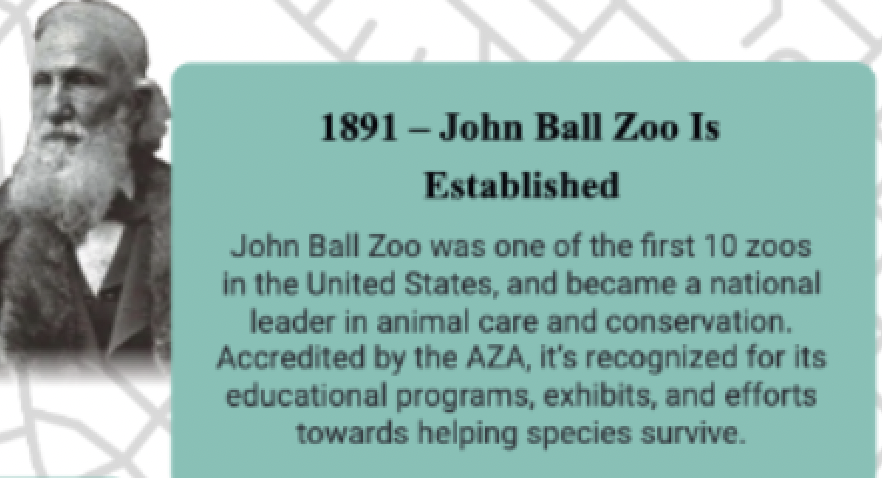 1891 – John Ball Zoo is Established – Here the GR Chamber celebrates the founding of the zoo, but fails to mention the ongoing legacy of the expansion of the John Ball Zoo and how that has impacted the John Ball Neighborhood and green space in that area.
1899 – Anna Bissell Becomes The First Female CEO In The US – Again, the GR Chamber celebrates a female CEO, but offers no context. Anna, who was married to Melville Bissell, started as a sales  person for the company, but took over in 1889 when her husband died. Anna Bissell ran the company until 1919 and remained chairman of the board until 1934. There is no evidence that a labor union was allowed to organize or attempted to organize at the company. The notion that paid sick leave and pensions plans were implemented “long before these practices were widespread, does not mean that the company engaged in such practices out of some benevolence. These policies were adopted at a time in the early years of the 20th Century, when organized labor was more radical and militant than at any other point in US history. The fact that the Bissell Corporation adopted such labor practices could also very well suggest that they did so by adopting such policies was a way to prevent workers from organizing.
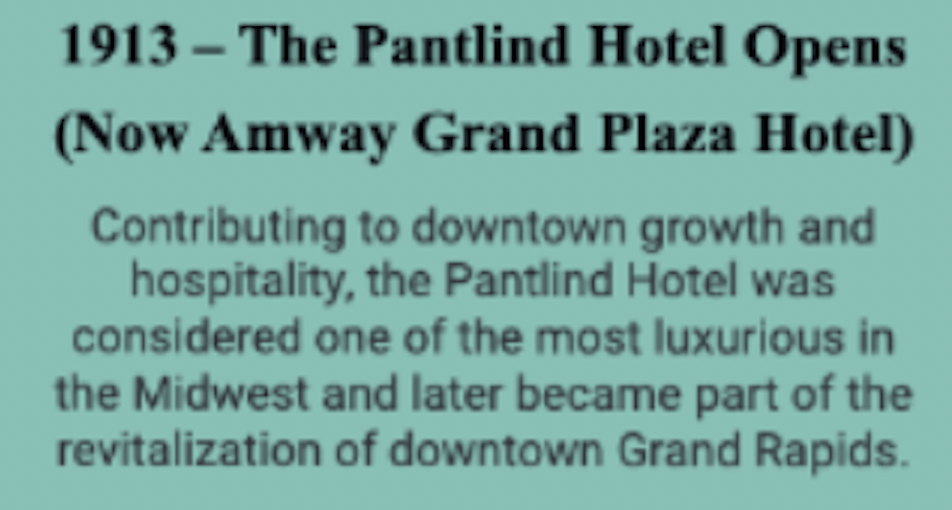 1913 – The Pantlind Hotel Opens (Now Amway Grand Plaza Hotel) – The GR Chamber doesn’t acknowledge how this luxurious hotel was unaffordable for most Grand Rapidians in the early 20th Century. It is also interesting that the GR Chamber history mentions this same hotel twice in their timeline, while no other signal entity is mentioned more than once.
 1945 – Grand Rapids Becomes The First City in the US to Fluoridate Its Drinking Water – While this piece of history is true, it ignores the vast health disparities that exist in Grand Rapids around class and race dynamics.
1960s – I-i96 Expressway Opens – For the GR Chamber the highway construction was all about faster commutes and economic 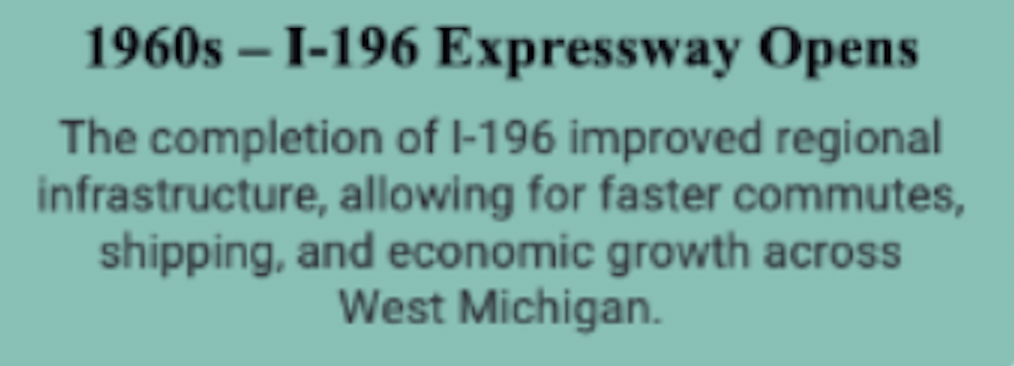 growth. The GR Chamber never says who really benefited from the highway construction, nor do they acknowledge the displacement of 4000 people in the process and the destruction of hundreds of homes in both white and Black communities. See Roughly 4,000 people were displaced from highway construction through Grand Rapids: An interview with Fr. Dennis Morrow.
 1962 – Meijer Creates America’s 1st Supercenter – It is is true that Meijer became the first store of its kind, but there is no discussion of how these supercenters put out of business all kinds of Mom & Pop neighborhood stores over the years. In addition, this piece of history ignores the history of the Meijer family and their wealth expansion over the decades, especially during the pandemic.
 1974 – Gerald R. Ford Becomes President of the United States – Here the GR Chamber ignores what Ford did as President. Ford became Nixon’s Vice President in October of 1973 and was sworn in as President in August of 1974. He served as President until Carter took the oval office in January of 1977. Ford supported the repressive government in the Philippines in its counterinsurgency war against rebels. During the coup in Argentina in 1976, Ford supported the generals who took power and slaughtered thousands of dissidents. Under Ford the US provided millions of dollars in military aid to the right-wing movement in Angola known as UNITA. He negotiated military bases in Spain with the fascist dictator Franco. Ford maintained the illegal terror war and embargo against Cuba and was president during the final days of the US occupation of South Vietnam. But probably the foreign policy that best defines Ford was his support of the Indonesian invasion of East Timor. For more details see For additional information on this topic, see the video, The untold history of Gerald Ford.
 1981 – Steelcase Global Headquarters Is Established – Here the GR Chamber acknowledges the Steelcase headquarters, which “supported employment and economic growth.” What the GR Chamber does not say about Steelcase is that they have resisted efforts amongst workers to unionize and they fail to mention that since Steelcase went global in 1981, they have been negatively impacted by trade policies like NAFTA.
 1983 – World-Class Hotel Redefines Downtown – While it is true that the purchase of the Pantlind Hotel by the DeVos family has been good for downtown business, the GR Chamber also fails to mention how the DeVos family and the GR Chamber of Commerce have convinced City and County leaders to re-direct public funds to improve and compliment the private sector acquisitions and new develop projects in downtown Grand Rapids.
 1996 – Frederik Meijer Gardens & Sculpture Park Opens – The GR Chamber frames the Meijer Gardens as a tourist attraction and destination, but fails to acknowledge how these sorts of venues/destinations also plays a role in quieting public rage directed at Billionaire families like the Meijer family, as they have quietly amassed tremendous wealth.
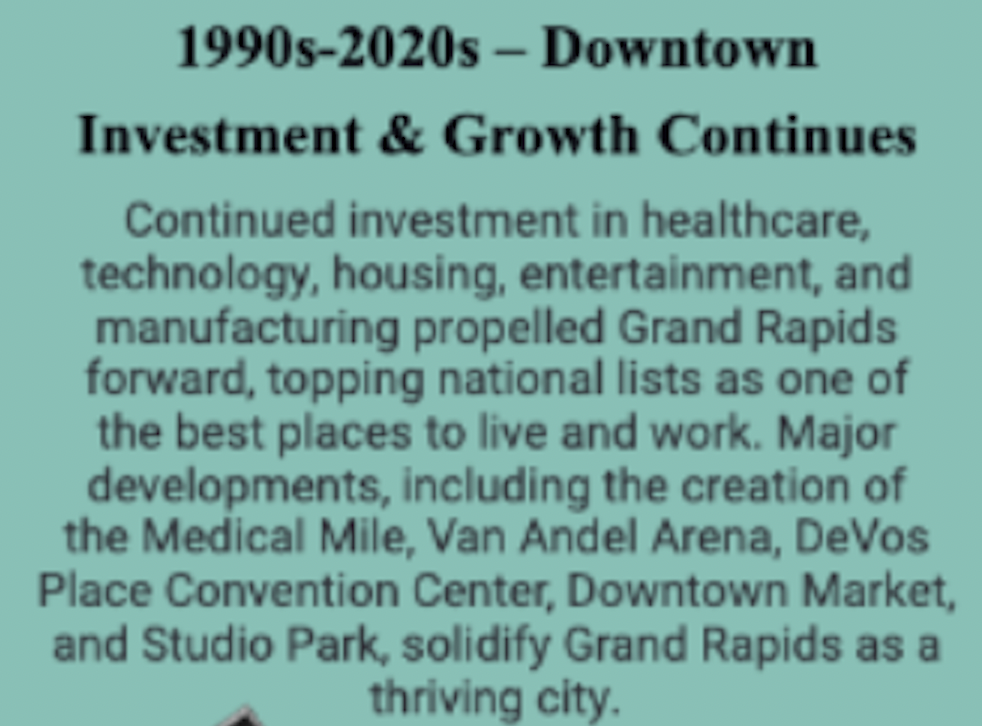 1990s – 2020s – Downtown Investment & Growth Continue – The GR Chamber of Commerce has spent the last several decades working in conjunction with members of the Capitalist Class and groups like Grand Action 2.0 to get City and County officials to use public money for private benefit and to influence public policy that caters to the interests and goals of the ownership class that runs downtown Grand Rapids. This was demonstrated clearly when the GR Chamber got the City of Grand Rapids to adopt ordinances that criminalized the unhoused.
In looking at the history and narrative that the Grand Rapids Chamber of Commerce is promoting through their infographic on local history, it is vitally important that we collectively provide counter-narratives to the Capitalist narratives that the GR Chamber is notorious for. GRIID is happy to provide some of the counter-narratives.
 Grand Rapids Institute for Information Democracy
Trackbacks
Comments are closed.