Reversing the Missionary Position: Learning Solidarity on Mayan time, is the title for my book that will be available this fall in Grand Rapids
I am excited to share with people who follow this blog, that I will be coming out with another book in the fall, one that is based on my experiencing of doing solidarity and accompaniment work in Latin America and here in West Michigan. Below is the introduction for the forthcoming book.
“Fray Diego de Landa throws into the flames, one after the other, the books of the Mayas. The Inquisitor curses Satan, and the fire crackles and devours. Around the incinerator, heretics howl with their heads down. Hung by the feet, flayed with whips, Indians are doused with boiling wax as the fire flares up and the books snap, as if complaining. Tonight, eight centuries of Mayan literature turn to ashes.”
Memory of Fire: Volume 1 – Genesis, Eduardo Galeano
In January of 1992, just days before the ceasefire in El Salvador, I was sitting in the Central Plaza watching the crowds of people with my traveling partners. We noticed a large crowd in the center listening to a man speaking in English who was accompanied by a translator. I decided to walk over to investigate what was going on when I realized that the man speaking was a preacher from the US. As soon as I realized this, I turned around and rejoined my friends shaking my head in disgust.
When the crowd finally dispersed, I noticed that the street preacher was headed in our direction. Right away he began to speak to us in English and inquired about our being in El Salvador. We told him we were tourists because one never knows when there are people listening in (orejas) on your conversations. Before we could say any more, this guy began asking us if we had “come to know the Lord.” We all said “no,” much to his disappointment, but we were curious enough to ask him what he was doing in El Salvador. He said, “To spread the Gospel and to win souls for Christ.” We asked him if he was doing anything for these people in the way of food, housing, jobs, or opposing US military aid. He told us “no” and that those things were not relevant as long as people saved their souls. At that point, I remember telling him that he was no different than the long line of Christians who had come here to impose their will on these people. I told him that if he wanted to preach religion, maybe he might want to follow the model of the late Archbishop Oscar Romero.(1) Looking at me with a confused expression, our missionary friend simply said, “Who was he?”
This encounter reflects for me a fundamental tenet of the relationship that Euro- Americans have had and continue to have with people throughout Latin America. Over the past 500 years, Mayans and many other people have had various forms of intervention in their communities by people claiming to know what is best for them. Whether they have been missionaries, statesmen, Peace Corp workers, anthropologists, relief agencies, or even solidarity organizations – all of them, in some form or another, have gone to these countries with the position that they were going to “help these people,” “show them how it is done,” make their lives better or simply to “save” them from themselves.
The corporate-owned media in this country has contributed to this view since it rarely puts into context why there are rampant societal problems such as poverty, street children sniffing glue, political violence, government corruption, and ecological devastation. The cumulative effect of watching news stories about Latin America that are mostly disaster related is that viewers are left with the sense that “these people” cannot take care of themselves. Whether it is on the nightly news or a CARE ad showing malnourished children, the North American public is fed images of dependency and backwardness. From my studies of the local TV news coverage of Latin America, it is rare that we are given the opinions and perspectives of Latin Americans on what is happening there and a virtually nonexistent view from Latin Americans who hold no positions of power.
More and more people are beginning to question this notion of superiority and imperial mentality that permeates all social institutions in this country. Beginning with the observations that took place surrounding the 500 years of resistance by Indigenous peoples throughout the Western hemisphere, some people in the US are confronting their own relationships with the First Nations of North, Central and South America. This is due in part to an increase in solidarity groups sending people to various countries by way of invitation to stand with people in their struggles for justice.

Attitudes are also changing because people are becoming more familiar with the rich literary and cultural traditions that give a radically different view of the past 500 years. This transition has not been without resistance, some of it which wants to aggressively cling to the history of the victors, while others are scrambling to find “examples” of well intentioned people that they can hold up so as to not feel completely guilty about being in positions of privilege.
What I want to do in this book is to reflect on the fact that it has been I who have been “saved,” because of the people I have worked with in Guatemala, El Salvador and Chiapas, along with those in Grand Rapids who are from Mexico and Central America. In many ways it is I who have been transformed by these people and the experiences I had with them. I do not want to give the impression that I have some romanticized notion of who the people I met, rather I am saying that it is I who really gained from these encounters. It is sort of a reversal of the missionary position, where instead of going to change others I became changed. Who I am today, and what I do, is in large part because of my encounters with the people of Mexico and Central America.
What I hope to communicate in these pages is that solidarity was not just something I participated in on my journeys to Guatemala, El Salvador and Chiapas, it was something I learned and continue to learn from because of the struggles they have allowed me to participate in. They have taught me profound lessons on community, organizing, and the importance of having a vision. I learned that for them to obtain real freedom I had to learn to listen to what it was that they wanted. I was taught solidarity by not wanting to impose my will, my desires on them. In religious terms, it is as if I was being proselytize by them and sent back to the US to make converts here. I could not simply come back from my trips and claim that I had done “my time.” No, this is not solidarity. Solidarity requires an ongoing relationship and doing whatever it takes to improve, to build upon that relationship.
The kind of solidarity that the Guatemalans/Salvadorans and Mexicans have taught me is learned solidarity. This type of solidarity requires that after standing with those communities, I have to also work here in the US to change the policies that make it nearly impossible to achieve lasting change in their country’s of origin. The main difference between dogmatic religion or political ideologies and learned solidarity for me is that learned solidarity is based on real principles of democracy, equality and mutual respect, not just paying lip service to it. Learned solidarity is the desire and the experience of standing with people, of having a presence with them, regardless of differences or world-views.
Learned solidarity is not following an ideological blueprint or something you read in a book. Learned solidarity is a process and a commitment to practicing what I learned from the Zapatistas and the values they embrace. One Zapatista value comes from the phrase, “we build the road by walking together.”
One experience I had of learned solidarity came during my first stint in Guatemala while working with Peace Brigades International. I was working with a newly formed group of Guatemalan widows called CONAVIGUA. They were meeting in a church courtyard in Chichicastenango one afternoon when a group of soldiers entered and made threats. The women definitely stood their ground and the soldiers left. That night one of the women said to me that they were grateful for our presence that day, but then she went on to tell me something that I can never forget nor ignore. She said, “It is important that you are here, but more important that you return to your country to tell the people what is going on here. The way you live determines how we live.”

This book is the product of learned solidarity. It is divided into three sections, each reflecting on the various ways that this learned solidarity has impacted me. Part I of the book is entitled Q’anjobal Mayans Invade Amway Territory. I share thoughts on being bit by the Central America bug, part of the Sanctuary movement in the 80’s and how I negotiated cultural solidarity in an area permeated with Christian conservatism.
Part II is called Sembramos, Comemos, Sembramos – We Plant, in order to Eat, in order to Plant. This is a saying I learned from a Mayan farmer that reflects the simplicity and consistency in the lives of the Mayans I met in Guatemala, El Salvador and Chiapas. Here I gleaned sections from my journal entries from various trips between 1988 to 2006, where I have had numerous opportunities to accompany and observe the relentless persistence of the Guatemalan and Salvadoran popular movements and the participatory democracy of the Zapatista communities.
Part III, The Way You Live, Determines How We Live, is a collection of articles that I have written over the years on various aspects of how US foreign policy impacts Central America and Mexico, and what we might do to change those policies. As Noam Chomsky has always pointed out, the responsibility of the citizens of countries that dictate global policies are key in determining the outcome of many liberation struggles around the world.
I am forever indebted to the people I have met and learned from in these pages. My encounters with them have transformed my life forever. It is because of them that I am the person I am today. It is for them that I dedicate this book.
Photos:
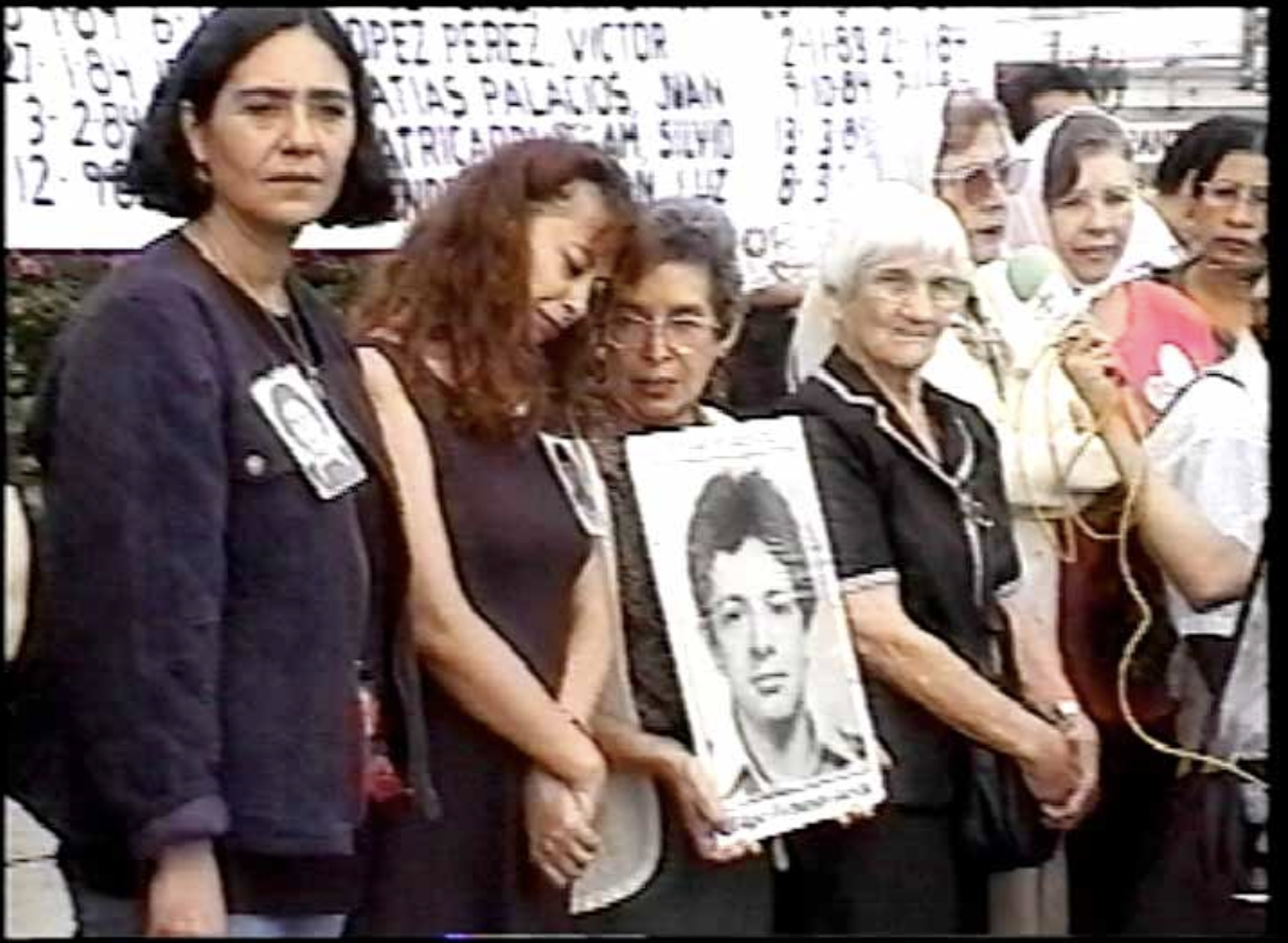
Top picture is from Guatemala, with the Mothers of the Disappeared group
2nd picture is from Chiapas, Mexico, where Zapatistas converge on a Mexican military base to shut it down.
3rd picture is from Guatemala, during International Women’s Day.
 Grand Rapids Institute for Information Democracy
Comments are closed.