Responses to the mistrial of ex-cop Schurr in the death of Patrick Lyoya – Part III
In Part I, I revealed the statements that came from police unions, police apologist organizations and Grand Rapids City officials. Today, I want to look at some of the response to the mistrial of Schurr from those who are supportive of/sympathetic to the Lyoya family.
In Part II, I included statements of solidarity, sympathy and collective grief with the Lyoya family. Today, I want to talk about an abolitionist response to policing, and what Alec Karakatsanis, the author of the new book Copaganda: How Police and the Media Manipulate Our News, calls the, “Punishment Bureaucracy.”
However, before talking about abolition the police, also known as state violence workers, it is important to talk about a recent Executive Order from the Trump Administration that has to do with policing. It is called, Strengthening and Unleashing America’s Law Enforcement to Pursue Criminals and Protect Innocent Citizens. This Executive Order will provide even more freedom for cops to intimidate, harass, jail people in the US, along with providing additional protections for them.
A recent article from the Intercepted states:
The executive order calls for “military and national security assets” to assist in local policing, directs federal resources and protections for state and local law enforcement, and enhances police protections, among other proclamations. But it reflects a deeper ambition.
“He wants more federal militarized law enforcement under his thumb instead of under the thumb of governors or mayors,” says Balko. “He wants to use them to help with immigration deportations. He wants help with cracking down on protest.” And the concern and fear, says Balko, is that Trump will also “use law enforcement to go after his critics and people he perceives to be his enemies.”
I wanted to include this information to say that the standard reformist approaches to policing will not only be completely inadequate, and reforms will only solidify and further legitimize state violence.
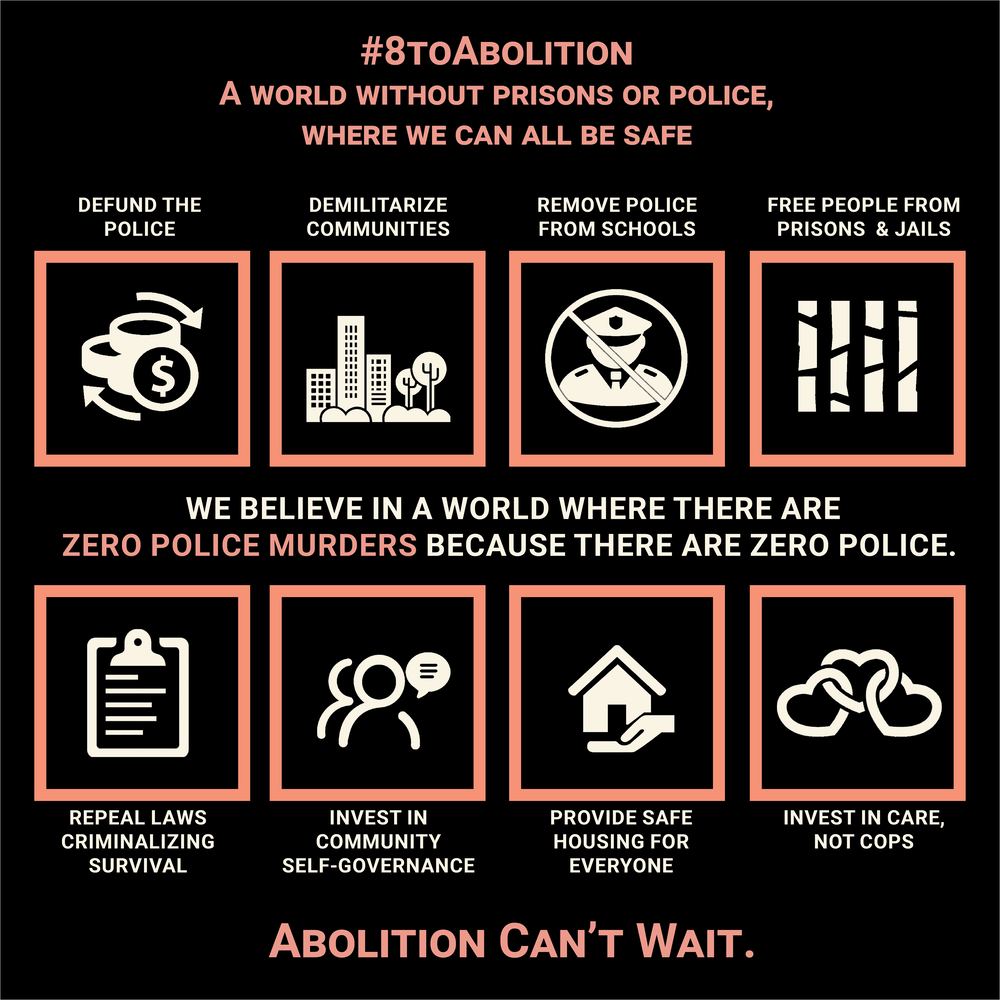
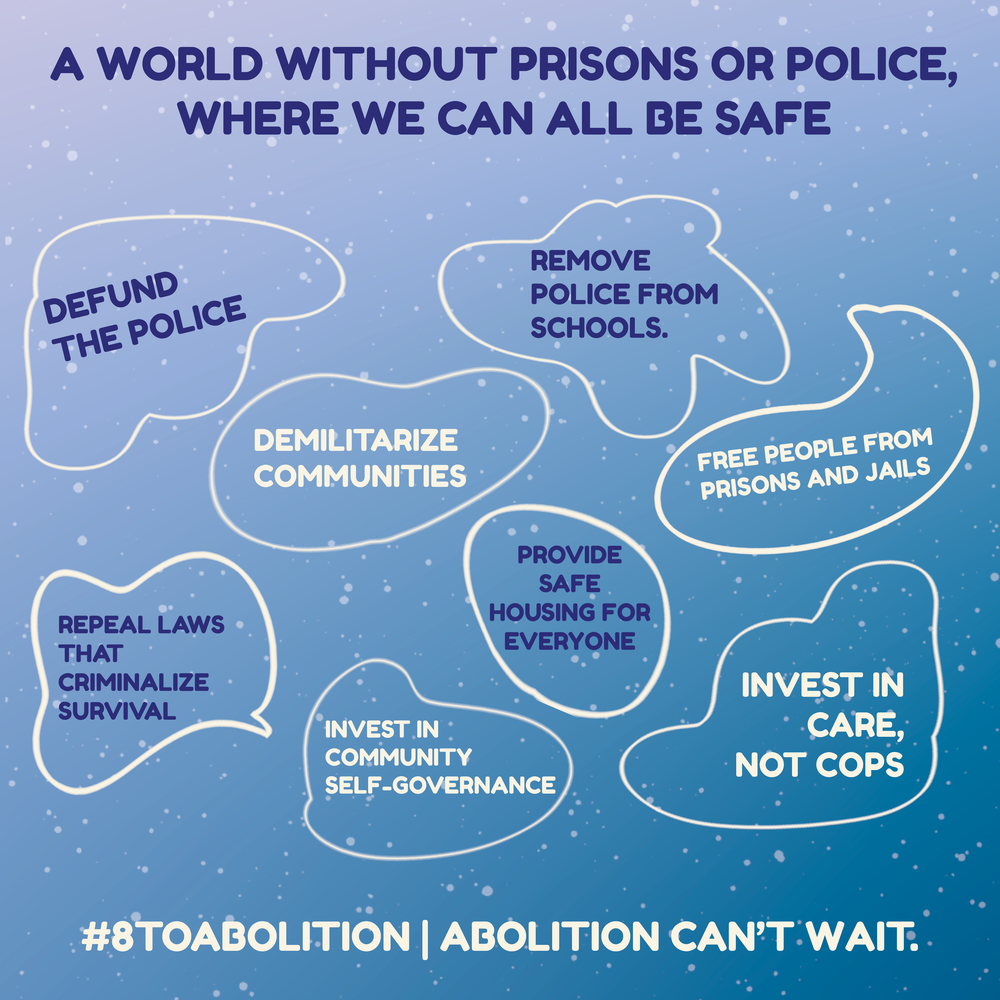
This is exactly why the Movement for Black Lives was calling for the Defunding of the Police after the George Floyd protests all across the US. To be clear, defunding the police is the first step to the abolition of policing as we know it.
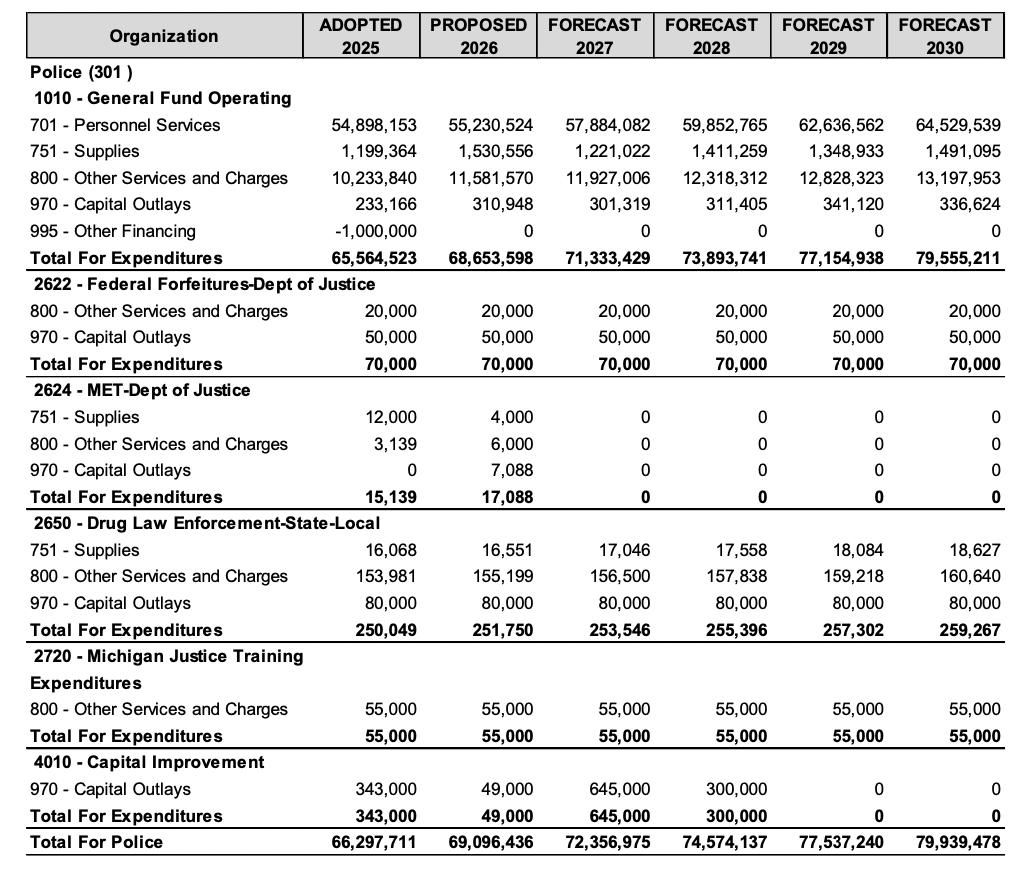
The City of Grand Rapids has submitted their 2026 Budget proposal, which includes $69,096,436.00 for the GRPD. You can see (above) how the amount for the GRPD will continue to grow and by 2030, they will receive nearly $80 million in public money to manage and control this community.
Using Radical Imagination for the Abolition of the GRPD
Now, no one is expecting that the GRPD will go away tomorrow or anytime soon. However, if we want to see the GRPD, a known institution of oppression, to be dismantled, then we need some kind of a proposal/plan to make that become a reality. What I am proposing is just an idea, it is not the only idea and it may not even be the right idea. However, we have to begin with an idea to start down the path of actually working towards the abolition of the GRPD.
Imagine what kind of an impact that $370 Million would have over the next 4 years if the GRPD was defunded and we used that money to invest in community. Considering these numbers, think about how $370 Million over a four year period could contribute to things such as:
- Housing costs – both home ownership and rent
- Health care costs, including preventive care
- Educational scholarships
- Food security
- Transportation costs
- Environmental Justice projects
These are just some of the ways that divesting from the GRPD and investing in the Black community could radically alter the lived experience of the very community that has disproportionately been affected by policing in Grand Rapids.
Lastly, the $69,096,436.00 that currently goes to the GRPD is annually. Imagine how that kind of funding could be used to invest in community, or that money could be directed towards BIPOC communities in general, as a form of reparations for the historical exploitation, police abuse, drug war, land theft, etc. that BIPOC communities have experienced since the founding of Grand Rapids. We all can radically imagine how things would be different if such a plan were enacted, so why limit ourselves to the unimaginative notion of simply reforming the cops? Lets work to actually abolish the police and practice the principle that we take care of us!
 Grand Rapids Institute for Information Democracy
Comments are closed.