Responses to the mistrial of ex-cop Schurr in the death of Patrick Lyoya – Part II
 In Part I, I revealed the statements that came from police unions, police apologist organizations and Grand Rapids City officials. Today, I want to look at some of the response to the mistrial of Schurr from those who are supportive of/sympathetic to the Lyoya family.
There was an outpouring of support and solidarity on May 8th, from a number of organizations offering sympathy to the Lyoya family. The Grand Rapids Pride Center wrote in part, “We mourn, we stand, we fight. The Grand Rapids Pride Center joins the collective grief and outrage surrounding the injustice faced by Patrick Lyoya and his family. We send our deepest love, strength, and solidarity to the Lyoya family during this painful time.”
The Latino Community Coalition said, “We recognize how significant this moment is in the history of Grand Rapids and in the life of our community. As Latine people, we know we have a responsibility to stand with our Black community. Our lives are deeply connected. We are grieving alongside our neighbors, and we call on all of us to use our voices, leverage our collective power, and continue building community. We must keep showing up and demanding justice; not just today, but always.”
The YWCA posted on their social media, this brief statement: “The news of a mistrial in the case of Patrick Lyoya’s murder is deeply painful for many in our community, especially for those who have long borne the weight of injustice. While the courtroom process has reached a standstill, the pursuit of justice must continue. As an organization committed to eliminating racism, we stand with those calling for accountability, transparency, and transformation—not only in our justice system but across all systems that affect safety, opportunity, and equity for all.”
The ACLU of Michigan responded with the following comments: “Despite devoting considerable time and energy to the effort to reach a verdict in the killing of Patrick Lyoya by former Grand Rapids police officer Christopher Schurr, the jury was unable to do so. The mistrial leaves continued pain and uncertainty in our community. But what the mistrial does not change is the fact that the death of Mr. Lyoya, a beloved son, brother and father of two, who came to this country in search of a better life, was both preventable and predictable. True accountability means a commitment by the City of Grand Rapids and its police department to real and lasting policing reform – a commitment evidenced by no more lives lost.”
The Grand Rapid Urban League also weighed in and wrote in part: “This is a grave injustice the Lyoya family must now bear—not only today, but for the rest of their lives. It is a wound that also marks the conscience of every Grand Rapidian who believes in the promise of justice. Until every system—education, health, housing, economic, and criminal justice—works for all, our community cannot and will not thrive. The Urban League of West Michigan calls on the Kent County Prosecutor to swiftly retry the murder case against former officer Christopher Schurr without delay. Additionally, we invite the City of Grand Rapids Office of Oversight and Public Accountability (OPA) to an immediate and transparent dialogue with us and the broader community. This conversation should focus on a thorough examination of the training, policies, practices, and procedures currently in place within the Grand Rapids Police Department – particularly in instances were these actions result in a loss of life. Our city’s future depends on the courage to confront hard truths and the will to make meaningful changes. Justice delayed is justice denied—not just for one family, but for all of us.”
Finally, here is an excerpt from a statement from the Concerned Clergy of Grand Rapids : “As clergy representing diverse faith communities in Grand Rapids, we stand united in our commitment to truth, justice, and human dignity. The killing of Patrick Lyoya placed our city at a painful crossroads – a moment that demands moral clarity, communal resolve and transformative action. Patrick Lyoya was a son, a brother, a neighbor—and a child of God. His life was taken by an act of violence at the hands of law enforcement, and the pain of his death reverberates still, especially among our Black and immigrant communities. We acknowledge that the deeper crisis is not solely about one case—but about a system that continues to fail the very people it claims to protect.”
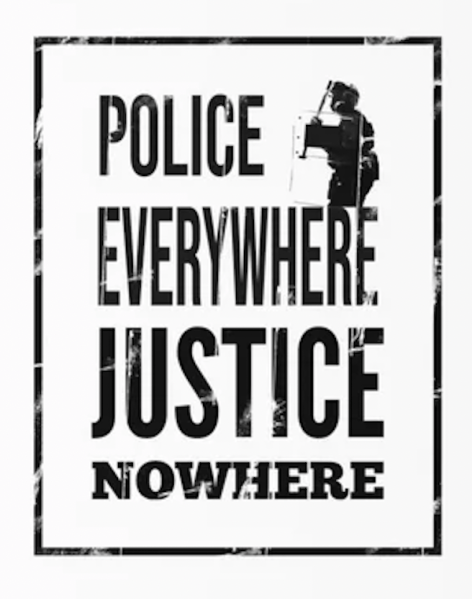 All of these responses center the Lyoya family and the collective grief that many are feeling since the mistrial of the ex-cop who killed Patrick Lyoya. These statements are important, not only because they are embracing the Lyoya family, but because they honor the need for collective grief, loss and mourning.
Several of these groups also included some comments about the need for change, specifically the ACLU of Michigan and the Grand Rapids Urban League. However, the Concerned Clergy of Grand Rapids was the only statement I have seen which communicates a list of demands. They write:
- “We are not only calling for justice in this case—we are demanding structural transformation. This includes:
- Immediate and transparent review of police training and testing practices, especially those related to de-escalation, racial bias, and use of force
- Changes in recruitment and hiring that reflect the racial, cultural, and linguistic diversity of our community
- Thoughtful and community-informed officer placement to foster trust rather than fear
- Greater investment in non-policing solutions to public safety, including mental health responders and violence interrupters
- The establishment of ongoing, accountable partnerships between police leadership and trusted community representatives
- As faith leaders, we want to collaborate with the Office of Oversight and Public Accountability to establish a plan of shared action that addresses these systemic issues, supports community healing, and ensures ongoing institutional accountability—regardless of the outcome of this trial.”
The calls for accountability and reform, while understandable, are unlikely to achieve what is necessary to actually prevent the systemic harm and function of policing. Alex Vitale, in his groundbreaking book, The End of Policing, provides an important critique of police reforms, stating:
“For liberals, police reform is always a question of taking steps to restore the legitimacy of policing…………They want the police to be better trained, more accountable, and less brutal and racist – laudable goals, but they leave intact the basic institutional functions of the police, which have never really been about public safety and crime control………..The reality is that police exist primarily as a system for managing and even producing inequality by suppressing social movements and highly managing the behaviors of poor and nonwhite people; those on the losing end of economic and political arrangements.”
In Part III, I want to explore what an abolitionist response to the GRPD would be and how it might be achieved.
 Grand Rapids Institute for Information Democracy
Trackbacks
Comments are closed.