As the jury prepares to render their decision in the Schurr trial, why is there so little attention around police killing civilians and cop convictions?
I have been monitoring the local news since the Schurr trial began on April 28th. There have been over 60 combined news stories from the four daily Grand Rapids commercial news outlets – MLive, WOODTV8, WZZM13 and WXMI 17.
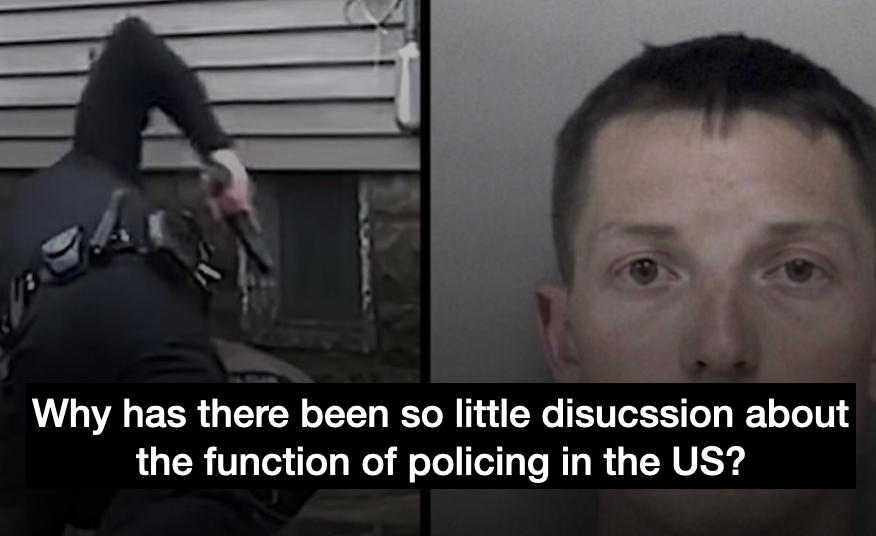
However, despite the heavy saturation of news coverage, there has been no significant reveals in terms of information about the day that now ex-GRPD officer Schurr shot Patrick Lyoya in the back of the head, while sitting on top of him.
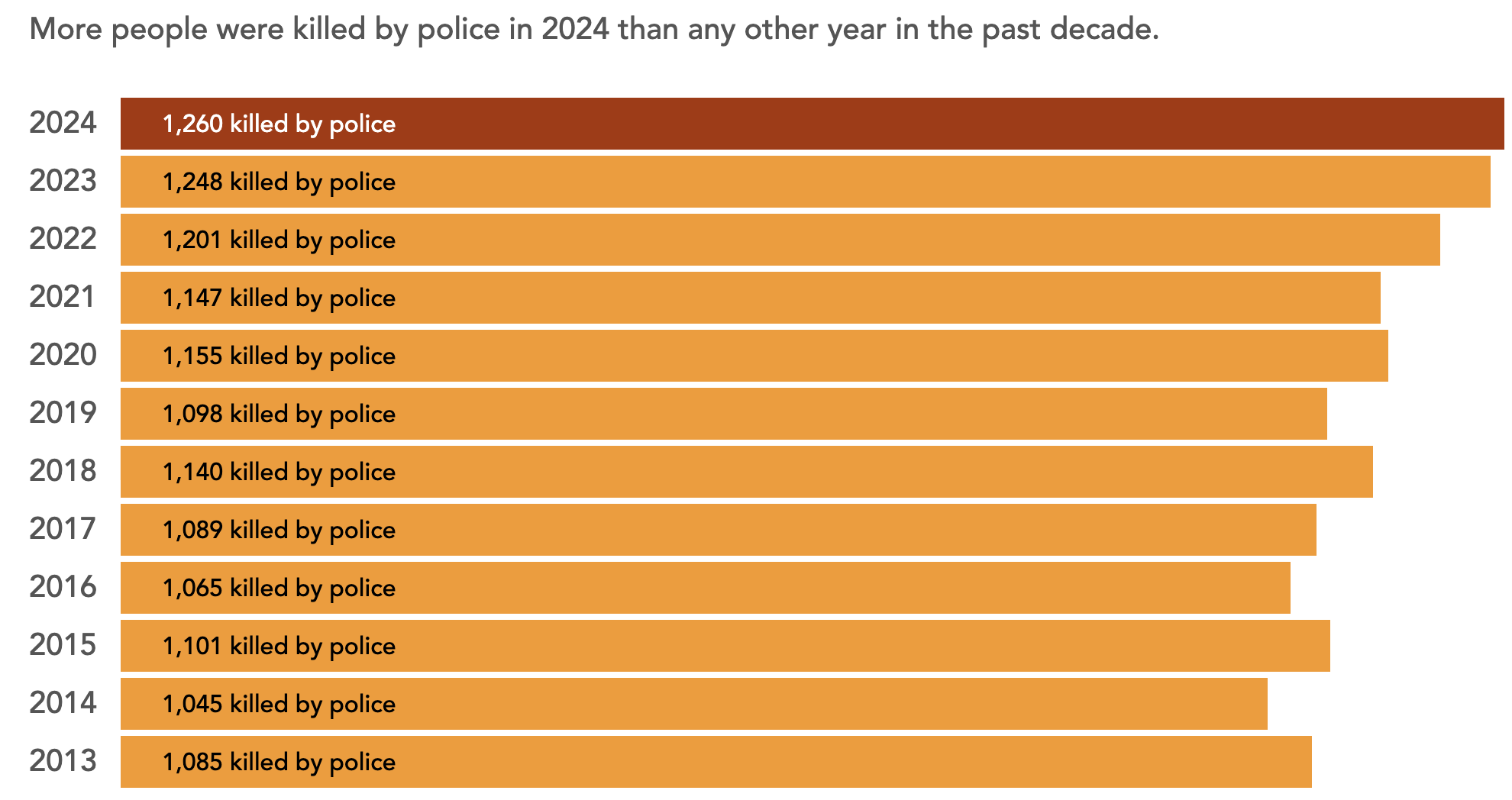
More importantly, local news reporters have not talked about the larger, more systemic issues regarding police killings in the US. According to mappingviolence.org, the police in the US have killed 387 people in 2025 (through April 20th). In fact, there has not been a single day in 2025 that the police have not killed someone in this country.
Other important facts are:
- Black people are 2.8 times more likely to be killed by cops than white people.
- 1260 people were killed by cops in 2024, which is the highest number in any given year since 2013.
- Most killings began with police responding to suspected non-violent offenses or cases where no crime was reported. 154 people were killed after police stopped them for a traffic violation.
- 119 people were killed after police responded to reports of someone behaving erratically or having a mental health crisis.
However, maybe the most alarming statistic from mappingviolence.org is the fact that in 2024, in which cops killed 1260 people, cops were only charged with a crime in 9 of those cases.
Now, it is true that the lawyers representing Schurr have gone out of their way to delay the trial or to have the trial dismissed by higher courts. Schurr’s lawyers even trial to have the trial dismissed last week, say that people were negatively biased because of the videos of Schurr shooting Patrick Lyoya.
However, lawyers who defend cops prefer to go to trial because of two major factors. First, the laws in the US are ridiculously biased in favor of cops, making it very difficult to charge them with crimes. In fact, when violence is do against cops, the punishment is way more severe than in regular assault cases. Thus, the police and their powerful unions have the law biased in their favor.
The second reason has to do with the fact that policing in the US is so normalized that we rarely can find criticism of it, especially within the dominant commercial news media. In addition, our collective view of policing has been manufactured because of all the movies and TV shows about cops since the invention of TV, where police are lionized as the good guy. To the degree that entertainment media has shown corrupt and racist cops, it is always framed through the few bad apples narrative.
This leads me to my last point, which is how often are police convicted of murder. Based on the recent data, it would appear that police are prosecuted for murder in less than 2% of fatal shootings. This is a very small percentage, considering how many people are killed by cops every year.
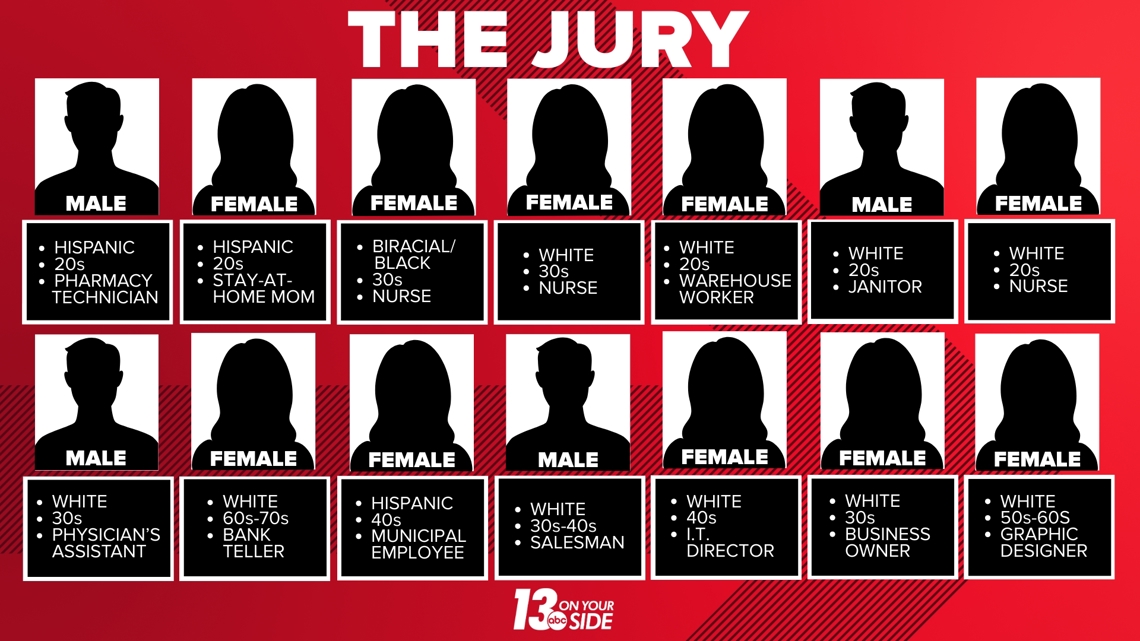
Then there is the matter of having all white or majority white jurors, as is the case with the Schurr trial. While there is no hard data to demonstrate that all white or mostly white juries will let cops off the hook, historically it has not been good for families seeking justice.
I know that these are structural and systemic issues around police killings. I don’t want to down play or be dismissive in any way over the eventual outcome of former cop Christopher Schurr’s killing of Patrick Lyoya. However, until we address the systemic violence of policing in the US and how little that cops are even charged with crimes when killing people, communities, especially BIPOC communities, will continue to be brutalized by policing in this country.
As Alex Vitale notes in his book, The End of Policing, “The reality is that the police exist primarily for managing and even producing inequality by suppressing social movements and tightly managing the behaviors of poor and nonwhite people; those on the losing end of economic and political arrangements.”


Trackbacks
Comments are closed.