Politicians and rallies won’t save us: We need direct action, disruptions to systems of power and community care – Part II
Editor’s note: This is Part II of a three part series on movement work, strategies and tactics for the current political climate in the US.
Yesterday, I began a three part series on why we shouldn’t rely on politicians, the political system or over-reliance on specific tactics in order to create change and work to build the kind of world that we want to see.
In Part I, I addressed why politicians won’t save us, why rallies won’t save us, and why we need to develop goals, strategies and tactics to fight against systems of power and oppression. I primarily used examples from the Civil Rights Movement/Black Freedom Struggle, so I want to expand on that today by talking about Direct Action, disrupting systems of power and oppression, and why it is important if we want to achieve our goals.

Disrupting systems of power and oppression
As I said in Part I, rallies can be a useful tactic that can make statements, demonstrate to us that we are not alone and even build community. However, alone rallies or symbolic protests will never be enough to disrupt and dismantle systems of power and oppression. As Ronald Reagan’s Secretary of State, Alexander Haig used to say, “people can march all they want, as long as they pay their taxes.”
In any sort of social movement or radical politics, we need to participate in disruptive actions, actions that are disruptive to systems of power and oppression. Instead of just holding signs outside of Social Security offices, why not go inside and disrupt their ability to do what they do? Instead of holding signs on highway overpasses, why not occupy the offices of members of Congress….all members of Congress?
Disrupting systems of power and oppression often means attacking either their ability to make profits, conduct business as usual and perpetuate harm. Capitalism is an insidious economic system that is based on profits and constant growth, but it is also rooted in exploitation and destruction, both of the exploitation of humans and ecosystems. This is why the South African Anti-Apartheid campaign had as one of its strategies a boycott, divestment and sanctions campaign to not support businesses that were profiting off of racial apartheid, robust boycott campaign targeting some of the largest perpetrators of racial apartheid, divesting funds from banks, pension funds, etc, and to call for governments to impose sanctions. This campaign involved a great deal of resistance, and lots of civil disobedience. The current Palestinian BDS campaign is built around the exact same model.
Another form of disruption is when we throw a monkey wrench into systems of power and oppression to conduct business as usual. During the End the Contract campaign that happened in Kent County in 2018-2019, the campaign that sought to get Kent County to end their contract with ICE, those involved in the campaign engaged in all kinds of disruptions. In fact, the kickoff to the campaign in late June of 2018, began with some 200 people showing up to the Kent County Commission meeting and shutting it down. The campaign disrupted numerous county meetings over the next several of months, but it also involved in taking up space in the 4th of July parade, going in to the Kent County Jail and making so much noise that those working the phones had a difficult time hearing callers. After the GRPD called ICE on Jilmar Raos Gomez, the campaign shut down several Grand Rapids City Commission meetings, and on numerous occasions it disrupted traffic. You can read about this campaign here. The County never ended their contact, but ICE did in September of 2019, primarily because of all the bad press and bad PR the campaign had generated!
Lastly, disruptions can mean engaging in actions that reduce harm that is being perpetrated by systems of power and oppression. This can look like what animal liberation groups have done by liberating animals from cages to destroying the machinery of those systems of cruelty. Harm reduction disruptions can also look like Indigenous people blockading fossil fuel corporations from continuing to build oil pipelines. According to a report put out by the Indigenous Environmental Network in 2021, Indigenous-led resistance campaigns against pipelines in the US and Canada have reduced greenhouse gas pollution by at least 25% annually since these campaigns began.
Disruptions that can reduce harm is exactly what GR Rapid Response to ICE does, with their organized effort to mobilize people who have been trained to show up when affected people being targeted by ICE, to try to prevent them from disappearing immigrants from this community.

Direct Action
Most of the examples I provide in the previous sections on disruptive tactics would also qualify as Direct Action. However, I want to explore what Direct Action is a bit more and provide some additional examples.
Direct action means that we take collective action to change our circumstances, without handing our power to a middle person – bosses, politicians and or any other authority. Direct Action means we take matters into our own hands and not expect those in power to do what we want.
Direct Action is often not even in the form of a protest. Direct Action can mean organizing a union where you work. Having a union can make your workplace safer, provide increased wages, better benefits and allow workers to level the playing field instead of just taking orders. Direct Action can mean starting a food cooperative, creating a community-based neighborhood garden or creating a seed bank in your community.
Direct Action can also look like refusing the draft, withholding taxes because you do not want to support US Imperialism, chaining yourself to a tree to prevent it from being cut down or chaining yourself to a bulldozer that is being used for an oil pipeline construction. Direct Action is when the Disability Justice movement blocked public transportation systems in order to make sure that those systems were accessible or when the people provided resources and direct support to those wanting to have an abortion pre-Roe v Wade.
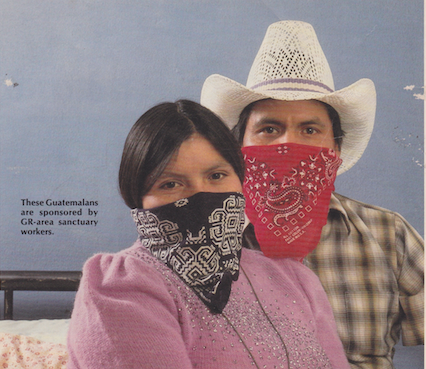 Direct Action looks like what the Black Panther Party for Self-Defense did when they patrolled their own neighborhoods to prevent cops from brutalizing members of the community, and Direct Action looks like what those who were enslaved did to escape from plantation, burn them or kill those who owned plantations. Direct Action look like communities offering sanctuary to undocumented immigrants, regardless of the fact that the US government considers it illegal.
Again, Direct Action is when we take collective action to change our circumstances, without handing our power to a middle person – Mayors, plantation owners, CEOs, cops or any other authority figures that are a part of systems of power and oppression.
In addition to fighting systems of power and oppression, many of the previous social movements also created communities of care and did not relying on existing systems to support and sustain their community. Many people call this Mutual Aid or Community Care, which is what I will discuss in Part III.

 Grand Rapids Institute for Information Democracy
Trackbacks
Comments are closed.