Mayor LaGrand’s State of the City address provides us some insight into what Grand Rapids residents can expect
Last Thursday night, Mayor David LaGrand gave his first State of the City speech at an event that was invite only. Invite only events by public officials means that they want to control the narrative and prevent any dissenting voices from being heard. It’s not a good look for those who claim to be progressive.
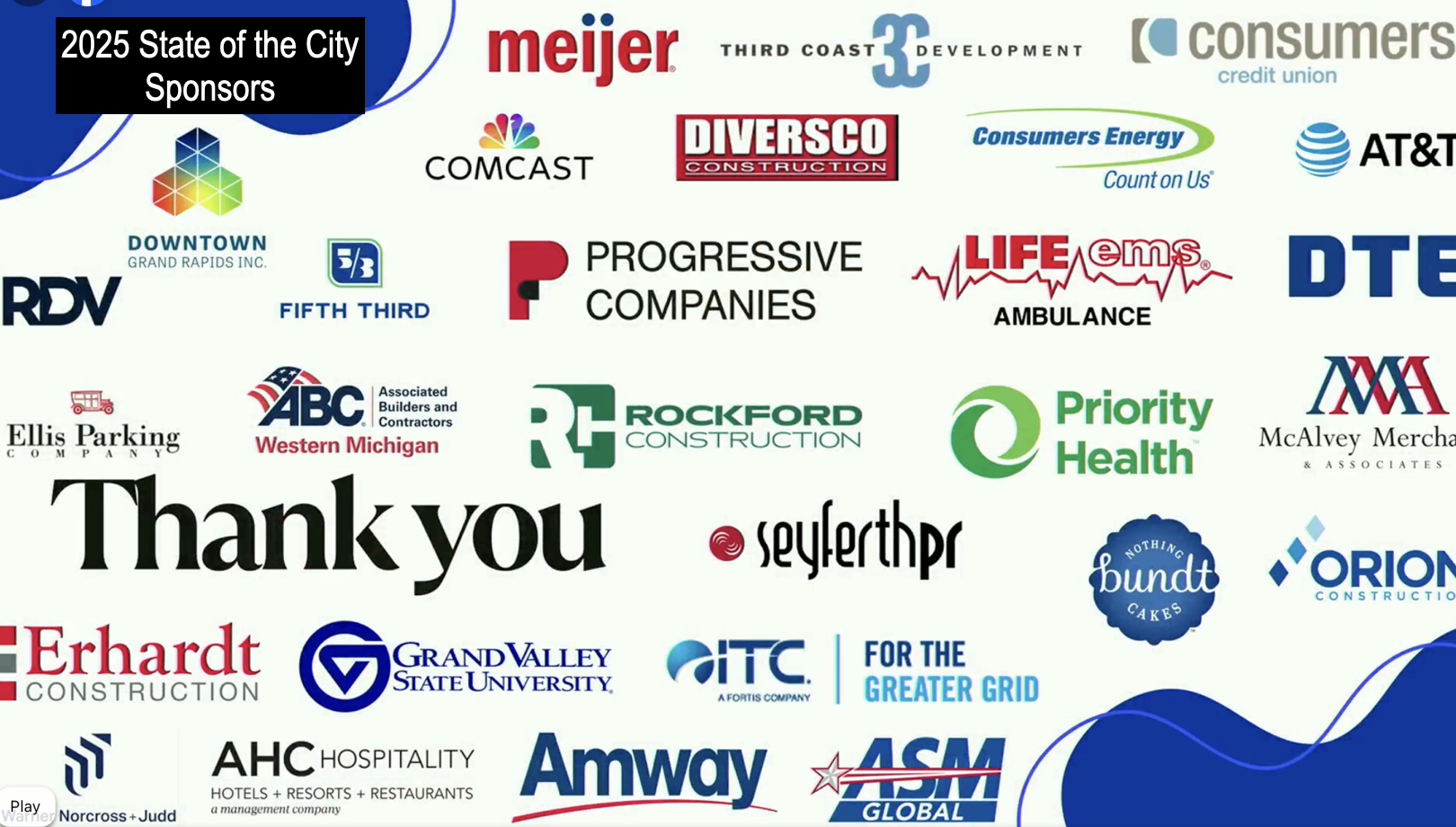
In addition, the event featured numerous sponsors, most of which have a track record of engaging in repressive, exploitative practices, along with be part of the Capitalist Class. There are several constructions companies listed, which might provide an idea about what the Mayor had to say about the current housing crisis. SeyferthPR is listed, which is the PR firm that represents the local power structure, along with Warner Norcross Judd, the law firm that represents the local power structure. There are energy companies that notoriously perpetuate the climate crisis, and a company that has a near monopoly on paid parking.
However, the most telling event sponsors are the DeVos family companies, represented by Amway, AHC Hospitality and RDV Corp. In addition, there are numerous entities which the DeVos family has influence in, often a representative, such as Downtown Grand Rapids Inc. and Grand Valley State University, which I have written about in my analysis of the Grand Rapids Power Structure.
2025 State of the City Address
There was the expected local news coverage of Mayor LaGrand’s State of the City address, like MLive’s post that highlighted 4 take aways from the night. There was also an article posted on the Rapidian, which presents itself as a more independent voice, but too often mimic’s how the commercial media practices journalism. You can also watch the State of the City address at this link and make up your own mind. (LaGrand’s comments begin at 20:25 in the video) What follows is my analysis of what Mayor LaGrand said and didn’t say.
LaGrand spent the first 2 minutes and 35 seconds thanking the sponsors of the event, Grand Rapids City employees, the elected officials in the room and members of the Grand Rapids City Commission. LaGrand then identifies what he called, “three baskets for policy challenges.” Those identified were housing, justice & policing, and City & Neighborhood design.
Housing
LaGrand began his comments on housing by saying, “We all know that Grand Rapids is no longer a cheap housing market. And that makes sense – housing is cheap in places people don’t want to live, and more expensive when there’s demand.” The Mayor then provided some data about the growing need for housing, the increased cost of housing, while income increases are nowhere near what the housing costs are.
LaGrand even acknowledges the increase in the number of unhoused people across the country, but then praises what Grand Rapids is doing, citing the 100 in 100 days program, a program that is limited in scope and is ultimately a false solution to the bigger issue of housing insecurity. Central to the issue of the housing crisis is the fact that 47% of Grand Rapidians are one paycheck away from being on the streets or having to live with family/friends. In February, there was a new report on the housing crisis in Kent County, which stated two things that the Mayor did not acknowledge:
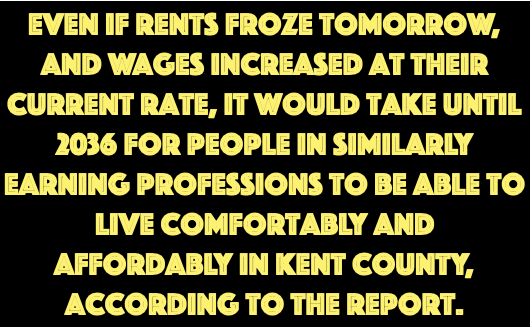
- Even if rents froze tomorrow, and wages increased at their current rate, it would take until 2036 for people in similarly earning professions to be able to live comfortably and affordably in Kent County, according to the report.
- If home prices remained at the rate they are now, people in those occupations still wouldn’t be able to afford a home in Kent County until 2041, the report stated.
LaGrand does acknowledge in the slide above these awful housing related projects, all of which exemplify the worst of the housing as a commodity narrative. This is especially true of the DeVos/Van Andel three towers project, which will receive $565 million is tax incentives. In addition, the City of Grand Rapids and the people representing the three towers project treated the significant public opposition to this project with nothing but contempt.
LaGrand then talked about 2 housing efforts that he was excited to announce, that GR now has a land bank and ADUs – Accessory Dwelling Units. However, neither of these two items addresses the fundamental challenge of the duel economic component, which is the cost of housing and the fact that people do not make a living wage in this city.
Justice & Policing
In this portion of his speech, LaGrand by making this statement – “Public order is the bedrock of a strong city.” Public order is essentially code for business as usual. The wealth gap in this city, to priority of profits over people, the structural racism and maintaining systems of power and oppression are what public order looks like in this city.
LaGrand chose to highlight projects like Cure Violence and the new 16 bed community mental health efforts. LaGrand failed to acknowledge that the Trinity Health 16-bed crisis stabilization unit is a face saving effort after Trinity health did not assist a Black man who was struggling with mental health issues last fall and was shot to death by the GRPD because they thought he had a gun.
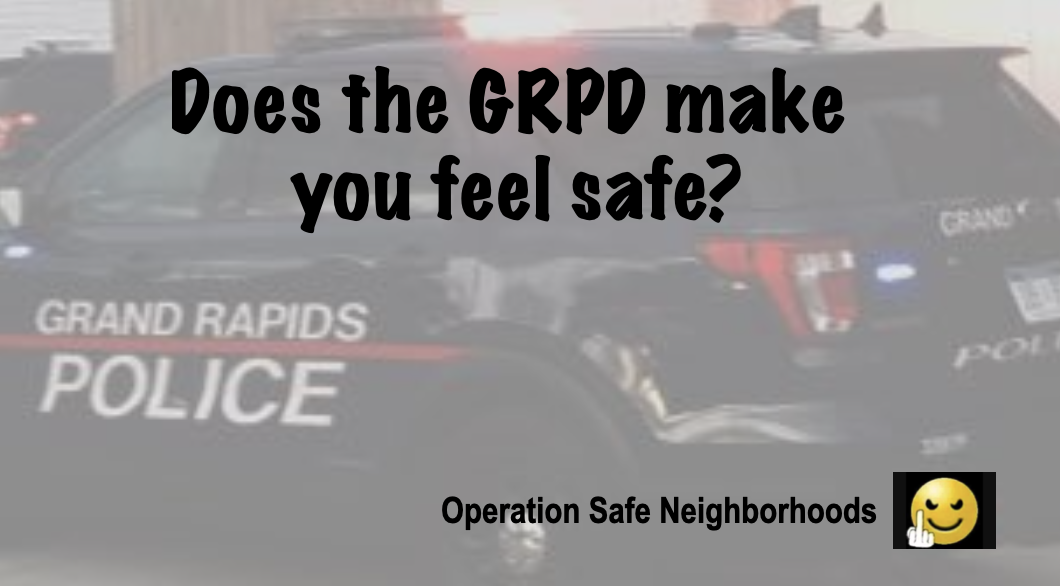
LaGrand also praises Winstrom, but ignores the massive budget the GRPD gets on an annual basis, which are millions more than the city charter minimum requires. LaGrand praises the increase in GRPD cops and continues the same copaganda narrative that more neighborhood cops means more community safety. The notion of community policing or neighborhood policy is a good thing is not grounded in reality, as I have written previously regarding the so-called Operation Safe Neighborhoods.
What we know is that when people’s basic needs are being met, there is a reduction in crime. However, you can’t meet the needs of people, when you spent massive amounts on policing, and provide even larger amounts of tax subsidies to developers for private gains.
At about 40 minutes into the video Mayor LaGrand started talking about the importance of cities. In fact, LaGrand said that ever since human invented cities a few thousand years ago, they have been thriving. The Mayor offers no real evidence of such a claim and having spent many years abroad doing solidarity work, my experience about cities says otherwise. But if you want good analysis about cities, I would suggest you read Mike Davis who wrote Dead Cities in 2002 and Planet of Slums in 2005.
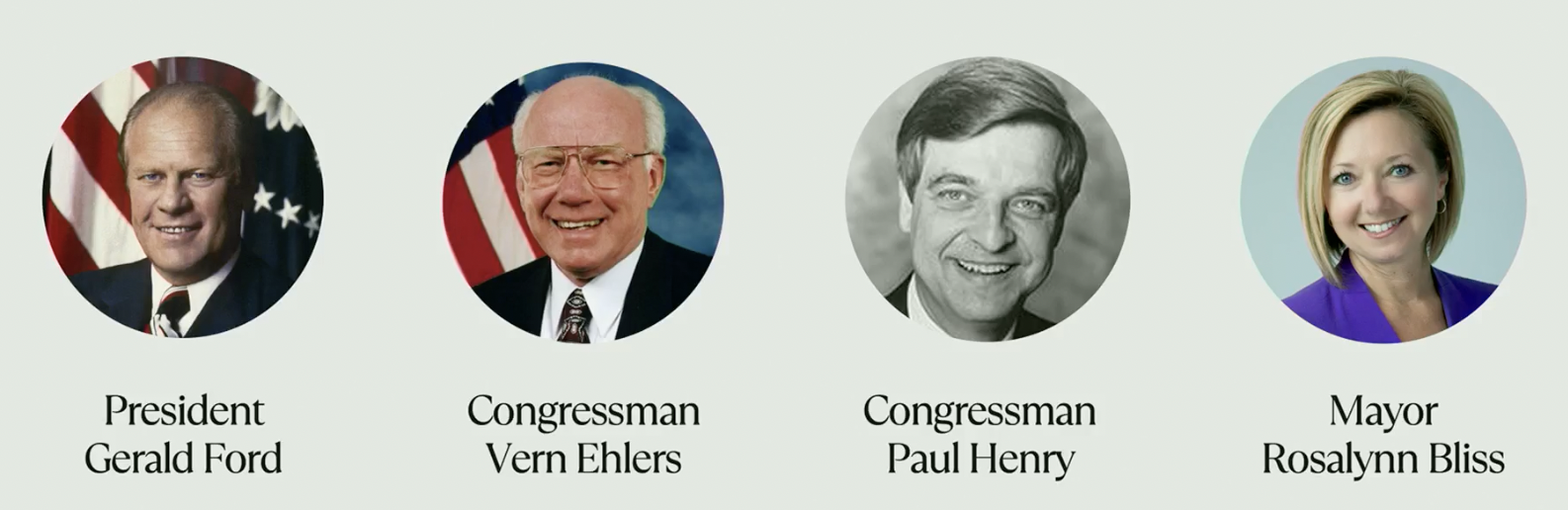
After waxing about cities and democracy, LaGrand then talked about what he really thinks is important – party politics that is non-partisan. He then shares a slide with the images of Gerald Ford, Congressman Vern Ehlers, Congressman Paul Henry and former Mayor Rosalynn Bliss. Really, these are the models for us?
- As a member of Congress, Gerald Ford voted to militarize policing in the US, suppress the social movements of the 1960s and 70s, then as President supported the continuation of US Imperialism and US involved wars abroad.
- Here is a more honest assessment of the legacy of former Congressman Vern Ehlers.
- I also have a memory about former Michigan Congressman Paul Henry.
- An alternative to the dominant narrative regarding the legacy of Mayor Bliss.
LaGrand ended his comments by promoting his Mayor’s Mondays and that he wants to flip the scrip and value everyone’s voice. However, when immigrants and other community members showed up to a late-January City Commission meeting to demand that Grand Rapids become a Sanctuary City, people were dismissed. City Commissioner Belchak said, “there were probably as many people who would oppose GR being a Sanctuary City, they just didn’t show up.” However, to date, there have been 3204 people who have formally communicated that they want GR to be a Sanctuary City, while only 16 people have formerly opposed it.
 Grand Rapids Institute for Information Democracy
Trackbacks
Comments are closed.