Do you want false solutions to the Housing Crisis in Kent County from Non-Profits or do you want to build Tenant Power with GRATU?
Last week, housing non-profits met in Grand Rapids to talk about upcoming housing projects and to release a new report, State of Housing: Solutions for an Equitable Housing System in Kent County, Michigan.
The report, which was produced by Housing Kent, was the main theme in a recent MLive article, headlined, Kent County leaders using 7 projects to solve ‘astronomical rise in housing prices’.
Like most coverage around the housing crisis in Kent County, the article centered on what housing non-profits are doing, along with their partners in government and the business community. In other words, we are not hearing from people who are directly impacted by the housing crisis, people who have a live-experience of what housing insecurity means.
In addition to not hearing from those most impacted by the housing crisis, the MLive article simply regurgitates talking points from the Housing Kent report. There are 7 solutions they are committed to:
100 in 100 – A Grand Rapids Area Coalition to End Homelessness project.
Enhanced Coordinated Entry – which aims to streamline the process by which housing providers connect people experiencing homelessness with housing resources.
Eviction Prevention Pilot Program – The Heart of West Michigan United Way and Housing Kent are co-leading an eviction prevention pilot that helps keep renting families in their homes.
Employer Housing Programs – A partnership between Housing Kent and Bank of America aims at addressing the shortage or workforce housing by helping large employers implement their own housing-related programs as the “new employee benefit.”
Gap Financing – Kent County needs an additional 35,000 housing units by 2027 to keep up with demand, according to Housing Next’s 2022 Housing Needs Assessment.
Kent County Corridor Strategy – The Kent County Corridor Strategy was devised to identify underused properties where residents want to see housing growth.
Fair Housing Education and Enforcement – The Fair Housing Center of West Michigan is taking aim at racial disparities in homeownership that hinder economic mobility.
The reality is that beside the Fair Housing Education and Enforcement strategy, the other 6 strategies are false solutions. What I mean by the other 6 strategies being false solutions, is that they still operate through a market-based housing framework, and rely on financial assistance or co-ordinated efforts of non-profits that don’t address the primarily problem.
The MLive article stated the primary problem in these two sentences:
Even if rents froze tomorrow, and wages increased at their current rate, it would take until 2036 for people in similarly earning professions to be able to live comfortably and affordably in Kent County, according to the report.
If home prices remained at the rate they are now, people in those occupations still wouldn’t be able to afford a home in Kent County until 2041, the report stated.
 The issues are not the lack of housing, they are the cost of rent and the cost of buying a home. One way to address this crisis is to make sure that everyone makes a living wage. A second way to address the housing crisis is to provide housing to people outside of a market framework.
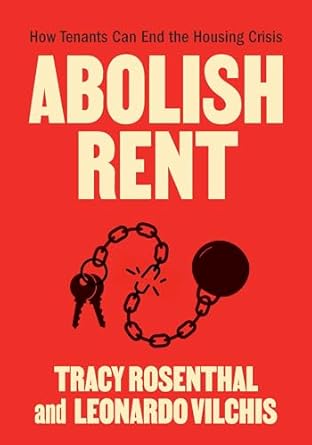
If we think about people who pay rent, the market says that what they are paying is based on what the market says the value of rent should be. However, more and more people involved in housing justice work are referring to rent as theft. In the book, Abolish Rent: How Tenants Can End the Housing Crisis, co-authors Tracey Rosenthal and Leonardo Vichis help us to re-frame what rent really is with these statements:
- Rent is a fine for a human need.
- Rent is the gap between tenants’ needs and landlords’ demands.
- Tenants live inside the landlord’s profit-maximization vise.
- Rent is a monthly tribute to those with generational wealth.
- Rent is an engine of inequity.
- Rent is our money, which landlords invest for their gain.
-
 Rent prevents us from caring for ourselves and each other.
 - Behind each rent check is a threat of eviction.
- Behind each rent check is the threat of state violence.

I attended a workshop by these co-authors, both of who are renters and part of tenant unions.
In contrast to what the non-profit housing industrial complex in Kent County is suggesting, people who are housing insecure, especially those that are tenants should consider attending the 2nd Annual GRATU Tenant Assembly on Saturday, April 26th. This Tenant Assembly is designed to build tenant power, build tenant solidarity, and fight against the exploitative practices of landlords and Property Management Companies that are committed to making profits, not providing safe and healthy places to live.
 Grand Rapids Institute for Information Democracy
Comments are closed.