Lessons on the history of US Immigration Policy #3: How we talk about undocumented immigrants matters
With immigration being a major topic of conversation in the US, it is important think about how we talk about immigrants, legal status and borders, particularly the US/Mexican border.
Borders are the results of the creation of nation states, but they are always evolving, especially when imperial powers are always seeking to expand their territory. The US began 13 states in 1776, all of which were part of the eastern shoreline of the Atlantic.
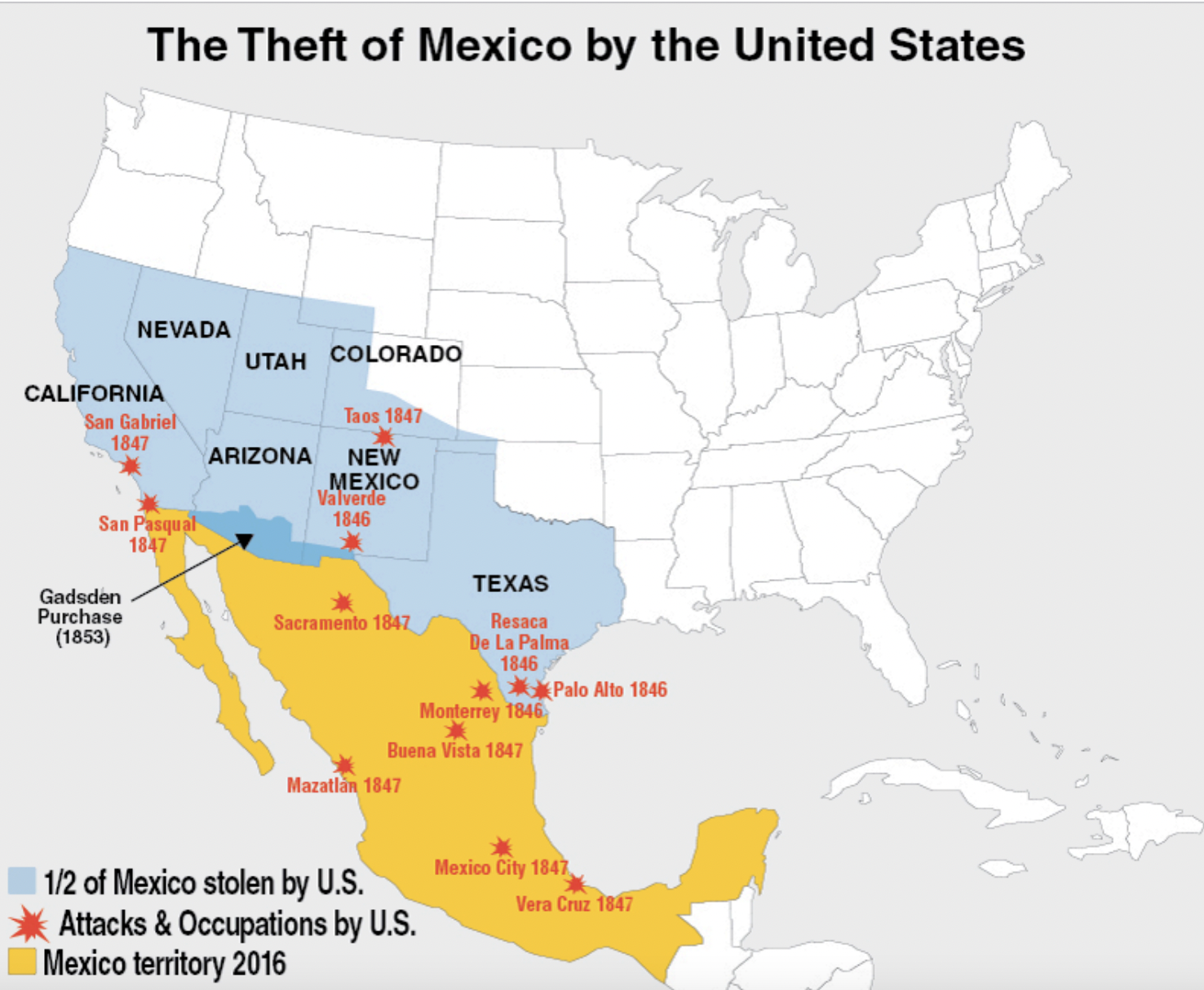
As the US expanded west taking Indigenous land, they also looked south and more than doubled the total landmass of the US after the US/Mexican War. Most of the people who were living in the area of Mexico that became Texas, California and the other states that are now part of the US were never forced to move. Many Mexican nationals will often use the phrase, “We didn’t cross the border, the border crossed us.”
For a deeper understanding of how US borders evolved over time, see Greg Grandin’s excellent book, The End of the Myth: From the Frontier to the Border Wall in the Mind of America.
One interesting fact about how the US dealt with border crossings is the fact that they did not even create a formal border patrol until 1924, when congress passed the National Origins Act, thus establishing the Border Patrol as an agency of the U.S. Department of Labor.
The US/Mexican border evolved over time with the militarization of that border beginning with the Carter Administration and continuing to be more militarized throughout the past few decades. In 2024, the US provided $19.6 billion to Customs and Border Protection (CBP) and $9.6 billion on Immigration and Customs Enforcement (ICE).
Immigrants who cross into the US from Mexico at unauthorized points along the border do so because; 1) they can’t afford the cost of getting visas or other state sanctioned travel documents; and 2) most of them are fleeing military repression, poverty or because they have been displaced from their land because of climate change.
Most immigrants crossing into the US at unauthorized points are desperate and take great risks to come to the US. Every year the group No More Deaths documents the number of undocumented immigrants that die while attempting to enter the US. These immigrants risk their lives in order to find a better life.
Immigration status
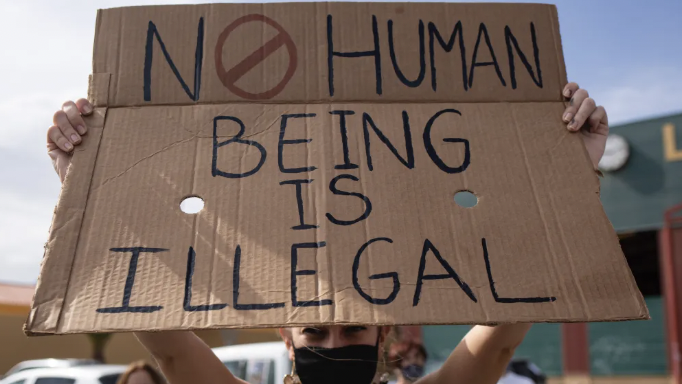
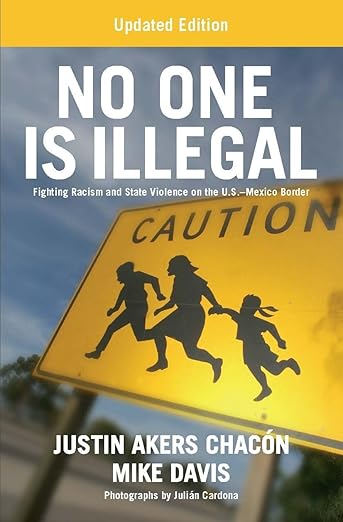
Way before Donald Trump first ran for President in 2016, conservative and far right commentators would refer to undocumented immigrants as “illegal.” Designating immigrants as illegal is not only cruel, it dismisses the humanity of immigrants and it provides no context for why people have decided to enter into the US unauthorized. For a detailed exploration of why calling someone illegal is deeply problematic, see the book, No One is Illegal: Fighting Racism and State Violence on the U.S.-Mexico Border, by Justin Akers Chacon and Mike Davis.
 Over the years we would hear politicians and those with an opinion about undocumented immigrants use the term “illegals” as if it was a fully accept and factual term. As more and more people pushed back on this demeaning label, the journalistic world began to notice.
Since 1953, the Associate Press has been publishing a Stylebook, which provides standards for journalist how how to report on issues and what kind of language reporters should be using.
Since 2012/2013, the Associated Press Style book has taken a position against referring to undocumented immigrants as “illegal,” stating:
- “We should not speak of people violating immigration laws without “reliable information about a person’s true status” — which most commonly means a legal charge against them or a court decision.
- Be especially careful about raids in which police seize large numbers of alleged illegal immigrants. Ask how many have actually been charged, and with what: entering the country illegally, overstaying visas or with non-immigration-related offenses? Were any people found to be legitimately in the country and released? If such details are not available, make that clear in the story.
- Don’t lump together in stories and scripts people who entered the country illegally as adults, and young people who were brought in as children and have spent most of their lives in the country. People have their own stories; respect that. Some people entered the country legally on a tourist or other visa but violated the law by overstaying it. When organizations and politicians talk about “illegal immigrants,” ask them specifically whom they mean.
- Be specific about nationalities. Don’t let terms like “illegal immigrants” be used synonymously with one nationality or ethnic group.
- Make sure you have a clear understanding of immigration-related legal issues in your area, including under what circumstances police have a right or obligation to inquire into a person’s immigration status.
- Our goal is to report fully and carefully on immigration matters without obscuring the fundamental facts of the situation.”
Partisan politics is often ugly and demeaning, especially when dealing with vulnerable and affected communities like immigrants. In recent weeks in the Grand Rapids news media, I have heard reporters use the term “illegal immigrants”, which does not reflect current journalistic standards, nor does it reflect the humanity of all people. We all need to do better when talking about the issue of immigration and make sure to always put a human face to the issue, since how we talk about immigration can often dictate what we do about it.
If your organization or community group would be interested in a presentation or class on the history of US Immigration Police, please contact Jeff at sjeff987@gmail.com.


Trackbacks
Comments are closed.