Kent County Commission votes for a 25 year contract with Live Nation for events at the Amphitheater, while MLive fails to report on the details of the federal lawsuit
Last Friday, MLive reported that the Kent County Commission 10 – 7 in favor of a 25 year contract with Live Nation, the near monopoly live concert venue corporation.
The MLive story does provide an overview of how the vote went down, quote several of the commissioners, some who voted for and some who voted against. When it came to the cost of the 25 year contract, there was no clear response, other than there will be an annual fee and an incentive fee based on performance. However, when asked about the total cost of the 25 year contract, there was no transparency.
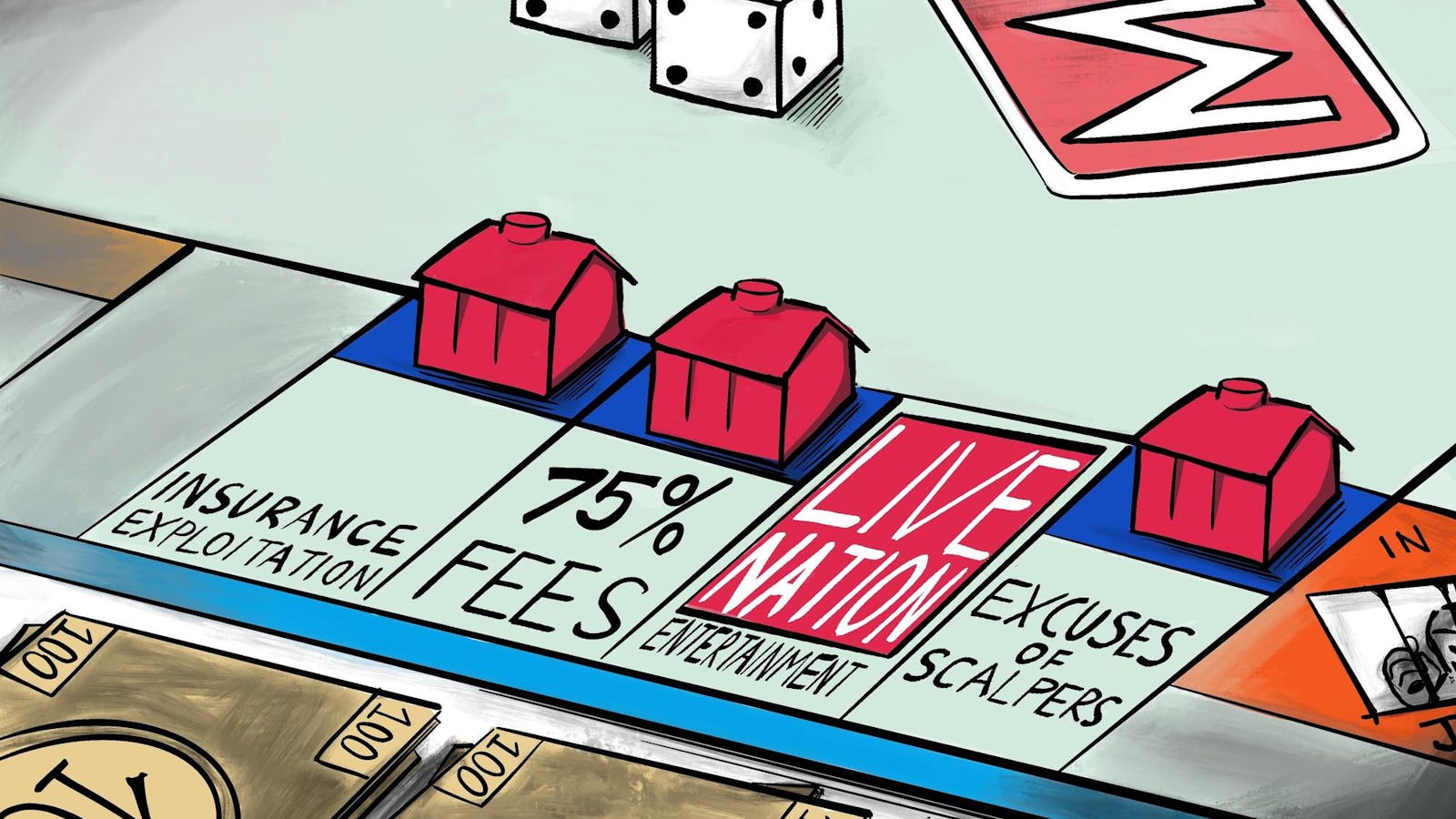
Another issue was how Live Nation became the company that was considered for the contract. Rick Winn, the Chair of the Convention Arena Authority (CAA), was quoted as saying, Live Nation has “been the major promoter of all acts in the arena for twenty something years.” The MLive article failed to mention that Winn is the President of AHC Hospitality, the DeVos owned company that runs several hotels and other hospitality venues.
However, the most problematic aspect of the MLive article was the fact that the only sources cited regarding the federal lawsuit against Live Nation was a lawyer with Dickinson Wright who works with the CAA and stated it may take 10 years for the federal lawsuit to be decided. The other source cited regarding the federal lawsuit was Live Nation itself, which is deeply problematic, since there are no sources cited that argues in the affirmative for the lawsuit.
If you want to read a summary of the lawsuit, just go to this link. The issues the lawsuit raises are worth listing, but it is worth noting that Live Nation also purchased Ticket Master, which is sort of at the root of the issue:
- Live Nation-Ticketmaster exploits its longtime relationship with Oak View Group, a potential competitor-turned-partner that has described itself as a “hammer” and “protect[or]” for Live Nation.
- Retaliating Against Potential Entrants
- Threatening and Retaliating Against Venues that Work with Rivals
- Locking Out Competition with Exclusionary Contracts
- Blocking Venues from Using Multiple Ticketers
- Restricting Artists’ Access to Venues
- Acquiring Competitors and Competitive Threats
In a 2022 article in The Nation, the writer provides some useful background information on the monopoly nature of Live Nation.
Today Ticketmaster controls even more of the music and entertainment industries than it did then. In 2010, the company merged with Live Nation, which owns concert venues and manages leading artists. This combination of ticketing and promotion enables a very specific kind of market abuse: Live Nation can retaliate against venues that don’t use Ticketmaster. The company can, as analysts from the American Economic Liberties Project described it, condition “the availability of its performers to independent venues on those venues using Ticketmaster’s ticketing services.”
When the merger was being approved, the Department of Justice understood the potential for abuse, and it required Live Nation to enter into a 10-year consent decree not to pressure venues in this manner. But the company, as many predicted, often ignored its own promises, and the DOJ extended the decree by five and a half more years. As it found in 2019, “Live Nation repeatedly and over the course of several years engaged in conduct that, in the Department’s view, violated” the prohibition on “retaliating against concert venues for using another ticketing company.”
 That brings us to today. We know that one symptom of excessive market power is technological and innovative backwardness. There’s no reason to improve one’s products when you have the market locked down. It’s telling that as technology has revolutionized everything and brought down costs for services over the past decades, this corner of our economy has remained stagnant and far too profitable for owners. As the American Economic Liberties Project pointed out, “Tickets are expensive, and the added service charges can double the final price. Direct ticket sales for popular concerts are often sold out within minutes, but then they are somehow available secondhand for over 50 percent more than the original price. Simply put, Ticketmaster provides bad service at outrageous prices.”
One would think that MLive would have included some of these concerns and this analysis. Instead, MLive simply cited Live Nation’s dismissive comments about the lawsuit.
So what does this mean for the cost of tickets for events that will be held at the Amphitheater? It is somewhat early to tell, but given the monopolistic nature of Live Nation/Ticketmaster, people should expect prices to be high. This means despite the use of millions in public dollars subsidizing the Amphitheater, there will likely be lots of local residents who will not be able to afford the cost of most concerts. As many of us have been saying all along, the Amphitheater will make money for the already rich, while costing the public millions, which is exactly why Grand Action 2.0 made the Amphitheater a priority in the first place.
 Grand Rapids Institute for Information Democracy
Trackbacks
Comments are closed.