ArtPrize vs Local Election coverage in the Grand Rapids media market
It has been several years since GRIID has conducted a comparative study of local news coverage on ArtPrize and local elections.
2009 was the first time that I did a comparative study between ArtPrize and election coverage, which was followed by a similar study in 2010. In fact, in 2010, GRIID produced a 21 page report just on the Grand Rapids Press coverage, which you can find here.

For 2024, I kept the comparative coverage between ArtPrize and local election coverage in a shorter time period. I looked at the coverage from MLive, WOODTV8, WZZM13 and WXMI 17 between September 8 through September 29. In that 3 week time span, this is what I found. There were a total of nine stories done about local elections (by local elections I mean elections happening for seats within Kent County).
- MLive – 5
- WOODTV8 – 1
- WZZM13 – 2
- WXMI 17 – 1
Total Local Election stories – 9
During the same three week period there were a significantly larger amount of ArtPrize stories, with all four of the news agencies producing more ArtPrize stories than local election stories.
- MLive – 12
- WOODTV8 – 33
- WZZM13 – 17
- WXMI 17 – 12
Total ArtPrize stories – 74
This means that the ratio of ArtPrize stories compared to local election stories was a little more than 8:1.
Reporting Equity
Before I jump into some analysis, I want to be clear that I am not saying that the amount of stories devoted to ArtPrize is a bad thing. In fact, I watched and read all 74 stories and thought that much of this coverage was pretty good. I was intrigued by some of the artist themes, the various mediums used and the passion of many artists who wanted to highlight specific causes and issues.
What I am critiquing is the lack of local election coverage during the same period of time. Imagine if the same amount of effort and energy were put into local election coverage as was this case with ArtPrize. Would increased coverage have an impact on the public’s understanding of what are often called “down ballot” candidates? Would increased coverage result in increased voter participation or at the very least a more informed voting base?
It is difficult to know what the outcome would be if there was parity between ArtPrize coverage and local election coverage. However, there are certainly several reasons why I believe increased local election coverage is important for participatory democracy, reasons I will now address.
First, I believe it is important to qualify what I mean by increased coverage and will use MLive as an example, since they had 5 local election stories during the 3-week time period. Four out of the five local election stories that MLive posted were about a Grand Rapids City Commission race, two different Kent County Commission races and 1 local judicial race. Unfortunately, MLive has decided to provide minimal bios on each candidate and then ask them each 4 questions. Now, I am not opposed to candidate responses to questions posed by the news media, but that should never be the extend of the coverage.
In addition to asking candidate questions, local reporters should should be engaged in fact checking, verify the claims of candidates, providing insights into their campaign finances and engaging the public on issues that are of concern to them. Local elections are not primarily about candidates, but about issues that impact local communities. None of the things I just named were included in their local election coverage.
Second, robust local election coverage is vitally important because unlike national and statewide elections, only local news agencies can provide coverage of local candidates and issues. Let’s face it, we are all inundated with coverage during a Presidential election cycle – not that is very informative – and we read/hear tons of political ads for other larger political races all the time. However, when it comes to local elections we relying exclusively on local news agencies to provide robust, non-partisan coverage.
Third, local elected officials are more accessible to the public and are less influenced by deep pockets than the larger races. People living in Kent County and Grand Rapids have the ability to watch or attend local commission and school board meetings. Granted, those meetings are not all that democratic and transparent, but you can meet up with these politicians in person or at public forums outside of government meetings. This type of access decreases when we are talking about state and federal officials, which spend most of their time in Lansing or DC and when they are in their districts they often hold hold public meetings that are too brief, during the day – when most people are working – or require you to register in order to get the location of meetings.
Fourth, increased local election coverage should be part of a larger effort to develop a culture of civic engagement and participatory democracy. If local news agencies were serious about local politics they would not only increase their coverage of local election, but of local policies that impact all of us. Such a focus on policy would lead right back to the public, where more and more people would not be mere spectators in local elections and local policy decisions, but active participants in the process.
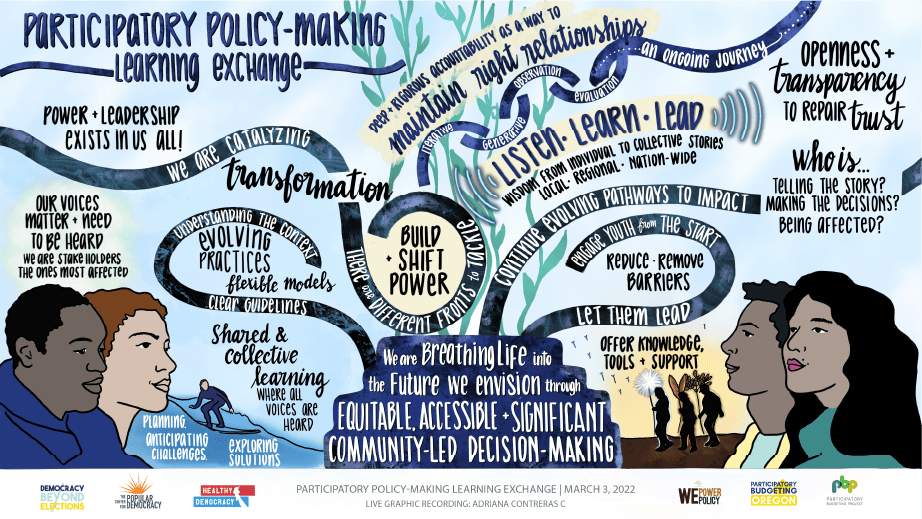
We can’t allow ourselves to settle for the minimum when it comes to how local elections/local policies and how our tax dollars are used. I believe that people are tired of business as usual politics and want more than rhetoric when it comes to things like community safety, structural racism, housing justice, food security, robust schools and vibrant ecosystems. We have to demand more and part of our demands is for the local news to actually provide critical information for us to be able to fully participate in our communities.
 Grand Rapids Institute for Information Democracy
Trackbacks
Comments are closed.