Is Kent County going to have its own Ottawa Impact moment? Part II
 On Tuesday, GRIID posted Part I on the Kent Contract Coalition. I pointed out the basics of this contract, along with which GOP candidates and incumbents had signed on to the document that is following the model adopted by the GOP in Ottawa County in 2022.
At the end of that post, I mentioned that for Part II, I wanted to present some ideas on how to combat the ideology and the electoral strategy of the Kent Contract Coalition.
Combating the Kent Contract Coalition
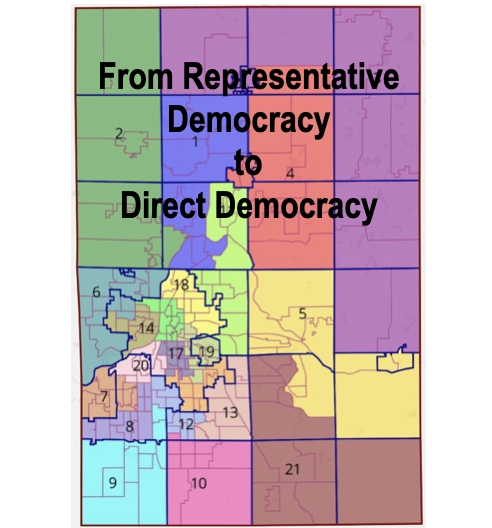
Now, the obvious and simplest answer is for people to not vote for the 19 GOP candidates and incumbents that have signed on to the Kent Contract. However, if you look at the 19 GOP candidates and incumbents that have signed the Kent Contract, you can see that the bulk of them are running for Kent County Commission Districts that are primarily rural, as you can see in the map here.
The rural and less populated districts in Kent County have been won by GOP candidates for a long time. On top of that, the Kent County Democratic Party often runs candidates for those rural districts to merely have someone on the ballot, but don’t run serious campaigns with strong platforms. Therefore, it seems that the Kent Dems often concede these districts as not winnable.
Of course part of the problem of finding good candidates is finding someone who can connect with people, who are dynamic and who don’t just follow the partyline. People need to understand the concerns of those who live in rural parts of Kent County, they need to develop a robust vision that could counter the ideological stance of those in the Kent Contract Coalition, and they need to run on issues that directly impact individuals and families.
Now, countering the Kent Contract Coalition should not just involve reaching those in rural areas, but appealing to all residents in Kent County. This is more difficult, since if you include the urban districts you are now involving a more racially diverse population, a population that is more supportive of the LGBTQ community and other critical issues like housing, immigration and climate justice. This is often where the Democratic Party in Kent County fails, since they rarely take a strong stance on critical issues, partly because they too often run on a campaign slogan that say, “Vote for me, since the other candidate/political party is so far to the right.”
You can’t run an effective political campaign and just say, “I’m not as bad as my opponent”, nor can you run an effective campaign by making vague promises that include words like freedom, pro-family or “I’ll put more money in your pocket.” What would get people excited would be running on a platform that would do some of the following:
- Make $25 an hour the minimum wage.
- Adopt the Rent is Too Damn High Coalition demands.
- Immigration Justice policies – support the Drive Safe legislation, oppose ICE raids on undocumented immigrants or make Kent County a sanctuary county.
- Reduce the Sheriff Department’s budget, which would include a reduction in funding for the Kent County Jail and divert that money towards alternative safety programs or funding towards housing of food justice projects.
- Promote community garden projects, tree planting, and other sustainable projects that would promote more food justice and ecological sustainability.
- Begin a County Budget process that would be participatory, not then kind the City of Grand Rapids does, where they give out a very small percentage of the budget, but a participatory budget process where people would have input on the entire budget.
Of course, it is rare to find individuals who would run for County Commission on such a platform. However, you could do what I suggested in a recent post about Social Movements and Elections, where community-based groups would have a collective vision, with a list of demands that candidates would have to adopt if they want those involved in social movements to vote for them.
Lastly, we could just by pass the electoral process and build strong social justice movements that would have the power to force policymakers to adopt such platforms. Or better yet, we could create a new system of governance that would not be based on representative democracy, but more locally based municipal politics, which would involve a whole lot more people, be participatory and follow an assembly model for decision making on a regular basis, as opposed to showing up to vote for the lesser of evils every two years.
 Grand Rapids Institute for Information Democracy
Trackbacks
Comments are closed.