Instead of celebrating those with power and influence, we need to challenge their power and influence: Another list of mostly rich white people
In the past GRIID has critiqued the 200 most powerful business leaders in West Michigan, with an initial article in 2021, entitled, Power Over or Power With: A Power Analysis of the top 200 most powerful business leaders in West Michigan, according to the Grand Rapids Business Journal.
Last year, GRIID once again provided some analysis of the claim from the Grand Rapids Business Journal with our article entitled, The 200 Most Powerful Business Leaders of 2022: Celebrating those who are responsible for making sure that Structural Racism and Economic disparities are normalized.

With Crain’s Detroit taking over the Grand Rapids Business Journal and MiBiz, Crain’s Grand Rapids Business has continued the top 200 tradition, calling this year’s 200, The 200 Most Influential Leaders. The brief text that introduces the top 200 for 2023, reads in part:
Consider the Grand Rapids 200 our “who’s who” of power brokers across the West Michigan region, whether in manufacturing, banking, philanthropy, economic development or a host of other key industries. It’s important to note that the people profiled in the Grand Rapids 200 did not ask to be included. Rather, this is our editorial team naming the 200 most influential business leaders in West Michigan. We based the selections purely on our news judgment.
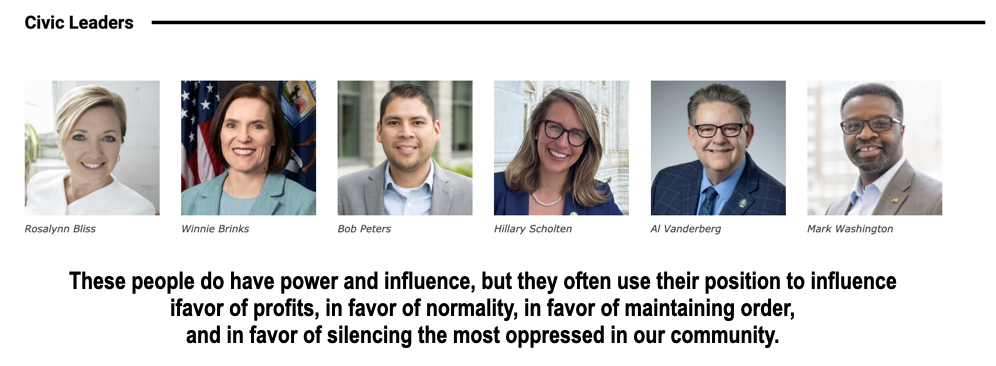
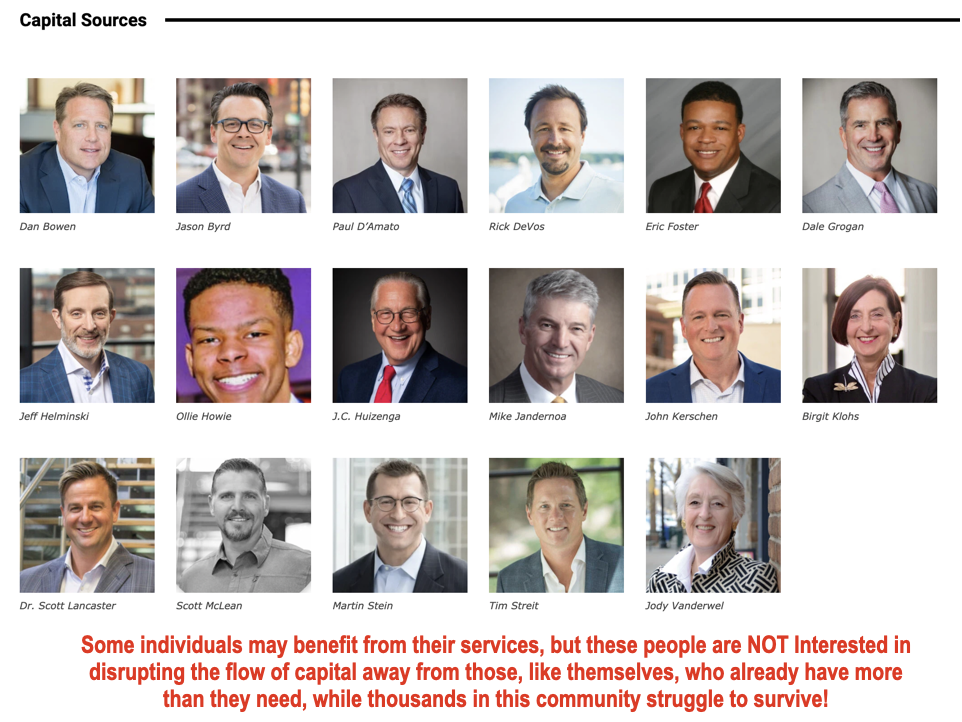
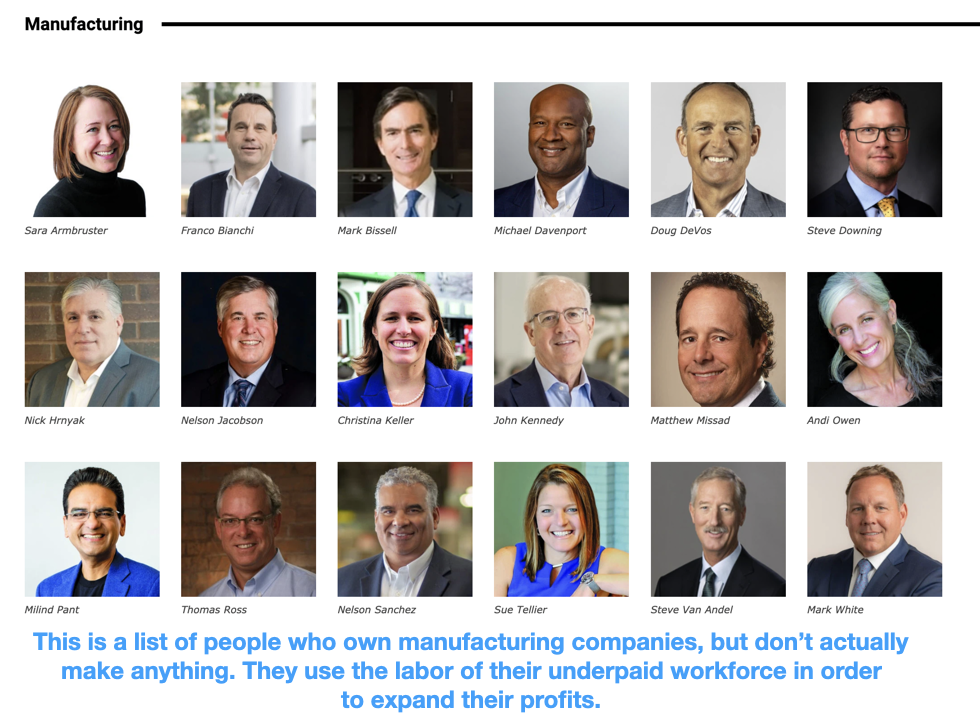
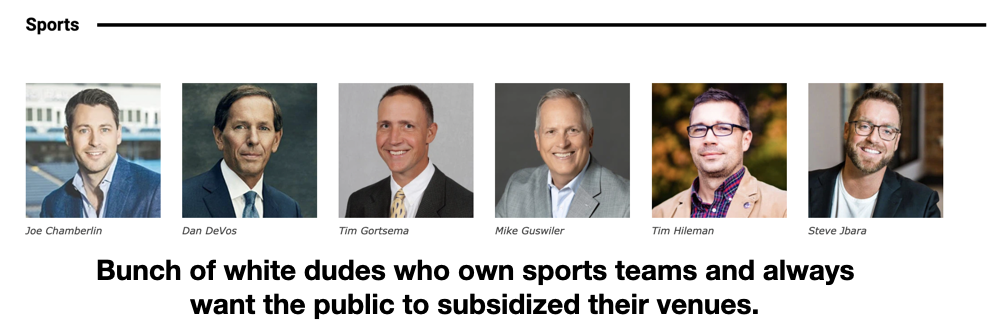
It seems clear to me that what Crain’s Grand Rapids Business means by influential are those who act as power brokers, an assessment I would not argue with. The only difference is that while Crain’s Grand Rapids Business sees these people as vitally important to their world, I view them as an impediment to real equity and liberation. Consider this, that most of the people listed in the 200 most influential are people who make between 6 and 10 figure salaries. Most of the people on this year’s list do not do anything to disrupt the systems of power and oppression that exist in West Michigan, in fact, most of them seek to maintain the systems of power and oppression, and many of them profit from the oppression and exploitation.
What follows is very limited analysis of each of the categories and the people they include. However, if one reads the GRIID blog enough, one can see that there is substantial analysis of each of these sectors on a regular basis.









 Grand Rapids Institute for Information Democracy
Trackbacks
Comments are closed.