Worthy and unworthy victims: The US, Israelis, and Palestinians
 In Ed Herman and Noam Chomsky’s seminal work, Manufacturing Consent: The Political Economy of the Mass Media, they discuss the function of what they name as worth and unworthy victims.
The main example that Herman and Chomsky provide in their book is a comparison of the amount of news coverage that one Polish Priest who was killed by communists, compared to a hundred religious workers in Latin American in the early 1980s. In looking at the major US news media, they determined that there were more stories about this one Polish Priest, compared to 100 religious workers being killed in Latin America.
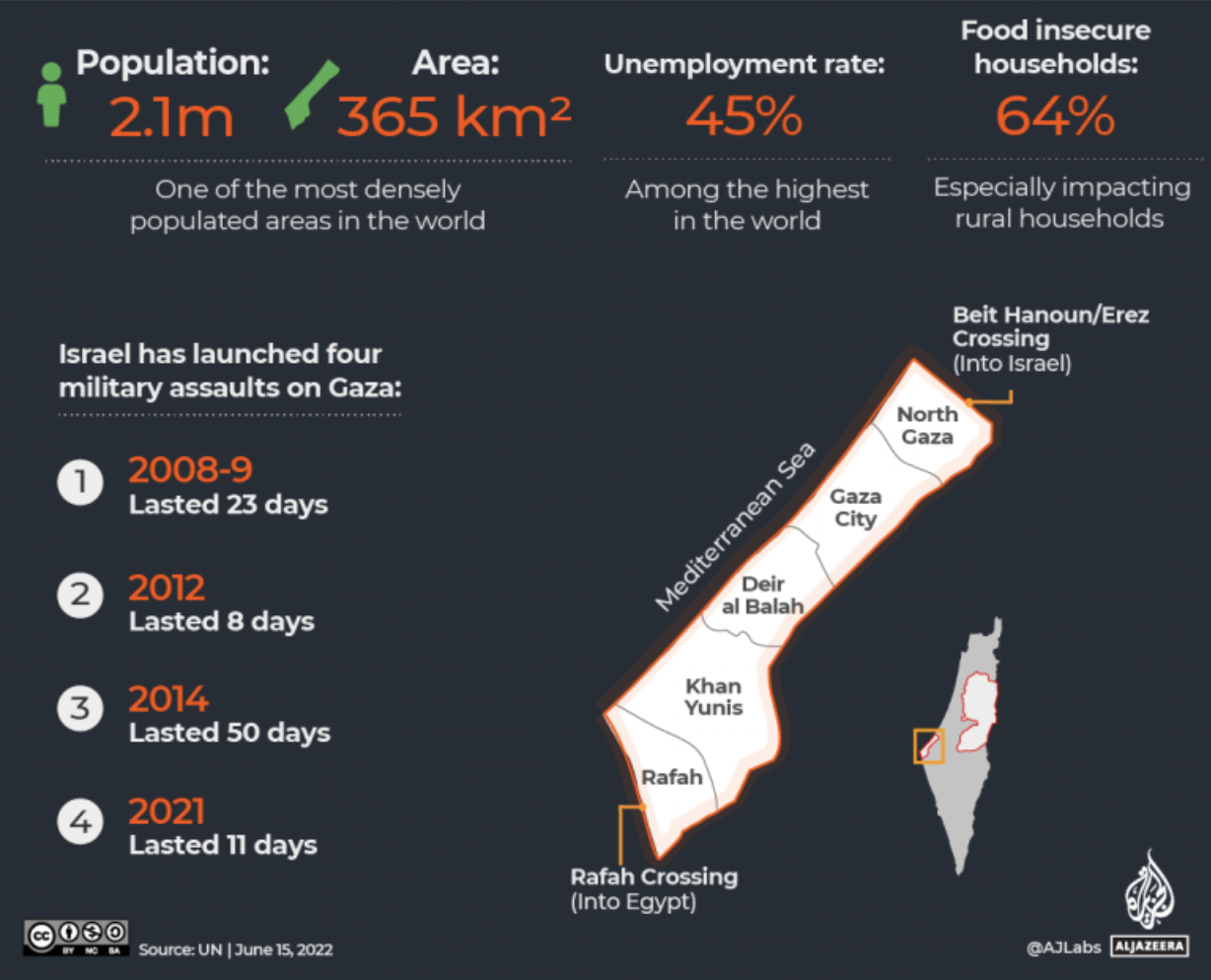
Arguably, a similar dynamic is occurring right now with the recent Hamas attack against Israel, which resulted in estimates of up to 900 dead Israelis. Since last week’s attack by Hamas, Israel has retaliated, with the number of Palestinian deaths rising by the hour, especially since the violence being pretreated by the Israeli military has been constant, especially in the Gaza Strip.
Of course, what is not regularly reported on in the US media or uttered by most US politicians is the fact that:
- Israel has been illegally occupying Palestinian lands for decades.
- Israel has been bombing Gaza on and off for decades.
- Israeli Settlements have expanded, despite the fact that the settlement expansion is happening on Palestinian lands and because settlement expansion has been condemned by the United Nations.
- The US has since the mid-1970s provided military aid to Israel, with recent decades averaging $3 Billion annually.
The cumulative number of Palestinians killed by the Israeli military, tortured by Israel and displaced from their lands by Israel is overwhelmingly disproportionate to how many Israelis have been killed, tortured or been displaced from their lands by Palestinians.
However, despite the statistical differences, Israel is seen as a worthy victim, while Palestinians are unworthy. In fact, not only are Palestinian deaths unworthy, they are consistently labeled as terrorists, or as one Israeli military leader recently referred to them as “human animals.”
US government position on Israel/Palestine
US President Joe Biden, in a statement he released on Saturday, stated in the first three sentences:
THE PRESIDENT: Good afternoon. Today, the people of Israel are under attack, orchestrated by a terrorist organization, Hamas.
In this moment of tragedy, I want to say to them and to the world and to terrorists everywhere that the United States stands with Israel. We will not ever fail to have their back.
Four days ago, 3rd Congressional Representative Hillary Scholten posted these words on Facebook:
To our strong ally, Israel–we are with you in the face of these horrific attacks. We pray that you feel our unity surrounding you and your loved ones. We mourn the dead, pray for the wounded and afraid, and rise to meet this challenge together.
Scholten has not issued a similar statement about the Palestinians who have been killed in the past two days.
On Monday, Rep. Scholten wrote:
Hamas terrorism has claimed thousands of innocent lives and continues to devastate and destabilize the region. I’m joining a bipartisan resolution to condemn this terrorist group and reaffirm our nation’s commitment to providing support to our ally, Israel.
The bipartisan resolution that Scholten is referring to can be viewed here. As of this writing, there have been 392 US House members that have already signed on to the resolution, including Rep. Scholten. This is consistent with the 50 year bipartisan US support for Israel. It is also due to the millions of dollars that pro-Israeli PACs have contributed to members of Congress. In fact, if you are an elected official or a candidate and you speak challenge the US narrative about Israel, there will be a campaign to discredit you.
News Media Bias
The national media watchdog group, Fairness & Accuracy in Reporting (FAIR), has been documenting the biased coverage by the larger national news agencies for nearly 40 years. Their documentation has shown a clear bias in favor of Israel, but they have also documented how the national news media has internalized the official US government narrative on Israel. In an August post, they encourage US news consumers to look out for 6 tropes on Israeli/Palestine coverage, with the 4th trope affirming Chomsky and Herman’s analysis, Newsworthy and Unnewsworthy Deaths.
For additional media analysis of how the US News Media reports on Israel/Palestine, see the following documentaries:
Peace, Propaganda & the Promised Land: U.S. Media & the Israeli-Palestinian Conflict https://shop.mediaed.org/peace-propaganda–the-promised-land-p117.aspx
The Occupation of the American Mind: Israel’s Public Relations War in the United States https://shop.mediaed.org/the-occupation-of-the-american-mind-p198.aspx
As a counter to the US Government/Media Narrative, I would encourage people to check out the site Electronic Intifada, which was begun by a Palestinian activist/educator Ali Abunimah. A group that I was involved with in 2002, Brough Abunimah to Grand Rapids to speak. When the Grand Rapids chapter of the Jewish Federation found out that Abumimah would be speaking in Grand Rapids, they applied pressure to Aquinas College, where we were hosting a teach-in and almost got the event cancelled. Here is an excellent example of the kind of analysis that Ali Abunimah brings to this critical issue.
Other recommended resources that challenge the US/Israeli narrative on Israel/Palestine are:
B’Tselem – The Israeli Information Center for Human Rights in the Occupied Territories https://www.btselem.org/
Occupation 101: Voices of the Silenced Majority https://shop.mediaed.org/occupation-101-p120.aspx
The International Boycott, Divestment, Sanction movement, known as the BDS Movement. https://bdsmovement.net/
The Ethnic Cleansing of Palestine, by Ilan Pappe
Internationalism: Decolonizing Native America and Palestine, by Steven Salaita
Dishonest Broker: The US Role in Israel and Palestine, by Naseer H. Aruri
The New Intifada: Resisting Israel’s Apartheid, edited by Roane Carey
The Holocaust Industry: Reflections on the Exploitation of Jewish Suffering, by Norman Finkelstein
Ten Myths About Israel, by Ilan Pappe
The Battle for Justice in Palestine, by Ali Abunimah
BDS: The Global Struggle for Palestinian Rights, by Omar Barghouti
On Palestine, by Noam Chomsky and Ilan Pappe
Challenging the US/Israeli narrative is not popular and it is very risky, since you will often be labeled as anti-Semitic. This tactic is meant to silence or marginalize people. However, if we study history, critically examine this issue and not get stuck in ideological positions, it is my belief that people will embrace the Palestinian struggle.


Comments are closed.