Minimal progress has been made in racial equity and justice 60 years after the 1963 March on Washington
The United States is a country that is deeply divided around the issue of racial justice and racial equality. Sixty years ago this month, the Civil Rights Movement organized a massive march in Washington, DC, to demand greater freedoms, housing and jobs, especially for Black Americans.
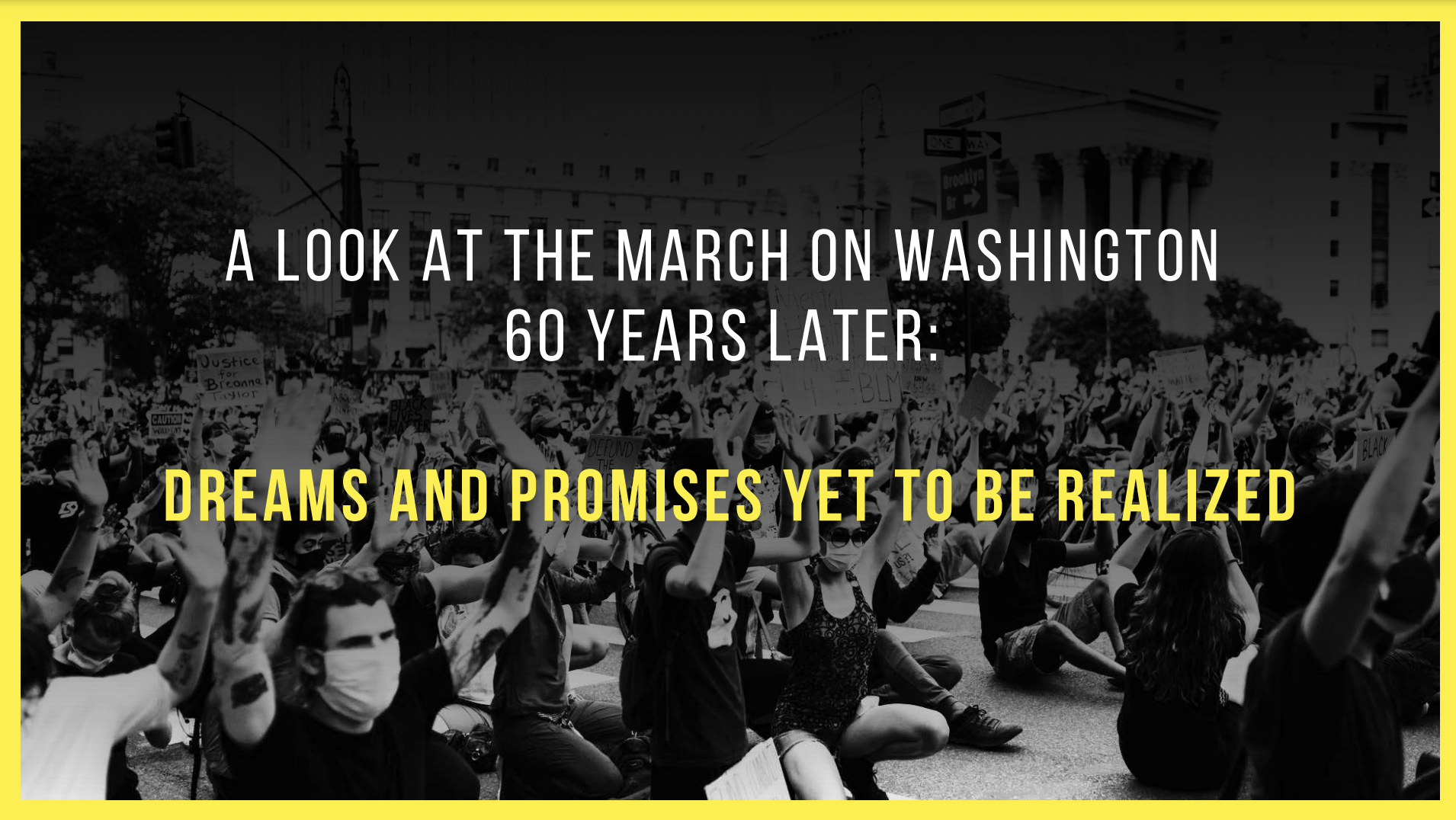
According to a new study produced by the FPWA – Fulfilling the Promise of Opportunity, found that since the march, racial disparities across housing, education, employment, wages, and voting rights have remained stagnant, or in many cases widened to a staggering degree.
The 58 page report published by FPWA demonstrates that desire the grassroots efforts of the Civil Right Movement, Black Americans are still unable to realize the dreams of the 1963 March on Washington, primarily due to the systemic and structural racism that is built in to virtually all sectors of society. For example, the report states:
Black Americans earn 20% less than their white counterparts, even with identical college degrees. This racial wealth gap has long-term detrimental impacts on families: 1 in 3 Black children live in poverty, compared to less than 1 in 10 white children. For incarceration rates, the disparity is yet more severe: 1 out of 3 Black boys born today can expect to be sentenced to prison in their lifetime, versus 1 out of 17 for their white peers.
On this issue of racial disparities and housing here are a few bullet points from the report:
- The passage of the Fair Housing Act of 1968 was a crowning achievement of the Civil Rights era, but much like the Voting Rights Act it too has been steadily eroded and hollowed out.
60 years later, the gap in homeownership remains relatively unchanged; segregation – while shifting scale from state-level to municipal level — too remains stubbornly flat
Devaluation of Black and Brown communities and diminishment of Black wealth continues unmitigated, costing Black families, fortunate enough to own their own homes, billions of dollars in wealth accumulation.
Abhorrently high levels of homelessness seen in Black and indigenous communities across this country.
Black and Brown communities continue to bear the brunt of environmental degradation, economic disinvestment, and unequal access to healthcare services. These social determinants of health were starkly revealed as Covid-19 ravaged communities of color.
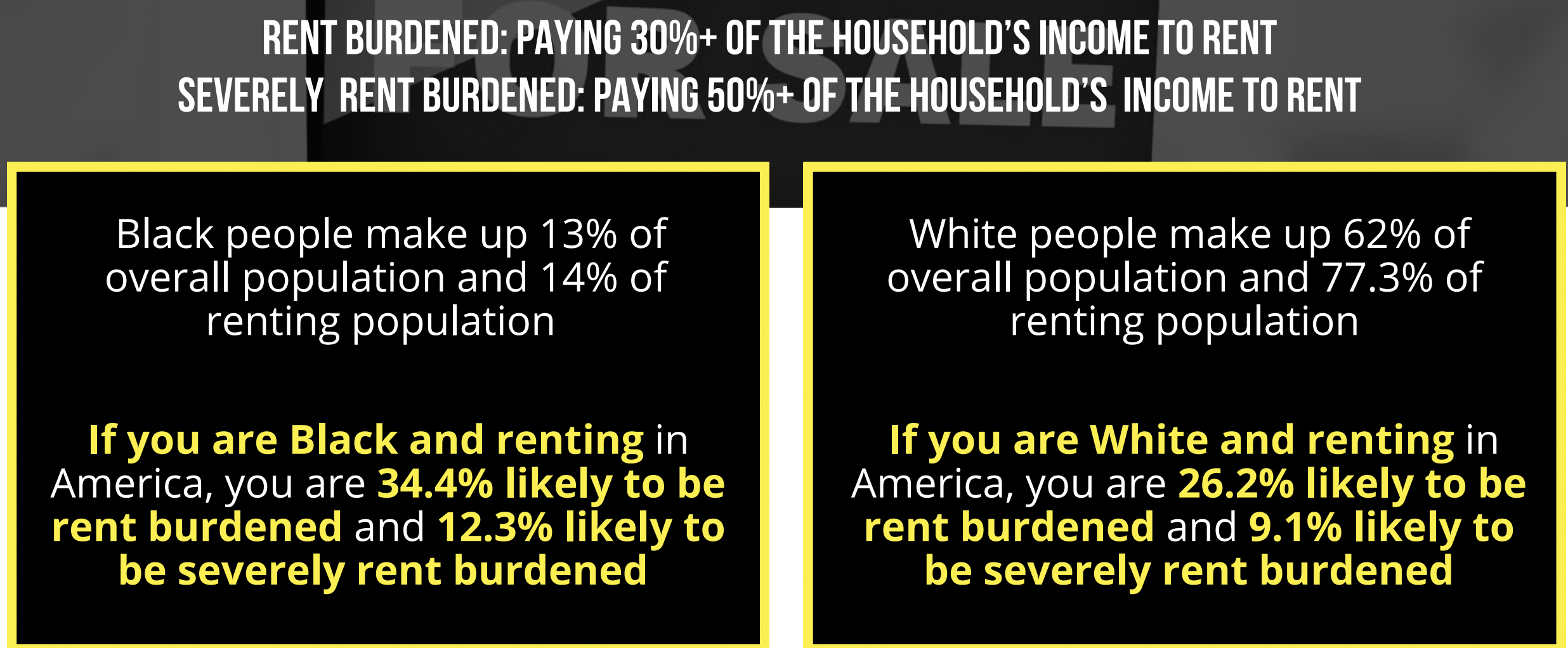
On the disparities with rent, check out this graphic below.
On the matter of economic disparities, specifically on jobs and wages, there too we can see significant differences.
- Black people experience higher unemployment rates AND lower wages across all educational attainment levels and age cohorts than White persons.
On average, Black persons earn 20% less than their White counterpoints.
Due to occupation and wage segregation and wage inequity, Black persons are disproportionately impacted by the suppressed federal minimum wage and outdated federal poverty measure.
Then there is the issue of Police Brutality, which Grand Rapidians are all too familiar with. Check out the data in this graphic.

So, despite all of the handwringing after the Black Lives Matter protests and the 2020 uprisings that took place across the country, the actual data and the socio-economic conditions show that Black people all across the country and in Grand Rapids are not better off than they were in 1963.
In Grand Rapids and Kent County as a whole, the fact is that Black people proportionately experience higher levels of poverty than white people, have higher health risks, have worse infant mortality rates, have a larger percentage of families experiencing food insecurity, plus a higher percentage of incarceration rates. Like the rest of the country, Grand Rapids has deeply systemic and structural racism in both the public and the private sector.
Later this month, GRIID will post an article about people from Grand Rapids who participated in the 1963 March on Washington.
 Grand Rapids Institute for Information Democracy
Comments are closed.