Adulation and Protection: The Grand Rapids Press and Its Police Coverage
On October 13, a Walker police officer named Trevor Slot was killed during a chase to arrest two bank robbers. In the 8 days following, the Grand Rapids Press ran 50 articles about Slot on its website.
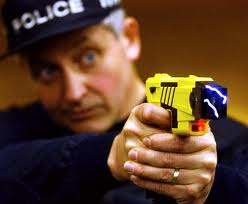
In addition to the news articles covering the details of the pursuit as they were released and interviews with various people from Slot’s wife to his colleagues, we have learned: that Officer Slot gave out trophies and ice cream to the t-ball team that he coached; that he was “loveable and funny;” that he used to work on the Lowell police force; that he was talking to his wife on the phone when he was called in on the pursuit; that three Grandville intersections will be closed for his funeral procession; and that the Northview school provided counseling for students who were unable to cope with the news of the officer’s death. The Press felt that each of these details required its own separate article.
On October 21, the day of Slot’s funeral, there wasn’t just one article covering the event. Instead, the Press posted individual articles about the motorcade procession, the color guard, the eulogies, plus a complete video of the funeral service. The impression of a hero, even a celebrity figure, was created expanding each detail of the service into a complete story of its own.
But there has been another significant police story that the Grand Rapids Press has been covering at the same time. The family of Matthew Bolick has decided to sue the East Grand Rapids Police Department for gross negligence in the death of their son on November 16, 2009. To date, there has been one article posted about this lawsuit, which included the actual police film footage from the attempted arrest.

In the eight days following Matthew Bolick’s death in 2009, the Press generated only 11 articles about it. There were no glowing articles about Matthew’s life; no video of his funeral. In fact, many of the articles didn’t even feature Bolick, but instead seemed written to emphasize the police’s professionalism and integrity. One opens with the sentence, “To colleagues and community members, East Grand Rapids Public Safety Sgt. Brian Davis and Officer Gary Parker were well-trained and showed the utmost level of character and integrity on and off the job.”
This article goes on to describe Parker’s declaration that they were sorry “it turned out the way it turned out,” and states that Matthew Bolick was tazed “three or four times.” Although there is one sentence that says the family could not imagine why it took multiple taser shots for two officers to subdue someone who was 5 feet, 6 inches and only weighed 130 pounds, reassurances abound that “the officers responded in an objectively reasonable manner and did this according to department guidelines.” There are several paragraphs describing each officers’ background and careers in glowing detail. There is one single sentence telling us that Matthew Bolick was working at UPS so he could complete his college education.
In another article, we are told that Matthew Bolick was “not a monster.” After this backhanded assurance, the story quickly switches to the police viewpoint of the incident, emphasizing that the officers followed correct procedure, that Bolick was out of control, and that the Bolick house had been searched—the article doesn’t state, but certainly implies, for drugs.
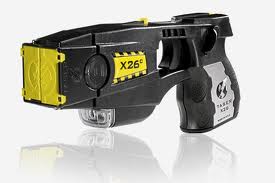
Even an article that appears from its headline to question the safety of tasers is essentially a police-quoted essay about why they are “important tools” in fighting crime. It reports that Matthew Bolick was “combative” and struck an officer in the face, making the tazing necessary. The Press coverage makes no reference to the lack of safe use of these weapons in the hands of the police. Amnesty International has reported that between 2001 and 2008 alone, 351 people died because of tazings from police officers. But the Press’s instinctive stance appears to be to protect police actions even in a shocking case like this one.
The medical examiner’s eventual assessment of Matthew Bolick’s death was that he died from “excited delirium syndrome,” not from the tazing and rough treatment by the officers.
It was emphasized that the officers only used the taser “several times” and had gone out of their way to avoid hurting Matthew. They were cleared of all criminal charges.
The police videos tell a different story. These were posted with the article describing the family’s lawsuit against the EGRPD.
Matthew Bolick had returned home to East Grand Rapids from California for the Thanksgiving holiday, and was exhibiting psychotic symptoms. On the night of his death, Bolick’s father called the police for help because he was afraid his son would hurt himself—he was hearing voices and had broken the glass in a picture window.

Stephen Bolick advised the police that his son had been acting strangely but told them he was not on drugs. The autopsy proved him right—despite veiled hints afterward by police that Bolick was high, Matthew Bolick had nothing in his system but Ibuprofen.
The video of the death is disturbing to watch. Parker, a large man, threatens “I will taze you in a heartbeat,” and tells Matthew Bolick to lie down on the ground. Matthew struggles and the officer tells him, “If you run, I will shoot you,” and then tazes Matthew for the first time. Matthew screams, flails, and apparently hits the officer in the face in order to escape. Parker mocks him by saying, “You want more? You want more?” Despite the tazings, Matthew manages to get up and start running, with the officers in pursuit. As Matthew flails his arms wildly while running to evade the police, the officer taunts, “Hit me one more time. Hit me one more time.”
Brian Davis, the senior officer at the scene, does not appear to intervene in any way, except to shout orders like, “Get him down!” After Bolick is on the kitchen floor, his head wrapped in a towel, and appears to be cooperating after several taser hits, he’s asked, “Why are you so mad?” As he lies moaning but barely moving, police alternate between ordering him to calm down and threatening him with more tazings. This doesn’t mesh with the police claim that Bolick reacted “in a very violent manner” and that the police wanted to take him peacefully but that Matthew “wasn’t going to have it that way.”
Over a ten-minute period, Parker used his taser 19 times. Each firing contained a charge of 50,000 volts, and several were “drive stuns,” to deliver maximum pain. Davis continued with tazings even after Matthew was on the ground and was handcuffed. This treatment, the lawsuit says, created such immense mental and physical stress that Bolick’s heart failed.
It’s been revealed that the night of November 16 was the first time that any East Grand Rapids Police officer had used a taser. It’s also clear from the video that these officers had received no training—or at least were not applying any training—about how to deal with a psychotic subject.
An EGR Police Department spokesperson said about the lawsuit, “To suggest we’re responsible for the death…it’s outrageous.”
The death of a police officer is undoubtedly news. The death of a vulnerable citizen repeatedly attacked by the police with 50,000-volt charges is also news. Compare the coverage, in both quantity and content, of these two stories and see if you think that the Grand Rapids Press is offering unbiased reporting about incidents concerning our local police departments.
If you see some inequity or slanting of details to make one party look better than another, write to Editor Paul Keep at pkeep@grpress.com. His response will probably be to mock you in one of his “the buck doesn’t stop here” Sunday columns, but at least you’ll know your opinion has registered.
 Grand Rapids Institute for Information Democracy
Minor correction: In Michigan we don’t have coroners, we have medical examiners.
http://www.nlm.nih.gov/visibleproofs/galleries/cases/examiner.html
Thank you, Jeff, and thanks for the link.
Sorry! John.
The school district isn’t Northville, it’s Northview. Why would a public school system 134 miles southeast of Grand Rapids provide counseling to students for a death that happened on the other side of the state? Jesus Christ.
Wow, that is a great piece, thank you so much for writing it! Matt was one of my best friends and he deserves this. I’d like to buy you a beer. Seriously.
I also noticed the disparity in the Press’ coverage of these two events. The GR Press is 100% pro-police. It is so obvious.
A young man is killed in his home by inexperienced EGR cops using a very dangerous weapon that nobody understands and all the GR Press reports is the East Police’s version of events.
Thank God the Taser video exists because it proves that Matt was unnecessarily brutalized by these two much larger thugs. Officer Parker in particular seemed to revel in the opportunity for a fight, constantly provoking Matt who did nothing more than try to get away from these homicidal lunatics.
On March 20, The GR Press’ John Tunison added insult to injury in a story he wrote about the possibility of a ‘citizen Taser’ coming to Michigan. To help sell deadly Tasers to civilians who already have tons of guns, he called none other than EGR Public Safety Director Mark Herald to get some fluffy pro-Taser quotes, and unnecessarily drag Matt’s name through the mud one more time.
In other words, the same guy whose cops killed a young man with Tasers, is selling deadly Tasers as harmless “less-than-lethal” weapons via the GR Press. All these folks are despicable scumbags.
Thanks again for the piece. Peace.
I find it very sad that the father who called for help in helping his son….will have to live with the fact that his son died as a result of this….we have all seen it time after time, the police acting like they are God….would they have tasered their brother or friend or father or any other relative who seemed to be acting out of character…19 TIMES, with this “safe” form of control???? I know that police have a dangerous job and have to make life or death decisions in a split second, but even after the facts and the VIDEO….you can’t express sorrow or the fact that you just overkilled the victim?????PLEASE!!!!
The videos are horrifying. The father made it clear to the police that his son was having psychiatric issues. Then the officer kept telling the victim to ‘relax’ and tazing him to “force” him to relax?!? He was unable to relax and unable to respond at that time. He needed help.
It is inexcusable and heartbreaking. Of course no amount of force would make him relax. Everyone knows you can’t force someone to “relax” especially if they are hearing voices and emotionally distraught. The victim was 130 pounds and without any weapon.
The officer was completely ignorant/uneducated about this type of thing, not using his head, and brutal. By the tone in his voice the officer seems to be completely clueless about what he was doing to this man and how ineffective and inappropriate his actions were.
Our society needs to have laws to protect people with psychiatric issues from being brutalized, and get them proper help.
God please let them win this case so that a precedent can be set to protect people.
Quinn, Linda, and Jennifer, thank you so much for your comments. I too hope that the family wins or settles this case. It may send a message about police brutality in this area that is badly needed, given the propensity of the area media to whitewash whatever the police do here.
Quinn, please accept my sympathies. it’s bad enough to lose a friend, but to lose one in such a horrifying way must be haunting.
Thank you for writing this, I hope it opens up some eyes…
Thanks, kswheeler; it is indeed haunting. My friends and I have been well aware of EGRPD’s predatory style for many, many years–since high school. Their m.o. always been the same. They are total incompetents, always finding a way to harass you if it’s late at night and/or you happen to be black. They just stopped me two nights ago for no reason.
Here’s an excerpt from a story I read the other day:
Dr. Douglas Zipes is an electrophysiologist specializing in heart rhythm. He’s published hundreds of articles and won numerous awards for his knowledge of clinical cardiology. The cardioverter he invented is keeping former Vice President Dick Cheney’s heart ticking.
Dr. Zipes takes issue with Taser’s claims that its weapons cannot cause death.
“Taser has said it can’t happen with Taser equipment because the pulses are too short, the energy is insufficient and it can’t capture the heart,” Dr. Zipes said. “That’s absolutely, totally wrong.”
(Read more: http://www.wcpo.com/dpp/news/local_news/investigations/ITeam-Can-Tasers-kill#ixzz1cg6dKG3y)
TASERS KILL.
I have been shot with a Taser and yes, it hurt like hell. But I have also been trained in the use of a Taser in a police role (much more so than I’m guessing the author of this article has ever been). Tasers do put out 50,000 volts when deployed. However, the voltage is simply what allows the spark to jump from one point (or probe) to another (this is not what affects the body). What has an actual effect on the Sensory (pain) and Motor (movement) Nervous Systems is the amount of amps (amps = pain + movement lock-up). A typical wall outlet has a voltage of around 110 volts (whereas the Taser puts out around 50,000, of which only about 5,000 occur across the body). On that same line, a wall outlet puts out a high electrical current of about 16 amps but the Taser puts out a low current of only 0.0036 amps. Just as a fun fact a Christmas tree bulb puts out about 1 amp. The article also makes light of the fact that it took multiple Taser shots to bring Bolick, who was only 5’6” and about 130 lbs, down. I’m not sure if you watched the Taser Cam videos that the article linked to but in those videos the first shot brought him down for the duration of the deployment. As soon as the Taser stopped (if you just pull the trigger once it only goes for 5 seconds) he rolled over (probably breaking one of the Taser wires or disconnecting a probe) and ran away. This broken wire or disconnected probe would have made any of the following Taser pulls useless because both probes need to be attached in order for the current to connect between them. This is likely why Bolick was able to continue running away. As for the drive stun that the article mentions, it is a pain compliance technique but is nowhere near as painful as the probes are. Tasers only affect the area between the two probes, which on a drive stun is only about an inch. On the Bolick video it looked like the probes were at least 1 foot away from each other, which would have made it much more painful than a drive stun. Bolick was suffering from what is known as excited delirium syndrome, which in a nutshell made him indifferent to pain and gave him seemingly superhuman strength (hence the reason it took so much to bring the little guy down). But what makes me think that at least one of the probes disconnected or a wire broke after the first Taser shot, which was effective, is that he kept running away. A Taser probe shot like that affects the Motor Nervous System, which is why when you see him on all fours on the ground he is not moving. Because of the excited delirium he is immune to the pain, and therefore his Sensory Nervous System is not affected, which is why he is not screaming at this point (the only yelling he does seems to be to intimidate the officers more so than out of pain), but regardless of the excited delirium his Motor Nervous System would still be affected, causing his body to lock-up, which it does initially. The last thing I wanted to point out was that the officers were responding to what they knew to be a homicidal person. Bolick’s dad called 911 saying that his son had just freaked out, was going crazy, and had threatened to kill him. The article suggests that Bolick was less dangerous because his dad said Bolick was not intoxicated by drugs or alcohol, which the autopsy confirmed. I would argue that this not only did not lessen the level of danger Bolick but actually made Bolick more dangerous. When intoxicated, people might make threats they would otherwise not make. Being intoxicated might also impair someone’s ability to logically or even physically carry out such threats. However, when someone who is completely sober makes such a threat and begins acting in a way Bolick did, creating enough fear that his own father would call the police, take his other kids and dog with him and leave the neighborhood, it creates a heightened sense of seriousness, especially when this person continues to exhibit psychotic symptoms and resist after officers arrive on scene. The lawsuit said that police violated Bolick’s constitutional protections in being unprepared to deal with someone suffering from an “obvious psychotic episode.” It also says Bolick’s condition called for less, not more, physical intervention. This from the same lawyers who would likely accuse the police of not doing anything to intervene and protect the rest of the Bolick family or even the residents of the area had they used less physical intervention and simply allowed Bolick to run wild. The bottom line is that when presented with the available facts of the case, including video evidence, it appears the officers used the appropriate amount of force necessary to control and detain a person suffering from a rare psychotic episode, which he unfortunately died from (not from being Tasered) as determined by the medical examiner. It is interesting that this author can write an entire article about how savagely brutal the police were in dealing with Bolick and how the police are also being protected by the Grand Rapids Press, when in the same article, sandwiched between the previous accusations, the author says, “The medical examiner’s eventual assessment of Matthew Bolick’s death was that he died from ‘excited delirium syndrome,’ not from the tazing and rough treatment by the officers. It was emphasized that the officers only used the taser ‘several times’ and had gone out of their way to avoid hurting Matthew. They were cleared of all criminal charges.” The article then jumps right back into saying how the police brutalized Bolick until he died, despite the opinions of the Kent County Prosecutor, who cleared the officers of all charges, and the medical examiner, who ruled Bolick had not died from being tasered. Bolick’s death was an unfortunate result of his rare condition but I can guarantee it was not intended by either officer involved. Had these officers intended to kill Bolick and had that been the appropriate response, they would have opted for the tool on their belt that would get the job done in one shot rather than using a less-lethal option and risking further injury to themselves in fighting with Bolick over such an extended period of time. Obviously, the circumstances did not call for a lethal force option to be used, therefore the officers responded by using the most reliable less-lethal option available to them at the time. Just food for thought.
I did read the article that your was linked to, and in case you need a refresher on what it says, here is a direct quote from it: “The city said police, who were cleared of criminal wrongdoing by Kent County Prosecutor William Forsyth, went to great lengths to avoid hurting Bolick, who died of a rare case of excited delirium syndrome, or acute exhaustive mania.” That is pretty clear and does not suggest that this is simply some initial assessment of a medical examiner. Near the end of the article you will also find this conclusion: “Dr. David Start, a forensic pathologist, found no proof the death was caused by the Taser shots.” If you read the entire article there is only one point of disagreement about what caused Bolick’s death, and that is this one: “Mills said the mental and physical stress combined with Bolick’s psychological problems caused him to go into cardiac arrest and die. He has maintained that the Taser played a role in the death.” So what I am seeing here is that you are disregarding the assessments of both a medical examiner and forensic pathologist – who found no evidence that Bolick died as a result of being tased – and are saying that there is disagreement about what killed him because the Bolick’s lawyer says so. Of course William Mills is going to say the Taser played a role in killing Bolick, that’s his job. If he didn’t say he believed the Taser was at fault I would advise the Bolick’s on getting a better lawyer. In that same respect, Mills does not say that Bolick died because he was tased, but that the Taser played a role, combined with Bolick’s mental condition and the physical and mental stress caused by the situation – which, if you remember, he created.
Secondly, you keep referring to the Taser Cam video, as if it is the end-all be-all of this case. While video evidence is certainly helpful to have, especially in cases such as this, the fact is that it does not provide a complete picture of what occurred that night. If you look at the times on both the dashboard camera footage and the Taser Cam video, you will notice that officers began to leave the D&W gas station after meeting with Bolick’s father at 21:12:24 (9:12 pm) on 11/16/09. I don’t know how familiar you are with the area but I grew up in East Grand Rapids and know where this gas station is compared to the Bolick’s house. It would have taken the officers approximately two minutes to get from this gas station to the Bolick house. The first time we see any Taser footage is at 02:19:14 (2:19 am) on 11/17/09, more than five hours after the officers and Bolick’s left the gas station. You write your article as if police simply arrived at the house, walked up to Bolick, and tased him without making an effort to solve the situation in a different manner. We don’t know exactly what happened during those five hours. In fact, we don’t know what happened between police and Bolick at all until Bolick and the situation became so out of control that officers had to deploy their Tasers to finally take Bolick into protective custody. I agree that Bolick was upset and agitated, that comes with the territory, but he was not cooperating (running from the police is a crime). As for the “foregone conclusion” that police would be cleared of criminal charges, simply because officers are more often than not cleared does not mean it is part of some big conspiracy theory. I agree that police officers do make mistakes; they are human just like anyone else. However, did it ever occur to you that the reason officers are more often cleared of criminal charges may be because they did not act criminally? I’m having a hard time understanding your logic behind why more officers should be criminally convicted of wrongdoing. This may come as a shock to you but not just anyone can become a police officer. There is an extensive interview and background investigation process just to be accepted into an academy. After graduation you will go through an even more detailed, in-depth background check and multi-interview process, after which a background investigator at your potential department will be assigned strictly to one purpose: spending an average of three to six months digging up any speck of dirt they can from your entire life. They will talk to friends, coaches, classmates, teachers, neighbors, and individually interview family members just for starters. This comes in addition to local, state, and federal background investigations and criminal history checks. These background investigators are not looking for reasons why their candidate will make a good officer – that is done long before this point in the process – but for reasons they won’t. My point is, maybe more officers are not criminally convicted because the system is actually working. Maybe there are enough checks and balances in the system that bloodthirsty sociopaths looking to go out and brutalize people aren’t becoming police officers. Is that such a far out assumption?
As for the officers’ training, they absolutely had training on how to handle a mentally disturbed person – it’s a State of Michigan police-training requirement. I agree that anyone who has had training in this area will say that the best approach is to try and deescalate the situation, approaching the subject in a calm manner as well as being polite and respectful with the person. You are correct that being as nonthreatening as possible is the main objective at this point. In addition to this, an officer should avoid any physical contact with the subject provided that the subject is not engaged in violent behavior that would endanger him/herself or others. As I said earlier, there is a period of more than five hours between officers meeting with Bolick’s father at the gas station and the beginning of the earliest Taser footage of the incident. Believe it or not, officers did not respond to the scene with their Tasers firing on all cylinders. There is a large window of time that is unaccounted for by hard video evidence. I would argue that this shows the officers made, at the very least, an effort to solve the situation peacefully. I highly doubt that officers were waiting at the Bolick house for five hours for Bolick to show up so they could immediately tase him on sight – although this seems to be your school of thought. No, Bolick did not threaten the officers in the Taser video, but we don’t know what was said prior to the Taser being activated. The officer telling Bolick he will tase him is not a threat, it’s a warning. This goes back to basic conflict resolution. Anyone who is a parent will tell you they do the same thing with their kids. You give them an option on how to behave and tell them what the consequence for behaving badly is. If they behave badly, you then follow through with the consequences you outlined for them – it’s simple. The officer tells Bolick that he will tase Bolick if he runs (“shoot” in this case means with a Taser, not a gun, as an officer cannot shoot their gun at someone simply because the person is running from them), therefore giving Bolick an option on how to respond to the situation, ultimately choosing his consequence – this is very basic conflict resolution/avoidance.
Also, I never claimed to be an expert on the subject and am admittedly not an expert. The only claim that I made was that I have been trained in the use and application of the Taser in a police environment, which I’m guessing is more than you can say. I agree that it Tasers can be a contributing factor, among several others, in deaths, but your opinion that Tasers alone kill people is not “part of the public record” because that has never been proven. Here are some direct quotes from police Taser training materials: “Risk of an ECD application having a negative effect on a person’s heart rate and/or rhythm is not zero;” “The risk of an ECD causing cardiac arrest in humans from ventricular fibrillation is sufficiently remote that making accurate estimates is very difficult. Current estimates of the risk are on the order of 1 in 100,000 applications;” “When possible, avoiding chest shots with ECDs reduces the risk of affecting the heart” (Bolick was tased in the back, not the chest); “Over 13 research analysis on effects on breathing have been conducted. The available human data directly contradicts animal studies [referenced in the Amnesty International link you posted] and does not reveal evidence of breathing impairment or respiratory acidosis.” I did read the article from Amnesty International that you linked referencing recent Taser-related deaths – perhaps you should have read it a little closer yourself. The article does report that 334 post-Taser (not Taser-caused) deaths have occurred nationwide between 2001 and 2008. However, if you read the entire article you will see that “most of the 334 deaths nationwide have been attributed to factors such as drug intoxication,” with only 50 of these even having a Taser as a single contributing factor in the death. Just because someone dies in a period of time after they have been tased does not mean the Taser caused the death. I invite you to show me the factual evidence that Tasers, and Tasers alone, kill people. As for the lack of historical use of Tasers by the police department, there’s a first time for everything and just because it was the first line-of-duty deployment for the department, this does not mean those officers are any less capable or trained in the use of a Taser than an officer from any other department. Regardless of your opinion, most officers – including those in departments who have a long history of Taser deployments – have only deployed their Tasers a handful of times outside of a training environment. The fact that these officers or any others at EGR had never fired their Tasers in the line-of-duty before does not mean they killed Bolick. As the lawsuit says, “Over a period of 10 minutes, defendant Parker activated his Taser 19 times.” As I said in my previous post many, if not all, of the Taser shots after the initial shot (which was obviously effective for the duration of the shock) were not effective, likely due to a broken wire or disconnected probe from Bolick rolling on the ground after the initial shot. The fact that the officer activated his Taser 19 times during that 10-minute period does not mean Bolick was tased 19 times, which is obvious by the lack of body lock-up from the Taser shots while Bolick was running from police. The officer was likely activating the Taser hoping that a disconnected probe would reconnect during the pursuit, allowing Bolick to be apprehended.
Again, Bolick’s death was a tragic one and being that I grew up in EGR and know members of the Bolick family myself, this hits especially close to home. I get that there is video of the incident but you have to realize that these videos only show about 15 minutes of what occurred over more than 5 hours. You have no idea what those officers did to resolve that situation prior to the situation escalating to the point where the Taser was deployed, giving you the snapshot of video that you are using to try and crucify these officers. My intention is not to say that police officers are right in everything they do because they are the police. All I ask is that you give these and other officers the same consideration before you misrepresent information for its shock value and call these officers murderers without knowing all the facts yourself. Innocent until proven guilty goes both ways.
Really? Much better researched? A more accurate statement would be that they have a lower burden of proof, making it much easier to find ANYONE guilty in civil court than it is in criminal court. I have also said several times that I know every officer makes mistakes, some more serious than others…they are human just like you. I only wish that the mistakes of the few didn’t cause thick-skulled people to jump to the conclusion that every officer is a criminal and murderer. Believe it or not there are some of us, most in my experience, that actually do this job to help people. Even those who are ungrateful for it.
Your cluelessness and conspiracy theories are hilarious. I feel like I am reading the plot of a comic book movie with all of this talk about the police going around killing whomever they please and getting away with it because they have everyone “in their pocket.” I’d also like to know what you are referring to with this statement: “I too hope that the family wins or settles this case. It may send a message about police brutality in this area that is badly needed, given the propensity of the area media to whitewash whatever the police do here.” Please enlighten everyone as to how brutally oppressive the police in West Michigan are. On another note, you’ve obviously never seen an officer’s paycheck or you wouldn’t think they were paid so handsomely. Although I hope it is a handsome paycheck compared to what you are getting to write these ludicrous stories. Next time you get pulled over I guess you’d better roll all the windows down, turn the car off, throw the keys out the window and stick your hands out the window. God forbid the officer who stopped you to mistake you reaching for your license as you reaching for a gun and light you up. Yes, doing our job even for the ungrateful is what we get paid to do. But it’s the ungrateful like you that are “such a bitch.”
I do not work for the Grand Rapids Police Department and therefore cannot speak to their salary or benefits. Being that it’s the largest police department in the area they obviously have one of the better benefits and salary packages. I am glad to hear that your staff is volunteer…reporting this shabby isn’t worth more than that. Your institution claims to teach “critical thinking skills about how media functions and how it can misinform the public.” Maybe it should do a better job at policing, I mean regulating (I don’t want to confuse you by making you think I meant murdering), its own staff before pointing fingers at other media outlets. I’m still waiting to hear why you hope this will “send a message about police brutality in this area that is badly needed.” Please tell us all about the ruthlessness of West Michigan police rather than pulling up old, irrelevant stories from New York or California.
Thank you for finally posting something relevant. Although judging from who those stories are coming from we’ll all have to take it with a grain of salt. Here’s a hint about opinionated writing you might want to take into consideration: it is much more persuasive if you recognize your opposition as a valid argument and then take steps to pick apart their position, rather than unconditionally dismissing it as rubbish. For example, my first post here was a simple clarification of facts that you misrepresented in your article, much like people corrected you on the school district that was providing counseling for the Slot death and the fact that Kent County has a medical examiner, not a coroner – no big deal. You then retaliated with a post making the blanket statement that all officers lie under oath and that simply because I have police training I am going to think that police officers are always right. On the contrary, I work with and have met several officers whose judgement I question sometimes. I have stated many times in my numerous posts that I agree with you that police are not always right. I am not here to say police can do whatever they want or that officers are always right – that’s hardly the case. I simply wanted to clear up information and show people how strangely judgemental of police you are. You see, it doesn’t help your argument to completely write off your opposition as garbage, even when they have valid points. You’ve made the blanket assumption several times that all police are homicidal, corrupt, and would like nothing better than to smash in the skull of the next unsuspecting citizen they cross. Judging from your article and posts I could draw the same general conclusion that all writers are fear-mongering, misinformed, ignorant, passive-aggressive assholes that couldn’t be more bigoted towards a group of people based on their views of an extremely small subgroup within that group of people. But I don’t assume this about every writer or reporter because I know that’s not true and to draw such a conclusion based on such little information would be absurd. There are hundreds of thousands of police officers out there and you have pointed out barely a dozen of incidents over the past who knows how many years. As for your opinion that I think I’m always right, maybe you should read my posts again and look for all the times I said police are not always right. By the way, who always has to have the last word here? Here’s a quote from your SECOND response to me: “I’m not going to respond to any more of your posts. Your position is clear. As is mine.” Looks like I’m not the only one who always has to be in charge.
And the true spirit of Grand Rapids Institute for Information Democracy comes out. They won’t hesitate to make someone else look bad, but as soon as the tides turn everything that makes them look bad magically disappears. I see you kept all the posts congratulating you on your house of cards masterpiece, but for some reason all your posts regarding anything that actually challenged your opinion are now gone. To be honest, I’m actually surprised that my posts are still up. Thank you, kswheeler. You have just shown how much you and this so-called “truth in information” organization embody the epitome of information censorship. Bravo.