Seven Outstanding Films About Immigrants
With all of the anti-immigration legislation heating up again—and with Alabama’s inhumane law confirmed by a Federal District court recently—we thought it might be a good idea to offer a list of the best films we’ve seen about immigrants. These movies will offer you a look through the eyes of immigrants in both the U.S. and Europe, and give an insider perspective of why many are forced to enter countries without documentation and take jobs that put them in peril.
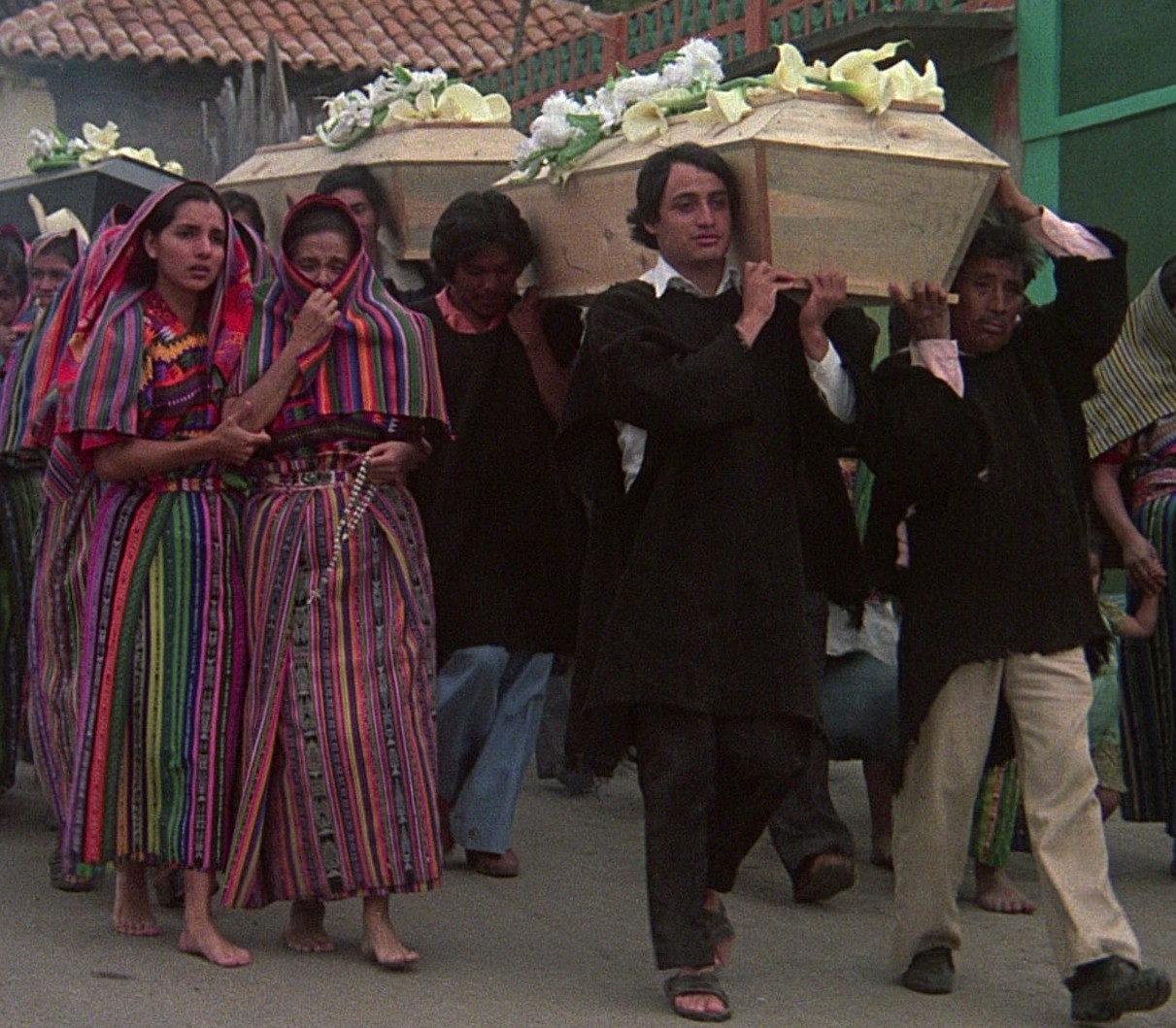
El Norte
A brother and sister from Guatemala escape from their village after most of the workers there are slaughtered by the army. Their crime? Attempting to organize for better working conditions and fair pay, which is considered tantamount to revolution. They are unable to stay in Mexico, where they head first but where they are treated like “dumb Indians” in the words of the brother, Enrique. They manage to cross the U.S. border, making a heart-stopping trip through the sewer system. The two head to Los Angeles.
To return to Guatemala means death, so Rosa and Enrique must attempt to decode the American culture, the urban culture of L.A., and survive without documentation in the United States. They don’t find the warm, hospitable life they’ve seen on American TV shows; instead, they are forced to adapt to a foreign and confusing language, high prices and a life continually on the run from the authorities.
This film won an Oscar for best screenplay. The performance of David Villalpando, a Mexican actor and author, as Enrique is particularly moving.
Bread and Roses
Maya, who crosses the border from Mexico without papers, heads for Los Angeles and the home of her sister, Rosa. Rosa gets Maya a job at the non-unionized janitors’ service for which she works. It’s a nightmare job: the abusive supervisor enjoys his power trips, and in one scene fires a woman simply for forgetting her glasses.
Along comes union organizer Sam Shapiro, who talks to the crew about a “justice for janitors” campaign, urging them to organize. Maya is intrigued. But Rosa, who is supporting her ill husband, resists—she is scared she will lose her job. Her boss launches an intimidation campaign that frightens her even further. When she and Maya argue about unionization, Rosa reveals all of the indignities and abuse she has suffered in order just to stay in the United States—that speech alone is worth the time spent watching this remarkable movie.
But the performances, the script, and the direction in this film all contribute to its excellence. As Sam, Adrian Brody spent a month working with union organizers in Los Angeles to learn about the hardships that undocumented workers face here. Pilar Padilla and Elpidia Carrillo are superb as the two sisters.
The film’s title comes from the 1911 union song of the same name. The song’s final lines sum up the message of this film perfectly: “Our lives shall not be sweated from birth until life closes/ Hearts starve as well as bodies, bread and roses, bread and roses!”
Dirty Pretty Things
Okwe, a Nigerian immigrant living in political exile in London, discovers a horrifying crime ring but can’t intervene because of his undocumented status.
In Nigeria, Okwe was a doctor; in London, he drives a cab by day and works as a desk clerk at a hotel at night. Kindhearted despite being seriously sleep-deprived, Okwe also gives free medical treatment to other undocumented immigrants who can’t use the public health system. His friend Guo Yi, who works at the local hospital, steals antibiotics for Okwe to use in his work. Okwe rents sleeping time on the sofa of another undocumented worker, a Turkish housemaid. An intriguing element of this film is its depiction of an entire shadow network of immigrants helping each other as they live under the radar of the authorities.
One night a porter asks for Okwe’s help with a plugged toilet, and he fishes out a human heart. The shocking discovery launches Okwe into danger as he discovers an organ-harvesting scam that’s sending immigrants to their deaths.
In one memorable scene, a doctor demands of several of the immigrants, “How come I’ve never seen you people before?” Okwe answers, “Because we are the people you do not see. We are the ones who drive your cabs. We clean your rooms. And suck your cocks.” Roger Ebert wrote about this film, “It is a story of desperation, of people who cannot live where they were born and cannot find a safe haven elsewhere.”
Sweet Land
Providing an earlier view of an immigrant and the bigotry she faces when she arrives in Minnesota, Sweet Land is set in the early 1920s. Inge’s mail-order arrangement is to marry Olaf, a Norwegian-American farmer. In the stark Minnesota farmland, Inge finds welcoming neighbors…until they discover that she is not Scandinavian, but German. Their change from warmth to icy contempt is incomprehensible to Inge, who doesn’t understand how they can blame her for the sons they lost in World War I. The local pastor preaches sermons against Inge and refuses to perform the wedding ceremony.
Inge is an alien in every sense of the word. Her lack of English (she speaks mostly in slang expressions she picked up on her journey to America, such as “I could eat a horse”) makes her as much of an outsider as her German birth. So does the fact she was raised in the city and knows nothing about farming. But her steadfast nature and her enthusiasm about all things new gradually evoke a grudging respect from the hidebound community members, who have to let go of their bigotry and accept Inge simply as the person she is. In that way, it is a perfect film about assimilation.
The casting of this film is brilliant. It includes Elizabeth Reaser as the young Inge; veteran stage actress Lois Smith as Inge in old age; John Heard as the rigidly conservative pastor; and Ned Beatty as one of the leading citizens of the farming town.
 The Visitor
Walter, a professor from Connecticut, arrives at his Manhattan apartment, which he keeps only for visits. There he discovers two undocumented immigrants—he walks in on a naked woman from Senegal using his bathtub. A young couple has rented the usually vacant apartment, they thought legitimately, from a scam artist taking advantage of immigrants’ need for no-questions-asked housing.
Walter, played by Richard Jensen in an Oscar-nominated performance, has shut down emotionally after the death of his wife. He turns the couple, Tarek and Zainab, out onto the street, and then changes his mind and tells them they can stay the night. One night turns into many as the two draw him out of his grief with their hopeful, optimistic view of life. He even becomes immersed in the African drum music that Tarek plays.
Through these two, the professor also meets Tarek’s mother. When Tarek is arrested, she arrives from Michigan to try to keep her son from being deported. The bureaucracy and red tape of the immigration system in the U.S. is plainly depicted in this film, and the presentation of the cruel withholding of information at the detention center from family members is wrenching to watch.

The film’s subtlety lets all of the emotions of this story shine forth—ranging from joy to despair and hope to outrage—without ever letting us forget the reality of people who are trapped in a system where they are truly dependent on the kindness of strangers.
Maria Full of Grace
The Oscar-nominated performance of Catalina Sandino Moreno in her first acting role is only one reason to watch this compelling film. Maria works on a Columbian flower plantation in the awful job of de-thorning roses. Her family is dependent on her wages. But then everything goes wrong. She becomes pregnant. She’s forced to quit her job. Without any prospects, Maria sets out for Bogatá to start over, and meets a man who talks her into taking a job as a drug mule. She is a desirable candidate because she is pregnant, and US Customs will not subject her to an x-ray.
After swallowing 62 pellets of heroin, Maria boards a plane and arrives at LaGuardia Airport, evading suspicious customs officials. The drug mules, mostly young women, are held captive in a seedy hotel until they pass all of the pellets they’ve swallowed. When one woman is killed, Maria and a friend she’s made on the trip run for their lives.
The film shows in detail why the drug-mule fee would be a huge temptation to the poverty-wage workers of Central America. Mules are lured with descriptions of easy money, but the trip is dangerous, the heroin packets can kill, and there’s a cold cruelty to those who treat Maria as nothing more than a package containing a valuable commodity.
The script offers fully drawn portraits of these usually marginalized people. Each character has her own motivation for the drug-trafficking job: political sanctuary, desperation fueled by poverty, a chance to be reunited with family in the U.S. They are victims of the wealthy drug lords, but they understand the risks they are accepting, or think they do. The real villain here is a have/have-not system that allows those risks to seem acceptable to anyone.
Paris, Je T’Aime
This is a collection of short films by various directors. The one featuring an immigrant is titled Loin du 16e (16e is an arrondissment, or neighborhood, of Paris). The nearly wordless piece, by Brazilian writers/directors Walter Salles and Daniela Thomas, is quietly heartbreaking. It shows the morning routine of a young South American immigrant. She makes a long, tiring trek from her barely-affordable slum neighborhood in Paris to the home of her rich employer. But there’s more at stake than just a complicated commute; the woman also has a baby who she must leave behind every day.
Catalina Sandino Moreno, the star of Maria Full of Grace, plays the young mother, the only featured actor in the film.
If you are looking for a story that, in just a few minutes, elegantly sums up the hardships and the emotional stress of living life as an immigrant in a foreign country, removed from family and familiar surroundings, this is it.
All of these films are available from the Grand Rapids Public Library System. You can round out your viewing by checking out the documentaries and other resource materials about immigrants, immigration issues, and the history of immigration to the U.S. at The Bloom Collective.
 Grand Rapids Institute for Information Democracy