Reporting on unemployment statistics
Yesterday, MLive posted a very brief story on new unemployment data for the state of Michigan.
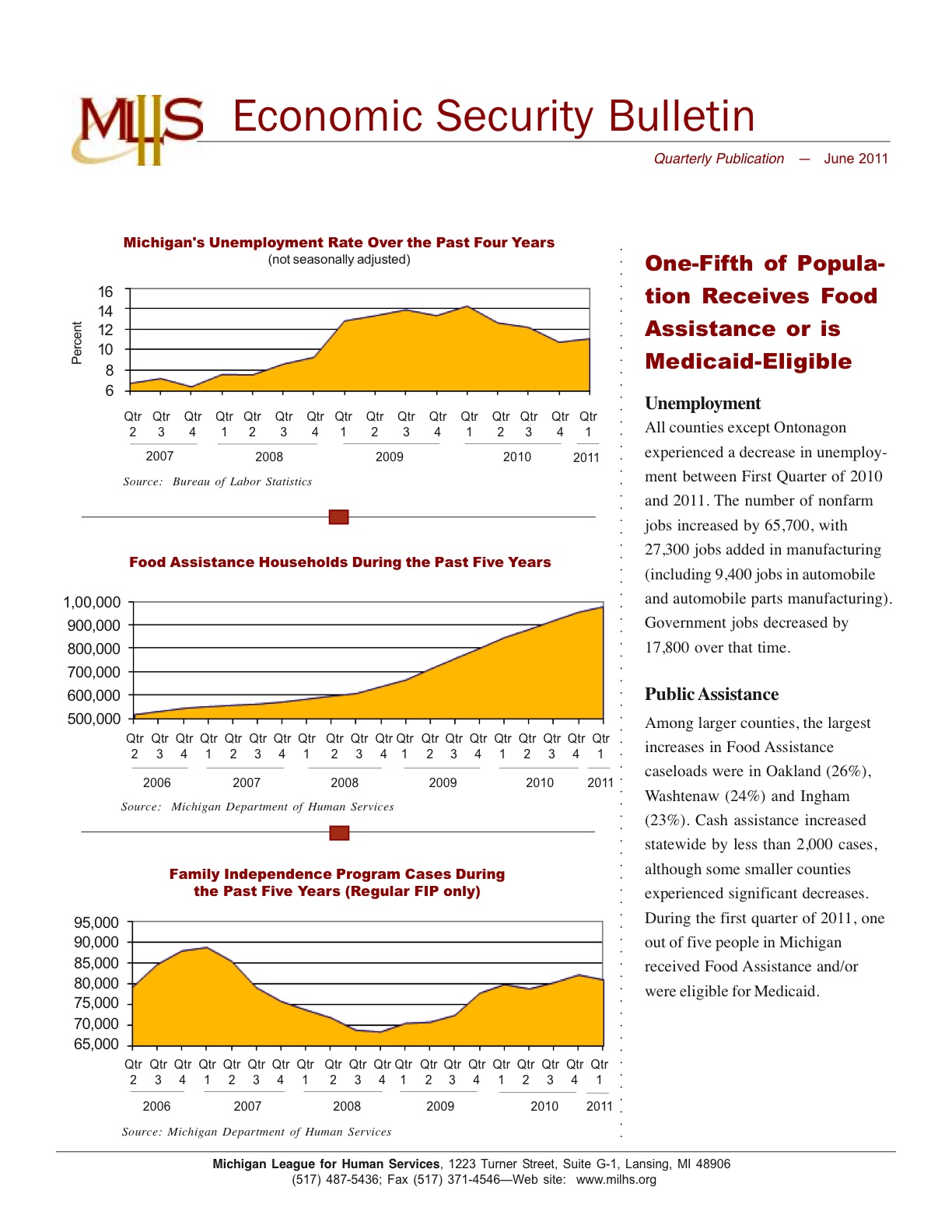
The 100-word article’s headline read, “Unemployment drops in Michigan but families still struggling, report says.”
The article points out that unemployment is down in every county in the state except one, but then points out that those seeking food assistance is up by 15.5 percent statewide.
The Grand Rapids Press reporter never provides any data for Kent County or the surrounding counties, which would make the story more relevant for area readers. According to the Michigan League for Human Services report the unemployment numbers for Kent County are down 2.6%, from 11.4% to 8.8%. The actual number of unemployed in Kent County, according to the study, is 26,879.
In terms of food assistance, the numbers show that there was an 18.8% increase in people seeking help with food. According to the report the number of households seeking food assistance every month went up from 47,634 households to 56,604 households.
The Press writer could have easily provided some of these numbers, but chose not to. In fact, the report also has statistics on those participating in the Family Independence Program, families with children in child day care and those receiving Medicaid. In addition, the report provides a breakdown of trends in employment sectors from 2010 to 2011.
All of this data is certainly relevant and would raise numerous questions for any competent reporter. One simple, yet important question would be if unemployment numbers are down, why are more households seeking food assistance?
One conclusion that could be drawn is that many people who are employed don’t make a livable wage. People earning the minimum wage of $7.40 an hour cannot survive in this economy. The living wage vs minimum wage calculator page for Kent County shows the huge discrepancy. A living wage, where people are paid based on real need, provides a breakdown of the average monthly expenses and then calculates what a living wage would be compared to a minimum wage.
Statistics can be useful tools, but they can also be misleading without adequate context. Just because unemployment statistics are down for Michigan, doesn’t mean that things are better for working class people nor is it a reflection that the “economy” is making a comeback.
 Grand Rapids Institute for Information Democracy
Good analysis, Jeff.
It’s also useful to consider the claim that wages have stagnated. You hear that phrase a lot, but until recently I never saw a figure that really brought it home to me in real terms.
In 1985, the real median income of people in Michigan was about $34,500. In 2010, the real median income of people in Michigan was just over $30,000. So, in terms of actual buying power of dollars, even people who have held onto their jobs have experienced a net loss of about 13 percent.
So the idea that wages have stagnated is actually a capitalist lie…wages are not the same as they were 25 years ago. The working class has instead lost a lot of ground in terms of income, while minimum wage is so neglected as to be a joke. It doesn’t represent anything like a living wage now, as you point out.