New Media We Recommend
Below is a list of new materials that we have read/watched in recent weeks. The comments are not a “review” of the material, instead sort of an endorsement of ideas and investigations that can provide solid analysis and even inspiration in the struggle for change. All these items are available at The Bloom Collective, so check them out and stimulate your mind.
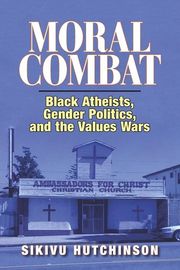
Moral Combat: Black Atheists, Gender Politics and the Values Wars, by Sikivu Hutchinson – What kind of analysis would you be likely to read from a Black feminist who is also an educator and an atheist? Damn fine analysis. Sikivu Hutchinson not only provides interesting insight into contemporary Black politics, she provides analysis through the rare lens of a Black atheist. Hutchinson’s critique is far reaching, but what I found particularly interesting was the level of policing that takes place within the Black community against those who dare to question the role of the Black Church. The author talks about the intimidation she face growing up to embrace Christianity with the Black community but also the internal questioning and censorship that many Black people face who challenge the primacy of religious belief. This book was not only enlightening, but in some ways ground breaking.

A Queer History of the United States, by Michael Bronski – Like Vicki Eaklor’s book Queer America: A People’s GLBT History of the United States, Bronski’s attempt to reclaim and uncover the history of the LGBTQ community is an invaluable resource. Bronski’s volume is much broader than Eaklor’s, in that he covers the US from the time of the first European colonists. Bronski also does something that Eaklor does not spend much time on, which is a keen sense of how literature and other forms of art were an expression of how American the LGBT community has been through the entire history of this country. In addition, Bronski provides important analysis of the more contemporary LGBT movements, especially those that were more focused on liberation, both sexual and social. Bronski makes a strong case for the position that whatever right the LGBTQ community enjoys now it was the result of the more radical sectors within its history such as the Gay Liberation Front, the Gay Activist Alliance and ACT UP. An important contribution that should be included to the body of work started by Howard Zinn’s A People’s History of the United States.

People of the Pines: The Warriors and the Legacy of Oka, by Geoffrey York and Loreen Pindera – The People of the Pines is the story of the courage of the Mohawk people in eastern Canada in 1990. The community of Oka was planning to build a golf course on traditional Mohawk land and the Mohawk people fought back. They Mohawk community not only objected verbally, they organized and engaged in direct action that led to a two and one half month stand-off between Mohawk warriors and the Canadian police/military. This book is not only important because it documents a contemporary example of Euro-American conquest, but it also demonstrates that people can organize and fight back. An important history lesson for all who claim to care about indigenous struggles.

That Infernal Little Cuban Republic: The United States and the Cuban Revolution, by Lars Schoultz – There have been numerous books written on the history of US relations with Cuba since the 1959 revolution, but few have the depth and substance that long-time writer Lars Schoultz brings to this subject. The 700 page volume is a bit overwhelming, but the author’s style of writing and keen sense of history makes up for the length. Schoultz methodically breaks down the history of US relation with Cuba beginning with the Truman administration as a means of providing some context before the 1959 revolution. The author then uses each sequential US administration as a framework for the chapters of That Infernal Little Cuban Republic. One should be clear however, that this book is not written to provide a critique of the Cuban revolution itself, rather it provides a detailed analysis of how the US has responded to Cuba since 1959. Schoultz makes it painfully clear that the US has done everything in its power to undermine the Cuban revolution and to punish the Cuban people as an example for the rest of the world that real independence and autonomy from the US will not be tolerated.
 Grand Rapids Institute for Information Democracy
Hi Jeff:
Thanks much for the recommendation on my book and the illuminating capsules on the other selections.
Sikivu Hutchinson
Thank you Sikivu, I thoroughly enjoyed your book and hope that it is widely read. You bring an important and unique voice to critical issues of the day!