This Day in Resistance History: The End of the Illegal Imprisonment of the Amistad Passengers
On this day in 1841, the United States Supreme Court admitted that the nation had falsely imprisoned 52 people for two years, due in part to direct interference from the U.S. government. The decision also highlighted startling admissions related to slavery in the United States.
 The ruling was made on behalf of the Mende passengers from the ship La Amistad. They had been jailed since 1839 in New Haven, Connecticut. Sengbe Pieh (called Joseph Cinqué during the trials) and 51 others had been called everything from pirates to property to murderers. Arguments about their fate bounced from one court to another in one of the most complicated cases in the early American justice system.
In 1839, the U.S.S. Washington captured the slave ship La Amistad in the waters off Long Island. The Amistad’s senior crew members, José Ruiz and Pedro Montez, told naval officers that they were transporting 52 slaves from a plantation in Cuba, where they had been born, for sale elsewhere in Cuba. But the Black passengers, led by Sengbe Pieh, managed to arm themselves, kill the captain, and take possession of the ship. Ruiz said he was ordered to sail to Africa, but managed to fool the slaves by charting a course north, hoping to find aid in American waters.
The passengers were taken into custody. A district court hearing, scheduled as a courtesy, would formally return the ship and its “contents” back into the hands of Ruiz and Montes.
 Instead of the expected pro forma hearing, however, the courtroom erupted with petitions by a number of claimants. The captain and first mate of the U.S.S. Washington appeared and demanded to have the ship and the slaves given to them as pirate salvage captured on the high seas. The senior Spanish diplomatic counsel marched into the courtroom to announce that Queen Isabella II wanted La Amistad and the slaves. sent to Spain. A local group of abolitionists demanded that the slaves be set free, because Connecticut no longer allowed slavery and the slaves therefore had reached free soil. And Secretary of State John Forsyth delivered a message from President Martin Van Buren, stating that it was in the national interest that the judge comply with the wishes of Spain, honoring a 1795 treaty. Clearly, this case was far more tangled than originally thought.
Then New Haven abolitionist Lewis Tappan hired attorney Roger Baldwin to represent the Amistad passengers. Baldwin hit on a legal point that no one else had even considered. The so-called slaves, he pointed out, could not speak a word of Spanish. If they’d been born on and worked on a Cuban plantation, how could that be possible? And if they had not been born into slavery, then under current U.S. law they could not be sold as slaves. They were free if they had been born free. Baldwin set about to prove it.
He sought help from one of his Yale professors, Josiah Gibbs, a language expert. Gibbs’s job was to try to speak with the imprisoned men and women directly and find out where they had come from. The professor cleverly established a basic vocabulary with the prisoners. Then he went down to the docks and shouted out the words he’d learned from them until he found someone who understood the language and answered him.
That person was James Covey, a native of Sierra Leone who spoke Mende and had become a British sailor. Covey discovered that Senge Pieh had been a landowner and a rice farmer. He and the other Mende passengers had been kidnapped, taken in chains to a slave fortress in Sierra Leone, and sold to slavers who owned the ship Tecora. Ruiz and Montes bought the Mende prisoners from the Tecora captain with the intent of illegally selling them to a Cuban plantation owner.
Meanwhile, Roger Baldwin, obtaining a writ to search La Amistad, found the Tecora manifest hidden on board. It listed the Amistad group, giving each one a false Spanish name and listing their sale prices to the Amistad owners.
Despite this incontrovertible evidence, Baldwin was forced to take the case through three separate courts. Each time he won, the case was appealed by the government. Finally, the case landed in the U.S. Supreme Court. By this time, the situation won the attention of former President John Quincy Adams, an ardent abolitionist, who worked with Baldwin on preparation for the high court hearing. Baldwin presented the case, with Adams giving the closing argument.
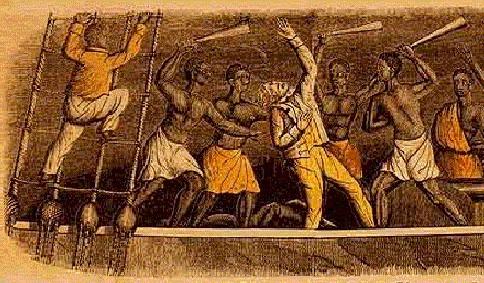 Despite the fact that all but one of the Supreme Court justices of the time were Southern slave owners and despite constant pressure applied by Van Buren on behalf of Spain, the Court found that the Amistad passengers were in fact free men and women. The order secured their immediate release from prison. The Court further ordered that the kidnapped Mende be transported at U.S. government expense back to their homeland.
Justice Joseph Story, who wrote the majority opinion, made a point of addressing demands that Pieh and the male Mende be charged with murder and piracy for killing the captain and a crew member during their uprising on La Amistad. Story wrote that “while we may lament the dreadful acts by which they asserted their liberty and took possession of the Amistad and endeavored to regain their native country,” Pieh and the others could not be charged with murder or insurrection. They had simply attempted to take back the liberty that had been stolen from them. He wrote that they had fallen victim to “a heinous crime” and that any acts they committed to regain their freedom were justified as self-defense.
The Amistad case underscored a basic American hypocrisy. While politicians repeatedly stressed the American idea of natural rights, such as liberty—a point directly addressed in the opinion—the case cast light on the government’s complicity with the institution of slavery. The irony of ruling that the Mende passengers had the right to rise up against those who had deprived them of their freedom did not extend to more than 2.5 million people who were enslaved on plantations and cities across the United States at the time. United States v. Libellants and Claimants of the Schooner Amistad, along with the Dred Scott decision, is considered one of the most important court cases concerning slavery in United States history.
 Grand Rapids Institute for Information Democracy
Kind of like the resistance to gentrification? What are your thoughts on the resistance here in GR?