MiBiz spreads myth about toilet paper company’s “green” practices
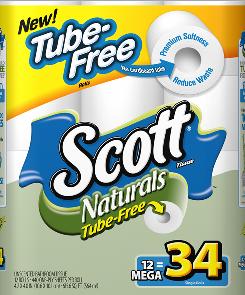
The regional business publication MiBiz recently sent out their sustainability E-newsletter, which is always worth critiquing. Like most business entities they love to highlight so-called “green” corporate practices as a way of taping into the growing green consumer market.
The article in the MiBiz newsletter that caught my attention was a blurb about the toilet paper giant Kimberly-Clark, which has announced they will be putting on the market tubeless toilet paper.
The MiBiz blurb was based on a USA Today article that acts essentially as a PR piece for the Kimberly-Clark. Not only does the article cited a company spokesperson who makes eco-friendly claims, the story also cites someone with the Natural Resources Defense Council who claims this is a positive example of what corporations can do to promote conservation. However, such a business-friendly article from the McJournalism of newspapers (USA Today) should not confuse us with what is fundamentally wrong with equating Kimberley-Clark’s new marketing strategy with concern for eco-systems.
First, citing a spokesperson from the Natural Resources Defense Council makes complete sense once you know that this so-called environmental group is part of what some call the Big Green groups or Gang Green. Big Green groups are those who have abandoned any real grassroots environmental work and have shifted to lobbying in Washington and partnering with Corporate America.
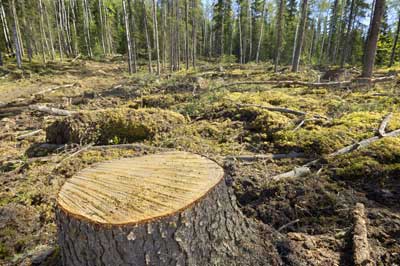
Second, calling Kimberly-Clark’s tubeless toilet paper rolls green is a perfect example of green-washing. The company is the second largest toilet paper company in the world and has contributed to deforestation and soil erosion on a massive scale. Kimberly-Clark owns or controlled hundreds of thousands of acres of land in the US, Spain, Thailand, Mexico, China and 20 other countries.
In addition to the amount of land the company owns it is important to understand that most toilet paper is currently made from trees, which means the industry does not use much in the way of recycled paper. In fact, in the US today, tissue from 100% recycled fibers make up less than 2% of sales for at home use. This is an astounding number and it means that companies like Kimberly-Clark need to cut down more forests for their products.
Third, since Kimberly-Clark is committed to increasing its profits they will do whatever is necessary to make that happen. For instance, the company spent hundreds of thousands of dollars annually lobbying the US Congress. Another tactic the company uses is having representative from other large corporations sit on their board of directors, which gives them greater influence on policy and greater access to natural resources. Some of the board members of Kimberly-Clark also sit on the boards of General Electric, Home Depot and Waste Management.
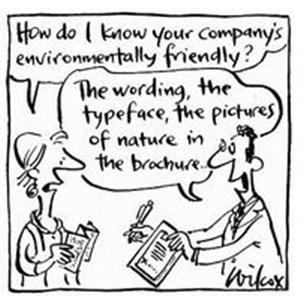
Lastly, the biggest flaw with corporations claiming to be green is that they don’t have a limit to their growth. Kimberly-Clark, like any other business, wants to expand and develop more markets for their products. Just because they make a minor adjustment to how they manufacture their product doesn’t mean they will end up cutting down fewer trees.
Therefore, just because news agencies like USA Today and MiBiz are fooled by this kind of corporate green-washing, doesn’t mean we have to be.
 Grand Rapids Institute for Information Democracy