Beyond Talking About Racism in Grand Rapids
A few weeks ago people in West Michigan had a wonderful opportunity to have a conversation about racism. The play Lines: The Lived Experience of Race, written and directed by Stephanie Sandberg was preformed at Actors Theater in late September/early October.

Lines was based on interviews that Sandberg did with roughly 160 people in the community about their experience of racism. The play was divided into themes, like discrimination, education, gentrification on Wealthy St. and police profiling.
The way Lines was constructed not only highlighted individual experiences of racism, it exposed the larger problem of institutional or structural racism. The commentary was powerful and indicting. It was powerful because of the way it challenged the audience to confront the still deeply entrenched reality of racism in West Michigan and it was indicting because it forced us White folks who like to think care about communities of color that whatever we are doing now just isn’t working.
As a matter of transparency, I was one of the individual’s highlighted in the play and I participated in a talk back session after one of the performances. I can only speak about the content of the discussions after the show I attended. In some ways I thought that it was good, but primarily the comments made by White people afterwards still communicated a tremendous amount of privilege.
For example, one person said that the play dealt with heavy stuff and that “we can’t always be carrying that heaviness around. We need to take a vacation from the issue and sometimes just enjoy ourselves.” In one sense I understand the intent of the statement, but it fails to acknowledge that people of color don’t have the luxury of “going on vacation” from racism.
This for me underscored how deeply entrenched White privilege is in this society, since even people who came to a play about racism still didn’t get it. One aspect of White privilege is our unwillingness to confront the harsh realities of what communities of color face every second of every day.

The ugliness of racism and White privilege certainly needs to be discussed and Lines certainly gave us an excellent opportunity to have those discussions. However, talk must eventually be translated into action and that action must be geared to transforming society from one of White privilege and institutional racism to one of racial justice. Therefore, I want to make a few observations/proposals about how we could move in that direction.
1. All institutions must make racial justice and integral part of their work and mission. By this I don’t mean tokenism or just having people of color on your board of directors, I mean seriously coming to terms with how these institutions can challenge the deeply entrenched forms of institutional racism in this community. For example, communities of color disproportionately living in poverty, which means have higher rates of unemployment, underemployment and are facing housing foreclosures. If the work of religious institutions, government and the plethora of non-profits that inhabit Grand Rapids does not change this really then how can they say they are committed to racial equality?
We cannot be content by sending people to the Institutes for the Healing of Racism and think that somehow absolves us of having to actually do something to challenge institutional racism. We can’t just hang out with people of color and think makes of champions of racial justice.
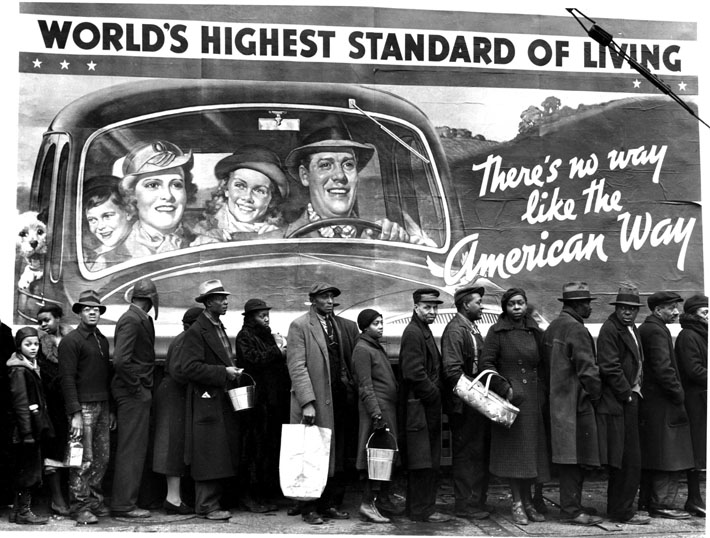
2. We all must challenge institutions that by their very nature perpetuate institutional racism. Here is where I am sure to make enemies, but such is life. One example of an institution that perpetuates institutional racism is the Chamber of Commerce. This is an association of area businesses that promotes economic policy and practices that disproportionately benefit White people. Can people of color be members of the local Chamber of Commerce……absolutely! Heck, they even offer their own version of the Institutes for the Healing of Racism. However, the power that the Chamber of Commerce can leverage on economic issues mostly benefits White people.
3. We all must think about racism as more than a White/Black issue. Other communities of color are equally affected by institutional racism. For example, Latino communities are disproportionately made up of people who work for substandard wages picking our food, serving our food and cleaning up after us in the service industry. On top of the economic hardships they must endure we have the audacity to claim “they take jobs from us” or are nothing more than “illegal aliens.”
Lastly, since we must give in to the temptation to take a vacation from racism, we need to think about how racism works in the less obvious ways. For example, look at the hundreds of thousands of people who participated in the event we all know as ArtPrize. Lots of people came to downtown Grand Rapids to look at art and to enjoy the commercial district. However, we have to ask ourselves who were the primary beneficiaries of this seemingly benign cultural event? Which businesses made money and how were race relations negotiated during that three-week spectacle? What if next year ArtPrize were to use the intersection of Franklin and Eastern as its focal point? Would that mean a massive amount of financial investment in that part of the city? Would it benefit many of the current residents who live in that area? The answers to these questions should tell us something about how entrenched institutional racism is in this city.
 Grand Rapids Institute for Information Democracy