When Eating Locally becomes a class issue
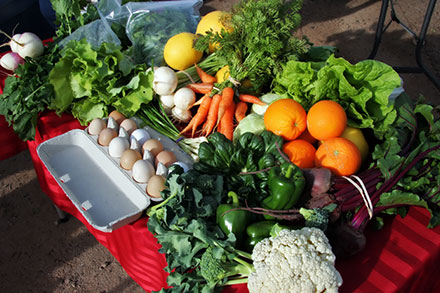
In recent years the issue of eating healthy and eating local has become quite mainstream. Years ago the very idea was only found with people who took gardening or small scale farming seriously as well as people who have understood for a long time the importance of eating that promoted justice.
Now you can’t turn the radio or TV on without someone talking about selling local produce. At one level this is a good thing. For decades in the US most of us ate food that would travel on average over a thousand miles before it arrived on our plate. The amount of fossil fuel used to transport and grow food in an agribusiness model is overwhelming.
Another benefit to eating locally means that you have a greater chance of having a relationship with the people who grew the food. Eating locally doesn’t always mean that those who labor in the fields are treated well, but with the increased emphasis on eating local and organic more and more people are turning to small scale farms that rely more on family labor or production models used with Community Supported Agriculture (CSAs).
However, this new emphasis on eating locally has also received the attention of the private sector, business people who see the marketing potential of eating locally. This new brand of green capitalists realized the market value of selling “locally grown and organic foods,” so much so that eating local and eating organic is now often a class issue.
Take for instance an article posted on MLive today, which featured a partnership between JW Marriott and Trillium Haven Farm. The article communicates that the upscale hotel/restaurant of JW Marriott will offer classes on “what local, organic food brings to the table nutritionally and to the area’s economy.”
While this may sound like a wonderful idea upon further investigation one finds that the classes that they will be offering over the next few months cost $125. According to the Facebook posting for these classes participants will be instructed by Trillium Haven Farms and JW Marriott chefs, along with some meals, a T-shirt and a guided tour of the Jenison-based farm.
The article also includes a picture of two of the chefs from JW Marriott who are growing food at the hotel facility and provide a link to what kind of food is offered at their Six, One, Six restaurant. Looking at the dinner menu of this restaurant we find that appetizers range from $6 to $12 and dinner meals can cost from $21 to $27.
These prices beg the question, “who can afford to eat organic and local?” Most working class individuals and families are not likely to pay those prices for a meal, which means that more often than not they will be eating at fast foods joints. This is what I meant by eating locally grown food at local restaurants as a class issue.

One could argue that the cost of eating local food served at the JW Marriott restaurant or many other local restaurants does not preclude working class individuals and families from buying locally grown produce at a farmers market and preparing it for themselves. While this is true, it does not take into account that most working class individuals and families have less leisure time to be able to prepare meals, but this fact also distracts us from the larger question of why healthy local foods are not affordable for everyone.
Community Supported Agriculture is one way to provide healthy, local, organic and affordable food to people, which is why Trillium Have Farm’s partnership with the JW Marriott hotel/restaurant is troublesome. Eating well should not be a privilege, but a right for everyone.
There are local groups attempting to address some of these food justice issues, particularly for working class families. The Greater Grand Rapids Food Systems Council addressed this topic at a gathering last month and Our Kitchen Table will be addressing the issue of Food Justice at a Food Summit they are hosting Thursday, June 10 from 6 – 9pm at the Film Farm, located on the 7th Floor of the Masonic Temple in Grand Rapids (233 E. Fulton St).
 Grand Rapids Institute for Information Democracy
I, too, am disturbed that healthy organic foods are not within reach of most working class folks. These are the same folks who, like me, often don’t have access to health insurance, meaning diseases brought on by a poor diet create an additional financial burden that their families cannot afford.
On the other hand, CSAs like Trillium face their own challenges operating in this capitalistic food system of ours and have to look for ways to stay solvent.
Hopefully tomorrow’s discussion will help us figure out more ways to get good foods to more people, regardless of their income.
Thanks for an important post that raises awareness about an issue not often considered. I agree that eating well should be a right.