Positive Personal and Community Responses to Climate Change and Peak Oil
Last night a small group of people gathered in the Wayland High School auditorium to hear Megan Quinn Bachman speak. Bachman, who is with Community Solutions, was invited to town by the Michigan-based organization Local Future.
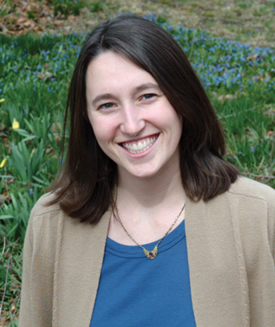
The speaker begins by talking about the fact that we are at a critical crossroads in human history, which we have been before. She gives the example of Easter Island, where massive deforestation occurred, which anthropologists believe led to the destruction of the people on that island. The only thing different now Bachman said, is that the Island is our whole planet.
People too often think that there is a technological fix, but more and more we are realizing that technology cannot save us from the ecological crises that we face. Bachman shows a slide called the Energy Curve of History, where in the US we went from use of wood to coal to petroleum. This energy curve also demonstrated that humans have only experienced major energy consumption in the past 150 years or so, ever since the beginning of the industrial revolution.
What the energy curve also shows is that humans could do more with fossil fuels than with human labor or human energy. For example one gallon of gas is equal to six weeks of human labor. Bachman also had the statistic which stated that US daily oil use is equal to 20,000,000 years of human labor.
She provided a few more statistics, like 93% of the energy we use now will be in decline in the next 25 years. Megan argues that peak oil is now, where demand has exceeded new oil discovery and production. In fact, 64 of the 98 oil-producing Nations are in decline.
So where are we going?
Bachman laid out some scenarios about what will happen in the future as a result of the energy crisis and the massive ecological destruction. These scenarios were an immediate crash, which would be the result of no fundamental change to what we are doing now. Another scenario is what she called the techno fantasy scenario, where we all believe that technology will save us.
A third scenario she identified is called the green tech stability scenario. In this scenario we rely heavily on bio-fuels and other green technology, but don’t make many fundamental changes to our levels of consumption. This third scenario is sort of what the Green Capitalists would like us to embrace, where we can just buy “green” products. The last scenario Bachman offered up is what she called creative descent, where we make significant changes to our consumption patterns, rely mostly on renewable energy and focus on building sustainable, localized communities.

Bachman said this last scenario, creative decent, is the direction that her organization advocates. It’s what Community Solutions calls Plan C. Plan C calls for conservation & curtailment of resource use, along with cultural and lifestyle changes. Bachman said that in a Plan C model, people don’t relying on government and the business community to make the change that is necessary.
One model that fits with Plan C was what Cuba did after the collapse of the Soviet Union, which meant a major loss of oil. She said the government provided some assistance, but urban communities started localized food systems. What was impressive about the Cuban model was their ability to maintain a good standard of living. About 90% of Havana’s vegetables come from the City and 80% of the production is organic. The Cuban model impressed Bachman so much that she and others from Community Solutions produced a documentary called The Power of Community: How Cuba Survived Peak Oil.
What do we need to do?
Bachman said change starts with us and that we all need to take steps to a sustainable life. These steps include a reduction in our purchases, purchasing more local, conservation measures, gardening, organic purchasing, walking/biking, reducing debt, diet change, preventative health, more efficient car, store emergency supplies, learn survival skills, use bartering, get a CSA membership, use mass transit, share a car or get rid of your car, and retrofit our homes to be energy efficient.
Bachman said that in her research there has also been more career/job shifts, where new farmers is the fasting growing sector, followed by activism, teaching and small micro-businesses. She also said that there are barriers to change. Her research showed that people have a hard time driving less, changing their diet and that habits & family practices are hard to overcome. However, Bachman said we can live a better life, which is why many people are motivated to make a change. People have expressed to her that learning new skills, having better relationships, and cooperating with people are motivating factors to change.
Bachman also said we need community level strategies, particularly around food and energy. She said in order to be sustainable we need to be producing what we consume. This is important because it requires us to move from an abstract to a real economy, where we are able to see what is actually happening. Real wealth, Bachman said, is the community, when we rely on each other. Monetary reform is one tactic to use, where we can create our own wealth systems and take our money out of commercial banks. There are state banks that are being proposed around the country and one that is operating in North Dakota.
Bachman ended her presentation with a quote from Buckminster Fuller, which said – “don’t fight the existing reality, build a new model.” While it is extremely important to build new models for living, it seems that we can’t ignore the systems of power that are perpetuating the massive ecological destruction around the world. It seems that resisting this destruction is necessary at the same time that we build new models of living.
 Grand Rapids Institute for Information Democracy
went on a holiday to Cuba this winter and ventured outside the comfort zone of Varadero. Rented a car and headed inland, picked up a local who became our guide for the day. I asked him to show us the real Cuba.
-many bicycles on the road (CD reflectors)
-Less T.V. resulting in more public human interaction
-Crocodiles come out onto the roads at night to soak up the heat from the asphalt roads (natural speed bumps)
-Not many fridges so food is bought day to day. (again)
-there variety of food is limited (needs more choices)
-Cuba has a hot climate thus some of the ways Cuba deals with no oil could be used in Southern States.
-Northern States and Canada will have to adapt differently to cold climate heating problems. Humans can live in +30 celcius temps but would perish at -30 without proper clothing, shelter and heat.
Ice roads were very short this year, fuel and supplies will now be shipped by air to northern communities (very very expensive)
Northern communities have been conditioned to poor diets to cope with food demand/
-Baby bottles are filled with coke because it has a longer shelf life and is cheaper than milk.
-Communities are .not self reliant, they depend on food clothing and shelter.
-Children leave school after grade 5 and are beaten if they show any interest of continueing
-There has been no work structure for over 2 generations so people have grown up not knowing how to work in a community (Government assistance through First Nations)
-If the Economy crashed, First Nations people would Migrate south for assistance. Most large game has been shot up in the North.
Nice report, Jeff. I agree completely with your last paragraph.
I went to a Local Future event a few years ago in Middleville. It was an eye-opening and very thought-provoking experience. And though I didn’t agree completely with their analysis and projections, I did support and agree with what they are trying to accomplish.
Rampant consumerism will be the end of our civilization if we don’t confront and strangle it first.
I like the term “Creative Decent.” Seems similar in meaning to the old term “Voluntary Simplicity.”
Many of us may survive if we can quickly change to a more sustainable lifestyle.
We have the way. Do we have the will?